Key takeaways
- Google says AI Overviews and AI Mode are rooted in its core Search ranking and quality systems, so Dutch SEO fundamentals still count. Crawlable pages and useful content get you into the candidate pool.
- Product and landing pages are the most cited content types in ChatGPT, together about 39% of citations in Promptwatch Data (Sep 28 to Oct 4, 2026). That is global data, not Netherlands-specific.
- Query fan-out means one Dutch question triggers several related searches. Cover the follow-up questions, not just the head term.
- Track Dutch-language prompts separately from English ones. Answers and cited sources can differ by country and language.
- Measure what AI does on your site (crawler logs, referral traffic), not just whether your brand was mentioned.
What is different about the Netherlands
I will be upfront about what I can and cannot say. Public data on Dutch-language AI citations is thin. Most citation research is global, and I am not going to pretend it is split by country. What we do know is the rollout timeline and how the systems work, and that is enough to build a sensible plan.
Google's AI Overviews were available in 200+ countries and 40+ languages as of May 2025, according to Google's own announcement. AI Mode, the separate conversational tab, launched in the Netherlands around 10 October 2025 (NL Times), as part of a rollout to 40+ countries and 38 new languages. It is a separate tab rather than the default experience, and ads in Europe were excluded at launch.
Two other facts are worth keeping in mind. The EU opened an investigation into Google's AI-generated summaries on 9 December 2025, so the rules around this feature may keep moving. And Pew found that only about 1% of users click a source link directly from an AI Overview (July 2025). Being cited is not the same as getting traffic. Plan for brand exposure first and clicks second.
How the two systems pick sources
Google AI Overviews and AI Mode
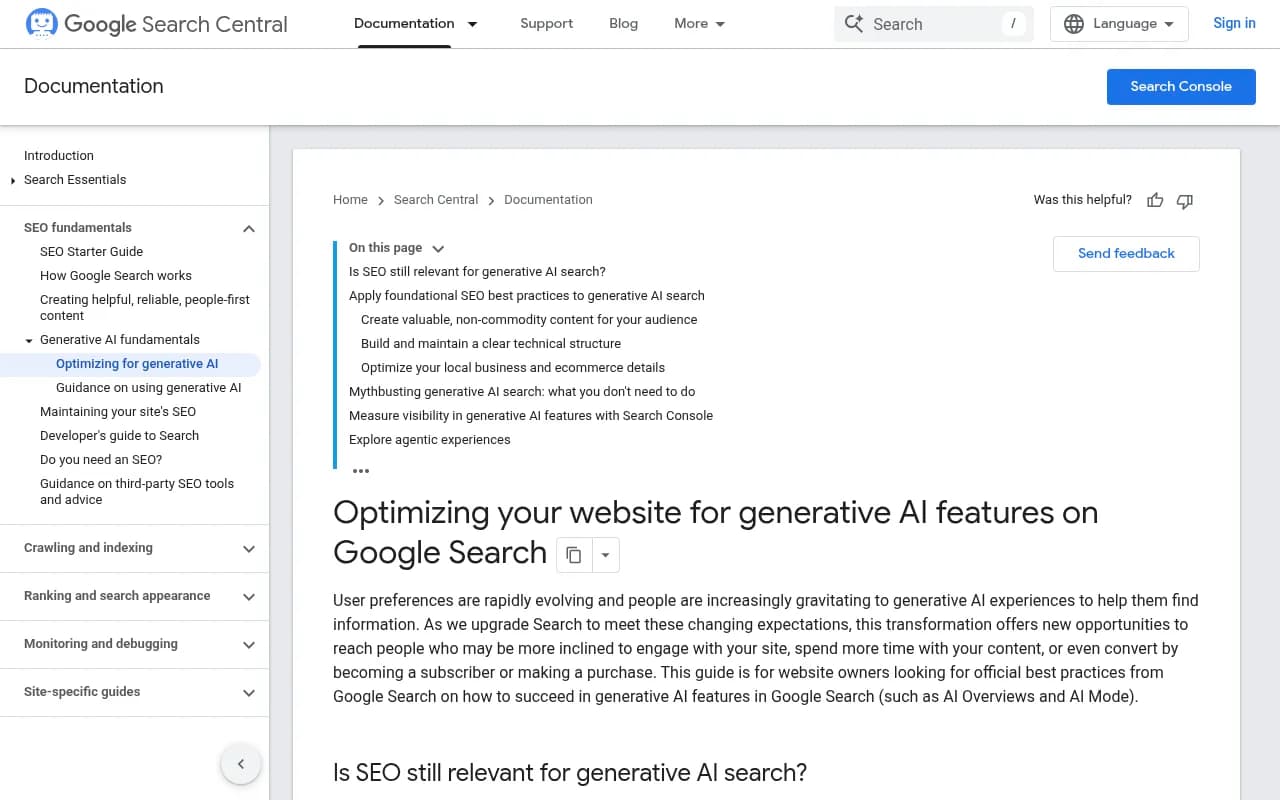
Google's official guide names two mechanisms. Retrieval-augmented generation pulls pages from the Search index and shows clickable links. Query fan-out runs several related searches at once. Google's own example: a question about fixing a lawn full of weeds fans out into searches like "best herbicides for lawns".
For a Dutch site, the practical meaning is simple. Someone asking "hoe kom ik van onkruid af in mijn gazon" is effectively asking five or six questions at once. If your page answers only the first, a competitor with a fuller page gets the citation.
The guide also covers creating non-commodity content, a clear technical structure, local business and ecommerce details, and measuring visibility in Search Console. It debunks some suggested GEO hacks as well. I would read the whole thing before buying anyone's "AI Overview secret" course.
One caution on the idea that you must rank top 10 to be cited. Ahrefs' 2026 analysis, as reported by CXL, found only 37.1% of AI Overview-cited URLs also ranked in the organic top 10 for the same query. Rankings help. They are not a gate.
ChatGPT
ChatGPT runs its own web searches and cites what it finds. Promptwatch Data shows that almost half of ChatGPT responses cite 10 or more unique domains (Sep 28 to Oct 4, 2026), so there is room for more than the top two or three sources. ChatGPT also changes its search behavior without notice. On August 8, 2026 it started using the site: operator at scale, going from about 0.4% to about 17% of fan-out queries, per Promptwatch's site: operator report. Anything you build should not depend on one quirk of one model.
What content gets cited
The most useful dataset I have is Promptwatch's content type report, covering ChatGPT citations from Sep 28 to Oct 4, 2026. Again, global, not Dutch.
| Content type | Share of ChatGPT citations |
|---|---|
| Product pages | 22.4% |
| Landing pages | 16.8% |
| Listicles | 13.6% |
| How-to guides | 8.7% |
| Documentation | 7.5% |
| General articles | 6.1% |
| Comparisons | 5.9% |
| News | 5.7% |
| FAQ pages | 3.3% |
| Reviews | 1.7% |
The surprise for most content teams: your blog is not the main surface. Product and landing pages together are 39% of citations. If your Dutch product pages are thin, full of marketing fluff, or missing prices and specs, that is the first thing to fix.
It shifts by intent, too. For commercial prompts like "beste CRM voor kleine bedrijven" (the report's example is the English equivalent), product pages hit 26.0%, landing pages 20.6%, listicles 15.0% and comparisons 7.9%. Those four make up almost 70% of commercial citations. For branded prompts, reviews climb to 5.6%, more than three times their overall share. And for informational prompts, how-to guides (10.7%) and documentation (8.5%) matter more.
Content type also affects how long you stay cited. Promptwatch's half-life data shows landing pages and docs staying cited longest, while news lost half its pages within 36 days. Evergreen pages pay off longer than news-style posts.
A Dutch GEO checklist
1. Get the technical basics right
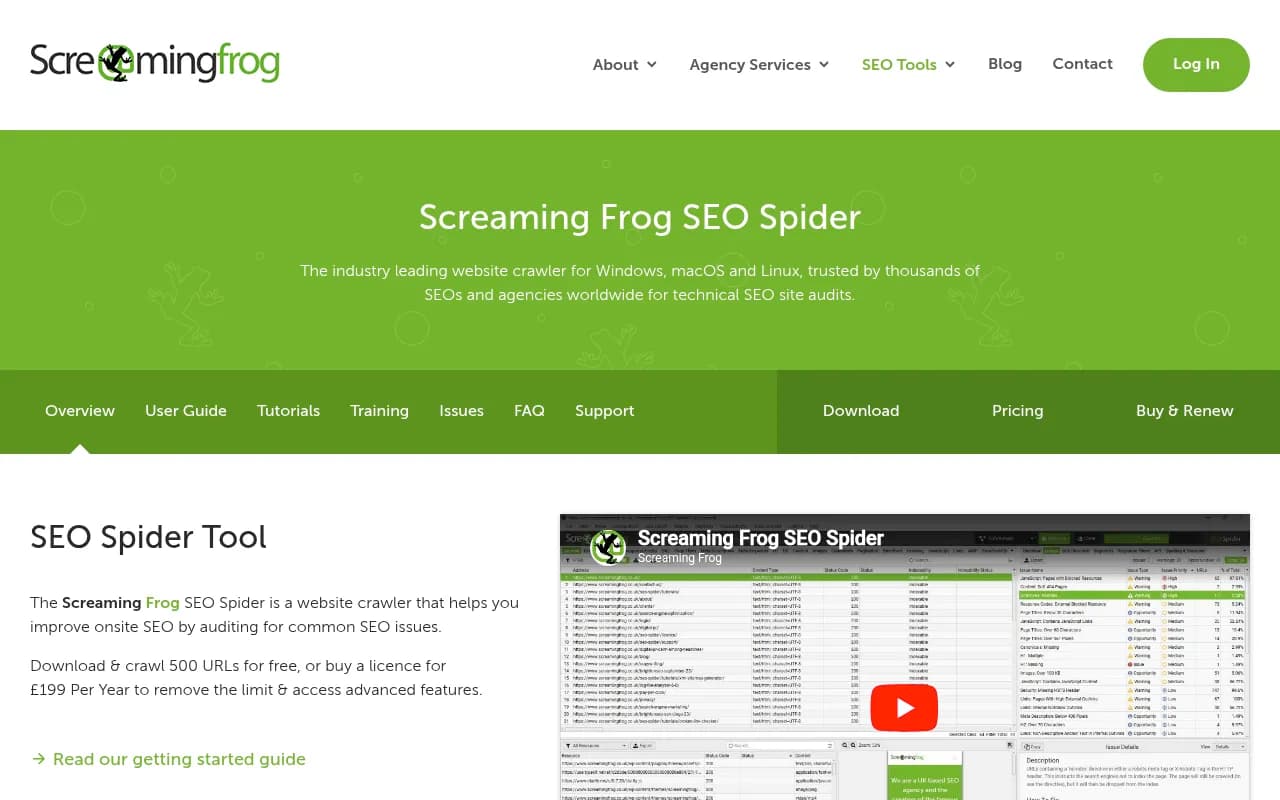
AI systems cannot cite what they cannot read. Check robots.txt, make sure key pages render without heavy JavaScript, keep your sitemap clean and fix broken internal links. A crawler like Screaming Frog SEO Spider handles the audit side.
Then watch the crawlers themselves. Server logs or a tool with IP-verified AI crawler logs will show whether GPTBot, OAI-SearchBot, ClaudeBot or PerplexityBot are reaching your pages and hitting errors. Promptwatch's crawler traffic data is a useful benchmark for what normal looks like.
2. Rebuild product and landing pages first
Given the numbers above, start here. Each page should state what the product is, who it is for, what it costs and how it compares, in plain Dutch. Include specs, delivery terms, and prices. Avoid vague slogans that give a model nothing to quote.
3. Write headings like real Dutch questions
Use the phrasing people actually type or say, not the phrasing your marketing department prefers. Put the answer in the first two sentences under the heading, then expand. AnswerThePublic and AlsoAsked are good for surfacing question patterns, and both handle Dutch.
Tracking 2026 data, as summarized by To The Web, showed AI Overviews appearing on 64.7% of question-form queries versus 13.7% of all queries. Question-shaped content is where the exposure is.
4. Cover the fan-out
Take a core topic and list the related searches a model would run. Then check that your site answers them, ideally on one page or a tightly linked cluster. Content gap tools help here, and so does simply running your target prompts and reading the sources that get cited.
5. Get into roundups and review sites
Listicles are 13.6% of ChatGPT citations overall and 15.0% for commercial prompts. If "beste X" articles on Dutch sites are cited for your category, you want to be in them. That is a PR and outreach job, and it is slower than editing a page. Reviews matter most for branded prompts, so build up profiles on Trustpilot and on whatever review sites are standard in your category.
6. Add structured data that matches the page
Organization, Product and Offer, Article and FAQPage markup help engines understand a page. They do not guarantee citations, and the markup has to reflect what is visible. Schema App and Yoast SEO are common ways to manage it.
7. Keep a plain FAQ about your brand
For branded prompts, FAQ pages reach 4.8% of citations versus 3.3% overall. A short, honest FAQ covering pricing, alternatives, who you serve and where you operate gives models clean material. Mention your Dutch details too: KvK number, service area, languages supported.
8. Do not over-invest in social
According to Promptwatch Data, between Sep 28 and Oct 4, 2026 ChatGPT took 0.46% of its citations from social platforms, while Google AI Overviews took 12.2%. Reddit's share of ChatGPT citations also fell from roughly 4% to 0.5% on August 14, 2026 (report). YouTube and LinkedIn may still help in AI Overviews. For ChatGPT, your own site and trusted third-party pages matter far more.
Measuring it
Traditional rank trackers will not tell you much here. You need three views: whether your brand appears in answers for the prompts that matter, which of your pages get cited, and whether any of it brings visitors.
Google Search Console is the free starting point for the Google side, since Google's guide points to it for measurement.
For prompt tracking, there are many options. A few are worth knowing, depending on what you need:
| Tool | Good for | Watch out for |
|---|---|---|
| Promptwatch | Tracking plus action: prompt monitoring across models and countries, crawler logs, AI traffic, content gap analysis and content generation | More than a simple tracker, so overkill if you only want mention counts |
| Teun.ai | Dutch AI visibility toolkit with free rank checks | Narrower feature set |
| Otterly.AI | Affordable basic monitoring | No crawler logs or content workflow |
| Peec AI | Monitoring-focused tracking | No optimization layer |
| Semrush | Teams already living in a classic SEO suite | AI data is an add-on to a broader product |
Promptwatch is the one I would look at first if you want to act on the data, since it connects visibility gaps to content and then checks whether published pages get crawled, cited and clicked. It also lets you pin monitors to a country and language, which matters when you want Dutch prompts tracked as Dutch prompts, not English ones with a different flag.



For a broader tool list, the GEO software directory at bestgeosoftware.com is a decent place to compare options.
Build a Dutch prompt set
Start with 30 to 50 prompts. Write them in Dutch, as a customer would, and split them by intent: informational ("hoe werkt..."), commercial ("beste ... voor ..."), and branded ("is [merk] goed?"). Run the same prompts weekly. Keep an English set too if you sell cross-border, and compare. I would not assume the Dutch and English answers match, because they often do not.
A quick manual routine also works at small scale: test five target prompts weekly in ChatGPT and Perplexity and note which sources show up. It is crude, but you will learn more from reading the cited pages than from any dashboard score.
Perplexity
Mistakes I would avoid
- Treating GEO as separate from SEO. Google says it is not. Fix the foundation first.
- Translating English pages by machine and calling it Dutch GEO. Models notice thin, stiff text, and so do readers.
- Chasing every new trick. Markdown files, for example, are only 0.05% of AI search citations per Promptwatch's markdown report. They serve AI agents, not AI search.
- Counting mentions as the goal. Mentions are an input. Revenue and qualified visits are the output.
- Ignoring regulation. With the EU investigating AI Overviews, and GDPR and the EU AI Act in play, expect some of the rules for publishers and crawlers to shift. Review your AI crawler policy periodically.
A 90-day plan
Weeks 1 to 2: audit crawlability, fix errors, and set up Search Console and some form of AI crawler logging. Build your Dutch prompt set and record a baseline.
Weeks 3 to 6: rewrite your top product and landing pages in plain Dutch with full specs, prices and a brand FAQ. Add matching structured data.
Weeks 7 to 10: publish comparison and how-to content that covers the fan-out for your three most valuable topics. Start outreach to the roundups and review sites already being cited in your category.
Weeks 11 to 13: compare against baseline. Look at which pages got cited, which prompts moved, and whether AI referral traffic appeared. Cut what did nothing, repeat what worked.
If you would rather hand this to specialists, an agency such as 1001 SEO Media covers technical SEO, content and GEO under one roof. It is the publisher of this site, so weigh that accordingly.
The honest summary
There is no Dutch-specific trick. The work is ordinary: make pages that are easy to crawl, specific to the point of being quotable, and backed by third-party sources that models already trust. What changes for the Netherlands is the language layer, so test in Dutch, write in Dutch, and measure in Dutch. Start with your product pages this week.