Key takeaways
- Prompt tracking has no reliable volume, no fixed positions, and answers that change per run. Choosing fewer, better prompts beats tracking hundreds of guesses.
- Start from Google Search Console queries you already rank for, then rewrite them into natural-language prompts. That gives you a demand signal that prompt tools mostly lack.
- Use fan-outs (the sub-searches ChatGPT runs behind a prompt) to check whether your prompt matches what the model actually retrieves.
- Group prompts by intent and funnel stage, and keep branded and competitor-comparison prompts in their own buckets so they do not skew category metrics.
- Re-audit after platform changes. ChatGPT's search behavior shifted overnight on August 8, 2026, and fan-out analyses from before that date are stale.
Why prompt selection is the hard part
With keywords you get volume, positions, and a competitor view. With ChatGPT prompts you get almost none of that. The same question can return different brands depending on session context, location, and history, and the number of possible phrasings is effectively infinite. SE Ranking makes the same point in its prompt selection guide: most teams default to "best [category] tool" prompts and call it a strategy, which covers one thin slice of how buyers actually ask.
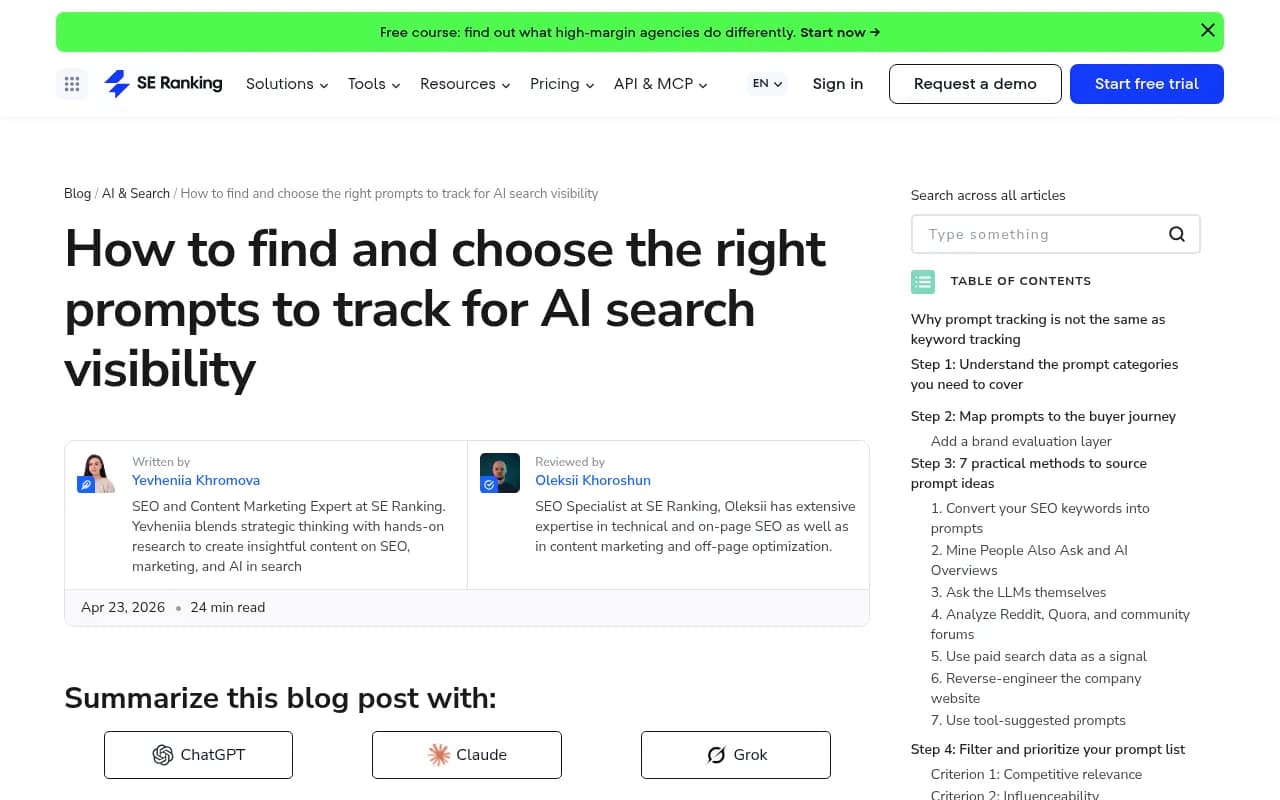
So the goal is not coverage of every possible prompt. It is a small, defensible set that represents real demand, tracked often enough to separate signal from noise. The framework below has five steps.
Step 1: Mine Google Search Console for demand
Search Console is the closest thing you have to a demand signal, because it shows what real people typed before landing on your site. Most of the usable prompt ideas are already sitting in it.
A workable process:
- Export the last 3 to 6 months of queries from the Performance report.
- Filter out branded queries. Keep those for a separate bucket.
- Sort by impressions, not clicks. High impressions with low clicks often point to topics where AI answers are eating the click, which is exactly where you want to know your visibility.
- Take the top 50 to 100 non-branded queries and rewrite each as a natural-language question or request. SE Ranking recommends this same conversion method.
- Pull out the long-tail queries (8+ words). A Reddit thread on this exact problem in r/SEO_LLM makes the same point: long-tail Search Console queries tend to look most like real prompts.
Example rewrites:
| Search Console query | Prompt version |
|---|---|
| crm small agency pricing | What is the best CRM for a small agency on a tight budget? |
| compare project tools remote teams | Compare project management tools for fully remote teams |
| how to migrate wordpress to webflow | How do I migrate a WordPress site to Webflow without losing SEO? |
Do not paste keywords in as-is. Nobody asks ChatGPT "crm small agency pricing". Rewrite them the way a person would type or say them.
Step 2: Check each prompt against fan-outs
When someone enters a prompt, ChatGPT often rewrites it into one or more web searches. That is query fan-out, and it is the layer that decides which pages get retrieved and cited. A prompt that never triggers the searches your content can answer is a poor tracking candidate.
Two things are worth knowing about how big fan-outs actually are.
- Promptwatch's own measurements show an average of about 2.15 distinct searches per response in early December 2025, easing to about 1.84 by early March 2026. Its intro copy says a prompt can trigger 3 to 8+ searches, but the measured averages are much lower, so plan around the averages. See Promptwatch's ChatGPT query fan-out data.
- Searchable reports 1.74 underlying searches per response across 6.9 million responses. Because answers vary, a single check is one sample, not a stable result.
Fan-out queries are also short. Promptwatch's data shows average fan-out length dropping from about 117 characters in December to the high 80s in February and March, and to roughly 53 characters (about 6 to 8 words) once fan-outs returned in April. That means the searches ChatGPT runs look a lot more like keywords than like your conversational prompt. Your Search Console list and your prompt list are closer cousins than they seem.
How to see fan-outs for your candidate prompts
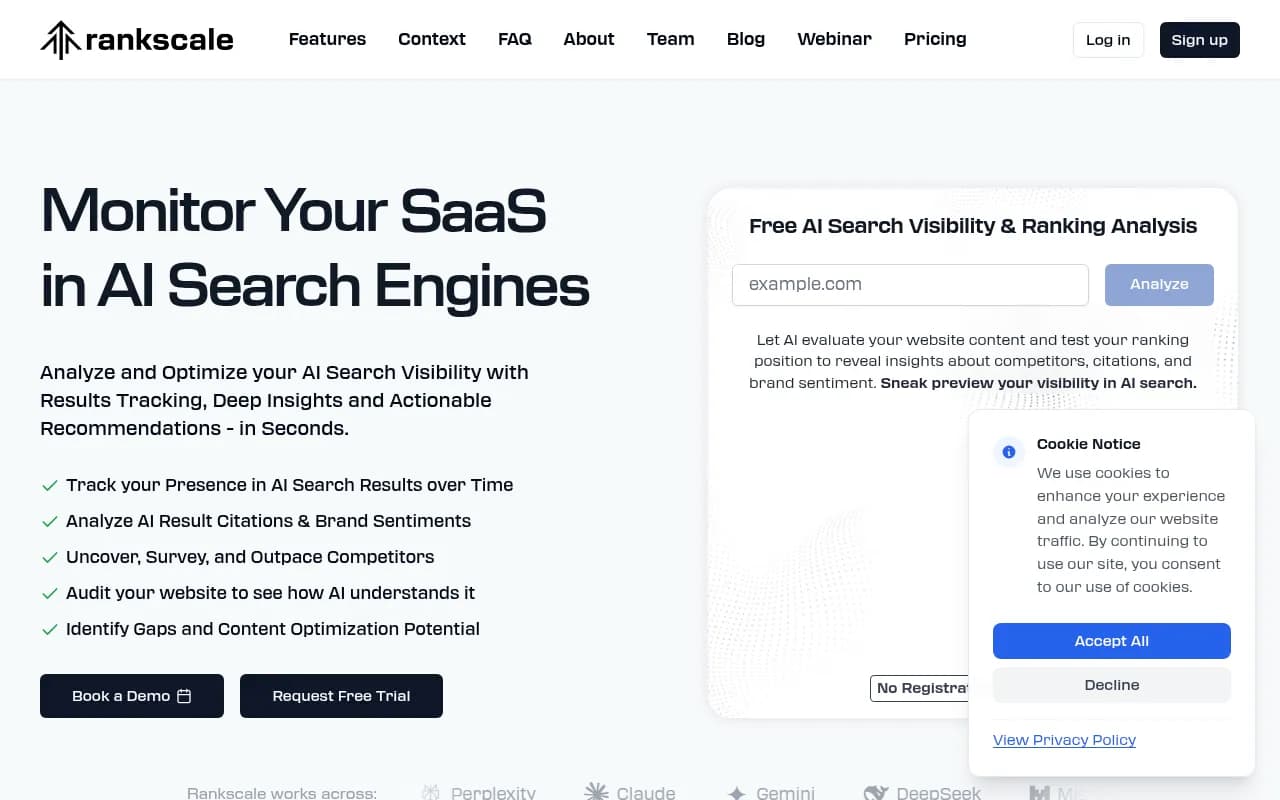
Several tools expose them. In Searchable's comparison, Rankability has a "Fan-out queries" drop-down for a target prompt, Rankscale has a "Search terms" report, and Cairrot has a free Chrome extension that shows fan-outs in real time as you prompt.
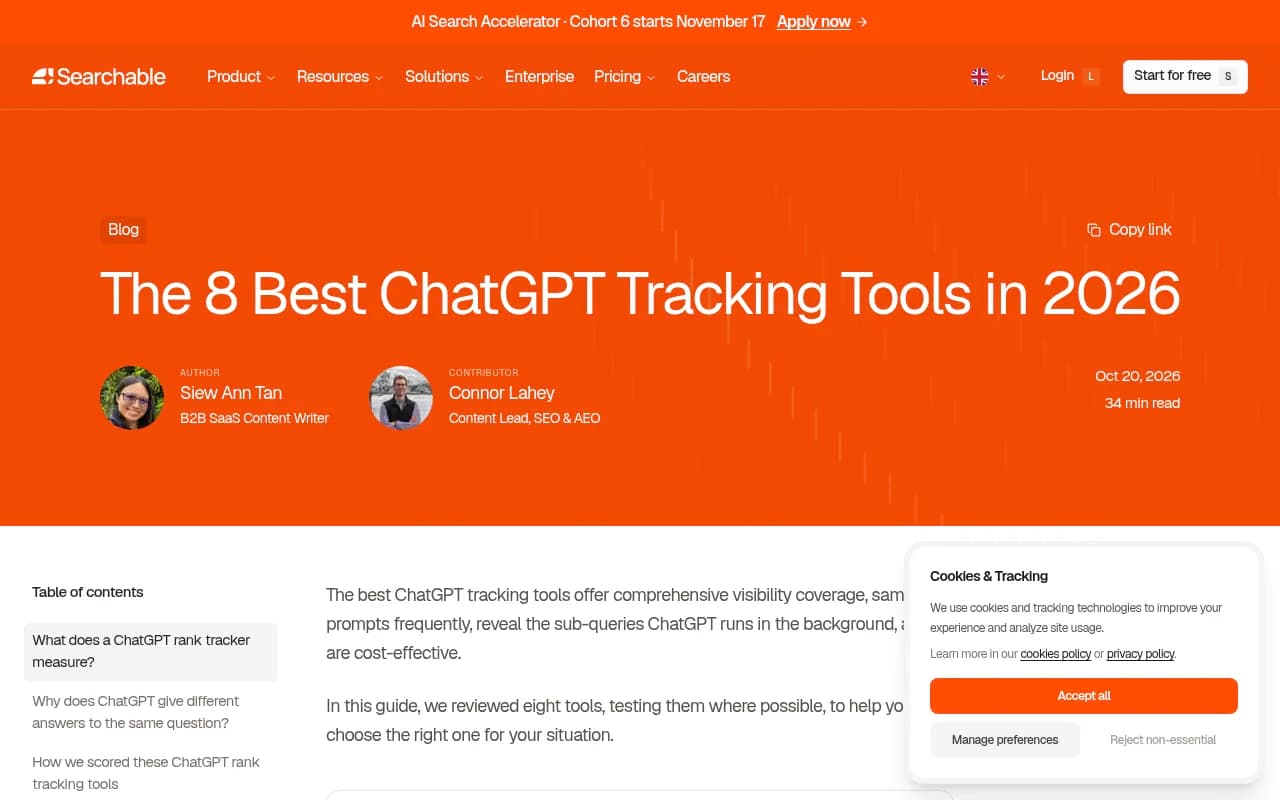

Platforms like Promptwatch also surface fan-outs per response alongside prompt volumes and difficulty scores, which helps when you are deciding which prompts deserve a slot.

For each candidate prompt, ask three questions:
- Do the fan-outs contain terms you already rank for in Search Console?
- Do they add modifiers like "best", "reviews", or the current year? Profound's analysis of fan-outs across millions of prompts finds models commonly add exactly these, plus category terms and sometimes competitor names the user never mentioned.
- Is there a page on your site that could plausibly answer the fan-out?
If the answer to all three is no, the prompt is a reach. Keep it only if it matters commercially.
The August 2026 change you should know about
On August 8, 2026, ChatGPT began using the site: operator at scale. According to Promptwatch Data, site:-scoped fan-outs jumped from 0.37% to 16.8% of all fan-out queries in a single day, and average fan-outs per response rose from about 1.08 to about 1.83. The site: searches sit on top of the generic ones rather than replacing them.
Two practical consequences for prompt selection. First, any fan-out mapping you built before that date should be re-run. Second, your own domain is now more of a retrieval surface, so crawlable, indexed pages matter more than they did. If your tracked prompts depend on pages that are hard to crawl, you are measuring a problem you cannot fix with content alone.
Step 3: Cover five prompt types
Most brands over-index on comparison prompts. SE Ranking lists five core types worth covering:
| Prompt type | Example | What it tells you |
|---|---|---|
| Informational | What is query fan-out? | Whether you are cited as a source of explanation |
| Comparative | Best rank trackers for agencies | Share of voice against competitors |
| Instructional | How do I track ChatGPT citations? | Whether your how-to content is retrieved |
| Brand-specific | Is [your brand] good for agencies? | Sentiment and accuracy of what the model says |
| Transactional | Which rank tracker should I buy for $100/month? | Visibility at decision time |
A rough split I would start with for a 40-prompt set: 10 informational, 10 comparative, 8 instructional, 6 transactional, and 6 brand-specific. Adjust for your market. A local services business will lean transactional; a developer-tool company will lean instructional.
Keep branded and competitor prompts separate
Brand-specific and head-to-head prompts almost always produce your brand in the answer, because you named it. Mix them into your category prompts and your overall visibility number looks great for the wrong reason. Tag them, report them in their own section, and keep your headline metric on non-branded category prompts.
Step 4: Map prompts to funnel stage and persona
Once the prompts exist, label them. Three stages are enough: awareness, consideration, and purchase. Add a persona tag if you serve more than one buyer. A CFO and an operations lead ask very different questions about the same product.
Why bother? Because a drop in visibility is only actionable if you know where it happened. Low coverage on awareness prompts is a content gap. Low coverage on purchase prompts with strong awareness is usually a positioning or comparison-page problem.
Another source of prompt ideas, beyond Search Console, is worth a short pass:
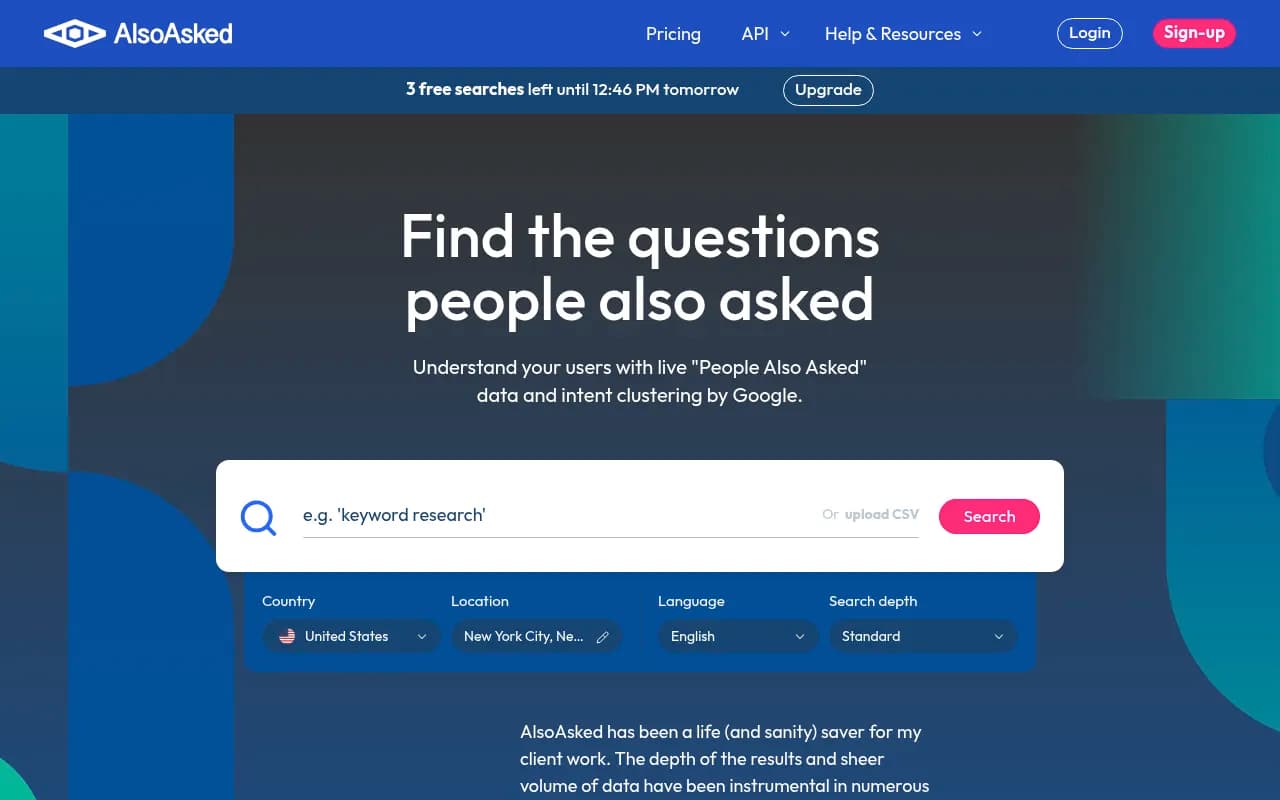
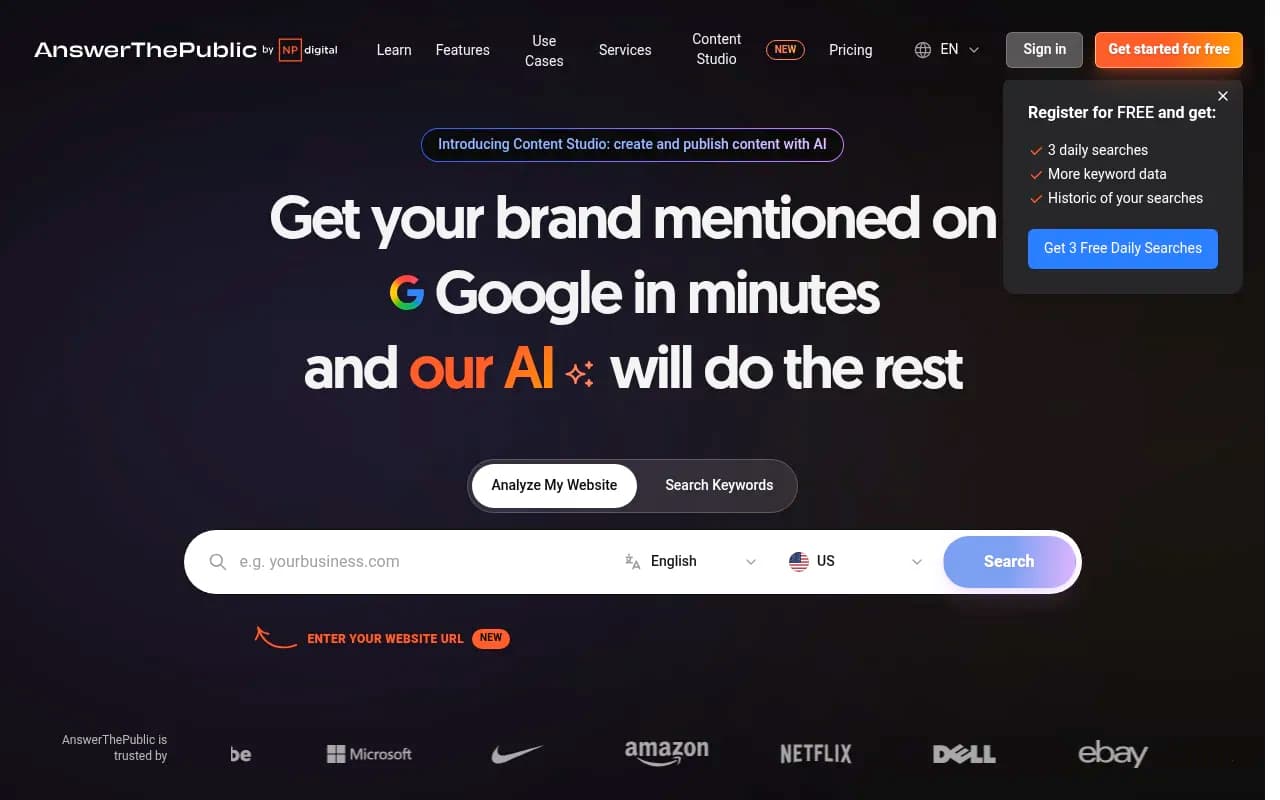
- People Also Ask boxes and related questions for your top topics. AlsoAsked and AnswerThePublic can speed this up.
- Reddit and community threads where your buyers phrase problems in their own words.
- Sales and support call transcripts. These are often the best source of real phrasing.
- Asking ChatGPT itself to brainstorm what an ideal customer would ask. It is a fine starter list, but treat it as a hypothesis and cross-check against Search Console.
Step 5: Set a run cadence and prompt variants
Because answers vary run to run, one daily check per prompt is thin and one weekly check is nearly useless for spotting trends. Searchable's advice is to match sampling frequency to the decision you need to make. If you are reporting monthly to a client, daily sampling with an average over the month is far more defensible than a single snapshot.
A few rules of thumb:
- Track each core prompt daily where your tool and budget allow it. Rankscale samples as often as hourly, according to Searchable's review.
- Add 2 or 3 phrasing variants for your most important prompts. If you only appear for one wording, you have a fragile win.
- Track by country, and by city if you serve local customers. The same prompt asked from different places can return different brands.
- Judge trends over weeks, not single days. A prompt that flips between cited and uncited across consecutive runs is noisy, not broken.
Tools that help with prompt selection
You can do all of this with Search Console and a spreadsheet, but the right tracker removes the manual steps. Here is how a few options compare on the parts that matter for this framework.
| Tool | Fan-out visibility | Best fit |
|---|---|---|
| Promptwatch | Fan-outs per response, prompt volumes and difficulty, Search Console suggestions | Teams that want to go from prompt picking to publishing fixes |
| Searchable | Fan-out counts per prompt and brands in those queries | Tracking all ChatGPT surfaces in one place |
| Rankability | Fan-out drop-down per prompt | Picking sub-queries to track directly |
| Rankscale | Search terms report, frequent sampling | High-frequency sampling |
| Cairrot | Free Chrome extension for live fan-outs | Quick manual checks before committing a prompt |
| SE Ranking | Keyword-to-prompt workflow from rank tracker exports | Teams already living in SE Ranking |

If you want to compare more options, the AI rank tracker directory at ai-rank-tools.com lists many of them side by side, and bestgeosoftware.com covers broader GEO platforms.
A repeatable prompt-selection workflow
Here is the whole thing in a form you can run this week.
- Export non-branded Search Console queries, sorted by impressions.
- Rewrite the top 50 to 100 into natural prompts, favoring long-tail ones.
- Run each through a fan-out viewer and discard prompts with no overlap to your content or business goals.
- Tag what survives by type, funnel stage, and persona. Isolate branded and competitor prompts.
- Trim to a starting set of 30 to 60. Add 2 or 3 variants for the 10 that matter most.
- Set a daily cadence and a monthly review. Add or drop 10 to 20% of prompts each review.
- Re-run fan-out checks after any major ChatGPT change.
Common mistakes
- Tracking only "best X" prompts. You will miss most of how people actually ask.
- Treating a single run as truth. It is one sample.
- Never refreshing the list. Search Console shows new queries every month, and ChatGPT's behavior changes without notice.
- Counting branded prompts toward category visibility.
- Picking prompts you can already win. A tracker full of easy wins feels good and teaches nothing.
What to do with the results
Prompt selection is only useful if the output leads somewhere. When a prompt shows you are absent, check the fan-outs, find the page that should answer them, and either create or rewrite it. Promptwatch's own guidance is to write headings that read like search queries, put the entity and category first in titles and H2s, and build focused pages for sub-questions such as comparisons, pricing, and alternatives. For citation patterns by content type, Promptwatch's ChatGPT citation share by content type report (Sep 28 to Oct 4, 2026) found product pages led at 22.4% of citations, followed by landing pages and listicles, which helps you decide what format to build for each prompt.
If you would rather hand the strategy and execution to a team, an agency such as 1001 SEO Media builds prompt sets, content, and tracking as part of its GEO work. Either way, the principle is the same: a small prompt set grounded in real demand, checked against fan-outs, and reviewed on a schedule will tell you more than a thousand guesses.