Key takeaways
- Claude synthesizes knowledge from training data and web search -- it doesn't crawl and rank pages in real time, so traditional SEO tactics alone won't get you cited
- Brands that appear repeatedly across authoritative, third-party sources are far more likely to be recommended than brands that only talk about themselves
- Content structure matters: Claude favors clear, specific, question-answering content over vague marketing copy
- Tracking your Claude visibility requires dedicated AI monitoring tools -- Google Analytics and Search Console can't see this channel
- The full loop is: find where you're invisible, create content that fills those gaps, then measure whether Claude starts citing you
When someone opens Claude and types "What's the best project management tool for remote teams?" or "Which CRM should a startup use?", your brand is either in that answer or it isn't. There's no page two. No "also consider" section buried below the fold. Claude synthesizes its knowledge and delivers a handful of names in seconds.
That's the new reality of brand discovery. And most marketing teams are still optimizing for a channel -- Google search -- while their prospects are getting answers somewhere else entirely.
This guide covers how Claude actually decides what to cite, what signals it responds to, and what you can do about it.
How Claude decides which brands to mention
Claude isn't a search engine. When you ask it for a recommendation, it's not running a live crawl and ranking pages by authority. It's drawing on patterns from its training data -- a massive corpus of web content, books, forums, and documents -- to synthesize a response that reflects what it "knows" about a topic.
This distinction matters more than most people realize. Claude's recommendations reflect what was written about your brand before its knowledge cutoff, not what's currently ranking on Google. If your brand had minimal authoritative coverage in the content Claude trained on, the model simply doesn't have enough signal to recommend you confidently.
Anthropic built Claude using Constitutional AI, a framework designed to make the model helpful, honest, and harmless. In practice, this means Claude rarely declares one product definitively "the best." You'll see phrases like "popular options include..." or "many teams find success with..." -- Claude hedges because it's trying to be accurate, not because it's being evasive.
The three information sources Claude draws from
Claude pulls brand information from three places:
Training data is the baseline. Brands with strong, consistent coverage across authoritative sources appear more reliably here. The catch: this data has a cutoff date and doesn't update in real time.
Web search extends Claude's knowledge when search is enabled (either by the user or by the integration they're using). Brands with current, authoritative web content benefit from this. If someone is using Claude with web search turned on, your recent content can influence the response.
MCP (Model Context Protocol) tools allow Claude to access structured data sources and APIs in enterprise deployments. This is more relevant for B2B scenarios where a company has connected Claude to internal databases or product catalogs.
For most brands, training data and web search are the channels that matter. And the signals that influence both are similar: authoritative, specific, widely-corroborated content about your brand.
What Claude actually responds to
Here's the honest version of what makes Claude more likely to mention your brand.
Corroboration across sources
Claude looks for consensus. If only your own website says you're "award-winning" or "industry-leading," that's marketing copy. If Clutch, Forbes, a relevant trade publication, and three independent blog posts all describe your brand in similar terms, that's signal.
This is what one guide from Mojo Creative Digital calls "reputation architecture" -- the idea that AI citation isn't about ranking higher, it's about being trusted across the internet. That framing is accurate. Claude is essentially asking: "What do credible, independent sources say about this brand?" If the answer is "not much," you won't appear.
Third-party mentions that carry weight include:
- Industry directories and review platforms (G2, Capterra, Clutch, Trustpilot)
- Coverage in trade publications and vertical media
- Expert roundups and comparison articles
- Podcast appearances and interviews
- Case studies cited by other organizations
- Academic or research references where applicable
Content that directly answers questions
Claude surfaces content that matches user intent. Not content that's optimized for a keyword -- content that actually answers the question someone is asking.
The practical difference: a page titled "Best Branding Agency Nashville | MOJO Creative Digital" is keyword-optimized. A page titled "What Should You Look for in a Healthcare Branding Agency?" is question-optimized. Claude is much more likely to pull from the second one because it's structured to answer a specific query.
This means your content strategy needs to shift from "what do we want to rank for" to "what questions do our prospects actually ask, and do we have clear, specific answers to those questions?"
Factual precision over vague claims
Claude has a strong preference for specific, verifiable information. "We've helped hundreds of companies grow" is vague. "We helped a 50-person SaaS company reduce churn by 23% in six months" is specific and citable.
This applies to your entire content footprint -- your website, your case studies, your press coverage. The more concrete and specific your claims, the more useful they are as training signal.
Structured, skimmable content
Claude processes text, and it processes structured text better than walls of prose. Content with clear headings, numbered lists, defined terms, and logical flow is easier for the model to extract and synthesize from.
This isn't just about readability for humans. It's about making your content "quote-worthy" -- easy to pull a specific, accurate claim from when Claude is assembling a response.
The five practical steps to improve your Claude visibility
1. Audit where you currently stand
Before doing anything else, find out whether Claude mentions your brand at all, and in what context. Run a set of prompts that your target customers would realistically ask -- category questions, comparison questions, problem-solution questions -- and record what Claude says.
Be systematic about this. Track:
- Whether your brand appears at all (mention rate)
- Where in the response it appears (first mention vs. buried)
- How Claude describes your brand (sentiment and accuracy)
- Which competitors appear instead of you
This baseline is essential. Without it, you're optimizing blind.
Tools like Promptwatch automate this process -- running hundreds of prompts across Claude and other AI models, tracking mention rates over time, and showing you exactly which prompts competitors are winning that you're not.

2. Build your third-party presence
This is the highest-leverage activity for most brands. If you're not already listed and reviewed on the major directories in your category, start there. G2, Capterra, Clutch, Trustpilot -- whichever ones are relevant to your space.
Then go broader. Pitch relevant trade publications. Get featured in expert roundups. Appear on podcasts. Contribute guest articles to industry sites. Every credible, independent mention of your brand is a data point that Claude can draw on.
The goal isn't volume for its own sake -- it's corroboration. You want multiple independent sources describing your brand in consistent, specific terms.
3. Rewrite your content around questions
Go through your existing content and identify pages that are written for keywords rather than questions. Rewrite them to directly answer the questions your prospects are asking.
A few formats that work particularly well for AI citation:
- "How to" guides with specific, actionable steps
- Comparison articles ("X vs. Y: which is better for Z use case")
- FAQ pages with precise, factual answers
- Case studies with specific metrics and outcomes
- Glossary pages that define terms in your category
The more directly your content answers a real question, the more useful it is as a source for Claude.
4. Fix your technical foundation
Claude's web search capability means ClaudeBot (Anthropic's crawler) needs to be able to access your content. Check that:
- ClaudeBot isn't blocked in your robots.txt
- Your key pages load quickly and render properly
- Your content isn't locked behind login walls or paywalls
- Your structured data (schema markup) is accurate and complete
This is often overlooked. A brand can have excellent content but still not get cited because the crawler can't access it properly.
5. Track, iterate, and close the loop
Getting cited by Claude isn't a one-time project -- it's an ongoing process. You need to monitor your visibility, identify where you're still invisible, create content to fill those gaps, and then measure whether it worked.
This cycle is where most brands fall short. They do the initial audit, make some content changes, and then never check whether anything improved. AI visibility tracking tools make this loop practical to run continuously.
Tools for tracking and improving your Claude visibility
The monitoring landscape has grown quickly. Here are some options worth knowing about.
For comprehensive AI visibility tracking and optimization:
Promptwatch covers Claude alongside 10 other AI models, with prompt-level tracking, competitor heatmaps, and built-in content gap analysis. The key differentiator is that it goes beyond monitoring -- it shows you which prompts competitors are winning that you're not, then helps you create content to close those gaps.
For brand mention monitoring:
For AI-specific visibility tracking:

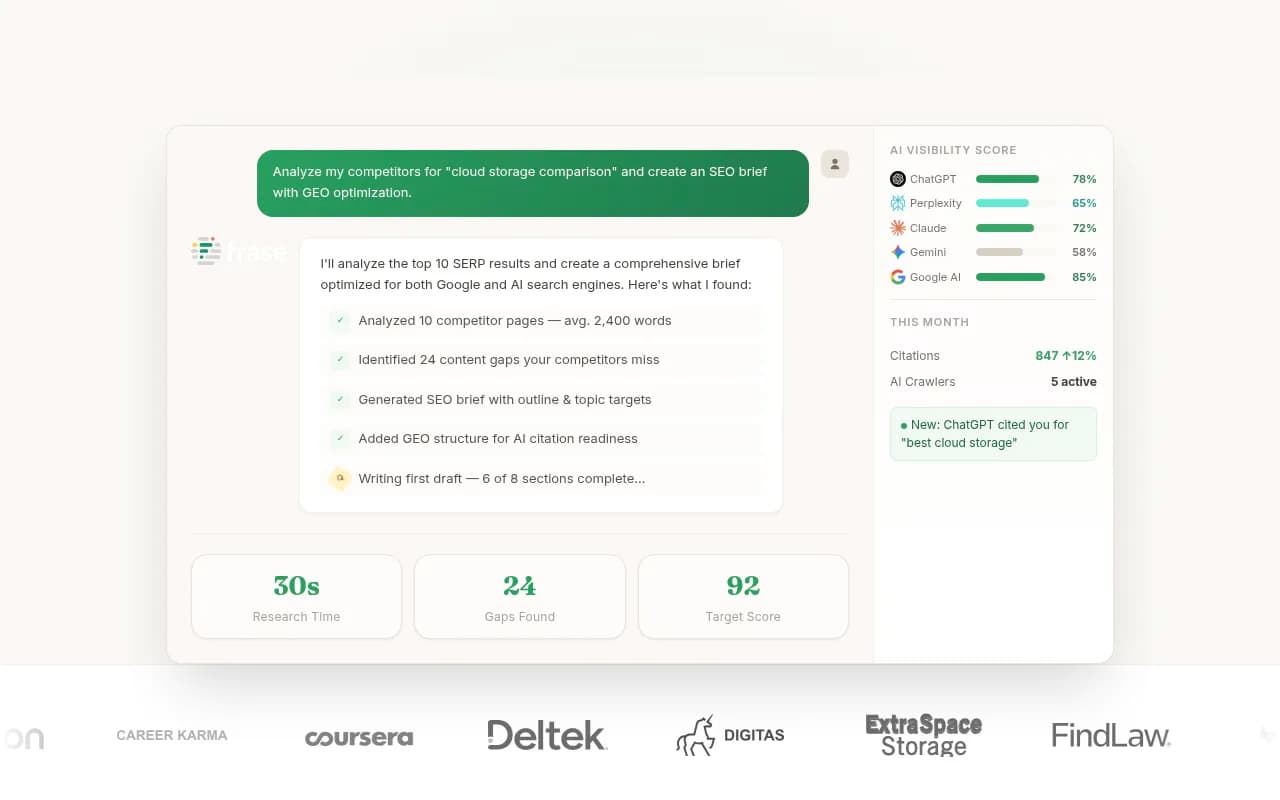
For content creation optimized for AI citation:
Comparison: AI visibility tools for Claude monitoring
| Tool | Tracks Claude | Content gap analysis | Content generation | Crawler logs | Pricing |
|---|---|---|---|---|---|
| Promptwatch | Yes | Yes | Yes (AI agent) | Yes | From $99/mo |
| Otterly.AI | Yes | No | No | No | From ~$29/mo |
| Scrunch AI | Yes | Limited | No | No | From $49/mo |
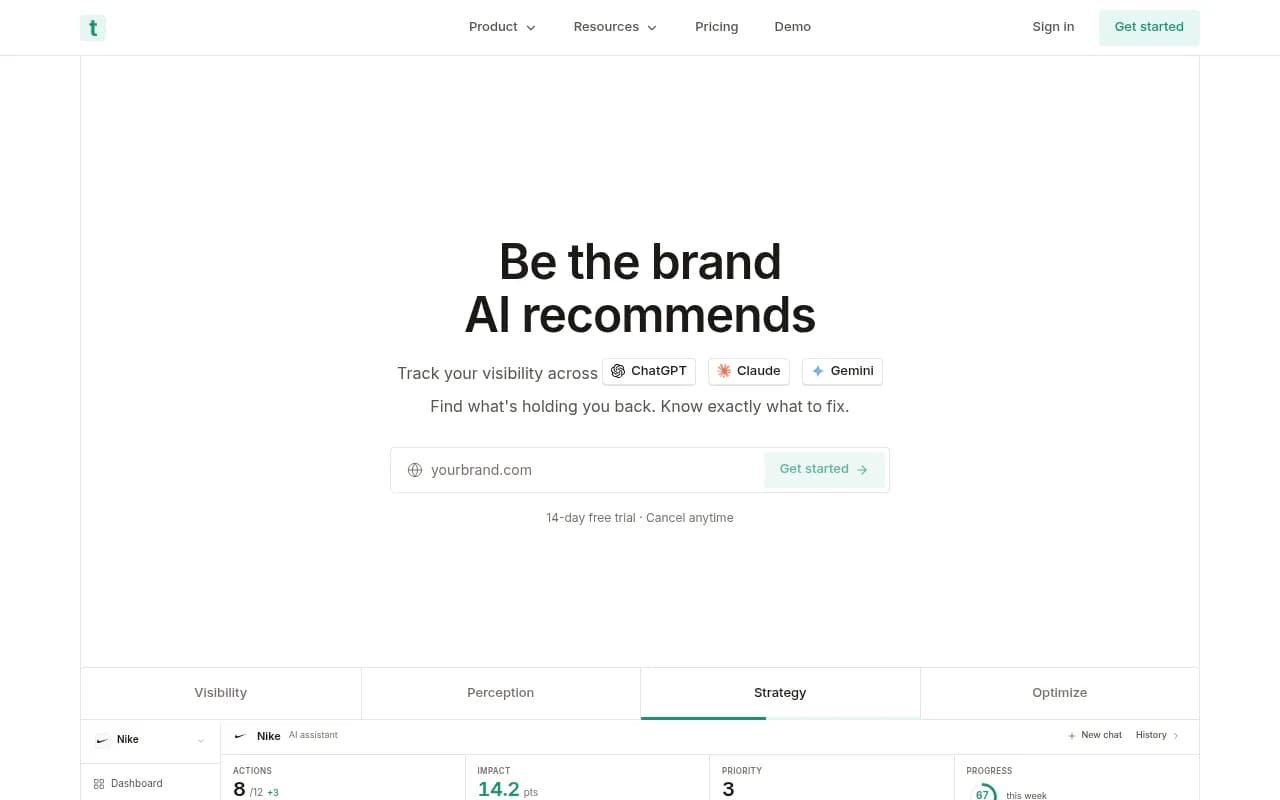
| Trakkr.ai | Yes | No | No | No | From $39/mo |
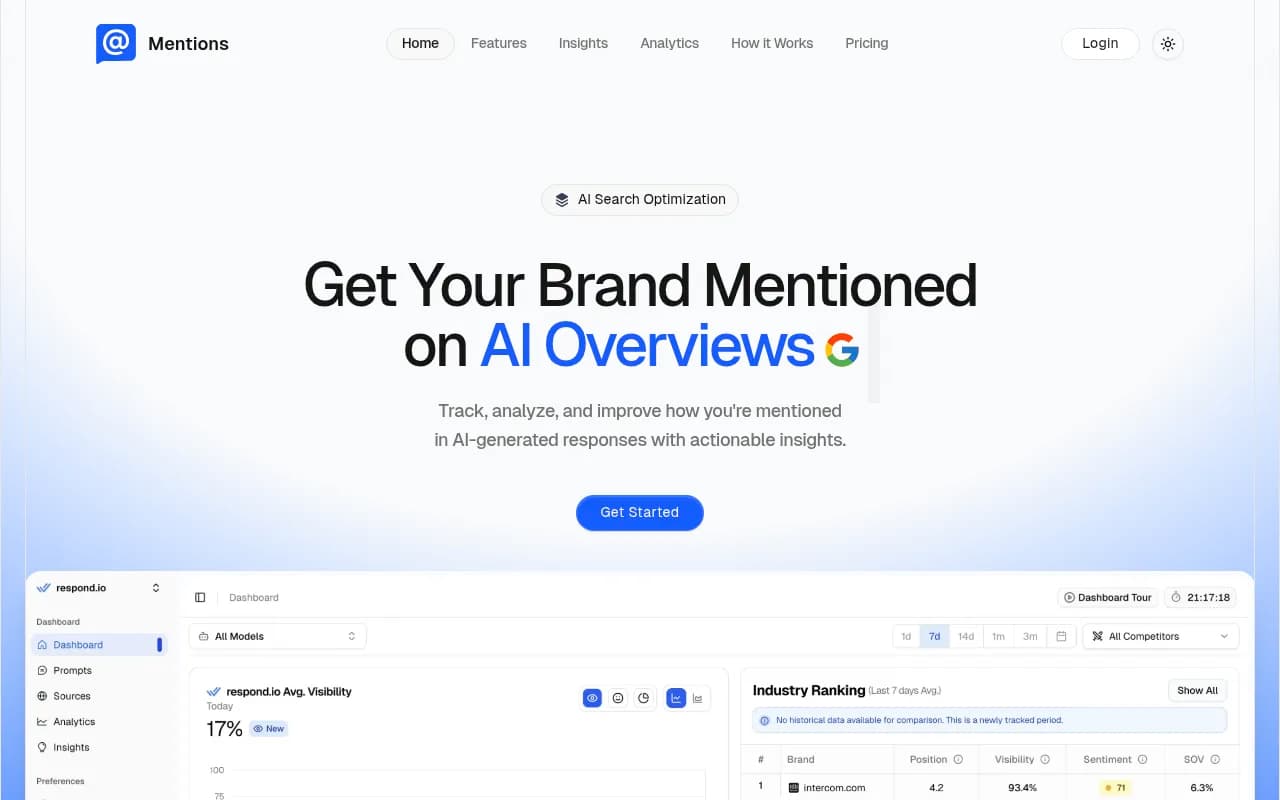
| Mentions.so | Yes | No | No | No | From $19/mo |
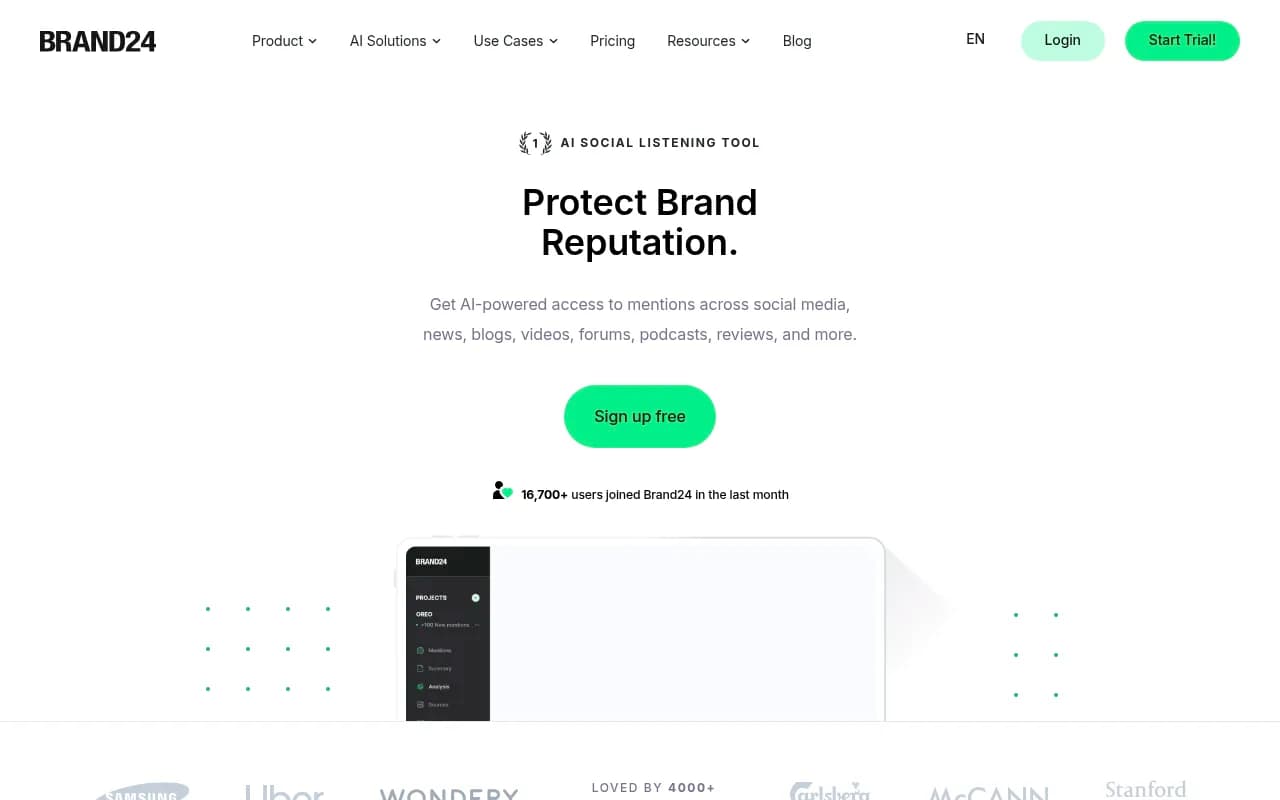
| Brand24 | Partial | No | No | No | From $99/mo |
The core difference between monitoring-only tools and platforms like Promptwatch is what happens after you see the data. Monitoring tells you that you're invisible for a given prompt. Optimization tells you why, and helps you fix it.
Common mistakes brands make
Optimizing for Google and hoping it transfers. Traditional SEO and AI citation optimization overlap but aren't the same thing. High Google rankings don't guarantee Claude mentions. The signals Claude responds to -- third-party corroboration, question-answering content, factual specificity -- require their own strategy.
Only talking about themselves. If your entire content footprint is your own website saying how great you are, Claude has no corroboration to draw on. You need independent sources making similar claims.
Ignoring the technical layer. Blocking ClaudeBot in robots.txt is a surprisingly common mistake. So is having key content behind login walls. If the crawler can't read it, it can't cite it.
Treating this as a one-time project. Claude's training data updates over time, and web search means recent content matters. Brands that continuously publish authoritative, question-answering content will accumulate citation signal over time. Brands that do a one-time content push and stop won't.
Using vague, unverifiable claims. "We're the leading provider of X" means nothing to Claude. "We've processed 50 million transactions across 12 countries" is specific and citable. Audit your content for vagueness and replace it with precision.
What the content that gets cited actually looks like
The pattern across well-cited brands is consistent. Their content tends to be:
- Written to answer a specific question, not to rank for a keyword
- Structured with clear headings and logical flow
- Specific and factual, with real numbers and outcomes
- Corroborated by independent sources that describe the brand similarly
- Accessible to crawlers without friction
One useful mental model: write content as if you're trying to be quoted in a Wikipedia article about your category. Wikipedia-style content -- neutral, specific, well-sourced, structured -- is exactly the kind of content that AI models learn to trust and cite.
The bigger picture
Claude's user base is growing, and the share of purchase decisions that start with an AI query rather than a Google search is increasing. The brands that invest in AI citation optimization now are building a compounding advantage -- more citations lead to more brand awareness, which leads to more third-party coverage, which leads to more citations.
The good news is that the fundamentals aren't mysterious. Be specific. Be corroborated. Answer real questions. Make your content accessible. Track what's working. These aren't exotic tactics -- they're just good content strategy applied to a new channel.
The brands that treat Claude visibility as a serious, measurable marketing objective in 2026 will be in a much stronger position than those still waiting to see if AI search "really matters."
It already does.