Key takeaways
- ChatGPT and other AI models pull answers from training data AND real-time web sources -- you need to be visible in both
- The core strategy is building "entity authority": getting your brand mentioned on the trusted sources AI models cite most
- Content structure matters as much as content quality -- AI models prefer clear, direct answers to specific questions
- Review platforms (G2, Capterra, Reddit) and earned media are often more influential than your own website
- Tracking your AI visibility is essential -- you can't improve what you can't measure
You've done the SEO work. Your site ranks. Your reviews look solid. Then you open ChatGPT and type: "What are the best tools for [your category]?" -- and your brand isn't there.
That gap is becoming a real business problem. Buyers are increasingly using ChatGPT, Perplexity, and Claude to research vendors before they ever visit a website. According to data cited by Surfer Academy, shoppers complete purchases 47% faster when assisted by AI. If you're not in those answers, you're invisible at the moment someone is actively trying to buy.
The good news: this isn't random. AI visibility is something you can systematically build. Here's how.
How ChatGPT actually decides what to recommend
Before jumping into tactics, it helps to understand the mechanism. ChatGPT generates answers from two sources:
-
Training data -- the static knowledge baked in during pre-training. If your brand was mentioned frequently across authoritative web sources before the training cutoff, you're more likely to appear in responses that don't require web search.
-
Real-time grounding (RAG) -- when ChatGPT uses its browsing capability (via Bing/SearchGPT), it fetches current web content to answer queries. This is where recent content and earned media matter most.
Your goal is to be retrievable in real-time search AND authoritative enough to be cited in the synthesized answer. These require slightly different strategies, but they reinforce each other.
The underlying concept is "entity authority" -- the degree to which AI models associate your brand name with specific problems, categories, and use cases. This is different from traditional SEO keyword ranking. You're not trying to rank a page; you're trying to become a recognized entity in the AI's understanding of your space.
Step 1: Audit where you stand right now
You can't fix what you can't see. Start by running a set of test prompts in ChatGPT, Perplexity, and Claude -- the kinds of questions your customers actually ask:
- "What's the best [product category] for [use case]?"
- "Compare [your category] tools"
- "What do people use for [problem you solve]?"
- "Is [your brand name] any good?"
Note which competitors appear and which don't. Note the sources ChatGPT cites when it does use web search. This tells you exactly where the gaps are and which sources you need to get mentioned on.
For ongoing tracking rather than manual spot-checks, tools like Promptwatch run these prompts automatically across multiple AI models and show you your visibility scores over time.

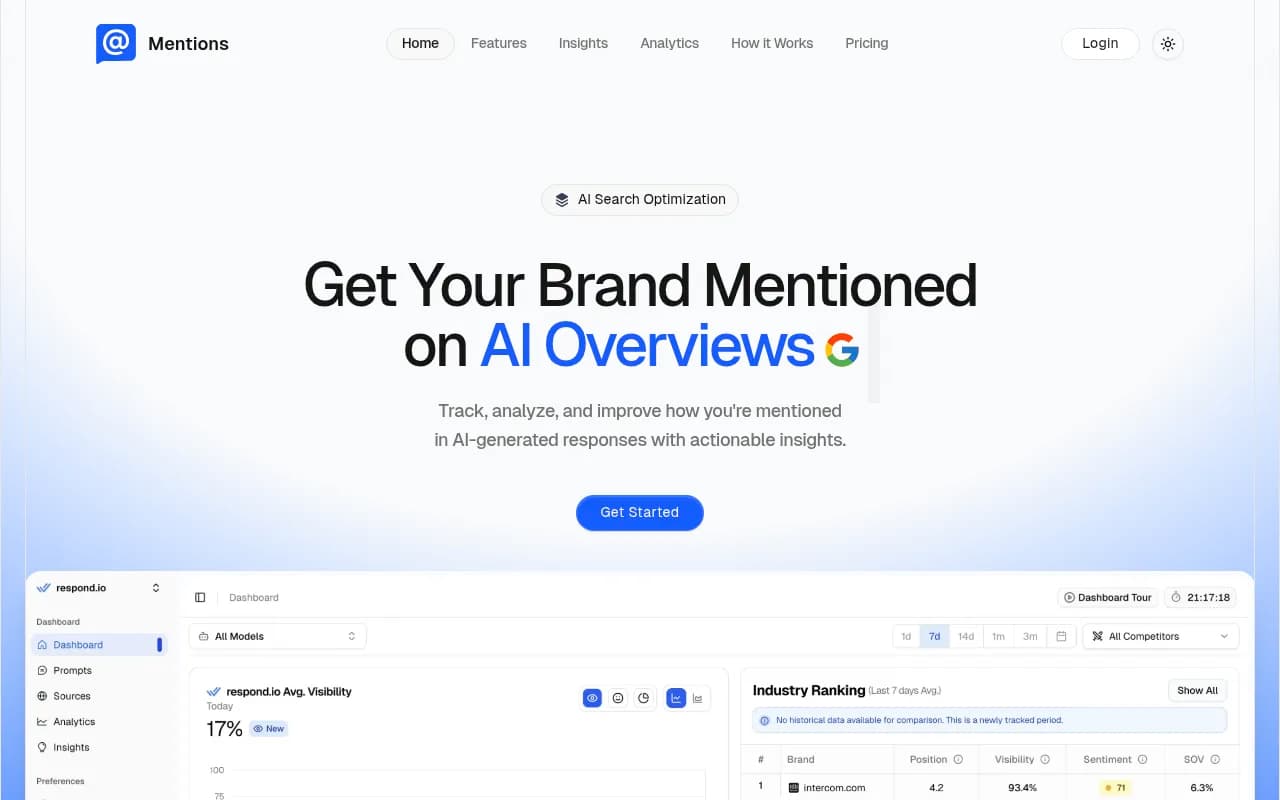
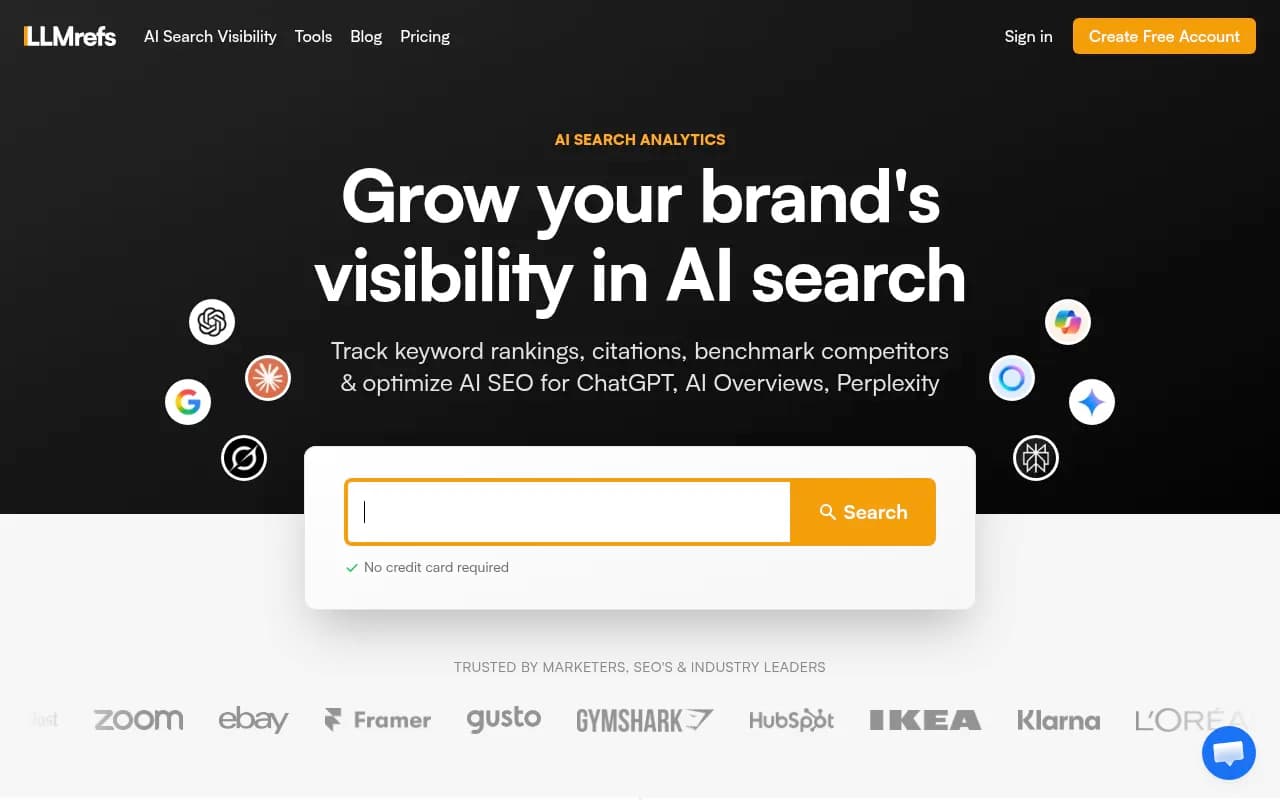
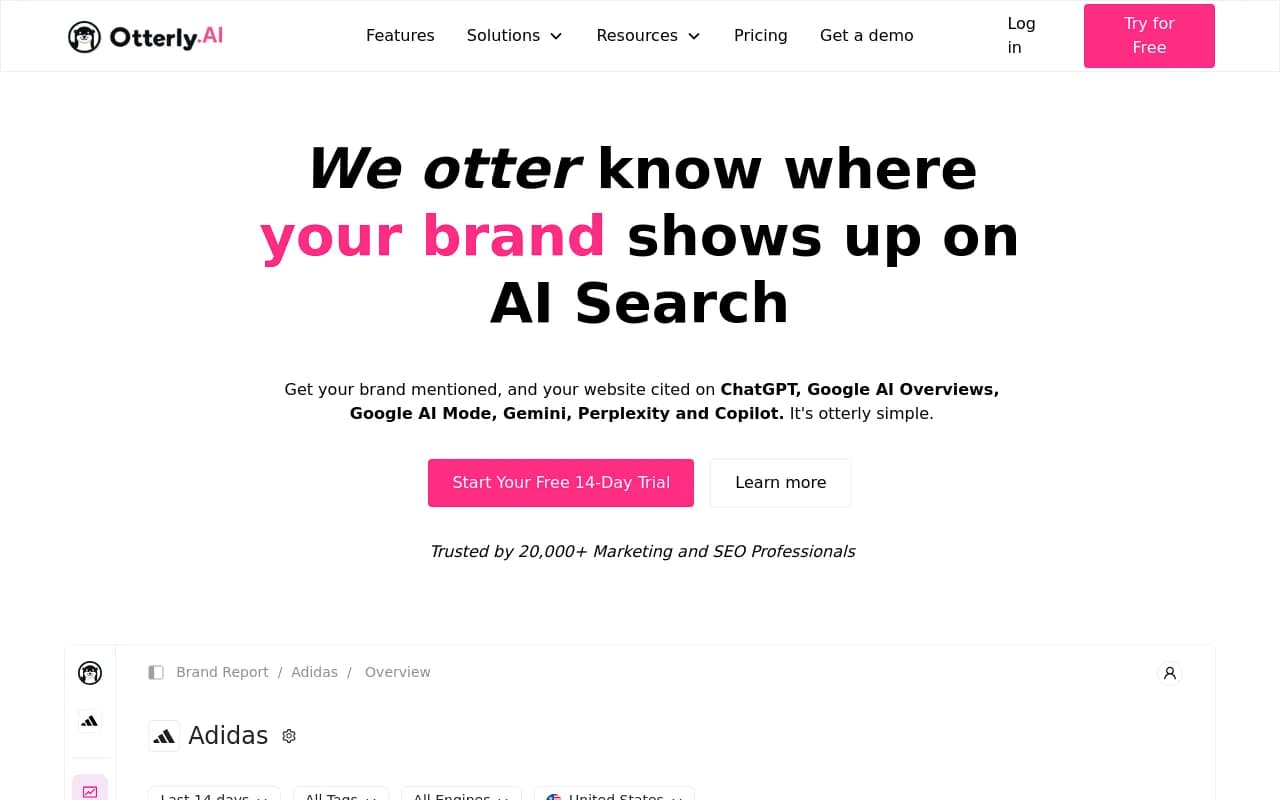
Other options worth knowing about:
Step 2: Build your citation network
This is the most important step, and the one most brands skip. Your own website is a weak signal compared to third-party mentions on sources AI models trust. Think of it like link building for traditional SEO -- except instead of links, you're building citations.
Review platforms
G2, Capterra, Trustpilot, and similar review aggregators are heavily cited by AI models. If you have 12 reviews on G2 and a competitor has 400, that's a visibility gap that goes beyond social proof -- it directly affects AI recommendations.
Prioritize:
- Getting more reviews on the platforms most relevant to your category
- Ensuring your product description uses the exact language customers use when searching
- Responding to reviews (this signals active presence and adds keyword-rich content)
Earned media and PR
Getting mentioned in industry publications, newsletters, and news sites creates the kind of high-authority citations that AI models weight heavily. A single mention in a well-known industry publication can do more for your AI visibility than dozens of blog posts on your own site.
Practical approaches:
- Pitch data-driven stories (original research gets cited more than opinion pieces)
- Offer expert commentary to journalists covering your space
- Get listed in "best of" roundups and comparison articles
According to authoritytech.io, earned media strategies produce 72% higher citation rates in AI answers compared to owned content alone.
Reddit and community forums
This one surprises a lot of people. Reddit threads are heavily indexed and frequently cited by AI models, especially for product recommendations and comparisons. Perplexity in particular pulls from Reddit constantly.
You can't fake this -- spammy brand promotion gets downvoted and flagged. But you can:
- Participate genuinely in subreddits relevant to your space
- Answer questions where your product is legitimately the right answer
- Make sure your brand name appears naturally in discussions about the problems you solve
Wikipedia and structured reference sources
If your brand is large enough, a Wikipedia page is worth pursuing. AI models treat Wikipedia as an extremely high-trust source. Even if you don't qualify for a full page, getting mentioned in relevant category articles helps.
Step 3: Optimize your own content for AI citation
Your website content still matters -- it just needs to be structured differently than traditional SEO content.
Write direct answers to specific questions
AI models are looking for content that directly answers the query. A blog post titled "The Ultimate Guide to Project Management" is less likely to be cited than one titled "How to manage remote engineering teams across time zones." The more specific and direct, the better.
Structure your content with:
- Clear question-and-answer sections
- Concise definitions of key concepts
- Specific claims backed by data
- FAQ sections that mirror how people actually prompt AI
Build topical depth, not just breadth
AI models favor sources that demonstrate genuine expertise on a topic. Publishing one article about your space isn't enough. You need a cluster of content that covers the topic from multiple angles -- the core concept, common problems, comparisons, how-tos, and edge cases.
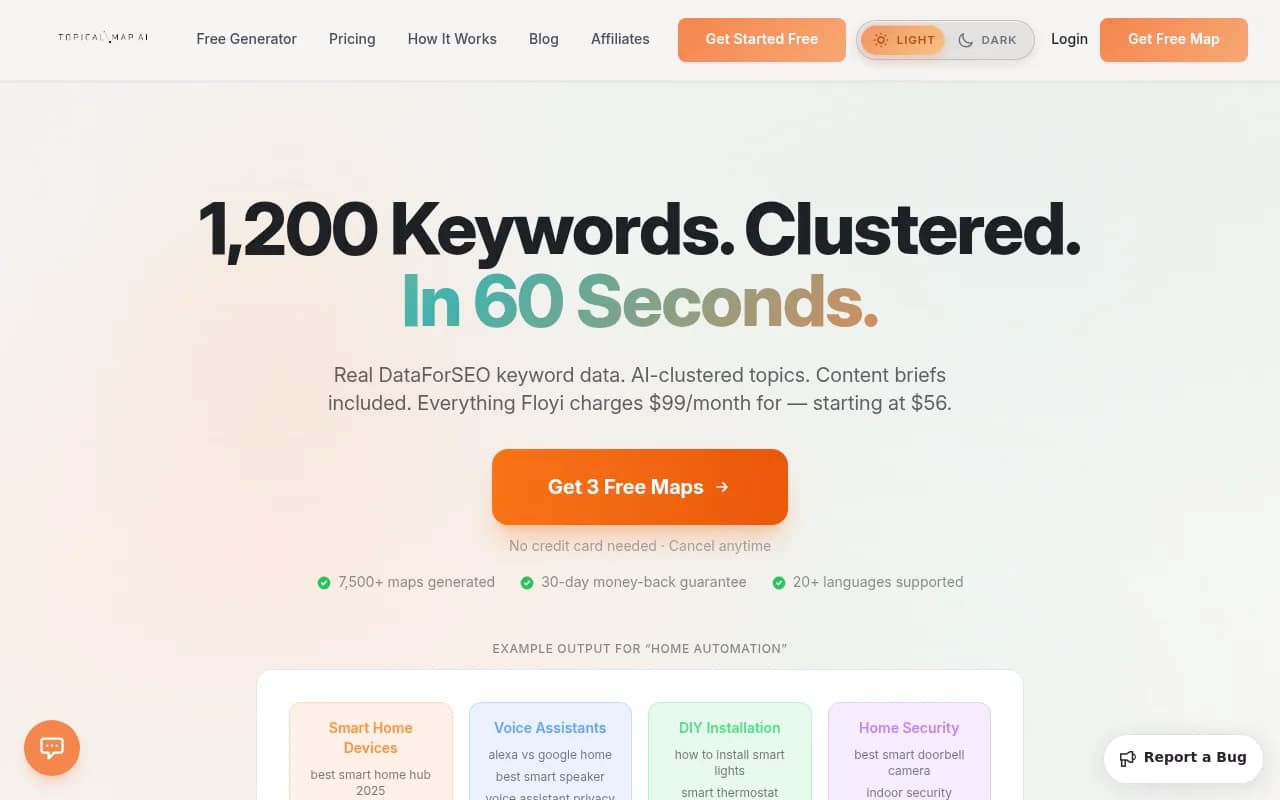
Tools like Topical Map AI can help you map out the full content territory you need to cover.
Associate your brand with specific problems
This is the "problem association" strategy from GEO research. Your brand name should appear consistently alongside the specific technical problems you solve -- in your own content, in press releases, in white papers, and ideally in third-party coverage.
If you sell project management software for engineering teams, you want "engineering team project management" and your brand name to appear together across as many authoritative sources as possible. Over time, this trains AI models to associate your brand with that problem.
Step 4: Create content that AI models want to cite
There's a meaningful difference between content that ranks in Google and content that gets cited by AI. The latter needs to be:
- Factually specific (AI models prefer concrete claims over vague assertions)
- Well-structured (clear headings, logical flow, no fluff)
- Genuinely useful (not keyword-stuffed filler)
- Authoritative (backed by data, research, or clear expertise)
Content formats that tend to get cited most:
- Comparison articles ("X vs Y: which is better for Z")
- Data-driven research pieces
- How-to guides with specific, actionable steps
- Definition pages that clearly explain industry concepts
For content creation at scale, tools like Jasper and Surfer SEO are widely used:
If you want content generation that's specifically grounded in AI citation data rather than traditional SEO signals, Promptwatch's built-in writing agent generates articles based on 880M+ citations analyzed -- so the output is engineered to match what AI models actually cite, not just what ranks in Google.
Step 5: Fix your technical foundation
AI crawlers behave differently from Google's crawler, and many brands have technical issues that prevent AI models from properly reading their content.
Make sure AI crawlers can access your site
Check your robots.txt file. Some sites inadvertently block AI crawlers like GPTBot (OpenAI), ClaudeBot (Anthropic), and PerplexityBot. If you're blocking these, you're invisible to real-time grounding.
Here's what to check in your robots.txt:
# Allow OpenAI's crawler
User-agent: GPTBot
Allow: /

# Allow Anthropic's crawler
User-agent: ClaudeBot
Allow: /

# Allow Perplexity's crawler
User-agent: PerplexityBot
Allow: /
Implement structured data
Schema markup helps AI models understand what your content is about. At minimum, implement:
Organizationschema with your brand name, description, and key attributesFAQPageschema for Q&A contentArticleschema for blog posts and guidesProductschema if you sell products
Page speed and crawlability
AI crawlers have limited patience for slow or broken pages. Run a technical audit to catch crawl errors, broken links, and slow load times. Tools like Botify handle this at enterprise scale:
Step 6: Monitor and iterate
AI visibility isn't a one-time project. The models update, competitors publish new content, and the sources AI models trust shift over time. You need ongoing monitoring to know what's working.
What to track
- Your brand's mention rate across key prompts (how often you appear when someone asks about your category)
- Sentiment -- when you are mentioned, is it positive, neutral, or negative?
- Which sources AI models cite when recommending competitors (these are your target citation sources)
- Which of your own pages are being cited and how often
Tools for monitoring
| Tool | Best for | Key feature |
|---|---|---|
| Promptwatch | Full-cycle optimization | Gap analysis + content generation + tracking |
| Otterly.AI | Budget monitoring | Simple prompt tracking |
| Mentions.so | Brand mention tracking | AI search mention alerts |
| LLMrefs | Multi-model tracking | Citation tracking across ChatGPT, Perplexity, Claude |
| Brand24 | Broader brand monitoring | 25M+ sources including AI platforms |
Putting it together: a realistic timeline
Getting your brand into ChatGPT answers isn't instant. Here's a rough timeline based on what practitioners are reporting in 2026:
Weeks 1-2: Audit current visibility, fix technical issues (robots.txt, schema), identify the top 10 citation sources in your category.
Weeks 3-6: Launch a PR/earned media push, optimize your G2/Capterra profiles, publish 4-6 pieces of AI-optimized content targeting specific questions.
Weeks 7-12: Build out topical depth with a content cluster, engage authentically on Reddit and relevant forums, track visibility scores weekly.
Month 3+: Iterate based on data. Double down on content formats and topics where you're gaining traction. Expand to new prompt categories.
Most brands see measurable improvement in AI visibility within 6-8 weeks of consistent effort, with significant gains by the 3-month mark.
The honest reality
Traditional SEO and AI visibility share a lot of DNA -- quality content, authoritative sources, technical accessibility -- but the weighting is different. AI models care more about third-party validation and less about on-page keyword density. They care more about being directly cited by trusted sources and less about domain authority in the abstract.
The brands winning in AI search right now are the ones that have built genuine reputations across the web: real reviews, real press coverage, real community presence. You can accelerate that with smart content and PR strategy, but there's no shortcut past actually being a brand worth recommending.
Start with the audit. Find out where you're invisible. Then work backward from the sources AI models actually trust in your category.