Key takeaways
- AI search work is a service line, not a feature. Package it as an audit, a monthly optimization retainer, and a reporting layer.
- Your tool stack needs three jobs covered: tracking (are we cited?), diagnosis (why or why not?), and execution (content and fixes). Many tools only do the first.
- Price in tiers with a setup fee plus a monthly retainer. Check your tool costs against your per-client margin before you quote anything.
- Promptwatch Data shows product and landing pages earn about 39% of ChatGPT citations, so most client wins come from fixing core pages, not from publishing more blog posts.
- The 60-day plan below gets you from zero to a sellable offer, a pilot client, and a repeatable report.
Why agencies are adding AI search now
Clients are asking the same question in different words: "Why doesn't ChatGPT mention us?" You can answer it with a shrug or with a service line. The second option pays better.
I'll be upfront about one limit. There is no settled industry price list for GEO retainers yet, and I did not find a reliable benchmark worth quoting. The pricing section below gives you a framework and example numbers to adapt, not a market rate. Test it against your own costs and your clients' budgets.
The good news is that AI search work overlaps heavily with what a decent SEO agency already does: technical health, content, authority, reporting. What is new is the measurement layer and a handful of platform-specific behaviors. If you want a sense of how an agency built around this looks, 1001 SEO Media runs technical SEO, content, digital PR and generative engine optimization as one practice, which is roughly the shape you are aiming for.
What you are actually selling
Before tools, decide the offer. Three layers cover most of it.
Layer 1: AI visibility audit
A one-off project. You measure how a client appears across ChatGPT, Google AI Overviews, Perplexity and Gemini for a defined set of prompts, compare against competitors, check whether AI crawlers can read the site, and list fixes. It works as a paid entry point and as a pilot-to-retainer bridge.
Layer 2: Monthly optimization retainer
The recurring work. Rewrite and restructure key pages, publish content that fills gaps, earn mentions on third-party sources AI cites, fix technical blockers. Output is measured in citations, visibility score and AI-referred traffic, not just rankings.
Layer 3: Reporting and monitoring
A dashboard or monthly report clients can read in five minutes. Agencies often underprice this. If the client can't see progress, they churn, even when the work is good.
What the data says you should optimize
Don't build the service on folklore. Use data on what AI engines actually cite, and attribute it properly in client decks.
Core pages beat blog volume
In Promptwatch's data for Sep 28 to Oct 4, 2026, product pages were 22.4% of ChatGPT citations and landing pages 16.8%. Together that is 39% of citations going to pages that describe what a company sells. For commercial prompts like "best CRM for small businesses", product pages, landing pages, listicles and comparisons make up almost 70%. Branded prompts lean on reviews more heavily: 5.6%, over three times their share across all prompts.
Practical meaning: your first sprint for any client should be their money pages, then roundup listings and reviews, then editorial content.
Content lifespan differs by type
Promptwatch's content half-life report tracked pages ChatGPT cited on July 6, 2026 for 90 days. Landing pages and docs stayed cited longest, while news lost half its pages within 36 days. If a client wants to lean on news-style posts, tell them they are signing up for constant refreshes.
Social strategy is engine-specific
From Sep 28 to Oct 4, 2026, ChatGPT got 0.46% of its citations from social platforms, while Google AI Overviews got 12.2%. Reddit specifically dropped from about 4% to 0.5% of ChatGPT citations on August 14, 2026. So "do more Reddit" is no longer a blanket recommendation. YouTube, Facebook and Instagram matter more for Google surfaces. Your service should set the social mix per engine and per client.
Query fan-outs shape headings
Promptwatch's ChatGPT query fanout data shows average searches per response moved from 2.15 in early December 2025 to about 1.84 in early March 2026, with query length shrinking to roughly six to eight words by April. The practical advice holds up: write headings that read like search queries, put the entity and category up front, and build focused pages for sub-questions like pricing, alternatives and X vs Y. Re-check the mapping after major model updates, since behavior shifts. For example, ChatGPT began using the site: operator at scale on August 8, 2026.
Authority is not what you think
In August 2026, sites with domain rank 46 to 75 earned almost half of ChatGPT citations, while DR 91 to 100 fell to about 3%. Mid-authority clients are not locked out. That is a useful line in a sales pitch to smaller brands.
For the wider dataset, the Promptwatch Data hub is worth bookmarking for client-facing citations.
The tool stack: three jobs
Tool shopping gets confusing fast, because the catalog of AI visibility products is huge. Sort them by job.
Job 1: tracking
Answers "are we mentioned and cited, and how do we compare?" Plenty of tools do this at low prices. Cheap trackers are fine for a quick audit, but they stop there.
Otterly.AI is an affordable option for basic tracking.

Peec AI is a monitoring-focused alternative.

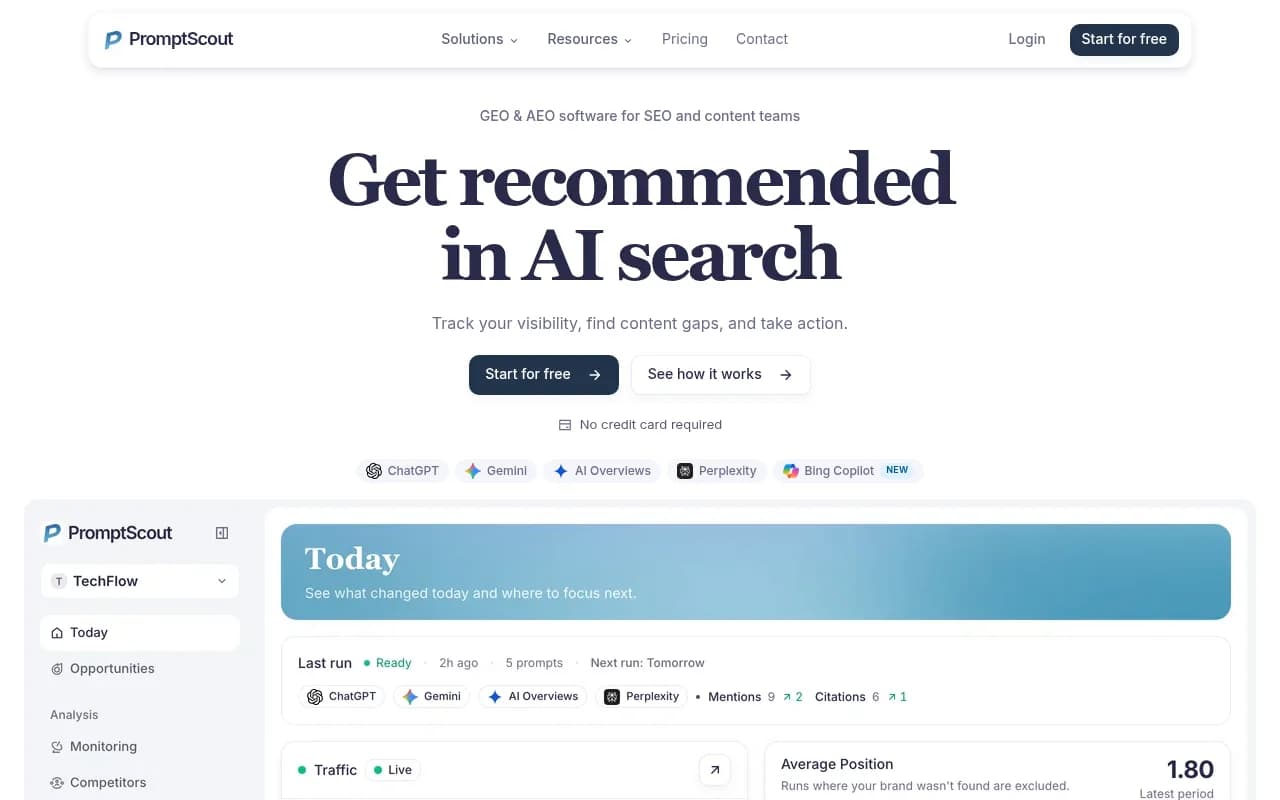
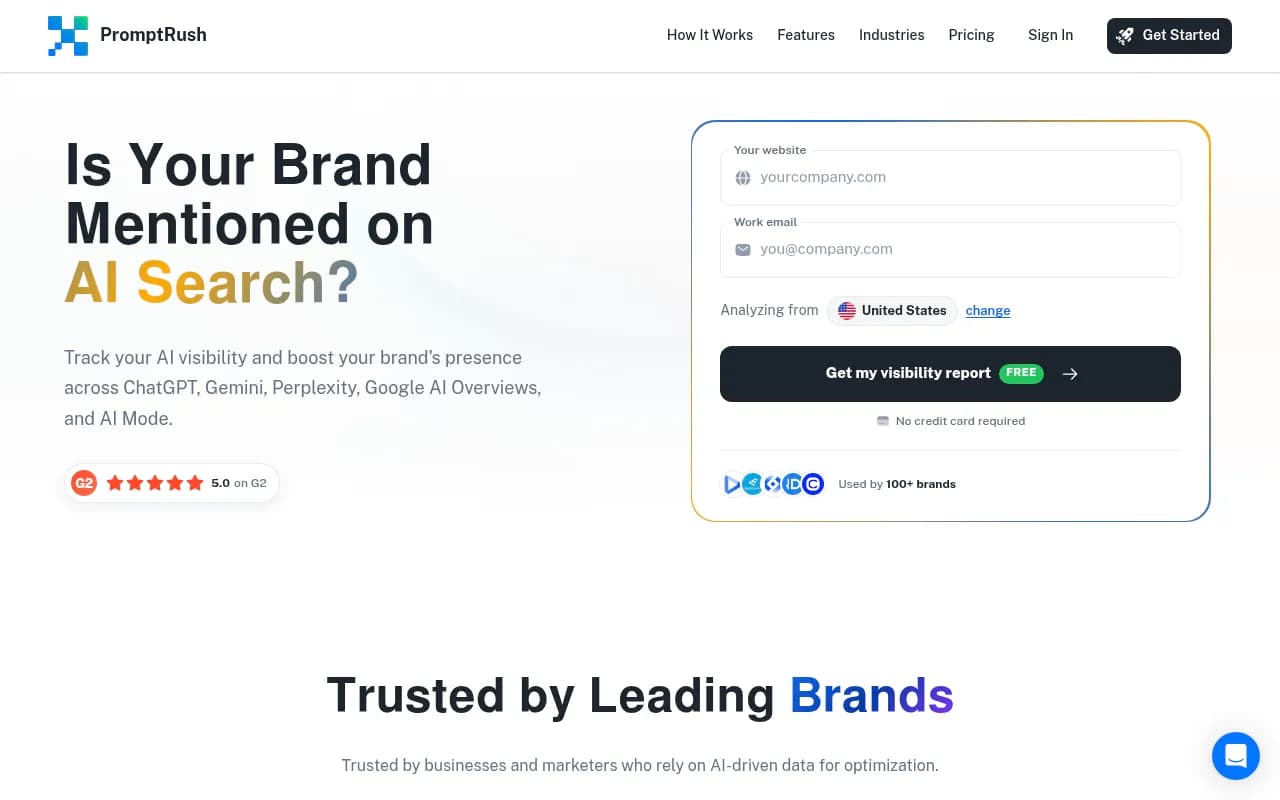
PromptScout and PromptRush are budget end-of-market choices if you only need a lightweight check for a pitch.
Job 2: diagnosis
Answers "why aren't we cited?" This needs crawler logs, citation analytics per page, and site audits. Without it you are guessing. Most trackers skip this layer.
Job 3: execution
Answers "what do we ship this week?" Content planning against gaps, publishing, and checking whether published pages got crawled and cited.
For an agency, the case for one platform covering all three jobs is simple: fewer tools to explain to clients, one report, and less time stitching exports together.
Promptwatch is the platform we would start with for that full stack. It tracks the real interfaces of ChatGPT, Google AI Overviews, AI Mode, Gemini, Perplexity, Copilot and others, logs AI crawler visits with IP verification, attributes AI-referred traffic, and has a Content Agent that plans, writes and publishes against visibility gaps. Agency plans include unlimited projects, white-label PDF reports and branded client access.

Other platforms worth evaluating, depending on your client mix:
Profound is an enterprise-oriented option with a higher price point.

Scrunch monitors and optimizes how assistants describe a brand.

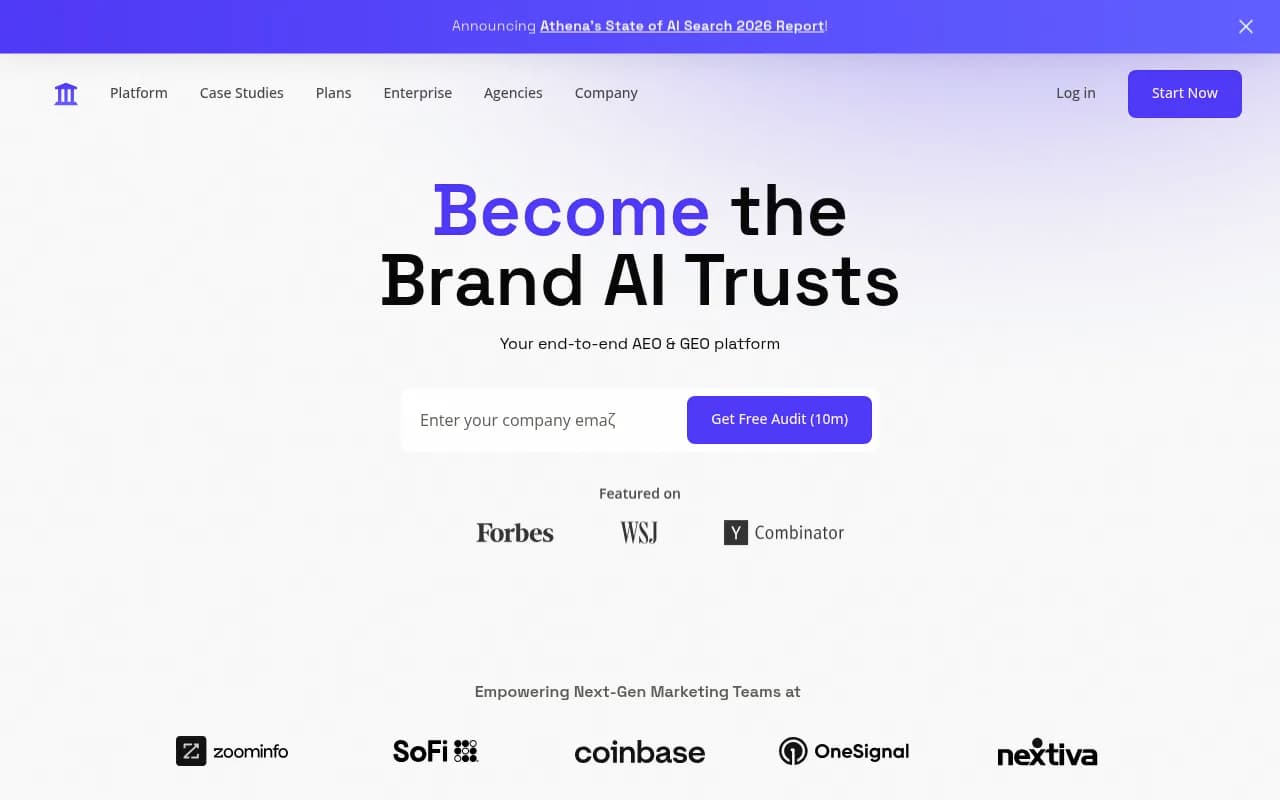
AthenaHQ is another monitoring-leaning platform.
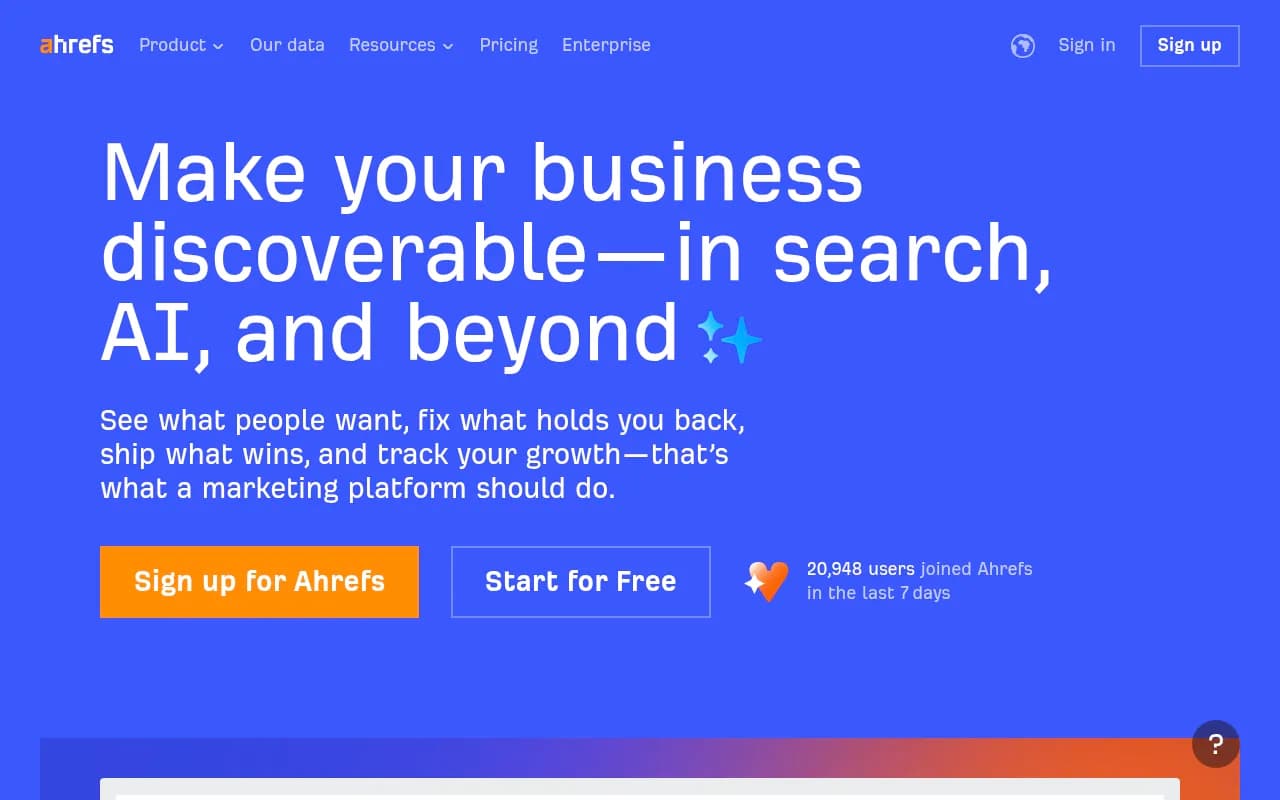
Semrush and Ahrefs Brand Radar add AI tracking to suites you may already pay for. They are convenient, but expect shallower AI-specific data than a dedicated platform.
If you want to browse more, the GEO software directory at bestgeosoftware.com lists many of these side by side.
Supporting tools you probably already own
Not everything has to be new. A crawler like Screaming Frog still finds the technical issues that block AI bots. Google Search Console gives you the query data that feeds prompt selection. AgencyAnalytics can hold the reporting wrapper if clients like to see everything in one place.
Comparison table
| Approach | Tracks mentions | Crawler logs and traffic | Content execution | Agency features | Fit |
|---|---|---|---|---|---|
| Budget trackers (Otterly.AI, Peec AI, PromptScout) | Yes | Generally no | No | Varies | Pitch audits, tiny budgets |
| SEO suite add-ons (Semrush, Ahrefs Brand Radar) | Yes, fixed prompt sets | Limited | No | Existing seats | Agencies already in the suite |
| Enterprise monitors (Profound, Scrunch) | Yes | Varies | Limited | Yes | Large brands with budget |
| Promptwatch | Yes, real UI data | Yes, IP-verified | Yes, Content Agent and CMS publishing | Unlimited projects, white-label reports | Full-service retainers |
Confirm current feature sets on each vendor's site before committing. Products in this category change quickly.
Pricing the service line
Know your floor first
Start with cost, not market guesses. Per client, add up the tool cost, the hours you will spend, and a buffer. Agency tiers of Promptwatch list at $199, $399 and $799 per month (confirm at promptwatch.com/pricing), and that cost is spread across all your clients, so per-client tool cost can be small. Your real cost is people's time.
A general reference for AI-related services from a Pickaxe pricing guide shows discovery sprints at $1,500 to $3,000 and monthly retainers anywhere from $2,000 to $50,000 depending on scope. That is general AI consulting, not GEO specifically, so treat it as context for how buyers think about AI work, not as a benchmark for your retainers.
A simple three-tier structure
The same guide recommends a hybrid of a one-time setup fee plus a monthly retainer. That fits GEO well. Here is an illustrative structure to adapt, with placeholder numbers you should set from your own costs:
| Tier | What is included | Structure |
|---|---|---|
| Audit | Prompt set, competitor benchmark, crawler and site check, prioritized fix list | One-time fee |
| Optimize | Audit plus monthly page rewrites, a set number of new pages, monthly report | Setup fee plus monthly retainer |
| Scale | Optimize plus offsite mentions work, multi-region tracking, weekly check-ins | Setup fee plus higher retainer |
For each tier, define volume (pages per month, prompts tracked, regions) rather than selling "AI optimization" vaguely. Vague scope is where margin goes to die.
Price against value, not hours
AI tooling will make you faster, which shrinks hourly billing. If a client's AI-referred traffic converts well, price toward that value. Promptwatch reports that Crisp saw 2x higher conversion rates from AI traffic compared with traditional channels. Use your own client data once you have it.
The 60-day rollout plan
Days 1 to 10: decide and equip
- Pick your first target client type (for example, B2B SaaS or multi-location local). Narrow beats broad.
- Shortlist two or three tools using the three-jobs framework. Trial the platform you would run client work on.
- Run an audit on your own agency site. You will learn the workflow, and you get a case study.
- Write down who owns what: strategist, content lead, technical SEO.
Days 11 to 20: build the offer
- Draft the three tiers with scope limits.
- Build an audit template: prompt set, competitor table, crawler findings, top ten fixes.
- Prepare a one-page explainer on how AI engines pick sources, using the data above.
- Set up a report template with visibility score, share of voice, citations by page, and AI-referred sessions.
Days 21 to 35: pilot with one to three clients
- Offer existing clients a discounted pilot audit in exchange for a testimonial or case study.
- Run audits. Focus on money pages first, since that is where the citation share is.
- Check crawler access early. A site that blocks AI bots can't be fixed with content alone.
- Ship quick wins: rewrite headings as query-style, add FAQ sections, fix errors.
Days 36 to 50: optimize and measure
- Publish content against gaps, matched to prompt intent (commercial prompts get comparisons and product pages, informational prompts get how-tos and docs).
- Pursue listings in roundups and review sites that AI cites in the client's category.
- Compare visibility before and after. Record what changed, including things you did not expect.
Days 51 to 60: package and sell
- Turn the pilot results into a two-page case study.
- Finalize pricing and a proposal template.
- Pitch your existing client base first. Upsell is easier than cold sales.
- Set a monthly cadence: report, review call, next-month action list.
Mistakes to avoid
- Promising rankings. AI answers vary by prompt, model, location and time. Sell improvement in visibility and citations, with ranges.
- Using one prompt set forever. Revisit prompts quarterly, since fan-out behavior changes with model updates.
- Copying the Reddit playbook for ChatGPT. See the numbers above.
- Buying tracking only. Mentions without a path to fix them leave you reporting problems you can't solve.
- Skipping crawler checks. The cheapest win is often a blocked bot.
Where to go next
If you are comparing platforms in depth, the GEO software directory and AI rank tracking directory cover the field. Start with a trial, run your own site through it, and have an audit template ready within two weeks. The service line gets real the first time a client sees a page of theirs cited after you changed it.