Key takeaways
- GrowthBar, Frase, and Outranking are all solid AI content tools, but they were built for Google rankings, not AI citations -- and that distinction matters more every month.
- Frase rebuilt its product from scratch in early 2026 to treat AI visibility as a first-class feature, not a bolt-on. It's the most evolved of the three.
- GrowthBar is the fastest to use for keyword research and drafting, but it lacks any meaningful AI citation tracking.
- Outranking has the most structured workflow for long-form SEO content, but its AI visibility features remain thin.
- If your goal is to appear in ChatGPT, Perplexity, or Google AI Overviews, none of these three tools alone is sufficient -- you'll need a dedicated GEO layer on top.
The question sounds simple: which AI SEO tool drives the most ChatGPT citations? But answering it honestly requires separating two things that the industry has been conflating for years -- ranking on Google and getting cited by AI models. They overlap, but they're not the same thing.
GrowthBar, Frase, and Outranking were all built primarily for the first goal. They help you research keywords, structure content, and optimize for search engine rankings. Whether they also help with the second goal -- getting your content picked up by ChatGPT, Perplexity, Claude, or Google AI Overviews -- is a newer and more complicated question.
This guide works through each tool honestly, then looks at what the citation data from 2025 actually tells us about which content strategies worked.
What each tool actually does
Before comparing citation outcomes, it helps to understand what you're working with.
GrowthBar
GrowthBar is probably the most accessible of the three. It's built around ChatGPT-4 powered content generation, keyword research, and competitive analysis. The workflow is fast: enter a keyword, get an outline, generate a draft, optimize it. For solo bloggers, small marketing teams, and agencies that need volume, it's genuinely useful.
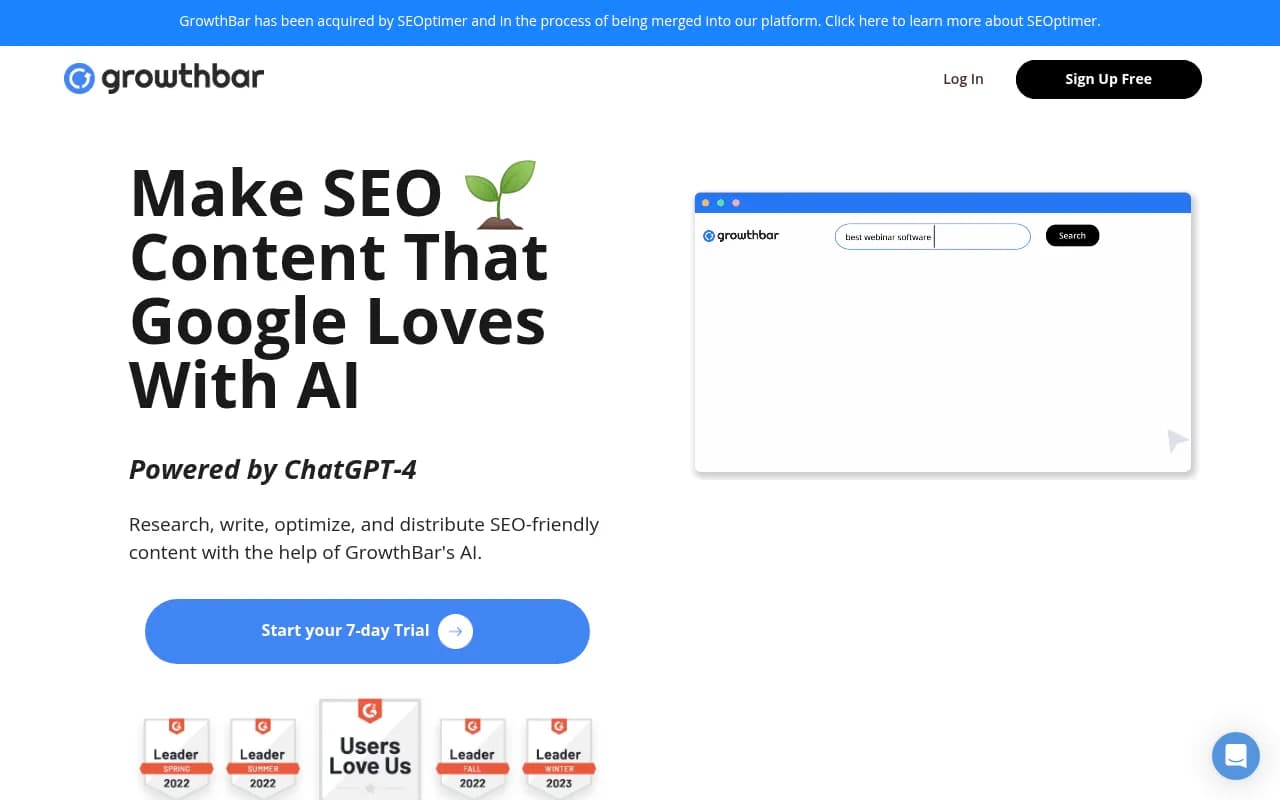
What GrowthBar does well is speed. You can go from keyword to publishable draft in under 30 minutes. The keyword research pulls in real data, and the AI-generated outlines are usually structurally sound. It also has a site auditing feature and basic backlink analysis.
What it doesn't do: there's no AI citation tracking, no visibility into how AI models perceive or cite your content, and no mechanism to understand why a competitor's page gets referenced in ChatGPT responses while yours doesn't.
Frase
Frase has been in the content optimization space longer than most. The original product was built around the same core mechanic as Surfer SEO and Clearscope: analyze top-ranking pages, extract keyword targets, give you a score to hit. It worked reasonably well for Google SEO.
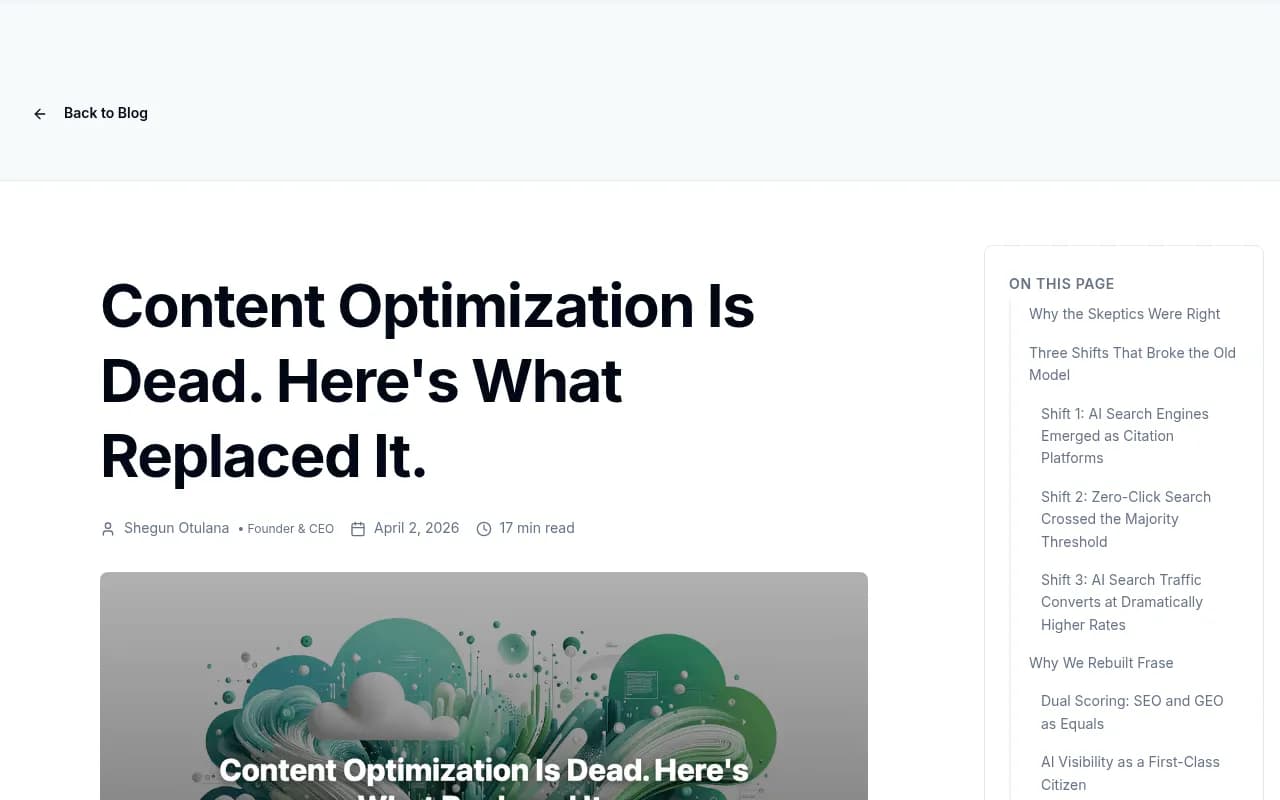
But in early 2026, Frase's founder Shegun Otulana published a candid post acknowledging that this model was broken. A Reddit thread in r/seogrowth had called out the entire category: the tools make content less readable, they don't account for LLMs, and they lack any "LLM/Rankbrain/Gemini friendliness metric." Otulana's response wasn't defensive -- he agreed, and announced that Frase had been rebuilt from scratch in January 2026.
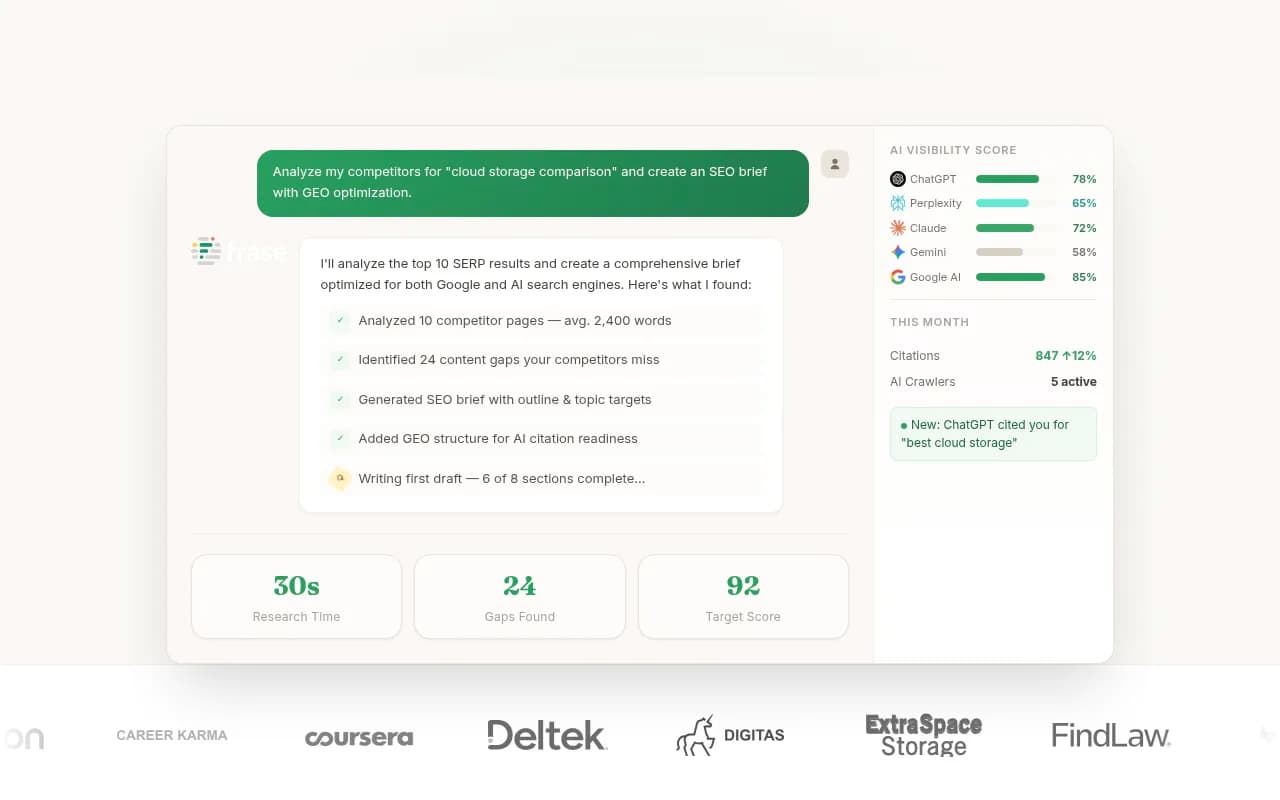
The new Frase includes GEO scoring alongside traditional SEO scoring, a "Content Watchdog" feature for monitoring AI visibility changes, and agentic workflows that can autonomously fix content gaps. That's a meaningful shift. Whether the execution matches the ambition is something users will need to test, but the direction is right.
Outranking
Outranking sits in a slightly different position. It's more structured than GrowthBar and more workflow-oriented than Frase. The platform is built around a step-by-step content creation process: keyword research, SERP analysis, brief generation, AI-assisted drafting, and on-page optimization. It has strong CMS integrations and is often cited as one of the better tools for teams that need a repeatable content production process.
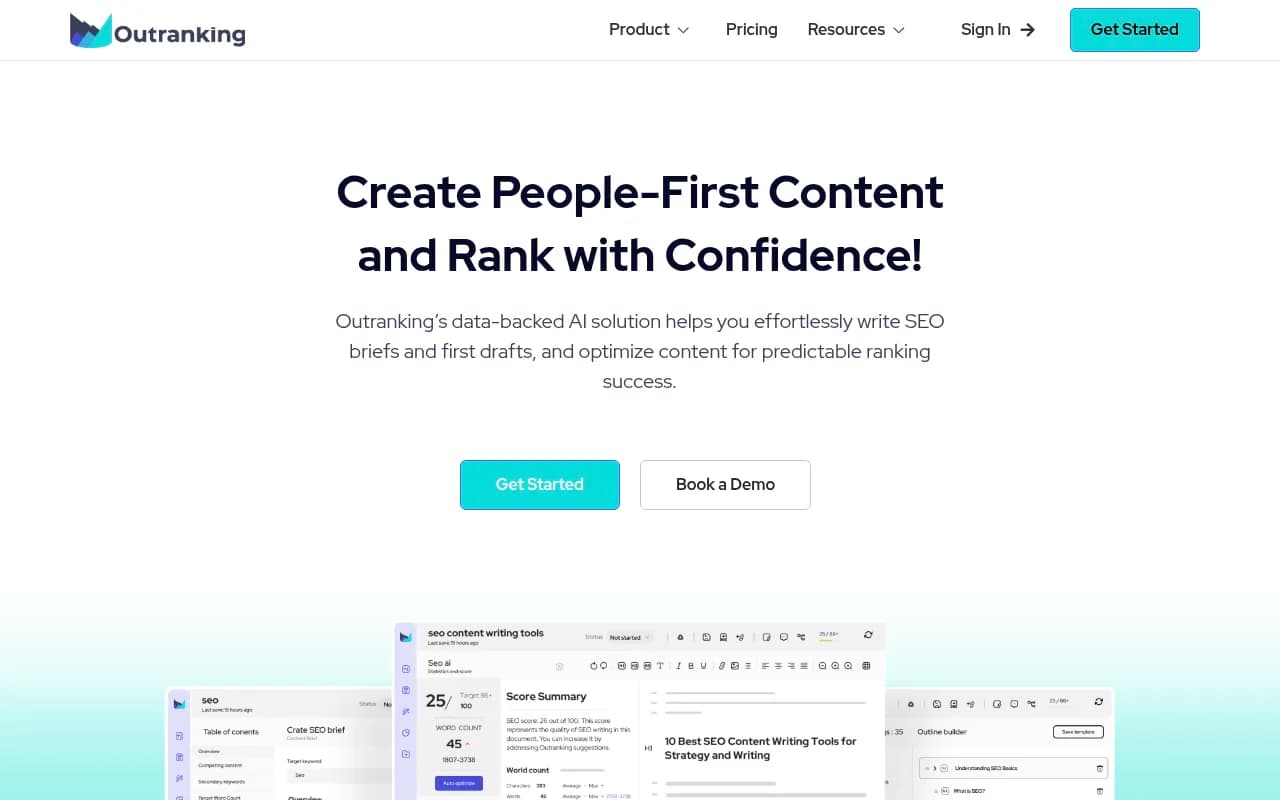
Where Outranking stands out is in its internal linking automation and its SERP-grounded content briefs. Where it falls short, at least through 2025, is in AI citation visibility. The platform doesn't show you whether your content is being cited by AI models, which prompts trigger citations, or how you compare to competitors in AI search responses.
The 2025 citation picture: what the data shows
Here's the uncomfortable truth: none of these three tools was designed to optimize for AI citations. They were designed to optimize for Google rankings. And while there's meaningful overlap between "content that ranks on Google" and "content that gets cited by AI models," the two aren't identical.
The content that gets cited by ChatGPT, Perplexity, and Claude tends to share certain characteristics:
- It answers specific, well-defined questions directly and early in the page
- It's structured in ways that are easy for AI models to parse (clear headings, concise paragraphs, factual claims)
- It comes from domains that AI crawlers visit frequently and trust
- It covers topics with sufficient depth that AI models see it as authoritative
Traditional SEO optimization -- hitting a keyword density target, matching the word count of top-ranking pages -- doesn't reliably produce these characteristics. In fact, the Frase founder's post makes exactly this point: the old scoring model optimized for ranking signals that don't translate cleanly to AI citation signals.
So which tool drove the most ChatGPT citations in 2025? The honest answer is: the tool mattered less than the content strategy. Teams that were intentionally writing content to answer specific questions, structuring it for AI readability, and publishing on authoritative domains saw citation gains regardless of which tool they used to produce the content.
That said, Frase's rebuilt platform is the only one of the three that's explicitly trying to close this gap. GrowthBar and Outranking are still primarily Google-first tools.
Feature comparison
| Feature | GrowthBar | Frase | Outranking |
|---|---|---|---|
| AI content generation | Yes (GPT-4) | Yes | Yes |
| Keyword research | Yes | Yes | Yes |
| Content briefs | Yes | Yes | Yes |
| SERP analysis | Basic | Yes | Yes |
| On-page optimization scoring | Basic | Yes (rebuilt) | Yes |
| GEO / AI visibility scoring | No | Yes (new in 2026) | No |
| AI citation tracking | No | Partial | No |
| CMS integrations | Limited | Yes | Yes (strong) |
| Internal linking automation | No | No | Yes |
| Content Watchdog / monitoring | No | Yes (new) | No |
| Agentic content fixes | No | Yes (new) | No |
| Pricing (entry) | ~$29/mo | ~$45/mo | ~$79/mo |
Where each tool fits in 2026
GrowthBar: best for fast, volume-driven content
If you're producing a lot of content and need to move quickly, GrowthBar is hard to beat on speed and simplicity. The GPT-4 integration is well-implemented, and the keyword research is solid enough for most use cases. It's not the right tool if AI citation visibility is a priority, but for teams that are still primarily optimizing for Google and need to scale output, it does the job.
Frase: best for teams making the transition to AI-first SEO
The rebuilt Frase is the most interesting of the three right now, precisely because it's in transition. The old product was a competent but conventional content optimization tool. The new product is trying to be something more: a platform where AI visibility is treated with the same seriousness as Google rankings. If the execution holds up, it could be the most useful of the three for teams that are starting to think about GEO seriously.
Outranking: best for structured, workflow-driven content teams
Outranking's strength is process. If you have a content team that needs a repeatable, auditable workflow -- from keyword research through publishing -- Outranking provides more structure than the other two. The internal linking automation is genuinely useful at scale. But if you want to understand your AI citation footprint, you'll need to look elsewhere.
The gap these tools don't fill
All three tools share the same blind spot: they can help you create content, but they can't tell you whether that content is actually being cited by AI models, which prompts trigger those citations, or what you need to change to improve your AI visibility.
That gap is real and growing. As more search queries get answered directly by ChatGPT, Perplexity, and Google AI Overviews without users clicking through to websites, the question of AI citation visibility becomes as commercially important as Google rankings.
Tools built specifically for this problem -- tracking which prompts mention your brand, which pages get cited, and what content gaps exist -- are a different category from content creation tools. Promptwatch is one example: it monitors your visibility across 10 AI models, shows you which competitor pages are getting cited when yours aren't, and includes a content generation layer specifically designed to close those gaps.

The distinction matters because content creation tools (GrowthBar, Frase, Outranking) and AI visibility platforms are solving different problems. The former help you produce content; the latter help you understand whether that content is working in AI search. Frase is the only one of the three that's actively trying to bridge these two worlds, but it's still early.
Other tools worth considering alongside these three
If you're building a content stack for 2026, a few other tools are worth knowing about:
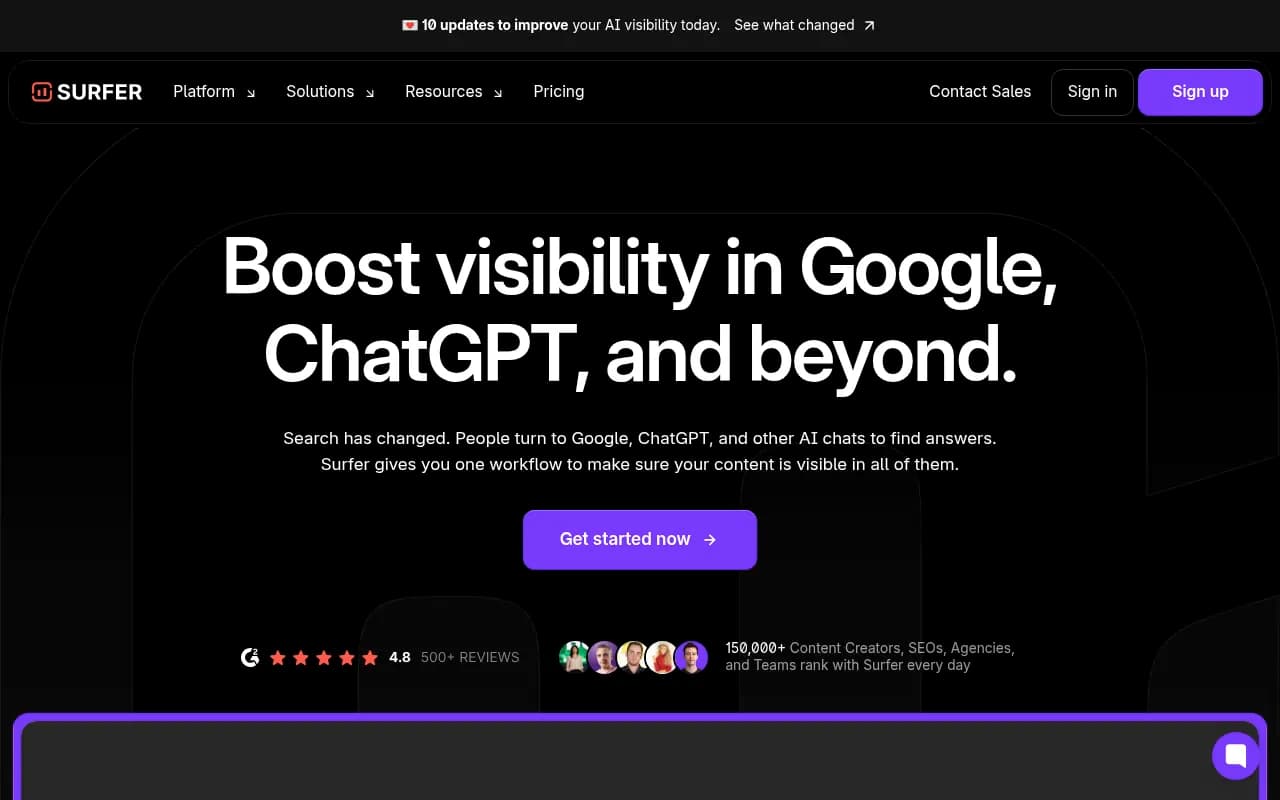
Surfer SEO remains one of the strongest on-page optimization tools for Google SEO, with a more mature feature set than GrowthBar for content scoring.
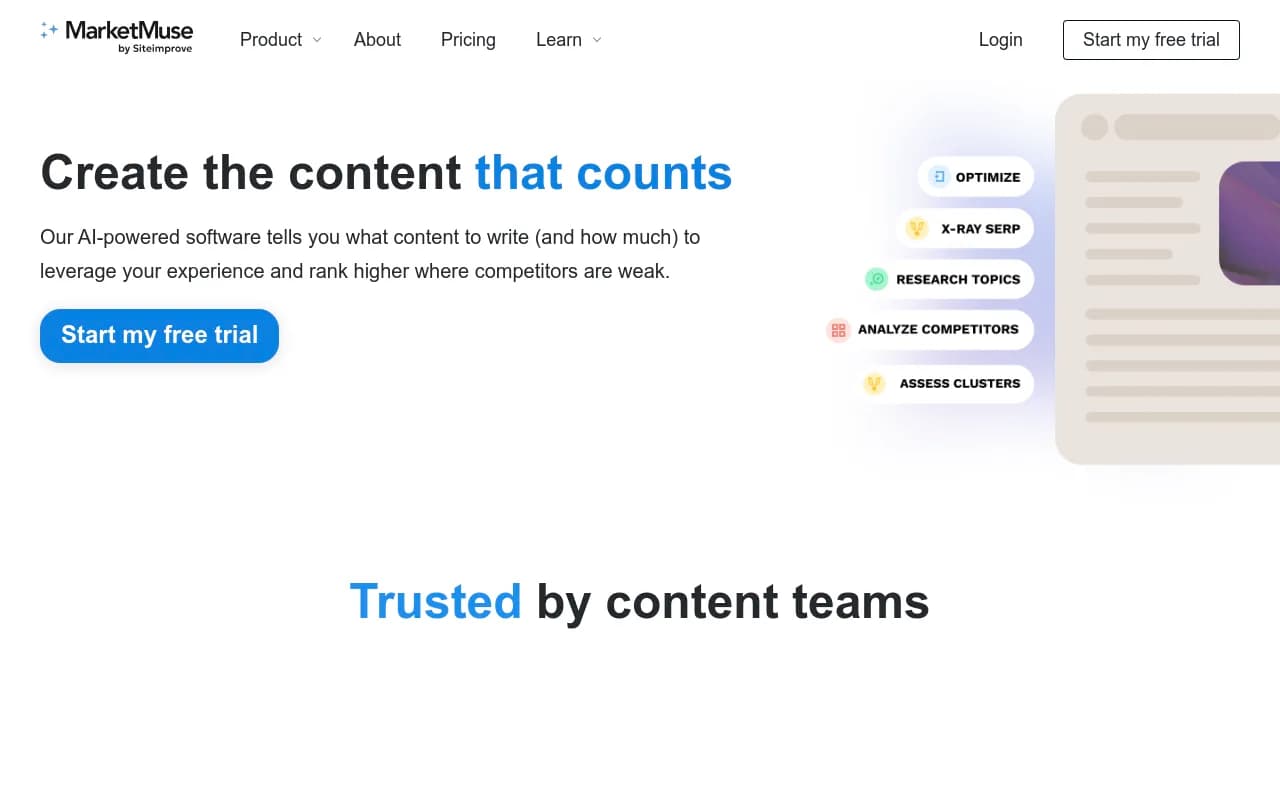
MarketMuse takes a more strategic approach to content planning, helping you identify topical authority gaps rather than just optimizing individual pages.
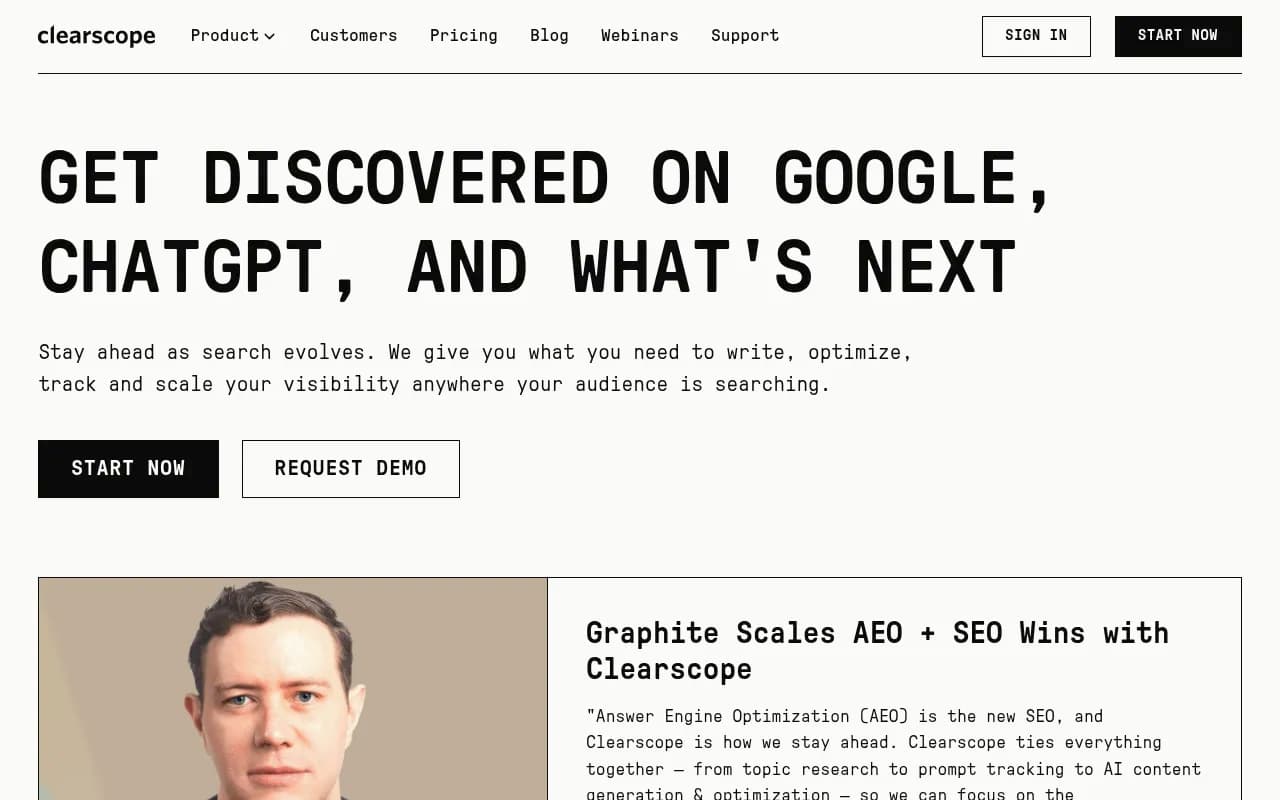
Clearscope is the cleanest, most focused content optimization tool in the category -- no bloat, just solid keyword and semantic analysis for writers who want to stay in flow.
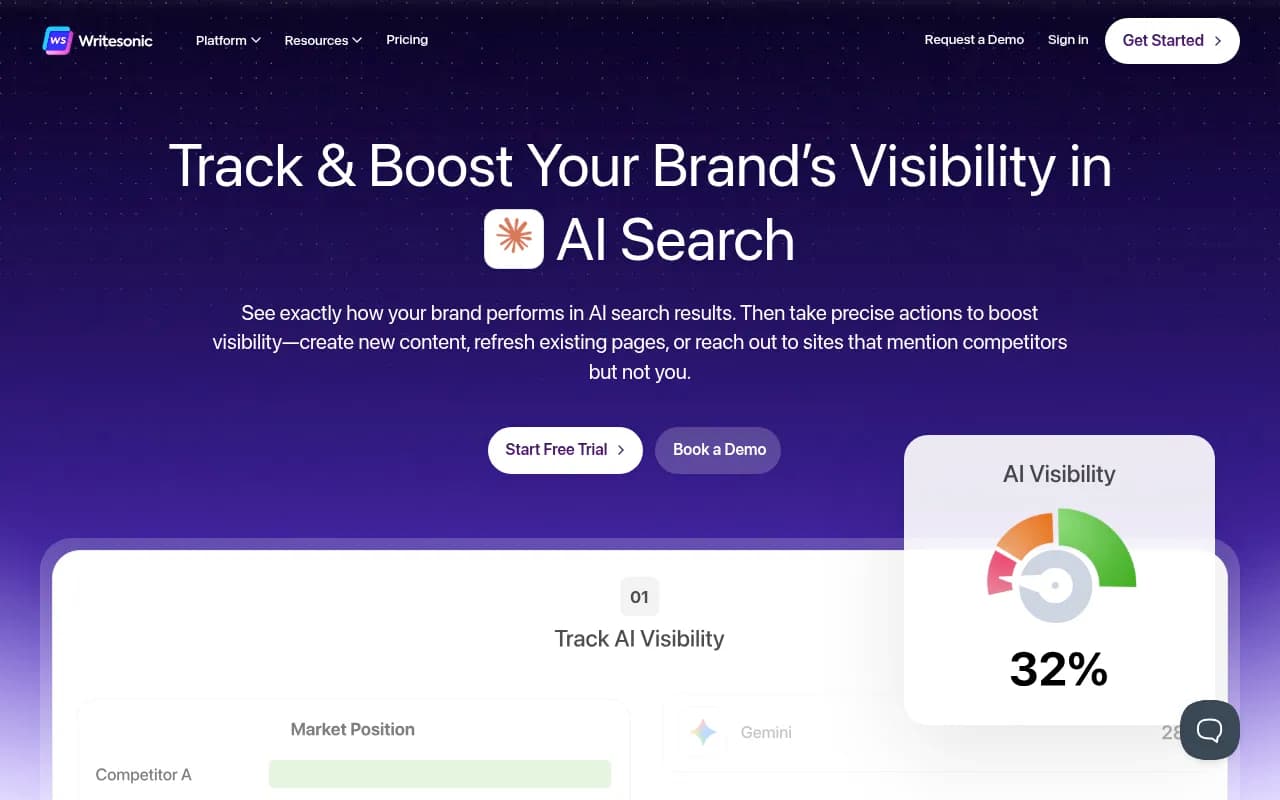
For AI visibility specifically, Writesonic has been expanding its GEO features, and SE Ranking has added AI search monitoring to its traditional rank tracking platform.
What to actually do with this information
If you're choosing between GrowthBar, Frase, and Outranking today, the decision comes down to what you're optimizing for:
- Primarily Google rankings, fast output, small team: GrowthBar
- Google rankings plus early AI visibility investment: Frase (new version)
- Structured content workflows, larger team, CMS-heavy: Outranking
But if AI citation visibility is a serious business priority -- and for most brands it should be by now -- none of these three tools is sufficient on its own. You need to know which prompts your customers are using, which AI models are citing your competitors but not you, and what content you need to create to close that gap. That's a different kind of tool.
The content creation layer and the AI visibility layer are converging, but they haven't merged yet. The smartest content teams in 2026 are running both: a content production tool for output, and a GEO platform for measurement and optimization. Treating them as the same thing is how you end up publishing a lot of content that nobody -- human or AI -- ever finds.