Key takeaways
- ChatGPT, Perplexity, and Claude use fundamentally different citation logic -- a strategy that works on one won't automatically work on the others
- Perplexity averages 6.61 sources per response and strongly favors fresh content published within 30 days; recency matters more here than anywhere else
- ChatGPT cites Wikipedia for nearly 48% of its top sources, signaling a preference for encyclopedic, neutral content over promotional writing
- Claude prioritizes logical structure and authoritative sourcing -- thin content gets ignored regardless of domain authority
- Research analyzing 129,000 domains found that 73% of brands never appear in ChatGPT citations, even when they rank well on Google
- Tracking your AI visibility across all three platforms is the only way to know if your efforts are actually working
There's a gap most marketing teams don't know exists. Your brand ranks well on Google. You have reviews, backlinks, a content team. But when someone asks ChatGPT "what's the best [your category] tool," three competitors show up and you don't.
That's the AI visibility problem in 2026. And it's not one problem -- it's three separate problems, because ChatGPT, Perplexity, and Claude each decide what to cite in completely different ways.
This guide breaks down what actually works on each platform, why the strategies differ, and what you can do this week to start closing the gap.
Why your Google rankings don't transfer to AI citations
Before getting into platform-specific tactics, it's worth understanding why traditional SEO doesn't solve this.
Research analyzing 129,000 domains found that only 20% of AI citations overlap with the #1 Google result. You can own the top spot on Google and still be completely invisible when someone asks an AI assistant about your category.
The reason is structural. Google ranks pages based on signals like backlinks, click-through rates, and on-page optimization. AI models select citations based on something different: whether your content actually answers the question well, in a format the model can parse and trust.
Each model has its own version of "trust." That's where the strategies diverge.

ChatGPT: write like an encyclopedia, not a brand
ChatGPT processes roughly 2.5 billion queries daily. At that scale, it's not looking for the most enthusiastic brand voice -- it's looking for content that reads like a reliable reference.
The most telling data point: ChatGPT cites Wikipedia for 47.9% of its top sources. That's not a coincidence. It reflects a clear preference for neutral, comprehensive, factual content over anything that reads like marketing copy.
What ChatGPT responds to
Encyclopedic structure. Content that defines terms, explains concepts, and covers a topic from multiple angles tends to get cited more than content that's narrowly promotional. Think "what is [category], how does it work, what are the tradeoffs" rather than "why our product is the best."
Third-party mentions. ChatGPT's training data includes a lot of review sites, comparison articles, and industry publications. Getting mentioned in those sources -- not just on your own site -- builds the kind of distributed signal the model picks up on.
Consistent brand presence across the web. If your brand name appears in multiple independent contexts (press coverage, review platforms, industry directories, forum discussions), ChatGPT is more likely to treat it as a real, established entity worth citing.
Structured content. FAQ sections, clear headings, definition-style paragraphs -- these formats make it easier for the model to extract and use your content in a response.
What doesn't work on ChatGPT
Promotional language gets filtered out. Content that reads like a landing page -- heavy on superlatives, light on substance -- rarely makes it into citations. The model is trained to be helpful, and "we're the leading solution for X" doesn't help anyone.
Also worth noting: ChatGPT's knowledge has a training cutoff. For topics where recency matters, you're competing with whatever was in the training data. This is where Perplexity has a structural advantage.
Perplexity: freshness and sources are everything
Perplexity is a different beast. It's a real-time search engine layered with AI, which means it's actively crawling the web when someone asks a question. This changes the citation logic entirely.
Perplexity averages 6.61 citations per response -- more than ChatGPT or Claude. It also heavily cites Reddit (46.7% of citations in some analyses), YouTube, and LinkedIn alongside traditional web pages. That's a meaningful signal about where to publish, not just what to publish.
What Perplexity responds to
Recency. Articles published within 30 days get cited 3.2x more frequently than older posts. If you're not publishing regularly, you're essentially invisible on Perplexity. A content calendar isn't optional here -- it's the mechanism.
Reddit and community presence. Perplexity pulls heavily from Reddit discussions. If people are talking about your brand (or your category) on Reddit and your brand comes up positively, that feeds directly into Perplexity responses. This means community engagement isn't just a brand awareness play -- it's an AI citation strategy.
YouTube content. Perplexity cites YouTube more than most people expect. Video content that answers specific questions -- especially "how to" and "best X for Y" formats -- gets surfaced in responses.
LinkedIn articles. Thought leadership content on LinkedIn gets indexed and cited. This is underused by most brands.
News and press coverage. Fresh press mentions, product announcements, and industry news get picked up quickly. A press release that gets syndicated across multiple news sites can generate Perplexity citations within days.
What doesn't work on Perplexity
Old content. Seriously -- if your last blog post was six months ago, Perplexity largely ignores your site for time-sensitive queries. The freshness penalty is steep.
Also, thin content that exists purely for SEO purposes. Perplexity's real-time crawling means it's evaluating your content in context, against everything else published recently on the same topic.
Perplexity
Claude: structure, logic, and authority
Claude (Anthropic's model) has a different personality than the other two, and that personality shows up in what it cites. Claude users tend to ask more analytical, nuanced questions -- and Claude responds with more careful, structured reasoning.
According to research from ATAK Interactive, "Claude users want deeper analysis." That's the key insight. If you want to get cited by Claude, your content needs to hold up to scrutiny.
What Claude responds to
Logical structure. Content that builds an argument step by step -- with clear premises, evidence, and conclusions -- performs well. Claude is particularly good at following structured reasoning, and it tends to cite content that mirrors that structure.
Authoritative sourcing within your content. If your articles cite credible research, studies, or data, Claude is more likely to treat your content as a reliable source. Citing your sources makes you more citable.
Depth over breadth. A 2,000-word piece that thoroughly covers one specific angle tends to outperform a 5,000-word piece that skims across ten topics. Claude rewards specificity.
Technical and professional content. Claude is widely used for technical research, legal analysis, coding, and professional decision-making. Content written for professionals -- with appropriate terminology and nuance -- gets cited more often than content written for general audiences.
Long-form guides and whitepapers. Claude has a large context window and can process long documents. Comprehensive guides, research reports, and detailed how-to content fit well with how Claude users prompt.
What doesn't work on Claude
Vague claims without evidence. "Studies show" without citing the study, "experts agree" without naming the experts -- Claude is trained to be epistemically careful, and it tends to avoid citing content that makes unsubstantiated claims.
Shallow content that covers a topic at a surface level. If your piece on "content marketing strategy" is basically a definition plus five generic tips, Claude won't find it useful enough to cite.
Platform comparison: what to prioritize
Here's a quick summary of the key differences across all three platforms:
| Factor | ChatGPT | Perplexity | Claude |
|---|---|---|---|
| Citation volume per response | 2-4 sources | 6.61 sources | 3-5 sources |
| Recency weighting | Low (training cutoff) | Very high (real-time) | Medium |
| Content style that works | Encyclopedic, neutral | Fresh, multi-channel | Structured, analytical |
| Reddit/community signals | Low | Very high | Low |
| Technical/professional content | Medium | Medium | High |
| Third-party mentions needed | High | Medium | Medium |
| Video content (YouTube) | Low | High | Low |
| Promotional language penalty | High | High | High |
The one thing all three share: they penalize promotional language. Content that reads like a sales pitch doesn't get cited, period.
A practical content strategy for all three platforms
You don't need three separate content teams. But you do need to think about distribution and format more deliberately.
Build a content base that works across platforms
Start with comprehensive, neutral reference content on your site. Pieces that explain your category, define key terms, compare approaches, and answer common questions. This is your ChatGPT foundation. It also works for Claude if you add depth and structure.
For example, if you sell project management software, a piece titled "How project management software works: approaches, tradeoffs, and what to look for" will outperform "Why [Your Brand] is the best project management tool" across all three platforms.
Layer in freshness for Perplexity
Publish regularly -- at minimum, weekly. Short-form updates, trend pieces, and news-adjacent content keep you visible on Perplexity. Repurposing existing content into updated versions with a new publication date also helps.
More importantly: get active on Reddit. Participate in relevant subreddits genuinely. Answer questions. When your brand comes up in discussions naturally, that feeds Perplexity citations. This can't be faked -- astroturfing gets spotted and damages your reputation.
Go deep for Claude
Pick your most important topics and write the definitive piece on each one. Not a listicle -- a real, structured analysis. Include data, cite your sources, acknowledge complexity. These pieces take longer to produce but they compound over time.
Build your off-site presence
All three platforms look beyond your own website. Getting mentioned in:
- Industry publications and trade press
- Review sites (G2, Capterra, Trustpilot, etc.)
- Comparison articles on third-party sites
- Podcast transcripts and interview write-ups
- YouTube videos (even if you don't make them -- getting mentioned in others' videos counts)
This distributed presence is what signals to AI models that your brand is a real, established entity worth citing.
How to know if it's working
This is where most brands fall short. They change their content strategy but have no way to measure whether AI models are actually citing them more.
Tracking AI visibility requires different tooling than traditional SEO. You can't see your "AI ranking" in Google Search Console. You need to actually query these models and see whether your brand appears -- and do that systematically across many prompts, over time.
Promptwatch is built specifically for this. It tracks your brand's visibility across ChatGPT, Perplexity, Claude, and seven other AI models, shows you which prompts your competitors appear for that you don't, and helps you identify the exact content gaps to fill. The Answer Gap Analysis feature is particularly useful here -- it shows you the specific questions AI models are answering without citing you, so you know exactly what to write next.

Other tools worth knowing about for different parts of this workflow:
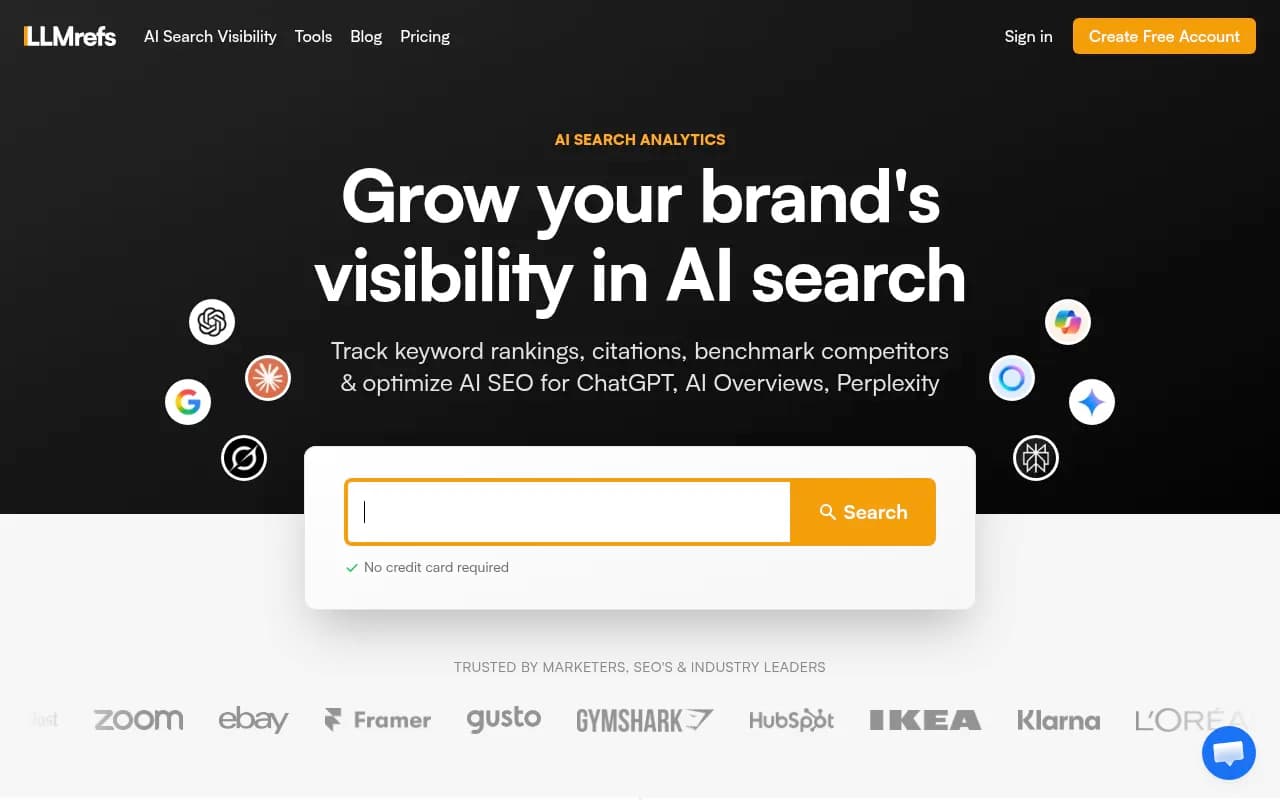
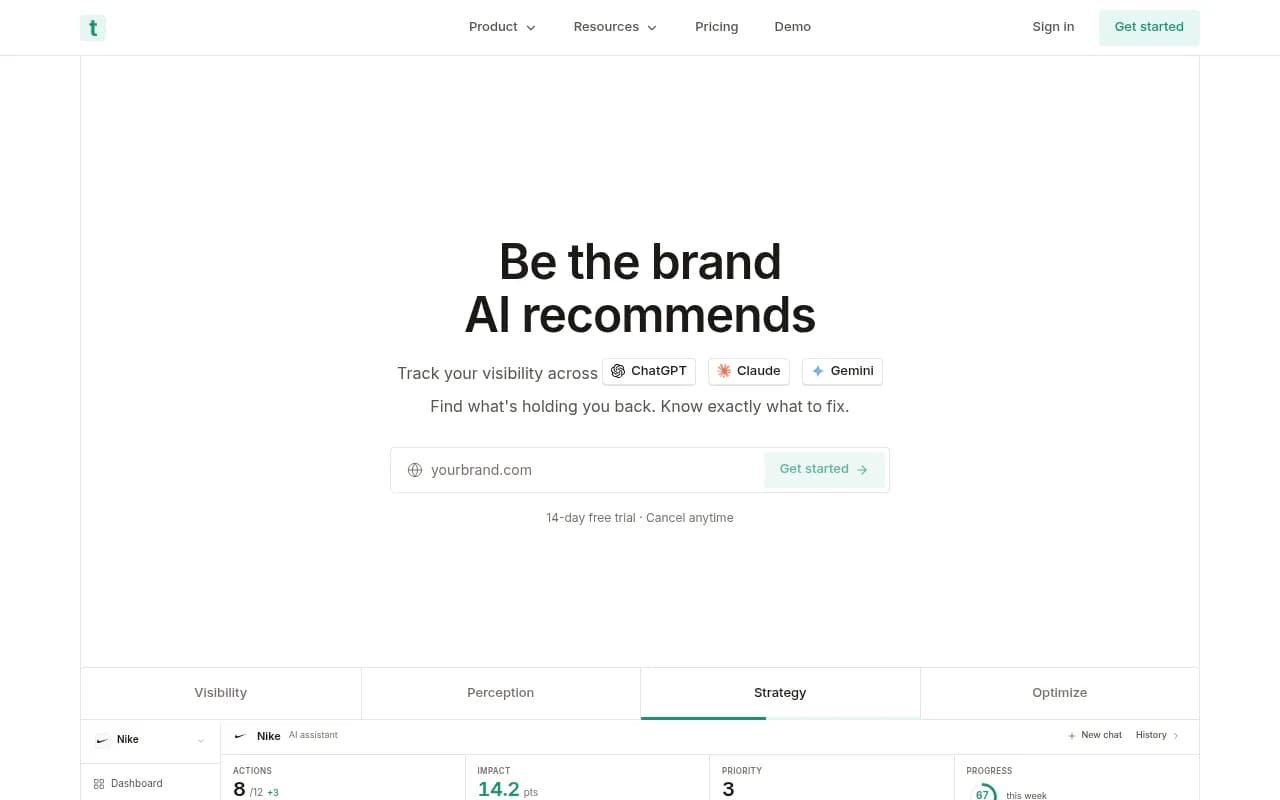
For tracking AI visibility specifically:

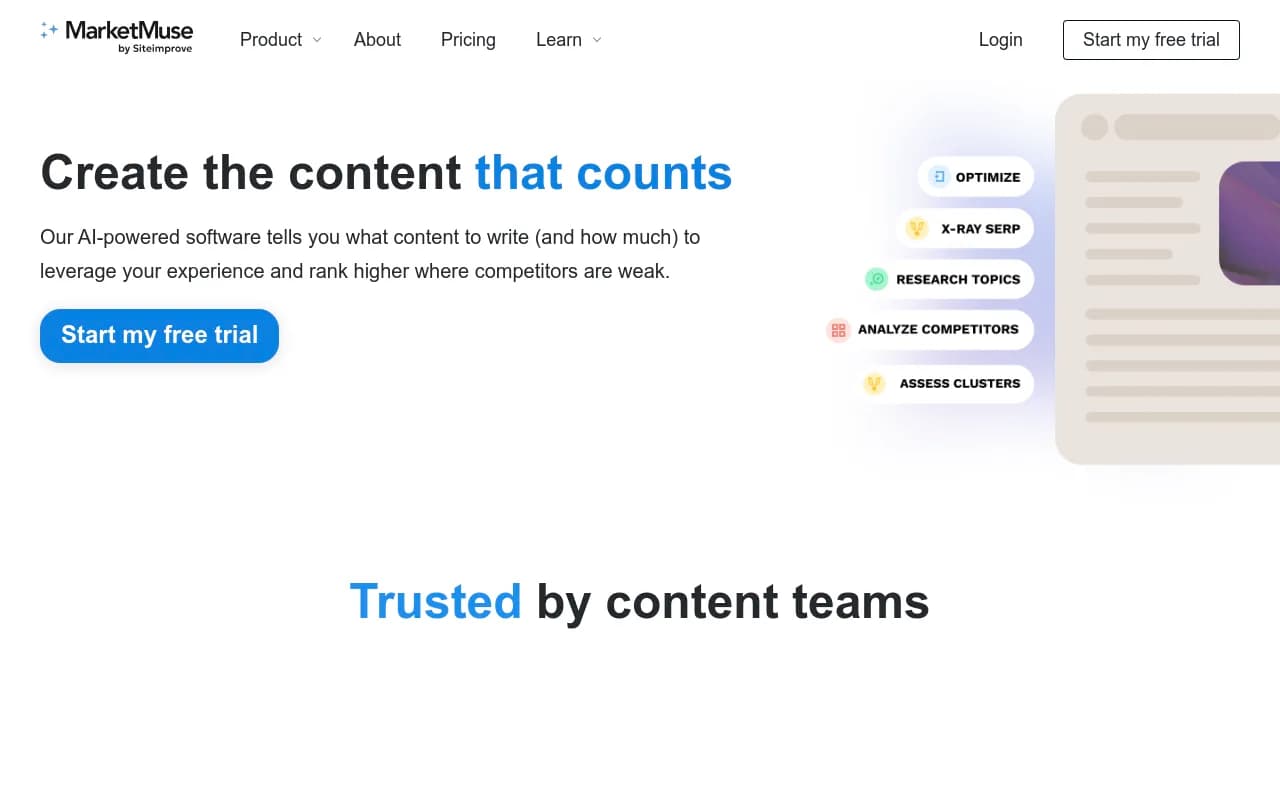
For content creation and optimization:
The Reddit angle most brands ignore
It's worth spending a moment on Reddit specifically, because it's the most underused lever in AI citation strategy.
Perplexity cites Reddit in roughly 46.7% of its responses. ChatGPT's training data includes substantial Reddit content. Claude is trained on diverse internet text that includes community discussions.
Reddit threads that mention your brand -- especially in the context of genuine recommendations or comparisons -- carry real weight. The challenge is that you can't manufacture this. Reddit communities are good at spotting brand accounts, and getting caught doing fake grassroots marketing will actively hurt you.
What you can do:
- Participate genuinely in relevant communities as a brand representative (disclosed)
- Answer questions in your area of expertise without pitching
- Create content worth sharing that community members organically post
- Monitor discussions about your category and respond helpfully when your brand comes up
Over time, authentic Reddit presence builds the kind of citation signal that's very hard for competitors to replicate.
What to do this week
If you're starting from zero, here's a practical sequence:
-
Run a baseline audit. Ask ChatGPT, Perplexity, and Claude the 10 most common questions someone in your category would ask. Note which competitors appear and which don't. This is your gap map.
-
Identify your highest-value prompts. Where are you closest to appearing? Those are your quickest wins.
-
Create or update one comprehensive reference piece on your most important topic. Make it neutral, structured, and genuinely useful. Publish it on your site.
-
Get active on Reddit in one relevant subreddit. Not to promote -- to participate.
-
Reach out to two or three industry publications about a contributed article or data piece. Third-party mentions matter.
-
Set up tracking so you can measure progress. Without measurement, you're guessing.
The brands that will dominate AI search in 2026 aren't the ones with the biggest budgets -- they're the ones that understand how each model thinks and create content that actually serves those models' users. That's a strategy any brand can execute.