Key takeaways
- A visibility score tells you where you stand. It does not tell you what to change, and most teams stall at that gap.
- Read your metrics as diagnostics: low share of voice is a coverage problem, late position is a prominence problem, mentions without citations is a content or crawlability problem.
- Content type matters. In Promptwatch Data, product and landing pages made up about 39% of ChatGPT citations (Sep 28 to Oct 4, 2026), so your commercial pages are doing more work than your blog.
- Platform behavior changes overnight (ChatGPT's site: operator shift on August 8, 2026), so a weekly action loop beats a quarterly audit.
- Pick tools by whether they help you fix things, not by how pretty the dashboard is.
The problem with tracking alone
I have watched a lot of teams buy an AI visibility tool, spend a month admiring the charts, and then do exactly what they did before. The dashboard says you appear in 18% of relevant answers. Great. Now what?
This is the old rank tracking trap, just with new surfaces. Classic rank tracking gave you a number per keyword. You could fix a title tag, build a link, and watch the number move. AI search is messier. There is no single position, answers vary per run, and the thing you control (your content) reaches the model through crawlers, retrieval, third-party sources and training data.
So the job changes. Tracking is the input. The output is a prioritized list of changes you can ship this week. This guide walks through how to get there.
That said, classic rank tracking has not died. As Igniting Business argues, Google rankings are still a useful baseline, they just should not be the only part of your measurement. Keep them. Add the AI layer on top.
Step 1: Diagnose before you prescribe
Before writing anything, figure out which kind of problem you have. The common metrics point to different causes.
| What you see | Likely problem | First thing to check |
|---|---|---|
| Low share of voice across many prompts | Coverage | Do you have pages that answer these prompts at all? |
| Mentioned, but late in the answer | Prominence | Is a competitor's page clearer, more specific, or more current? |
| Mentioned, but your site is never cited | Content or crawlability | Are AI crawlers reaching and reading the page? |
| Cited, but sentiment is weak | Reputation | What do reviews and third-party sources say about you? |
| Cited in Google AI Overviews, absent in ChatGPT | Source mix | Which source types does each model prefer? |
This table is the most useful thing to tape above your monitor. Every action in the rest of this guide hangs off one of these rows.
Check crawler access first
It is embarrassing how often the answer is boring. A page cannot be cited if the AI crawler hits a 403, a JavaScript wall, or a robots.txt rule someone added in 2023. IP-verified crawler logs show which bots visit, what they read and where they fail. If you only do one technical check, do this one.
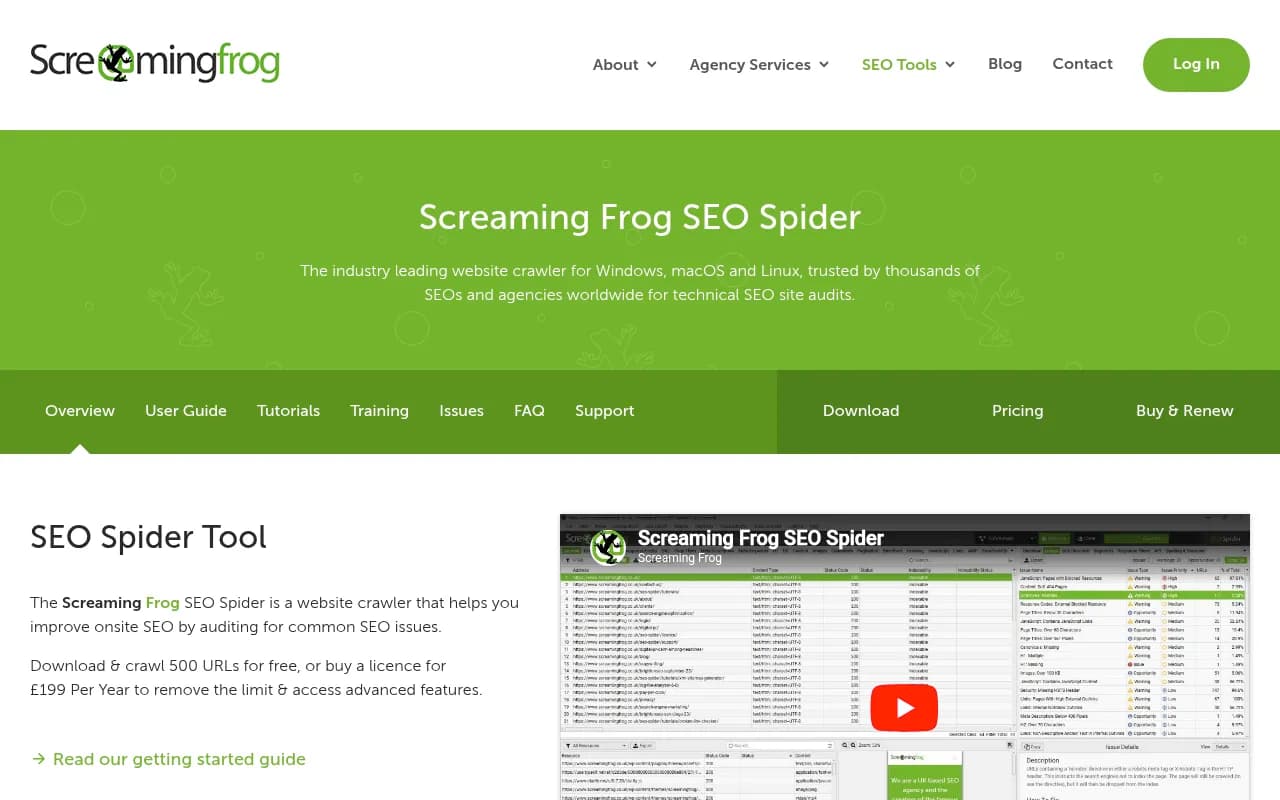
For a quick, free look, tools like Google Search Console cover the Google side of indexing, and a crawler such as Screaming Frog can surface broken links and orphaned pages.
For AI crawlers specifically, you need logs or a platform that parses them. Promptwatch includes IP-verified crawler logs for GPTBot, ClaudeBot, PerplexityBot and others, with plain-language crawl error explanations.

Step 2: Match content to what AI actually cites
Once crawling is clean, look at what kind of content gets cited for the prompts you care about. Promptwatch Data analyzed ChatGPT citations by content type for Sep 28 to Oct 4, 2026:
- Product pages: 22.4%
- Landing pages: 16.8%
- Listicles: 13.6%
- How-tos: 8.7%
- Documentation: 7.5%
- General articles: 6.1%
- Comparisons: 5.9%
- News: 5.7%
- FAQ: 3.3%
- Reviews: 1.7%
The surprise for many content teams is that product and landing pages together are roughly 39% of citations. Editorial formats combined are 43%. The blog is not the whole game.
It also shifts by prompt intent. For commercial prompts like "best CRM for small businesses", product pages hit 26.0%, landing pages 20.6% and listicles 15.0%. For informational prompts, how-tos and docs earn more than they do overall. For branded prompts, reviews were 5.6%, more than three times their overall share.
What to do with that
- Commercial gaps: tighten product and landing pages. Complete specs, real prices, clear positioning. Then get into the "best of" roundups AI already cites, and publish your own comparison pages.
- Informational gaps: write how-tos and keep docs public and crawlable.
- Branded gaps: add a brand FAQ and collect reviews on trusted third-party sites.
The point is mapping. Each prompt cluster gets the content type that tends to win it. Stop writing a generic blog post for every gap.
Step 3: Prioritize with durability in mind
Not all citations last. Promptwatch Data tracked every page ChatGPT cited on July 6, 2026 for 90 days:
| Content type | Still cited after 30 days | Still cited after 60 days |
|---|---|---|
| Landing pages | 78% | 69% |
| Docs | 76% | 67% |
| Comparisons | 72% | 63% |
| Listicles | n/a | 60% |
| Product pages, reviews, how-tos | n/a | about 55% |
| News | half gone by day 36 | 41% |
This changes how you spend effort. Landing pages, docs and pricing pages are long-term assets, so improve them once and well. Product pages and how-tos fade faster, with half-lives of roughly 74 to 77 days, so schedule refreshes. News is a short burst, useful for visibility spikes but not a foundation.
A practical rule: put anything with a 60-day half-life on a refresh calendar. Listicles and guides should be updated before they drop out, not after you notice they have.
Step 4: Treat your own site as a retrieval surface
On August 8, 2026, ChatGPT began using the site: operator at scale. Promptwatch Data shows site: queries jumped from 0.37% to 16.8% of all fanout queries overnight, and average fanout queries per response rose from about 1.08 to about 1.83.
Translation: ChatGPT now searches inside specific domains as part of answering. Thin category pages, broken internal search and unindexed content cost you answers in a way they did not a few months ago.
Action items:
- Confirm key pages are indexed in Google and Bing.
- Fix orphaned pages and pages missing from your sitemap.
- Re-run any fanout analysis you did before August 8. Keyword-to-prompt mappings from before that date are stale.
- Beef up category and hub pages so a site: query lands on something useful.
The broader lesson is that platform behavior can change overnight. A quarterly audit will miss it. A weekly loop will not. Just do not rewrite your whole strategy over a platform-wide shift that has nothing to do with your site.
Step 5: Build a weekly action loop
Here is the cadence I would use. It is boring on purpose.
Monday: review changes
Look at what moved: visibility score, share of voice, new competitors appearing, prompts where you dropped out. Do not react to single-day swings. AI answers vary run to run, so look at trends over a week or more.
Tuesday and Wednesday: ship fixes
Pick three to five actions, no more. Use the diagnosis table. A crawl error fix beats a new article almost every time. Then content refreshes. Then net-new content for real gaps.
Thursday: off-site work
Check which third-party pages AI cites for your category. That means roundups, review sites, forums and video. Pitch for inclusion or fix inaccurate listings. One caveat from Promptwatch Data: ChatGPT cited social platforms only 0.46% of the time from Sep 28 to Oct 4, 2026, while Google AI Overviews took 12.2% from them. Where you invest in Reddit, YouTube or LinkedIn should depend on which engine matters to your buyers. Reddit specifically fell from roughly 4% to 0.5% of ChatGPT citations on August 14, 2026, so do not lean on it for ChatGPT alone.
Friday: verify
Check whether last week's changes got crawled, whether the pages are being cited, and whether any AI-referred traffic showed up. If a page was published and nothing happened after a couple of weeks, send it back into the queue.
Step 6: Tie it to business results
Mentions are not revenue. To defend budget, you need visitor-level data: how many sessions come from ChatGPT, Perplexity, Gemini and Claude, and whether they convert. Some teams see AI traffic convert well. Crisp, for example, reported 2x higher conversion rates from AI traffic compared with traditional channels.
Two setups worth having:
- AI referral traffic in your analytics, segmented by source.
- Search Console and Bing data overlaid on AI citations, so you can find pages that rank in Google but never get cited by AI. Those are your cheapest wins, since the page already has authority and just needs to be clearer or more specific.
The Yotpo piece on rank tracking in the AI-first era makes a similar point about quantifying the cost of invisibility and using rank drops as a diagnostic. It is vendor content promoting Yotpo's own product, so treat its stats with some salt, but the framing of tracking as a diagnostic is sound.
Choosing tools that help you act
There is a real split in the market between trackers and platforms that help you fix things.
| Category | What it answers | Examples |
|---|---|---|
| Prompt trackers | Was my brand mentioned? | Otterly.AI, Peec AI |
| SEO suites with AI add-ons | How do AI results sit next to my keywords? | Semrush, SE Ranking |
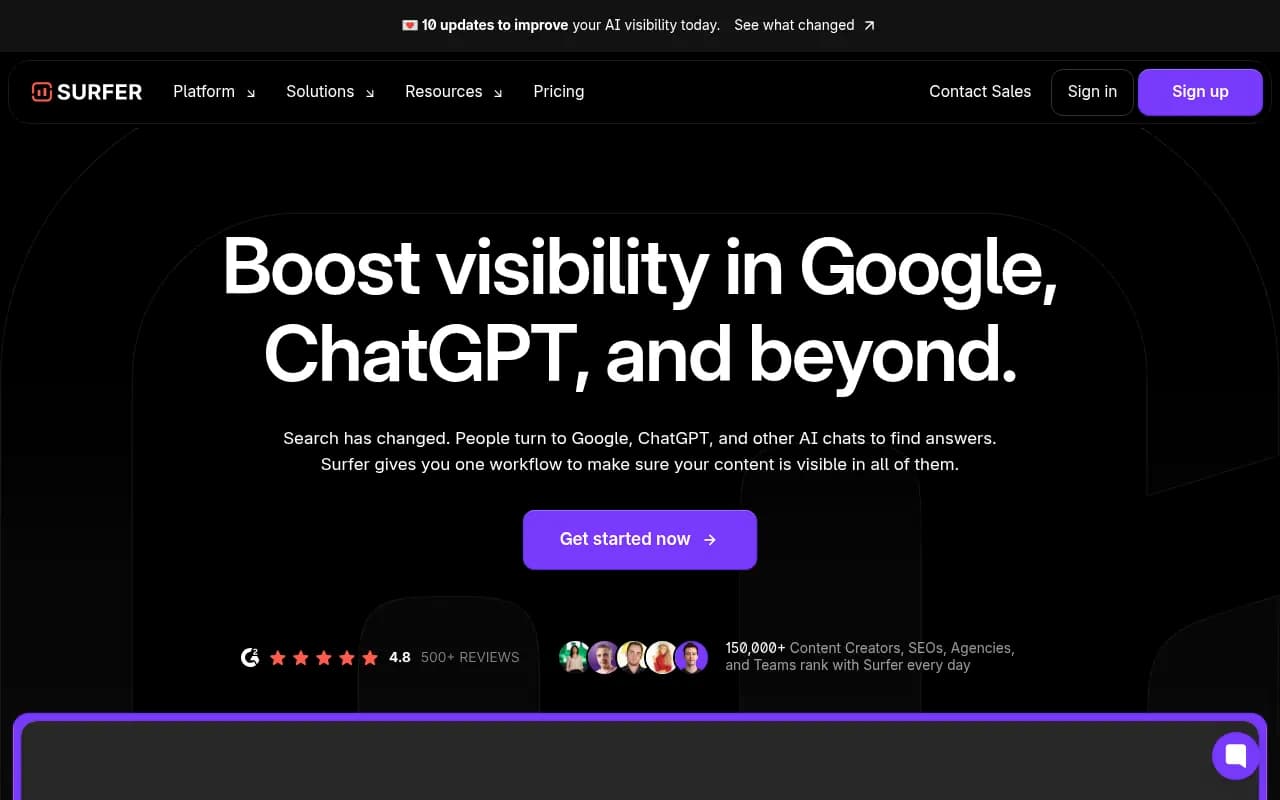
| Content optimizers | How do I improve this page? | Surfer SEO, Clearscope |
| Optimization platforms | Why am I invisible, and what do I change? | Promptwatch |
Trackers are fine if all you need is a reporting number.


Suites are convenient if your team already lives in them.
Content optimizers are good for on-page work once you know which page to improve.

Where Promptwatch differs is that it connects the steps: prompt volumes and difficulty, crawler logs, citation analytics, an Action Board of prioritized fixes, content gap analysis, and a Content Agent that can draft and publish to WordPress, Webflow or Framer. Published pages are then tracked through crawls, citations and clicks, and underperformers come back as new actions. If you are comparing options, the GEO software directory at bestgeosoftware.com is a good place to browse the wider field. Pricing starts with a free Explore tier and paid plans from $95/month, so check promptwatch.com/pricing for current numbers.
Common mistakes
Reacting to every dip
AI answers are noisy. A drop on one prompt on one day is not a trend. Wait for a pattern before rewriting a page.
Tracking too many prompts
A 500-prompt monitor nobody reads is worse than 50 prompts tied to revenue. Start with commercial and comparison prompts for your best-selling products.
Writing new content when the old content is the problem
If you already have a page on the topic and it is not cited, the fix is usually a refresh, better structure or crawl access. Not a second article cannibalizing the first.
Ignoring who the citation sources are
Mid-authority sites do well. Promptwatch Data found domains with rank 46 to 75 earned almost half of ChatGPT citations in August 2026, while DR 91 to 100 sites fell to about 3%. You do not need to out-authority the giants. You need to be the clearest answer.
A starter checklist
- Pick 30 to 50 prompts tied to revenue.
- Check crawler access and indexation for the pages that should answer them.
- Map each prompt cluster to a content type.
- Fix technical blockers, then refresh, then create.
- Set a refresh schedule based on content half-life.
- Segment AI referral traffic and watch conversions.
- Review weekly, ship three to five changes, verify the next Friday.
If you want more data on how AI engines pick sources, the Promptwatch Data hub is free and updated regularly.
Bottom line
Tracking tells you the score. Improving means changing pages, fixing access and earning mentions on sources AI already trusts, then checking whether it worked. Pick a small set of prompts, run the weekly loop for a month, and judge the result by pages cited and traffic converted, not by the visibility number alone.