Key takeaways
- A user-agent string proves nothing. IP-verified crawler logs match each request against the operator's published IP ranges, which removes spoofed bots from your data.
- Crawler logs are the only way to tell an access problem (bots can't reach the page) from a content problem (bots read it but never cite it).
- In Promptwatch Data's weekly crawler report, OpenAI made up 79.8% of verified AI crawler requests in the week of Aug 31 to Sep 6, 2026, down from 94.8% in June.
- Few GEO platforms ship crawler logs, and several that do gate them behind higher plans. Check the plan tier, not just the feature list.
- Most comparison guides in this space are written by vendors who rank themselves first. Verify claims against pricing pages before you buy.
Why crawler logs matter more than another visibility score
Most GEO tools can show you a headline number: how often ChatGPT or Perplexity mentions your brand. That number is useful, but it doesn't tell you what to do when it's low.
Say a competitor gets cited and you don't. There are two very different explanations. Either AI bots can't read your pages (blocked by robots.txt, a WAF rule, a JavaScript wall, a 403 at the CDN), or they can read them and the content just isn't good enough to cite. The fixes have nothing in common. Without server-side evidence you're guessing.
That's the gap crawler logs fill. They show which bots hit which URLs, how often, and what status code came back. Join that with citation data and you can follow a page from crawl to citation to visit.
I'd go further: for an enterprise team with thousands of URLs and a security team that loves aggressive bot rules, crawler logs are the most underrated item on a GEO RFP.
What "IP-verified" actually means
Any request can claim to be GPTBot. The user-agent header is a text field the client writes itself. Scrapers routinely fake it, which means a log that only matches user-agent strings will overcount AI traffic and hide real problems behind noise.
IP verification works differently. The platform checks each request's source IP against the IP ranges that the crawler operator (OpenAI, Anthropic, Google, Perplexity, Mistral, Meta and others) publishes. If the IP doesn't match, the request isn't counted as that bot.
When you evaluate a vendor, ask three questions:
- Does it verify against published IP ranges, or only match user agents?
- Does it separate training crawlers from answer-time fetchers (for example, a training bot versus a user-triggered fetch)?
- Does it connect crawl events to citations, so you can see which crawled pages actually get cited?
A fourth question matters for enterprise: how do logs get in? Cloudflare, Fastly, Vercel, CloudFront or raw server logs should be supported without a rebuild of your infrastructure.
What the 2026 crawler data shows
Promptwatch publishes weekly verified crawler data. Its AI Crawler Traffic report covers June 8 to September 6, 2026, built from raw server and CDN logs, counting only requests whose IP matches the operator's published ranges. Weeks run Monday to Sunday in UTC and each weekly bar totals 100%, so a rising share doesn't automatically mean more requests in absolute terms.
Two findings stand out:
- OpenAI accounted for 79.8% of verified AI crawler requests in the week of Aug 31 to Sep 6, 2026, down from 94.8% in the week of Jun 8 to Jun 14. Other providers (Anthropic, Google, Perplexity, Mistral) are taking a growing slice.
- Meta is a bigger player than most teams assume. According to Promptwatch Data on Meta-WebIndexer, it went from about 2% to nearly 38% of tracked AI crawler requests between mid-July and August 9, 2026.
The report's practical advice is worth stealing. Compare your own logs against the public mix. If a provider is large in the public data but near zero in your logs, you are probably blocked or unreachable for that provider. Also check robots.txt, CDN and WAF rules for every provider in the chart, not just the one you read about last.
For Claude specifically, there's a separate report on Claude's citation crawler visits covering December 2025 to April 2026.
How the main enterprise GEO platforms compare on crawler logs
The table below pulls from Promptwatch's own comparison guide (dated Aug 17, 2026, updated Nov 5, 2026; competitor prices checked Oct 22, 2026). That guide ranks Promptwatch first, so treat it as vendor-sourced. Profound's and Scrunch's crawler-log details come only from that table, and I haven't confirmed them on the vendors' own pages. Prices and platform counts are vendor-reported.
| Tool | AI platforms tracked | Entry price | AI crawler logs |
|---|---|---|---|
| Promptwatch | 12 | $95/mo | Yes, from Professional at $245/mo |
| Profound | 3 on trial, 9 on Enterprise | Free 7-day trial, then custom | Yes |
| Scrunch | 6 | $300/mo month-to-month | Yes |
| Otterly.AI | 4, plus paid add-ons | $29/mo | From Standard at $189/mo |
| Slate | 6 | $499/mo | Not listed |
| AthenaHQ | 5 free, 11 on Starter | $295/mo | No |
| Semrush AI Visibility Toolkit | ChatGPT and AI Mode | $99/mo | No |
| Ahrefs Brand Radar | 7 | $50/mo add-on | No |
The pattern is clear. Crawler logs are not standard. Of eight tools in that comparison, four list them, and two of those lock them behind a higher plan. If crawler data is a requirement, the entry price is not the price you'll pay.
Promptwatch
Promptwatch is the platform I'd look at first if the goal is closing the loop between crawling, citation and revenue. Its crawler analytics (Agent Analytics) log GPTBot, OAI-SearchBot, ChatGPT-User, ClaudeBot, PerplexityBot, Meta-WebIndexer and other bots, verified against each operator's published IP ranges, with plain-language explanations when a crawl fails and a citation rate per page.

Setup goes through Cloudflare, AWS CloudFront, Fastly, Vercel, Netlify, Akamai, Google Cloud CDN, a custom HTTP endpoint, or the official WordPress plugin. Crawler logs start on the Professional plan ($245/mo, 25M crawler logs) and scale to 100M on Business ($579/mo). Enterprise adds SSO, audit logs, a white-label portal and 50,000 API/MCP requests per hour. It's also ISO/IEC 27001 certified and GDPR compliant, which tends to matter when procurement gets involved. Confirm current pricing at promptwatch.com/pricing.
What separates it from monitoring-only tools is what happens next: logs feed into Page Tracker, visitor analytics and the Action Board, and the Content Agent can draft and publish the missing pages to WordPress, Webflow or Framer. Then the same logs tell you whether bots picked the new page up.
Profound
Profound is the name that shows up most in enterprise shortlists. It lists crawler logs and visitor tracking, and its content work runs through AI Marketer credits. Pricing beyond the trial is custom, so budget conversations start with a sales call.
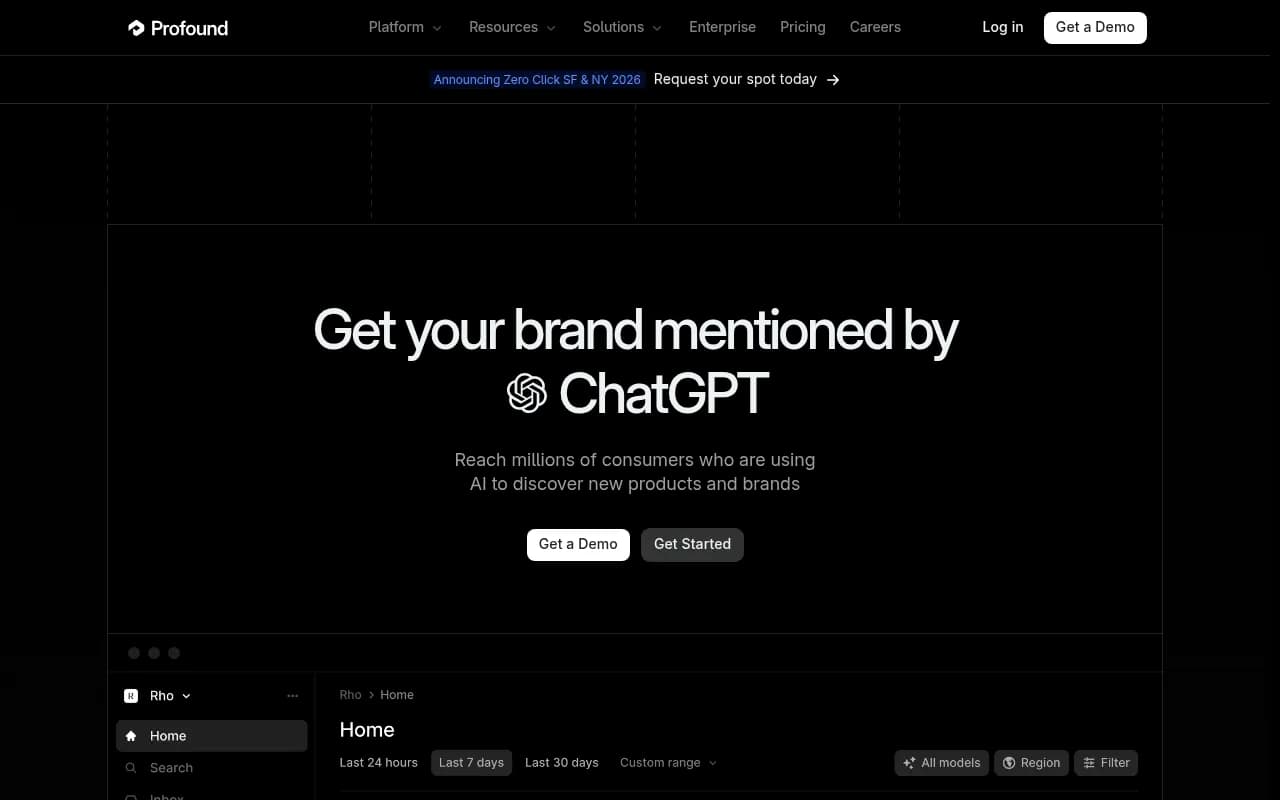
For a head-to-head view, see Promptwatch vs Profound.
Scrunch
Scrunch lists crawler logs and has an Agent Experience Platform for serving AI-ready content. Per the comparison table, visitor tracking is limited to agent traffic, and the entry plan has only basic content features.
Otterly.AI
Otterly is the budget option, starting at $29/mo for 15 prompts. Crawler data arrives from the Standard plan at $189/mo. A LinkedIn roundup also credits it with technical crawler audit logs and structured data validation, but that is a third-party summary.

Others worth knowing
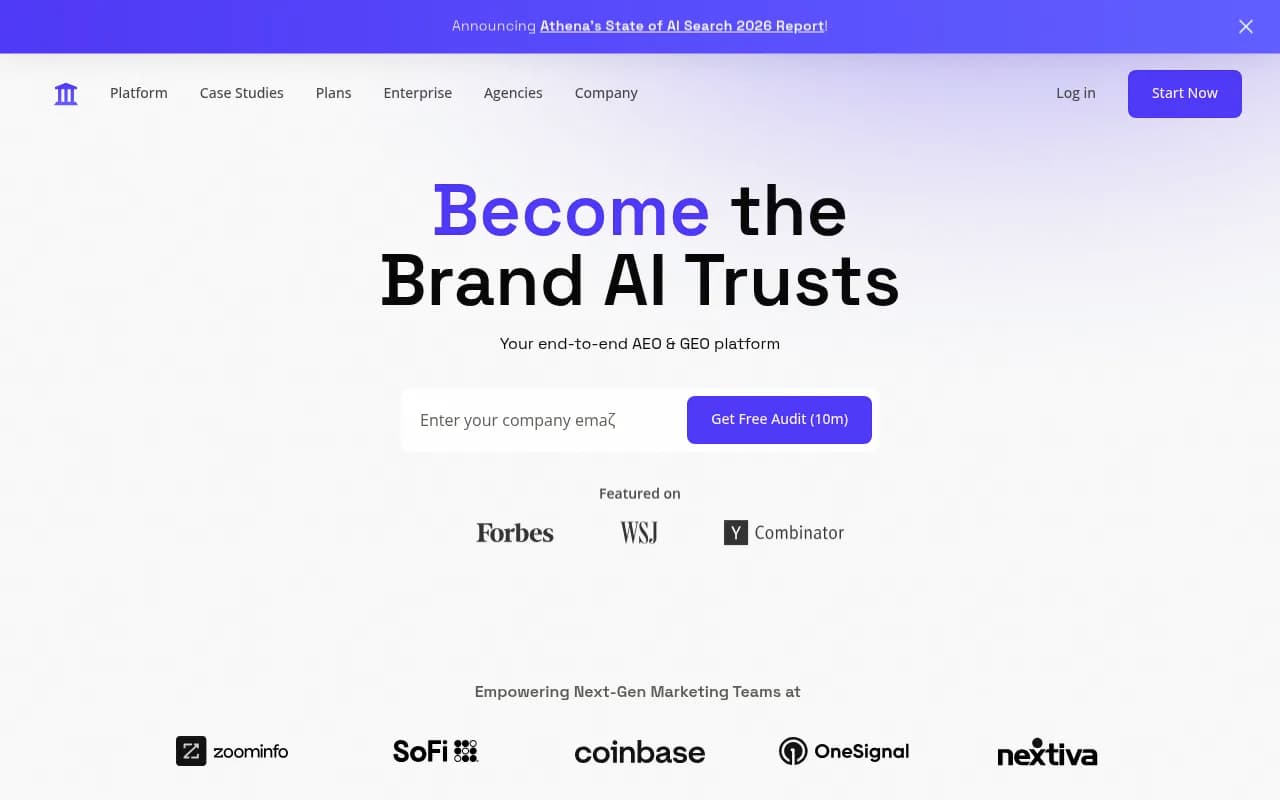
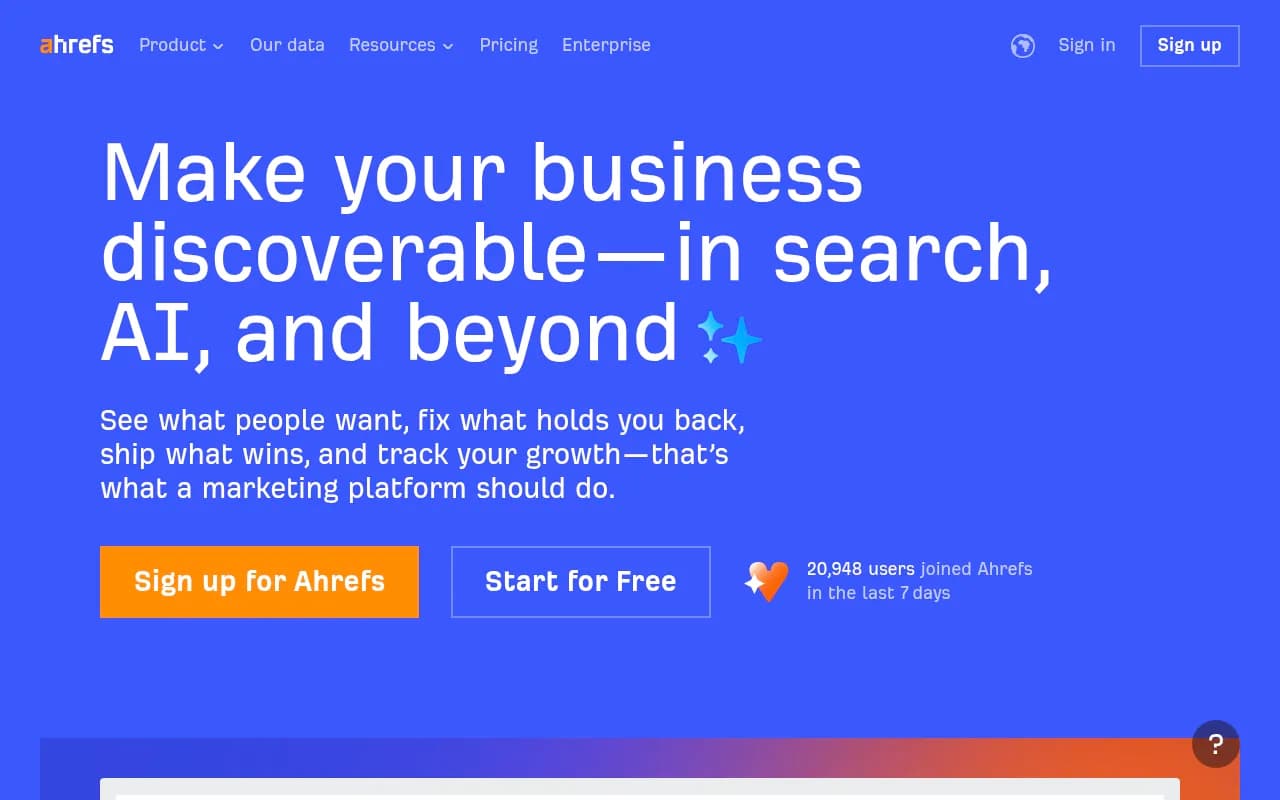
AthenaHQ, Semrush's AI Visibility Toolkit and Ahrefs Brand Radar don't list crawler logs. That doesn't make them bad products. Semrush and Ahrefs are strong if you already live in those suites. But they answer "was I mentioned?" more than "could the bot even read my page?"
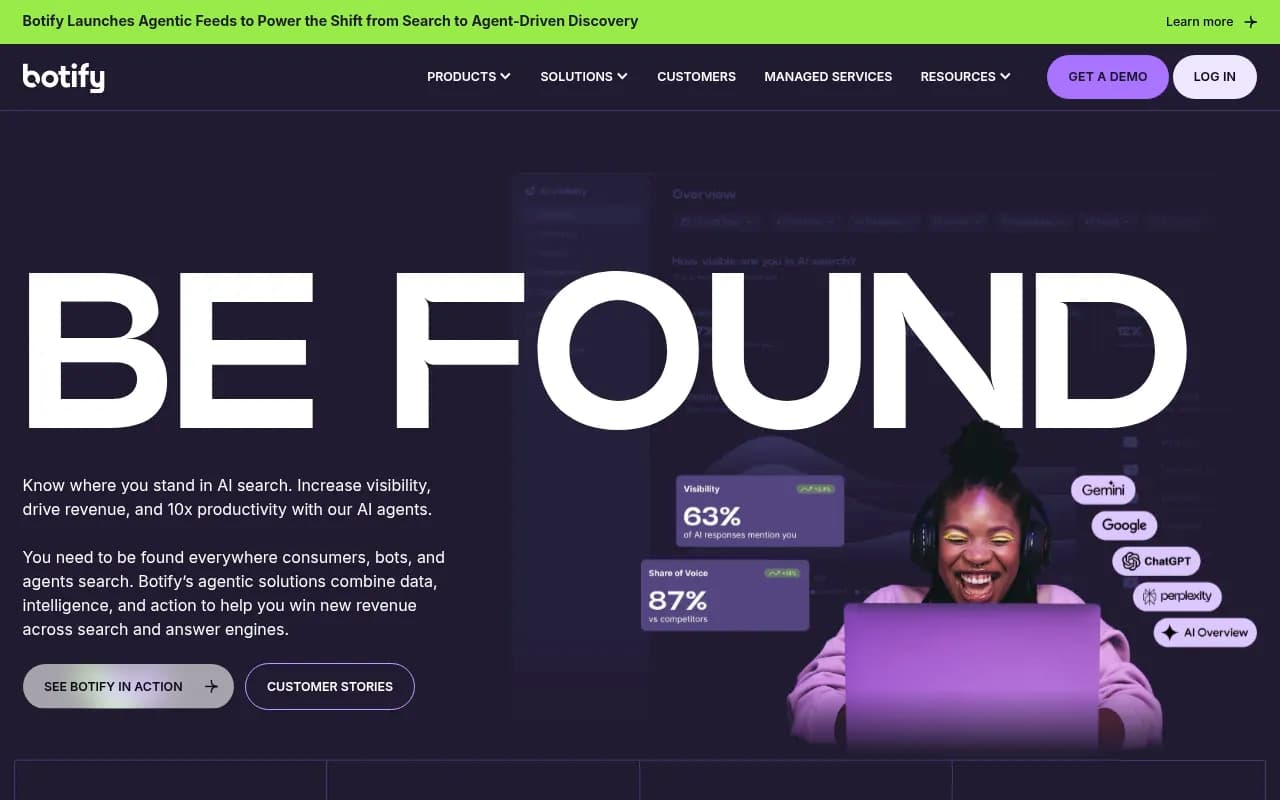
Enterprise SEO suites such as Botify, seoClarity and Lumar come from the log-analysis world and are worth a look if your team already runs them.
How the four-stage loop uses crawler logs
The Promptwatch buyer's guide frames GEO as Measure, Diagnose, Fix, Verify. Crawler logs power two of those four stages.
Diagnose
When a page isn't getting cited, logs answer the first question: did the right bot even request it? Look for 403s and 5xx responses, bots that never appear, and pages crawled once and never again. A provider that is big in the public mix but absent from your logs points to a block somewhere in robots.txt, CDN or WAF.
Verify
After you publish or refresh a page, logs show whether bots picked it up. Pair that with a citation trend and AI-referred visits and you can tell whether the fix worked, instead of waiting a quarter and hoping.
One caveat on attribution: ChatGPT stopped sending a referrer on October 8, 2026, so referrer-based AI traffic reports undercount it. Tools that let you count visits tagged utm_source=chatgpt.com recover some of it. Crawler logs are a useful cross-check since they don't depend on the referrer at all.
Buyer checklist for an enterprise RFP
Use this list when you talk to vendors:
- IP-range verification, not user-agent matching. Ask them to explain how spoofed bots are excluded.
- Which bots are covered, and whether training and answer-time fetchers are separated.
- Log ingestion paths that fit your stack (Cloudflare, Fastly, Vercel, CloudFront, Akamai, raw logs).
- Volume limits per plan. 10M and 100M monthly log events are very different tiers.
- Whether crawl events link to citations and conversions on the same page.
- Security paperwork: ISO 27001, GDPR, SSO, audit logs, role-based access.
- API or MCP access, so reporting can flow into your own BI.
- Whether the data comes from real AI interfaces or APIs. Answers and citations can differ between the two.
One more thing: treat every vendor listicle, including the ones cited here, as marketing. ziptie.ai, Promptwatch, Otterly and Meikai all rank themselves first in their own guides. That's not a scandal, it's just how this genre works. Ask for a trial with your own domain and check the logs yourself.
Meikai's enterprise guide makes a similar argument to this one: public capability pages can shortlist vendors but can't establish data quality or implementation fit. That's right, and it's why a pilot beats a demo.
A quick setup path
- Run the free checks first. Promptwatch's Agentic Readiness Check shows which AI crawlers can reach your site, and the AI Crawler URL Inspector tests individual URLs.
- Review robots.txt and your CDN or WAF rules for every major AI bot. The AI bots directory lists 400+ crawlers with guidance.
- Connect logs through your CDN or host. Most setups take minutes, not sprints.
- Let a week of data build, then compare your provider mix against the public report.
- Fix access issues first, content issues second.
For more tools in this category, the GEO software directory lists dozens of platforms by capability.
Bottom line
If crawler visibility is a hard requirement, the shortlist is short: Promptwatch, Profound and Scrunch, with Otterly if you can live with its higher-tier gating. Promptwatch is the one that connects those logs to content creation, publishing and revenue tracking in the same product, and it's the one I'd pilot first. Start with the 7-day free trial or the free AI visibility report, point it at your own CDN, and see which bots are actually reading your site.