Key takeaways
- BrightEdge and Conductor are both mature enterprise SEO platforms that have added AI visibility features, but neither was built from the ground up for AI search.
- BrightEdge's AI Catalyst module tracks visibility in ChatGPT, Perplexity, and Google AI Overviews, but it sits inside a legacy platform that can feel heavy and expensive for teams focused primarily on AI search.
- Conductor has a cleaner interface and stronger workflow tooling, but its AI visibility coverage is more limited compared to purpose-built GEO platforms.
- If AI search visibility is your primary concern rather than a secondary feature, you'll likely hit the ceiling of both platforms faster than you expect.
- Dedicated GEO platforms like Promptwatch go further by combining monitoring with content gap analysis and AI-native content generation -- the full optimization loop, not just a dashboard.
Enterprise SEO has been a two-horse race for a long time. BrightEdge and Conductor have traded customers, comparison articles, and G2 reviews for years. Both are genuinely capable platforms with large customer bases and deep integrations. Neither is a bad choice for traditional SEO at scale.
But 2026 is not 2022. AI search has moved from "interesting experiment" to "meaningful traffic channel" for a lot of brands. ChatGPT, Perplexity, Google AI Mode, and Claude are now answering questions that used to send users to a search results page -- and they're citing sources when they do it. The question is no longer whether you need to care about AI visibility. It's whether your current platform can actually help you win it.
That's where this comparison gets interesting.
What each platform actually does
Before getting into the AI-specific stuff, it's worth being clear about what BrightEdge and Conductor are at their core.
BrightEdge
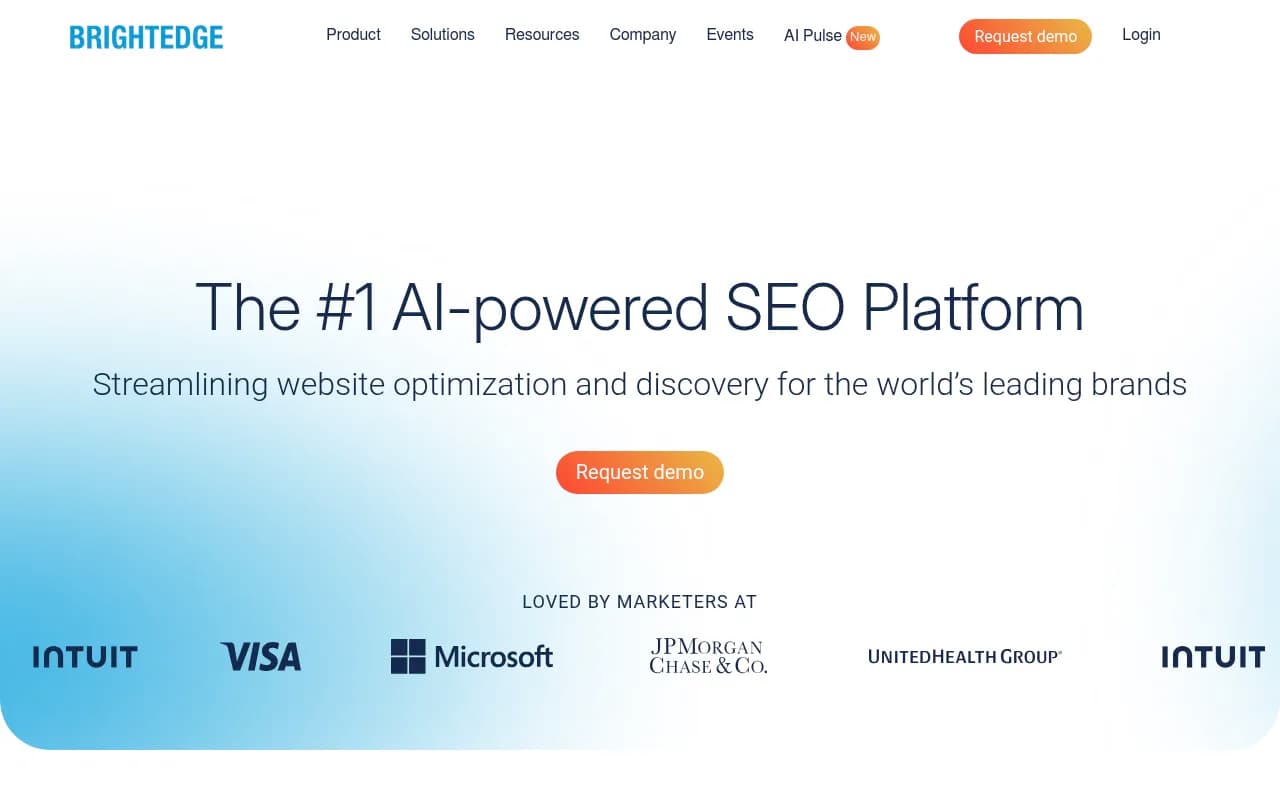
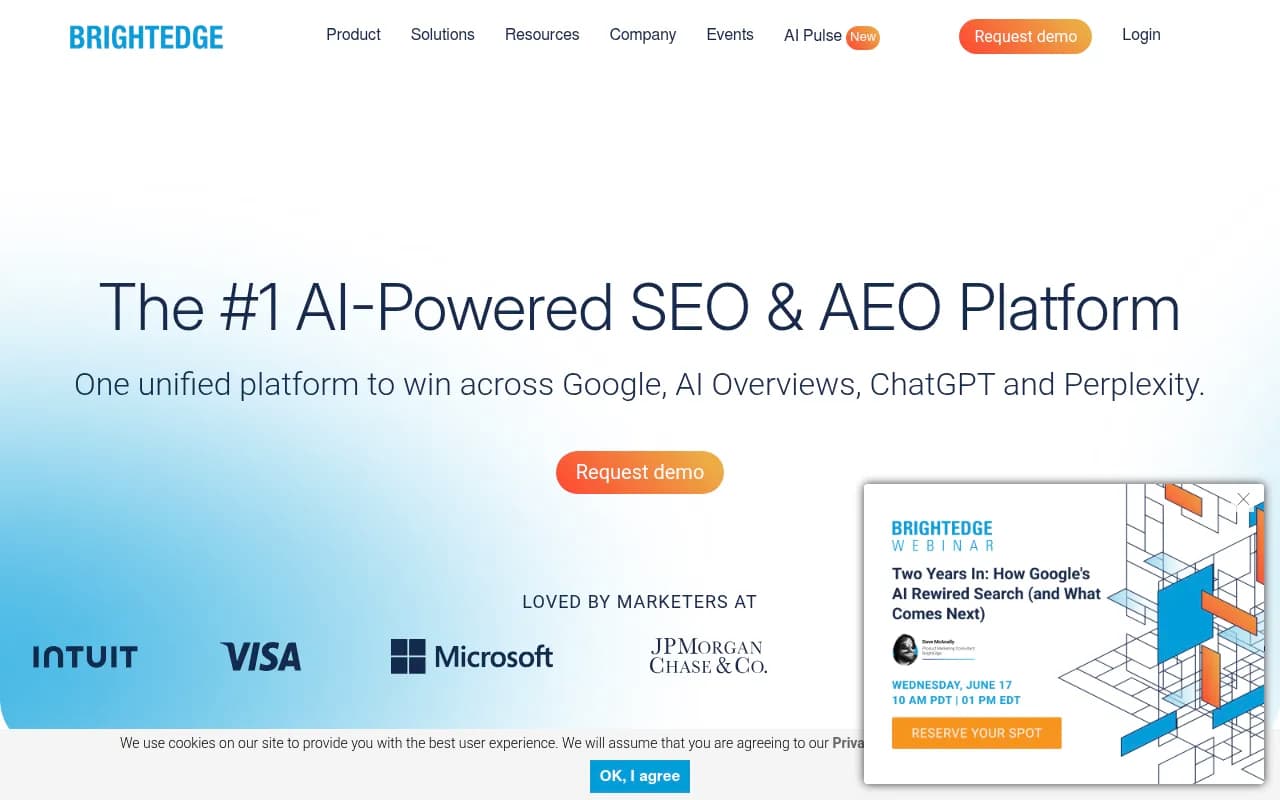
BrightEdge is one of the oldest enterprise SEO platforms still operating at scale. It covers keyword tracking, content recommendations, competitive analysis, technical SEO monitoring, and reporting -- the full suite. Its AI features are bundled under the "AI Catalyst" and "AI Hyper Cube" branding, which track visibility across Google AI Overviews, ChatGPT, and Perplexity.
The content side is handled by BrightEdge Content Advisor, which generates briefs and drafts grounded in SEO data. As Profound's own comparison noted, this is "useful for Google performance, but not designed around the citation patterns that drive AI search." That's a fair characterization. The briefs are built around traditional keyword signals, not the prompt-level data that determines whether an AI model cites your page.
Conductor
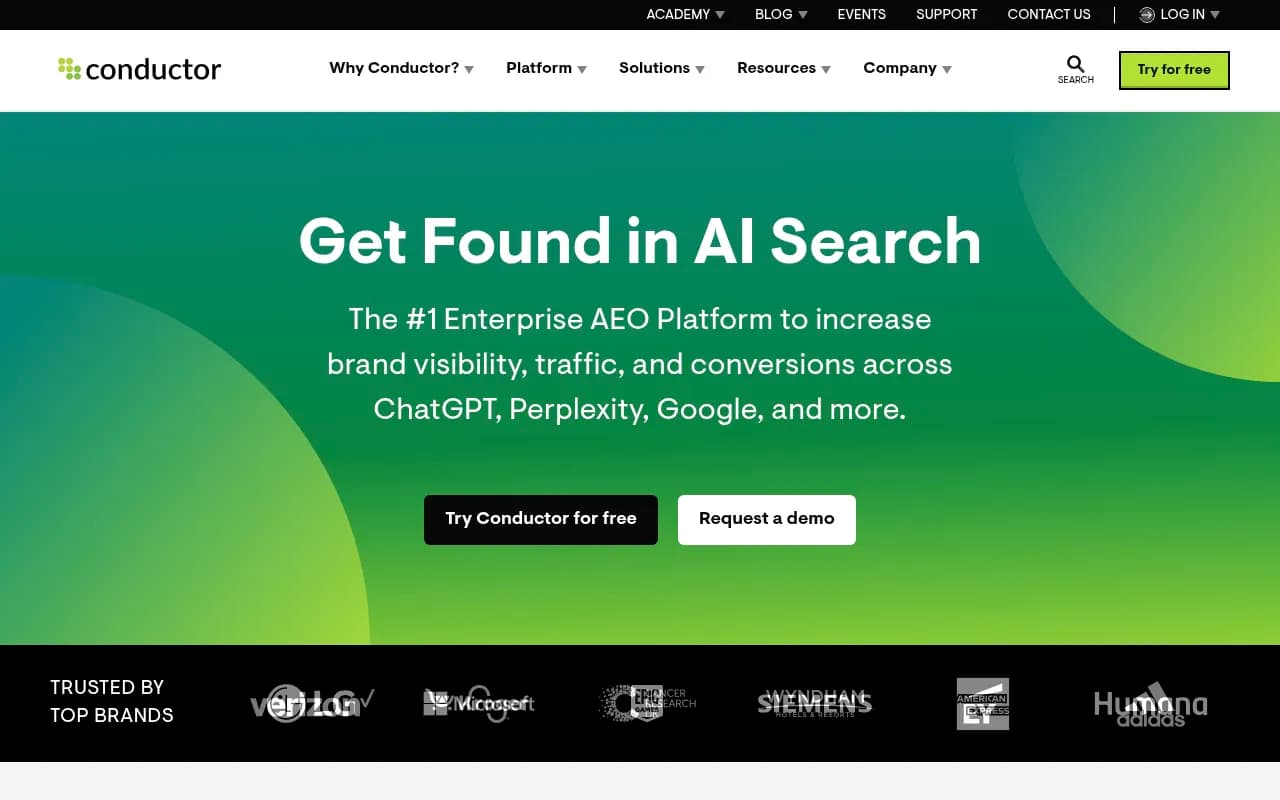
Conductor (formerly Conductor Searchlight) has positioned itself as the more marketer-friendly option. Its interface is genuinely cleaner than BrightEdge's, and the platform has historically been stronger on workflow features -- task management, content calendars, team collaboration. It also integrates with Adobe Experience Manager and other CMS platforms that large enterprises tend to run.
On AI visibility, Conductor has been expanding its coverage, but it's still primarily a traditional SEO platform with AI monitoring bolted on. The r/bigseo community has noted for years that Conductor's interface is the best in the enterprise SEO category -- that reputation holds -- but the depth of AI-specific data is limited compared to platforms built specifically for this use case.
AI search visibility: where they actually differ
This is the crux of it. Both platforms claim AI visibility coverage, but the implementation varies significantly.
Coverage across AI models
BrightEdge tracks Google AI Overviews, ChatGPT, and Perplexity. That covers the three highest-traffic AI search surfaces for most brands, which is reasonable. Conductor's AI monitoring is more recent and covers a similar set of models, though the depth of data -- citation tracking, source analysis, prompt-level breakdowns -- is less mature.
Neither platform tracks the full breadth of AI models that purpose-built GEO tools do. If you need visibility into Claude, Gemini, Grok, DeepSeek, Meta AI, or Copilot alongside the big three, you're going to find gaps.
Prompt-level intelligence
This is where the gap between legacy enterprise SEO platforms and newer GEO tools becomes most visible. BrightEdge and Conductor both track whether your brand appears in AI responses, but they don't give you the prompt-level data -- volume estimates, difficulty scores, query fan-outs -- that let you prioritize which prompts are worth targeting.
Knowing you're not cited for "best project management software for remote teams" is useful. Knowing that prompt generates 12,000 monthly queries across AI models, that three competitors are consistently cited for it, and that you're missing a specific piece of content that would close the gap -- that's actionable. That second layer is largely absent from both platforms.
Content gap analysis and optimization
BrightEdge's Content Advisor generates briefs, but they're grounded in traditional SEO signals. Conductor has content workflow features, but they're more about managing the production process than identifying what's missing from an AI visibility perspective.
Neither platform has a native answer gap analysis feature that maps your content against what AI models are actually citing -- and then generates content specifically engineered to fill those gaps. That's the piece that separates monitoring from optimization.
Crawler and citation analytics
BrightEdge and Conductor both have technical SEO crawling capabilities, but neither has real-time AI crawler logs -- the ability to see when ChatGPT's crawler, Perplexity's bot, or Claude's indexing agent hits your site, which pages they read, and when those pages move from crawled to cited.
This matters more than it sounds. If your content isn't being crawled by AI engines, no amount of optimization will move the needle. Knowing there's a crawl error on your most important product pages -- and that it's why you're not being cited -- is the kind of insight that changes what you do on Monday morning.
Feature comparison
| Feature | BrightEdge | Conductor |
|---|---|---|
| Traditional SEO tracking | Strong | Strong |
| AI model coverage | ChatGPT, Perplexity, AI Overviews | Limited, expanding |
| Prompt volume data | No | No |
| Answer gap analysis | No | No |
| AI-native content generation | Partial (SEO-focused briefs) | No |
| Real-time AI crawler logs | No | No |
| Citation source analysis | Limited | Limited |
| Reddit/YouTube tracking | No | No |
| ChatGPT Shopping tracking | No | No |
| Interface quality | Complex | Clean |
| Pricing transparency | Enterprise (opaque) | Enterprise (opaque) |
| Best for | Large teams needing full SEO suite | Teams prioritizing workflow and UX |
Pricing reality
Both platforms use enterprise pricing models, which means you won't find a number on their websites. You'll need to book a demo, go through a sales process, and negotiate. Estimates from G2 reviews and community discussions put BrightEdge contracts in the $40,000-$100,000+ annual range depending on features and seat count. Conductor is in a similar bracket.
For teams that genuinely need the full enterprise SEO suite -- technical auditing, content workflows, rank tracking at scale, integrations with enterprise CMS and analytics stacks -- that price can be justified. But if you're primarily buying for AI visibility, you're paying for a lot of traditional SEO infrastructure you may not need.
Who should use BrightEdge
BrightEdge makes the most sense for large enterprise teams that are already invested in the platform and want to add AI visibility monitoring without switching tools. If your team runs BrightEdge for traditional SEO and needs a "good enough" view of how you're performing in AI Overviews and ChatGPT, the AI Catalyst module is a reasonable addition to an existing workflow.
It's also a reasonable choice if your organization needs the full suite -- technical SEO, content, reporting, and AI monitoring -- in a single vendor relationship, and you have the budget and internal resources to manage a complex platform.
Who should use Conductor
Conductor is the better pick when team adoption and workflow integration matter more than raw data depth. Its interface is genuinely easier to use, and it integrates well with enterprise CMS platforms. If your SEO team is large and needs to coordinate content production across multiple stakeholders, Conductor's workflow features are a real advantage.
Like BrightEdge, it's a reasonable choice if you're already a customer and want to extend into AI monitoring without a full platform switch.
The honest limitation both share
Here's what neither platform's marketing will tell you directly: they were built for a world where Google was the only search engine that mattered. They've added AI visibility features because they had to, not because their architecture was designed for it.
The result is that AI monitoring in both platforms feels like a module rather than a foundation. You get dashboards showing whether you're cited, but you don't get the tools to systematically fix it. There's no answer gap analysis. No prompt intelligence. No AI-native content generation grounded in citation data. No real-time crawler logs showing you exactly why AI models are or aren't indexing your pages.
For teams where AI search is becoming a primary traffic channel -- not just a secondary metric to watch -- that gap matters.
What a purpose-built alternative looks like
The market has moved. There are now platforms built specifically for AI search visibility that do things BrightEdge and Conductor simply don't.
Promptwatch is one example worth knowing about. It tracks visibility across 10 AI models (ChatGPT, Perplexity, Google AI Overviews, Google AI Mode, Claude, Gemini, Grok, DeepSeek, Meta AI, Copilot), provides prompt volume estimates and difficulty scores, runs answer gap analysis to show exactly which prompts competitors are visible for that you're not, and generates content specifically designed to close those gaps. It also has real-time AI crawler logs -- something neither BrightEdge nor Conductor offers.

The difference in philosophy is meaningful. BrightEdge and Conductor show you data. A platform like Promptwatch is built around the loop: find the gap, create content to fill it, track the result. That's optimization, not just monitoring.
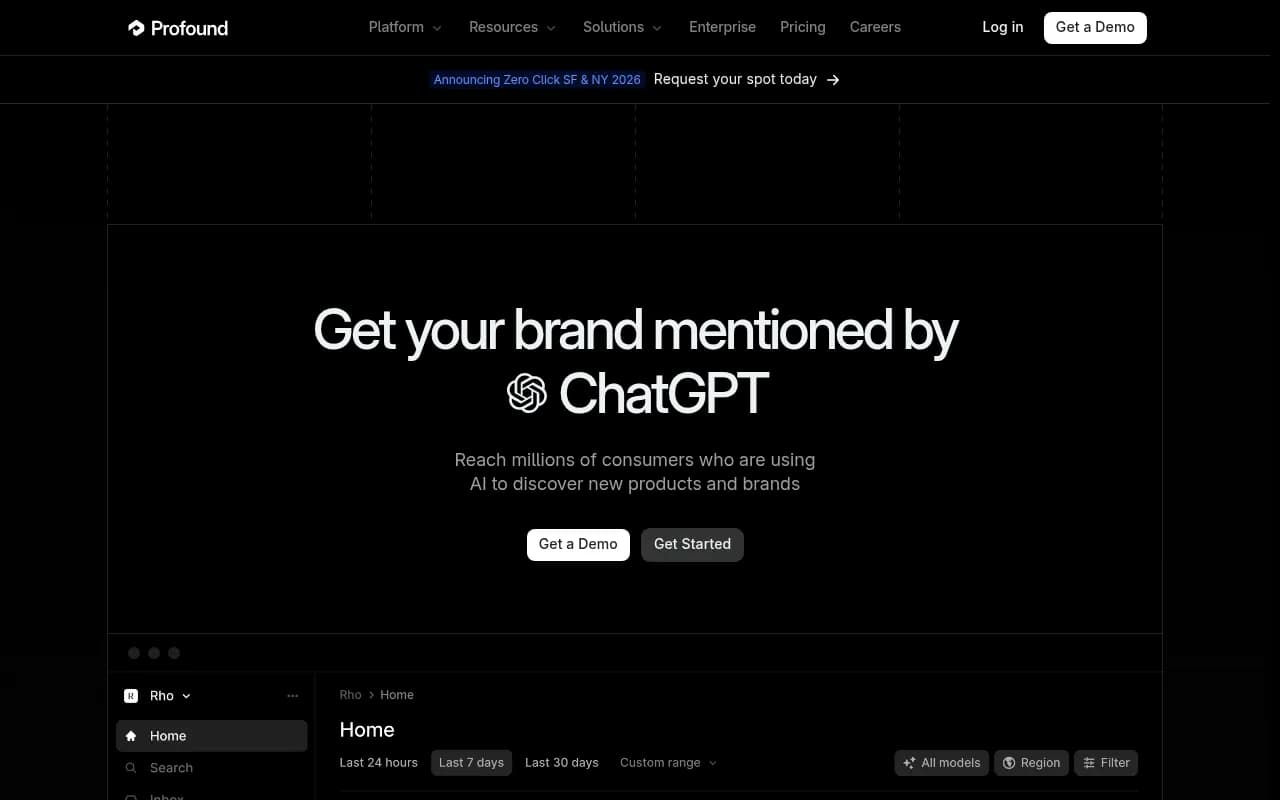
Other purpose-built options worth evaluating depending on your needs:
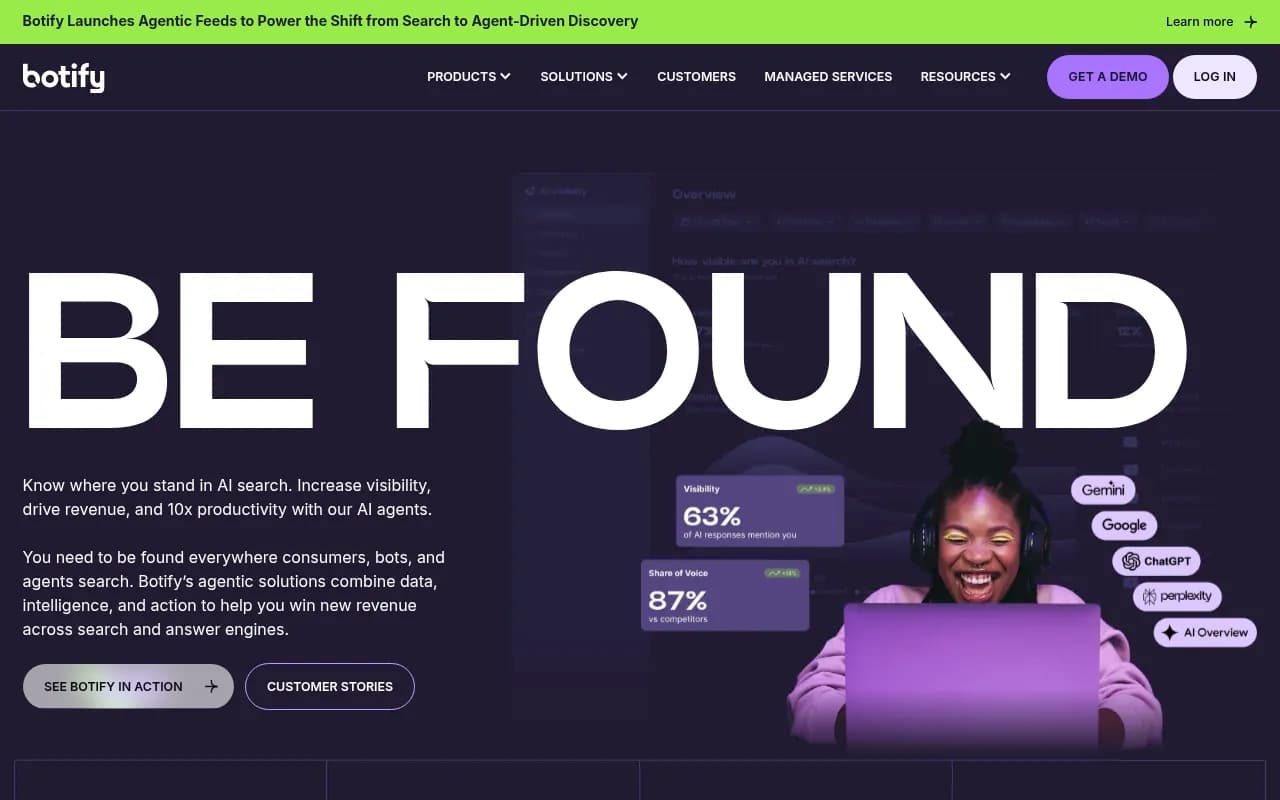
Botify is worth mentioning specifically because it has strong technical SEO capabilities alongside AI visibility features -- it's a reasonable middle ground for teams that need technical depth and AI monitoring without committing to BrightEdge's full suite.
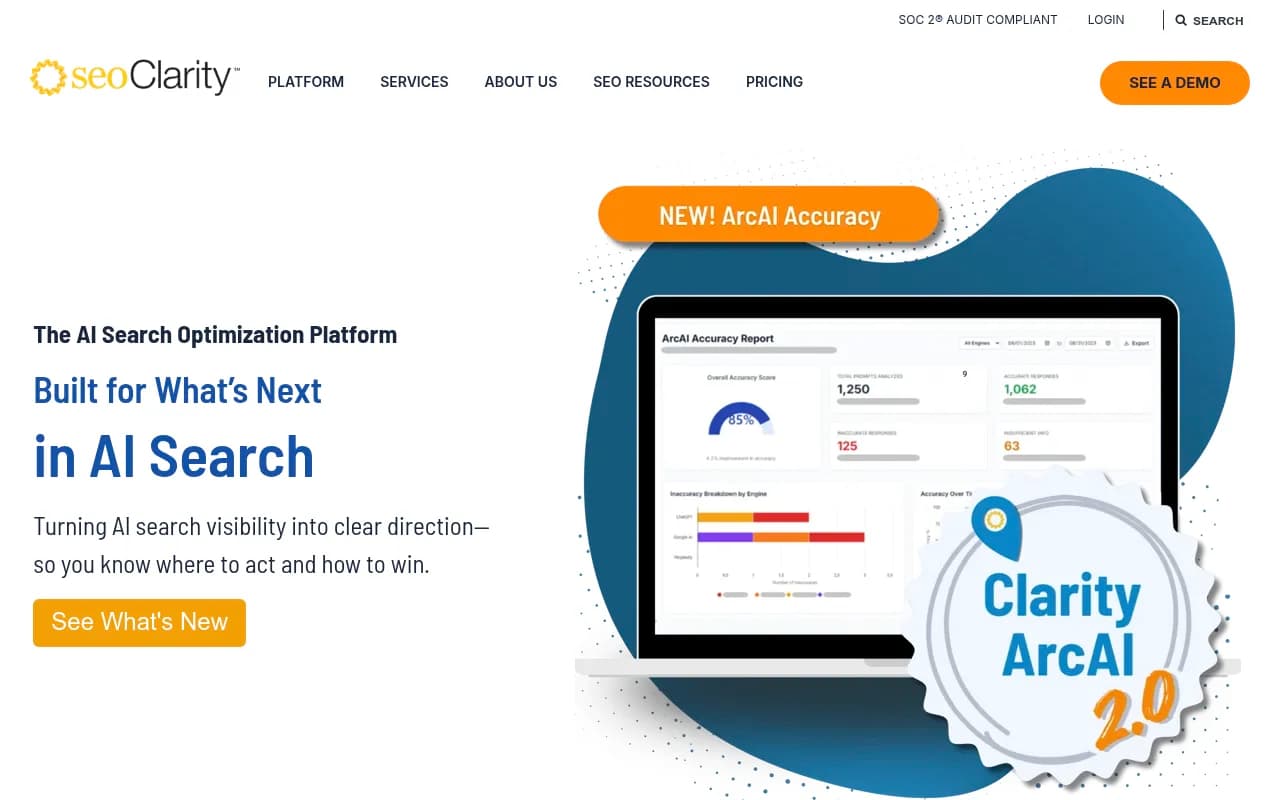
seoClarity has also been building out its AI visibility features and sits in a similar space to BrightEdge and Conductor, with some users finding it more flexible on pricing.
Making the decision
The right choice depends on what you're actually trying to solve.
If you need a full enterprise SEO platform and AI visibility is one feature among many, BrightEdge or Conductor can work. BrightEdge has more mature AI monitoring; Conductor has a better interface and stronger workflow tools. Neither is wrong.
If AI search visibility is your primary concern -- if you're trying to systematically track, analyze, and improve how your brand appears in ChatGPT, Perplexity, and Google AI Mode -- you'll likely find both platforms limiting. The data depth isn't there, the content optimization tools aren't built for this use case, and the pricing assumes you need the full traditional SEO suite.
In that case, the more honest comparison isn't BrightEdge vs Conductor. It's whether either platform is the right tool at all for what you're trying to do in 2026.