Key takeaways
- Crawler logs show whether AI bots reached your pages at all. GA4 can't tell you that, and a prompt tracker alone can't either.
- Plan gating is the main trap. Several tools lock crawler logs behind mid-tier plans, so the headline entry price often doesn't include the feature you came for.
- Promptwatch, Profound and Scrunch are the clearest picks for crawler-level evidence. Otterly.AI and Promptmonitor offer a cheaper route with lighter analytics.
- Prefer IP-verified logs over user-agent matching, and check CDN compatibility before you pay.
- Most comparison pages online are written by competing vendors, this one included in places. Verify prices on vendor pages.
Why crawler logs matter when you shop for alternatives
The Prompting Company positions itself around one promise: be the product cited by ChatGPT. It sits in Product Hunt's GEO tools category, and the alternatives Product Hunt lists include findable., Writesonic, PromptSignal, Citable, Wellows, NiubiGEO, Gauge, Omnia and Pendium. I couldn't find public pricing or crawler-log details for The Prompting Company itself, and I couldn't verify crawler logs for most of the names on that Product Hunt list. So I'm not going to pretend they have them.
What I can do is narrow the field to tools where crawler-log monitoring is documented, then be honest about the limits.
Why bother? Because of the order of operations. If an AI bot can't fetch a page, no amount of content tuning gets it cited. Promptwatch's own GEO comparison puts it bluntly: if you're blocking AI crawlers on a page, all the money is wasted. Server-side logs answer the question that analytics attribution can't: did the bot reach the page in the first place?
Think of the GEO loop as four stages: measure, diagnose, fix, verify. Most tools handle measurement well. Crawler logs belong to diagnose and verify, and that is where many products get thin.
What good crawler log monitoring looks like
Before the tool list, here is the checklist I'd use.
- IP verification. A user agent string is trivial to fake. Tools that only match on user agent will count spoofed traffic. Look for validation against the operator's published IP ranges.
- Bot-level detail. Provider totals hide the difference between training crawlers and answer-time fetchers. You want to see which bot inside each provider did the work.
- Page-level view. Which URLs were read, which returned errors, and which got cited afterward.
- CDN and log source support. Cloudflare, Vercel, Fastly, raw server logs. If your stack isn't supported, the feature is decoration.
- Plan gating. Check which tier unlocks logs, not which tier is advertised.
The market mix is a useful benchmark too. Promptwatch Data's AI crawler traffic report tracks weekly IP-verified requests from OpenAI, Anthropic, Google, Perplexity and Mistral from June 8 to September 6, 2026. OpenAI's share of verified requests fell from 94.8% in the week of June 8 to 79.8% in the week of August 31. The practical advice from that report is simple: compare your own logs against the market mix. If a provider is large in the report but near zero in your logs, you are probably blocked or unreachable for that provider. Check robots.txt, CDN rules and WAF rules.
One more data point worth knowing. Promptwatch Data also found that Meta-WebIndexer grew from roughly 2% to nearly 38% of tracked AI crawler requests between mid-July and August 9, 2026. Bots you have never heard of can become a big share of traffic fast, so a static allowlist ages badly.
Comparison table: crawler-log-capable alternatives
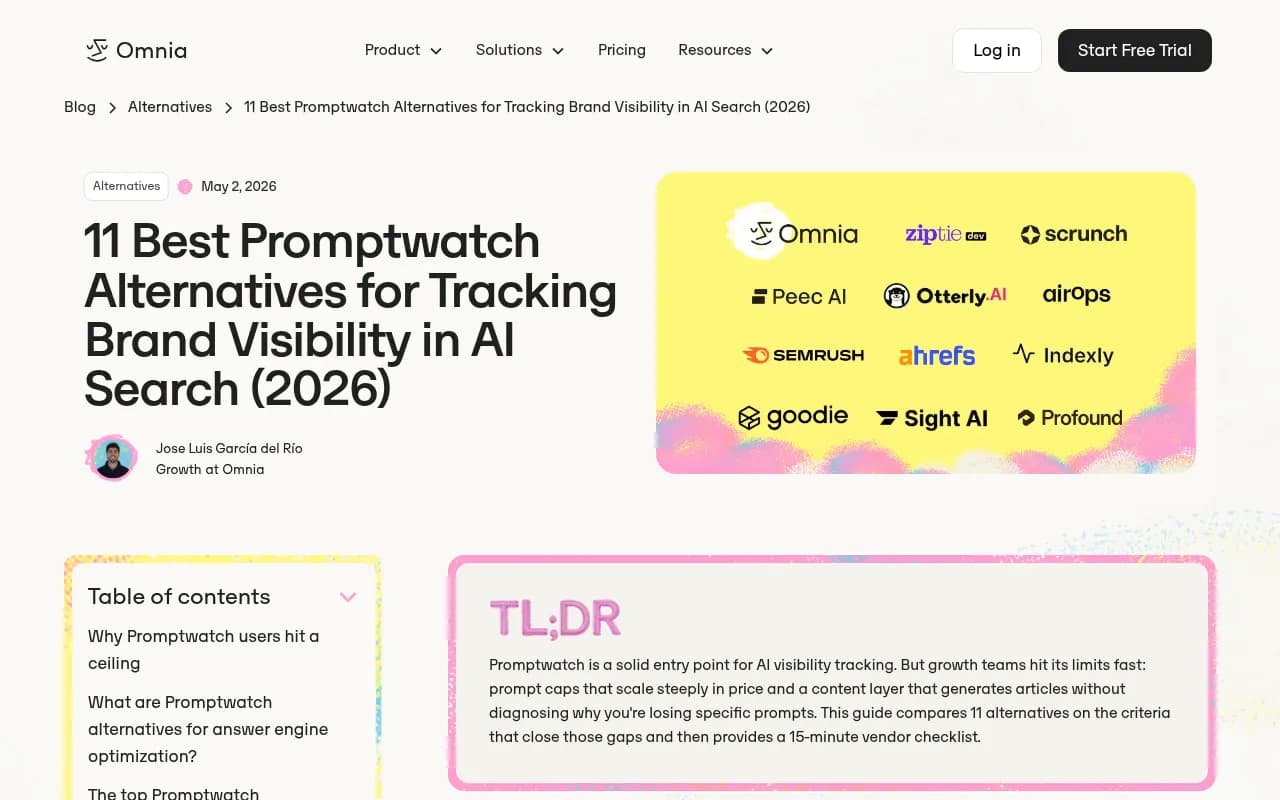
The figures below come from vendor-authored comparisons (Promptwatch's own blog, checked October 22, 2026, plus Orchly's and Omnia's pages). They disagree in places. Treat prices as approximate and confirm on each pricing page.
| Tool | Entry price | AI crawler logs | Content tools | Best for |
|---|---|---|---|---|
| Promptwatch | $95/mo (6,000 responses) | Check plan gating, see below | Content Agent publishes to WordPress, Webflow, Framer | Crawler evidence plus execution |
| Profound | Free 7-day trial, then custom | Yes (Agent Analytics) | Yes, via credits | Enterprise teams |
| Scrunch | about $300/mo month-to-month | Yes (agent traffic) | Basic on entry plan | Crawler control |
| Otterly.AI | $29/mo, 15 prompts | From Standard ($189/mo) per one source; another lists Agent Analytics | Audits and briefs | Tight budgets |
| Promptmonitor | $29/mo (yearly) | Crawler analytics | No | Cheap multi-engine |
| Peec AI | about 85 EUR/mo | Bot logs per Orchly | No | Clean monitoring |
| Semrush AI Visibility Toolkit | $99/mo | No (AI site audit only) | Separate add-on | Existing Semrush users |
| AthenaHQ | $295/mo | No | Yes | Revenue-linked reporting |
The tools, one by one
Promptwatch
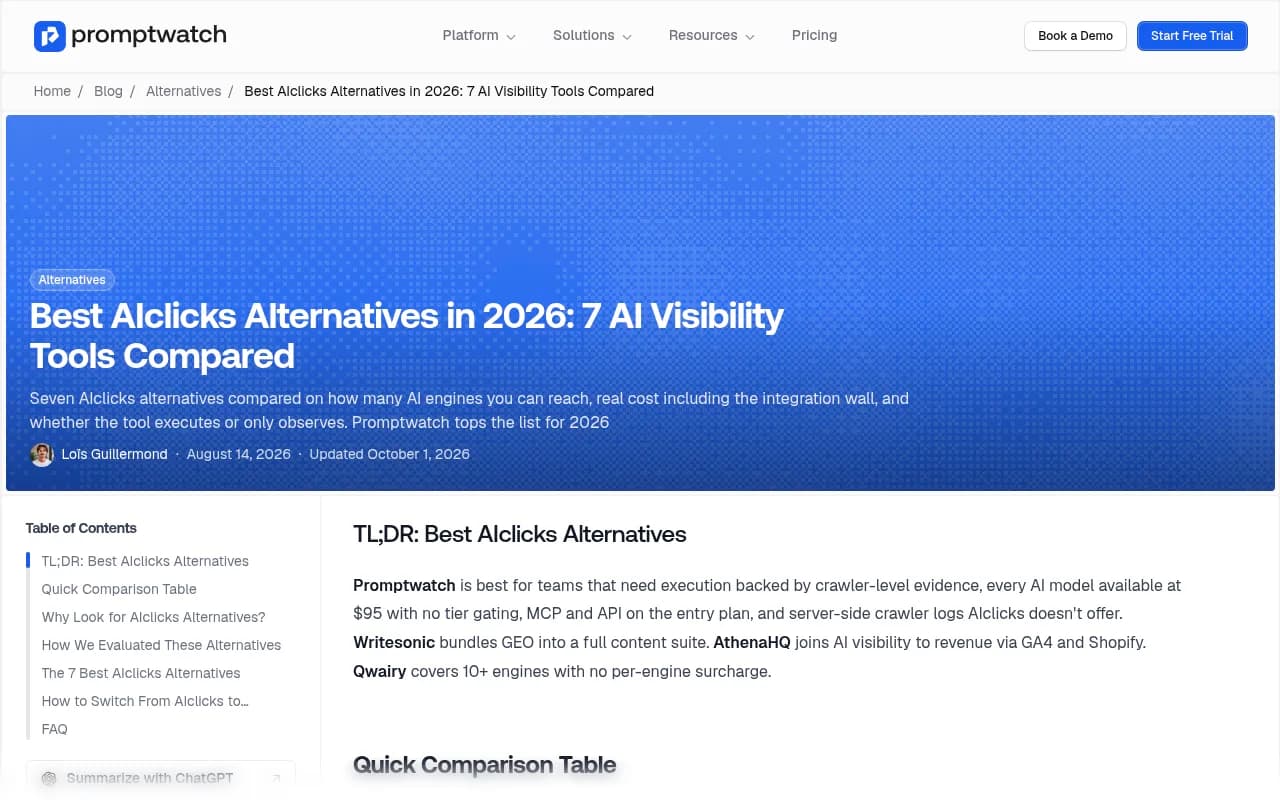
Promptwatch is the one I'd start with if crawler logs are the reason you're switching. It reads raw server and CDN logs, counts only requests that match operators' published IP ranges, and filters out spoofed bots. It connects to Cloudflare, Vercel, Fastly, AWS CloudFront, Netlify, Akamai and others, plus a WordPress plugin. From there it ties crawls to citations per page, so you can see the path from a bot visit to an actual mention, then use the Content Agent and Action Board to fix gaps and check whether the fix worked.

The plan-gating question is genuinely contested. Some comparison pages say logs are on every plan. Promptwatch's own blog and a couple of others say they start at the Professional tier ($245/mo), and one says the $95 Essential plan excludes them. Treat $245 as the safer assumption and confirm at promptwatch.com/pricing before you buy. Promptwatch also tracks Reddit, YouTube and LinkedIn citations and covers a wide set of AI engines, which helps if your citations come from off-site sources.
Profound
Profound's Agent Analytics tracks when and how AI agents read your pages. It's built for enterprise buyers: custom pricing after a short trial, with more engines unlocked on higher tiers. If you have a procurement process and want regional intelligence and demand data, it fits. If you want transparent pricing, it doesn't.

Scrunch
Scrunch leans toward crawler control. The Omnia guide describes it as helping build a machine-readable content layer for AI crawlers. Promptwatch's table calls its traffic data agent traffic only. Pricing starts around $300/mo month-to-month, or about $250 on yearly billing, which makes it the most expensive entry point here besides Profound.

Otterly.AI
Otterly is the budget option. Entry is about $29/mo for 15 prompts and four engines, with extras as paid add-ons. Sources disagree on its logs: one says they arrive from the Standard plan at $189/mo, another says Agent Analytics covers AI bot logs. Ask before committing.

Promptmonitor
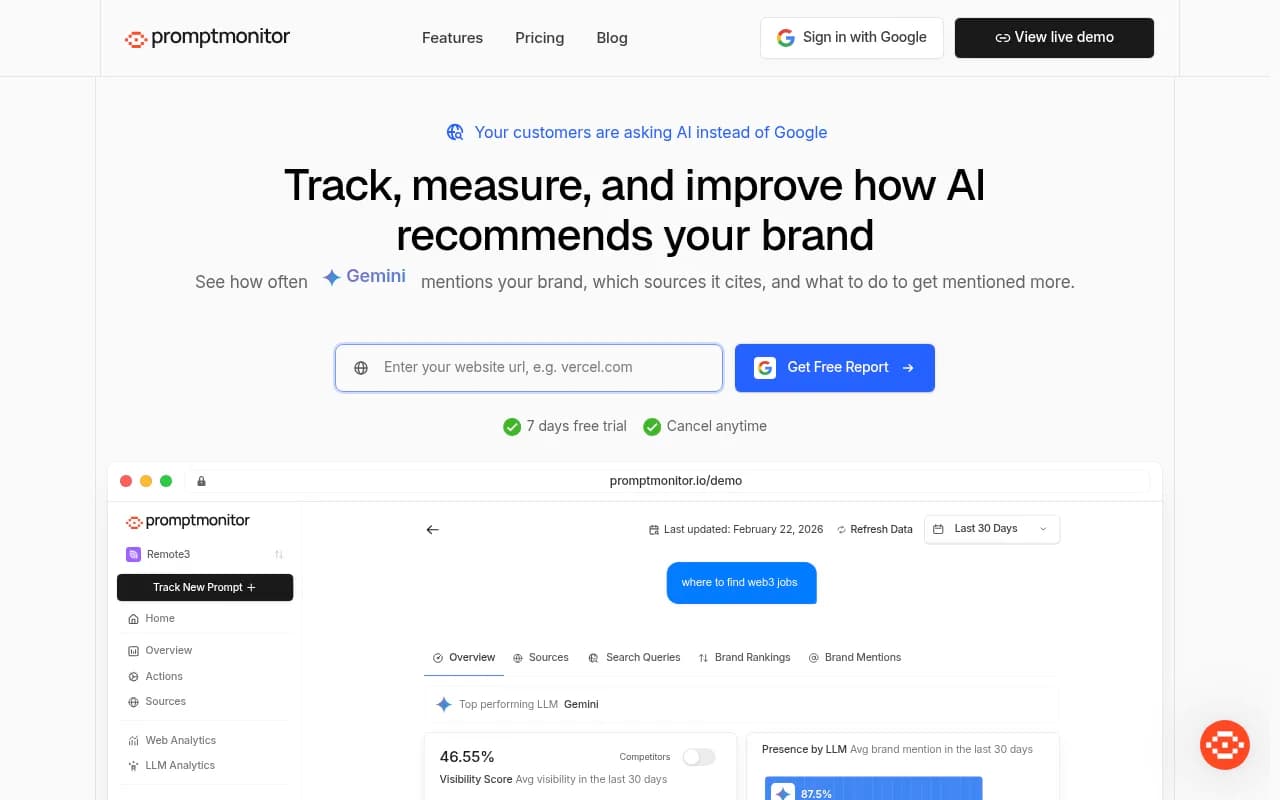
Promptmonitor starts around $29/mo on yearly billing, covers six engines and includes crawler analytics according to Orchly's comparison. It doesn't execute anything for you, so you'd pair it with a content workflow. Fine for a small team that mostly wants to see bot visits.
Peec AI
Peec AI is a clean monitoring product with unlimited seats and, per Orchly, bot logs. It covers fewer engines on the base plan (three, with Claude and DeepSeek reserved for Enterprise). It's good at monitoring and citation research, and you'll need another tool for execution.

Tools that lack crawler logs
Semrush's AI Visibility Toolkit, Ahrefs Brand Radar and AthenaHQ all came up in the research as lacking crawler logs. They can still be the right call if you want AI tracking inside a suite you already pay for. Just don't expect to diagnose a blocked crawler with them.

Other names worth a look
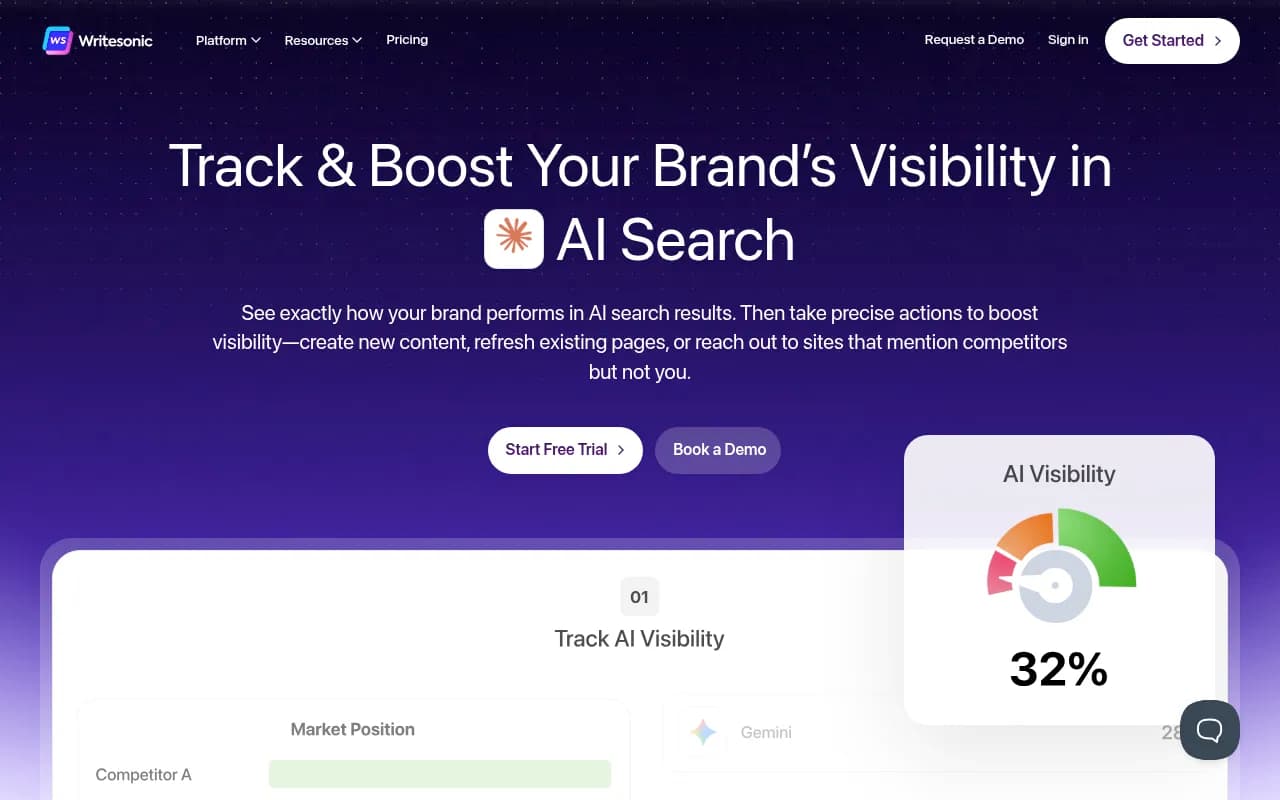
Product Hunt's suggestions for The Prompting Company include Writesonic, Gauge, Omnia and Wellows. I'm not claiming crawler logs for them because I couldn't confirm it. If you are curious, ask each vendor directly.
If you want a broader pool, the GEO software directory at bestgeosoftware.com lists many more platforms.
How to choose
Start with your stack
Look at your CDN first. If you're on Cloudflare, Vercel or Fastly, most of the tools above will plug in. If you're on something unusual, ask about custom endpoints or raw log ingestion.
Then decide whether you need execution
If you only want to know whether bots are reaching you, a cheaper monitor with crawler analytics is enough. If you also want to find content gaps, write and publish fixes, and see whether they got crawled and cited, you need a platform that closes the loop. That's where Promptwatch separates from the monitoring-only group.
Budget for the tier you actually need
A $29 or $95 headline price means little if logs start at $189 or $245. Write down what you need, then price only the plans that include it.
Pitfalls to avoid
- Believing the vendor comparison table. Almost every comparison page is written by a competitor. Cross-check against pricing pages.
- Accepting user-agent-only detection. Spoofing makes it unreliable.
- Ignoring the baseline. Compare your logs against market-wide crawler mix, like the one in Promptwatch's crawler report, so a near-zero provider stands out.
- Buying before a trial. Several of these have free trials. Connect your logs on day one and see if real data arrives.
Quick recommendations
| If you need | Pick |
|---|---|
| Crawler logs plus content execution | Promptwatch |
| Enterprise, custom contract | Profound |
| Crawler control and a machine-readable layer | Scrunch |
| Cheapest way to see bot visits | Promptmonitor or Otterly.AI |
| Clean monitoring with unlimited seats | Peec AI |
| AI tracking inside an existing SEO suite | Semrush or Ahrefs Brand Radar |
My blunt take: if the crawler logs are the reason you're leaving, verify gating before anything else. Ask each vendor which plan unlocks them, connect a real CDN during the trial, and see whether the bots in your data match what the market is doing.