Key takeaways
- This guide treats Slate as the AI visibility platform built for agencies (slatehq.com), not the CRM, docs generator, or editor that share the name.
- MCP and API access matter because they let your own agents, BI tools, and reporting pipelines read visibility data without anyone exporting CSVs.
- Promptwatch is the strongest fit here: a hosted MCP server with 110+ tools, REST API v2, a Looker Studio connector, and agents that act on the data.
- Lighter options like Trackee, Elmo, Ansvisor, and Peec AI are worth a look, but check their docs for current MCP and API coverage before committing.
- Test with one real workflow, such as a weekly client report pulled through MCP, before you migrate anything.
Which Slate are we talking about?
The name is crowded. There is the Technolutions Slate CRM for admissions, the Slate API docs generator, the Slate.js editor framework, and Slate Auto. This guide is about Slate, the AI visibility platform aimed at agencies that track how clients show up in ChatGPT, Perplexity, and other AI answers.
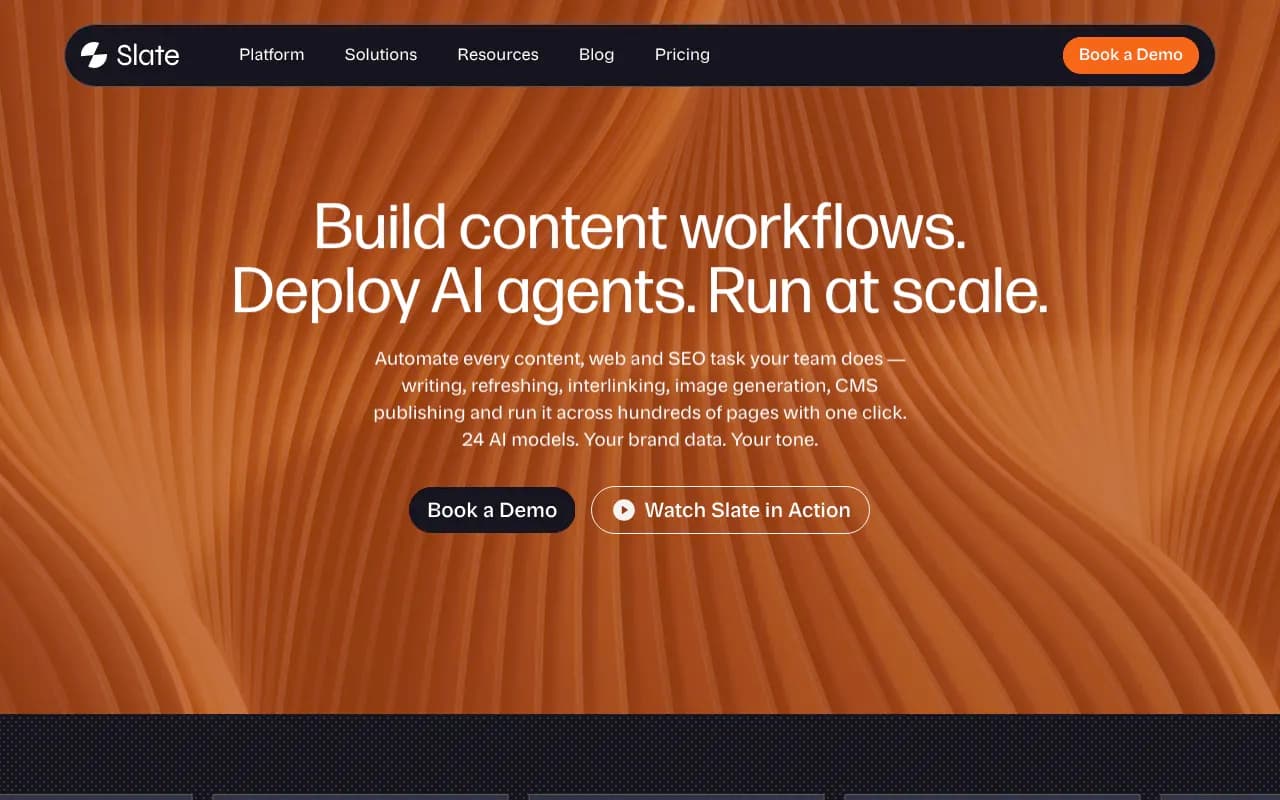
I could not find independent, current documentation on Slate's MCP or API surface while researching this, so I will not make claims about what it does or does not expose. Check its docs and your plan directly. What this guide does is give you a way to judge any alternative on the same terms.
Why MCP and API access matter for AI visibility tools
A dashboard is fine until the third client asks for a custom report. Then you want the data somewhere else: a spreadsheet, a warehouse, a Slack digest, or an AI assistant that can answer "which prompts did we lose this week?"
Two mechanisms cover this:
- A REST API is the classic route. Good for scheduled jobs, data warehouses, and dashboards you build yourself.
- An MCP server exposes the same data as tools that Claude, Cursor, ChatGPT, and other MCP-capable clients can call directly. You ask a question in plain language and the client fetches the data.
MCP has spread quickly. Firecrawl's 2026 roundup notes that Anthropic released it in November 2024, that OpenAI and Google DeepMind adopted it in early 2025, and that it moved to the Linux Foundation's Agentic AI Foundation in December 2025. Remote, OAuth-secured MCP endpoints are now the default for most vendors, so you rarely need a local install.
It is worth being clear about the division of labor. As one thread on r/mcp points out, agents do not talk to models through MCP; models have their own APIs. MCP is how an agent reaches tools and data. So an MCP server on a visibility platform does not replace the API. It gives an agent a friendlier way to use it.
What to check before you pick an alternative
Marketing pages say "API available" about almost everything. These are the questions that separate real access from a checkbox:
- Is the API included in the plan you would actually buy, or locked to enterprise?
- Does the MCP server cover read and write actions, or just a few read endpoints?
- Can you reach crawler, citation, traffic, and prompt data, or only top-line scores?
- Is the MCP endpoint hosted with OAuth, or do you have to run it yourself?
- Are there rate limits or credit costs per call that make automated reporting expensive?
- Does the data come from real AI interfaces or from API model calls? Answers and citations often differ between the two.
- Can agencies get white-label reports and a client portal, which is what most Slate users care about?
Treat the answer to number 3 as the tie-breaker. A visibility score through an API is a number. Per-page citation and crawl data is something you can act on.
Slate alternatives at a glance
| Tool | Positioning | MCP and API | Best for |
|---|---|---|---|
| Promptwatch | End-to-end AI visibility and GEO, with agents that act | Hosted MCP server with 110+ tools, REST API v2, Looker Studio connector | Agencies and in-house teams that want to automate reporting and fixes |
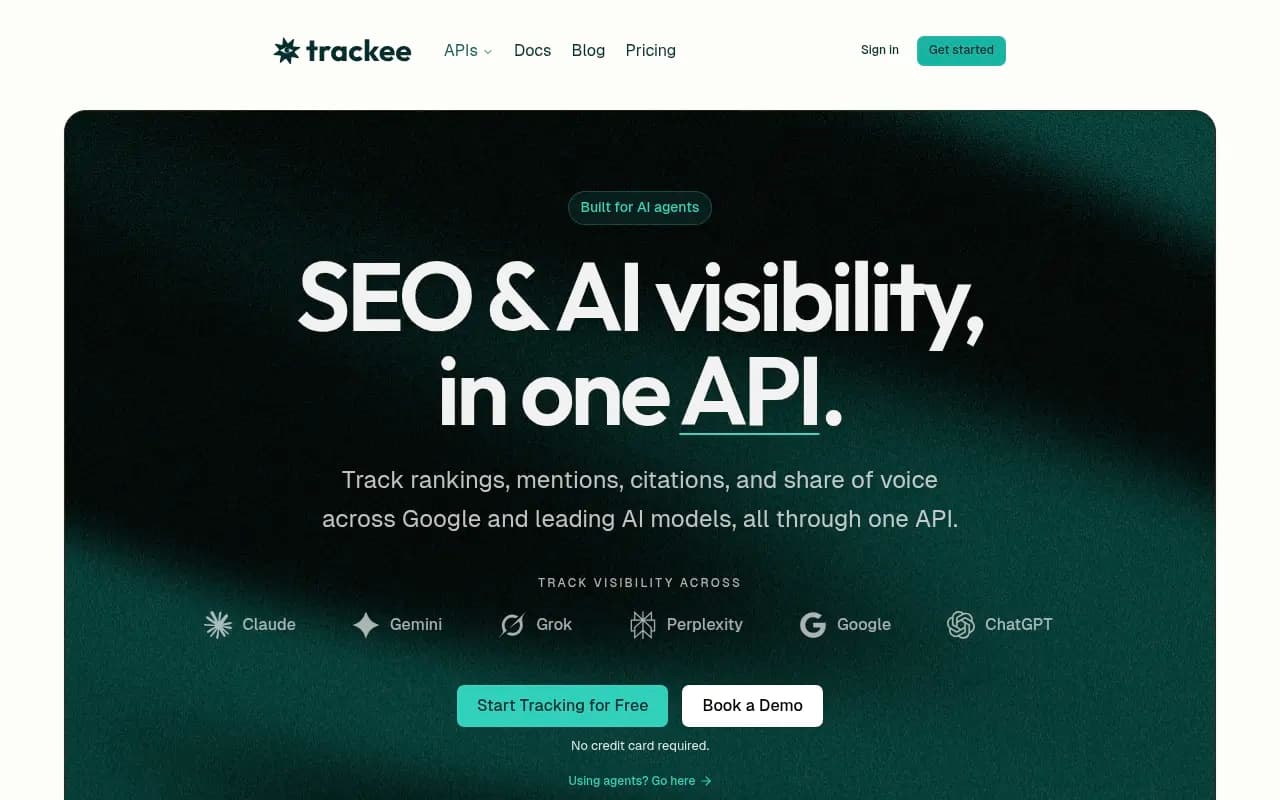
| Trackee | SEO and AI visibility API for AI agents | API-first by design | Developers building their own agent workflows |
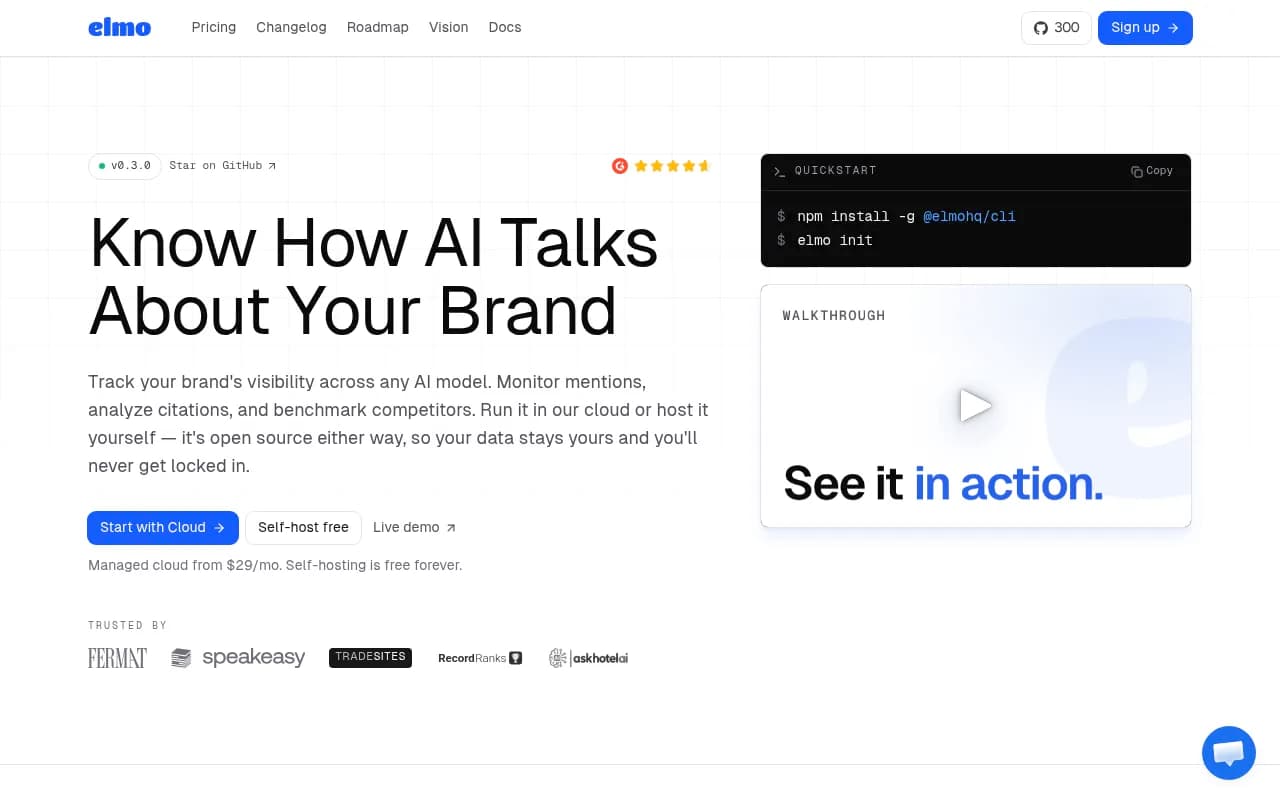
| Elmo | Open-source AEO and AI visibility tracker | Self-hosted, so you control the data | Teams that want to own the stack |
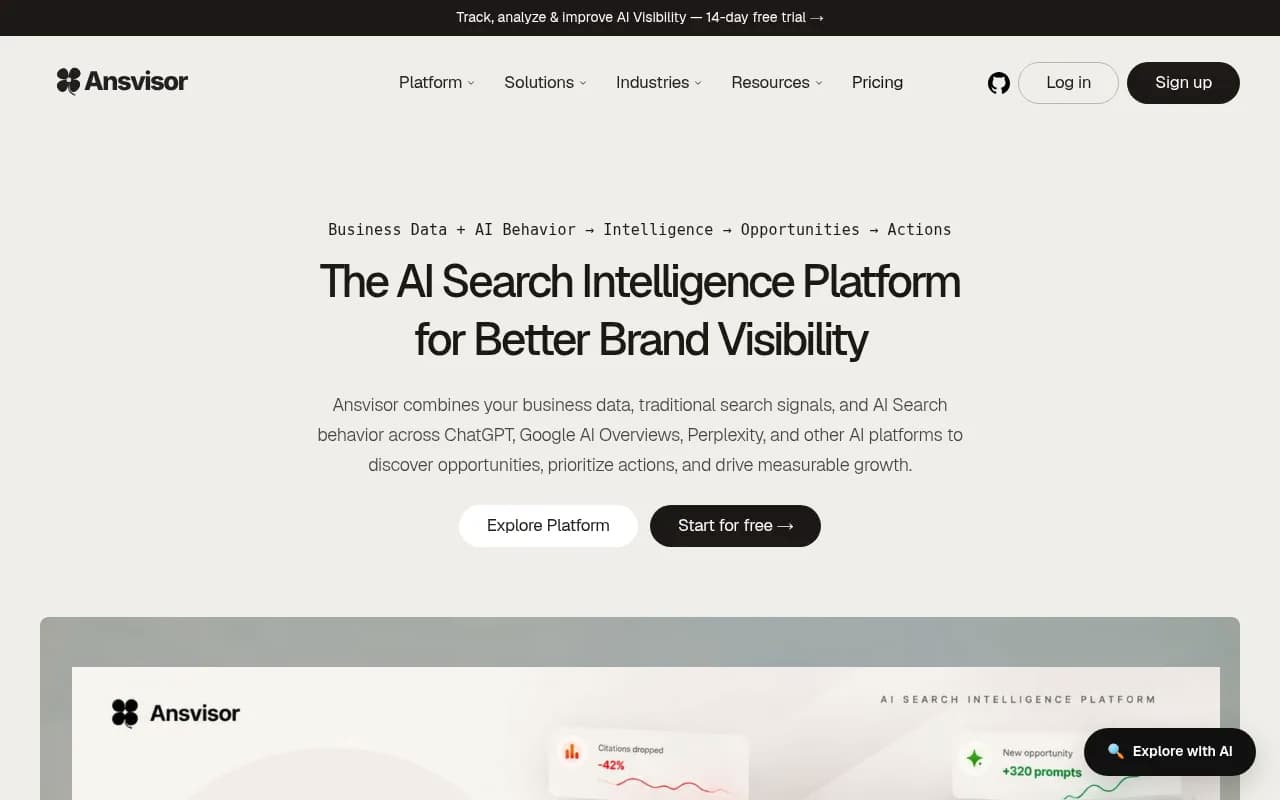
| Ansvisor | Open-source AI search intelligence | Self-hosted | Technical teams avoiding vendor lock-in |
| Peec AI | Monitoring without the optimization | Check current docs | Straightforward tracking |
| Otterly.AI | Affordable AI visibility tracking | Check current docs | Small budgets |
| Profound | Enterprise AI visibility | Check current docs | Large brands |
For the vendors marked "check current docs", I am deliberately not asserting specifics. Features in this category change monthly.
Promptwatch: the strongest option for programmatic access
Promptwatch is where I would start if MCP and API access is the reason you are leaving Slate. The access layer is broad: a hosted MCP server with more than 110 tools, REST API v2, a Looker Studio connector, Slack, an official ChatGPT plugin and Claude Connector, plus Cursor and Lovable integrations.

The interesting part is what sits behind those tools. Most trackers expose prompt results. Promptwatch also exposes IP-verified AI crawler logs, citation analytics, visitor analytics, and Google Search Console and Bing data per page. That means an agent connected over MCP can answer questions like "which pages rank in Google but never get cited by AI?" without you touching the dashboard.
A real example: TreeHouse, the company behind Pararius and Huurwoningen.nl, automated weekly reporting with the Promptwatch MCP. They grew AI search to about 25% of organic conversions, 99% of it from ChatGPT, after fixing crawler access and publishing proprietary rental data. Reporting was a side effect of having the data reachable.
Other things that matter for agencies:
- It tracks real user interfaces for ChatGPT, Google AI Overviews, Google AI Mode, Gemini, Perplexity, Microsoft Copilot, and Amazon Alexa, plus API models like Claude, DeepSeek, Mistral, and Grok. Answers in the real UI can differ from API outputs.
- Agent Chat works as an analyst over your live data, builds dashboards and PDF reports on request, and can run on a schedule into Slack.
- The Action Board and Content Agent close the loop. They plan, write, and publish content to WordPress, Webflow, or Framer, then track whether each page gets crawled, cited, and clicked.
- Agency plans start at Kick-off for $199/mo with unlimited projects and prompts, 10 seats, and white-label reports and client portal. Growth is $399/mo and Scale is $799/mo. Confirm current numbers at promptwatch.com/pricing.
The honest caveat: it is a large product. If you only need a monthly mention count, you will be paying for depth you will not use.
Developer-first and open-source options
Trackee
Trackee describes itself as an SEO and AI visibility API for AI agents. If your goal is wiring visibility data into a custom agent rather than operating a dashboard, that is a sensible starting point. Evaluate how deep the data goes and whether it covers real-UI tracking.
Elmo and Ansvisor
Both are open source. The upside is obvious: you control the data, the schema, and the integration. The cost is that you host it, maintain it, and build your own client-facing reporting. For an agency with an engineer on staff this can be a good trade. For everyone else it is a hobby project.
Llumo and OpenLens
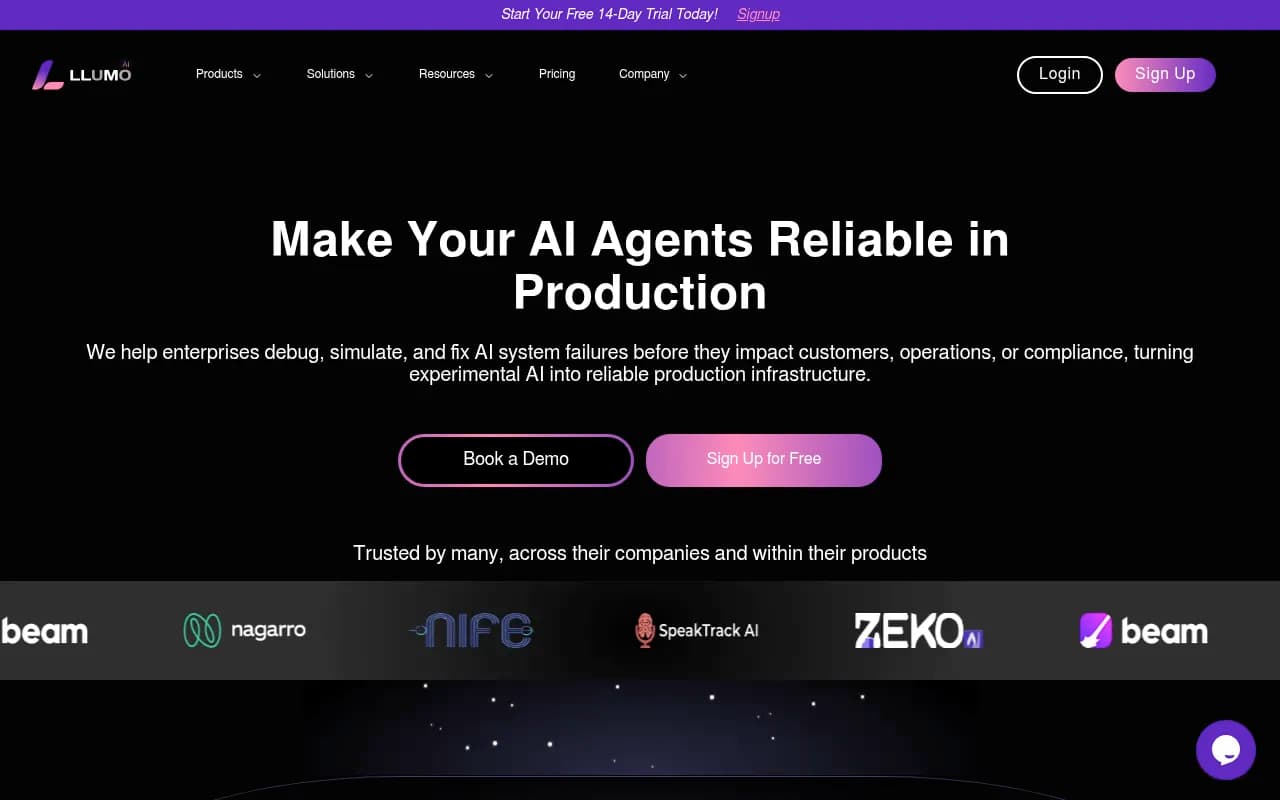
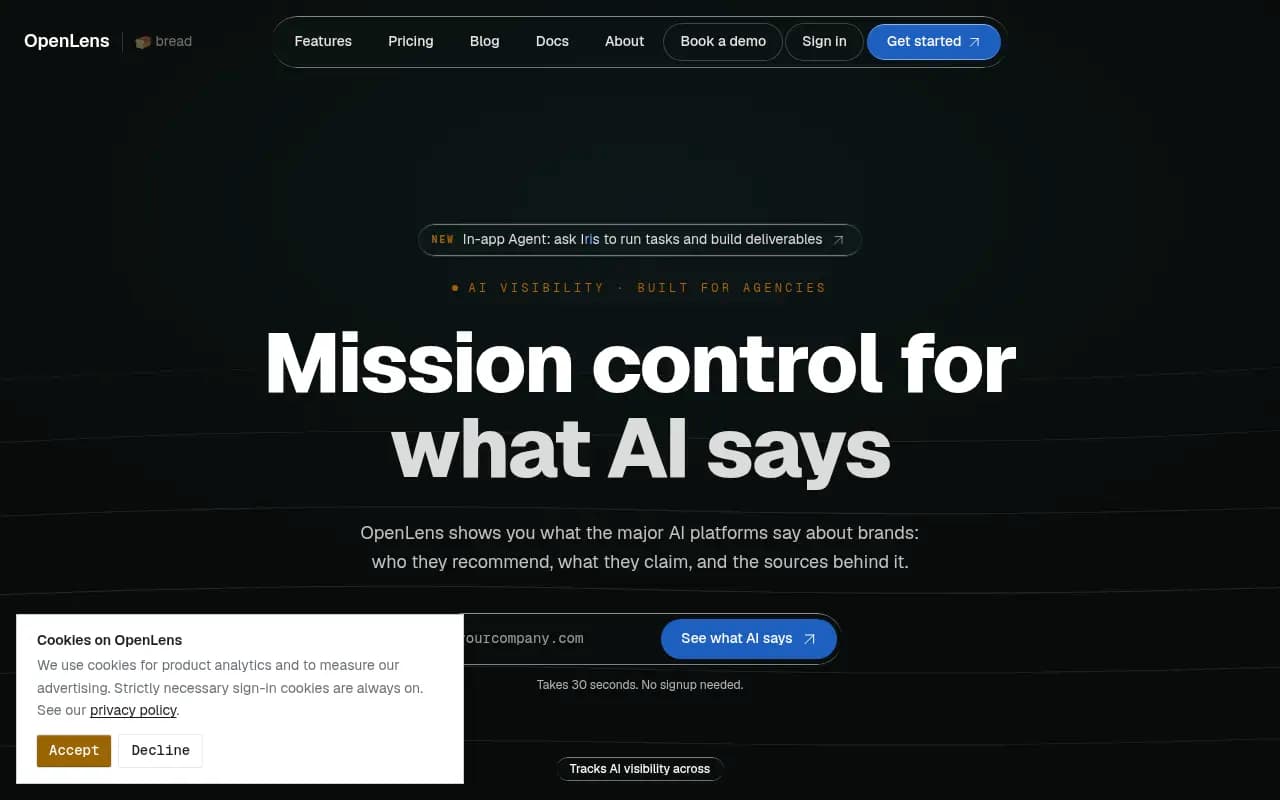
Llumo runs a bring-your-own-key model, and OpenLens has a free plan with an in-dashboard AI agent. Neither is a direct Slate replacement for a multi-client agency, but both are cheap ways to test whether an agent-driven workflow suits you.
Monitoring-focused alternatives
If your real need is tracking and you will pull data out occasionally, a simpler tool may do. Peec AI and Otterly.AI both sit in the monitoring camp. Profound targets enterprise buyers. Scrunch and AthenaHQ are also common shortlist names. These tools are strong at showing whether a brand was mentioned. They are generally weaker at explaining why, or at doing anything about it, so look closely at how much of the underlying data is reachable programmatically.




For a wider view, the GEO software directory at bestgeosoftware.com and the AI rank tracker listings at ai-rank-tools.com are useful places to scan more options.
How to test MCP access in an afternoon
Do not trust a feature list. Run one realistic task:
- Connect the vendor's MCP server to Claude, Cursor, or whichever client your team uses. Note how long setup takes and whether OAuth works cleanly.
- Ask for a weekly summary for one client: visibility trend, top lost prompts, top cited competitors.
- Ask something the dashboard does not answer directly, such as which cited pages belong to competitors on your priority prompts.
- Try a write action if the tool claims one, like creating a prompt or queuing a content task.
- Check the cost. Some platforms burn credits per call, and automated daily reports add up.
On security, the DEV Community guidance for MCP servers applies here too. Review what a server can do before approving actions, and start with a non-production project. A visibility MCP with write access can change tracked prompts or publish content, so scope tokens accordingly.
It also helps to know what the data layer looks like across the wider market. Promptwatch Data publishes AI crawler traffic benchmarks showing weekly IP-verified requests from OpenAI, Anthropic, Google, Perplexity, and Mistral from June 8 to September 6, 2026. If a vendor cannot expose crawler-level data through its API, you cannot build this kind of analysis yourself.
Which one should you choose?
| If you need | Pick |
|---|---|
| One platform for tracking, crawler logs, content, and automation, all reachable over MCP | Promptwatch |
| A raw API to feed your own agents | Trackee |
| Full control and self-hosting | Elmo or Ansvisor |
| Low-cost experiments | Llumo or OpenLens |
| Simple monitoring and occasional exports | Peec AI or Otterly.AI |
My blunt view: if you are an agency leaving Slate because you hit the ceiling on automation, move to something where the API and MCP cover the whole data model, not just the headline metrics. That is the gap between a tool that reports and a tool you can build on. Run the afternoon test above on your two top candidates, pick the one that answers the awkward question in step three, and negotiate the annual plan only after that.