Llumo Review 2026
Llumo offers a free AI visibility platform where you bring your own API keys, covering brand visibility tracking, competitor and share-of-voice monitoring, and citation and prompt-level analytics. The BYOK model keeps costs near zero for teams already holding LLM API access.

Key takeaways
- Llumo's real strength is agent debugging: its Eval360 engine traces prompts, retrievals, tool calls, and decisions in one view, with root-cause analysis that tells you what to fix first.
- The BYOK (bring-your-own-key) model keeps costs low if you already hold LLM API access, and the free signup plus a $49/month Pro tier makes it one of the cheapest entry points in LLMOps.
- The product has visibly pivoted. It was once marketed around cost reduction and AI visibility tracking, but the current site is almost entirely about agent reliability and observability.
- If you're coming here for AI search visibility specifically, be aware it's monitoring at best. Llumo lacks the content gap analysis, automated content generation, CMS publishing, AI crawler logs, and traffic attribution that Promptwatch offers.
- Best fit: engineering teams (5-50 devs) shipping LLM agents or RAG pipelines who need to catch hallucinations and workflow failures before customers do.

What Llumo actually does
Here's the first thing you should know: the marketing around Llumo has shifted noticeably, and it matters for what you think you're buying.
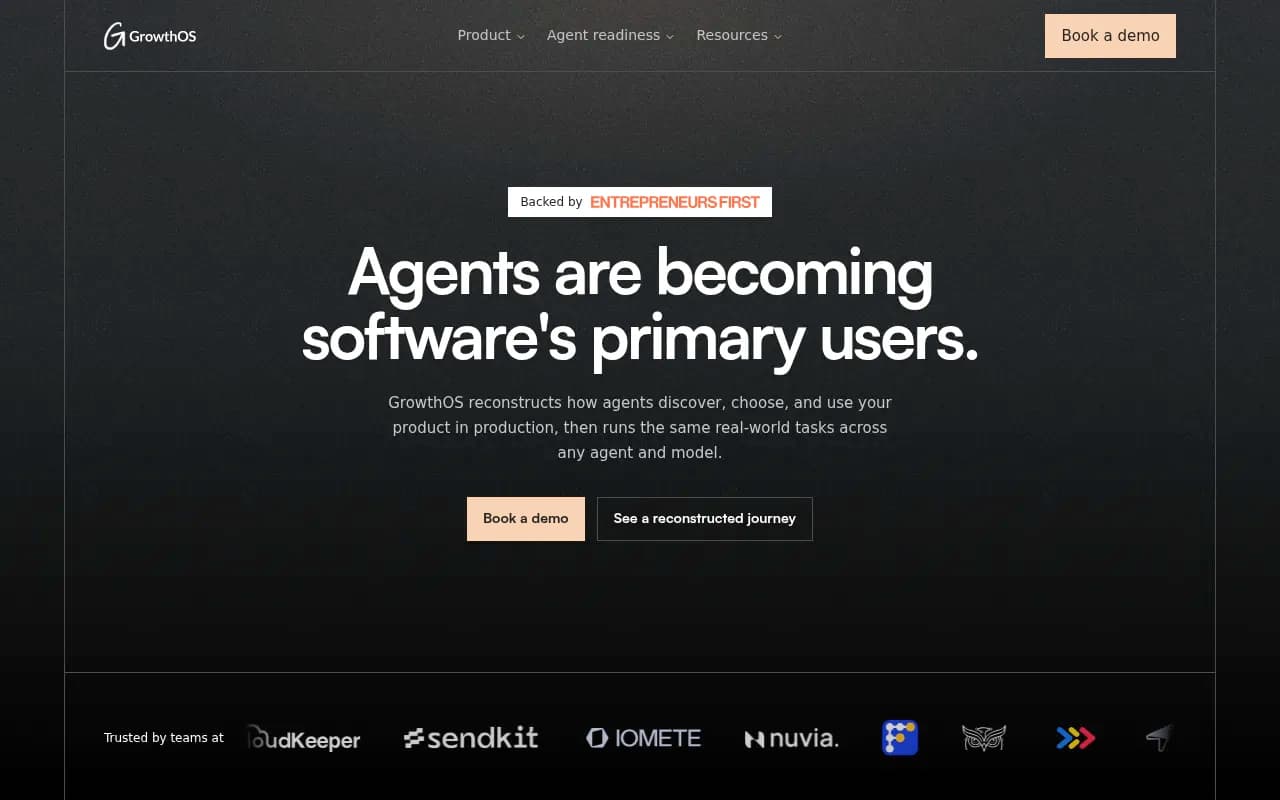
Older descriptions of Llumo, including its directory listings, position it as a bring-your-own-key AI visibility platform, tracking brand mentions and citations across AI models. The current llumo.ai homepage barely mentions any of that. What you'll actually see today is an LLMOps pitch: "Make Your AI Agents Reliable in Production," built around a proprietary evaluation engine called Eval360.
The pivot makes sense. Llumo started as a cost-optimization play (the company, based in Noida, raised $1 million in early funding partly on claims of cutting generative AI costs by up to 80%), and cost optimization naturally grows into reliability and observability once your agents are actually running in production. But if you found Llumo through its older positioning, prepare for a somewhat different product than expected.
The engineering side of the house will be happy. The marketing side less so.
Eval360 and the debugging workflow
Eval360 is the core of the platform, and it's the most interesting thing about Llumo. Instead of using GPT-4 or Claude as an evaluator (which is what most eval tools do, and which gets expensive fast), Llumo trained a small language model on 2M+ real-world agent behaviors to evaluate and debug workflows. The company claims this makes evaluation roughly 10x cheaper and 30% more accurate than LLM-as-judge approaches.
Those numbers are vendor claims, so treat them accordingly, but the architecture itself is sound. Running evaluations through a purpose-built SLM rather than a frontier model is genuinely cheaper, and cheaper evaluation means you can run more of it.
The workflow follows a loop:
- Trace everything. Input to output, across reasoning steps, retrieval, tool calls, latency, and cost. The flow diagram shows you exactly where an agent went off the rails instead of making you replay logs manually.
- Root cause analysis. RCA insights surface the specific failure, list exact issues, and recommend what to change first. This is the part users rave about in testimonials. One CTO described it as replacing "hours digging through logs" with instant error visibility.
- Simulation. Apply your fix in a sandbox, rerun the same workflow, test edge cases, and confirm the improvement before it touches production.
- Continuous monitoring. A unified dashboard tracks reliability trends, flags repeated failures, and sends Slack alerts when scores regress.
There's also a multi-option evaluation playground that lets you test prompt, model, or agent variations side by side on a single screen. If you've ever done model comparison by spinning up three notebooks and pasting outputs into a spreadsheet, you'll appreciate this immediately.
Framework and model support is broad: OpenAI, Anthropic, Meta, Mistral, Cohere, plus LangChain, LlamaIndex, Haystack, and Hugging Face. Integration is SDK-based, and users report setup in under 30 minutes. Custom-hosted LLMs are supported too, which matters for teams with compliance constraints.
The BYOK pricing model
Llumo's bring-your-own-key approach is a real differentiator in a category where evaluation platforms often charge based on tokens processed or run volume at premium rates.
The logic is straightforward: if you already pay for OpenAI or Anthropic API access, you connect your own keys and Llumo doesn't mark up your inference. The platform charges for its tooling (evaluation, tracing, dashboards) while your LLM spend stays between you and your provider.
What I found on pricing: a free signup tier, a Starter plan around 5,000 runs per month, and a Pro plan at $49/month with unlimited users and 25,000 runs monthly. That unlimited-seats policy on Pro is unusual and genuinely valuable for teams where half a dozen engineers want eyes on the same dashboards. For comparison, many observability competitors charge per seat, and those costs add up fast.
The free tier is limited enough that production teams will outgrow it quickly, but it's a legitimate way to evaluate the product on a real workflow before paying anything.
Who Llumo is built for
The persona fit here is narrower than the marketing suggests, and being precise about it helps:
- AI engineering teams shipping customer-facing agents. Support bots, summarization pipelines, multi-agent workflows. Anyone who's had a hallucination reach a customer knows the pain Llumo is selling against.
- CTOs and engineering leads at Series A to B startups who need reliability tooling but can't justify enterprise LLMOps contracts. The $49 Pro tier exists precisely for this buyer.
- ML platform teams running RAG in production who need drift detection and regression alerts between deployments.
Who it's not for: marketers tracking brand visibility in AI answers. This is where the older positioning creates real confusion.
Strengths and limitations
Strengths:
- Eval360 is a smart architectural bet. Purpose-built evaluation beats paying frontier-model prices to judge frontier-model output.
- The RCA-to-simulation loop genuinely shortens debug cycles. Trace, diagnose, fix, validate before shipping.
- Pricing is among the most accessible in LLMOps, and unlimited users on Pro removes a common scaling headache.
- Slack alerts and downloadable reports mean non-engineers can stay informed without living in the dashboard.
Limitations:
- The identity problem. Depending on where you encounter Llumo, you'll see it described as an AI visibility tool, a cost optimizer, or an agent debugging platform. That inconsistency suggests a company still searching for its final positioning, which is a risk when you're betting your observability stack on it.
- No published third-party evaluation of the 30% accuracy or 20x speed claims. Everything on the site is self-reported.
- If you do use it for AI visibility monitoring, it's monitoring only. Compare that directly against Promptwatch: Promptwatch adds content gap analysis, automated content agents that write and publish GEO-optimized content to your CMS, AI crawler logs showing when ChatGPTBot or ClaudeBot hit your site, visitor analytics that attribute real AI traffic and conversions, Reddit and YouTube citation tracking, prompt volume and difficulty scoring, and coverage across 10+ AI models including Google AI Overviews and AI Mode. Llumo has none of that optimization layer.
- The testimonial wall is enthusiastic but anonymous-adjacent. Several reviewers are identified only by first name and initial, which is a small trust flag for a company asking enterprises to instrument their pipelines.
- Documentation depth for complex multi-agent setups is hard to judge from the outside. "Less than 30 minutes to integrate" is a simple-pipeline claim.
The bottom line
Llumo is a genuinely interesting LLMOps tool at an aggressive price, and the Eval360 approach to evaluation is the kind of technical decision that could compound into a real advantage. Engineering teams shipping production agents should absolutely take the free tier for a spin before committing to pricier observability platforms.
Two honest caveats. First, the positioning whiplash means you should verify the product covers your actual use case before migrating anything. Second, if your need is AI search visibility and GEO, this is the wrong tool. Promptwatch is built for exactly that: it not only shows where your brand appears in ChatGPT, Claude, Gemini, Perplexity, and Google's AI answers, its agents help close the gaps with content generation and CMS publishing, backed by crawler logs and traffic attribution. Llumo debugs the AI systems you build. Promptwatch makes sure AI systems built by others recommend you. Different jobs, and both deserve the right tool.
Tags:
Frequently asked questions
What is Llumo used for?
How much does Llumo cost?
Is Llumo free?
Which models and frameworks does Llumo support?
Is Llumo an AI visibility or GEO tool?
Similar and alternative tools to Llumo