Key takeaways
- Dutch search volumes are tiny by global standards. A keyword with 500 monthly searches can be worth chasing, so tools that hide or round low volumes can mislead you.
- Start with free sources: Google Search Console for your own data, Google Keyword Planner for rough ranges, and autocomplete tools for ideas.
- Semrush and Ahrefs have Netherlands databases and are the usual paid picks, but I found no independent test of how accurate their Dutch volumes are.
- Dutch searchers use both Dutch and English, so research both languages and watch compound words and seasonal terms like Sinterklaas and Koningsdag.
- Treat volume as an ordering signal, not as truth. Verify with Search Console after 4 to 8 weeks.
Why Dutch keyword research is different
The Netherlands has about 18 million people. That sounds obvious, but it changes how you read every keyword tool. A term showing 300 searches a month in a US-built database might be a perfectly good target for a Dutch site, because the whole market is small.
One vendor-published comparison from SEOptimate (June 2026) argues that international tools treat anything under 1,000 searches as noise, round it to zero or hide it. SEOptimate sells a competing Dutch tool, so take the framing with salt. Still, the underlying point matches what most Dutch SEOs will tell you: for a small language market, the accuracy of small volumes matters more than headline database size.
A few other Dutch quirks to plan for:
- Google holds roughly 96% of search in the Netherlands (figure cited by AI Glot, quoting Wordbank), so Google-based data covers nearly everything.
- Dutch users often search in both Dutch and English, especially for tech, software and travel. Your research needs to cover both.
- Compound words matter. Dutch glues words together ("zonnepanelen terugverdientijd"), so one idea can have several spellings and splits.
- Practical modifiers like "beste prijs", "goedkoop" and "vergelijken" show up constantly in commercial queries.
- Seasonal peaks around Sinterklaas, Koningsdag and the summer holidays are strong and predictable.
Quick comparison of the main options
| Tool | Cost | Dutch strengths | Watch out for |
|---|---|---|---|
| Google Search Console | Free | Exact clicks and impressions for your own site | Only shows queries you already appear for |
| Google Keyword Planner | Free (needs an Ads account) | Direct Google source, country and language targeting | Broad ranges, rough volumes |
| Semrush | From about $139.95/mo | Large database, strong competitor research | Dutch low-volume accuracy unverified |
| Ahrefs | From $129/mo | Strong on competitors and backlinks | Credits are limited on lower plans |
| Mangools (KWFinder) | Budget suite | Clean interface, easy difficulty scores | Smaller feature set |
| Keyword Tool.io | Free and paid | Autocomplete suggestions in many languages | Volumes on paid tiers only |
| AnswerThePublic | Limited free searches | Question and preposition ideas | Not a volume tool |
| SEOptimate | From EUR 129/mo | Built for Dutch, free generator with intent labels | Vendor claims, unverified |
Prices come from third-party roundups and vendor pages. Check the vendor sites before buying, and check whether Dutch prices include VAT.
Free baseline: Google Search Console and Keyword Planner
Google Search Console
Google Search Console is where I would start every Dutch project, because it shows what Google really sends your site. The query report gives you exact impressions and clicks, no rounding, no estimates. For a small Dutch site this is often the most reliable data you have.
The limit is obvious: it only covers queries you already get impressions for. It is great for finding page-two keywords to push and for validating a tool's volume estimates. It is useless for discovering topics you have never ranked for.
Google Keyword Planner
Keyword Planner is free, but you need a Google Ads account. Set the location to Netherlands and the language to Dutch. It gives ranges rather than precise numbers unless you run active ad spend, so use it as a rough sanity check. It is still the most direct line to Google's own query data, and it works well for commercial terms where advertisers are active.
Paid all-in-one suites
Semrush
Semrush has a Netherlands database and is the most common paid pick. Keyword Overview, Keyword Magic Tool and its competitor gap reports all work with a Dutch country selection. Plans start at roughly $139.95 a month for Pro, with 500 tracked keywords, and Guru is about $249.95.
SEOptimate calls Semrush "US-oriented" for Dutch work. That comes from a competitor, and I could not find an independent test either way. My own advice: pick the Netherlands database explicitly, then compare a handful of Dutch keywords against your Search Console numbers before trusting it.
Ahrefs
Ahrefs is the other default choice. Lite is $129 a month, Standard $249. Its strength is backlink and competitor analysis, which matters when you need to see why a Dutch competitor outranks you. Credits are limited on lower plans, which can sting when you are exploring lots of long-tail terms. Ahrefs also has an AI visibility add-on, Brand Radar, starting at $199 a month.

The same competitor article claims Ahrefs has "less granular" Dutch data. Again, unverified. I would not choose between Semrush and Ahrefs on that claim alone. Run a free trial or the limited free tools with 10 to 20 Dutch keywords you already know the real numbers for.
Moz and SE Ranking
Moz and SE Ranking are cheaper alternatives with country-level databases. I would use them when Semrush or Ahrefs is out of budget. The pricing figures in some roundups looked unreliable, so confirm on the vendor pages.

Budget and specialist picks
Mangools
Mangools is a cheaper suite built around KWFinder, known for a clean interface and easy keyword difficulty scores. For a freelancer or a small Dutch webshop it is often enough. You set the country and language, and the long-tail suggestions are easy to filter.
Ubersuggest
Ubersuggest is a low-cost option with a lifetime-style pricing history and a simple interface. Good for beginners who want volume, difficulty and ideas in one place without learning a big suite.
Keywords Everywhere
Keywords Everywhere shows volume and related keywords right inside Google results. It is handy for quick checks while you browse Dutch SERPs, and for seeing People Also Ask terms in context.
AnswerThePublic and AlsoAsked
These two are for ideas, not numbers. AnswerThePublic pulls autocomplete questions and prepositions ("wat", "hoe", "waarom", "voor", "zonder"), which works well in Dutch because natural questions are often how people search. AlsoAsked maps People Also Ask trees so you can see what follow-up questions Google expects.
Serpstat and SEO PowerSuite
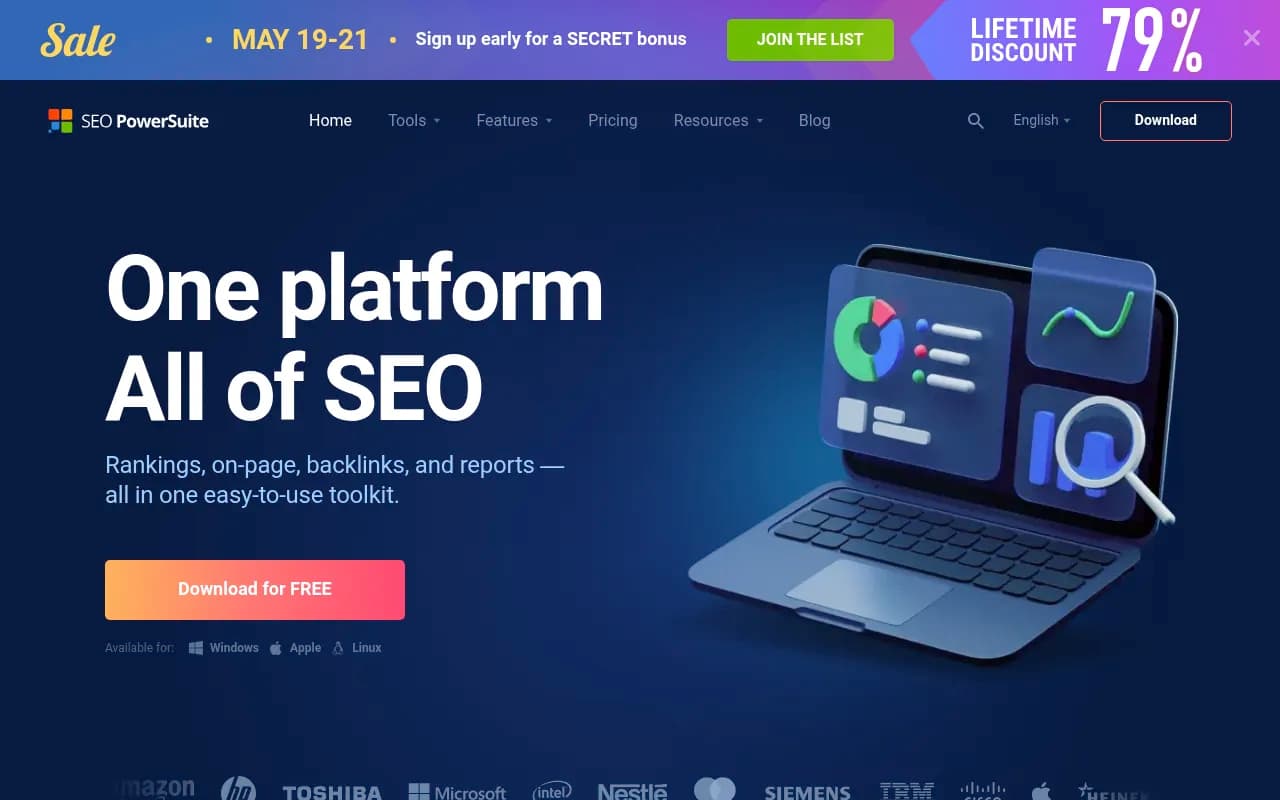
Serpstat is an all-in-one platform that is often cheaper than the big two. SEO PowerSuite is a desktop tool with no credit system, which suits people who run many Dutch queries and hate hitting limits.
SEOptimate
SEOptimate is a Dutch-market tool with paid plans from EUR 129 a month, a 3-day trial and a free keyword generator that returns Dutch or English ideas with intent labels. It also writes content and publishes to WordPress or Shopify. It was built for the Dutch market, according to the company, which is vendor positioning I could not verify. If Dutch long-tail accuracy is your main pain point, a trial next to Semrush or Ahrefs is a fair test.
Teun.ai
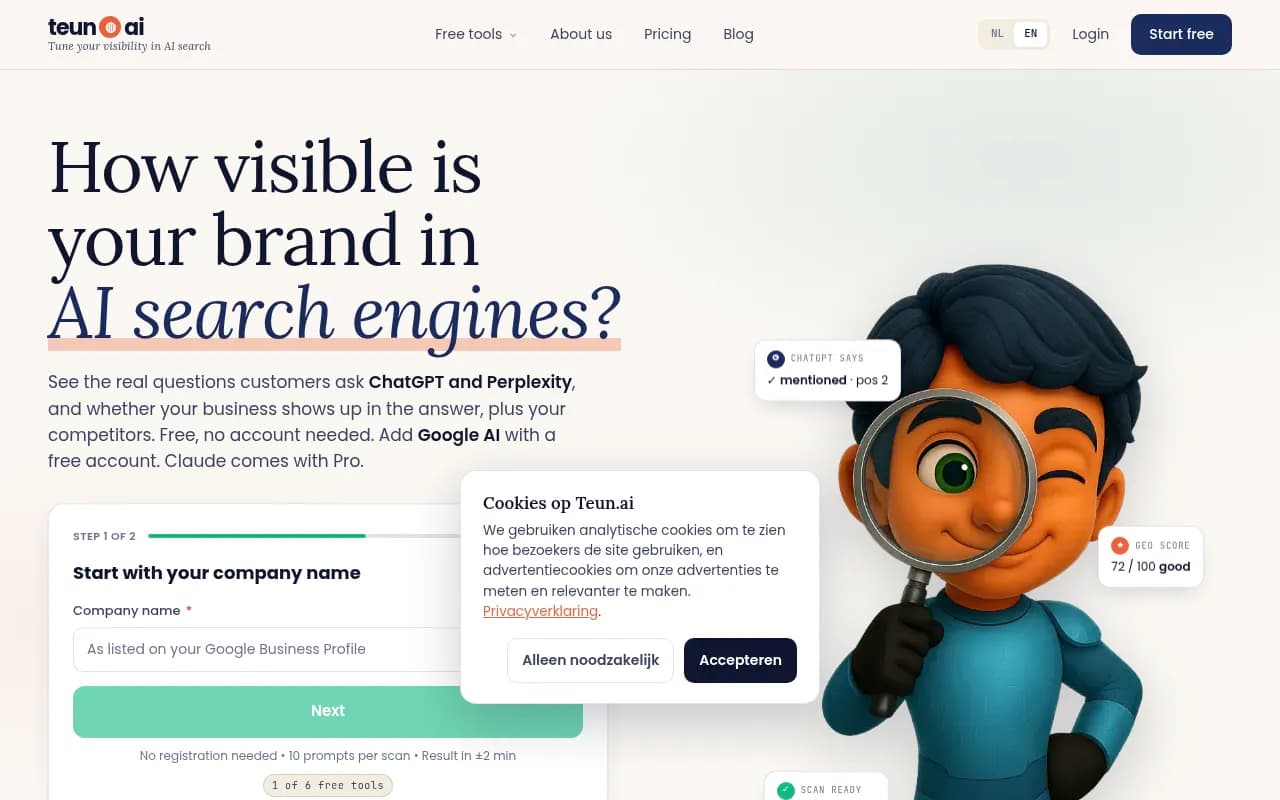
Teun.ai is a Dutch toolkit focused on AI visibility with free rank checks. It does not replace a keyword database, but it is useful if you want to see how Dutch prompts surface your brand in AI answers.
A Dutch keyword research workflow that works
Here is a workflow I would use for a Dutch site. It adapts the seven steps SEOptimate lays out, and it works with any combination of tools above.
- Start with a seed keyword in Dutch, and a second seed in English if your audience uses both.
- Pull suggestions from your main tool and from an autocomplete tool. Dutch compounds often show up in autocomplete first.
- Check intent by googling each keyword and looking at what ranks. If the top ten are webshops, a blog post will not win.
- Assess competition. Long-tail terms are the best entry point for a small or new site.
- Assign one keyword per page so your own pages do not compete.
- Write or optimise the page with the keyword in the title, H1 and meta description.
- Monitor in Search Console after 4 to 8 weeks and adjust.
Reading small volumes
When a tool says 50 or 90 searches for a Dutch term, do not throw it out. Look at the SERP: are there dedicated pages ranking, and do the results show real commercial intent? Volume is an ordering signal. Verify against Search Console data once you have any impressions.
Covering both languages
For tech, SaaS, travel and finance, run the same topic in English and Dutch. The AI Glot guide recommends researching both and keeping a glossary so you stay consistent on which English terms you keep and how you spell compounds. I would add one more check: look at which language the top results use before you decide.
Planning for seasons
Dutch seasonal peaks are sharp. Sinterklaas content needs to be live well before early November, and Koningsdag content weeks before April 27. Check Keyword Planner or Google Trends for the seasonal curve, then schedule publishing ahead of it.
Keyword research for AI search in Dutch
Dutch buyers now ask ChatGPT, Gemini and Google AI Overviews questions in Dutch too, and the prompts they use look more like full sentences than keywords. Traditional tools cover Google volumes, not AI prompts. Tools like Promptwatch can track how your brand appears in AI answers by country and language, and its prompt volumes and query fan-outs show what the models actually search for.

If you want data on what AI engines cite, Promptwatch's research hub at promptwatch.com/data is a good starting point. For more options in this category, the GEO software directory at bestgeosoftware.com lists tools side by side.
Which tool should you pick?
- Tiny budget or just starting: Google Search Console plus Keyword Planner plus AnswerThePublic. All free or nearly so.
- Freelancer or small webshop: Mangools or Ubersuggest for simple, cheap Dutch keyword lists.
- Agency or in-house team with competitor work: Semrush or Ahrefs, picked after a trial with your own Dutch keywords.
- Dutch long-tail focus and content publishing: trial SEOptimate against one of the big suites.
- AI search visibility in Dutch: add an AI visibility platform on top of your keyword tool.
The honest answer is that no one has published an independent test of Dutch volume accuracy that I could find. So run your own: pick 15 Dutch keywords where Search Console gives you real impressions, compare each tool's estimate, and keep the one that orders them best.
Final thoughts
Dutch keyword research is mostly about not trusting a single number. Use free first-party data as your anchor, add one paid suite for competitor and idea discovery, and treat small volumes as meaningful. Then check the results in Search Console after a couple of months and let the real clicks decide what to write next.