Key takeaways
- Ranketta is an AI visibility and merchandising platform for e-commerce and D2C brands. Its strength is per-SKU tracking and fixing catalog data, which is the wrong center of gravity for most content teams.
- A content team needs one loop: find the gap, brief it, write it, publish it, then check whether AI actually cites the page. Judge every tool by how many of those steps it covers.
- Promptwatch covers the full loop in one product. Frase, Surfer, Writesonic and AirOps cover the middle (briefs and writing) and add varying levels of tracking.
- Plan refreshes. Promptwatch Data shows product pages and how-tos reach their ChatGPT citation half-life at roughly 74-77 days, and news in about five weeks.
- Nearly every public "Ranketta alternative" article is written by a competitor, including Ranketta's own. Verify pricing on vendor pages before you commit.
Why content teams look past Ranketta
Ranketta is good at a specific job. Per its pricing page, it tracks visibility per SKU, rewrites product titles and attributes, and pushes a corrected feed toward the engines that read it. Plans run from Starter at EUR 79 for stores (EUR 69 for brands) through Growth at EUR 199 and Scale at EUR 449, with Enterprise on request. If you run a Shopify or D2C catalog, that is a legitimate fit.
Content teams usually aren't in that position. You publish articles, comparison pages, landing pages and docs. Your question is not "which of my 4,000 SKUs is invisible?" but "which prompts do we lose, what page would win them, and did the page we shipped last month work?" That is a workflow problem, and the dageno.ai write-up on Ranketta alternatives frames it the same way: the gap between spotting an AI visibility problem and shipping a measurable fix is what matters, not the number of dashboards.
A small caution before the list. Ranketta's own roundup of Profound alternatives ranks Ranketta first, and the third-party "Ranketta alternative" posts come from Dageno, ecentic and Siftly, each of which sells a competing product. I used those pieces for facts, not for rankings.
The four-step loop to score tools against
Before comparing products, write down what each step actually requires.
Track gaps
You need prompts tracked from the real interfaces of ChatGPT, AI Overviews, Gemini and Perplexity, plus a way to see which of your pages get cited and which competitors win instead. A gap report that maps your pages against prompts is more useful to a writer than a visibility score.
Write
The brief should come from the gap, not from a keyword list. That means pulling in the competitor pages AI already cites and the sub-queries AI runs per answer.
Publish
If publishing means copy-pasting into a CMS, the loop slows to a crawl. Look for direct WordPress, Webflow or Framer publishing, or at least a clean export.
Measure
This is the step most tools skip. You want to know whether crawlers read the page, whether it got cited, and whether it sent visits. Without that, you are guessing.
Comparison at a glance
| Tool | Tracking | Writing | CMS publishing | Re-measures after publish | Best for |
|---|---|---|---|---|---|
| Promptwatch | Real-UI tracking across all major engines | Content Agent, on-demand articles, refresh | WordPress, Webflow, Framer | Yes: crawler logs, page tracking, visitor analytics | Teams that want the whole loop in one place |
| Surfer | AI Search tracker | Editor, briefs, AI writing | Via editor/integrations | Limited to AI tracker | Teams already optimizing pages for Google |
| Writesonic | Tracks several engines by plan | AI articles | Check plan | Via platform | Content production plus light tracking |
| Frase | AI visibility included | Research, briefs, writing | Yes | Yes, per vendor | Research feeding straight into pages |
| AthenaHQ | Multi-engine tracking | Writes and publishes | CMS and Shopify | Yes, per vendor | Shopify content teams |
| AirOps | Light | Workflow-based content | Via workflows | Depends on setup | Ops-heavy teams building custom flows |
| MarketMuse | Not the focus | Strategy and briefs | No | No | Topical coverage planning |
Engine coverage and plan limits change quickly. I could not verify current pricing for Surfer, Frase, MarketMuse, AirOps, Writesonic or AthenaHQ from primary vendor pages, so check each before budgeting.
The alternatives, in the order I would test them
Promptwatch: best for the full gap-to-measurement loop
Promptwatch is the one I would start with if the brief is "write and ship content that AI cites, then prove it." It is an optimization platform rather than a tracker, which is the practical difference for a content team.

Here is how the loop maps to the product:
- Gaps: content gap analysis maps your pages against the prompts AI answers, with coverage scores, and the Action Board turns findings into a prioritized to-do list.
- Write: the Content Agent plans and writes against visibility gaps, using query fan-outs and the competitor pages AI already cites. A Brand Book and Knowledge Base keep it on-voice, and Content Refresh gives git-diff-style updates for existing pages.
- Publish: WordPress via the official plugin, Webflow, and Framer, as drafts or live, manually or on a schedule with a review inbox.
- Measure: IP-verified AI crawler logs show whether bots read the page, Page Tracker shows whether AI cites it, and visitor analytics show traffic and conversions. Underperformers come back as actions.
The proof points are concrete. Crisp reported 2x higher conversion rates from AI traffic versus traditional channels and scaled to 5-10 articles a day, per its case study. The Content Agent starts on the Business plan at $579/mo, which also adds faster-than-daily tracking and Fact Check. Professional ($245/mo) includes 5 AEO articles and the Knowledge Base, and Essential ($95/mo) is tracking-only. Confirm current numbers at promptwatch.com/pricing. A 7-day free trial and a free AI visibility report are the cheap ways in.
Where it is less ideal: if your only need is per-SKU feed correction for Google Merchant Center, Ranketta is more specialized. Promptwatch does cover ChatGPT Shopping and Amazon Alexa product visibility on Business, but it is not a feed editor.
If you are choosing between Promptwatch and the monitoring-first vendors, the Promptwatch vs Profound page lays out the differences.
Surfer: best if your workflow is already built around on-page optimization
Surfer combines a content editor, briefs, audits, internal linking, AI writing and an AI Search tracker. Per Omnia's roundup, standalone AI Search Analytics starts at about $82 a month billed annually for 50 prompts tracked daily.
It is a natural fit when the bottleneck is producing and polishing pages. The tracking side is lighter than a dedicated platform, and I would not expect crawler-level diagnostics from it.
Writesonic: best for production plus basic visibility
Writesonic puts AI articles, SEO, GEO, site audits and visibility tracking in one account. Omnia lists Starter at about $79 a month billed annually, with 50 prompts and 15 articles a month on ChatGPT, Gemini and Google AI Overviews. Higher tiers add sentiment and Action Center features.
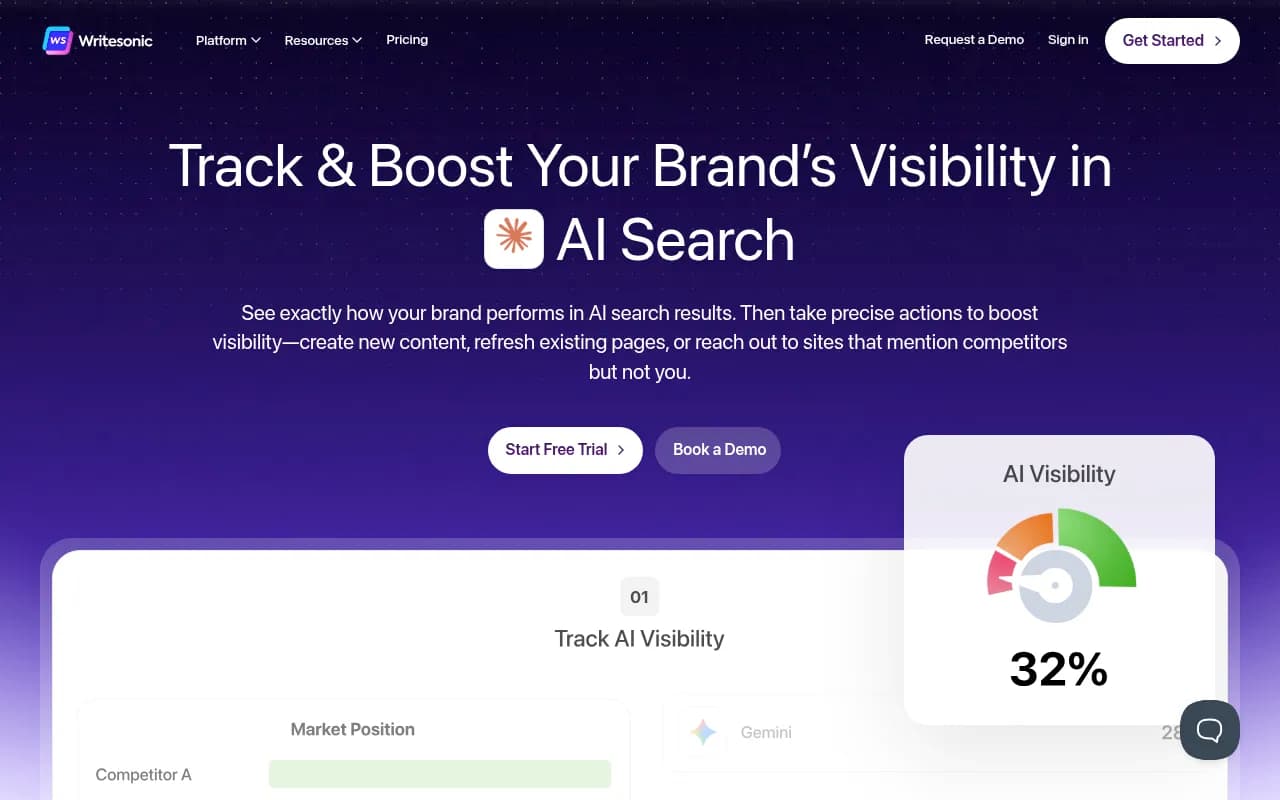
Check which engines and action features sit on your tier before comparing the headline price with a dedicated tracker. Siftly's comparison argues the gap between insight and a published fix is the weak spot for growth teams on this kind of tool, though Siftly sells a competitor.
Frase: best when research should feed directly into published pages
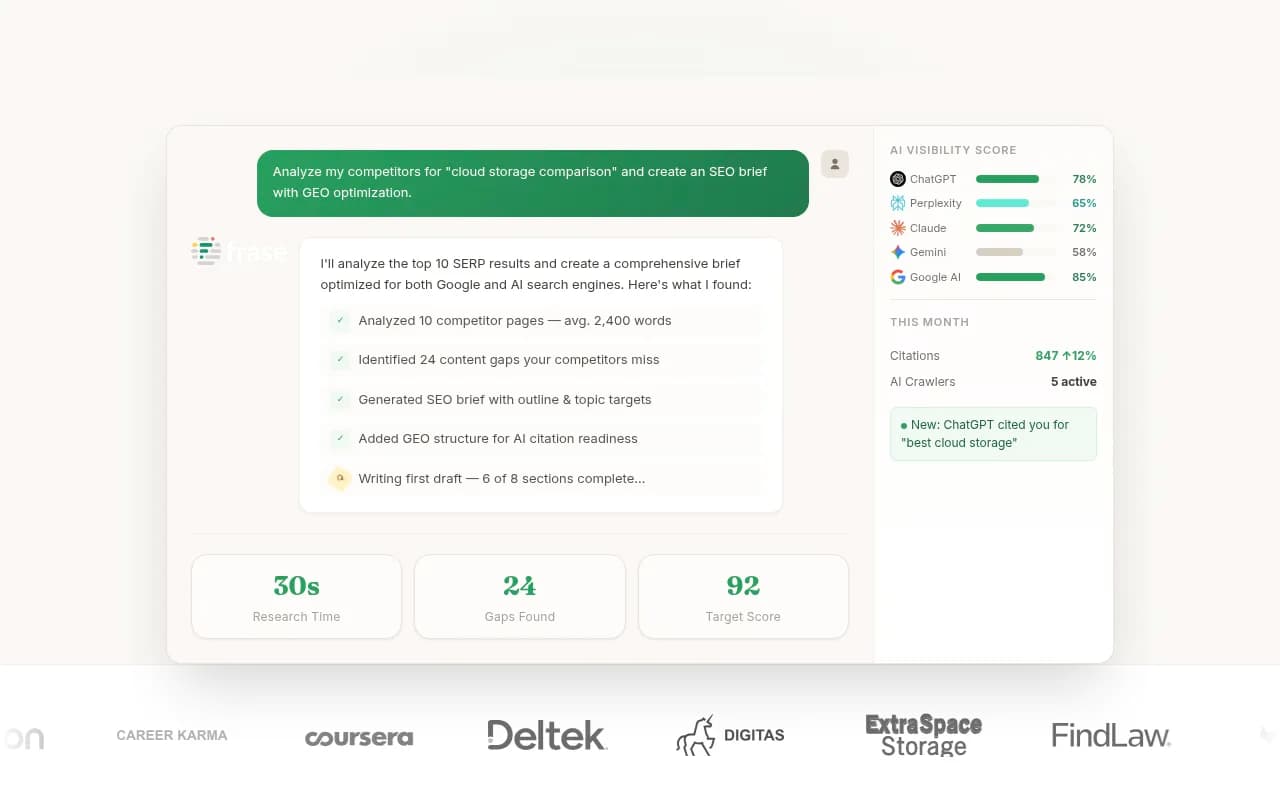
Frase links research, briefs, writing, optimization, publishing and AI visibility. If your writers live in briefs, that continuity is the draw.
AthenaHQ: best for content teams on Shopify
Ranketta's own Profound roundup credits AthenaHQ with writing and publishing content straight to a CMS, and generating Shopping Pages kept in sync with Shopify prices and variants. That makes it the closest like-for-like swap if you are a Shopify content team leaving Ranketta but still want store-aware copy. Note the catalog lists two similarly named entries, so make sure you are looking at athenahq.ai.

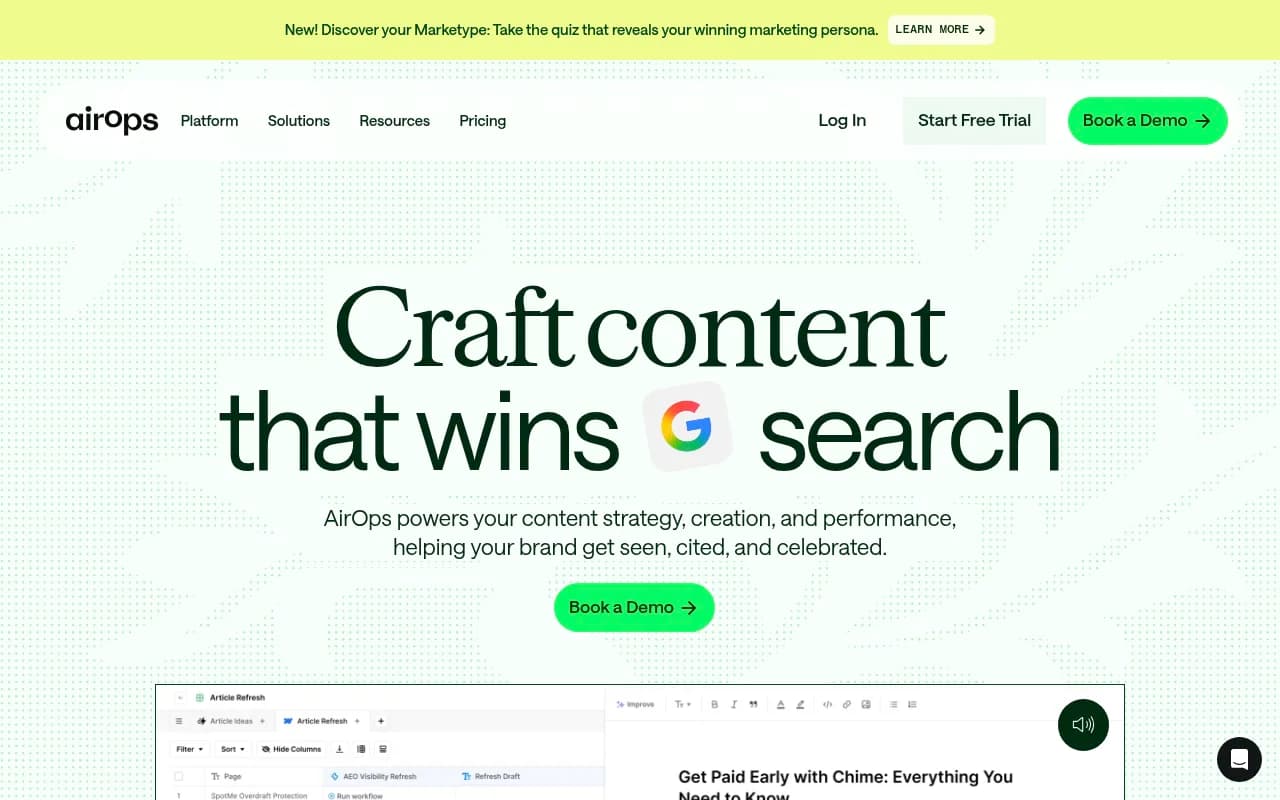
AirOps: best for teams that want configurable workflows
Evatype describes AirOps as a fit for teams that turn AI-search findings into configured content workflows. You build the pipeline, which is powerful if you have an ops person and a drag if you do not.
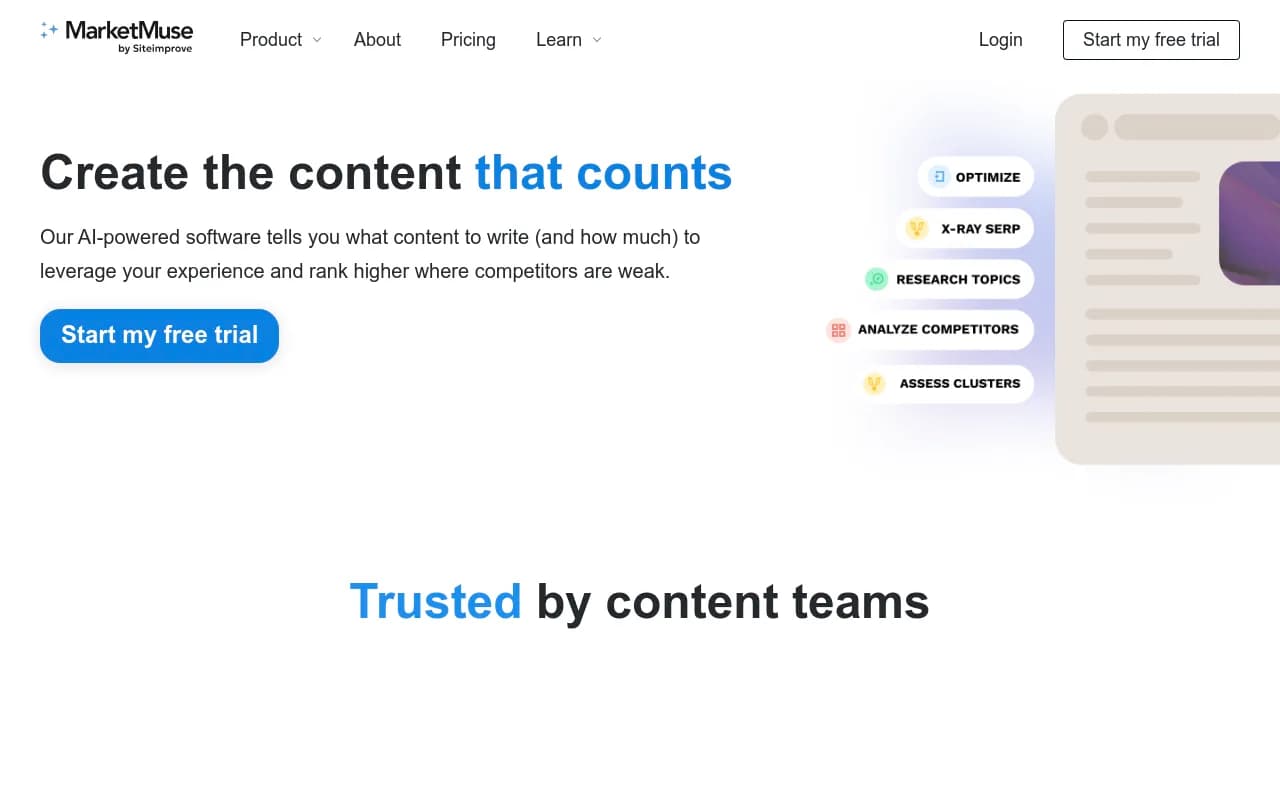
MarketMuse: best for topical coverage planning
MarketMuse is about what to write and how deeply to cover a topic, not about AI citations. Use it as a planning layer next to a tracker, not as a replacement for one.
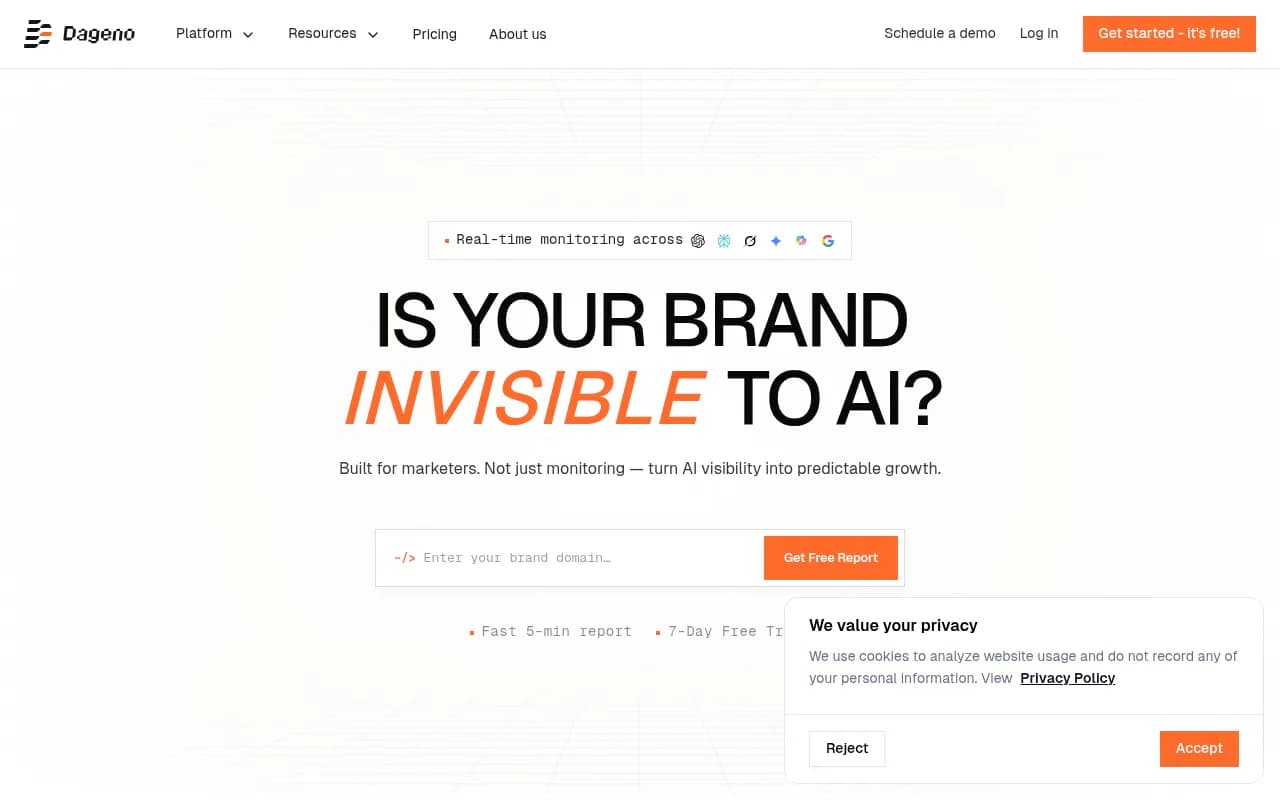
Dageno AI: best free-to-start cross-industry option
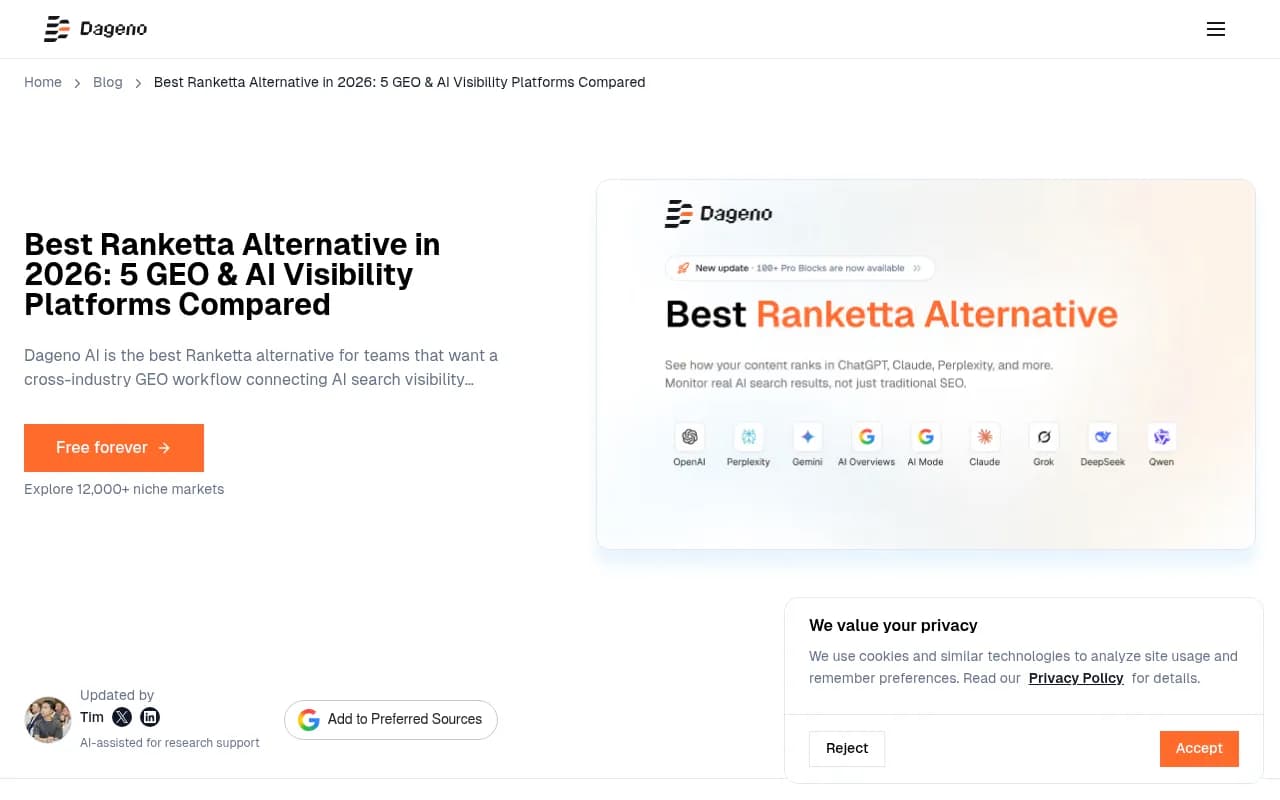
Dageno positions itself as a workflow from monitoring to strategy, content generation and attribution across industries. It lists a free plan, which makes it easy to test. Its own article is a vendor comparison, so read it with that in mind.
What to write once you have the gaps
Gap reports tell you which prompts you lose. They do not tell you what format to ship. Promptwatch Data on which content types ChatGPT cites (Sep 28 to Oct 4, 2026) is a good starting filter:
| Content type | Share of ChatGPT citations |
|---|---|
| Product pages | 22.4% |
| Landing pages | 16.8% |
| Listicles | 13.6% |
| How-to guides | 8.7% |
| Documentation | 7.5% |
| Comparisons | 5.9% |
For commercial prompts like "best CRM for small businesses," product pages, landing pages, listicles and comparisons make up almost 70% of citations. For branded prompts, reviews take 5.6%, more than three times their share across all prompts. The practical read: a content team that only publishes blog posts is ignoring the formats ChatGPT cites most. Match the page type to the prompt intent, publish comparison pages, and keep docs public and crawlable.
Schedule refreshes before pages decay
The measure step is not a one-off. Promptwatch's content half-life report tracked every page ChatGPT cited on July 6, 2026 for 90 days:
- Landing pages and docs: 78% and 76% still cited after 30 days, 69% and 67% after 60.
- Product pages, reviews and how-tos: about 55% still cited at day 60, reaching half-life at 74-77 days.
- News: half of cited pages gone by day 36.
Caveat from the report: landing pages, docs, comparisons and listicles only cross 50% in the final week of the window, so their true half-life is probably 90 days or more. Still, set a refresh cycle of roughly 10 weeks for how-tos and product pages, and about five weeks for anything newsy. Tools with a refresh workflow and page-level citation tracking make that cheap. Tools that only report a visibility score do not.
How to choose
- If you need the whole loop and want to see crawler, citation and traffic data next to each other, start with Promptwatch.
- If your team already lives in a content editor and wants light AI tracking added, try Surfer or Writesonic.
- If you are on Shopify and want store-aware copy, test AthenaHQ.
- If you have an ops person and want custom pipelines, look at AirOps.
- If you only need to monitor, a lighter tracker like Otterly.AI is enough, but you will need other tools for the write, publish and measure steps.

For a wider shortlist, the GEO software directory at bestgeosoftware.com is a reasonable place to keep browsing.
A short test plan
Run any shortlist the same way, for two weeks:
- Load the same 30-50 prompts into each tool.
- Ask each to produce a gap list for one product line or topic.
- Publish one page per tool through its own workflow, or note exactly where the workflow breaks.
- After 7-14 days, check whether the tool can tell you if the page was crawled, cited and clicked.
The tool that makes step four easy is usually the one your team will still be using in six months.