Key Takeaways
- AI "prompt volume" is modeled or panel-based. No AI engine publishes official query counts, so treat every volume number as a directional estimate.
- Difficulty is best judged by who is already cited: the domain authority, content types, and number of sources in the answers you want to appear in.
- ChatGPT retrieves on fan-out queries, not on the user's literal prompt, so one prompt can map to several searches.
- Start with 20-40 prompts, run them across 2-3 models, and give them at least 30 days before drawing conclusions.
- Volume and difficulty go stale fast. Platform changes can invalidate an analysis overnight, so re-check regularly.
Why prompt selection matters more than prompt count
In classic SEO, you pick keywords with a number next to them. Search volume, keyword difficulty, done. AI search has no equivalent official number. SE Ranking says it plainly: no reliable query volume, no positions, and technically infinite prompt variations.
That is uncomfortable, because you still have to decide which 50 or 500 prompts to track and write content for. Pick badly and you burn budget tracking prompts that nobody asks, or prompts dominated by sources you will never displace.
So vendors built proxies. Volume estimates and difficulty scores are those proxies. They are useful, but only if you know what they actually measure. This guide covers what the numbers are, where they break, and a practical process for picking prompts you have a real shot at winning.
What prompt volume actually is
Nobody outside OpenAI, Google, or Anthropic sees the full set of prompts users type. So any volume figure is built some other way. From the research I could verify, there are two broad approaches.
Modeled from search demand
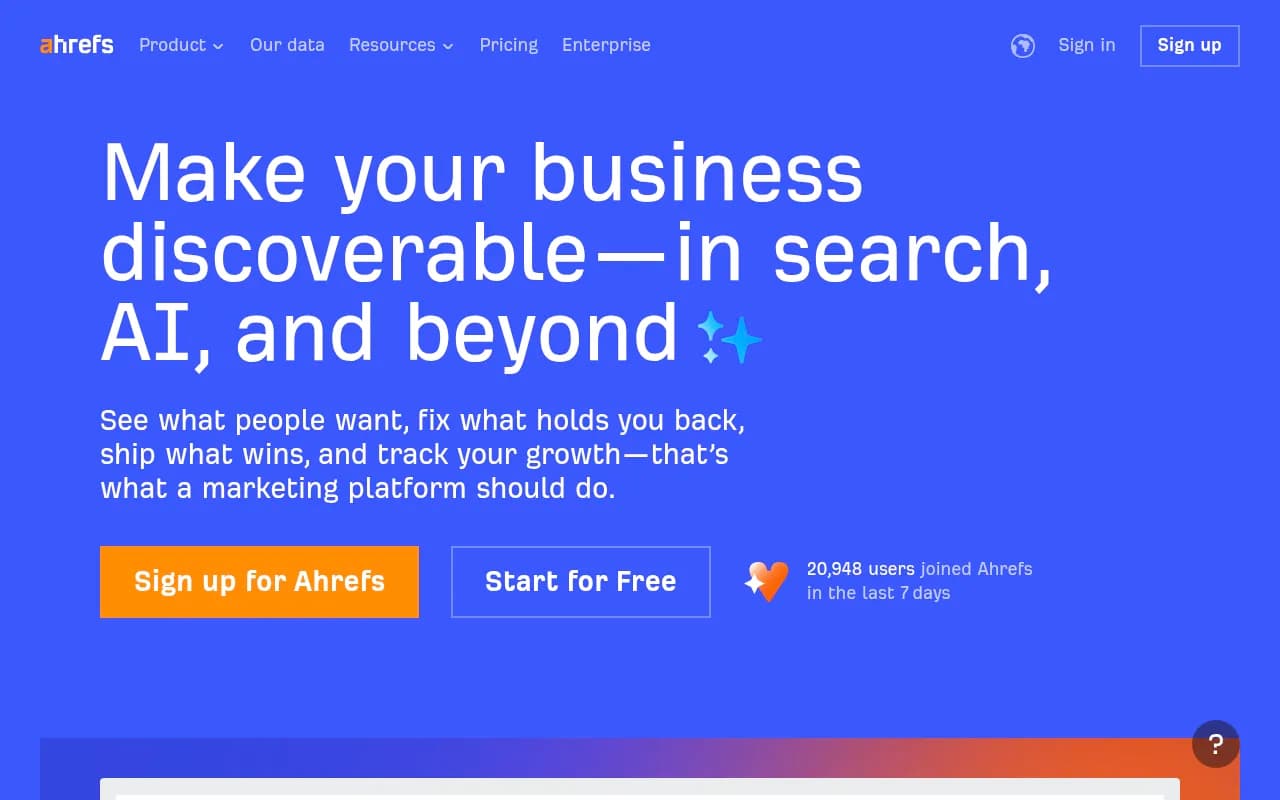
Ahrefs describes an "AI adjusted volume" for each prompt. It takes the parent keyword's Google search demand and scales it by a platform-specific ratio built from Ahrefs' aggregated AI referral traffic. That is a clever method, but notice what it is: modeled, not observed. It is Google demand wearing an AI costume. (This comes from Ahrefs' own vendor comparison page, so treat its claims as marketing.)
Panel or topic-level estimates
Profound describes its Prompt Volumes feature as measuring what users ask assistants and how topics shift across answer engines. Semrush's Prompt Research estimates AI volume and difficulty at the topic level, according to search snippets of its documentation. I could not find any vendor publishing a full methodology, and I found no independent validation of any of them. A Reddit thread in r/SEO asks exactly this question: how do these tools know AI volume?
My take: use volume to rank prompts relative to each other, not to forecast traffic. A prompt marked "high" is probably asked more often than one marked "low." A prompt marked 1,200 is not necessarily asked 1,200 times.
The fan-out wrinkle
There is a second problem. The unit ChatGPT retrieves on is not your prompt. It is the set of searches the model runs behind it. Promptwatch's ChatGPT query fan-out report notes that one prompt can trigger 3 to 8+ separate searches, though its own measured averages were lower: 2.15 fan-outs per response in early December 2025 and about 1.84 by early March 2026. The average fan-out query was also much shorter than a typical prompt, falling from about 117 characters to the high 80s.
Then things shifted again. On August 8, 2026, ChatGPT started using the site: operator at scale, jumping from 0.37% to 16.8% of fan-out queries in a day, and average fan-outs per response rose from about 1.08 to about 1.83 (Promptwatch Data on the site: operator change). Promptwatch says analyses built before that date are stale.
The lesson: a prompt is a loose proxy for demand, and any estimate built on it can go out of date after a platform update.
What difficulty scores can and cannot tell you
Here I have to be honest about a gap. I found no vendor documentation that defines a prompt difficulty formula beyond Semrush's topic-level mention. So when a tool shows you a difficulty number, you are trusting a black box.
That does not make it useless. Difficulty in AI search should, logically, reflect how entrenched the current cited sources are. You can check this yourself rather than trust a single number. Look at three things for each prompt.
Who gets cited
Promptwatch's data on ChatGPT citation share by domain rank shows that sites with domain rank 46-75 earned almost half of ChatGPT citations in August 2026, while DR 91-100 sites fell to about 3%. That is good news if your site is mid-authority. It also varies by engine: according to the catalog summary of Promptwatch's November 2026 domain rank report, the median cited domain is DR 56-57 across four engines, but DR 100 sites earn 13.7% of AI Overviews citations and only 0.3% of ChatGPT's. A prompt where the answer cites Wikipedia and government sites is harder in AI Overviews than the same prompt in ChatGPT.
What content type wins
If every cited page is a product page and you only have a blog post, you are bringing the wrong format. Promptwatch Data on ChatGPT citation share by content type found product pages were the most cited type at 22.4% (Sep 28 to Oct 4, 2026), followed by landing pages and listicles. Match the format to the prompt.
How many sources are in the answer
Almost half of ChatGPT responses cite 10 or more unique domains in Promptwatch's unique domains report. More slots usually means a more winnable prompt. A response citing two sources is a closed shop; one citing twelve has room.
A practical scoring model you can run in a spreadsheet
You do not need a vendor's difficulty number to make decisions. Score each candidate prompt on five dimensions, 1 to 5 each.
| Factor | Score 5 means | Score 1 means |
|---|---|---|
| Relative volume | Top tier among your candidates | Rarely asked |
| Business value | Category or competitor prompt near purchase | Pure trivia |
| Citation openness | 10+ domains cited, mid-authority sites present | 1-3 dominant sources |
| Format fit | You already have the right page type | You would need a new format |
| Current visibility | You are already mentioned sometimes | Zero presence |
Add them up. Anything above roughly 18 is a prompt to prioritise. Anything below 12 probably gets dropped or parked.
The "current visibility" factor matters more than people expect. Semrush's own workflow starts by reviewing prompts and topics where you already appear, then monitoring those first. Prompts where you show up occasionally are the cheapest to win, because the model already considers you relevant. You just need to be more consistent.
Sort prompts by type before you score them
Semrush splits prompts into three types, and the split is genuinely useful.
- Branded prompts protect your narrative and rarely win new customers.
- Category prompts are discovery-stage and the highest stakes.
- Competitor prompts reach buyers who are actively evaluating options.
Branded prompts will almost always show high visibility because they contain your name. That inflates averages and makes dashboards look healthy. Track them, but keep them out of your "winnable prompts" analysis. Spend your scoring effort on category and competitor prompts.
Build the candidate list
Start from SEO inputs, but rewrite them
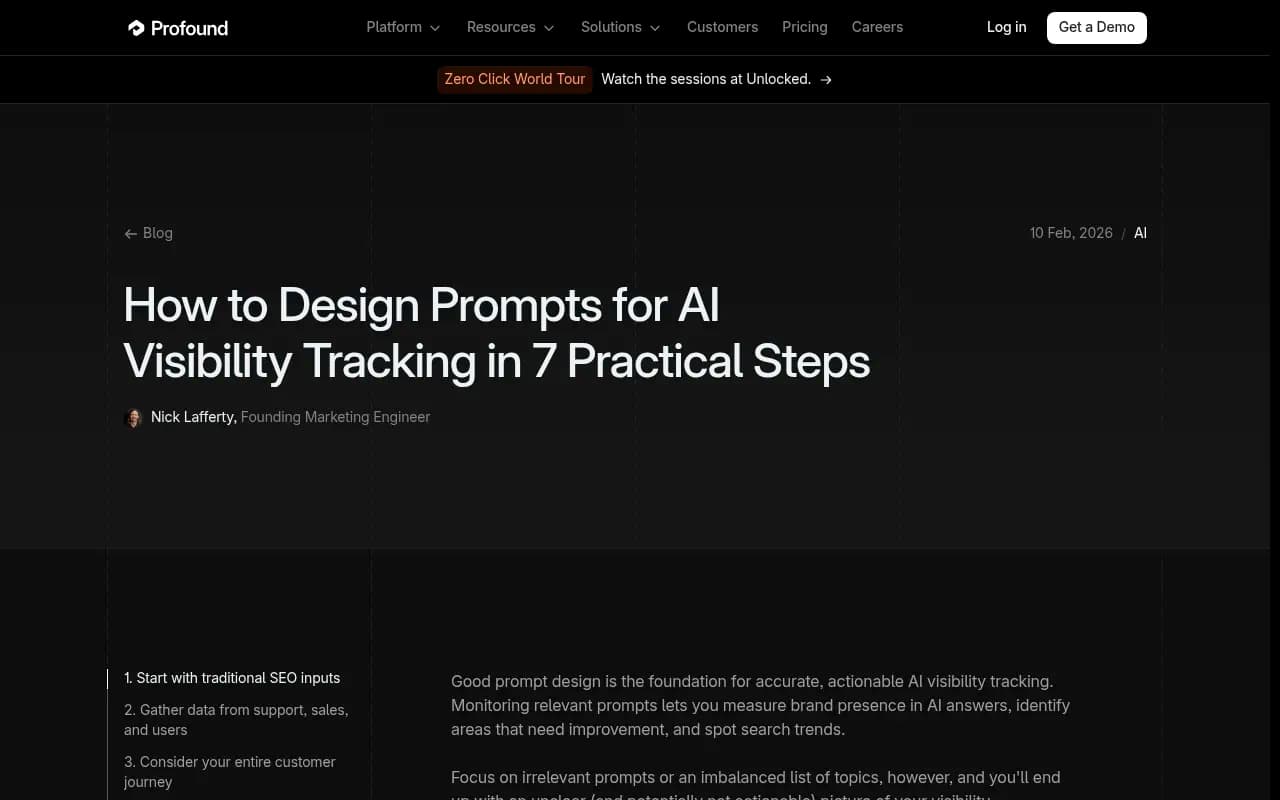
Profound's guide recommends taking the keywords and topic clusters you already target and turning them into conversational prompts. "CapCut alternatives" becomes "what are some good CapCut alternatives for B2B teams?" Do not paste raw keywords into a tracker. People talk to AI differently than they type into Google.
Add what real people say
Profound's second step is pulling in data from support, sales, and users. I agree with this one. Sales call transcripts and support tickets contain the exact phrasing and objections that no keyword tool shows. They also reveal long, specific prompts ("we are a 20-person agency and need X that integrates with Y") that carry low volume numbers but very high intent.
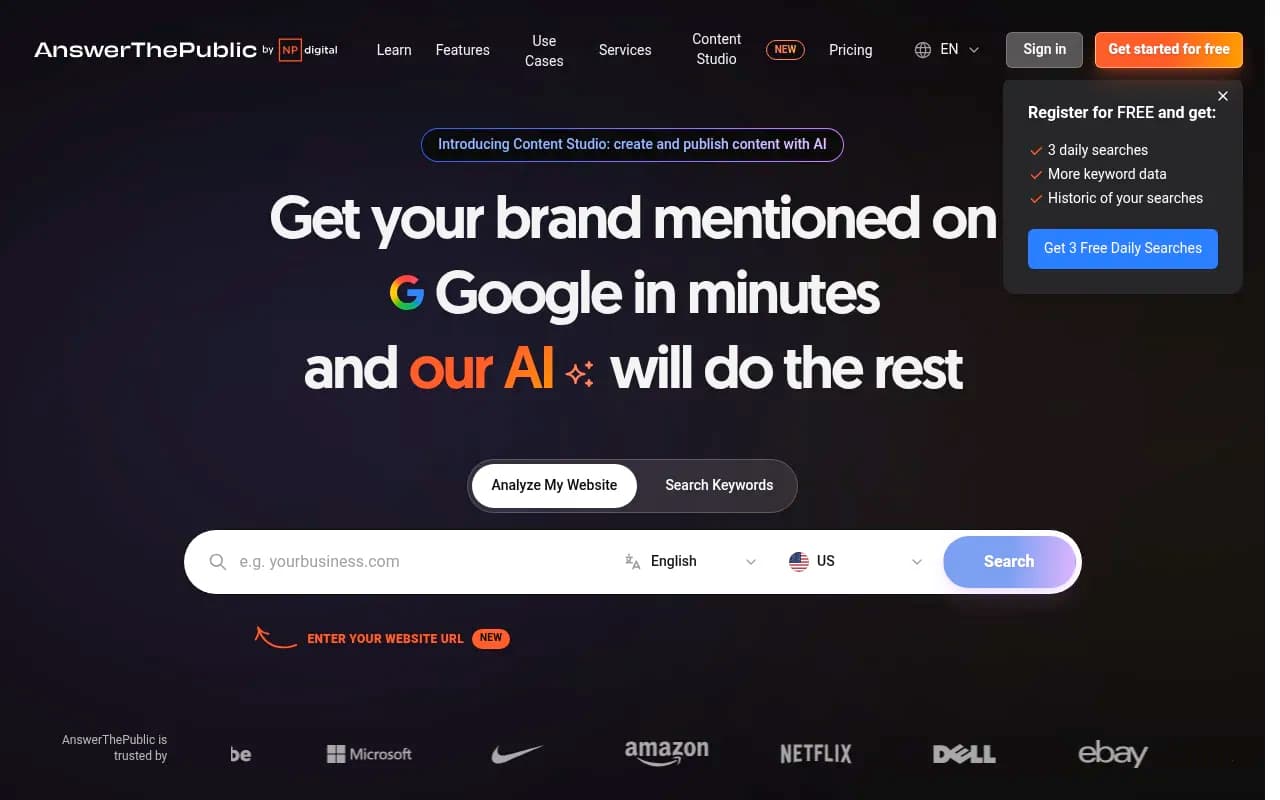
Tools like AnswerThePublic for question research and Google Search Console for existing queries are good starting sources. Google Search Console in particular shows which queries already bring impressions, a decent signal for which topics your site is plausibly relevant to.
Write like a person, with context
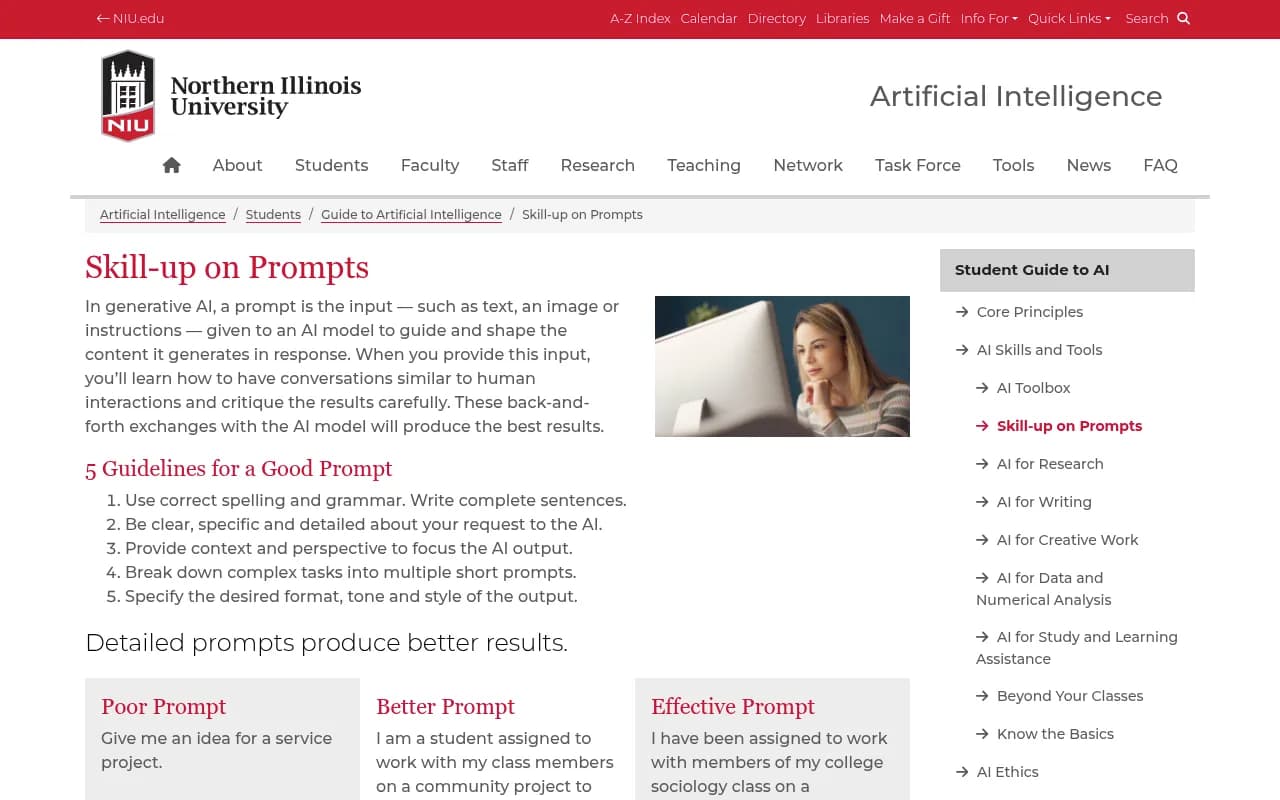
Framing matters when you design the prompts themselves. Northern Illinois University's prompt guidance recommends being clear, specific, and detailed, and giving context. For tracking, that translates into persona and situation. "Best CRM" is vague. "Best CRM for a small agency with five salespeople" is how a real buyer asks.
Where the tools fit
Once you have candidates, you need volume, difficulty, and tracking in one place. Here is how the main options differ on the specific job of prompt selection.
| Tool | Volume approach | Difficulty | Notes |
|---|---|---|---|
| Promptwatch | Monthly prompt volumes plus difficulty scores and citation rates across AI search, Google, and Bing | Yes, per prompt | Also shows query fan-outs, so you see the searches behind each prompt |
| Ahrefs Brand Radar | AI adjusted volume modeled from Google demand | Not documented in my research | Claims a 572M+ prompt index across 6 AI indexes; prompt tracking from $50/mo per its own page |
| Semrush | Topic-level volume estimates in Prompt Research | Topic-level | Strong if you already live in the Semrush suite |
| Profound | Prompt Volumes across answer engines | Not documented in my research | Enterprise-leaning pricing |
| SE Ranking / SE Visible | Guidance says volume is unreliable | n/a | Practical advice on starting small |
The tools that go beyond a single number are the ones I would lean on. Promptwatch pairs prompt volumes and difficulty with query fan-outs and citation data, so you can check a difficulty score against the actual sources cited, rather than taking it on faith. The Prompt Explorer also suggests prompts from Search Console, ranking keywords, People Also Ask, and any page on your site, which saves the rewrite step.

If you want to compare more options, the GEO software directory lists a wide range of trackers. A few worth a look for prompt research specifically:


How many prompts to start with
SE Ranking suggests 20-40 prompts, run across 2-3 AI models, for at least 30 days before drawing conclusions. I think that is the right order of magnitude. Prompt tracking costs scale with volume, and AI answers vary with phrasing, context, and platform. A single day's snapshot is noise.
One thing to watch: Semrush notes there is no stable rank in AI answers, only whether you are mentioned. So think in terms of mention rate over repeated runs, not position 3 versus position 5. Metrics like visibility score and share of voice, which average across many runs, are more honest than any single result.
A reasonable starting split for 30 prompts:
- 5 branded prompts, as a baseline
- 15 category prompts, your main battleground
- 10 competitor comparison prompts
Then weight toward your scored shortlist, not alphabetically.
Check the winnable ones against content you can ship
A prompt is only winnable if you can produce the page that answers it. Use the fan-out data here. Promptwatch's advice from its fan-out report is to write headings that read like search queries (for example "Best CRM for small agencies 2026"), front-load the entity and category in titles and H2s, and build focused pages for each sub-question instead of one mega-page. That fits what I have seen: narrow, specific pages beat sprawling ones for fan-out retrieval.
Also consider freshness. In Promptwatch's content half-life data, pages ChatGPT cited on July 6, 2026 were tracked for 90 days. Landing pages and docs stayed cited longest, while news lost half its pages within 36 days. If a prompt is dominated by news-type sources, winning it means committing to constant updates. Evergreen prompts are cheaper to hold.
Re-check on a schedule
This is the step most teams skip. Any volume or difficulty estimate can go stale. The August 8 site: operator change is the clear example: fan-out analyses built before that date no longer described how ChatGPT searched. Promptwatch's own conclusion is that continuous monitoring matters more than one-off audits, and I agree.
A workable cadence:
- Weekly: look at mention rate on your top 10 prompts.
- Monthly: re-score the full list and retire prompts that never move.
- After any major model update: re-run fan-out checks and re-map headings.
If you want to see the loop closed, the Promptwatch case studies show how teams like Crisp and OpenUp moved from guesswork to prompt-led planning.
Common mistakes
- Treating volume as traffic. It is a ranking signal between candidates, nothing more.
- Tracking only branded prompts. Your dashboard looks great and tells you nothing.
- Chasing the highest volume. High-volume category prompts with DR 90+ incumbents are often the hardest to move.
- Ignoring phrasing. AI answers vary with wording, so track two or three variants of a key prompt.
- Never revisiting the list after a platform change.
A short checklist
- Convert SEO keywords and sales or support language into conversational prompts.
- Label each as branded, category, or competitor.
- Pull volume and difficulty from your tool, and treat both as estimates.
- Inspect the cited sources: domain authority, content type, number of domains.
- Score with the five-factor sheet and keep the top 20-40.
- Track across 2-3 models for at least 30 days.
- Publish focused pages for the winnable prompts, then re-check monthly.
Volume tells you where the crowd is. Difficulty tells you how hard the door is to open. The cited sources tell you whether you have a key. You need all three, and none of them is precise.