Key takeaways
- Profound's pricing page lists a free 7-day Trial and a custom-priced Enterprise plan for brands. If you want a number before talking to anyone, you need another tool.
- Published entry prices range from about $29 a month (Otterly.AI) to $295 (AthenaHQ), with Peec AI near $95 and Semrush at $99 per domain.
- Most cheap trackers stop at monitoring. If you want someone to fix the gaps, look at tools with content, crawler and publishing features, such as Promptwatch.
- Engines cite very different numbers of sources, so pick a tool that tracks each engine separately.
- Most comparison posts on this topic are written by vendors who sell competing products. Re-check every price on the vendor's own page.
Why teams go looking for a Profound alternative
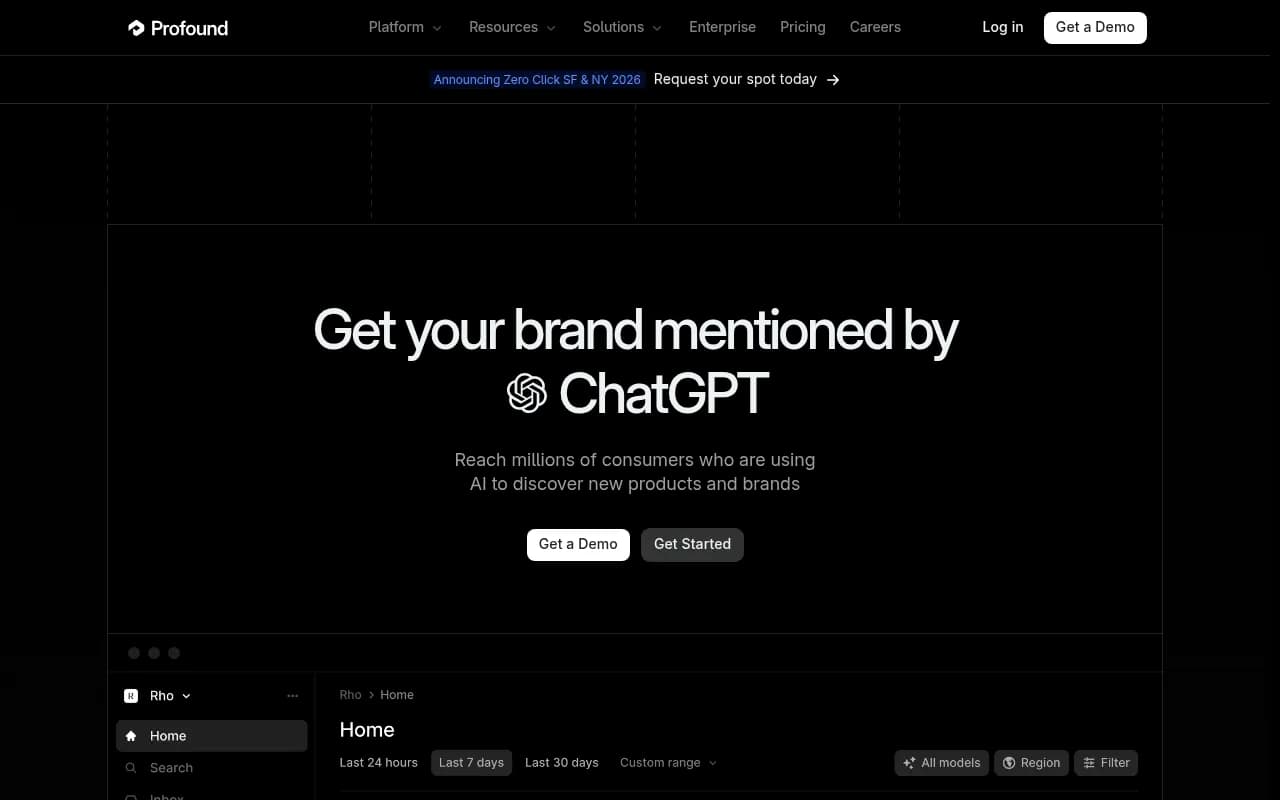
Profound is a serious product. It tracks up to nine answer engines on Enterprise (ChatGPT, Perplexity, Google AI Mode, Gemini, Copilot, DeepSeek, Claude, Google AI Overviews and Exa), and it comes with SSO, SAML, SOC 2, an API and agents. For a big brand with specialists in-house, that makes sense.
The friction is pricing. When I checked Profound's pricing page, brands got two options: a free Trial and Enterprise at a custom price behind a demo. The Trial runs 50 preset prompts daily for 7 days on ChatGPT, Gemini and Google AI Overviews, in one language and one region. You can't customize prompts, export data, use the API or get support.
So you can test it, but you can't budget for it without a sales call. Some teams are fine with that. Others just want to put a number in a spreadsheet and get started on a Tuesday afternoon.
One caveat. Profound's FAQ mentions a self-serve Agency Growth plan with 400 credits per month per client workspace. I couldn't confirm its price, so if you are an agency, check that page yourself before assuming there is no self-serve route.
What to look for in a replacement
Before the list, a few criteria that matter more than feature counts.
Published price and a self-serve start
This is the whole premise of the article. Every tool below shows an entry price or a free tier on its own site, though some are clearer than others.
Which engines are included at the entry price
Trial and entry plans often cover only two or three engines. Check which ones, because engines behave differently. According to Promptwatch Data's average sources per response report, ChatGPT cites about 5 sources per web-search answer, while Google AI Overviews and Perplexity cite about 10. Microsoft Copilot swung from under 2 to nearly 17 within a few weeks. The figures are daily averages that drift, but the point holds: visibility is not comparable across engines, so you want per-engine reporting rather than one blended score.
Markets and languages
Some tools limit you to one country on the cheapest plan. If you sell in several markets, that limit can double your real cost.
Monitoring versus action
A dashboard tells you that a competitor is cited and you are not. Someone still has to find out why and fix it. Decide whether that someone is your team or the software.
Profound alternatives compared
Prices below come from the vendors' pages as reported in recent comparison articles (October 2026 for most). I did not independently verify every one, so confirm before buying.
| Tool | Entry price (monthly) | Free option | Engines at entry level | Best for |
|---|---|---|---|---|
| Promptwatch | $95 (Essential) | Free Explore plan, 7-day trial | All models on paid plans | Teams that want to fix visibility, not just watch it |
| Peec AI | about $95 (EUR 85) | Check peec.ai | 3 on every plan | Agencies, unlimited seats |
| Otterly.AI | $29 | Not stated on pricing page | 4 | Smallest budgets |
| Semrush AI Visibility Toolkit | $99 per domain | 7 days (Semrush-wide) | 4 | Teams already on Semrush |
| Scrunch | $250 annual, $300 monthly | 7 days, no card | 7 platforms | Teams that want an AI-friendly site layer |
| AthenaHQ | $295 (free tier exists) | Free tier, 300 credits | 11 on Starter | Many engines on one plan |
| KIME | EUR 99 | 7 days | 2 on Explorer | Many countries and languages |
| Rankscale | $20 annual only, $99 monthly | Check vendor | Varies | Tight budgets |
The alternatives, one by one
Promptwatch
Promptwatch is the option I would look at first if your problem is not "I need a chart" but "I need to become visible." Pricing is public: Essential is $95 a month for 50 prompts and 6,000 responses with all AI models, Professional is $245, and Business is $579. There is a free Explore plan (ChatGPT only, 10 prompts) and a 7-day trial on the monthly paid tiers.
What separates it from the cheaper trackers is what happens after the tracking. It monitors the real interfaces of ChatGPT, Google AI Overviews, AI Mode, Gemini, Perplexity, Copilot and others rather than only APIs. It also has IP-verified AI crawler logs, visitor analytics for AI-referred traffic, content gap analysis, and a Content Agent on Business that plans, writes and publishes to WordPress, Webflow or Framer. The Action Board turns findings into a prioritized to-do list. Reddit, YouTube and LinkedIn citation reports are included, which many competitors skip.
The tradeoff: Essential is not the cheapest plan on this list, and the Content Agent and Agentic AI Search Optimization sit on Business and above. Agency plans start at $199 a month but exclude the Content Agent and AEO articles.

Peec AI
Peec is a Berlin-based tracker with clean analytics, a published price near EUR 85 a month (EUR 70 billed annually), unlimited seats and three models on every plan. Country limits scale by tier: one on Starter, three on Pro and Advanced. It is a good fit for agencies that want reporting without per-seat fees. It is monitoring-focused, so expect to do the optimization work yourself.

Otterly.AI
Otterly has the lowest published multi-engine entry price at $29 a month, covering ChatGPT, Google AI Overviews, Perplexity and Copilot. It suits a solo marketer or small team who mostly want to see where they stand. Recommendations are limited on the lowest plan (three a week on Lite), and its pricing page does not state a free trial.

Semrush AI Visibility Toolkit
If you already live in Semrush, the AI toolkit at $99 a month per domain puts AI tracking next to your keyword data. It covers ChatGPT, Google AI, Gemini and Perplexity. The catch is that it flags issues but your team does the fixing, and the surrounding suite pricing climbs quickly if you do not already pay for it.
Scrunch
Scrunch publishes a Core plan at $250 a month billed annually (about $300 monthly), with 125 prompts and seven platforms including ChatGPT, Claude, Gemini, Perplexity, AI Mode, AI Overviews and Meta. It goes past tracking with page audits and an AI-friendly version of your site. It is a closer like-for-like to Profound than the budget trackers are.

AthenaHQ
AthenaHQ has a free tier and a $295 monthly Starter plan that includes eleven engines, with a content optimization agent and on-page and off-page actions. Starter is single-language, and multi-language is an Enterprise feature. Good if engine breadth is your priority and the price fits.
KIME
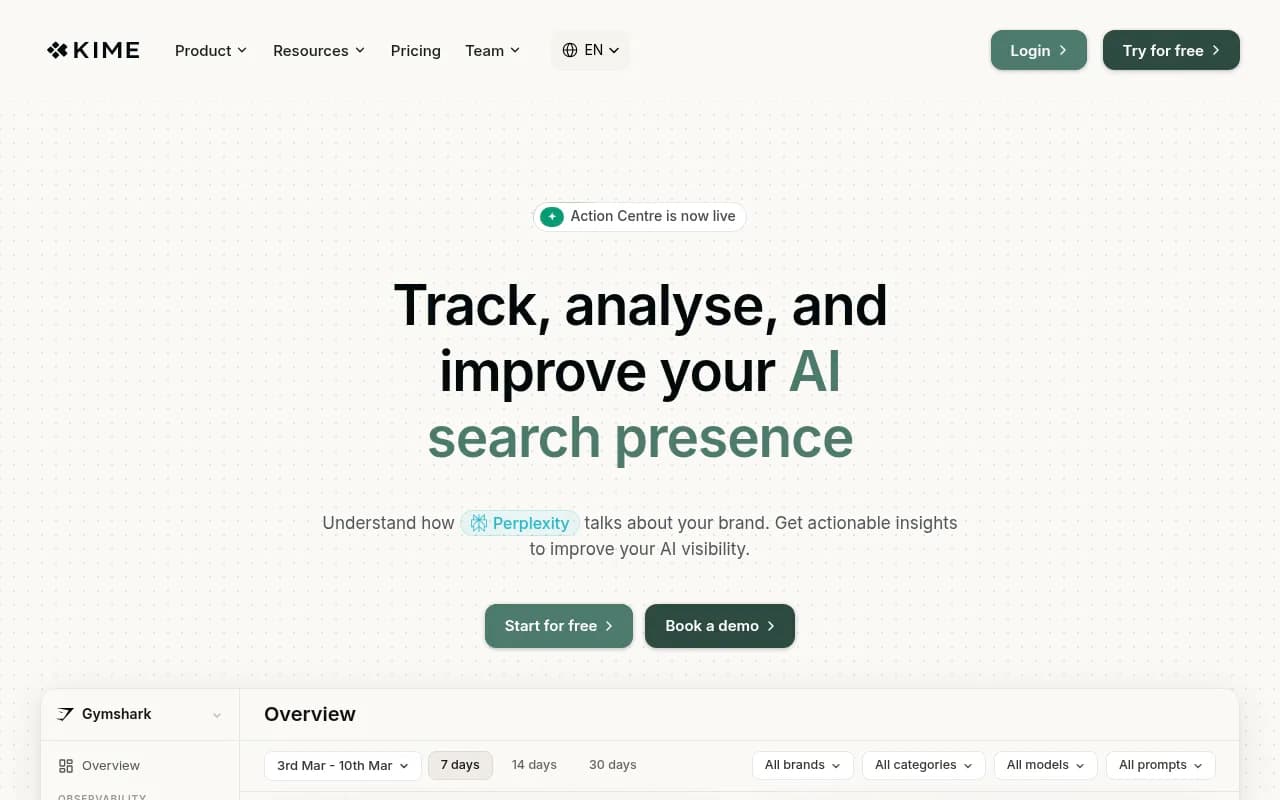
KIME starts at EUR 99 with a 7-day trial and, per its own page, unlimited countries and languages on every plan. Explorer covers two engines. The AWX agents execute tasks and you choose which run automatically. Worth a look for multi-market teams.
Rankscale
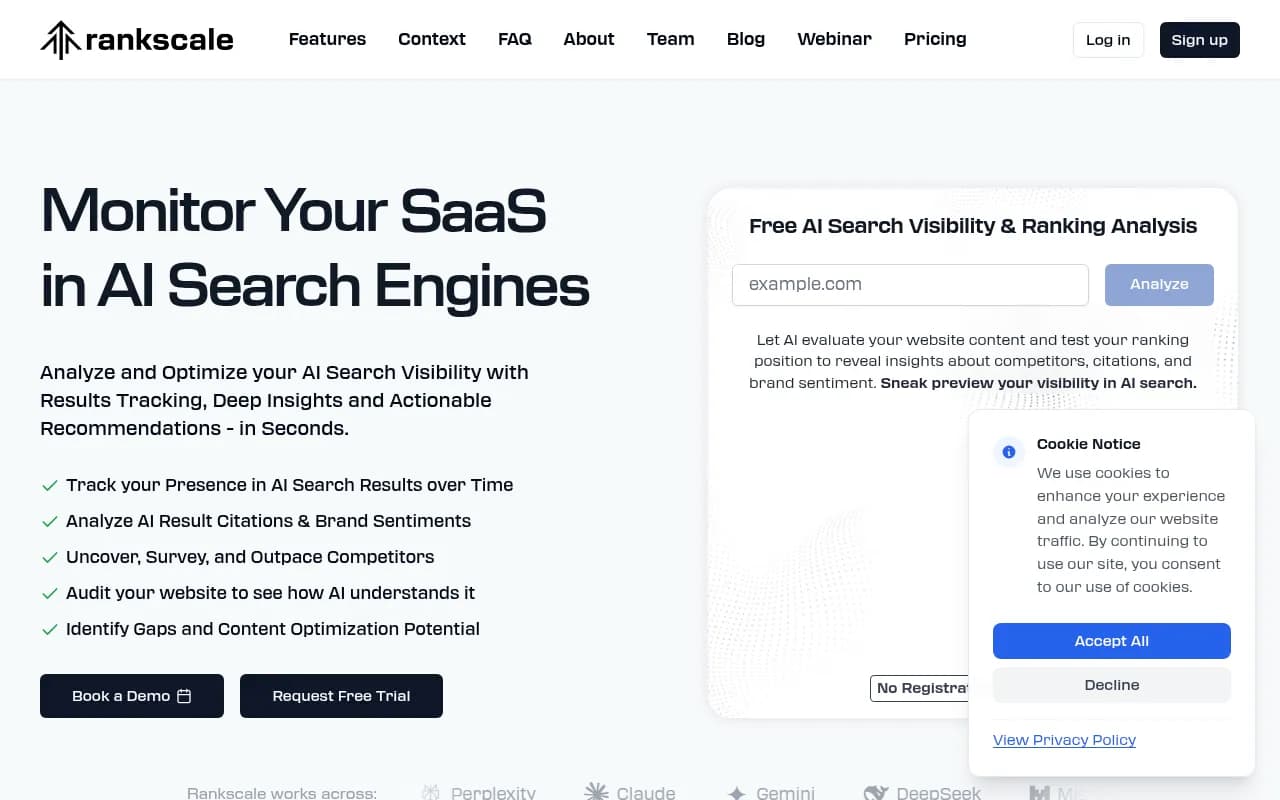
Rankscale is the budget end of the market: $20 a month on annual billing only, with Pro at $99 the cheapest monthly plan. Fine for a quick look, less so if you need depth.
Which one fits which team
| Your situation | Start here |
|---|---|
| You want visibility to actually improve, with content and crawler data | Promptwatch |
| Agency with many clients and no per-seat costs | Peec AI or Promptwatch agency plans |
| Smallest possible budget | Otterly.AI or Rankscale |
| Already paying for an SEO suite | Semrush AI Visibility Toolkit |
| Need many engines on one plan | AthenaHQ |
| Multi-country on a modest budget | KIME |
| Enterprise with in-house specialists and SSO needs | Profound or Scrunch |
More options are listed in the GEO software directory at bestgeosoftware.com, and the rank tracking side is covered at ai-rank-tools.com.
Where Profound is still the right call
Don't switch just because the price is hidden. If you need up to nine engines, ChatGPT Shopping, all-time history, SOC 2, SSO and a dedicated specialist with a 24-hour SLA, Profound's Enterprise plan is built for exactly that, and the sales call is the price of admission. Promptwatch is also ISO/IEC 27001 certified and offers SSO on Enterprise, so security is not a reason to rule it out, but only you know which procurement checklist you are facing.
How to test an alternative in a week
- Write 20 to 30 prompts that real buyers would ask, including a few that name competitors.
- Run them on the free trial or entry plan of two tools at once.
- Compare engine by engine, not as one blended score. ChatGPT's roughly 5 citation slots versus about 10 for AI Overviews mean the same brand can look very different on each.
- Check whether the tool tells you why a competitor wins: which pages are cited, whether AI crawlers can even read your site.
- Ask what happens next. Does it hand you a list of actions, draft the content, or just chart the problem?
- Check the price at the volume you will really need, not the entry tier.
A note on the sources
Much of the existing coverage of this topic comes from vendors that sell competing tools, including 3RD and IndustryLens, which both rank themselves among the options. Their pricing tables are useful starting points, but treat their rankings as biased. If you want a hand choosing and running AI search work, 1001 SEO Media is an agency that does this, and it uses Promptwatch for its own AI visibility tracking.
The short version
If the sales call is the dealbreaker, you have plenty of choices with public pricing. Pick Otterly.AI or Rankscale for the cheapest look, Peec AI or Semrush for tracking inside a familiar setup, and Scrunch or AthenaHQ for deeper platform features. If you want the tool to help you close the gaps it finds, start with Promptwatch's trial and see whether the crawler logs and content gap analysis show you something a pure tracker would not.