Key takeaways
- API polling and real UI scraping produce different results -- what ChatGPT shows users in its interface often differs from what the API returns, so the data collection method matters.
- Peec.ai uses UI-level scraping, which is one of its genuine strengths. Any alternative worth considering should do the same.
- Most monitoring-only tools (Otterly.AI, Peec.ai itself) stop at showing you data. The better alternatives help you act on it -- through content gap analysis, content generation, or optimization workflows.
- Promptwatch is the only platform rated a "Leader" across all GEO categories in a 2026 comparison of 12 platforms, and it combines UI-level data collection with a full content optimization loop.
- Your choice should depend on whether you need monitoring only, content creation, enterprise-scale tracking, or agency-friendly reporting.
There's a detail that most AI visibility tool comparisons gloss over: how the data is actually collected.
The two main approaches are API polling (querying the model's API directly) and UI scraping (simulating a real user session in the actual chat interface). They sound similar. They're not. AI models often behave differently in their user-facing products than they do through their APIs -- different citations, different formatting, different sources surfaced. If you're tracking how your brand appears to real users, API polling gives you an approximation at best.
Peec.ai has built its reputation partly on UI-level data collection. That's a real differentiator. But it's not the only tool doing this, and depending on what you need beyond monitoring, Peec.ai may not be the right fit. Some teams need content generation. Some need crawler logs. Some need agency-scale multi-client reporting.
This guide covers the alternatives that match or exceed Peec.ai's data quality standard -- and in most cases, go further.
Why the API vs. UI distinction actually matters
When a tool polls the ChatGPT API, it sends a query and gets a response. Clean, fast, scalable. But the ChatGPT interface that your customers use has additional layers: browsing, memory, plugins, shopping recommendations, and interface-specific ranking logic. The API response doesn't always reflect what a user sees.
Similarweb's 2025 Generative AI Report found that AI platforms generated over 1.1 billion referral visits in June 2025, up 357% year-over-year. Those visits come from real users in real interfaces. If your tracking tool is measuring something slightly different from what those users see, your data has a systematic blind spot.
UI-scraping tools simulate actual user sessions. They see what users see. That's the baseline any serious alternative to Peec.ai needs to meet.
The tools worth considering
Promptwatch
Promptwatch is the most complete platform in this space. It monitors 10 AI models -- ChatGPT, Perplexity, Google AI Overviews, Google AI Mode, Claude, Gemini, Meta/Llama, DeepSeek, Grok, and Copilot -- using real user-interface data, not API calls. That matters for the same reason it matters with Peec.ai: you're seeing what users actually see.
What separates Promptwatch from Peec.ai and most other alternatives is what happens after the monitoring. Most tools show you a visibility score and leave you to figure out what to do with it. Promptwatch has an Answer Gap Analysis that identifies exactly which prompts competitors rank for that you don't, then Content Agents that generate articles, comparisons, and briefs grounded in that real prompt data. You can track a page from the moment it's published through AI crawler visits to actual citation -- all in one platform.
It also has AI Crawler Logs, which show you in real time when ChatGPT, Claude, Perplexity, and others are crawling your site, which pages they're reading, and what errors they're hitting. Most competitors don't have this at all.
Used by 1,480+ brands including Booking.com and Center Parcs, with over 4.5 billion citations processed.
Pricing: Essential at $99/mo, Professional at $249/mo, Business at $579/mo. Free trial available.

Profound
Profound is the analytics-heaviest option in this category. It covers 10+ AI engines using real user-interface data (not API calls), and it includes Prompt Volumes -- actual estimates of how often users are querying specific prompts. That's genuinely useful for prioritization: instead of tracking every prompt equally, you can focus on the ones that actually drive traffic.
It also has strong enterprise reporting and is well-suited to large brands with complex competitive landscapes. The tradeoff is price -- Profound sits at the higher end of the market, and it's primarily a monitoring and analytics tool. Content optimization workflows aren't its strength.
Scrunch AI
Scrunch AI targets enterprise teams that need broad AI monitoring across a large number of prompts and markets. It uses UI-level data collection and has solid multi-language support, which matters if you're tracking AI visibility across regions.
Where it falls short relative to Promptwatch is on the action side. Scrunch gives you good data but doesn't have the content generation or gap analysis tools to help you act on it systematically. For a large brand that already has a content team and just needs reliable data, that's fine. For a team that wants an end-to-end workflow, it's a gap.
Otterly.AI
Otterly.AI is one of the more affordable options in the space. It covers the main AI engines and gives you brand mention tracking, share of voice metrics, and basic competitor comparisons. The interface is clean and relatively easy to get started with.
The honest limitation: it's a monitoring tool. There's no content gap analysis, no content generation, no crawler logs. If you're a small team that just wants to know whether your brand is showing up in AI answers and roughly how often, Otterly.AI does that job at a reasonable price. If you want to improve your visibility, not just measure it, you'll hit the ceiling quickly.

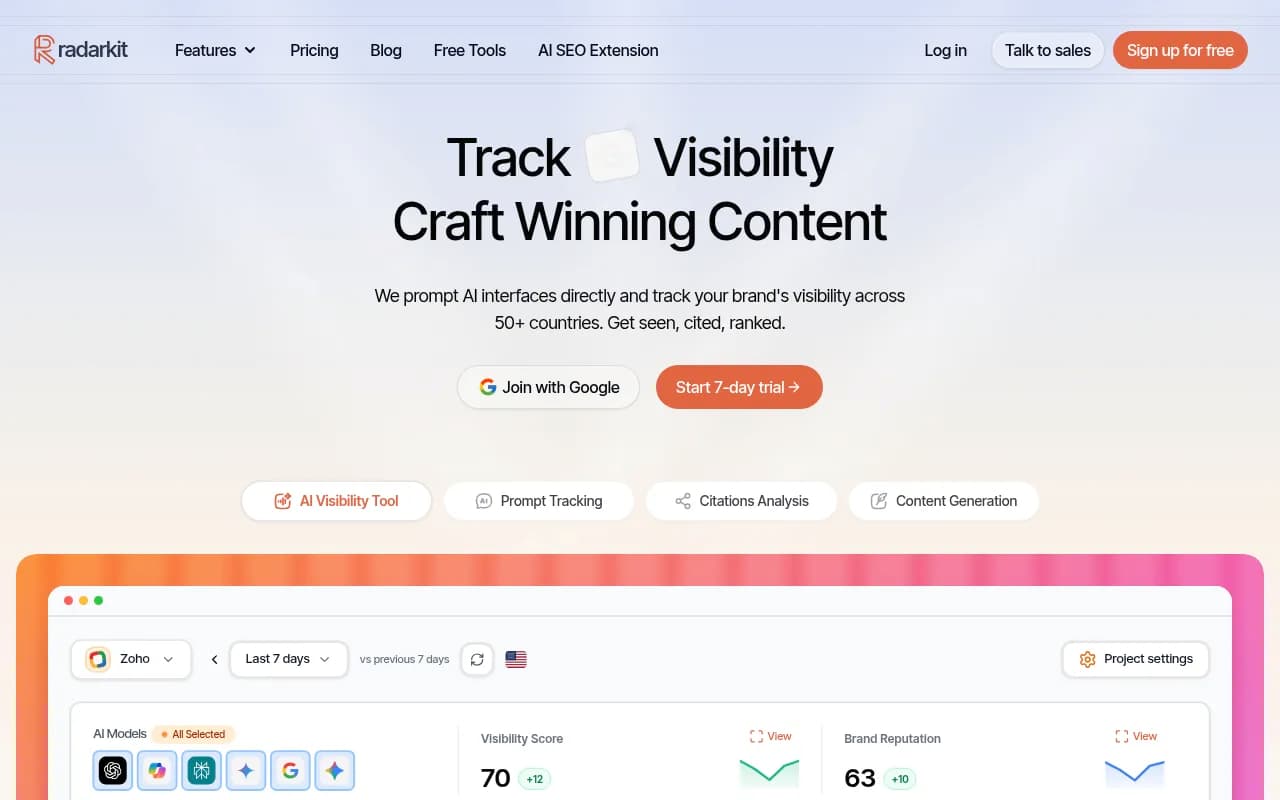
Radarkit
Radarkit focuses specifically on UI-level AI visibility tracking and has been cited in several independent comparisons as one of the more accurate tools for reflecting what users actually see. It covers the major AI engines and provides prompt-level tracking and competitor benchmarking.
It's a solid monitoring platform, particularly for teams that prioritize data accuracy over feature breadth. Like Otterly.AI, it doesn't have built-in content optimization tools, but the quality of the underlying data is genuinely good.
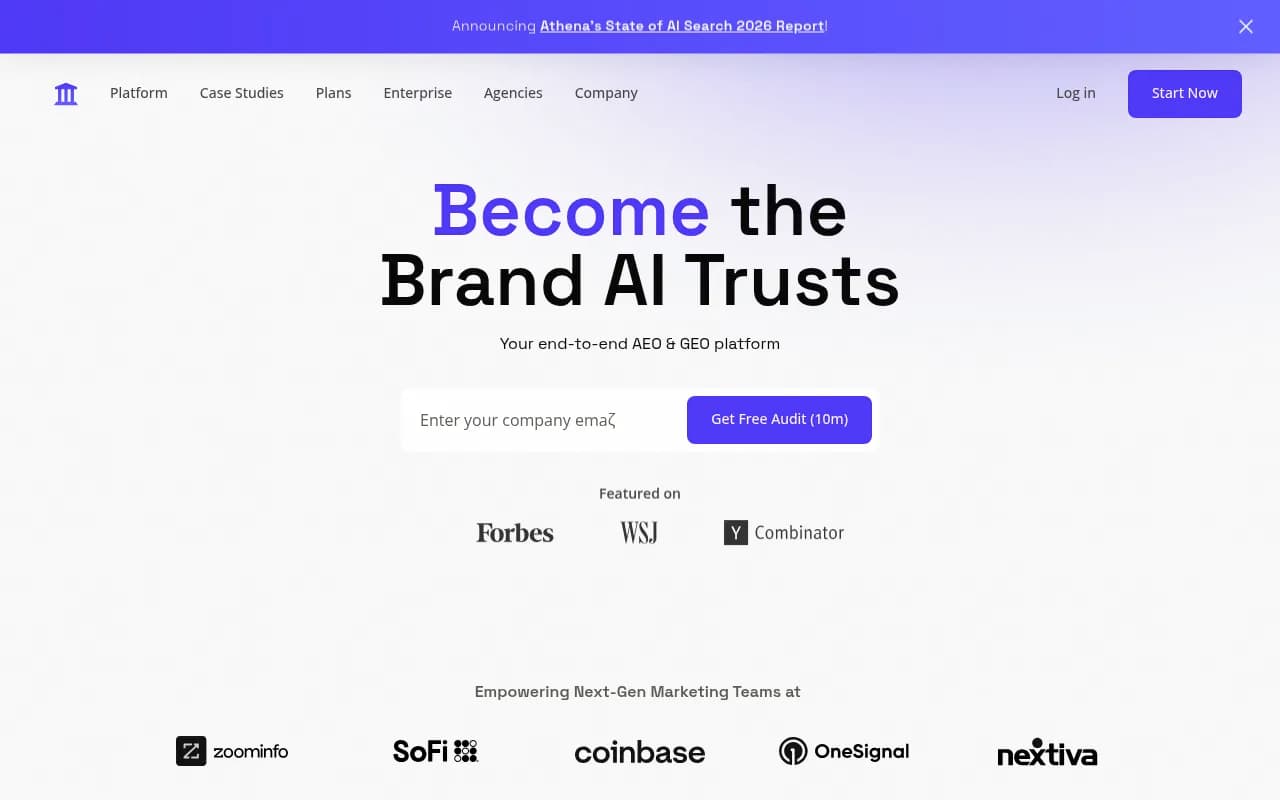
Athena HQ
AthenaHQ takes a slightly different angle -- it emphasizes brand sentiment and perception within AI responses, not just citation frequency. That's useful if your concern isn't just "are we mentioned" but "how are we described." It covers multiple AI engines and gives you visibility into the framing and context around your brand mentions.
The limitation is similar to others in this list: it's monitoring-focused. Content optimization isn't part of the workflow.
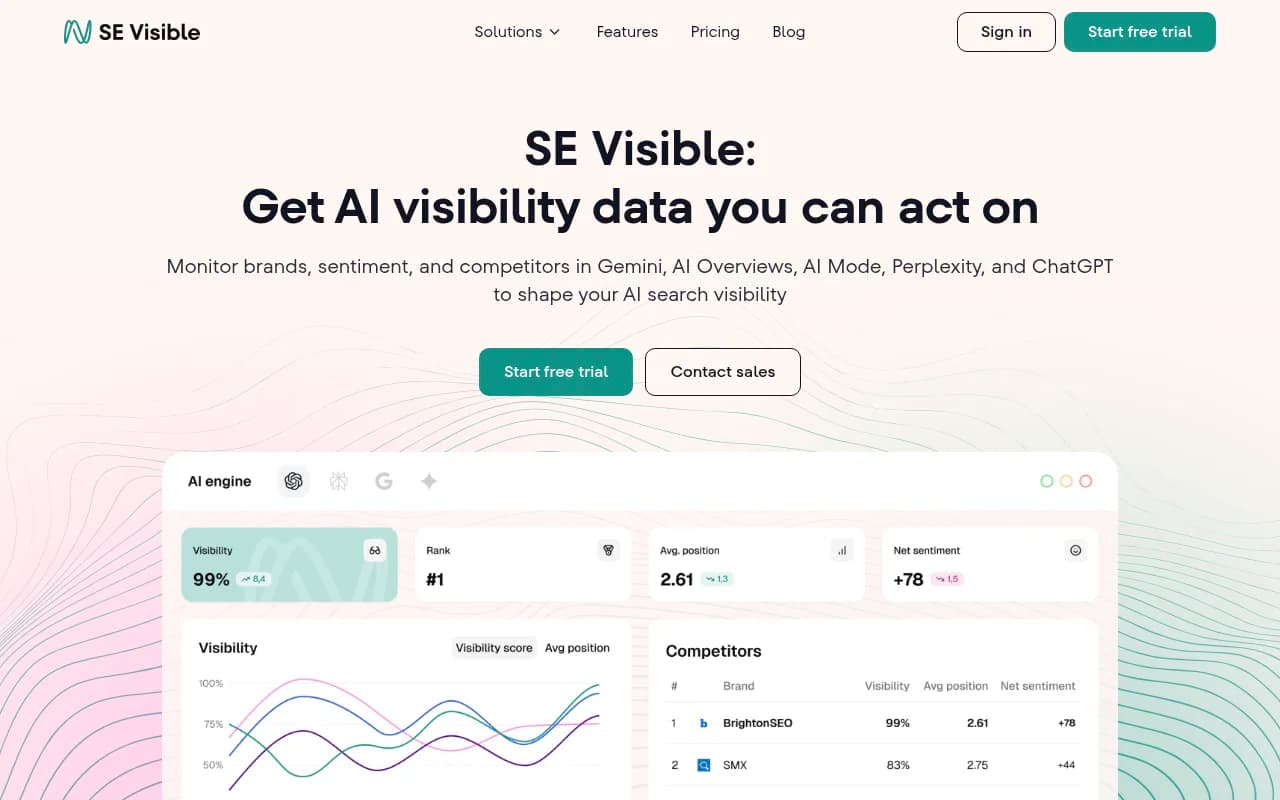
SE Visible
SE Visible (from SE Ranking) is interesting because it sits inside a broader SEO platform. If you're already using SE Ranking for traditional rank tracking, SE Visible gives you AI visibility data without adding another tool to your stack. It tracks brand mentions and citations across AI engines using UI-level data.
The tradeoff is depth. As an add-on to an SEO suite rather than a dedicated GEO platform, it doesn't go as deep on prompt intelligence, competitor gap analysis, or content workflows. But for teams that want AI visibility as one signal among many, it's a practical choice.
LLMrefs
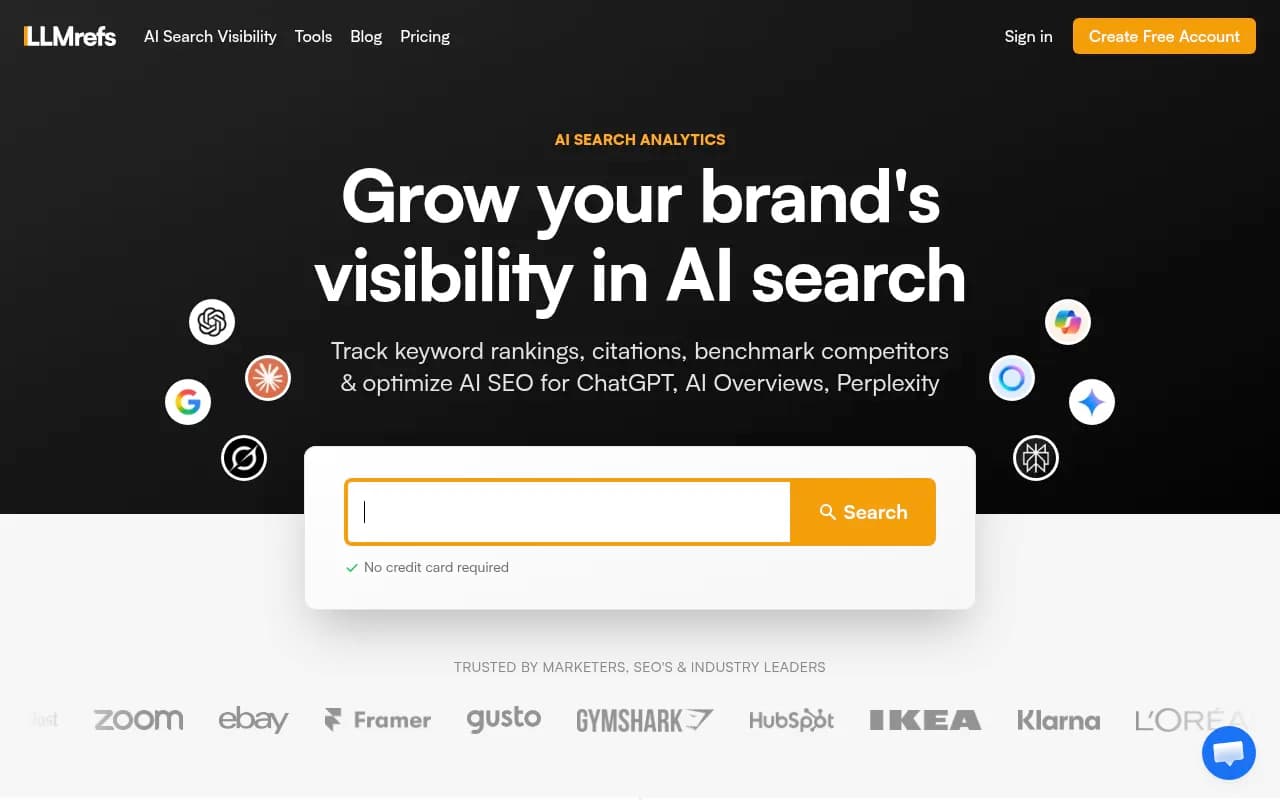
LLMrefs focuses specifically on citation and source tracking -- which pages, domains, and external sources AI models are pulling from when they answer queries in your category. That's a narrower focus than most tools here, but it's genuinely useful for understanding why competitors are being cited and what content types AI models favor.
It's best used as a complement to a broader platform rather than a standalone solution.
Rankscale
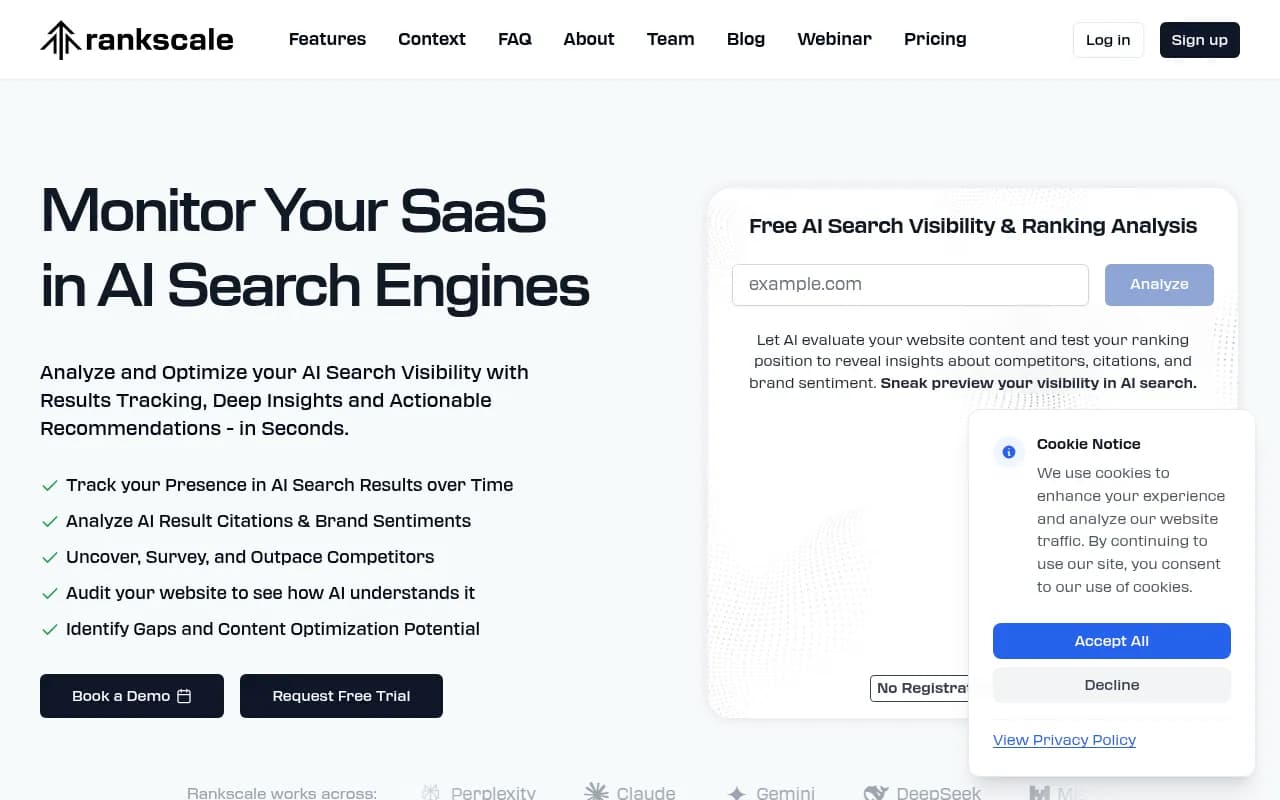
Rankscale is built around competitive AI visibility benchmarking. It lets you compare your AI share of voice against specific competitors across prompts and models, with UI-level data collection. If competitive benchmarking is your primary use case -- you want to know exactly where you stand relative to three or four named competitors -- Rankscale does that well.
Comparison table
| Tool | UI-level data | Content generation | Crawler logs | Prompt volumes | Best for |
|---|---|---|---|---|---|
| Promptwatch | Yes | Yes (Content Agents) | Yes | Yes | End-to-end GEO: monitoring + optimization |
| Profound | Yes | No | No | Yes | Enterprise analytics and reporting |
| Scrunch AI | Yes | No | No | Limited | Large-scale enterprise monitoring |
| Otterly.AI | Yes | No | No | No | Affordable brand mention tracking |
| Radarkit | Yes | No | No | No | Accurate UI-level monitoring |
| AthenaHQ | Yes | No | No | No | Brand sentiment in AI responses |
| SE Visible | Yes | No | No | No | AI visibility inside an SEO suite |
| LLMrefs | Yes | No | No | No | Citation and source analysis |
| Rankscale | Yes | No | No | No | Competitive benchmarking |
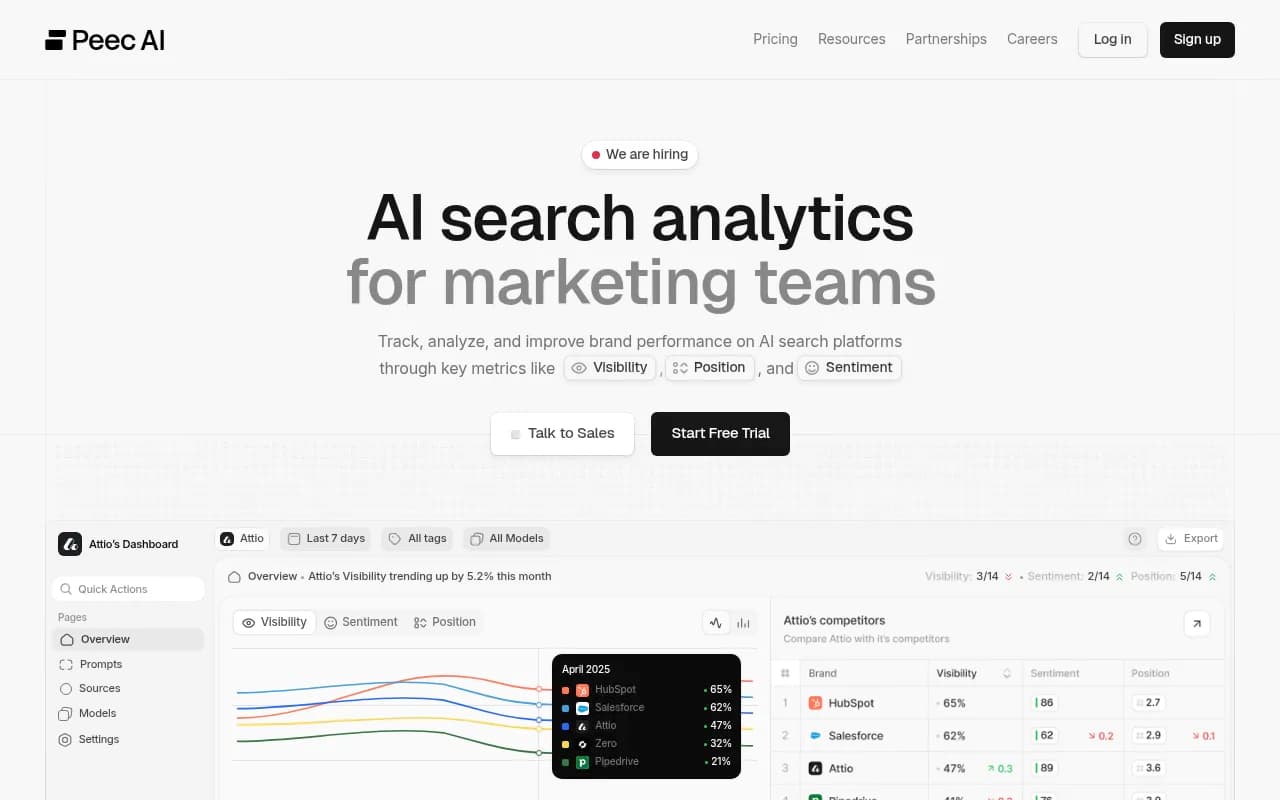
| Peec.ai | Yes | No | No | No | Mid-market monitoring baseline |
What Peec.ai does well (and where it falls short)
Peec.ai is a competent mid-market tool. It uses UI scraping, covers the main AI engines, and gives you prompt tracking, citation data, and competitor comparisons. For a team that's just getting started with AI visibility monitoring, it's a reasonable entry point. Pricing starts around €89/month with a 7-day trial.
The gap shows up when you want to do something with the data. Peec.ai will tell you that a competitor is being cited for a prompt you're not. It won't help you figure out what content to create to close that gap, generate that content, or track whether it worked. That's not a knock on Peec.ai specifically -- most tools in this space have the same limitation. But it means that for teams serious about improving their AI visibility (not just measuring it), Peec.ai is a starting point, not a destination.
How to choose
The right tool depends on what you actually need to do:
You want monitoring only, at a reasonable price. Otterly.AI or Radarkit. Both use UI-level data and give you the basics without a large budget commitment.
You want deep analytics and enterprise reporting. Profound. Strong data, strong reporting, higher price point.
You want AI visibility inside an existing SEO workflow. SE Visible, if you're already on SE Ranking. It avoids adding another platform.
You want to go from data to action -- find gaps, create content, track results. Promptwatch. It's the only platform in this comparison that covers the full loop: UI-level monitoring, answer gap analysis, AI content generation, crawler logs, and traffic attribution. For teams that want to actually improve their AI visibility rather than just watch it, that's the meaningful difference.
One thing worth noting: the gap between monitoring and optimization is where most teams get stuck. You can have a dashboard full of data showing that competitors are outranking you in ChatGPT and Perplexity. Without a clear path to fixing it, that data just creates anxiety. The tools that help you act on it -- not just observe it -- are the ones that compound in value over time.
A note on data freshness
UI-level scraping is more accurate than API polling, but it's also more resource-intensive. Different tools run queries at different frequencies, which affects how current your data is. When evaluating any tool in this space, it's worth asking how often prompts are re-run and whether you can trigger on-demand refreshes for specific prompts. Stale data in a fast-moving category like AI search can lead you to optimize for a picture of the world that no longer exists.
Promptwatch processes real-time crawler logs and runs prompt tracking continuously across 10 models, which is one reason it's become the reference point for teams that need current data, not weekly snapshots.
Bottom line
The UI vs. API distinction is real and it matters. Any tool that's polling APIs and presenting the results as "what users see in ChatGPT" is giving you an approximation. The tools in this guide all use UI-level data collection, which puts them on the right side of that line.
Within that group, the meaningful differentiation is what you can do with the data. If you just need to know where you stand, most of these tools will serve you. If you need to close the gap -- to actually improve how often AI models cite your brand -- Promptwatch is the only platform that gives you the full workflow to do it.