Key takeaways
- Omnia's sentiment analysis is still listed as "coming soon" months after launch, while most competitors ship this as a baseline feature.
- Data exports are locked behind the €279/month Pro plan, making it hard to justify for smaller teams or agencies.
- Omnia has no AI crawler logs, no Reddit/YouTube citation tracking, and no built-in content generation -- meaning you see the problem but can't act on it.
- Cost per tracked prompt runs nearly 3x higher than several alternatives.
- The tools that fill these gaps range from affordable monitoring alternatives to full-stack GEO platforms that close the loop between visibility data and content creation.
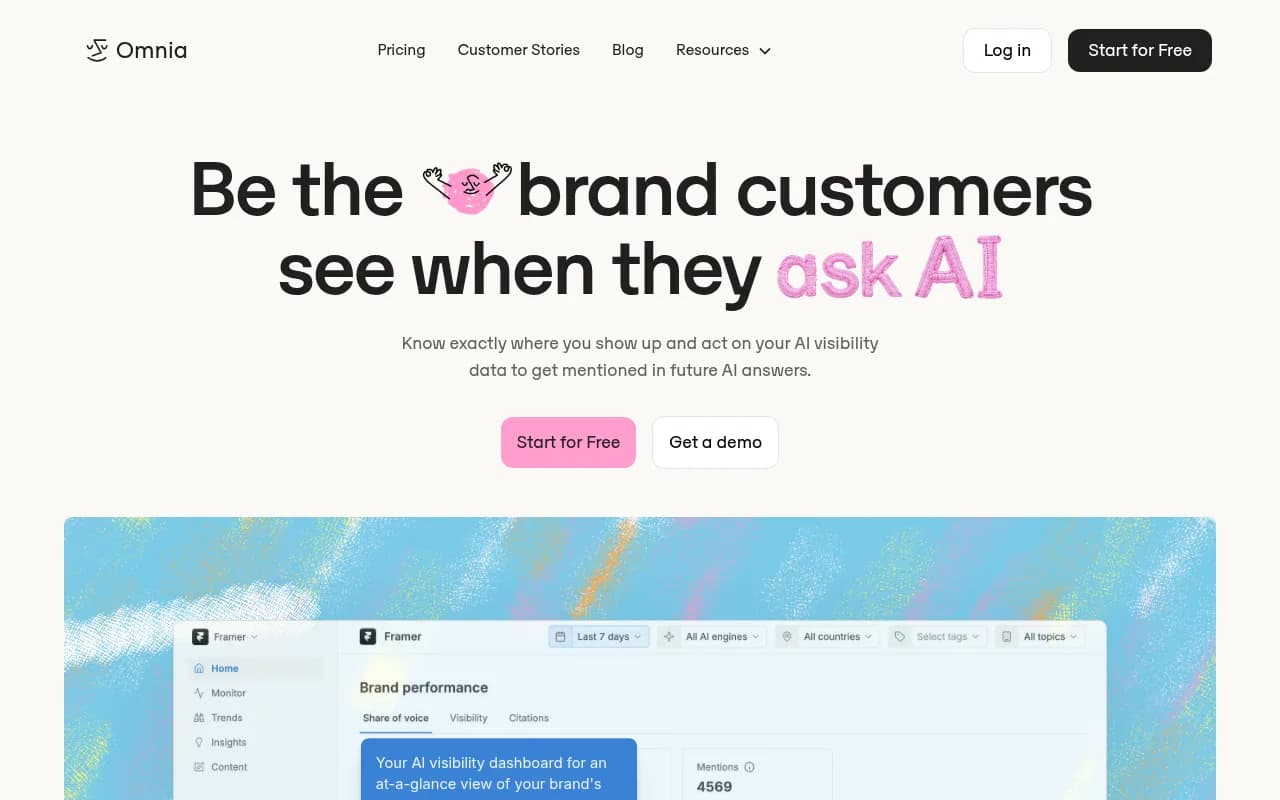
Omnia got a lot of attention after raising €3.5 million in pre-seed funding. That's a real vote of confidence, and the team has clearly built something people want. But funding rounds and product maturity are different things, and right now there's a noticeable gap between what Omnia promises and what it delivers.
This isn't a hit piece. It's a practical look at where Omnia falls short in 2026, based on what's actually live in the product versus what's still on the roadmap. If you're evaluating AI visibility tools and Omnia is on your shortlist, you need to know these gaps before you sign up.
The 6 features Omnia is missing
1. Sentiment analysis (still "coming soon")
This is the one that stings most. Sentiment analysis -- understanding whether AI models are mentioning your brand positively, negatively, or neutrally -- is a core feature for any brand monitoring tool. It's not a nice-to-have. If an AI model is recommending your competitor over you, you want to know the tone of that recommendation.
Omnia launched in mid-2025 and, as of mid-2026, sentiment analysis is still listed as "coming soon" on the pricing page. Competitors like Promptwatch and Profound have had this live for months. When you're paying for an AI visibility platform, you shouldn't be waiting on features that define the category.

2. Data exports locked behind the top tier
Omnia restricts CSV and data exports to its Pro plan at €279/month. Below that, you're stuck viewing data inside the dashboard with no way to pull it into your own reporting stack, share it with clients, or run your own analysis.
For agencies managing multiple brands, this is a dealbreaker. For in-house teams that report to stakeholders, it's a constant friction point. Most competing platforms include some form of data export at lower price points, or at least offer API access that doesn't require the most expensive plan.
3. No AI crawler logs
This is a technical gap that matters more than it sounds. AI crawler logs show you when bots from ChatGPT, Claude, Perplexity, and other models are actually visiting your website -- which pages they read, how often they return, and whether they're encountering errors that prevent proper indexing.
Without this, you're flying blind on the technical side. You can see that AI models aren't citing your content, but you can't tell whether it's because your content isn't good enough or because the crawlers aren't even reaching it. Omnia doesn't offer crawler logs at any plan level. Promptwatch does, starting at the Professional tier.
4. No content generation or gap-filling tools
Omnia is a monitoring tool. It shows you where you're invisible. What it doesn't do is help you fix it.
This is the fundamental limitation of monitoring-only platforms. You get a dashboard full of data showing that competitors are cited for prompts you're not -- and then you're on your own to figure out what to do about it. There's no content brief generation, no AI writing assistance, no structured workflow for turning visibility gaps into published content.
Platforms like Promptwatch have built what they call an "action loop": find the gaps, generate content to fill them, then track whether that content gets cited. Omnia stops at step one.
5. No Reddit or YouTube citation tracking
A significant portion of what AI models cite comes from outside your own website. Reddit threads, YouTube videos, and third-party listicles frequently show up as sources in ChatGPT, Perplexity, and Claude responses. If you're not tracking these, you're missing a major lever for improving your AI visibility.
Omnia focuses on domain-level and URL-level citation tracking for owned content. It doesn't surface the Reddit discussions or YouTube content that AI models are pulling from when they answer questions in your category. This matters especially for consumer brands and B2C products, where community content often outweighs brand-owned pages in AI citations.
6. Higher cost per prompt with fewer models
Omnia's pricing works out to roughly 3x the cost per tracked prompt compared to several alternatives, depending on the plan. And despite the premium price, the platform doesn't cover the full range of AI models that matter in 2026. Google AI Overviews, Google AI Mode, Grok, DeepSeek, and Mistral are increasingly relevant -- especially for brands with international audiences -- and coverage varies significantly across platforms.
How Omnia compares to the alternatives
Here's a direct comparison across the features that matter most:
| Feature | Omnia | Promptwatch | Profound | Otterly.AI | Peec AI |
|---|---|---|---|---|---|
| Sentiment analysis | Coming soon | Yes | Yes | Limited | No |
| Data exports | Pro plan only (€279/mo) | All paid plans | Yes | Yes | Yes |
| AI crawler logs | No | Yes (Professional+) | No | No | No |
| Content generation | No | Yes | No | No | No |
| Reddit/YouTube tracking | No | Yes | No | No | No |
| ChatGPT Shopping tracking | No | Yes | No | No | No |
| Models covered | 5-6 | 10+ | 6-8 | 4-5 | 4-5 |
| Starting price | ~€99/mo | $99/mo | Higher | ~$49/mo | ~$49/mo |
| Answer gap analysis | Basic | Full | Partial | No | No |
The tools that fill Omnia's gaps
For full-stack AI visibility with content execution
If you want a platform that doesn't just show you the problem but helps you fix it, Promptwatch is the most complete option available right now. It covers 10 AI models, includes crawler logs, tracks Reddit and YouTube citations, generates content briefs and articles based on real prompt data, and connects visibility to traffic attribution. The action loop -- find gaps, create content, track results -- is what separates it from monitoring-only tools.
For affordable monitoring without the premium price
If your main need is tracking brand mentions and citation share across AI models without the cost of a full GEO platform, a few options are worth looking at:
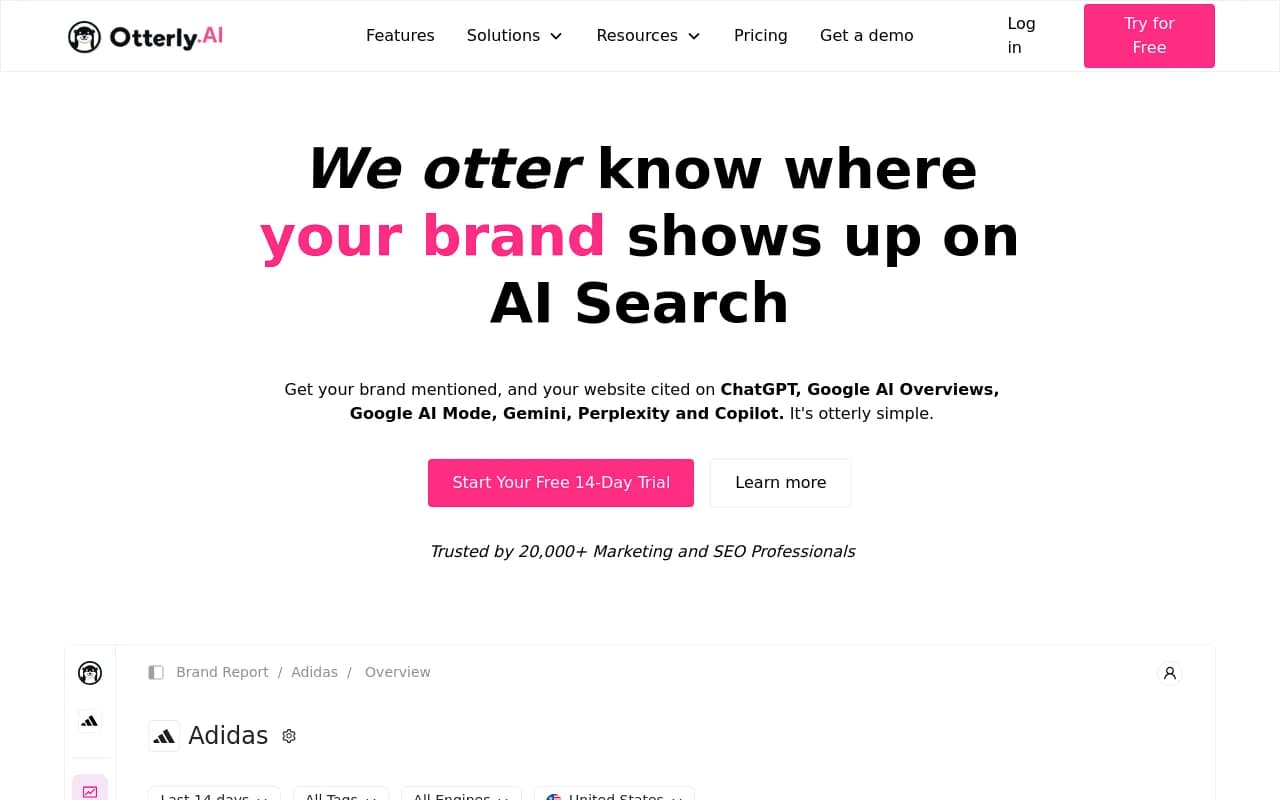
Otterly.AI is one of the more established monitoring-only tools. It's straightforward, covers the main AI models, and is priced for teams that don't need content generation.
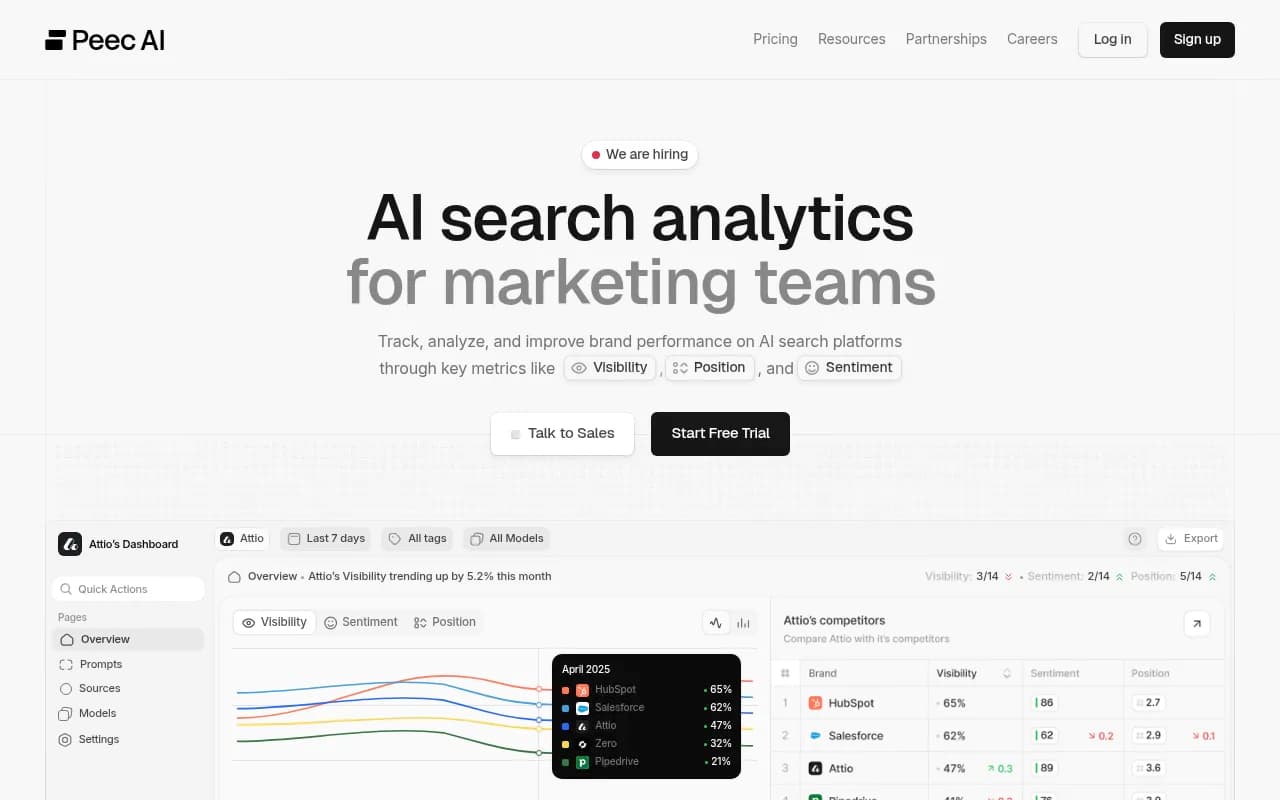
Peec AI is similar -- clean monitoring interface, reasonable pricing, but no optimization capabilities.
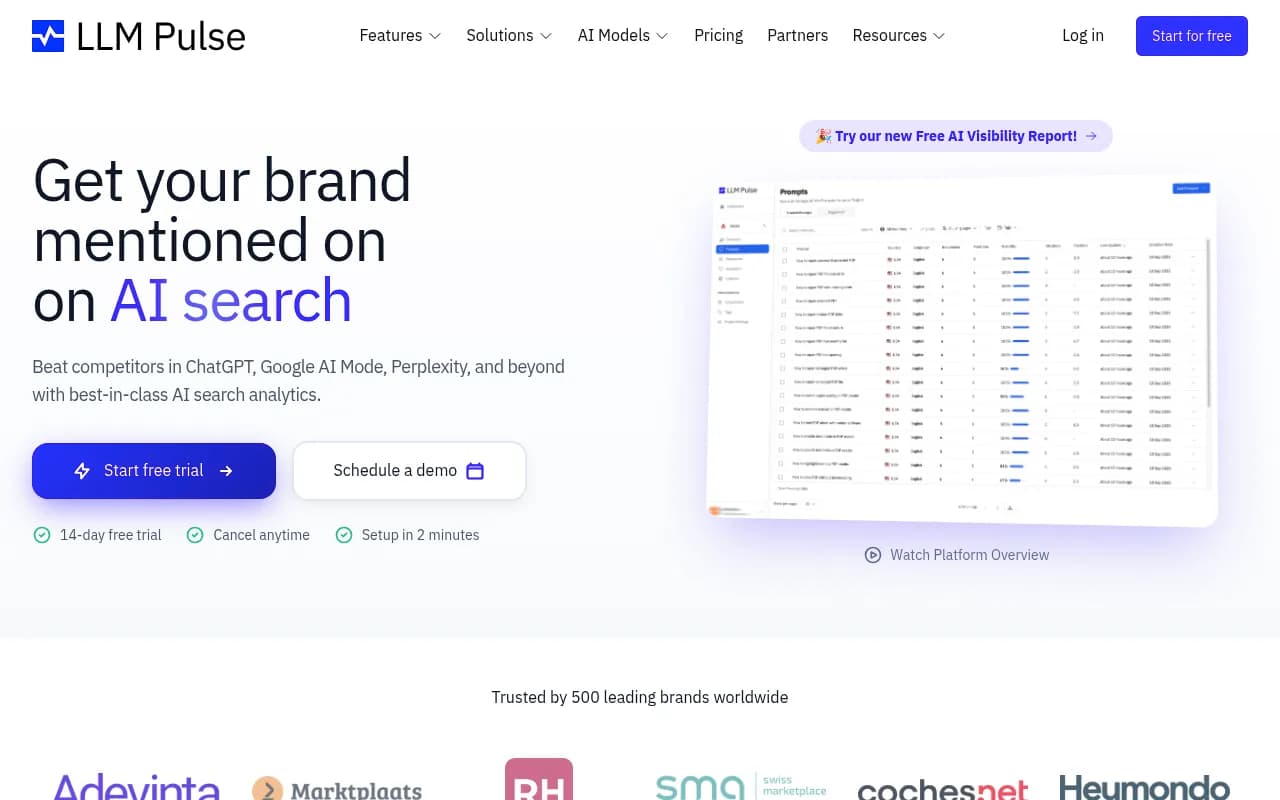
LLM Pulse has built a useful comparison layer on top of its monitoring, which makes it easier to evaluate how you stack up against competitors across different models.
For enterprise-grade visibility
If you're at the enterprise end and need depth of data, multi-region tracking, and integration with existing marketing stacks, two platforms stand out:
Profound has strong citation intelligence and is well-suited to large organizations that need detailed reporting. The gap is that it stops at monitoring -- there's no content execution layer.
Goodie AI is positioned specifically for enterprise GEO and has a more robust feature set for complex multi-brand environments.
For content gap analysis specifically
If the specific gap you're trying to fill is understanding what content to create to improve AI visibility, a few tools address this directly:
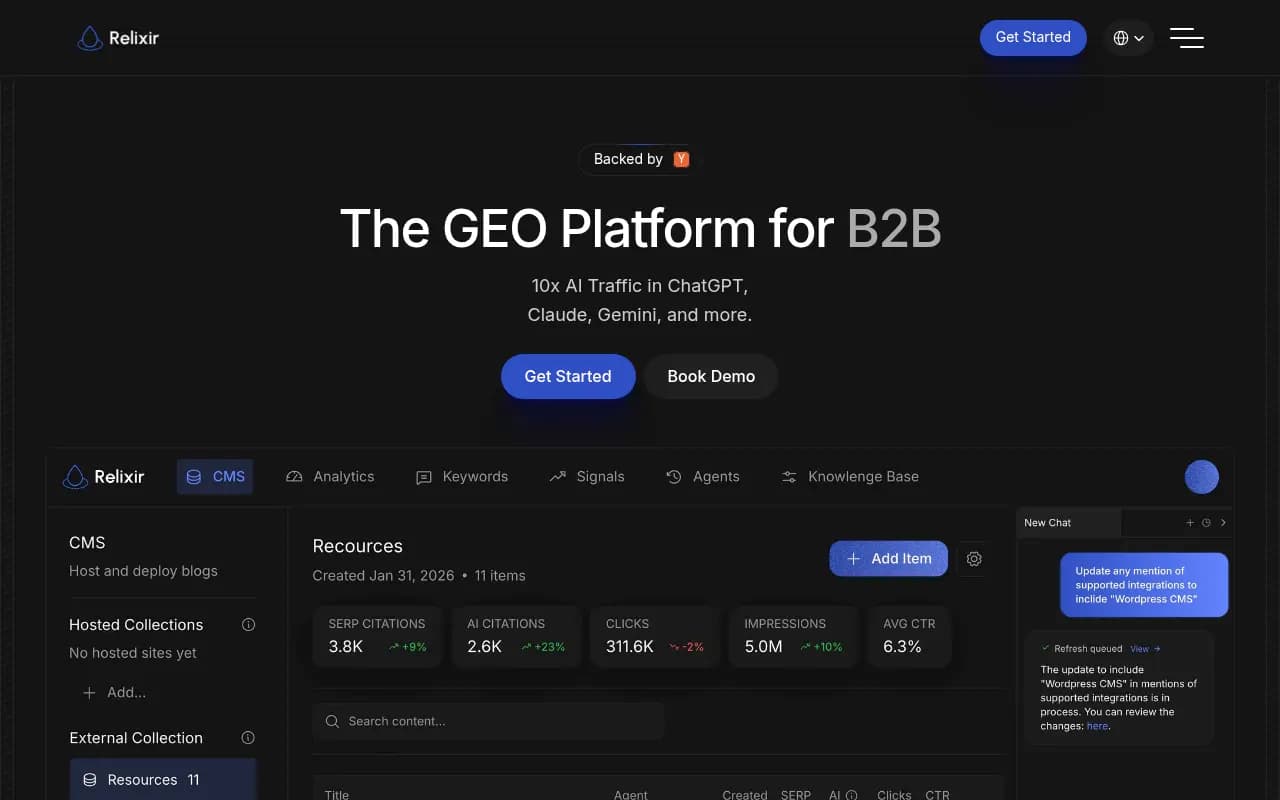
Relixir combines GEO monitoring with AI content generation, which makes it one of the closer alternatives to Promptwatch's full-stack approach.
Scrunch AI focuses on optimization recommendations alongside tracking, giving you more actionable output than a pure monitoring dashboard.
For Reddit and community citation tracking
This is a niche that most AI visibility platforms ignore. If you're in a category where community content heavily influences AI responses -- consumer tech, personal finance, health, travel -- you need a tool that surfaces what's being cited from Reddit and YouTube.
Promptwatch currently does this better than any other platform in the category. Outside of that, Brand24 tracks brand mentions across social platforms including Reddit, which gives you partial visibility into the community conversation even if it's not specifically tied to AI citations.
Who should still consider Omnia
To be fair: Omnia isn't a bad product. It's a young product with a clear roadmap and VC backing to execute on it. If you're a small team that primarily wants to track brand mentions across a handful of AI models and doesn't need exports, crawler logs, or content tools, Omnia's interface is clean and the core monitoring works.
The problem is the price-to-feature ratio at this stage of the product's maturity. You're paying a premium for capabilities that are either missing or still in development, while alternatives at similar or lower price points are more complete right now.
If sentiment analysis ships, exports open up to lower tiers, and the platform adds some form of content optimization, the calculus changes. But in mid-2026, you're betting on a roadmap rather than buying a finished product.
What to look for when evaluating alternatives
Before you pick a replacement, get clear on which of Omnia's gaps actually affect your workflow:
- If you need to act on visibility data (not just see it), prioritize platforms with content generation and gap analysis.
- If you're reporting to clients or stakeholders, make sure data exports are available on the plan you can actually afford.
- If you're in a technical role, crawler logs will tell you things no other data source can.
- If community content matters in your category, Reddit and YouTube tracking isn't optional.
- If you're running international campaigns, check model coverage and multi-region support carefully -- not all platforms track Google AI Overviews or regional model behavior.
The AI visibility space is moving fast. Platforms that were monitoring-only a year ago are adding optimization features. Platforms that launched with big promises are still catching up to their roadmaps. The safest bet is to evaluate what's live in the product today, not what's on the pricing page as "coming soon."