Key takeaways
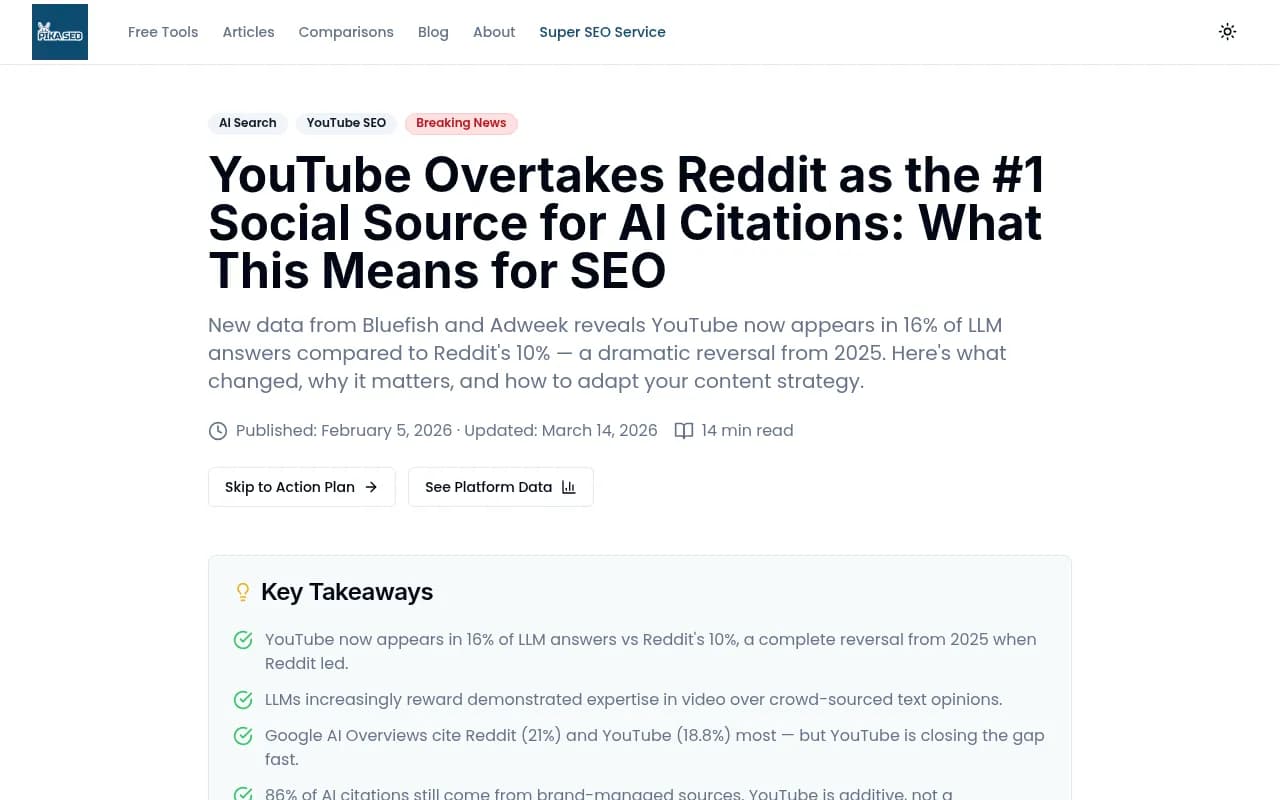
- YouTube now appears in 16% of LLM answers, overtaking Reddit (10%) as the most-cited social platform in AI-generated responses -- a near-complete reversal from mid-2025.
- Most GEO tools track brand mentions but miss the offsite citation layer: Reddit threads, YouTube videos, and LinkedIn posts that AI models actually pull from.
- Omnia is a solid citation analysis tool, but it has gaps -- particularly around Reddit/YouTube tracking depth, content generation, and AI crawler logs.
- The six alternatives below each handle Reddit and YouTube citations differently, so the right pick depends on whether you want monitoring, content creation, or both.
- Promptwatch is the only platform in this list that closes the full loop: find citation gaps, generate content to fill them, then track what changes.
Here's something worth sitting with: AI search traffic converts at 14.2% compared to Google's 2.8%. That's roughly five times more valuable per visit. And the sources AI engines are pulling from? Reddit and YouTube, by a wide margin.
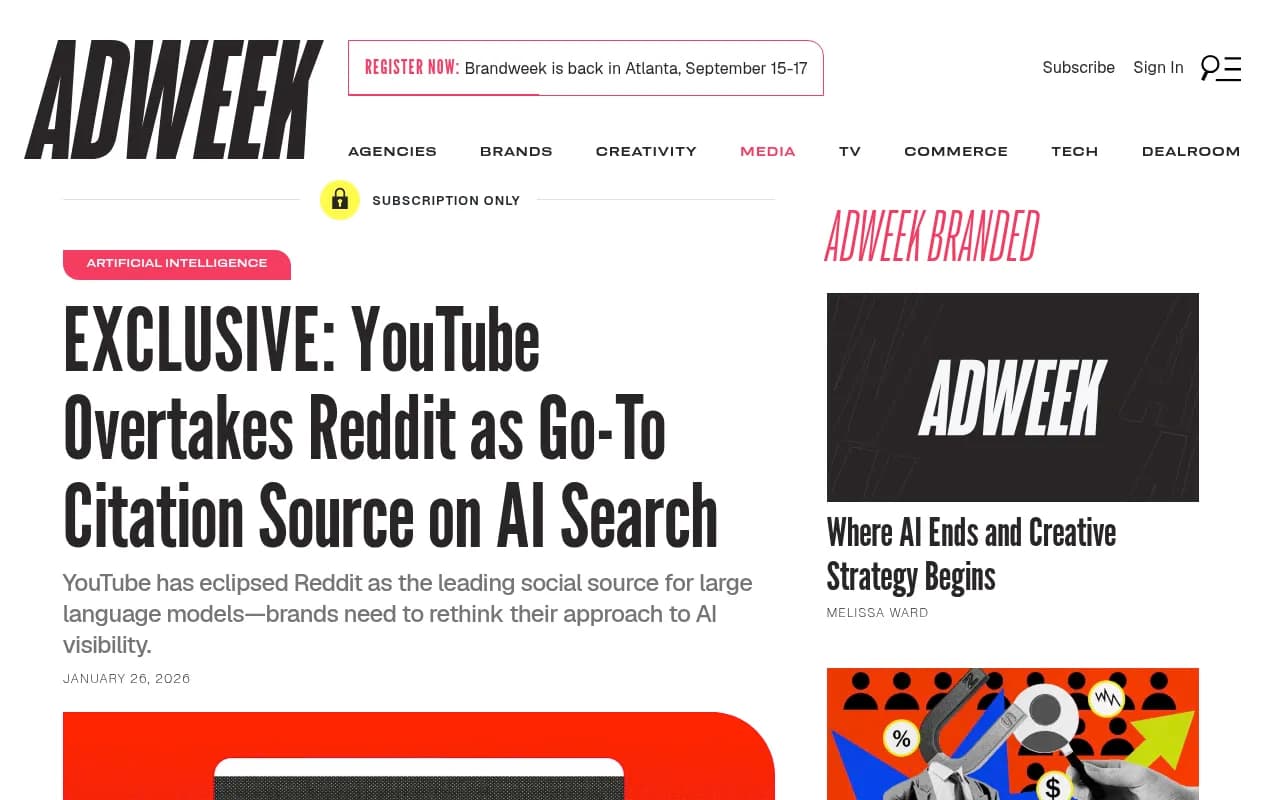
Adweek reported in January 2026 that YouTube has officially overtaken Reddit as the most-cited social platform in AI-generated responses, with YouTube appearing in 16% of LLM answers versus Reddit's 10%. In Google AI Overviews specifically, Reddit still accounts for 21% of top citations, with YouTube close behind at 18.8%.
This matters because most GEO platforms were built to track brand mentions in AI answers -- not to tell you which Reddit threads or YouTube videos are driving competitor visibility. Omnia does citation analysis well, but if you need deeper Reddit and YouTube tracking, content generation to fill gaps, or AI crawler logs, you'll want to look elsewhere.
Here's an honest breakdown of six alternatives.
What to look for in an Omnia alternative
Before jumping into the list, it's worth being clear about what "Reddit and YouTube citation tracking" actually means in practice. There are two different things a tool might do:
- Show you which Reddit posts or YouTube videos appear as citations in AI answers for your tracked prompts
- Surface which external Reddit threads and YouTube videos are driving competitor visibility -- even on prompts you haven't thought to track yet
Most tools do the first. Very few do the second. The distinction matters because if you're only monitoring prompts you already know about, you're missing the gaps where competitors are winning.
Also worth checking: does the tool just show you the data, or does it help you act on it? A dashboard that tells you "Reddit is citing your competitor's product comparison thread" is useful. A platform that then helps you create content to compete with that thread is more useful.
| Tool | Reddit tracking | YouTube tracking | Content generation | AI crawler logs | Pricing starts at |
|---|---|---|---|---|---|
| Promptwatch | Yes (offsite) | Yes (offsite) | Yes (AI agents) | Yes | $99/mo |
| Profound | Yes | Yes | No | No | Custom |
| Bluefish AI | Yes | Yes | No | No | Custom |
| Scrunch AI | Partial | Partial | No | No | Custom |
| AirOps | No | No | Yes (workflows) | No | Custom |
| Goodie AI | Yes | Yes | No | No | Custom |
| Omnia | Partial | Partial | No | No | Custom |
1. Promptwatch
Promptwatch is the most complete option on this list if you want to go beyond monitoring and actually fix your citation gaps.

The Reddit and YouTube tracking here works differently from most tools. Promptwatch's offsite citation analysis surfaces which external pages -- including Reddit threads, YouTube videos, and third-party listicles -- are being cited by AI engines in response to your tracked prompts. You're not just seeing your own domain's citation rate; you're seeing the full competitive picture of what AI models are pulling from.
What makes it genuinely different is the action loop. Once you see that a competitor is winning citations because a Reddit thread recommends their product, Promptwatch's Content Agents can generate content designed to fill that gap -- articles, comparisons, briefs -- grounded in real prompt data and citation patterns. Then you track whether that new content starts getting cited. Most platforms stop at step one. This one runs all three.
The AI Crawler Logs feature is also worth mentioning. You can see exactly when ChatGPT, Claude, Perplexity, and other crawlers visit your pages, which pages they read, and when a crawled page moves to an actual citation. That kind of transparency is rare -- most competitors don't offer it at all.
Pricing starts at $99/month for the Essential plan (1 site, 50 prompts, 5 articles). The Professional plan at $249/month adds crawler logs, city/state tracking, and 15 articles per month.
2. Profound
Profound was one of the first platforms to publish data on YouTube overtaking Reddit in AI citations -- their January 2026 data was cited in the Adweek report. That research credibility reflects real depth in how they track citation sources.
Profound's citation analysis covers which domains AI models pull from, including social and UGC sources like Reddit and YouTube. For enterprise teams that need detailed source-level reporting across multiple AI engines, it's a strong option. The platform monitors Google AI Overviews, Gemini, ChatGPT, and Perplexity, among others.
The main limitation is that Profound is primarily a monitoring and analytics platform. There's no content generation to help you act on what you find, and no AI crawler logs. If your team has the resources to take insights and run with them independently, that's fine. If you need the platform to help you close the gap, you'll hit a ceiling.
Pricing is custom (enterprise-oriented), which means it's not the right fit for smaller marketing teams.
3. Bluefish AI
Bluefish AI is the source behind some of the most-cited data on the YouTube/Reddit citation shift -- their six-month analysis of 6.1 million citations across 10 AI platforms is what surfaced the 16% vs 10% split.
That research depth translates into the product. Bluefish tracks citation sources at a granular level, including social platforms, and gives you visibility into which external sources are influencing AI answers in your category. For brands that want to understand the citation ecosystem around their niche -- not just their own domain -- it's worth evaluating.
Like Profound, it's enterprise-focused and doesn't include content generation. It's also one of the more expensive options in this space, which makes it better suited to larger brands or agencies with dedicated GEO budgets.
4. Scrunch AI
Scrunch AI takes a slightly different angle. It's built around monitoring how AI assistants like ChatGPT and Claude represent your brand, with citation tracking as part of that picture.
Reddit and YouTube tracking exists in Scrunch, but it's more limited than Profound or Bluefish. You'll see when those platforms appear as citation sources in AI answers, but the offsite analysis -- understanding which specific threads or videos are driving competitor visibility -- isn't as deep.
Where Scrunch is genuinely useful is for brand narrative monitoring. If you care about the tone and framing of how AI engines describe your brand (not just whether you're cited), Scrunch's sentiment and narrative diagnostics are solid. It's a reasonable choice for PR-oriented teams who want to know not just "are we cited" but "what are AI engines saying about us."
5. AirOps
AirOps is a different kind of tool -- it's less of a monitoring platform and more of an AI workflow builder for GEO content creation.
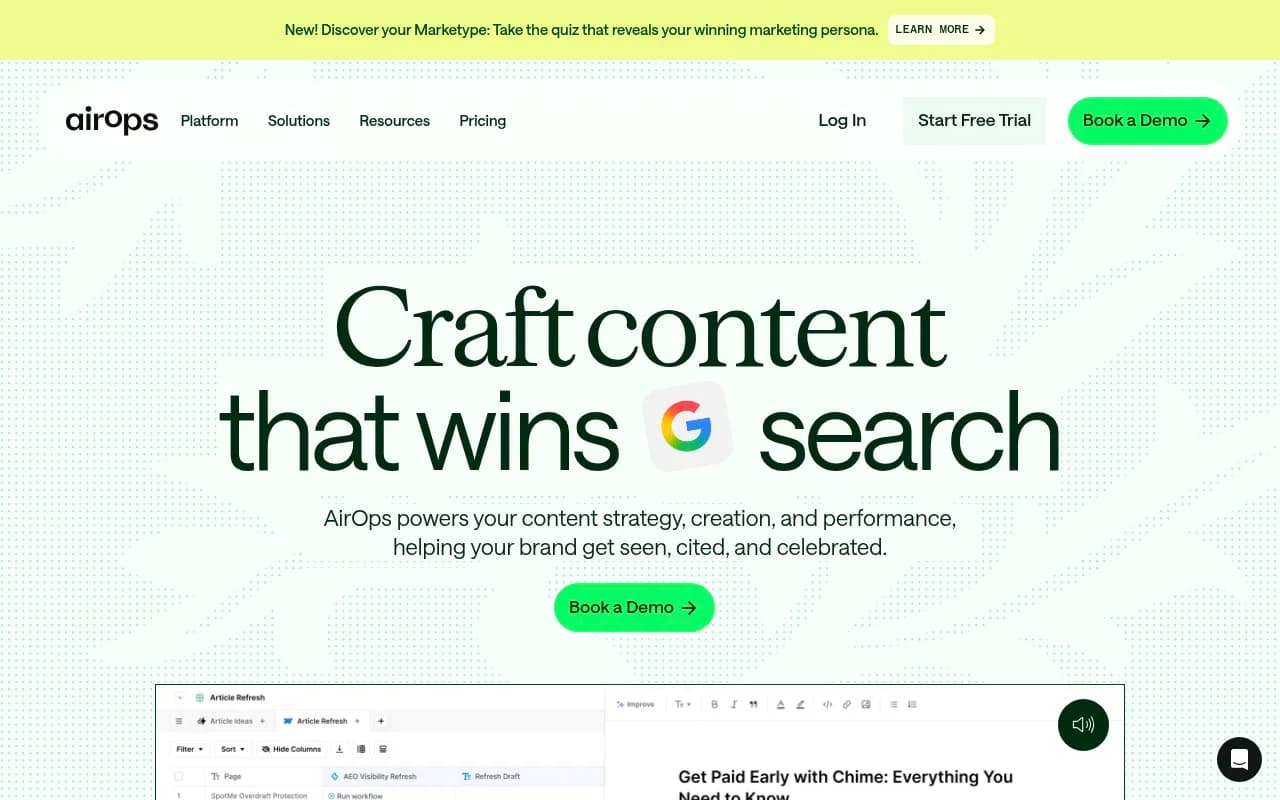
It doesn't track Reddit or YouTube citations directly. What it does is help you build automated workflows to create content at scale, including content designed to rank in AI search. If your gap analysis (done elsewhere) tells you that Reddit threads and YouTube videos are dominating citations in your category, AirOps can help you produce the content to compete.
Think of it as the execution layer, not the intelligence layer. You'd pair it with a monitoring tool rather than use it as a standalone solution. For teams that already have strong citation data and need to move fast on content production, it's worth considering.
6. Goodie AI
Goodie AI describes itself as the gold standard for enterprise GEO, and their research credentials back that up -- they tracked 6.1 million citations across 10 AI platforms in a study that surfaced the YouTube/Reddit citation shift.
The platform covers citation source analysis including Reddit and YouTube, and it's built for large-scale brand monitoring across multiple AI engines. Enterprise teams that need rigorous citation data with strong reporting will find it capable.
The gaps are similar to Profound and Bluefish: no content generation, no AI crawler logs, and pricing that puts it out of reach for most mid-market teams. It's a monitoring platform, not an optimization platform.
How Reddit and YouTube citations actually work in AI search
It's worth stepping back to explain why this matters so much right now.
AI engines don't just pull from brand websites. They pull from wherever they find credible, specific, experience-based content -- and Reddit threads and YouTube videos score well on all three dimensions. A Reddit thread where real users compare two products is more useful to an LLM than a brand's own comparison page, because it's less promotional and more specific.
YouTube's rise is partly about transcripts. LLMs can now parse video transcripts at scale, which means a detailed YouTube review or tutorial is effectively indexable content. YouTube is also cited approximately 200x more than any other video platform in AI answers -- TikTok and Instagram don't come close, because their content isn't as parseable.
What this means practically: if you're only optimizing your own website for AI search, you're leaving a significant portion of the citation landscape unaddressed. The brands winning in AI search in 2026 are the ones who understand which Reddit communities and YouTube channels are influencing AI answers in their category -- and who are either creating content on those platforms or building content that directly answers the same questions.
Which tool should you actually use?
It depends on what you're trying to do.
If you want to understand the full citation ecosystem -- including which Reddit threads and YouTube videos are driving competitor visibility -- and then actually do something about it, Promptwatch is the most complete option. The combination of offsite citation tracking, content generation, and AI crawler logs means you're not just watching the problem; you're fixing it.
If you're an enterprise brand that needs deep citation analytics and has a separate team to act on the insights, Profound or Goodie AI are worth evaluating. Both have strong research credibility and solid monitoring depth.
If brand narrative and sentiment matter as much as citation volume, Scrunch AI's tone diagnostics add something the pure citation trackers don't.
If you already have citation data and need to produce content fast, AirOps handles the execution layer well.
The one thing I'd push back on is the idea that monitoring alone is enough. Knowing that Reddit is citing your competitor more than you doesn't help unless you can do something with that information. The tools that close the loop between insight and action are the ones worth paying for in 2026.