Key takeaways
- Prompt data accuracy depends on how a platform collects responses: real user-facing AI interfaces vs. API calls produce meaningfully different results.
- Promptwatch is the only platform in this comparison that tracks real user-facing AI responses across 10+ models AND lets you act on what you find -- through content gap analysis and AI content generation.
- Profound offers strong enterprise-grade depth but starts at $499/month and focuses on monitoring rather than fixing.
- Peec AI and Otterly.AI are solid entry-level trackers, but both are monitoring-only with limited prompt intelligence.
- Rankshift is a newer entrant with limited public data on methodology -- treat its accuracy claims with some skepticism until independently verified.
If you've been evaluating AI visibility platforms in 2026, you've probably noticed that every vendor claims to have "accurate prompt data." The problem is that accuracy means different things depending on how a platform actually collects its data. Does it hit the AI model's API directly? Does it simulate real user sessions? Does it track one model or ten? Does it run prompts once a week or continuously?
These aren't minor technical footnotes. They determine whether the data you're looking at reflects what real users actually see when they ask ChatGPT or Perplexity about your category.
This guide breaks down Profound, Promptwatch, Peec AI, Otterly.AI, and Rankshift across the dimensions that actually matter for prompt data quality: collection methodology, model coverage, prompt intelligence depth, and what you can do with the results.
Why prompt data accuracy is harder than it sounds
Before getting into the platforms, it's worth understanding why this is a genuinely difficult problem.
AI search engines don't return consistent results. Profound's own research shows that 40 to 60% of cited domains change monthly across answer engines, even for identical queries. That's not a bug -- it's how these systems work. They're probabilistic, they update frequently, and the user-facing experience can differ significantly from what you'd get hitting the same model via API.
This creates a real methodological split in the market. Some platforms query AI models through their APIs, which is faster and cheaper but may not reflect what users actually see. Others simulate real browsing sessions in actual AI interfaces, which is slower and more expensive but captures the full picture including citations, shopping recommendations, and follow-up query behavior.
The gap matters more than most vendors admit.
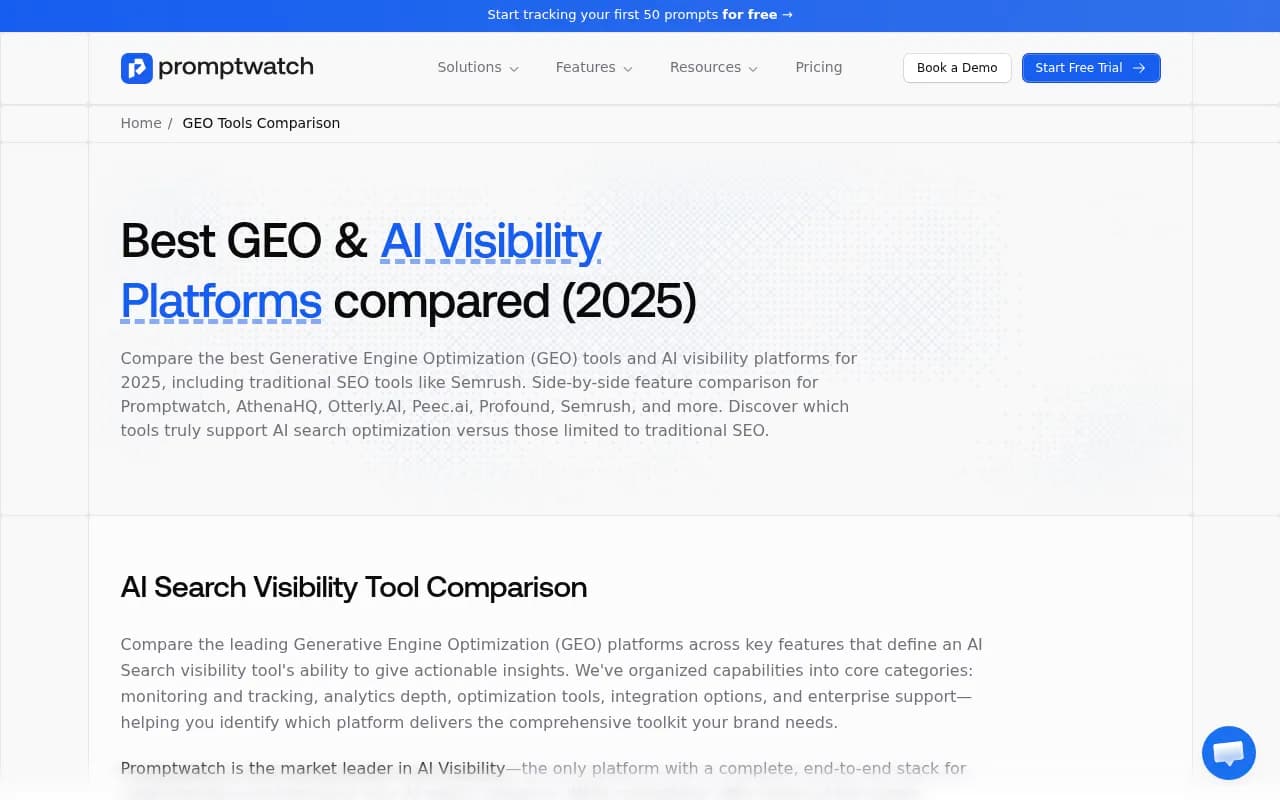
The platforms, compared
Profound
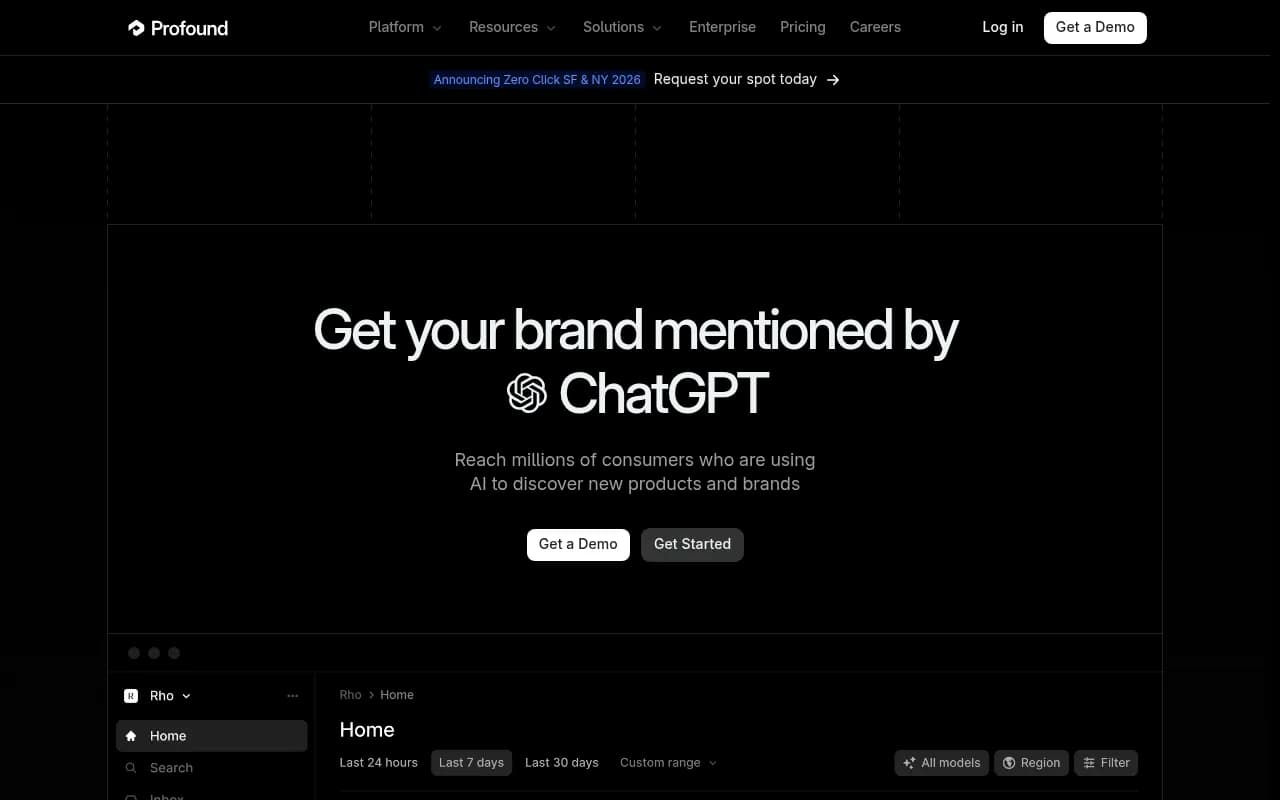
Profound positions itself at the enterprise end of the market, and the positioning is mostly earned. It tracks AI visibility across major models, offers competitive benchmarking, and has built out prompt volume data -- which tells you roughly how many users are asking a given question. That's genuinely useful for prioritization.
Where Profound gets interesting is its Agent Analytics feature, which gives some insight into how AI crawlers interact with your site. It also has shopping tracking for ChatGPT's product recommendations, which most competitors don't touch.
The honest limitation: Profound is primarily a monitoring and measurement platform. It tells you where you stand with impressive depth, but the content creation and optimization work still falls on your team. At $499/month as the entry point, that's a meaningful investment for a tool that diagnoses but doesn't treat.
Prompt data methodology: Profound queries AI models and tracks responses at scale. The depth of its prompt intelligence (volume estimates, competitive benchmarking) is among the strongest in this comparison.
Promptwatch

Promptwatch is the platform I'd point most marketing teams toward first, and the reason is straightforward: it's the only one in this comparison that closes the loop between finding a problem and fixing it.
The data collection side is strong. Promptwatch tracks real user-facing AI responses (not just API outputs) across 10 models: ChatGPT, Perplexity, Google AI Overviews, Google AI Mode, Claude, Gemini, Meta/Llama, DeepSeek, Grok, and Mistral. That's broader model coverage than any other platform here. It also tracks 4.5 billion+ citations, clicks, and prompts processed -- which gives its prompt volume and difficulty scoring real statistical weight.
What separates it from the field is the action loop. Answer Gap Analysis shows you exactly which prompts competitors rank for that you don't. Content Agents then generate articles, listicles, and briefs built around those specific gaps -- not generic SEO content, but pieces engineered around the actual prompts AI models are already fielding. Then page-level tracking shows you when new content gets crawled and cited, and by which model.
The AI Crawler Logs feature is something most competitors simply don't have. You can see in real time which AI crawlers are hitting your site, which pages they're reading, what errors they're encountering, and how often they return. That's the kind of technical visibility that lets you fix indexing issues before they become visibility problems.
Pricing runs from $99/month (Essential) to $579/month (Business), with agency and enterprise tiers available. The free trial is worth starting with.
Prompt data methodology: Real user-facing interface tracking across 10 models, not API-only. Prompt volume estimates and difficulty scoring are grounded in 4.5B+ data points.
Peec AI

Peec AI is a capable mid-market option. It tracks AI visibility across the main models, provides competitive benchmarking, and has a reasonably clean interface. Starting around €89/month, it's accessible for teams that don't have enterprise budgets.
The honest assessment: Peec AI is a monitoring tool. It tells you where you stand. It doesn't help you change where you stand. There's no content generation, no gap analysis that produces actionable briefs, and no crawler log visibility. For a team that has strong content resources and just needs reliable tracking data, that's fine. For a team that needs to actually improve their AI visibility, it's only half the solution.
Prompt data methodology: API-based querying of major AI models. Solid for tracking trends over time, though the user-facing vs. API gap applies here.
Otterly.AI

Otterly is the budget entry point in this comparison, starting around $29/month. For small teams or individuals who just want to see whether their brand appears in AI responses, it does the job.
The limitations become apparent quickly if you need depth. Prompt intelligence is basic -- you get visibility data but not volume estimates, difficulty scores, or query fan-outs. There's no content generation, no crawler logs, and model coverage is narrower than Promptwatch or Profound. The competitive benchmarking is present but surface-level.
That said, for a solo marketer or a small business that wants a simple answer to "is my brand showing up in ChatGPT and Perplexity," Otterly is a reasonable starting point. Just don't expect it to tell you why you're invisible or what to do about it.
Prompt data methodology: API-based monitoring. Limited prompt intelligence depth.
Rankshift
Rankshift is the newest entrant in this comparison, and the honest answer is that there's limited independent verification of its methodology. The platform claims strong prompt data accuracy, but unlike Profound or Promptwatch, there isn't yet a substantial body of third-party analysis or published research to validate those claims.
From what's publicly available, Rankshift appears to focus on tracking and reporting rather than optimization. Model coverage and prompt intelligence depth are not as clearly documented as the other platforms here.
If you're evaluating Rankshift, I'd recommend asking specifically: which AI models do you query, do you use API calls or user-facing interface simulation, and what's your prompt refresh frequency? The answers will tell you a lot about whether the accuracy claims hold up.
Feature comparison table
| Feature | Promptwatch | Profound | Peec AI | Otterly.AI | Rankshift |
|---|---|---|---|---|---|
| Models tracked | 10 | ~6-8 | ~5-6 | ~4-5 | Not clearly documented |
| Data collection method | Real UI + API | API-based | API-based | API-based | Unclear |
| Prompt volume estimates | Yes | Yes | Limited | No | No |
| Prompt difficulty scoring | Yes | Partial | No | No | No |
| Query fan-outs | Yes | No | No | No | No |
| Answer gap analysis | Yes | No | No | No | No |
| AI content generation | Yes | No | No | No | No |
| AI crawler logs | Yes | Yes (partial) | No | No | No |
| ChatGPT Shopping tracking | Yes | Yes | No | No | No |
| Reddit/YouTube insights | Yes | No | No | No | No |
| Competitor heatmaps | Yes | Yes | Yes | Limited | Limited |
| Multi-language/region | Yes | Yes | Limited | No | No |
| Starting price | $99/mo | $499/mo | €89/mo | $29/mo | Not public |
| Free trial | Yes | Demo only | Yes | Yes | Unclear |
What "accurate prompt data" actually requires
Here's a useful framework for evaluating any platform's accuracy claims.
Collection method: Real user-facing interface tracking captures citations, shopping recommendations, and follow-up behavior that API calls miss. If a platform only hits the API, it may be systematically missing a portion of what users see.
Refresh frequency: AI responses change constantly. A platform that runs prompts weekly will miss significant volatility. Look for platforms that track continuously or at minimum daily.
Model coverage: If you're only tracking ChatGPT and Perplexity, you're missing Gemini, Claude, Grok, DeepSeek, and others that are growing fast. Comprehensive coverage matters more as AI search fragments across models.
Prompt volume grounding: A visibility score is more useful when you know how many people are actually asking that question. Platforms that provide volume estimates (even rough ones) let you prioritize high-value prompts instead of optimizing for questions nobody asks.
Statistical depth: A platform processing billions of data points has more reliable signal than one processing millions. The difference shows up in edge cases and niche categories.
By these criteria, Promptwatch and Profound are the strongest on data quality. Promptwatch has the edge on model coverage and collection methodology; Profound has strong enterprise depth and has been in the market longer with more published research.
Which platform should you choose?
The right answer depends on what you actually need to accomplish.
If you need to improve AI visibility, not just measure it: Promptwatch is the clear choice. It's the only platform here that takes you from "you're invisible for these prompts" to "here's the content that will fix it" to "here's proof it's working." The price range ($99-$579/month) is also more accessible than Profound for most teams.
If you're an enterprise team that needs deep competitive benchmarking and can handle the execution internally: Profound at $499/month delivers strong depth. The prompt volume data and competitive analysis are genuinely impressive, and the agent analytics give technical teams useful crawl visibility.
If you're a mid-market team that needs reliable tracking on a reasonable budget: Peec AI at €89/month is a solid monitoring tool. You'll need to pair it with content resources to act on what you find, but the tracking data is reliable.
If you just need basic monitoring and have a tight budget: Otterly.AI at $29/month gets you started. Treat it as a starting point, not a complete solution.
On Rankshift: Until there's more independent verification of its methodology and accuracy, I'd treat it as a secondary option. The lack of documented data collection methodology is a meaningful gap when accuracy is the primary evaluation criterion.
The monitoring-only trap
One pattern worth calling out: most platforms in this market are monitoring dashboards. They show you data. They don't help you change the data.
This is fine if your team has the bandwidth and expertise to translate visibility gaps into content strategy, write the content, publish it, and track whether it moves the needle. Many enterprise teams do.
But for most marketing teams, the gap between "we can see we're invisible" and "we've fixed the invisibility" is where AI visibility initiatives stall. The research from Discovered Labs puts it plainly: all three of Profound, Peec, and Otterly "diagnose the problem but don't fix it."
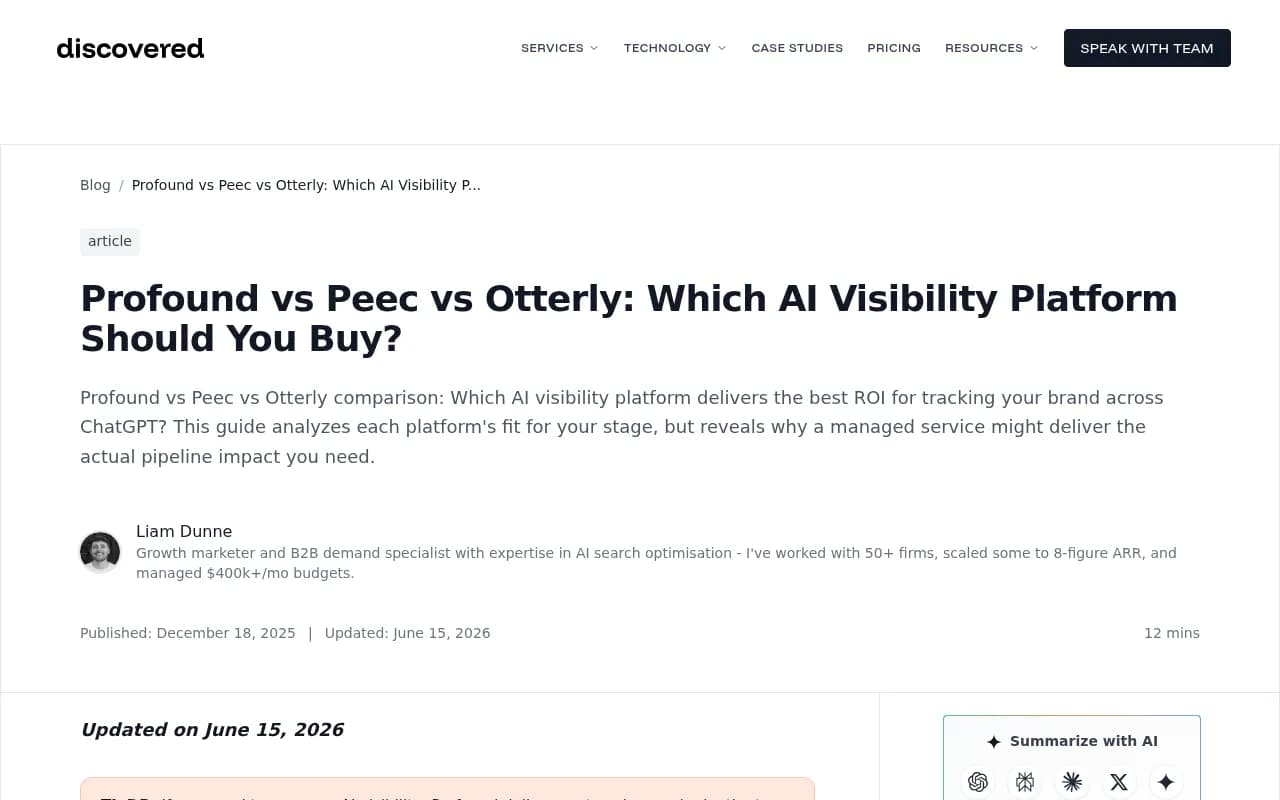
Promptwatch is built around closing that gap. The content agents aren't a bolt-on feature -- they're the point. The whole platform is designed around a cycle: find the gaps, generate content that addresses them, track whether AI models start citing it. That's a different product philosophy from the monitoring tools, and it shows in the feature set.
Bottom line
Prompt data accuracy in 2026 comes down to methodology, model coverage, and statistical depth. By those measures, Promptwatch and Profound lead the field. Promptwatch has broader model coverage and tracks real user-facing responses rather than API outputs alone; Profound has strong enterprise depth and published research backing its claims.
Peec AI and Otterly.AI are legitimate tools for teams that need affordable monitoring. Rankshift needs more independent validation before it can be recommended on accuracy grounds.
The more important question, though, is what you plan to do with the data. If the answer is "act on it," Promptwatch is the only platform in this comparison built to help you do that.