Key takeaways
- Most AI writing tools are optimized for draft speed, not LLM citation. Getting cited by ChatGPT or Perplexity requires a different approach entirely.
- AirOps excels at workflow automation and content operations at scale, but doesn't track whether your content actually appears in AI responses.
- Jasper is a mature content marketing platform with strong brand voice features, but its SEO focus is traditional rather than AI-search-native.
- GrowthBar is a solid, affordable option for SEO content briefs and blog writing, though it lacks any AI visibility tracking or citation analysis.
- Promptwatch is the only platform in this comparison built specifically around the full cycle: finding gaps in AI responses, generating content to fill them, and tracking whether that content gets cited.
Why "getting cited in LLMs" is a different problem than ranking on Google
Search has fractured. A growing share of users now get answers directly from ChatGPT, Perplexity, Google AI Overviews, and similar tools without ever clicking a blue link. For brands, this creates a new kind of visibility problem: you can rank #1 on Google and still be completely invisible when someone asks an AI assistant for a recommendation in your category.
The content that gets cited in LLM responses tends to share a few traits. It directly answers specific questions. It's structured clearly. It covers topics that AI models have identified as relevant to a query. And it exists on pages that AI crawlers have actually read and indexed.
None of that is guaranteed by traditional SEO content creation. Writing a 2,000-word blog post optimized for a keyword doesn't automatically make you visible in AI search. The gap between "good SEO content" and "content that gets cited by AI" is real, and it's where most writing platforms fall short.
So the question isn't just "which tool writes the best content?" It's "which tool helps you write content that AI models will actually cite?"
Let's look at each platform honestly.
AirOps: powerful automation, but not built for AI citation
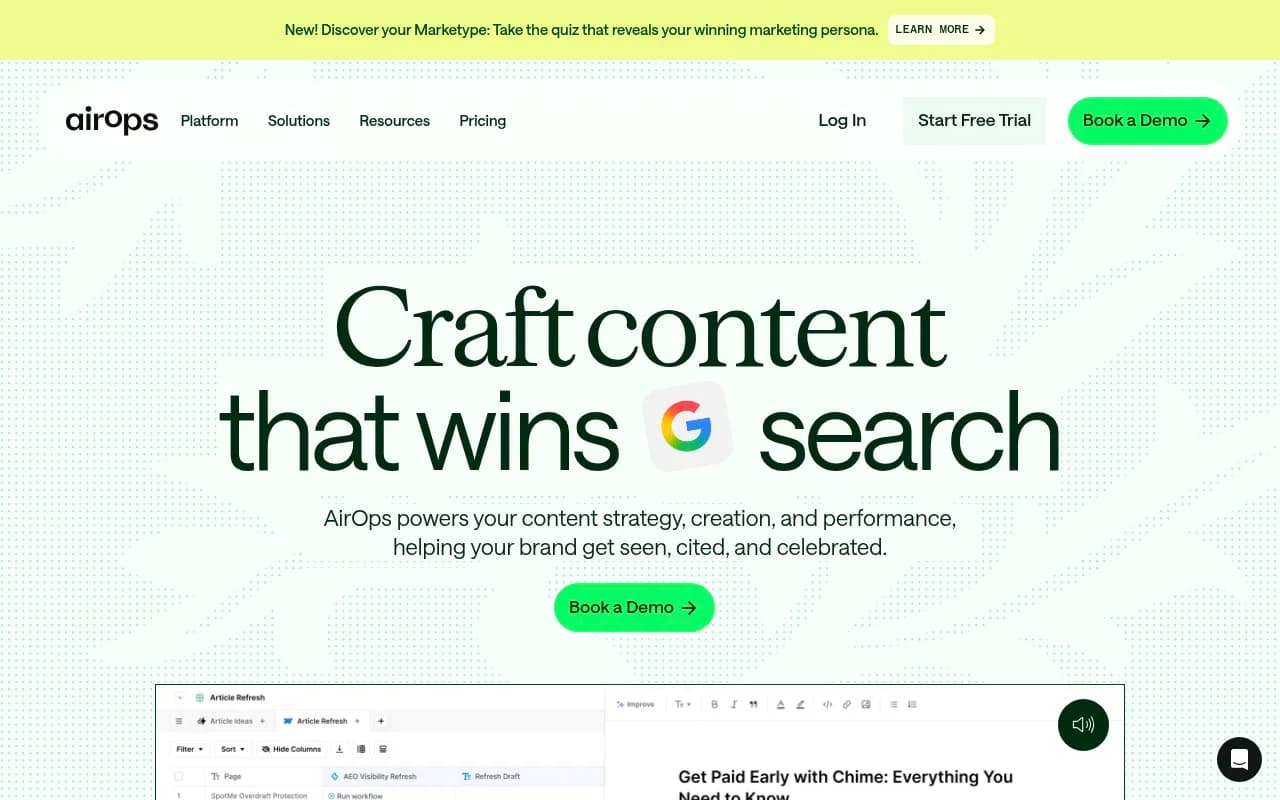
AirOps is a workflow automation platform for content teams. The core idea is that you build reusable AI workflows, connect them to your data sources, and run content operations at scale. If you need to generate hundreds of product descriptions, refresh a large blog archive, or automate content briefs across a big site, AirOps handles that kind of volume well.
The platform supports multiple LLM backends, lets you chain prompts together, and integrates with tools like Google Search Console and Ahrefs to pull in SEO data. For teams running high-volume content programs, it's genuinely useful.
Where it falls short for the AI citation problem: AirOps doesn't track how your content performs in AI search. It has no visibility into which of your pages are being cited by ChatGPT or Perplexity, no gap analysis showing which prompts your competitors appear in but you don't, and no feedback loop connecting content output to AI visibility outcomes. You're producing content, but flying blind on whether it's working in the channels that matter most right now.
It's a production tool, not an optimization tool. That's a meaningful distinction in 2026.
Jasper: the enterprise content platform that's still catching up on AI search
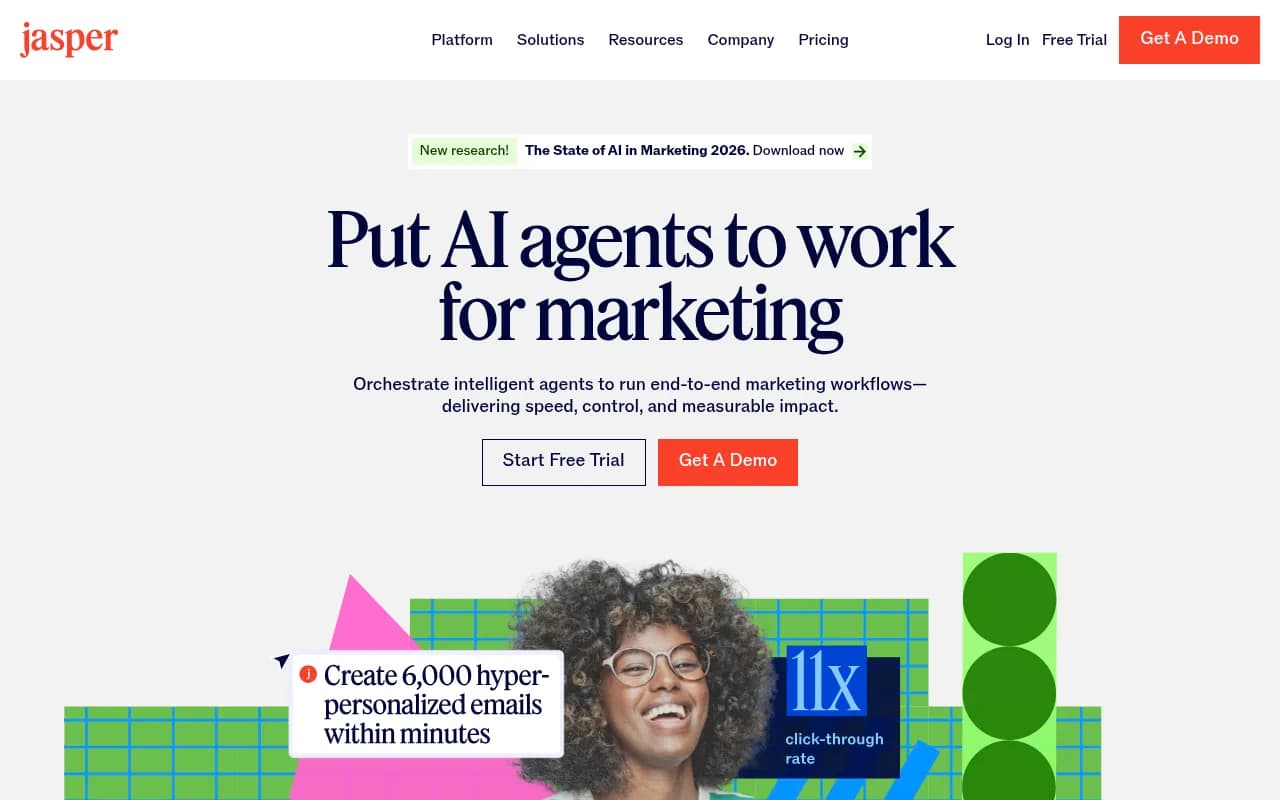
Jasper has been around long enough to have gone through several identity shifts. It started as a long-form writing assistant, evolved into a brand voice platform, and now positions itself as an enterprise content automation suite. The product is genuinely polished. Brand voice training works well, the template library is extensive, and the team collaboration features are solid.
For marketing teams producing blog content, landing pages, email campaigns, and social copy at scale, Jasper does the job. It's not cheap (enterprise pricing runs into the thousands per month for larger teams), but the quality and consistency are there.
The AI search problem is the same as with AirOps: Jasper is built to create content, not to optimize for AI citation. There's no prompt tracking, no citation analysis, no way to see which AI models are citing your pages or which topics you're missing. The content it produces is good, but "good content" and "content that gets cited in LLM responses" aren't the same thing in 2026.
Jasper has started adding some SEO integrations, and there's clearly awareness that AI search is changing the game. But the platform's core architecture is still oriented around content production, not AI visibility optimization.
GrowthBar: the affordable SEO writing tool that does what it says
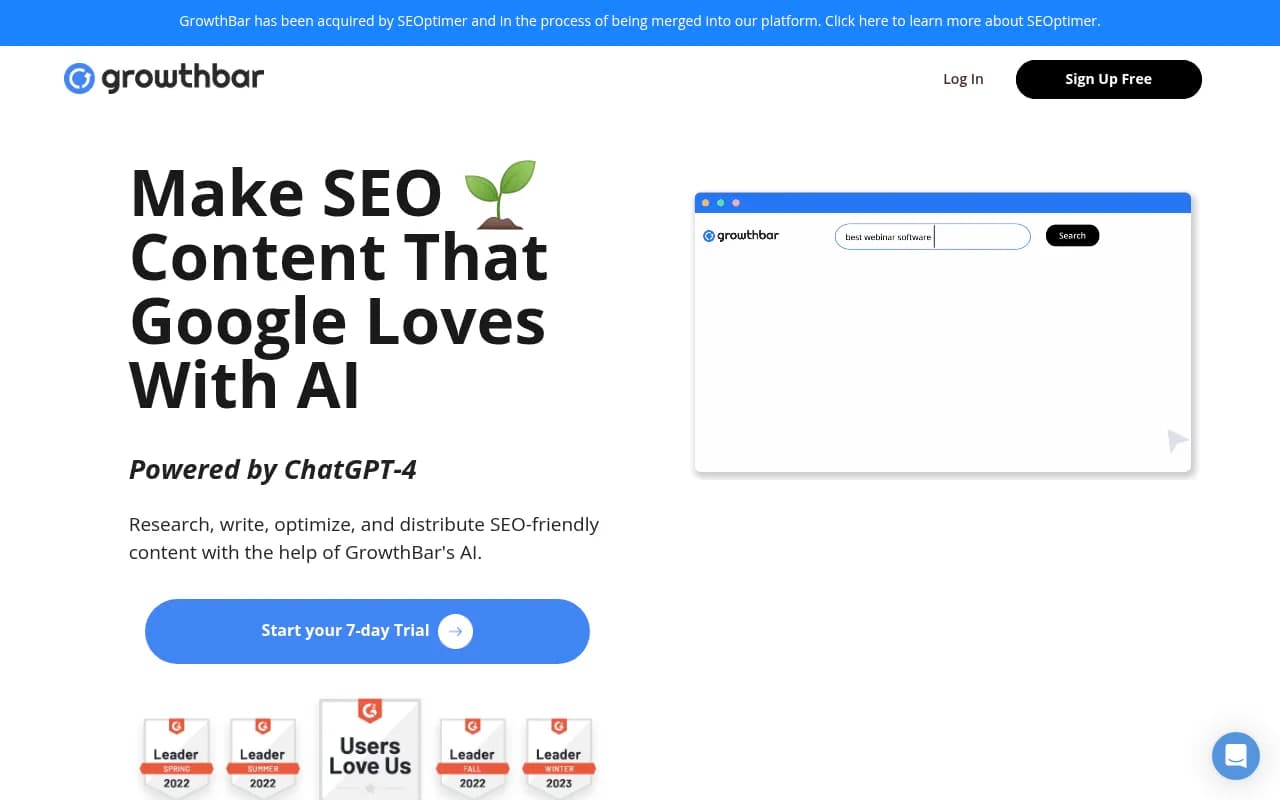
GrowthBar sits at the more accessible end of the market. It's primarily an SEO content tool: keyword research, content briefs, AI-assisted blog writing, and some basic competitor analysis. Pricing starts around $29/month, which makes it popular with smaller teams and solo marketers.
The writing quality is decent. GrowthBar uses GPT-4 under the hood and structures content around keyword targets and SERP analysis. For teams that need to produce SEO blog content without a big budget, it's a reasonable choice.
But GrowthBar has essentially no features relevant to AI search visibility. No LLM citation tracking, no prompt analysis, no content gap analysis for AI responses. It's a traditional SEO writing tool that happens to use AI for generation. If your goal is to appear in Google's traditional results, it can help. If your goal is to appear when someone asks ChatGPT for a recommendation in your space, GrowthBar doesn't address that at all.
Promptwatch: the only platform in this group built around AI citation
Promptwatch takes a fundamentally different approach. Rather than starting with "let's write content," it starts with "let's figure out which prompts are driving AI responses in your category, where your competitors are appearing, and what content is missing from your site."

The workflow looks like this:
- You track a set of prompts relevant to your business across 10+ AI models (ChatGPT, Perplexity, Google AI Overviews, Claude, Gemini, Grok, DeepSeek, and others).
- Answer Gap Analysis shows you exactly which prompts your competitors appear in but you don't. You see the specific questions AI models are answering without citing your site.
- Content Agents generate articles, comparisons, and briefs grounded in that real prompt data, including citation analysis, competitor visibility data, and your brand guidelines.
- Page-level tracking shows which of your pages are being cited, by which models, and how often. AI Crawler Logs show when crawlers from ChatGPT, Claude, and Perplexity hit your site, which pages they read, and when those pages move from "crawled" to "cited."
The feedback loop is the key difference. Most writing tools help you produce content. Promptwatch helps you produce content that's specifically designed to fill gaps in AI responses, then tells you whether it worked.
The platform also tracks things most competitors miss entirely: Reddit threads and YouTube videos that AI models cite in responses, ChatGPT Shopping recommendations, prompt volume estimates, and query fan-outs (how one prompt branches into sub-queries). For brands that need to understand not just "are we being cited" but "why are we being cited and what do we need to do next," that depth matters.
Pricing starts at $99/month for the Essential plan (1 site, 50 prompts, 5 articles), with Professional at $249/month and Business at $579/month. There's a free trial available.
Head-to-head comparison
| Feature | AirOps | Jasper | GrowthBar | Promptwatch |
|---|---|---|---|---|
| AI content generation | Yes | Yes | Yes | Yes (citation-grounded) |
| Traditional SEO optimization | Partial | Partial | Yes | Partial |
| LLM citation tracking | No | No | No | Yes |
| Prompt gap analysis | No | No | No | Yes |
| AI crawler logs | No | No | No | Yes |
| Reddit/YouTube citation tracking | No | No | No | Yes |
| ChatGPT Shopping tracking | No | No | No | Yes |
| Content briefs from AI data | Partial | No | Yes | Yes |
| Brand voice training | No | Yes | No | Yes (via brand guidance) |
| Workflow automation at scale | Yes | Partial | No | Partial |
| Pricing (starting) | ~$49/mo | ~$49/mo | ~$29/mo | $99/mo |
| Best for | High-volume content ops | Enterprise brand content | Budget SEO blogging | AI search visibility |
Which tool should you actually use?
The honest answer depends on what problem you're trying to solve.
If you're running a content operation at scale and need to automate workflows across large sites or multiple clients, AirOps is worth looking at. It's genuinely good at what it does, and the workflow flexibility is real.
If you're an enterprise marketing team that needs strong brand voice consistency and a polished content platform, Jasper is a reasonable choice. Just don't expect it to help you with AI search visibility specifically.
If you're a small team or solo marketer who needs affordable SEO blog content and doesn't have a budget for enterprise tools, GrowthBar is fine. It's not going to win any awards, but it does the basics competently.
If your goal is to actually appear when someone asks ChatGPT, Perplexity, or Google AI Overviews for something in your category, none of the first three tools address that directly. Promptwatch is the only platform here that's built around the full loop: understanding where you're invisible in AI responses, creating content to fix that, and measuring whether it works.
The uncomfortable truth for most marketing teams is that they're investing heavily in content creation without any visibility into how that content performs in AI search. That was a defensible position two years ago. In 2026, with AI search eating a growing share of informational queries, it's a gap worth closing.
A note on the broader market
These four tools don't cover the full picture. There are other platforms worth knowing about depending on your specific needs.
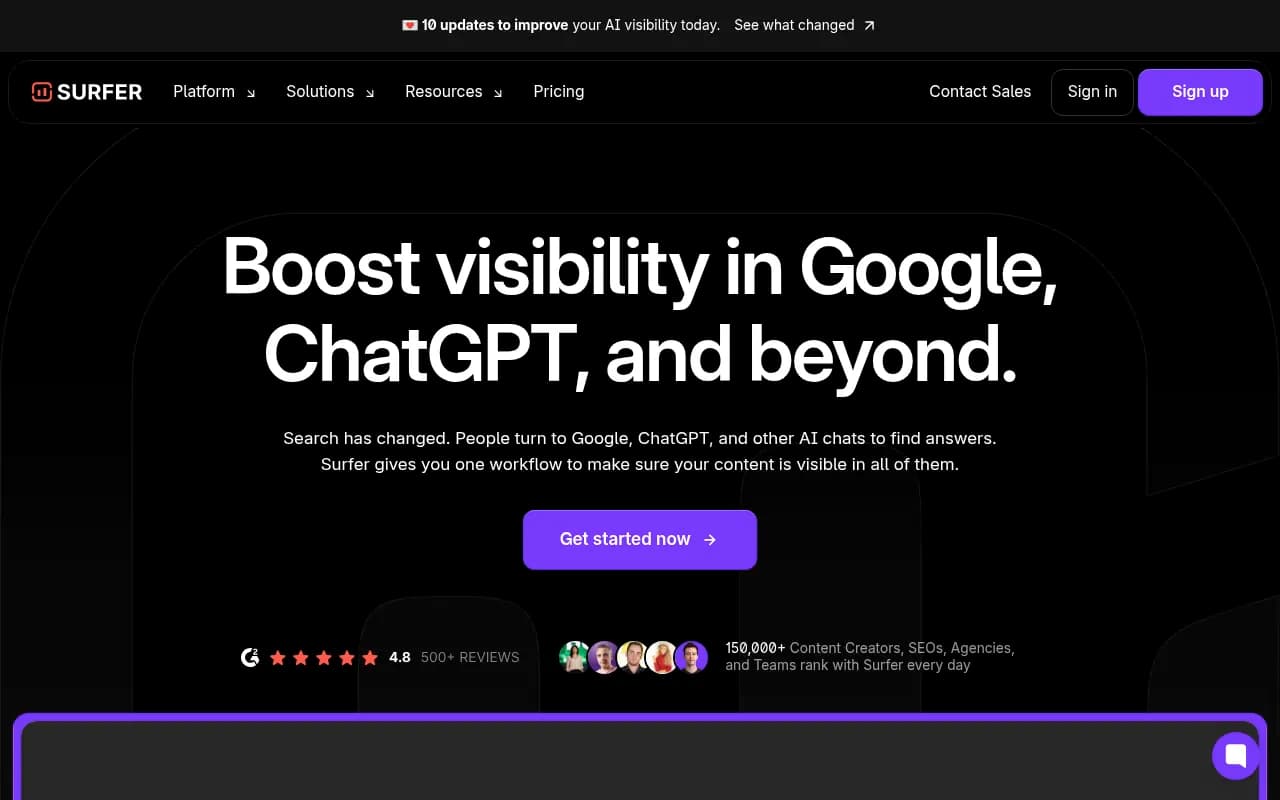
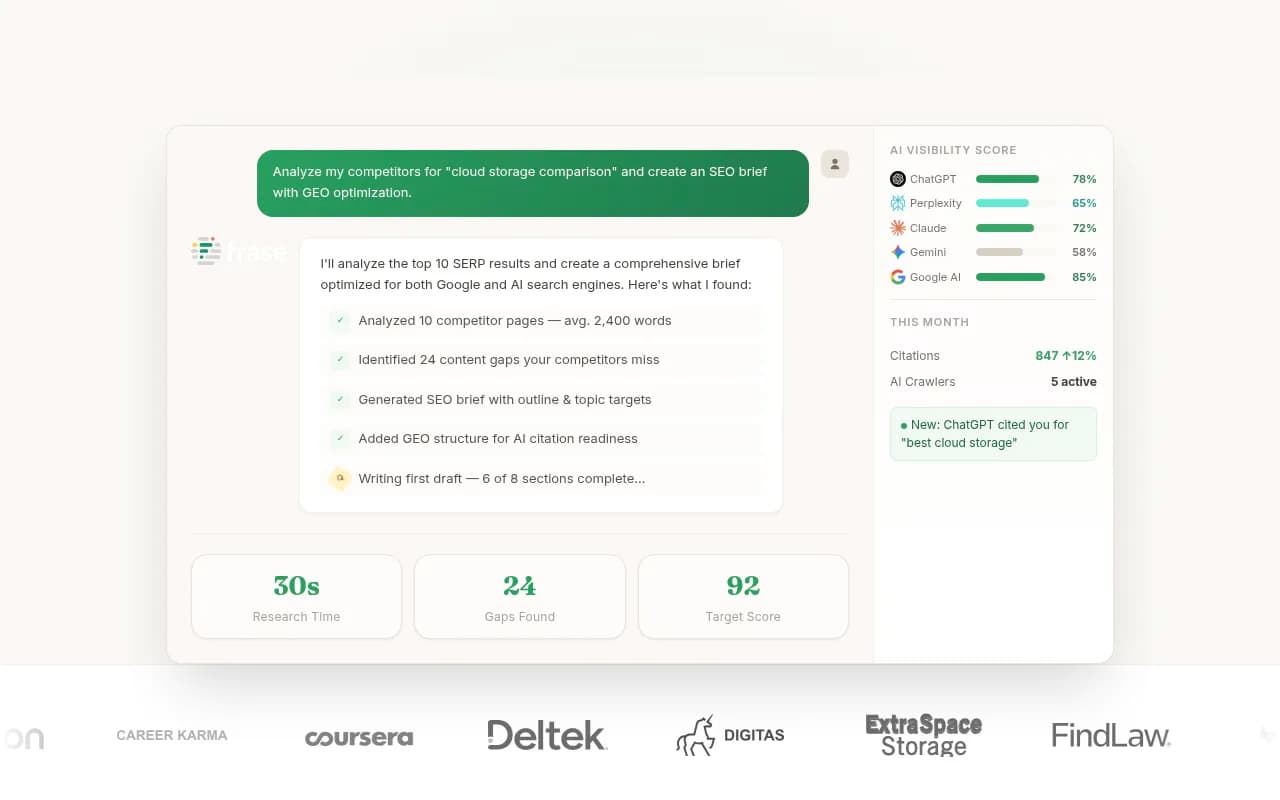
For SEO content optimization specifically, tools like Surfer SEO and Frase are worth considering alongside GrowthBar.
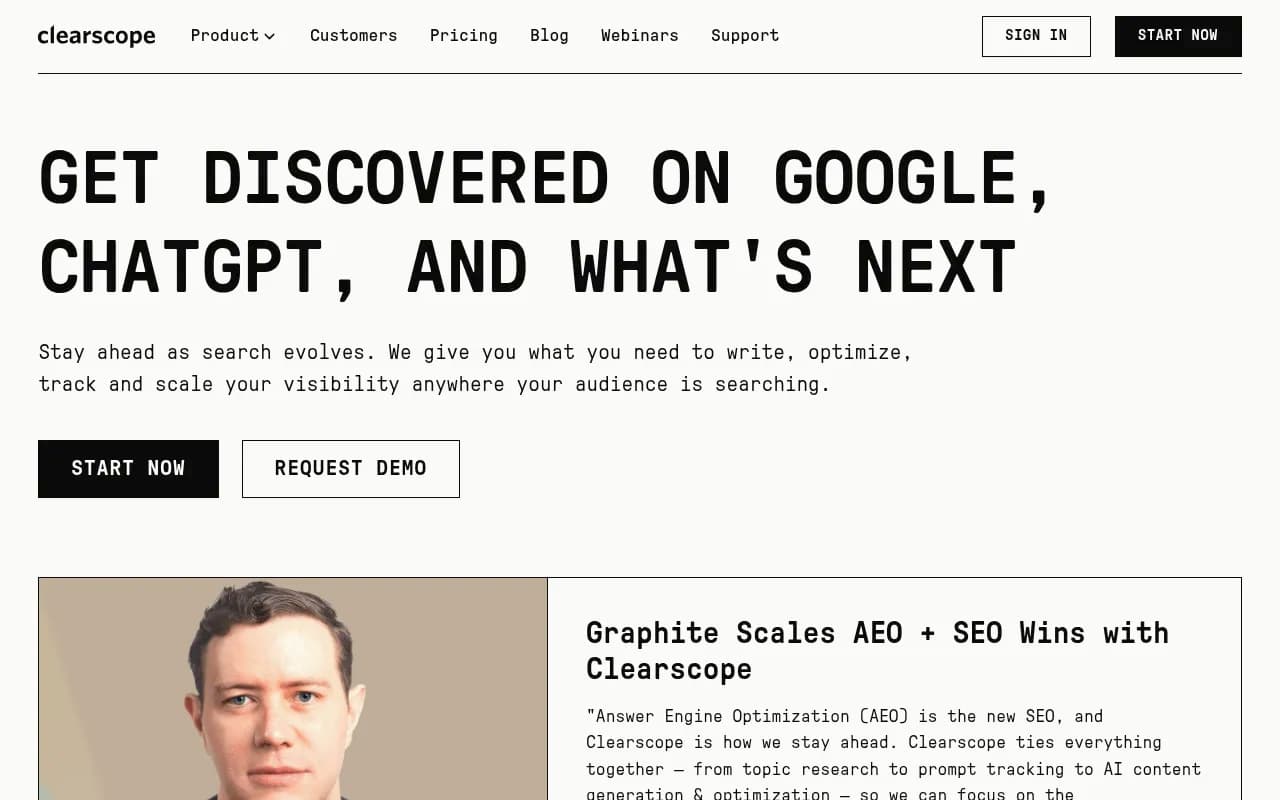
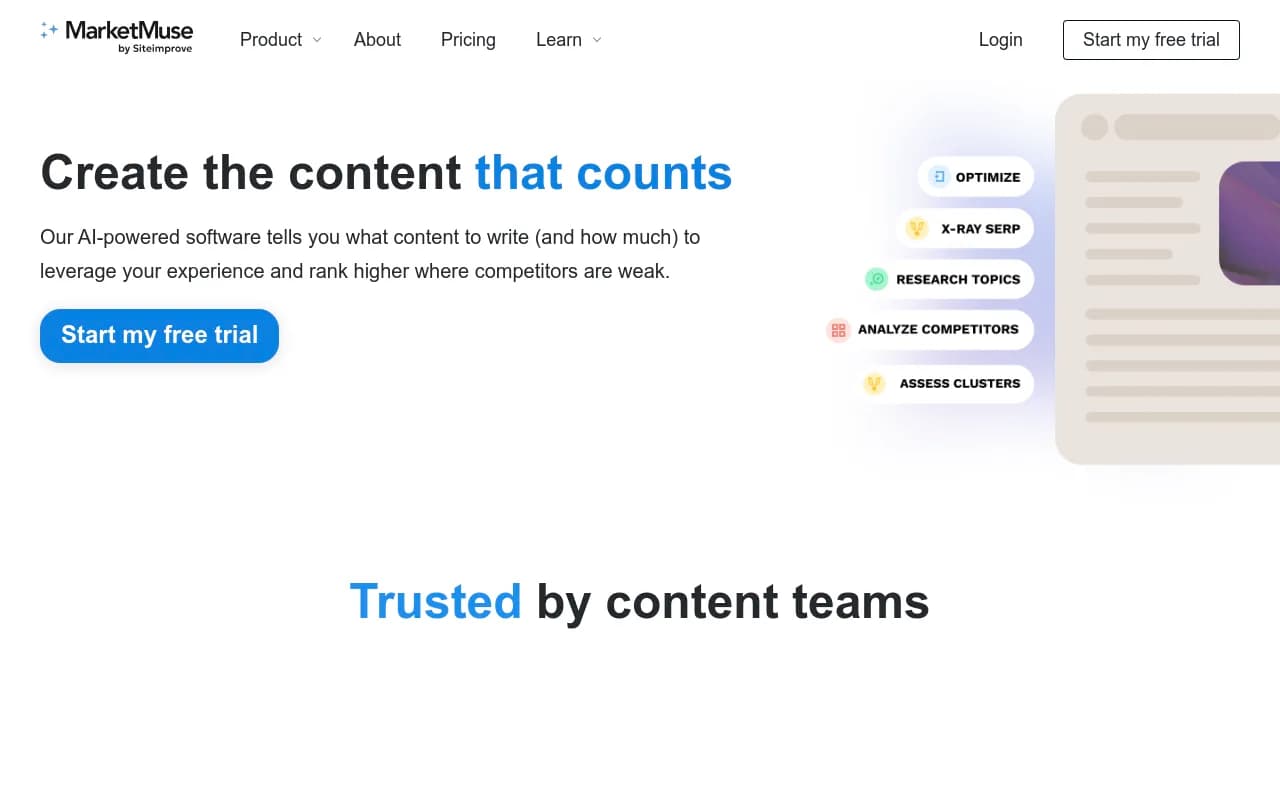
For content briefs with strong semantic analysis, Clearscope and MarketMuse have been around long enough to have real depth.
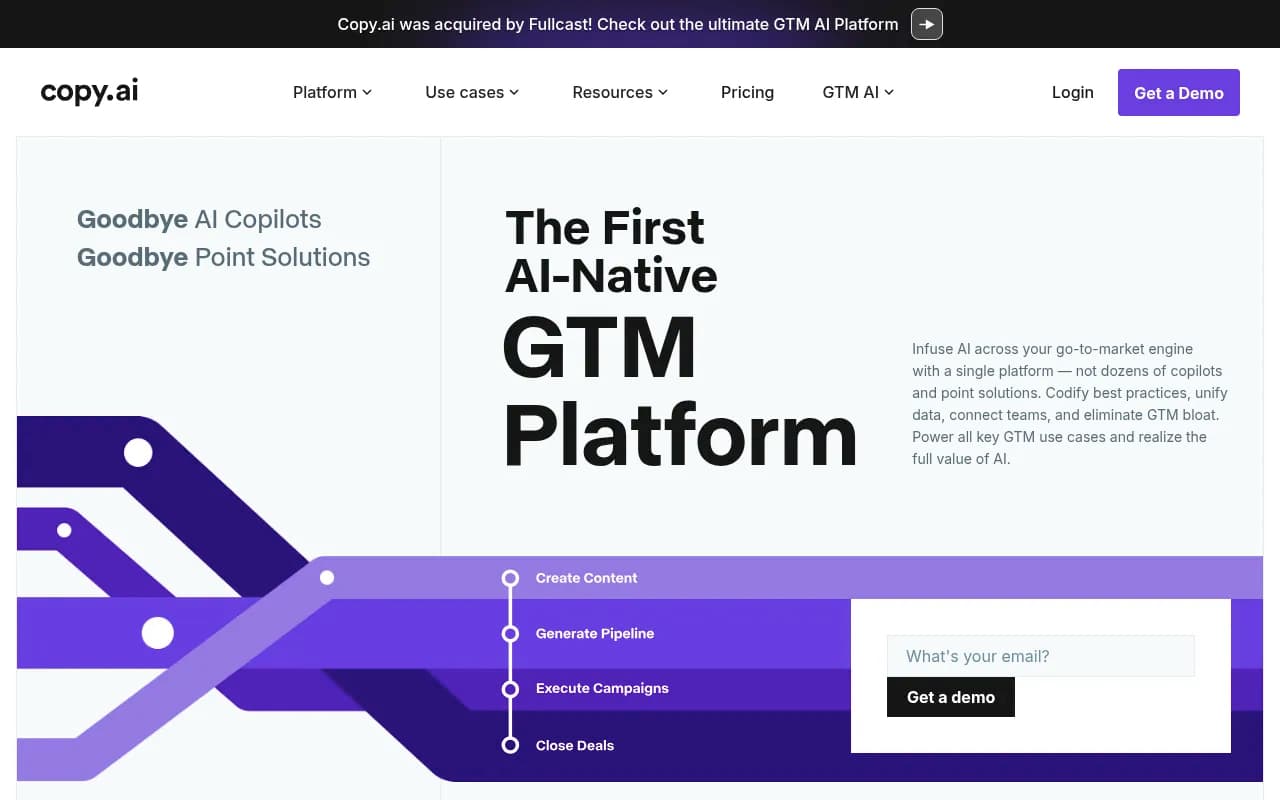
And for teams that want AI writing assistance without the full platform overhead, Copy.ai remains a solid option for specific copywriting tasks.
But if the question is specifically "which platform helps my content get cited in LLMs," the answer in 2026 is that most writing tools don't address this at all. The platforms that do, like Promptwatch, are a different category entirely. They're not writing tools that happen to track AI visibility. They're AI visibility platforms that happen to include content generation.
That distinction is worth keeping in mind as you evaluate your stack. Buying a better writing tool won't solve an AI visibility problem. You need a tool that understands the problem first.