Key takeaways
- AirOps carved out a genuine niche in AI-assisted content workflows, but its core strength (workflow automation) became a commodity faster than expected
- The shift from "AI content production" to "AI search visibility and GEO optimization" left AirOps playing catch-up in a market that moved quickly
- In 2026, AirOps launched Quill, an AI agent for citation optimization, with early customers reporting up to 130% increases in citation rate -- a meaningful pivot, but late relative to purpose-built GEO platforms
- Teams that need end-to-end GEO (tracking, gap analysis, content generation, and citation measurement) are increasingly choosing platforms built around that full loop from day one
How AirOps got here
AirOps launched as an AI workflow builder aimed at content and marketing teams. The pitch was simple and, at the time, genuinely useful: connect your data sources, build repeatable AI-powered workflows, and produce content at scale without stitching together a dozen separate tools.
For a while, that worked. Content teams were drowning in manual processes -- brief writing, first drafts, metadata generation, internal linking audits -- and AirOps gave them a way to automate chunks of that work without requiring engineering support. The no-code workflow builder was accessible, the integrations were solid, and the output quality was good enough to save real hours.
That era, roughly 2023 to mid-2025, was AirOps at its best. It solved a real problem for a real audience.
The trouble is that the problem it solved stopped being the hardest problem.
What the market actually wanted by 2025
By late 2025, the conversation in marketing and SEO had shifted hard toward AI search visibility. ChatGPT, Perplexity, Google AI Overviews, and a growing list of AI-powered answer engines were eating into traditional search traffic. Brands started asking a different question: not "how do we produce more content?" but "why isn't our content being cited by AI models, and how do we fix that?"
This is a fundamentally different problem than content workflow automation. It requires:
- Knowing which prompts your competitors are visible for that you're not
- Understanding which pages AI crawlers are actually reading (and which ones they're ignoring)
- Generating content specifically engineered to close citation gaps
- Measuring whether that content actually moves your visibility scores over time
AirOps was built to answer "how do we make content faster." The market started asking "how do we make content that AI models actually cite." Those are related questions, but they're not the same question, and the tooling required to answer them is quite different.
What AirOps got right
It would be unfair to dismiss what AirOps built. A few things genuinely worked:
Workflow flexibility. AirOps gave teams real control over how AI was applied to their processes. Unlike rigid content tools that locked you into a single output format, AirOps let you build custom pipelines. That flexibility attracted power users who wanted to do things no off-the-shelf tool supported.
Integration depth. Connecting AirOps to existing data sources -- CMSes, spreadsheets, SEO tools -- was relatively straightforward. For teams with complex content operations, that mattered.
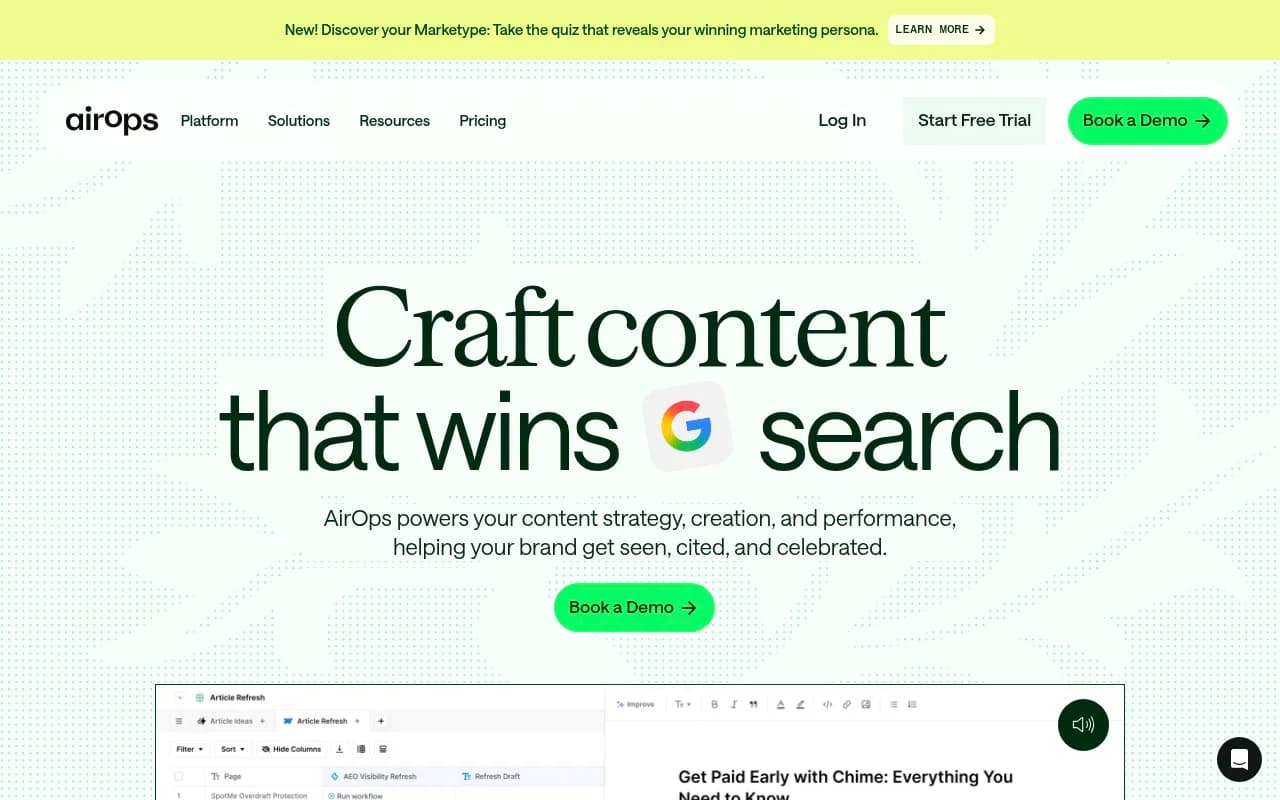
The Quill pivot. In 2026, AirOps launched Quill, positioning it as an AI agent captain for AI search optimization. Early customers reported up to 130% increases in citation rate within weeks, according to AirOps's own recap of their AirOps Next 2026 event. That's a real number, and it shows the team understood where the market was heading.
The Quill launch also brought 250+ marketing leaders together at AirOps Next 2026, which suggests the brand still has genuine pull in the marketing community. That's not nothing.
What AirOps missed
The Quill launch was the right move. The timing was the problem.
By mid-2026, purpose-built GEO platforms had already been running for 12-18 months. They had processed hundreds of millions of citations, built out prompt intelligence databases, and developed features like AI crawler logs, answer gap analysis, and page-level citation tracking that AirOps was only beginning to approach.
Here's where the gap shows up most clearly:
No native prompt intelligence. Understanding which prompts drive AI citations, how difficult those prompts are to win, and how they fan out into sub-queries requires a specific kind of data infrastructure. AirOps's workflow-first architecture wasn't built around this.
Limited citation measurement. Knowing that your citation rate went up 130% is useful. Knowing which pages drove that improvement, which AI models are citing them, and which prompts triggered those citations is what you actually need to optimize. That level of granularity requires purpose-built tracking.
No AI crawler visibility. Platforms like Promptwatch built real-time logs of AI crawlers hitting your site -- which pages they read, how often they return, what errors they encounter. This is foundational for understanding why some content gets cited and some doesn't. AirOps had no equivalent.
Content generation without gap analysis. Generating content is only useful if you know what gaps you're filling. Without answer gap analysis that maps your content against actual AI responses, you're producing content and hoping it lands rather than targeting specific citation opportunities.

The broader competitive picture in 2026
AirOps isn't the only tool that found itself repositioning as the GEO market matured. The whole category went through a shakeout.
Here's how the major players stack up on the dimensions that matter most for GEO in 2026:
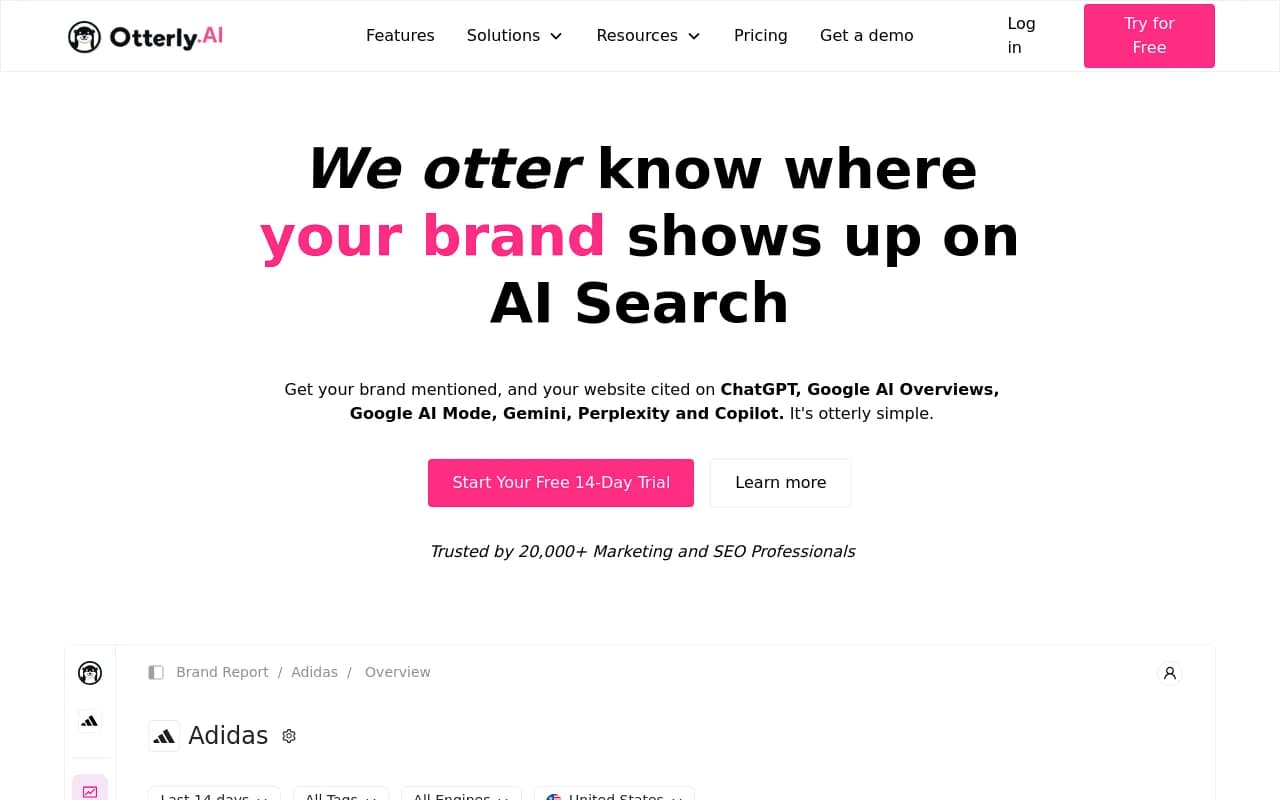
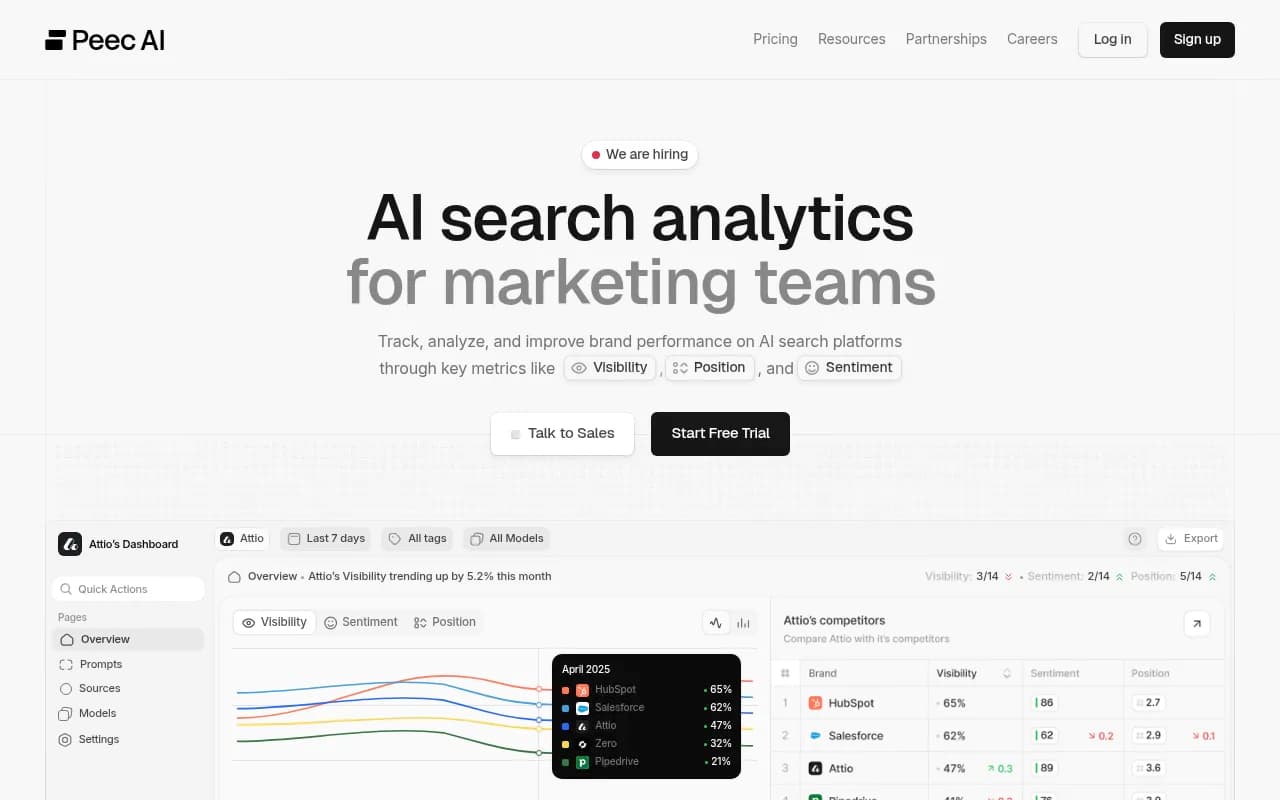
| Platform | Prompt tracking | Answer gap analysis | Content generation | AI crawler logs | Citation measurement |
|---|---|---|---|---|---|
| Promptwatch | Yes | Yes | Yes (Content Agents) | Yes | Yes (page-level) |
| AirOps (Quill) | Partial | No | Yes (workflows) | No | Limited |
| Profound | Yes | Partial | No | No | Yes |
| Otterly.AI | Yes | No | No | No | Basic |
| Peec AI | Yes | No | No | No | Basic |
| AthenaHQ | Yes | No | No | No | Yes |
| Search Party | Partial | No | No | No | No |
The pattern is consistent: most tools built monitoring first and stopped there. AirOps built content generation first and is now trying to add monitoring. Neither approach gives you the full loop.

Why the "full loop" matters so much
The reason purpose-built GEO platforms pulled ahead isn't that they have more features. It's that the features they have are connected to each other in a way that creates compounding value.
The loop works like this: you find which prompts your competitors are visible for that you're not (gap analysis), you generate content specifically designed to close those gaps (content generation grounded in real citation data), and then you track whether that content actually gets cited (measurement). Each step feeds the next.
AirOps, even with Quill, is strong at the middle step. But without robust gap analysis to tell you what to create, and without granular citation tracking to tell you whether it worked, the content generation step is less valuable than it could be.
This is the core reason teams that started with AirOps for content workflows are now layering in dedicated GEO platforms -- or switching to platforms that handle the whole loop natively.
Who AirOps still makes sense for
This isn't a case where AirOps is simply the wrong tool. It depends heavily on what you're trying to do.
AirOps still makes sense if:
- Your primary need is AI-powered content workflow automation (briefs, drafts, metadata, internal linking) rather than GEO optimization specifically
- You have a content operations team that wants to build custom AI pipelines and doesn't need out-of-the-box GEO tracking
- You're already seeing results from Quill and want to stay within a single platform rather than adding another tool
It's probably not the right primary GEO tool if:
- You need to understand which specific prompts are driving competitor citations
- You want AI crawler logs to diagnose why certain pages aren't being picked up
- You need page-level citation tracking connected to actual traffic and revenue data
- You're running a multi-site or multi-region operation that needs prompt monitoring across multiple AI models
What teams are using instead
For teams that need the full GEO loop, the market has consolidated around a smaller number of platforms that were built around optimization rather than just monitoring or just content production.
Promptwatch covers the complete cycle -- gap analysis, content generation via Content Agents, and citation tracking with AI crawler logs and page-level attribution. It monitors 10 AI models including ChatGPT, Perplexity, Google AI Overviews, Claude, Gemini, Grok, and DeepSeek, and connects visibility data to actual traffic through integrations with Cloudflare, Vercel, and Google Search Console.
For teams that want something more focused on monitoring without the content generation layer, Profound and Scrunch both offer solid enterprise-grade tracking.
For smaller teams or agencies that need affordable monitoring across multiple clients, tools like Otterly.AI and Cairrot offer lighter-weight options -- though they stop well short of the full optimization loop.
The honest verdict
AirOps built something real and useful. The Quill launch in 2026 shows the team understands where the market went. But understanding where the market went and having the infrastructure to serve it are different things.
The GEO platforms that are winning in 2026 weren't built by pivoting from workflow automation. They were built from the ground up around the question of how AI models discover, read, and cite content -- and then they built content generation on top of that foundation, not the other way around.
That sequence matters. When your data infrastructure is built around citation patterns, crawler behavior, and prompt intelligence, the content you generate is grounded in something real. When your content generation is built first and the tracking is added later, you're always playing catch-up.
AirOps can still be a useful part of a content team's stack. But for teams that need to understand and improve their AI search visibility -- not just produce more content -- it's no longer the tool that the market reaches for first.