Key takeaways
- AI search engines (ChatGPT, Perplexity, Gemini) are now a primary discovery channel for B2B buyers, and agencies that ignore this are leaving clients exposed
- The most successful agencies aren't selling "AI visibility" as a one-off audit -- they're baking it into monthly retainers as a recurring service line
- The core workflow is: find where clients are invisible in AI responses, create content that fills those gaps, then track whether it's working
- Most GEO tools only handle monitoring; the agencies getting the best results pair tracking with content creation and technical fixes
- Nine concrete service models are emerging, from AI answer audits to Reddit/forum optimization to crawler log analysis
Something shifted in late 2025. B2B buyers started asking ChatGPT "what's the best [software category] for [use case]" and trusting the answer. Not clicking through to a comparison site. Not scrolling Google. Just... accepting the recommendation.
That's a problem for any client whose brand doesn't appear in those answers. And it's an opportunity for the agencies that figure out how to fix it.
AI visibility -- sometimes called GEO (Generative Engine Optimization) or AEO (Answer Engine Optimization) -- is moving from experimental to essential. According to ALM Corp's 2026 research on digital agencies adapting to AI search, traffic from AI referrals converts 3-5x higher than traditional organic traffic. The buyers arriving from ChatGPT or Perplexity already trust the recommendation. They're not browsing; they're evaluating.
Agencies that have started packaging this as a retainer service are finding it sticks. Clients understand the problem intuitively once you show them they're invisible in AI answers for their core use cases. Here's how nine distinct service models are taking shape.
1. AI answer audits as a monthly deliverable
The simplest entry point: run a structured set of prompts across ChatGPT, Perplexity, Gemini, and Claude each month, document where the client appears (and where competitors do), and deliver a report.
This sounds basic, but done well it's genuinely valuable. The key is choosing the right prompts -- not generic category searches, but the specific questions a B2B buyer would ask mid-evaluation. "What's the best [tool type] for [industry] with [specific requirement]?" is very different from "what is [tool type]?"
The agencies doing this well are using platforms that automate the prompt monitoring so they're not manually querying 10 AI models. Promptwatch is one of the more comprehensive options here -- it tracks visibility across 10 models simultaneously and includes prompt volume estimates, so you can prioritize which queries actually matter.

For agencies that want something lighter to start, tools like Otterly.AI and Peec AI handle basic monitoring at lower price points.


The audit becomes a retainer anchor: clients see the data monthly, understand the gap, and want help closing it.
2. Answer gap analysis and content gap identification
Monitoring tells you where you're invisible. Gap analysis tells you why and what to do about it.
This is where the service gets more sophisticated -- and more valuable. The idea is to identify specific prompts where competitors are being cited but your client isn't, then trace back what content those competitors have that your client lacks.
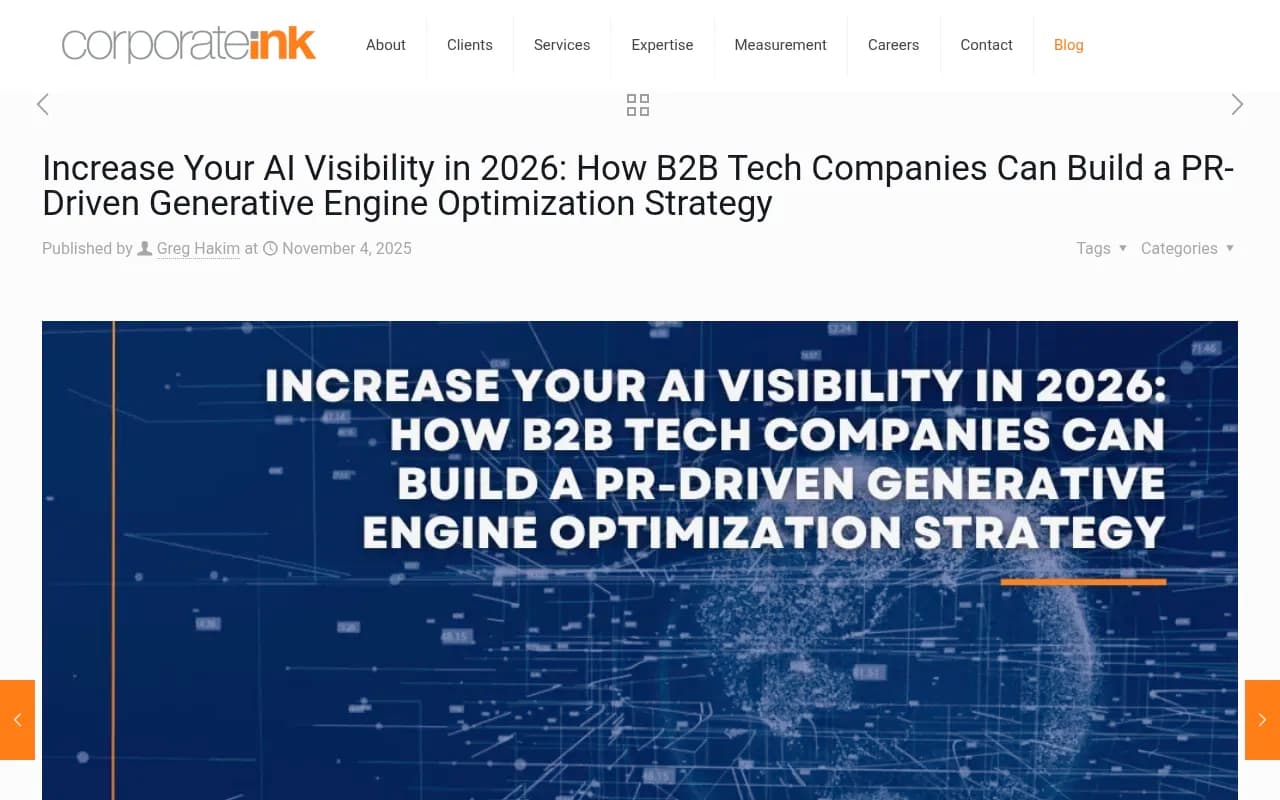
Corporate Ink's 2026 GEO research found that 89% of AI citations come from earned media -- news articles, third-party content, trusted publications -- not from brand websites or blogs. That's a useful frame for clients who assume their website content is enough. It usually isn't.
The gap analysis deliverable typically includes:
- A list of high-volume prompts where competitors appear and the client doesn't
- The specific content types and sources AI models are citing for those prompts
- A prioritized content brief for what to create next
Promptwatch's Answer Gap Analysis feature does a lot of this automatically -- it surfaces the exact prompts competitors are winning and maps them to content the client is missing. That turns a research task that might take days into something an account manager can pull in an hour.
3. AI-optimized content creation as a retainer line item
Once you know what content is missing, someone has to create it. This is where agencies have a natural advantage -- they already do content. The shift is writing for AI citation, not just for human readers or traditional SEO.
Content that gets cited by AI models tends to be:
- Specific and factual (AI models prefer concrete claims over vague assertions)
- Structured with clear headings and definitions
- Published on credible domains or in credible publications
- Backed by data, research, or named expert quotes
The format matters too. Listicles, comparison articles, and "best X for Y" pieces get cited heavily. So do FAQ-style pages that directly answer the questions buyers are asking.
Several tools help with the actual writing. Jasper AI and Copy.ai are solid for drafting at scale.
For content that needs to be optimized for both traditional SEO and AI visibility simultaneously, Surfer SEO and Clearscope help with semantic coverage.
The agencies packaging this well are charging for a set number of "AI-optimized articles" per month as part of the retainer -- typically 4-8 pieces, with briefs grounded in the gap analysis from step two.
4. Technical AI crawlability audits
This one surprises clients. Most assume AI models just "know" about their website. The reality is that AI crawlers (GPTBot, ClaudeBot, PerplexityBot) behave differently from Googlebot, and many sites are inadvertently blocking them or serving them broken pages.
A technical AI crawlability audit checks:
- Whether AI crawlers are being blocked in robots.txt
- Which pages AI crawlers are actually visiting (and how often)
- Whether those pages are returning errors
- How the site's structure affects which content AI models can access
This is genuinely technical work that most clients have never thought about. Agencies that can deliver it are differentiating themselves from competitors who only do surface-level monitoring.
Promptwatch includes AI crawler logs as a feature -- real-time logs showing which AI crawlers hit which pages, what errors they encounter, and how frequently they return. That data is the foundation of a crawlability audit. Botify is another option for enterprise clients with complex technical setups.
For agencies without a technical SEO background, this service is worth partnering on or white-labeling rather than building from scratch.
5. Reddit and forum optimization
This one is underrated and most agencies haven't touched it yet.
AI models -- particularly Perplexity and ChatGPT -- cite Reddit threads, product forums, and community discussions heavily. A MuckRack analysis of over 1 million LLM citations found that user-generated content from forums and communities is a significant source. If your client's brand is being discussed negatively on Reddit, or not discussed at all, that affects how AI models describe them.
The service here involves:
- Monitoring Reddit threads and forums where the client's category is discussed
- Identifying threads that AI models are actively citing
- Developing a strategy for authentic participation in relevant communities
- Creating content (guides, case studies, comparison posts) that earns organic mentions in those spaces
Brand24 is useful for monitoring brand mentions across Reddit and other platforms.
BuzzSumo helps surface which community discussions are getting traction in a given category.
Promptwatch specifically tracks Reddit and YouTube as citation sources -- it surfaces discussions that directly influence AI recommendations, which is the starting point for knowing where to focus.
This service works well as an add-on to the core AI visibility retainer, priced separately because it requires different skills (community management, PR-adjacent outreach) from pure content or technical work.
6. Competitor AI visibility benchmarking
Clients want to know how they compare. "You're mentioned in 12% of relevant AI responses" is less compelling than "you're mentioned in 12% of relevant AI responses, and your top competitor is at 47%."
Competitive benchmarking as a monthly deliverable gives clients a clear picture of where they stand relative to the market -- and makes the case for continued investment in the retainer. When a competitor jumps from 30% to 45% visibility in a quarter, clients feel urgency.
The deliverable typically shows:
- Visibility scores across key AI models for the client and 3-5 competitors
- Which prompts each competitor is winning
- Sentiment analysis (are AI models describing the client positively, neutrally, or negatively?)
- Month-over-month trends
Most GEO platforms support some version of competitor tracking. Promptwatch's competitor heatmaps show side-by-side visibility comparisons across LLMs, which makes the data easy to present in a client report.
For agencies managing multiple clients in the same category, this data also helps you understand the competitive landscape more broadly -- useful for pitching new clients in that space.
7. Earned media and PR alignment for AI citation
This is where AI visibility services start overlapping with PR -- and where B2B agencies with PR capabilities have a real edge.
Since the majority of AI citations come from earned media rather than owned content, getting clients featured in the right publications is directly tied to AI visibility. But not all publications carry equal weight. Corporate Ink's research found that some publications carry 10x more influence than others in how often they're cited by LLMs -- and which publications matter varies by industry and buyer type.
The service here involves:
- Identifying which publications AI models cite most often in the client's category
- Building a PR strategy that targets those specific outlets
- Tracking whether new media placements result in improved AI visibility
This is a natural extension for agencies that already do content marketing or PR. The difference from traditional PR is that you're measuring success not just by placements but by whether those placements show up in AI responses.
Meltwater is useful for tracking media coverage and identifying which outlets are gaining traction in a category.
The agencies doing this well are presenting it as "PR with AI visibility attribution" -- a clearer ROI story than traditional PR, which has always struggled to connect coverage to revenue.
8. AI traffic attribution and ROI reporting
Here's the challenge with AI visibility services: clients eventually ask "is this actually driving business?" Fair question.
Traditional analytics don't capture AI referral traffic well. When someone reads a ChatGPT response and then navigates directly to a website, it shows up as direct traffic -- not as an AI referral. That makes it hard to connect AI visibility improvements to actual pipeline.
The agencies solving this are implementing proper AI traffic attribution, which typically involves:
- A JavaScript snippet that identifies AI-referred sessions
- Google Search Console integration to capture clicks from AI Overviews
- Server log analysis to identify AI crawler activity and correlate it with subsequent human visits
HockeyStack is strong for B2B marketing attribution more broadly and can help connect the dots between AI-driven awareness and pipeline.
Promptwatch includes traffic attribution as part of its platform -- the code snippet approach, GSC integration, and server log analysis are all supported. That makes it easier to show clients a line from "AI visibility improved by X%" to "here are the sessions and leads that came from AI search."
This service layer is what separates agencies that can justify their retainer long-term from those that get cut when budgets tighten. If you can show revenue attribution, you're not a cost center -- you're a growth driver.
9. AI visibility as a white-labeled agency service
Some agencies aren't building this capability internally -- they're reselling it. Several GEO platforms offer white-label or agency tiers that let you present AI visibility reporting under your own brand.
This model works well for:
- Digital agencies that want to add AI visibility to their service menu without hiring specialists
- SEO agencies expanding into GEO without rebuilding their tech stack
- Marketing consultancies that want to offer the service to a few key clients without a major investment
The economics can work well. A platform like Promptwatch's Business tier at $579/month covers 5 sites and 350 prompts -- if you're reselling that as part of retainers at $1,500-3,000/month per client, the margin is solid.
For agencies that want a lighter-weight monitoring tool to resell, Cairrot is worth looking at -- it's specifically positioned for agencies tracking AI visibility across multiple clients at a lower price point.
Rankscale is another option built around scaling AI visibility across multiple clients.
The white-label model does have a ceiling: clients who get sophisticated about AI visibility will eventually want more customization than a resold platform provides. But as an entry point, it's a fast way to add a new service line without a 6-month build.
How these services fit together
These nine approaches aren't mutually exclusive -- most agencies are combining several into a single retainer package. A typical structure might look like:
| Service tier | What's included | Monthly price range |
|---|---|---|
| Starter | Monthly AI answer audit + basic competitor benchmarking | $1,500-2,500 |
| Core | Audit + gap analysis + 4 AI-optimized articles | $3,000-5,000 |
| Full retainer | All of the above + technical crawl audit + Reddit monitoring + attribution reporting | $6,000-10,000+ |
| Enterprise | Custom prompt sets, multi-region tracking, PR alignment, dedicated reporting | $15,000+ |
The exact pricing depends on the client's category, how competitive the AI landscape is for their prompts, and how many AI models you're tracking.
Which tools are actually worth using
There are a lot of GEO tools on the market now. Most do monitoring. Fewer help you act on what you find.
| Tool | Best for | Monitoring | Content help | Attribution |
|---|---|---|---|---|
| Promptwatch | Full-service AI visibility retainers | Yes (10 models) | Yes (built-in AI writing) | Yes |
| Otterly.AI | Budget monitoring for smaller clients | Yes | No | No |
| Peec AI | Multi-language monitoring | Yes | No | No |
| Profound | Enterprise monitoring | Yes | Limited | No |
| Botify | Technical crawl audits | Yes | No | No |
| HockeyStack | B2B revenue attribution | No | No | Yes |
| Surfer SEO | AI-optimized content creation | No | Yes | No |
| Brand24 | Reddit/forum mention tracking | Partial | No | No |
For agencies building a full AI visibility practice, Promptwatch is the most complete single platform -- it handles monitoring, gap analysis, content generation, and attribution in one place. That matters operationally: fewer tools to manage, fewer data handoffs, cleaner reporting for clients.
Getting started
The agencies moving fastest on this aren't waiting for a perfect playbook. They're picking one or two clients, running a basic AI answer audit, showing the client where they're invisible, and using that as the pitch for a proper retainer.
The data usually sells itself. When a client sees their top competitor cited in 60% of relevant ChatGPT responses and their own brand in 8%, the conversation about what to do next is pretty short.
Start with the audit. Build from there.