Key takeaways
- Most AI visibility tools are monitoring dashboards, not optimization platforms -- they show you the problem but leave you to solve it alone.
- The number of AI models tracked matters less than whether the tool gives you actionable insight from each one.
- If a tool can't tell you why you're missing from an AI response, it's not actually helping you fix anything.
- Content gap analysis and built-in content generation separate the serious platforms from the dashboards with a logo refresh.
- Always ask about traffic attribution before signing up -- without it, you can't connect AI visibility to revenue.
There's a pattern that keeps repeating in the AI visibility tool market right now. A new platform launches with a clean UI, a compelling demo, and a pricing page that makes it look like a no-brainer. You sign up. You connect your domain. You get a score. And then... you sit there staring at a number, wondering what you're supposed to do with it.
I've talked to enough marketing teams who've been through this cycle -- sometimes two or three times -- to know it's not a niche problem. The category is growing fast, the tools are multiplying, and the quality gap between them is enormous. Some platforms genuinely help you improve your AI search presence. Others are just dashboards dressed up as strategy tools.
Before you hand over your credit card details, here are eight questions worth asking. They'll save you from the expensive kind of lesson.
1. Which AI models does it actually monitor -- and how?
This sounds like a basic spec question, but it's more nuanced than it appears. The obvious answer is "more is better," but that's not quite right. What matters is how the tool queries each model and whether it's doing so in a way that reflects how real users actually search.
Some tools query ChatGPT with rigid, templated prompts. Others use more natural language that mirrors actual user behavior. The difference shows up in your data -- a tool using fixed prompts will miss huge swaths of the queries where your brand could (or should) appear.
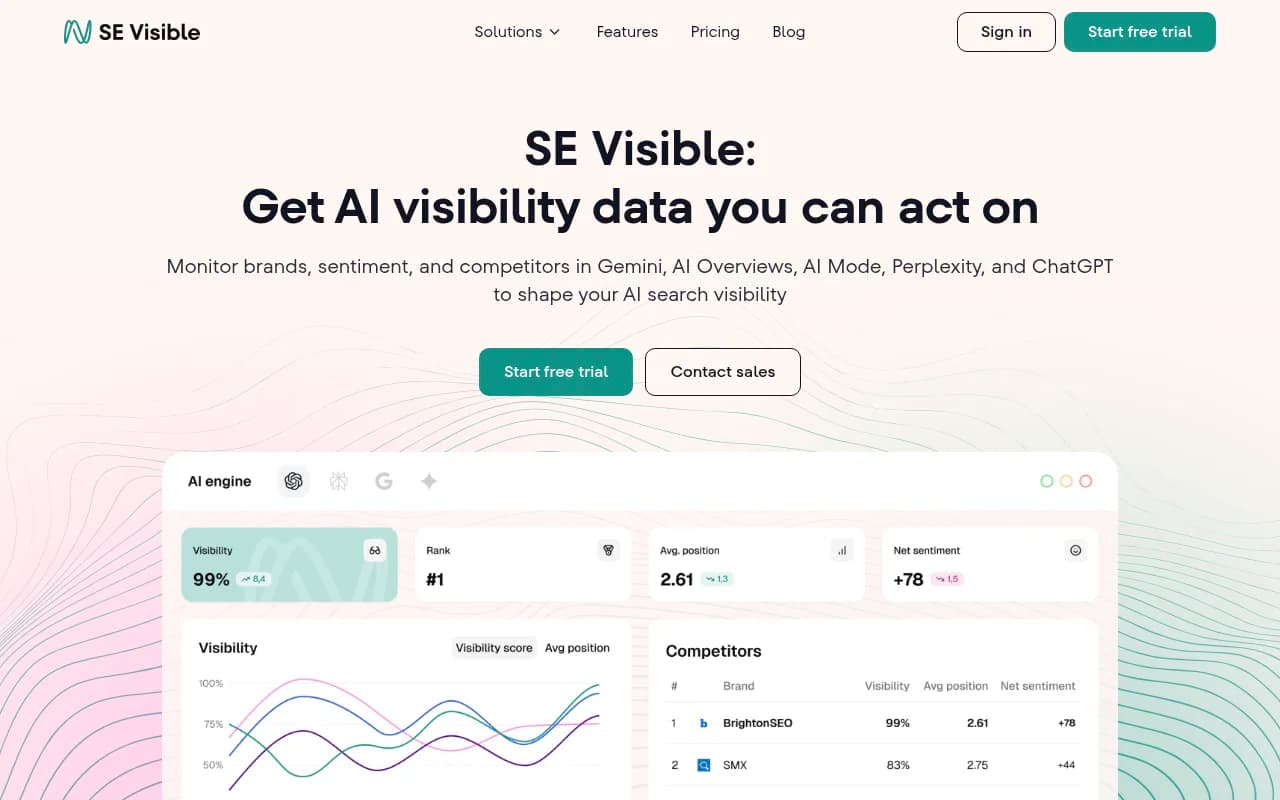
Ask specifically: does the tool monitor Google AI Overviews separately from Google AI Mode? Does it track Perplexity's different answer formats? Does it cover newer models like Grok or DeepSeek, or just the obvious three?
The platforms worth your time in 2026 cover at least 8-10 models and refresh data frequently enough to catch shifts in how individual models respond to queries in your category.
Promptwatch monitors 10 AI models including ChatGPT, Perplexity, Claude, Gemini, Grok, DeepSeek, Copilot, and Google AI Overviews -- and tracks how responses differ across each one.

2. Does it show me what I'm missing, or just what I have?
This is the question that separates monitoring tools from optimization tools. Most platforms are built to show you your current visibility -- your mention rate, your citation count, which prompts you appear in. That's useful context, but it's not a strategy.
The more valuable question is: which prompts are your competitors appearing in that you're not? That's where the actual opportunity lives. If a tool can't surface that gap, you're essentially flying blind on where to focus your content efforts.
Answer Gap Analysis -- the ability to show you competitor-visible prompts where you're absent -- is one of the most practically useful features in this space. It's also one of the most commonly missing. Many tools will show you your own visibility score and call it a day.
When evaluating any platform, ask for a demo that specifically shows competitor gap analysis. If they pivot to showing you your own metrics instead, that tells you something.

3. Can it tell me why I'm not being cited?
Knowing you're invisible in AI search is step one. Understanding why is step two -- and most tools stop at step one.
There are several reasons an AI model might not cite your content: the content doesn't exist on your site, it exists but isn't structured in a way the model can parse, it's too thin to be considered authoritative, or competitors have covered the topic more thoroughly. Each of these problems requires a different fix.
A tool that just tells you "your visibility score is 34/100" isn't helping you prioritize. A tool that says "you have no content addressing [specific question type] that competitors are ranking for, and here are the specific pages you're missing" -- that's actually useful.
Look for tools that combine citation analysis with content audit capabilities. The best ones will show you which of your existing pages are being cited, which aren't, and what the structural or content differences are between the two groups.
4. Does it have built-in content creation, or does it just tell me what to write?
This is where a lot of teams get stuck. A tool surfaces a content gap. Great. Now what? You take that insight to your content team, brief a writer, wait two weeks, publish something, and hope it works. That's a slow loop.
The more efficient approach is a platform that closes the gap between "here's what's missing" and "here's the content that will fill it" -- ideally within the same workflow. This means AI-generated articles, listicles, and comparisons that are grounded in real citation data, not generic SEO filler.
The distinction matters because content written to rank in traditional search and content written to get cited by LLMs are not the same thing. LLMs favor content that directly answers specific questions, uses clear structure, demonstrates authority, and covers topics comprehensively. A generic blog post won't cut it.
Ask any tool you're evaluating: does it generate content, or does it just recommend topics? If it generates content, is that content informed by actual citation patterns from AI models, or is it just a standard AI writer with a GEO label?
5. How does it handle prompt intelligence?
Not all prompts are equal. Some queries are asked by thousands of people every day. Others are niche, low-volume, and barely worth targeting. Some prompts are dominated by one or two sources that are nearly impossible to displace. Others are genuinely winnable if you publish the right content.
A good AI visibility tool should help you prioritize. That means giving you volume estimates for each prompt, some sense of how competitive it is, and ideally a view of how one prompt branches into related sub-queries (what some platforms call "query fan-outs").
Without this, you end up treating all prompts as equally important, which means you might spend weeks optimizing for a query that barely anyone asks while ignoring a high-volume opportunity in your category.
When evaluating tools, ask specifically: do you provide prompt volume data? Difficulty scores? Query expansion? If the answer is vague, that's a gap worth noting.
6. Does it track AI crawler activity on my site?
This one surprises people. Most marketers focus entirely on what AI models say about them -- but there's an equally important question: are AI crawlers even visiting your site in the first place?
If ChatGPT's crawler isn't indexing your pages, it doesn't matter how good your content is. You won't get cited because the model hasn't read you. And if the crawler is hitting your site but encountering errors -- broken pages, slow load times, blocked resources -- you have a technical problem that no amount of content optimization will fix.
AI crawler logs give you a real-time view of which AI bots are visiting your site, which pages they're reading, how often they return, and what errors they encounter. It's the AI equivalent of server log analysis for traditional SEO, and it's genuinely useful for diagnosing why certain pages aren't getting cited.
Most tools in this category don't offer this at all. It's a meaningful differentiator.
7. Can it attribute AI visibility to actual traffic and revenue?
This is the question that turns AI visibility from a vanity metric into a business metric. If you can't connect your visibility in ChatGPT or Perplexity to actual website visits and conversions, you're essentially reporting on something you can't justify to a CFO.
Traffic attribution from AI search is genuinely tricky. AI models don't always send referral traffic in a way that's cleanly captured by standard analytics. Some platforms solve this with a JavaScript snippet that captures AI-referred sessions. Others integrate with Google Search Console. The most thorough approach uses server log analysis to catch traffic that analytics tools miss.
Ask any tool you're evaluating: how do you attribute traffic from AI search? What's the methodology? Can I see a demo of the attribution dashboard? If they can't give you a clear answer, you'll end up with visibility data that lives in a silo, disconnected from the metrics your business actually cares about.
8. What does the pricing actually include -- and what's locked behind higher tiers?
AI visibility tools have gotten creative with their pricing structures. The headline number often looks reasonable, but the features you actually need -- competitor tracking, content generation, crawler logs, API access -- are frequently locked behind tiers that cost two or three times more.
Common things to check before committing:
- How many prompts can you track at each tier? (50 prompts sounds like a lot until you realize your category has 200 relevant queries)
- Is competitor tracking included, or is it an add-on?
- Are content generation credits included, and how many per month?
- Do you get API access, or is that enterprise-only?
- Is multi-region or multi-language monitoring available at your tier?
Also worth asking: what's the data refresh frequency? Some tools update daily, others weekly. For a fast-moving category, weekly data can mean you're making decisions based on information that's already stale.
The honest answer is that the cheapest tier of most tools is fine for initial exploration, but if you're serious about using AI visibility data to drive content strategy, you'll almost certainly need a mid-tier plan at minimum.
How the major platforms stack up on these questions
Here's a quick comparison of how different types of tools in this space handle the eight questions above:
| Question | Monitoring-only tools | Mid-tier platforms | Full optimization platforms |
|---|---|---|---|
| Models tracked | 3-5 | 5-8 | 8-10+ |
| Competitor gap analysis | Rarely | Sometimes | Yes |
| Explains why you're missing | No | Partial | Yes |
| Built-in content generation | No | No | Yes |
| Prompt volume/difficulty | No | Sometimes | Yes |
| AI crawler logs | No | Rarely | Yes |
| Traffic attribution | No | Rarely | Yes |
| Transparent pricing | Varies | Varies | Varies |
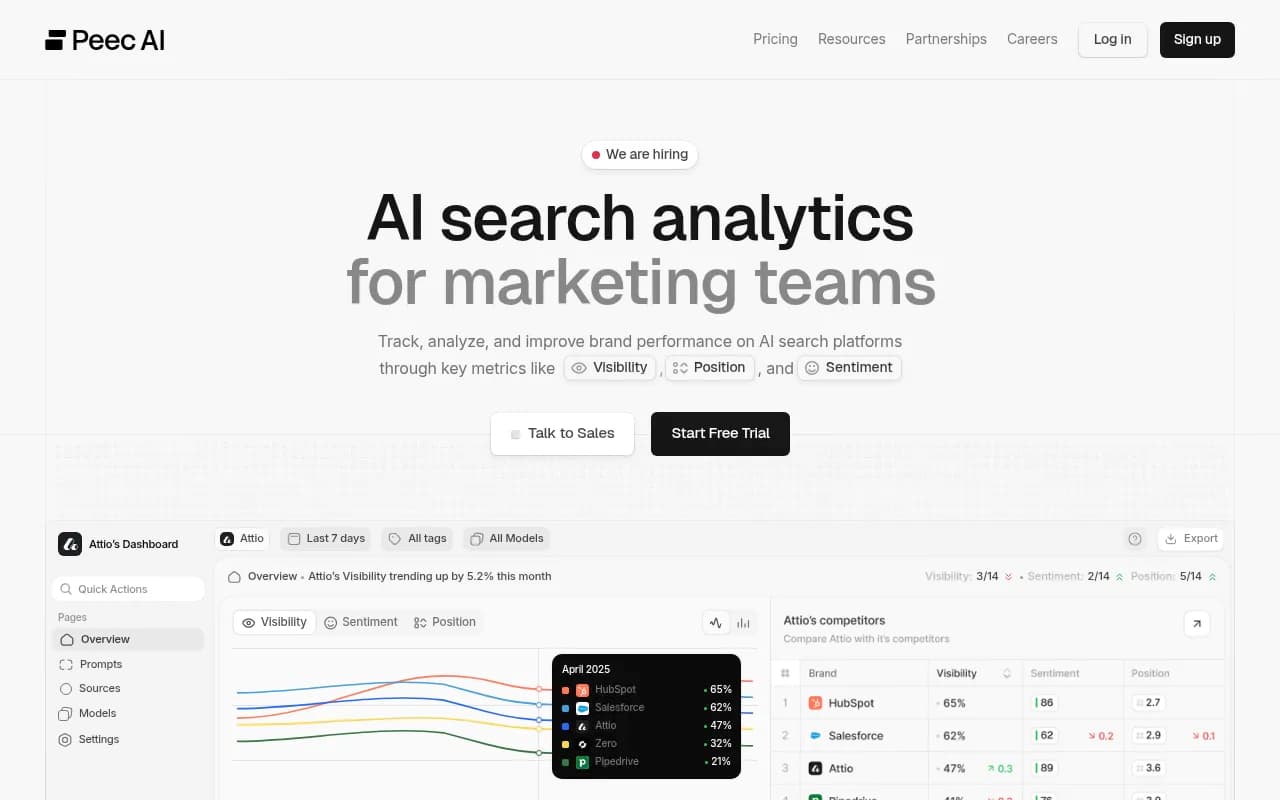
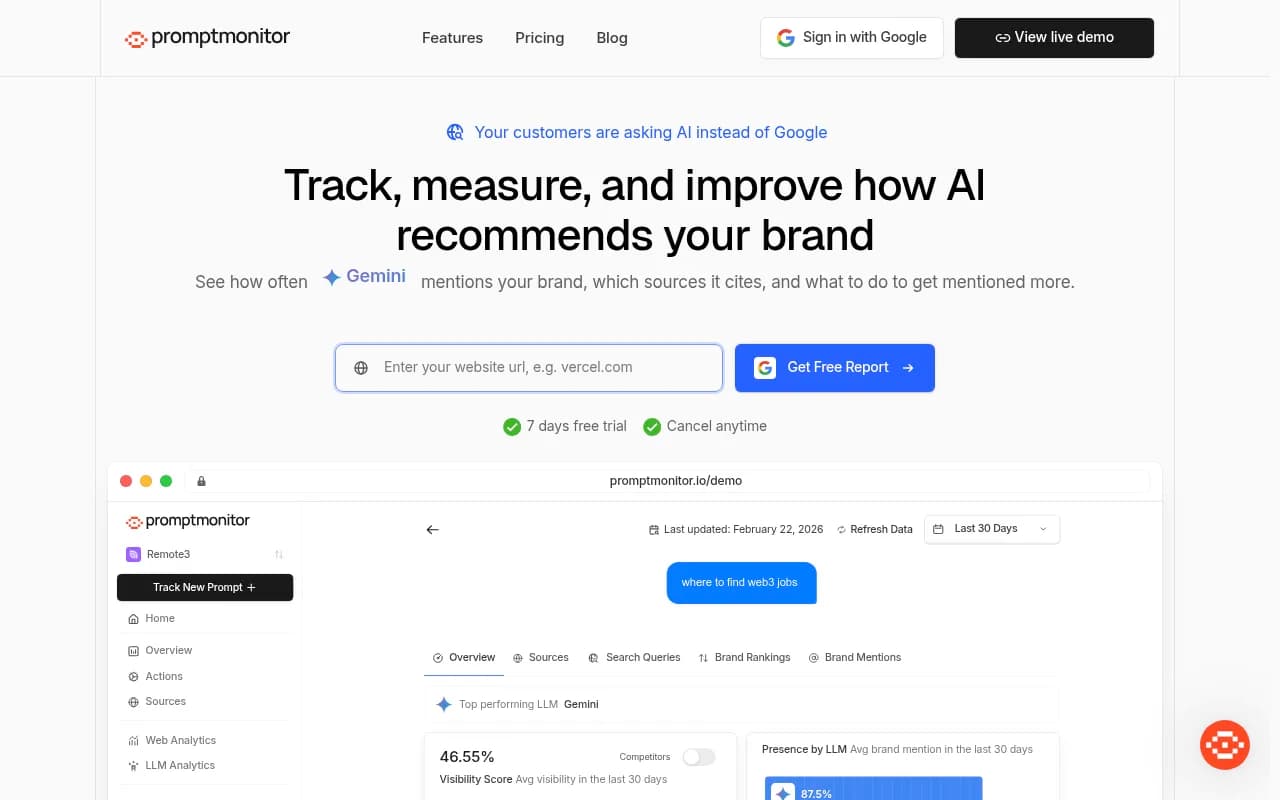
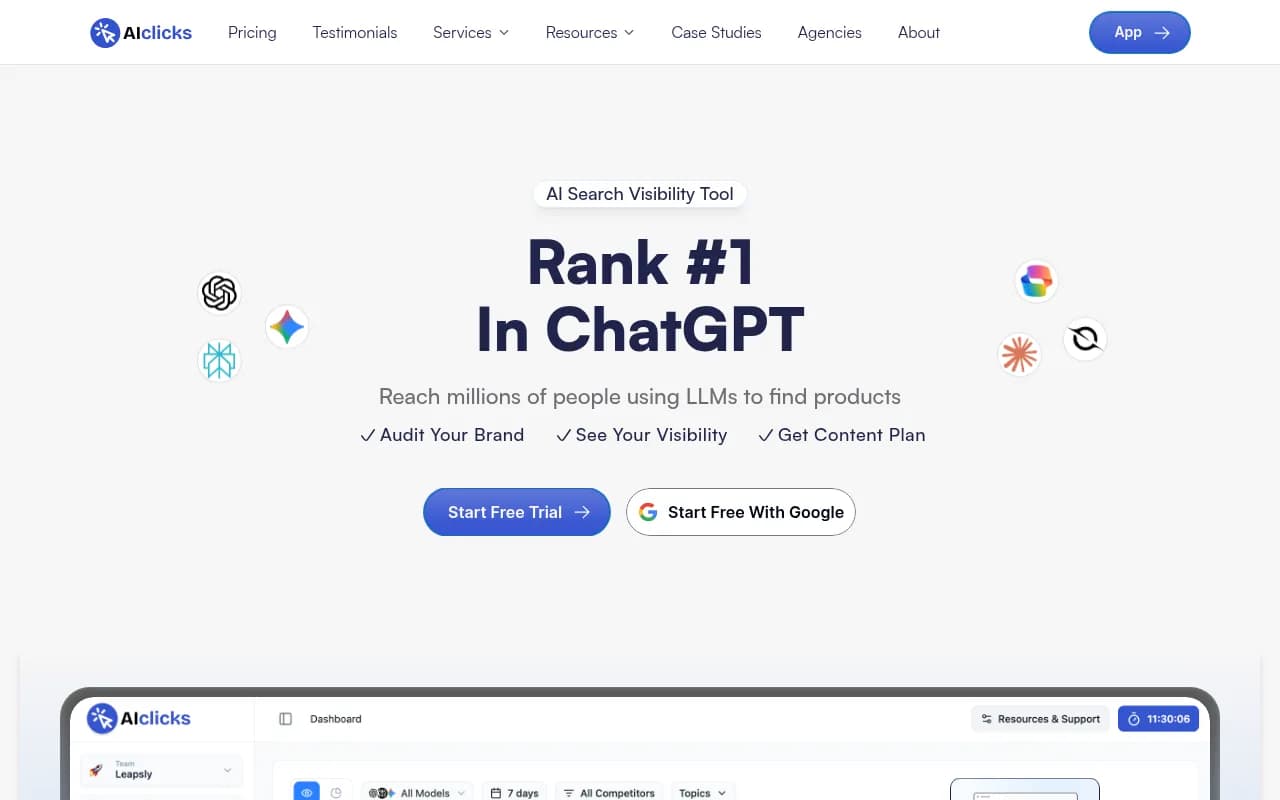
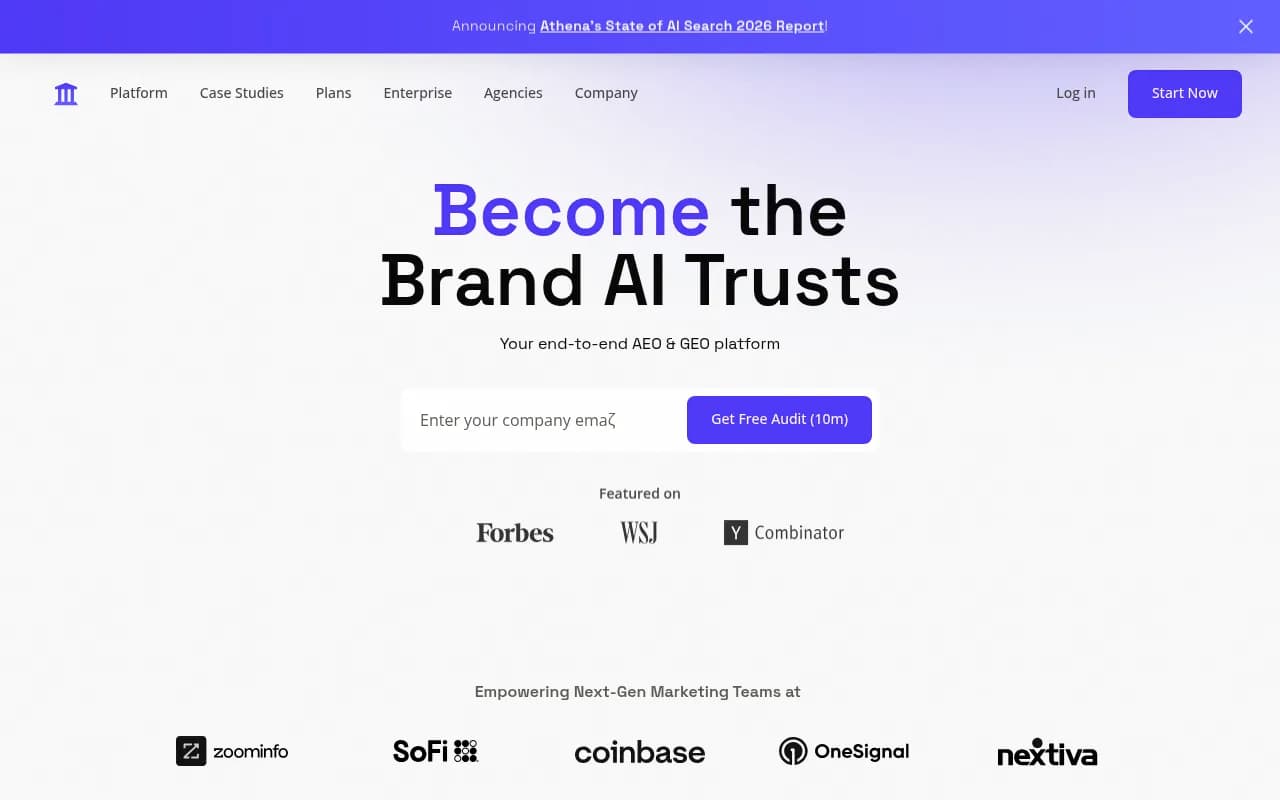
The monitoring-only category includes tools like Otterly.AI and Peec.ai -- useful for getting a read on your current visibility, but they stop well short of helping you improve it. Mid-tier platforms like Profound and AthenaHQ have stronger feature sets but tend to focus on enterprise use cases with pricing to match. Full optimization platforms close the loop between finding gaps, creating content, and tracking results.
The question underneath all the questions
Every one of the eight questions above is really asking the same thing: does this tool help me do something, or does it just show me data?
The market is full of dashboards. Dashboards that show you your mention rate across five LLMs, your sentiment breakdown, your citation position over time. All of that is interesting. None of it moves the needle on its own.
The tools worth paying for in 2026 are the ones that take you from "here's where you're invisible" to "here's the specific content you need to create" to "here's evidence that it's working." That's a short list.
Before you sign up for anything, run through these eight questions with the sales team or in the product demo. The answers will tell you more than any feature comparison table -- including whether the tool is built to help you win in AI search, or just to look like it is.