Key takeaways
- Most GEO platforms are monitoring dashboards -- they show you data but don't help you do anything with it
- The platforms worth paying for combine gap analysis, content generation, and tracking in one loop
- Tracking where competitors appear in AI answers is only useful if you can act on it quickly
- Content created specifically for AI visibility differs from traditional SEO content -- it needs to answer specific prompts, not just rank for keywords
- A handful of platforms have built genuine content creation into their GEO workflow; the rest have bolted on an "AI" label to existing tools
There's a pattern in the GEO tool market right now that's worth naming directly: most platforms are dashboards with a visibility score. They'll tell you that ChatGPT mentions your competitor 3x more than you, that you're missing from Perplexity's answers on your core category, and that your brand sentiment in Gemini is "neutral." Then they stop.
That's not optimization. That's just a more expensive version of anxiety.
The tools that actually move the needle are the ones that close the loop -- find the gap, generate content to fill it, track whether it worked. That cycle is what separates a GEO platform from a GEO tracker.
This guide covers six platforms that have genuinely built content creation into their workflow, not just monitoring. Some are better for agencies, some for enterprise, some for lean marketing teams. But all of them give you something to do with the data they surface.
Why content creation is the missing piece in most GEO stacks
Before getting into specific tools, it's worth understanding why so many platforms stop at tracking.
Building a monitoring dashboard is relatively straightforward. You query AI models, parse responses, extract mentions, and display a score. It's a real engineering challenge, but it's a solved one.
Building a content creation layer on top of that is harder. You need to know which prompts are worth targeting (volume, difficulty, competitive dynamics), what content AI models actually want to cite (not just what ranks on Google), and how to generate briefs or articles grounded in real prompt data rather than generic SEO signals.
That's why the gap exists. Most teams in this space shipped the monitoring layer first and are still figuring out the creation layer. A few have cracked it.
The 6 platforms
1. Promptwatch
Promptwatch is the most complete implementation of the find-gaps-create-content-track-results loop I've seen. It's not just that it has all three components -- it's that they're genuinely integrated rather than bolted together.
The Answer Gap Analysis is the standout feature for content creation. It shows you the specific prompts where competitors are getting cited and you're not, along with what content your site is missing that would make AI models want to cite you. That's a fundamentally different brief than "write about topic X" -- it's "here are the exact questions AI engines are already answering from your competitors, and here's what you need to say to compete."
From there, Content Agents generate articles, listicles, comparisons, and briefs grounded in that prompt data. The inputs include citation data, prompt volumes, persona targeting, competitor analysis, and screenshots -- so the output is engineered for AI citation, not just readability.
The tracking side is also more granular than most. Page-level tracking shows which specific pages are being cited, by which models, and how often. The crawler log feature (available on Professional and above) shows when AI crawlers hit your pages and when those crawls convert to citations -- so you can see the actual timeline from publish to visibility.
Promptwatch covers 10 AI models including ChatGPT, Perplexity, Google AI Overviews, Claude, Gemini, Grok, DeepSeek, and Copilot. Pricing starts at $99/month for the Essential plan (1 site, 50 prompts, 5 articles), with Professional at $249/month and Business at $579/month.

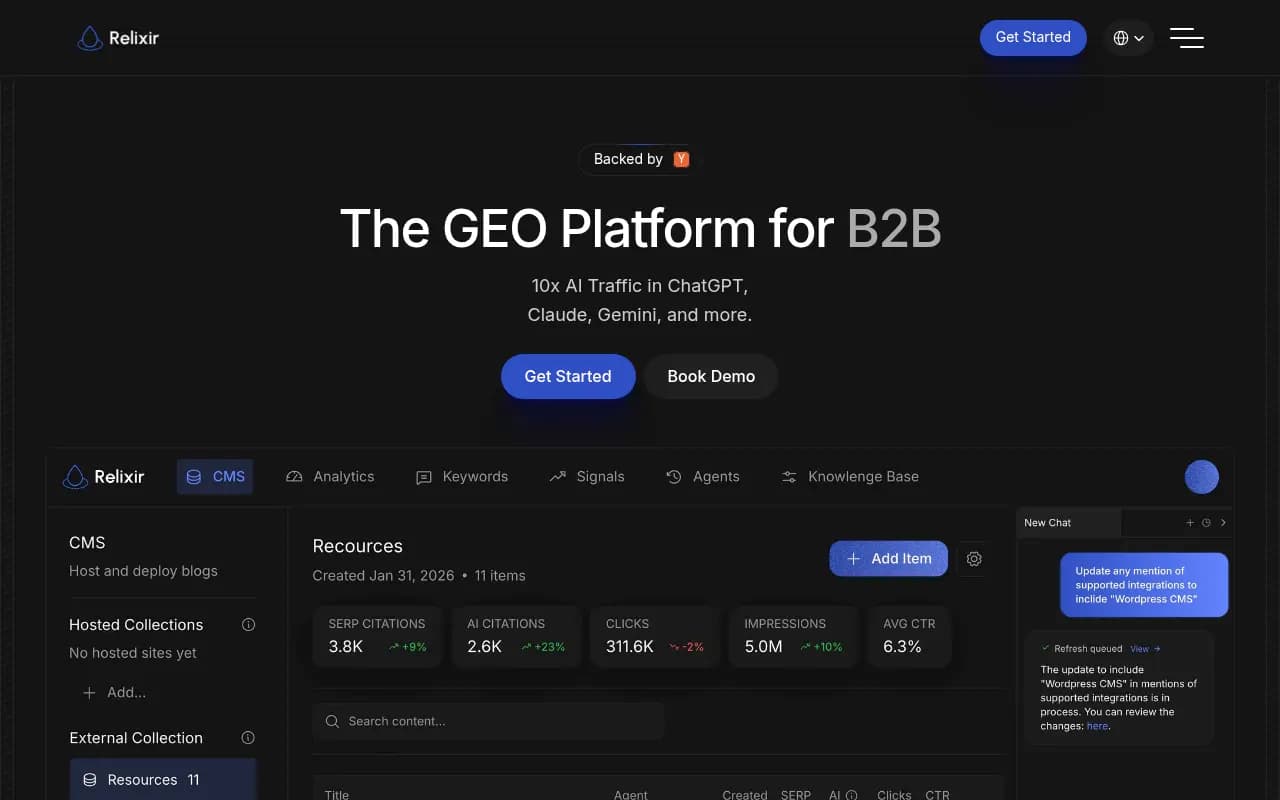
2. Relixir
Relixir positions itself as an all-in-one GEO platform with AI content generation built in. It's worth including here because it's one of the few tools that explicitly connects the content creation workflow to visibility data rather than treating them as separate modules.
The platform tracks brand mentions across major AI models and surfaces competitive gaps, then feeds that data into a content generation layer. It's particularly useful for teams that want a single tool rather than stitching together a tracker and a separate content tool.
3. Writesonic
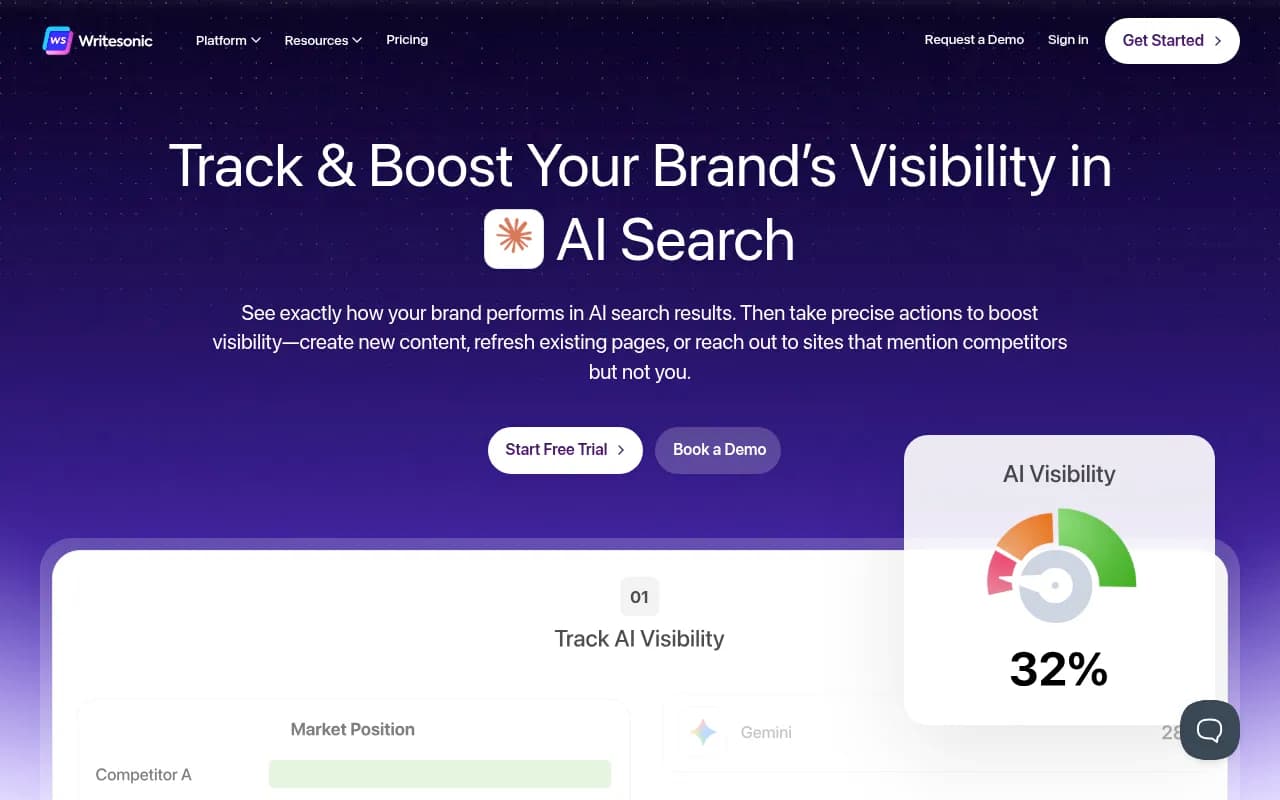
Writesonic has evolved well beyond its origins as a general-purpose AI writing tool. The current platform includes AI search visibility tracking alongside its content generation capabilities, which makes it genuinely relevant here rather than just a writing assistant that happens to mention GEO in its marketing.
The combination of content creation depth and visibility tracking makes it a reasonable choice for teams that are already using Writesonic for content and want to add AI search monitoring without switching platforms. It's not as specialized as Promptwatch on the GEO side, but the content quality is strong and the workflow integration is real.
4. AirOps
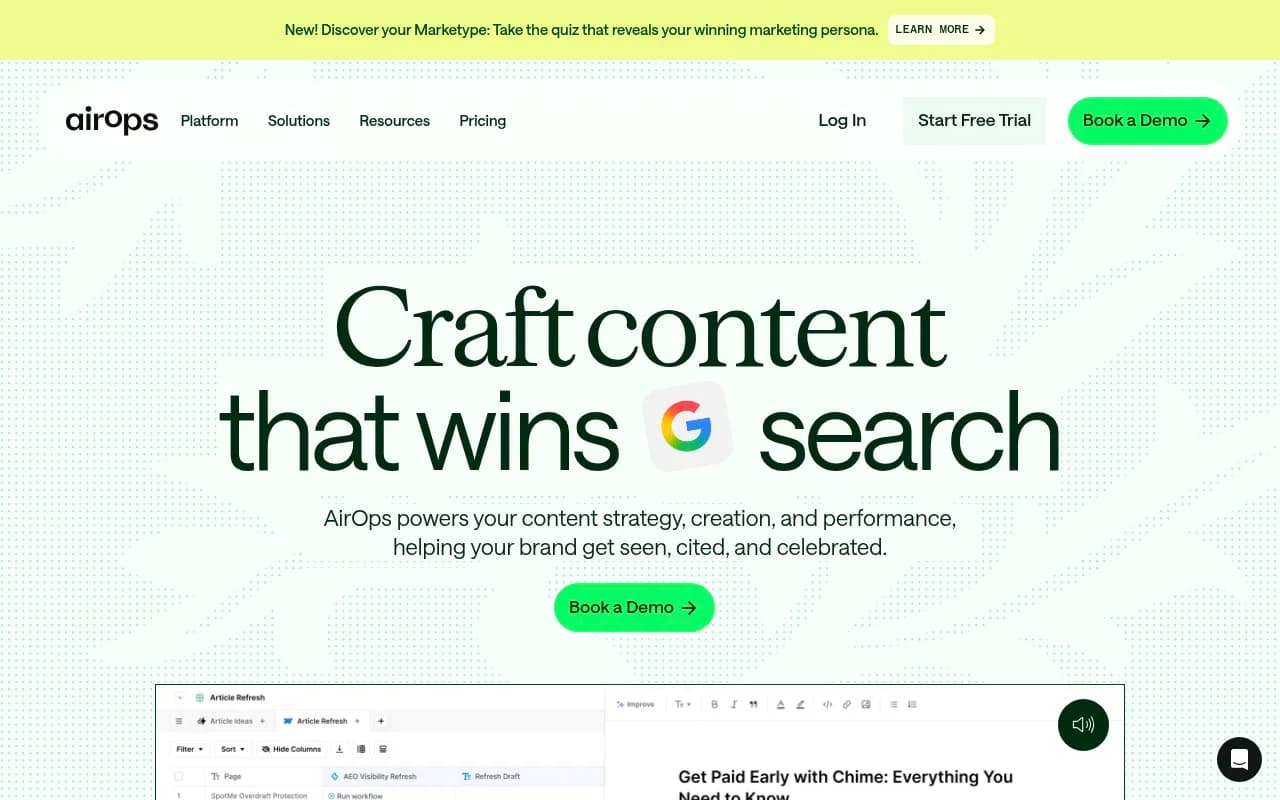
AirOps approaches GEO from a workflow automation angle. It's built around AI workflows that can be connected to your content production process -- so rather than a single "generate article" button, you're building repeatable pipelines that pull in visibility data, run it through content templates, and output briefs or drafts at scale.
This makes it particularly useful for teams with higher content volume requirements. If you're trying to close 50 content gaps simultaneously rather than 5, AirOps's workflow approach scales better than tools built around one-at-a-time generation.
The trade-off is setup time. AirOps requires more configuration than a purpose-built GEO platform, and the GEO-specific features are less opinionated. You're building the workflow yourself rather than following a pre-built loop.
5. SearchAtlas LLM Visibility
SearchAtlas has built a more complete GEO stack than most traditional SEO platforms. The LLM Visibility module tracks brand mentions across AI models, but the platform also deploys content fixes and generates content directly -- which puts it in a different category from tools that just surface data.
The connection to SearchAtlas's broader SEO capabilities is a genuine advantage for teams that want traditional search and AI search managed in one place. The content generation is grounded in both keyword data and LLM citation patterns, which produces briefs that work across both channels.

6. Orchly.ai
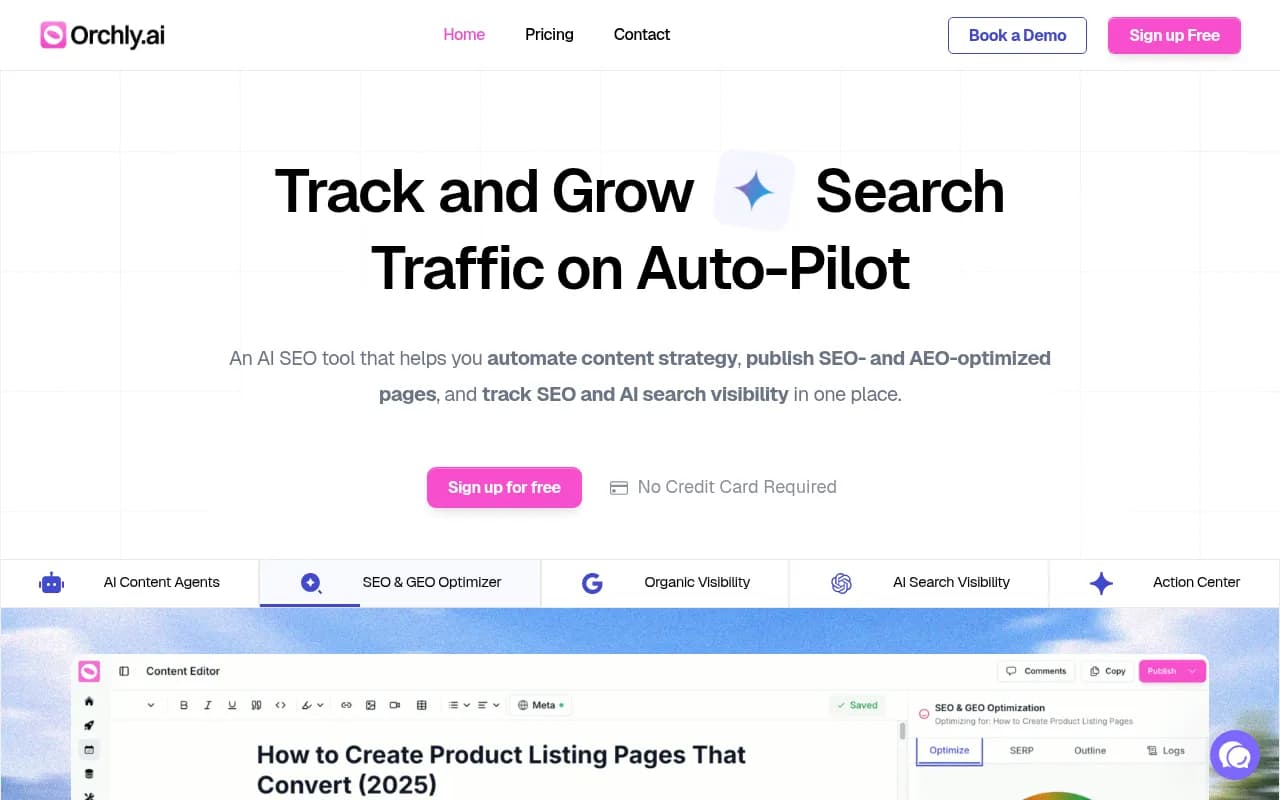
Orchly.ai describes itself as an AI-powered content ops platform that writes, optimizes, and tracks content for AI search visibility. It's newer than some of the other tools here, but the focus on content operations rather than just monitoring puts it in the right category.
The platform is particularly oriented toward teams that need to produce content at scale with AI visibility as the primary goal from the start -- rather than retrofitting existing content for AI search. If you're building a new content program around GEO rather than adapting an existing one, Orchly.ai is worth evaluating.
How these platforms compare
| Platform | Content generation | Gap analysis | Crawler logs | Models tracked | Best for |
|---|---|---|---|---|---|
| Promptwatch | Yes (Content Agents) | Yes (Answer Gap Analysis) | Yes | 10 | Teams wanting a complete GEO loop |
| Relixir | Yes | Yes | Limited | 5+ | All-in-one simplicity |
| Writesonic | Yes (strong) | Basic | No | 4+ | Teams already using Writesonic for content |
| AirOps | Yes (workflow-based) | Via integrations | No | Varies | High-volume content operations |
| SearchAtlas | Yes | Yes | No | 5+ | Teams wanting SEO + GEO in one tool |
| Orchly.ai | Yes | Yes | No | 4+ | New GEO-first content programs |
What to look for when evaluating these tools
A few things worth checking before committing to any GEO platform that claims content creation capabilities:
Is the content generation grounded in real prompt data? Some tools generate content based on keyword data and call it GEO. Real GEO content is built around the specific prompts AI models are answering -- the questions users are actually asking ChatGPT or Perplexity. Ask to see a sample brief and check whether it references specific prompt data or just general topic clusters.
Does the gap analysis show competitor-level detail? Knowing you're missing from "AI answers about project management software" is less useful than knowing ChatGPT cites Asana for 23 specific prompts where you don't appear. The specificity of the gap analysis determines how actionable the content briefs will be.
Can you track results at the page level? Aggregate visibility scores are fine for reporting, but they don't tell you which content is working. Page-level citation tracking -- which specific URLs are being cited, by which models, and how often -- is what lets you learn from what you publish.
Does the platform track real user-facing responses? Some tools query AI models via API, which can produce different results than what users actually see in the ChatGPT or Perplexity interface. Tools that track real user-facing responses (including shopping recommendations, featured citations, and formatted answers) give you more accurate data.
The tools that stop at monitoring
For context, here are some platforms that are genuinely useful for tracking but don't have meaningful content creation built in. They're not bad tools -- they're just in a different category.
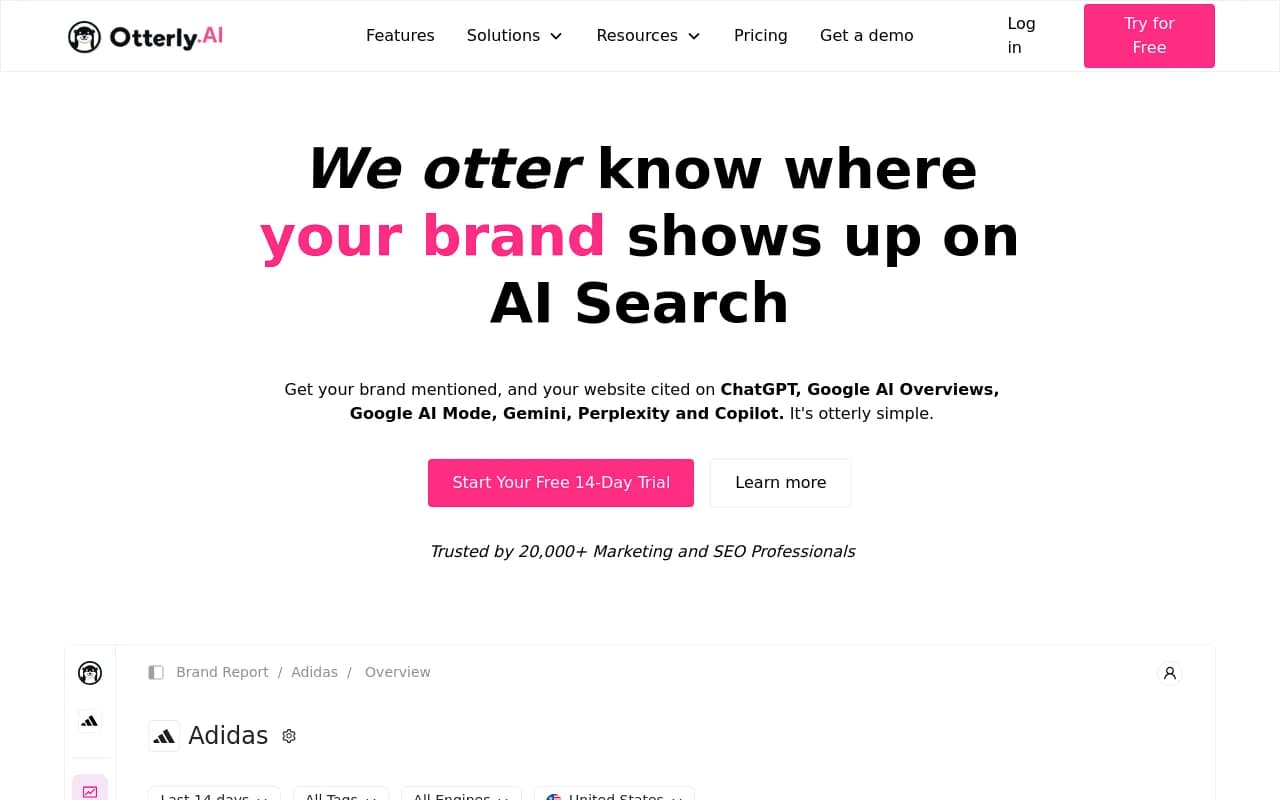
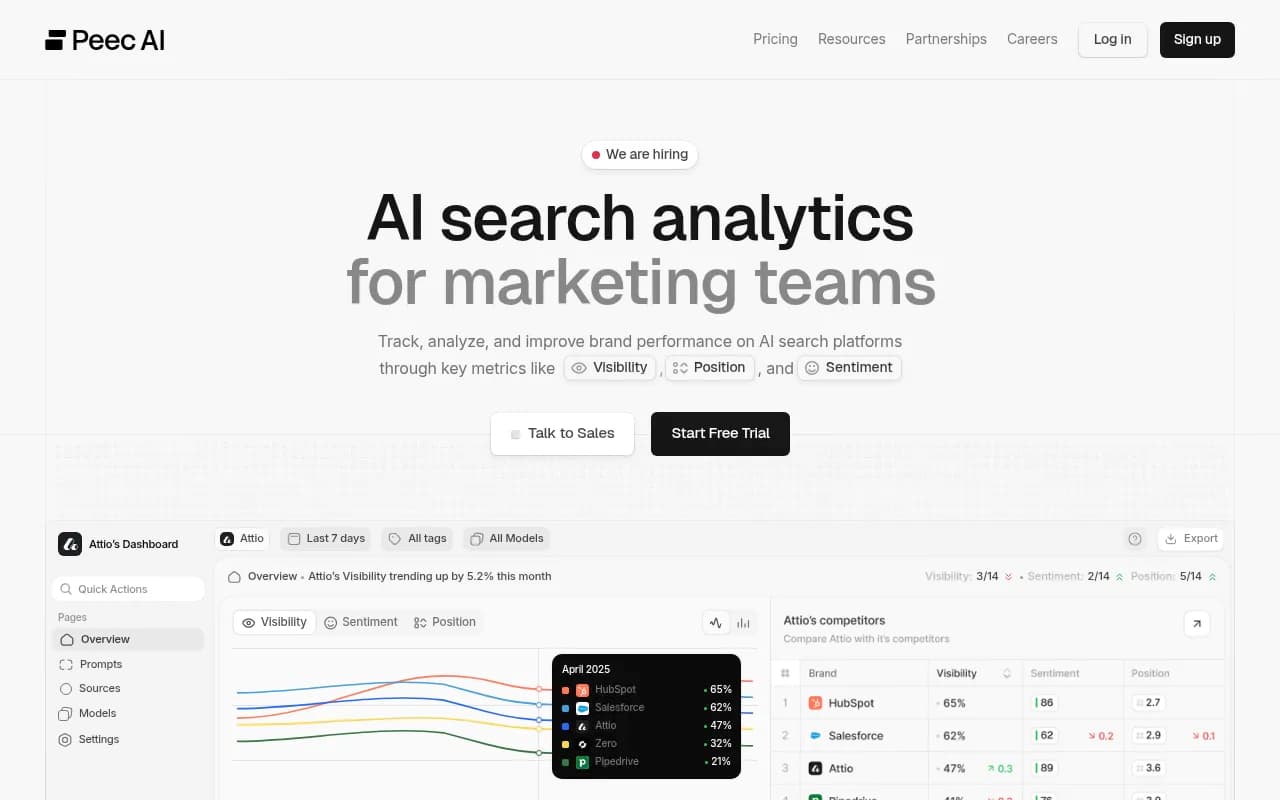
Otterly.AI and Peec AI are both solid for monitoring brand mentions across AI models at accessible price points. If you already have a content team and just need visibility data to inform their work, either could serve that purpose.
Athena HQ tracks brand visibility across 8+ AI search engines with good competitive benchmarking. Again, strong monitoring, limited creation.

Profound is a well-regarded enterprise option with strong data, but the content optimization layer is less developed than the tracking side.
The pattern across all of these is the same: they show you the problem clearly. They just don't help you fix it.
A note on traditional SEO tools adding GEO features
Semrush and Ahrefs have both added AI visibility features. Semrush uses fixed prompt sets, which limits how well it maps to your specific competitive situation. Ahrefs Brand Radar has similar constraints and no AI traffic attribution. Both are worth using if you're already paying for them, but neither is built around the GEO content creation loop the way purpose-built platforms are.

Which platform should you actually use?
If you want one recommendation: Promptwatch is the most complete implementation of the full GEO loop right now. The Answer Gap Analysis is genuinely specific (competitor-level, prompt-level detail), the Content Agents produce briefs and articles grounded in real citation data, and the page-level tracking closes the feedback loop so you can see what's working.
For teams with high content volume needs and existing workflow infrastructure, AirOps is worth evaluating alongside it. For teams already deep in the Writesonic ecosystem, the integrated tracking is a reasonable reason to stay.
But the core question to ask about any GEO platform is simple: after it shows me where I'm invisible, does it help me do something about it? If the answer is no, you're paying for a dashboard, not an optimization platform.