Key takeaways
- GEO content agents now plan, write, and publish 5-10 optimized articles a day directly to your CMS, replacing the old brief-writer-editor assembly line.
- The math only works if you feed the agent real visibility data: prompt volumes, citation gaps, and AI crawler logs. Without that, you're automating mediocrity.
- ChatGPT now runs leaner searches (avg 1 fan-out query, ~53 characters) and cites ~5 sources per response, so every article needs to target one clear intent with entity-rich headings.
- Product pages and comparison/how-to content are the fastest-growing citation types in both ChatGPT and AI Overviews, so agents shouldn't only write blog posts.
- Volume without quality gates triggers ranking drops within 60-90 days. The teams that win run a 70/30 split between new content and refreshes, with human review built in.
The new normal: publishing at a pace no human team can match
Two years ago, a content team publishing one article a day was considered fast. In 2026, tools like Promptwatch let a single operator publish 5 to 10 GEO-optimized articles a day, every day, with the agent handling research, drafting, internal linking, and CMS publishing on a schedule.

That number isn't marketing fluff. It comes from real customer deployments: Crisp, a customer support platform, scaled from a few articles a week to 5-10 per day using Promptwatch's Content Agents and saw 2x higher conversion rates from AI traffic compared to traditional channels. That's the whole pitch for agentic content in one sentence: more output, better targeting, and traffic that converts.
But the headline number hides the real story. The interesting part isn't that machines write fast. Writing was never the bottleneck. The interesting part is what happens to a content team's workflow when the writing step collapses to near zero, and everything else (strategy, quality control, measurement) becomes the job.
Why content teams are adopting agents now
Three shifts happened in the last 18 months that made agentic content workflows go from experiment to default.
AI search became a real traffic channel
ChatGPT, Perplexity, Gemini, and Google AI Overviews now send meaningful traffic, and that traffic converts. Multiple studies put AI-referred conversion rates at 3-4x higher than traditional organic search. When a channel converts that well, content teams get budget to chase it.
The problem: only about 50% of AI citations overlap with top-10 Google rankings. Ranking #1 in Google guarantees nothing in ChatGPT. So teams can't reuse their old SEO playbook, they need content planned around what AI engines actually cite.
We learned what AI engines actually cite
First-party data has made GEO less guesswork. Promptwatch's citation-type research from July 2026 shows product pages made up roughly a third of all ChatGPT citations that month, nearly double their share from March, while listicles grew from about 8% to over 10% within the month itself. Google AI Overviews show the same structural shift: listicles averaged around 26% of citations in Q1 2026 but dropped to ~18% by July, with product pages overtaking them in daily share by the end of the month.
The takeaway for content teams is uncomfortable but useful: your carefully crafted editorial hub matters less than your product pages, your comparison pages, and your how-to content. An agent that knows this can prioritize accordingly. A human team still working from a 2023 playbook can't.
The economics of manual GEO collapsed
Optimizely's research on the new content operating model puts it bluntly: fewer than 30% of marketers feel they have the tools and systems to manage content effectively across their organization. Meanwhile, the volume of content the business demands keeps growing. Manual GEO, done properly, means researching prompts, checking citations across five engines, writing, optimizing, publishing, and measuring, for every single page. A human can do maybe two of those a day. An agent does ten.

What a GEO content agent actually does all day
Forget the image of a chatbot spitting out blog posts. A real GEO content agent runs a loop:
- Finds gaps. It pulls the prompts your target audience actually uses (with monthly volumes and difficulty scores), checks which ones you're invisible for, and compares your content coverage against what AI engines cite for those prompts.
- Plans. It decides what to write, in what order, based on which gaps are cheapest to close and most valuable.
- Writes with citations in mind. Short search-query-style headings, direct answers up front, entity-rich structure, sourced claims, FAQ sections, schema markup.
- Publishes. Straight to WordPress, Webflow, or Framer, on a schedule you control, either through a review inbox or fully automated.
- Measures and adjusts. Which new pages got cited? Which got crawled by ChatGPTBot but never cited? What should next week's queue look like?
That last step is what separates a GEO agent from an AI writing tool. A writing tool optimizes a draft you already decided to write. An agent decides what to write based on what will actually move your AI visibility.
How workflows are actually changing on real teams
Here's where it gets interesting for the humans.
The strategist becomes the most important person
When output is unlimited, deciding what to produce is the scarce skill. Teams running agents successfully spend most of their human time on prompt research, topic prioritization, and brand positioning, and almost none on line editing. The agent handles the assembly line; people handle the direction.
This matches what's happening across marketing ops generally. Vellum's 2026 guide to AI agents for marketing describes teams being "orchestrated by AI" rather than replaced, with the most valuable agents being the ones that connect tools and surface insights rather than just create content.

Editors move from rewriting to gating
The old editor job was improving bad drafts. The new editor job is running a quality gate: checking claims, verifying sources, catching brand-voice drift, and approving or rejecting. Done properly, a quality gate takes 30-45 minutes per piece. At 10 pieces a day, that's still a full-time job, but a different one, closer to a compliance reviewer than a rewrite artist.
Some teams skip this. More on why that's a mistake below.
The brief-writer handoff disappears
The traditional chain (strategist writes brief, writer drafts, editor fixes, publisher formats) collapses into one step. This is genuinely a loss for some roles, and teams report the shift as increased productivity rather than reduced headcount, but the day-to-day work looks nothing like it did in 2024.
Measurement moves from rankings to citations
When your agent publishes 10 pages a day, you can't track them in a spreadsheet. Teams shift to automated monitoring: citation trends per page, AI crawler logs showing whether ChatGPTBot actually read the page, and conversion tracking on AI-referred traffic. Promptwatch's crawler logs are useful here, they show the crawl-to-citation path per page, so you can see that a page was crawled but never cited and needs restructuring rather than more promotion.
The data that should shape your agent's output
If you're running a GEO content agent, three pieces of citation behavior research should directly shape what it writes.
ChatGPT searches are getting leaner
Promptwatch's query fan-out research shows average fan-out searches per ChatGPT response fell from 2.15 in December to exactly 1.0 by April 2026, and average query length collapsed from ~117 characters to ~53. ChatGPT now searches like someone typing keywords, not asking conversational questions.
Practical implication: your agent should write headings that read like short search queries ("best CRM for small agencies 2026", not "what should you consider when choosing a CRM for a small agency") and front-load entity and category terms in titles and H2s.
Citation slots are scarce and contested
Per Promptwatch's data on average sources per response, ChatGPT cites roughly 5 sources per web-search response, versus about 10 for Google AI Overviews and Perplexity. Fewer slots means fiercer competition per slot. A page that's almost good enough gets nothing.
Content type matters more than word count
The citation-type data above points to a concrete content mix. Give product pages the same GEO attention as editorial content: structured specs, transparent pricing, clear availability. Keep comparison ("X vs Y") and how-to content in the roadmap, since competition there is still relatively low. And don't let your agent only write blog posts, since the fastest-growing citation categories are commercial pages, not editorial ones.
The tools landscape in 2026
The market splits into three camps, and the differences matter more than pricing tables suggest.
| Camp | What they do | Examples | Weakness |
|---|---|---|---|
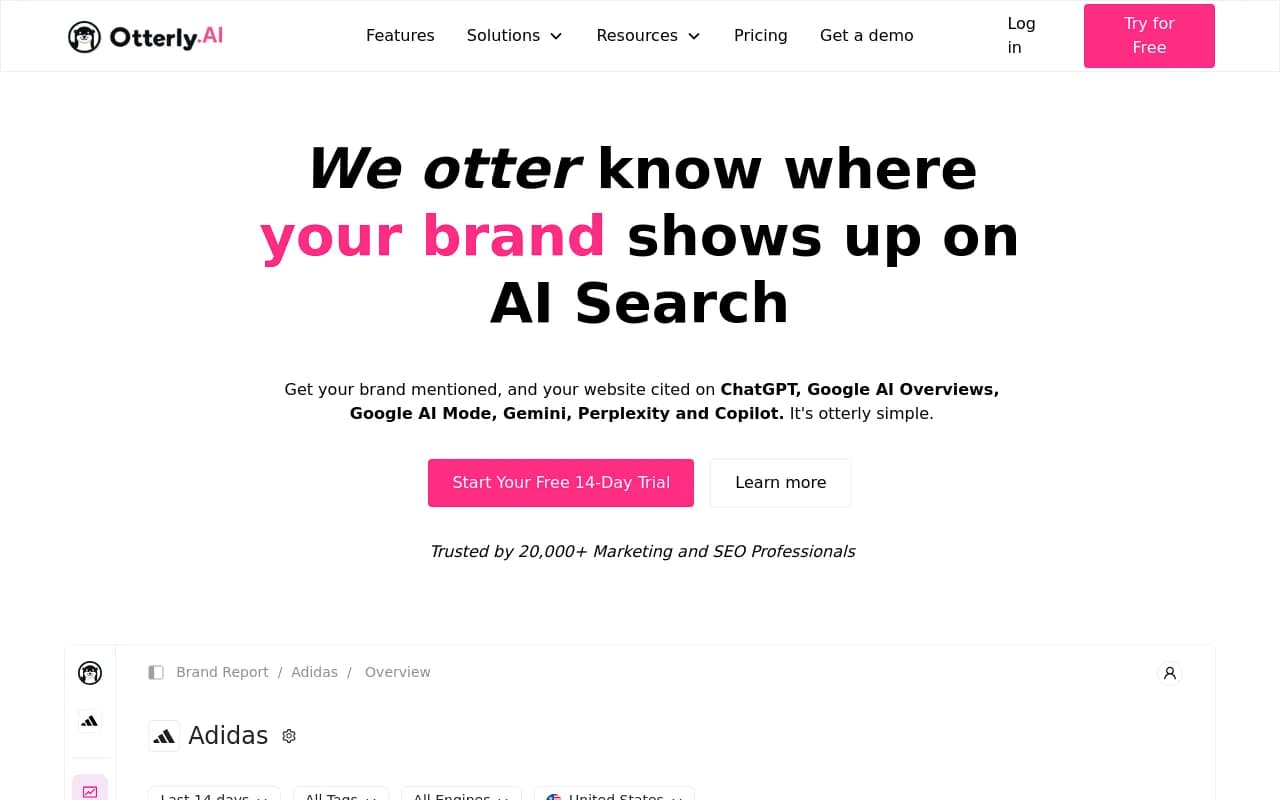
| Monitoring-first platforms | Track prompts, citations, sentiment, share of voice | Otterly.AI, Profound, Peec AI | No content production, so you still need a writing stack |
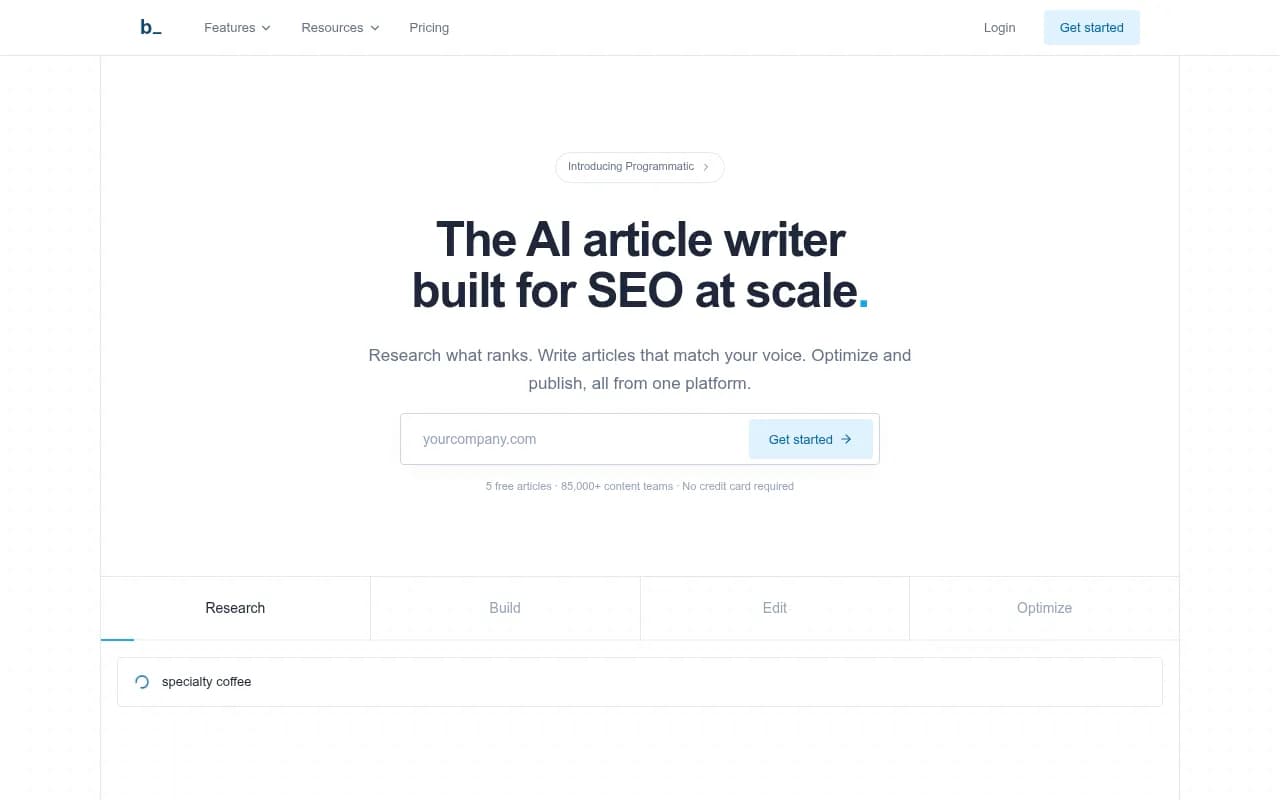
| Writing-first platforms | Generate and publish articles at scale | Byword, Content at Scale, Jasper | No visibility data to ground what gets written |
| End-to-end GEO platforms | Close the loop: visibility data drives automated content production | Promptwatch, AirOps | Fewer of these than you'd expect |



The end-to-end camp is small because doing both halves well is hard. A writing tool that doesn't know your citation gaps produces plausible content about topics that don't matter. A tracker that can't publish leaves the most labor-intensive step manual. Promptwatch's Content Agents sit in the third camp: the same platform that shows your visibility gaps plans, writes, and publishes the fixes to your CMS.
If you want to survey the full field, the GEO software directory at bestgeosoftware.com keeps a current catalog.
How to run 5-10 articles a day without wrecking your site
Here's the honest caveat section. Volume is a lever, and levers cut both ways.
Google's position hasn't changed since February 2023: quality matters, production method doesn't. AI content is fine; content built to manipulate rankings is spam regardless of who or what wrote it. But the helpful content system is a site-wide signal, and sites that publish hundreds of AI articles in a short window without corresponding growth in backlinks, brand mentions, or engagement frequently see ranking drops within 60-90 days.
A sensible operating model:
- Keep the quality gate. 30-45 minutes of human review per piece, built into the workflow, not bolted on. Fully autonomous publishing is possible; treat it as an earned privilege after the agent has a track record, not a day-one setting.
- Run a 70/30 split. Roughly 70% new content, 30% refreshing and updating existing pages. Most sustainable programs land here, and refreshes are where agents quietly outperform humans anyway, since updating 40 stale pages is nobody's favorite job.
- Stay topically coherent. A software company publishing 200 AI finance articles because a keyword tool showed volume creates topical incoherence that gets flagged. Your agent should write within topics where you have actual authority.
- Watch cannibalization and orphans. High-volume publishing risks keyword cannibalization, crawl-budget waste, and orphan pages that never earn internal links. Your agent should handle internal linking automatically; verify that it does.
- Feed it good inputs. Train the agent on 10-20 examples of your best-performing content. Maintain a banned-phrase list. Agents trained on your actual voice sound like you; agents trained on defaults sound like everyone.
What this means for your team
The teams getting real results from GEO content agents aren't the ones publishing the most. They're the ones with the tightest loop between visibility data and content production: see the gap, write the fix, measure the citation, adjust. Crisp's 2x conversion lift came from that loop, not from raw volume.
If you're building this in-house, the stack decision is simpler than it looks: pick a platform that either closes the whole loop itself or connects cleanly to the pieces you already have. And if you'd rather have a senior team run GEO end-to-end for you, 1001 SEO Media builds AI search visibility programs that combine technical SEO, content production, and GEO, with the same agent-driven workflows described here.
The 5-10 articles a day number will keep climbing. The teams that benefit won't be the ones with the fastest agents, they'll be the ones who never stopped asking whether the next article deserved to exist.