Key takeaways
- GetMint.ai built a solid early reputation as an AI visibility monitoring tool, but teams began hitting its ceiling as their GEO needs matured
- The most common complaint wasn't about data quality -- it was about what to do with the data once you had it
- Teams that switched generally fell into two camps: those who needed deeper analytics, and those who needed the platform to help them act on what they found
- Several alternatives have emerged that go well beyond monitoring, including platforms with built-in content generation, crawler log analysis, and traffic attribution
- The right replacement depends heavily on whether you're a solo marketer, an agency, or an enterprise team with complex multi-brand needs
The AI search visibility space moved fast in 2025. Tools that felt cutting-edge in early 2024 started showing their seams by mid-year. GetMint.ai was one of those tools -- it got a lot of teams through their first real experiments with Generative Engine Optimization, but for a growing number of users, it stopped being enough.
This isn't a hit piece. GetMint.ai does real things. But the teams that moved on had real reasons, and those reasons say a lot about where the GEO market is heading.
What GetMint.ai actually does
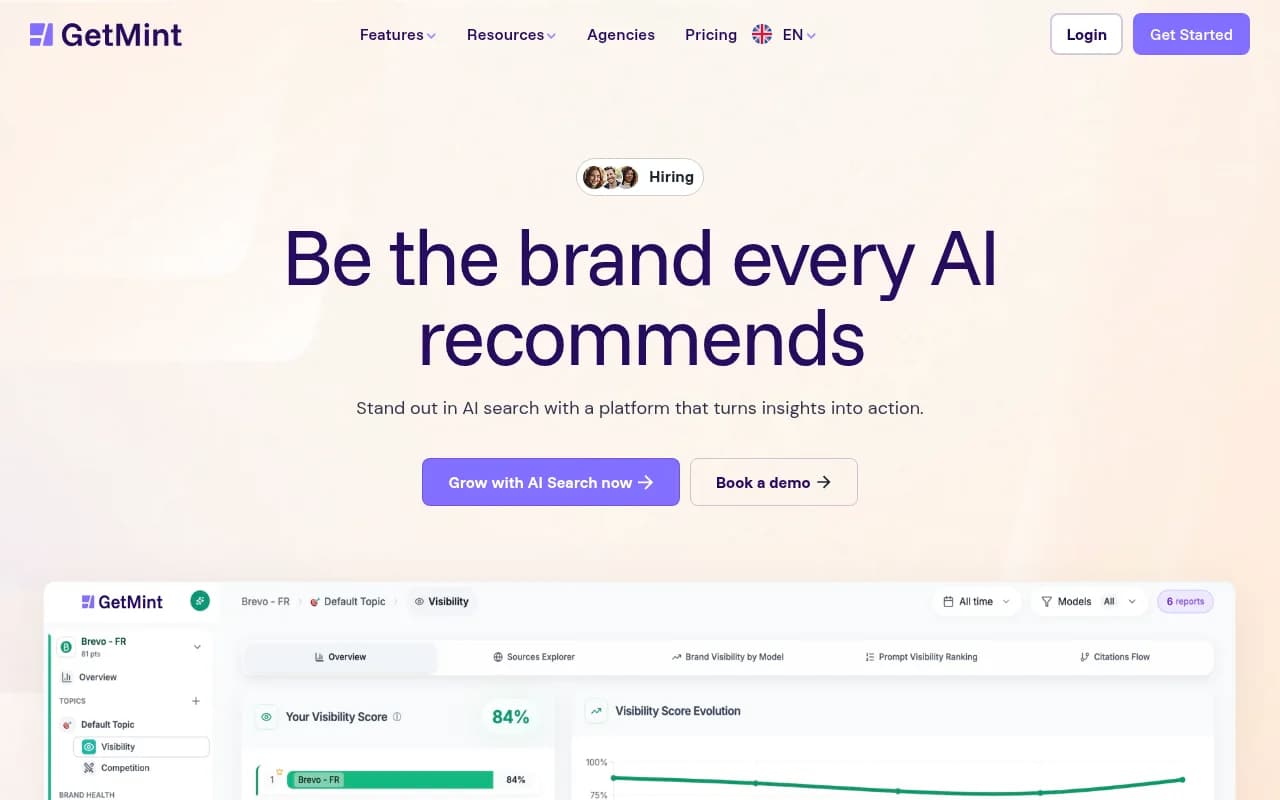
GetMint.ai is a monitoring platform focused on AI search visibility. It tracks how brands appear in responses from models like ChatGPT, Perplexity, and Google AI Overviews, and gives users a dashboard view of their citation performance across prompts.
For teams just getting started with AI visibility, that's genuinely useful. Seeing your brand mentioned (or not mentioned) in an LLM response is still a novel experience for most marketing teams, and having a structured way to track it is a real step up from manually querying ChatGPT every week.
The problem most teams ran into wasn't the monitoring itself. It was what came next.
Why teams started looking elsewhere
The "now what?" problem
The pattern that kept coming up in 2025: teams would set up their prompt tracking, watch their visibility scores for a few weeks, and then get stuck. They could see they were invisible for certain queries. They could see competitors getting cited. But the platform didn't help them understand why, or tell them what to do about it.
This isn't unique to GetMint.ai -- it's the core limitation of monitoring-only tools as a category. But by mid-2025, enough competing platforms had moved beyond pure monitoring that staying with a dashboard-only tool started to feel like a deliberate choice to stay behind.
Cláudio Fischer Lemos, an AI practitioner who shared his team's experience on LinkedIn, captured the frustration well: "At the end of 2025, our teams felt that all our agent projects were stuck and not improving. The trick of 'switching models' didn't help."

That feeling of being stuck -- of having data but no clear path forward -- was the most common reason teams gave for switching.
Prompt coverage gaps
Several teams reported that GetMint.ai's prompt library felt limited relative to what they actually needed to track. When you're in a competitive category, you want to monitor hundreds of variations of how customers might ask about your product. Platforms that let you build out large, custom prompt sets with volume estimates and difficulty scoring became more attractive as teams got more sophisticated.
No content gap analysis
By late 2025, the more advanced GEO platforms were showing users not just where they were invisible, but which specific content was missing from their site that would explain the gap. That kind of answer gap analysis -- where you can see the exact topics and angles AI models want to cite but can't find on your domain -- is a fundamentally different capability from tracking mentions. Teams that discovered it didn't want to go back.
Crawler log visibility
A smaller but vocal group of switchers cited the lack of AI crawler log data. Knowing that ChatGPT or Perplexity's crawler visited your site is one thing. Knowing which pages they read, how often they returned, and whether they hit any errors is another. For technical SEO teams trying to understand how AI models discover and index their content, this became a non-negotiable feature.
Attribution was missing
Marketing teams eventually need to connect visibility to revenue. The question "is our AI search presence actually driving traffic?" is a reasonable one, and in 2025 it became more urgent as budgets tightened. Teams that couldn't tie their GEO efforts to actual visits or conversions had a hard time justifying the investment -- and a hard time convincing leadership to take AI visibility seriously.
The platforms teams moved to
There's no single "best" replacement. Where teams landed depended on their size, budget, and what they were actually trying to accomplish. Here's an honest breakdown.
For teams that wanted a full optimization loop
The biggest shift was toward platforms that don't just show you data but help you act on it. The combination of gap analysis, content generation, and tracking in one place became the gold standard.
Promptwatch is the platform that came up most often in this context. It tracks visibility across 10 AI models (ChatGPT, Perplexity, Claude, Gemini, Grok, DeepSeek, Copilot, Meta AI, Mistral, and Google AI Overviews), but the part that differentiated it for most switchers was the action layer: Answer Gap Analysis that shows exactly which prompts competitors rank for that you don't, a built-in AI writing agent that generates content grounded in 880M+ real citations, and page-level tracking that closes the loop between content creation and visibility improvement. It also includes AI crawler logs and traffic attribution -- the two features most commonly cited as missing from GetMint.ai.

For agencies managing multiple clients
Agency teams had specific needs: multi-brand dashboards, white-label reporting, and the ability to track visibility at scale without paying per-brand enterprise rates. A few platforms addressed this better than others.

Otterly.AI is a lightweight option that works well for agencies that need affordable monitoring across multiple clients. It's not as deep as Promptwatch on the optimization side, but it's accessible and covers the basics.
Scrunch AI has a stronger analytics layer and is worth evaluating if your agency needs more granular reporting.
For teams that wanted to go deeper on content
Some teams weren't primarily looking for a monitoring upgrade -- they wanted a platform that would help them produce content that actually gets cited. That's a different problem, and a few tools address it specifically.
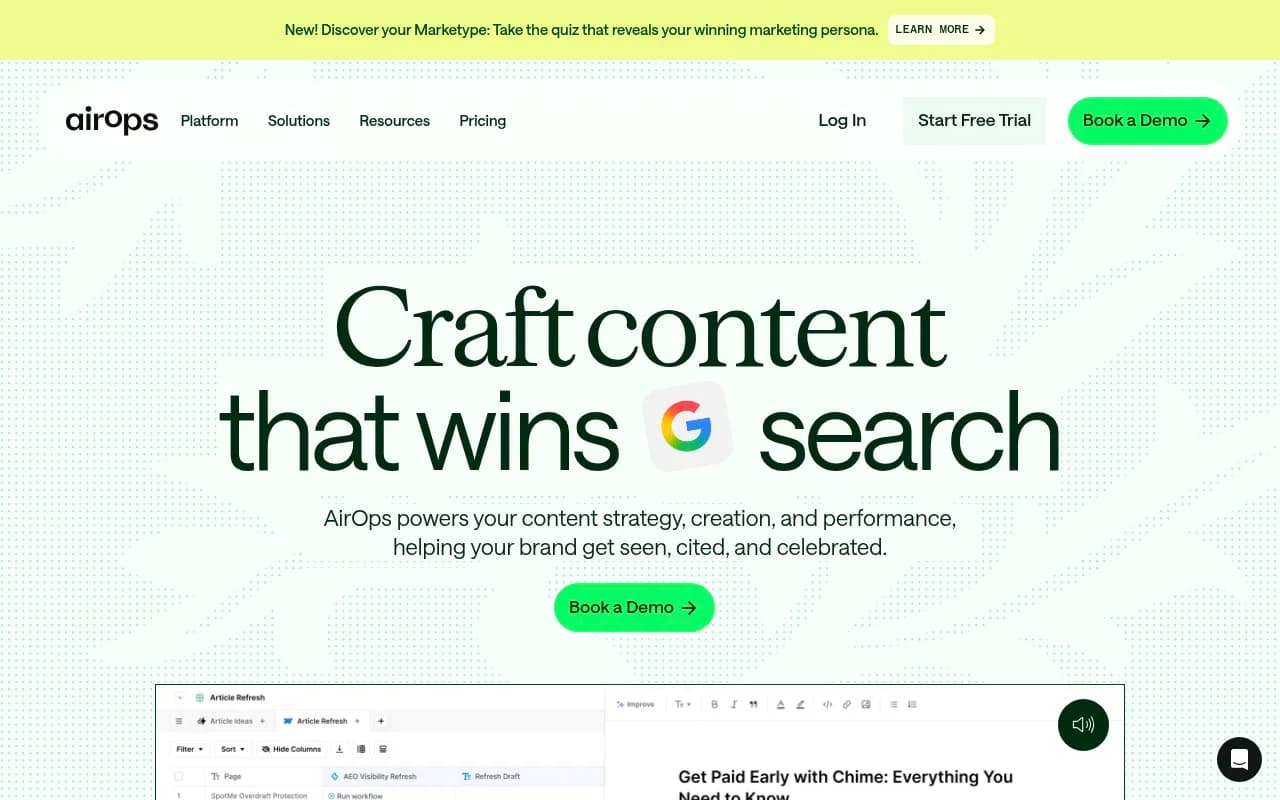
AirOps is worth mentioning here. It's built around AI workflow automation and content operations, and teams that were already running content programs found it easier to integrate than a pure GEO platform.
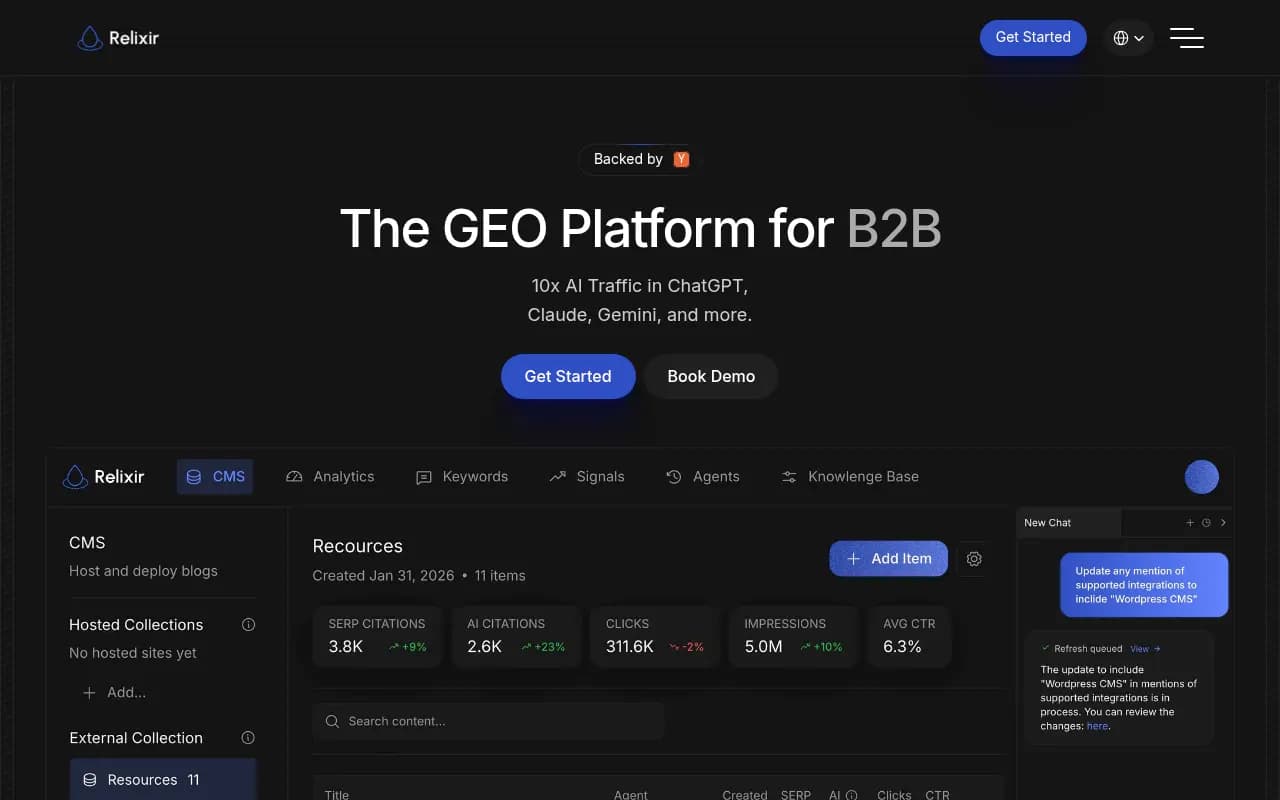
Relixir is an all-in-one GEO platform that combines AI content generation with visibility analysis -- a good fit for teams that want the monitoring and the content pipeline in one place.
For enterprise teams
Enterprise teams generally needed more: more prompts, more sites, more models, more integrations.
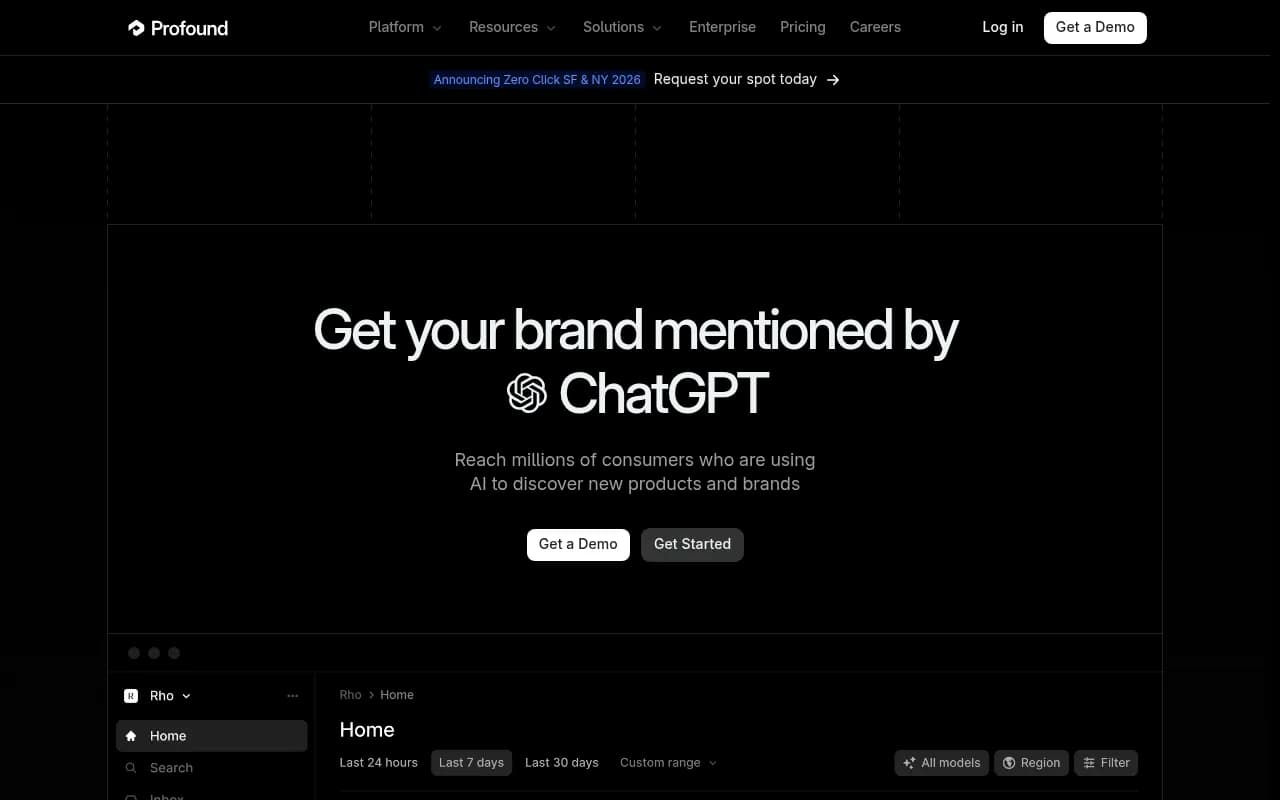
Profound AI is the go-to for large brands with complex visibility needs. It's priced accordingly, but for teams with serious budgets and serious requirements, it's a strong option.
Evertune is another enterprise-grade platform that's been gaining traction with Fortune 500 brands looking for AI visibility at scale.
For teams on a tight budget
Not everyone needed a full platform overhaul. Some teams just needed better monitoring at a lower price point.

Peec AI is a monitoring-focused tool that covers the basics without a lot of overhead. It's not going to help you create content or analyze crawler logs, but if you just need to track mentions across a handful of LLMs, it's an honest option.
Otterly.AI also fits here -- it's one of the more affordable options in the space that still covers multiple AI models.
Feature comparison: GetMint.ai vs. common alternatives
| Feature | GetMint.ai | Promptwatch | Otterly.AI | Profound AI | Relixir |
|---|---|---|---|---|---|
| AI model coverage | Multiple | 10 models | Multiple | Multiple | Multiple |
| Answer gap analysis | No | Yes | No | Limited | Yes |
| Built-in content generation | No | Yes | No | No | Yes |
| AI crawler logs | No | Yes | No | No | No |
| Traffic attribution | No | Yes | No | No | No |
| Reddit/YouTube tracking | No | Yes | No | No | No |
| Prompt volume & difficulty | No | Yes | No | Limited | No |
| Agency/multi-brand support | Limited | Yes | Yes | Yes | Yes |
| Starting price | Varies | $99/mo | Lower tier | Higher tier | Varies |
What the switchers actually learned
The teams that moved on from GetMint.ai in 2025 mostly said the same thing: they didn't regret using it early on. It was a reasonable starting point. But as AI search became a real channel -- not just an experiment -- they needed a platform that treated it the same way.
The broader lesson from 2025 is that AI visibility tools are splitting into two categories. There are monitoring dashboards, and there are optimization platforms. Monitoring dashboards tell you where you stand. Optimization platforms help you change where you stand.
A May 2026 discussion on the Machine Logic podcast made this point clearly: most companies have approved AI and run pilots, but they stall somewhere between "this works on my laptop" and "this works across the organization." The same dynamic applies to GEO tools. Getting data is the easy part. Knowing what to do with it -- and having a platform that helps you do it -- is where most teams get stuck.
How to choose your next platform
A few questions worth answering before you commit to anything:
What's your primary goal right now? If you're still in the "understand where we stand" phase, a lighter monitoring tool is fine. If you've already done that and you're ready to improve your visibility, you need something with gap analysis and content capabilities.
How many prompts do you actually need to track? This matters more than most people realize. A 50-prompt limit sounds fine until you're in a competitive category with dozens of relevant query variations. Make sure the plan you're evaluating covers your real prompt universe, not just a sample.
Do you need to prove ROI? If you're going to need to show leadership that GEO spending is driving traffic or revenue, you need a platform with traffic attribution built in. Not all of them have it.
Are you an agency or a brand? Agency workflows are different. You need multi-client dashboards, ideally with some reporting flexibility. Not every platform is built with that in mind.
What's your content production capacity? If you have a content team that can act on gap analysis findings, you might not need built-in content generation. If you don't, a platform that writes the content for you is a much bigger deal.
The GEO space in 2026 is genuinely competitive, which is good news for buyers. The tools are better, the pricing is more varied, and the gap between "just monitoring" and "actually optimizing" is now wide enough that you can see it clearly before you sign up. Take advantage of free trials, run the same prompt set across two or three platforms, and see which one actually helps you understand what to do next.
That's the real test.