Key takeaways
- Topical authority matters more than ever in 2026 -- AI models like ChatGPT and Perplexity actively favor sources that demonstrate comprehensive, connected coverage of a subject
- Domain authority alone won't save you; a focused site with deep topic coverage regularly outranks high-DA sites in AI-generated answers
- The core strategy is building content hubs: a pillar page supported by satellite articles that cover every angle, question, and subtopic your audience cares about
- Internal linking is what transforms a pile of articles into a knowledge graph that AI can actually navigate and trust
- Tracking your AI visibility -- which prompts surface your content, which don't -- is now a core part of the job, not an afterthought
Does topical authority still matter in 2026?
Short answer: yes, and arguably more than it ever did in traditional SEO.
Here's why. When Google was the only game in town, you could game rankings with backlinks, keyword density, and technical tricks. AI search engines work differently. ChatGPT, Perplexity, Claude, and Google's AI Overviews aren't just matching your page to a query. They're synthesizing answers from sources they've decided to trust. The question isn't "does this page contain the keyword?" It's "does this site actually know what it's talking about?"
That shift puts topical authority at the center of everything.
Brandon Leibowitz, speaking in a recent Majestic interview, put it well: you can't rank for every keyword, but if you build genuine relevance around a core topic and support it with surrounding content, you pick up long-tail variations, voice search queries, and new searches that nobody's even seen before. That's the compounding effect of topical authority.
The research from SearchAtlas backs this up with a concrete benchmark: most websites see faster and more sustainable ranking improvements by prioritizing topical authority, and the threshold they found meaningful is at least 25-30 high-quality, interconnected pages on a topic before you start seeing real traction.
So yes, it matters. The question is how to build it in a world where AI is doing the reading.
What AI models actually look for
Before getting into tactics, it helps to understand what's happening under the hood -- at least conceptually.
AI language models are trained on enormous amounts of text. When they generate an answer and decide which sources to cite, they're drawing on patterns about which sites consistently provide accurate, complete, well-structured information on a given subject. They're not running a PageRank algorithm in real time. They're reflecting trust signals baked into their training data and, in the case of retrieval-augmented systems like Perplexity, actively crawling and evaluating pages.
What this means practically:
- Shallow content gets ignored. A 500-word overview that skims the surface of a topic won't get cited when a competitor has a 2,000-word deep-dive that actually answers the follow-up questions.
- Disconnected content gets ignored. Ten articles that don't link to each other look like ten random pages, not a knowledge base.
- Inconsistent content gets ignored. If your site covers a topic sporadically -- one article in 2022, one in 2024, nothing in between -- that's not authority. That's noise.
The sites that get cited repeatedly are the ones where AI can follow a thread from a broad concept all the way down to specific, detailed answers, and trust that the information is current and accurate throughout.

The content hub model: still the foundation
The most reliable framework for building topical authority is the content hub, and it hasn't changed much conceptually -- but the execution requirements have gotten stricter.
A content hub has three layers:
The pillar page covers a broad topic comprehensively. It's not trying to rank for a single keyword. It's trying to be the best single resource on a subject. Think "The Complete Guide to Email Deliverability" rather than "how to improve email open rates." It links out to every subtopic.
Cluster pages go deep on specific subtopics. Each one answers a specific question or covers a specific angle that the pillar page introduces but doesn't fully explore. They link back to the pillar and to each other where relevant.
Supporting content fills in the gaps: comparisons, case studies, glossary entries, FAQ pages. This is the layer most sites skip, and it's often what separates a site that gets cited from one that doesn't.
The internal linking between these layers is what makes the structure legible to AI. It's not just good UX -- it's how you communicate the shape of your knowledge to a crawler or a language model trying to understand your site.
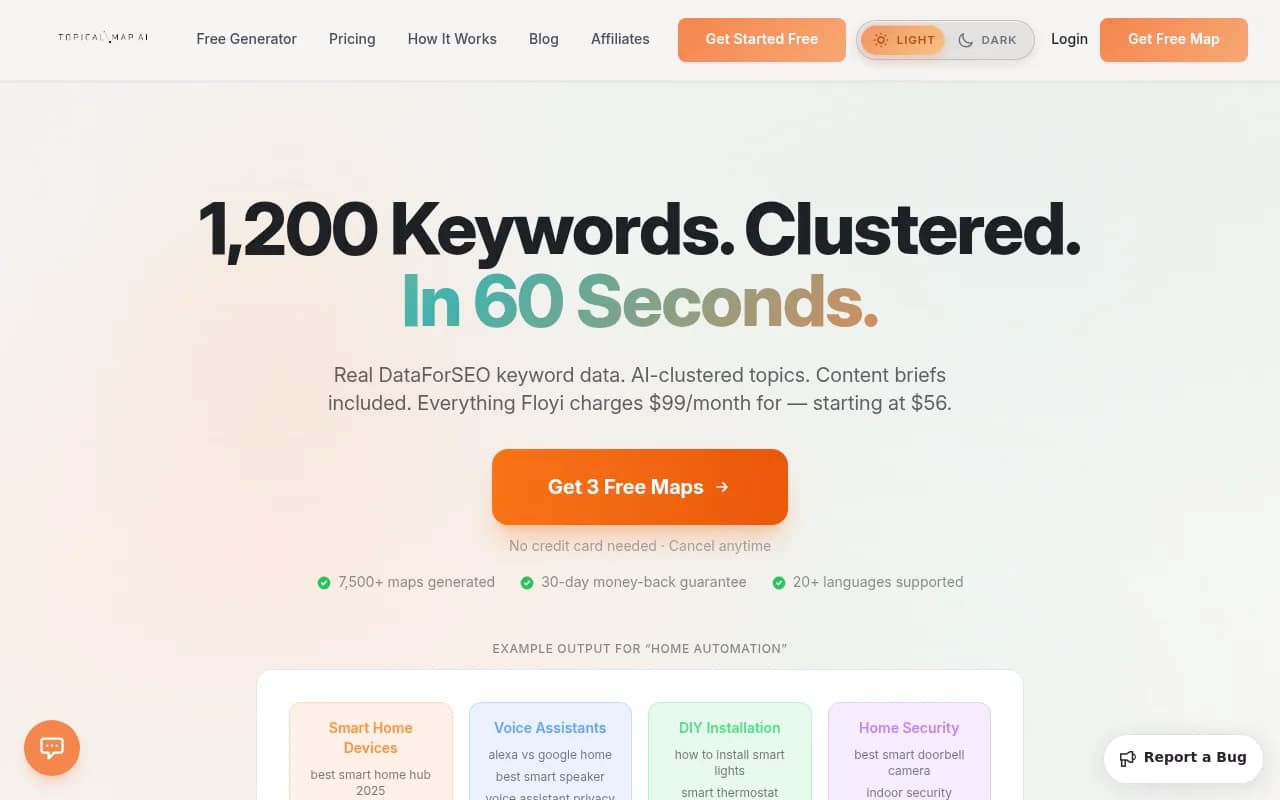
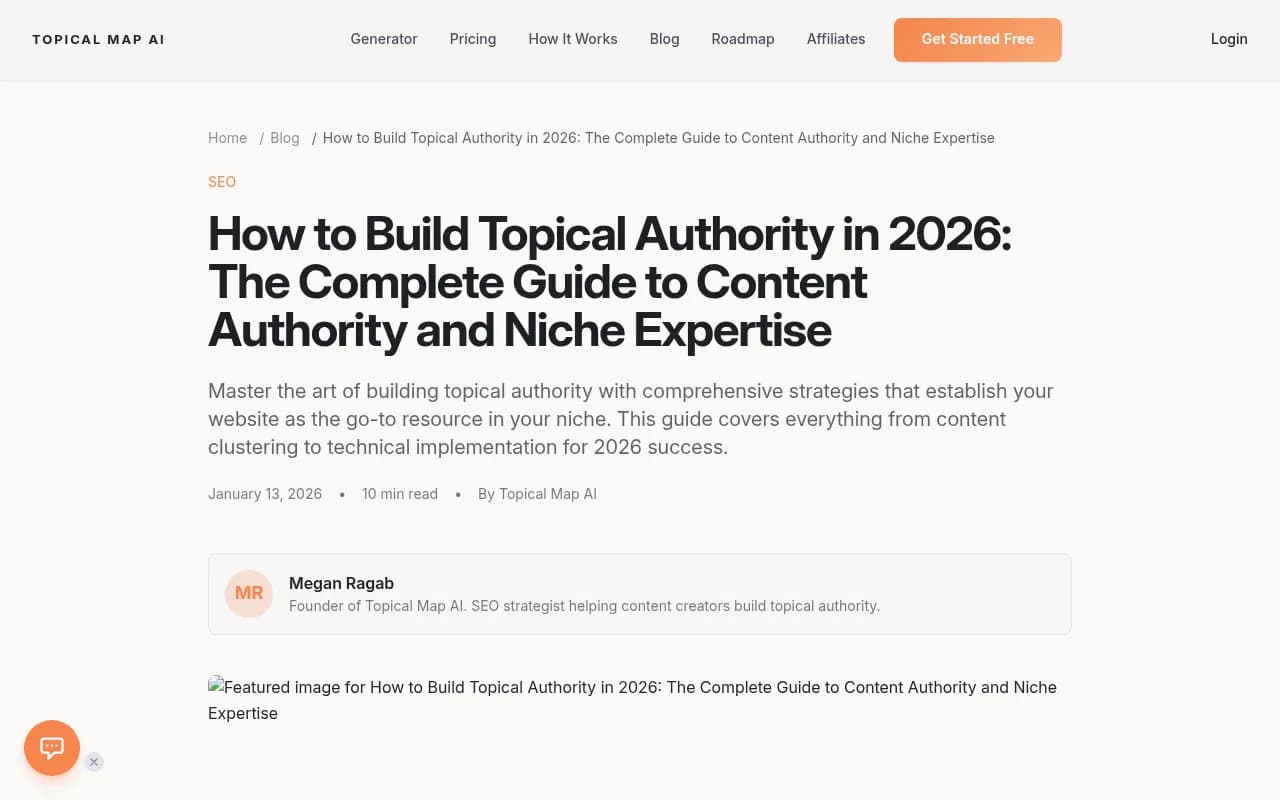
For building out this structure systematically, tools like Topical Map AI are worth looking at. They're designed specifically to map out the content clusters you need to cover a topic completely.
Finding the questions worth answering
One of the most common mistakes is building content hubs around topics you think are important rather than topics your audience is actually asking about. These overlap, but they're not the same thing.
The research process has to go deeper than a keyword tool in 2026. You need to understand:
- What questions people are typing into AI search engines (not just Google)
- Which of those questions currently have no good answer from your site
- Which questions your competitors are being cited for that you're not
That last one is the most actionable. If ChatGPT is recommending a competitor's guide every time someone asks a question in your space, that's a gap you can close. The prompt "what's the best way to [do X in your industry]" is worth testing manually across several AI tools to see who's getting cited and why.
Promptwatch has an Answer Gap Analysis feature built for exactly this -- it shows you which prompts competitors are visible for that you're not, so you can prioritize content creation around real gaps rather than guessing.

For keyword and topic research more broadly, tools like Clearscope and MarketMuse are useful for understanding semantic coverage -- what related concepts and entities need to appear in your content for it to be considered comprehensive.
Writing content that AI actually cites
Getting cited by AI isn't just about having the right topics. The content itself has to meet a higher bar than what passed for "good SEO content" a few years ago.
A few things that genuinely make a difference:
Specificity over generality. "Email deliverability depends on several factors" is useless. "Gmail's spam filter weighs sender reputation, authentication (SPF, DKIM, DMARC), and engagement rates -- in roughly that order of importance" is citable. AI models prefer content that makes specific, verifiable claims.
Answering the follow-up question. When someone asks a question, there's almost always an obvious follow-up. Good content anticipates it. If you're explaining what topical authority is, the next question is "how do I measure it?" If you answer both in the same piece, you're more useful than a page that stops at the definition.
Structured formatting. Headers, numbered lists, and clear paragraph breaks help AI models parse your content. This isn't about gaming anything -- it's just good writing. But it has a real effect on whether your content gets extracted and cited accurately.
Author expertise signals. E-E-A-T (Experience, Expertise, Authoritativeness, Trustworthiness) has been a Google concept for years, but it's increasingly relevant to AI citation too. Author bios, first-person experience, and specific credentials matter. Content that reads like it was written by someone who has actually done the thing tends to perform better than content that reads like a summary of other summaries.
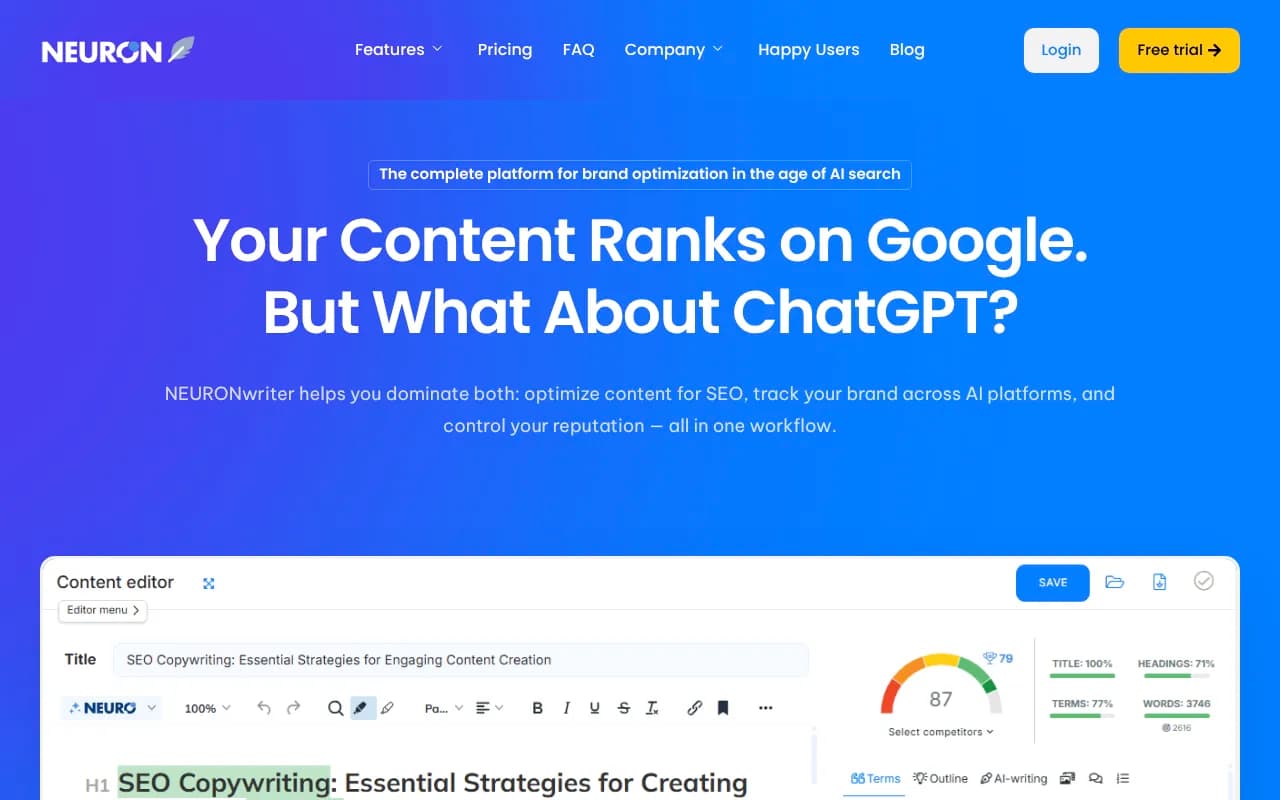
For content optimization and making sure you're hitting the right semantic signals, Surfer SEO and NeuronWriter are both solid options.
Topical authority vs. domain authority in 2026
This is worth addressing directly because a lot of people still treat domain authority (DA) as the primary signal to optimize for.
DA measures your overall link profile strength. It's a proxy for how much the broader web trusts your site. Topical authority measures how comprehensively you've covered a specific subject. They're related but different, and in 2026, topical authority is the more actionable lever for most sites.
Here's the practical reality: a focused site with 30 well-connected articles on a specific topic will often outrank a high-DA generalist site with 3 shallow articles on the same topic -- both in traditional search and in AI citations. The generalist site has more overall authority, but the focused site has more relevant authority for that specific query.
| Signal | What it measures | Who it favors | How to improve it |
|---|---|---|---|
| Domain authority | Overall link profile strength | Established, widely-linked sites | Link building, PR, brand mentions |
| Topical authority | Subject-matter depth and coverage | Focused, comprehensive sites | Content hubs, internal linking, topic depth |
| E-E-A-T | Expertise and trustworthiness signals | Sites with credible authors and real experience | Author bios, first-person content, citations |
| AI citation frequency | How often AI models reference your content | Sites with specific, well-structured answers | All of the above, plus prompt gap analysis |
The good news for smaller sites: topical authority is more achievable than DA. You don't need thousands of backlinks. You need to be the most complete, most useful resource on a specific subject. That's a content problem, not a link-building problem.
Backlinks: still relevant, but not the whole story
One question that comes up constantly: will topical authority replace backlinks entirely?
No. Backlinks remain a trust signal, and they're still part of how AI models evaluate source credibility indirectly (through training data that reflects what the web links to). But the relationship has shifted.
Backlinks used to be the primary ranking factor. Now they're more like a supporting signal. A site with strong topical authority and a modest backlink profile will often outperform a site with a strong backlink profile and weak topical coverage. The combination is still ideal, but if you're choosing where to invest, content depth tends to compound faster than link acquisition for most sites.
Measuring your topical authority
This is where a lot of content strategies fall apart. Teams invest in content hubs, publish consistently, and then... don't really know if it's working. They check Google rankings and call it a day.
In 2026, that's not enough. You need to know:
- Which AI models are citing your content, and for which prompts
- Which prompts your competitors are winning that you're not
- Whether your new content is actually getting picked up by AI crawlers
Traditional rank tracking tools don't answer these questions. You need something built for AI search visibility. Promptwatch tracks your visibility across 10 AI models (ChatGPT, Claude, Perplexity, Gemini, and more), shows you page-level citation data, and logs when AI crawlers actually visit your site. That last part matters more than most people realize -- if AI crawlers aren't finding your content, no amount of topical authority will help.
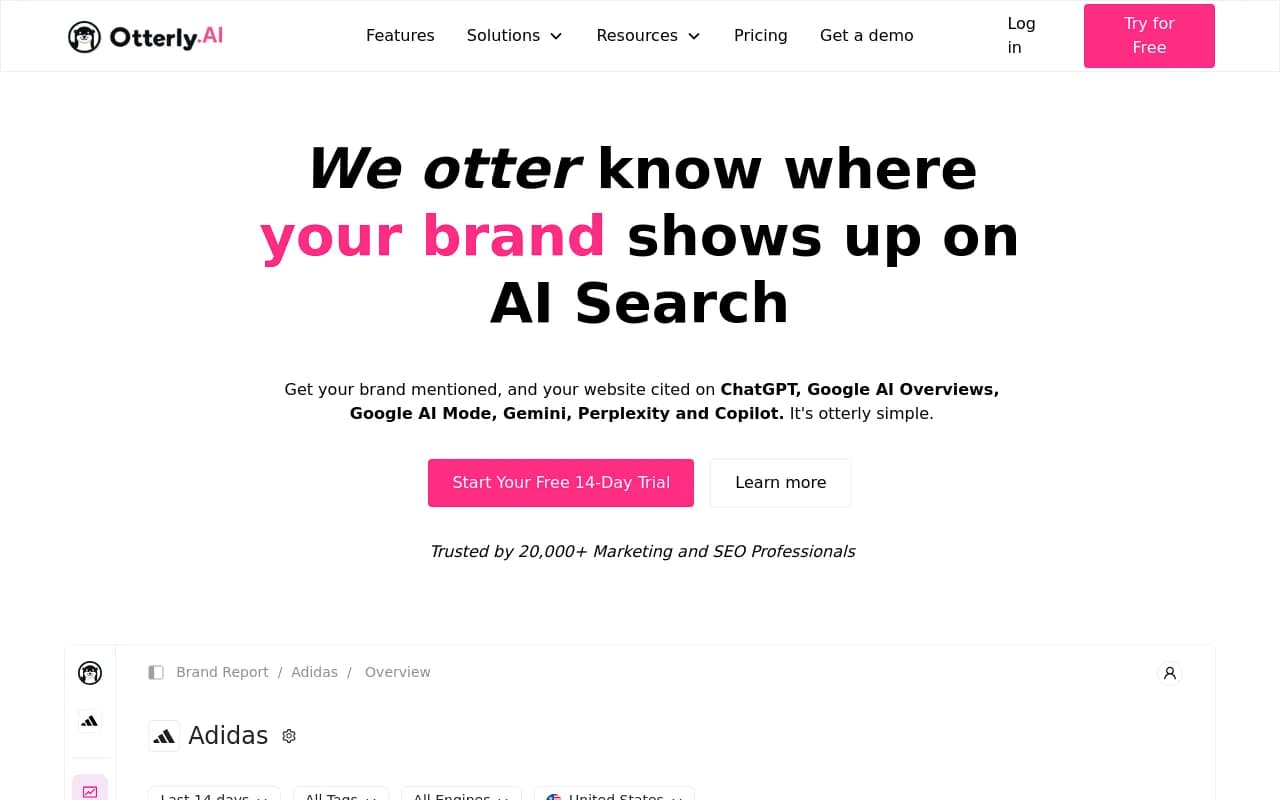
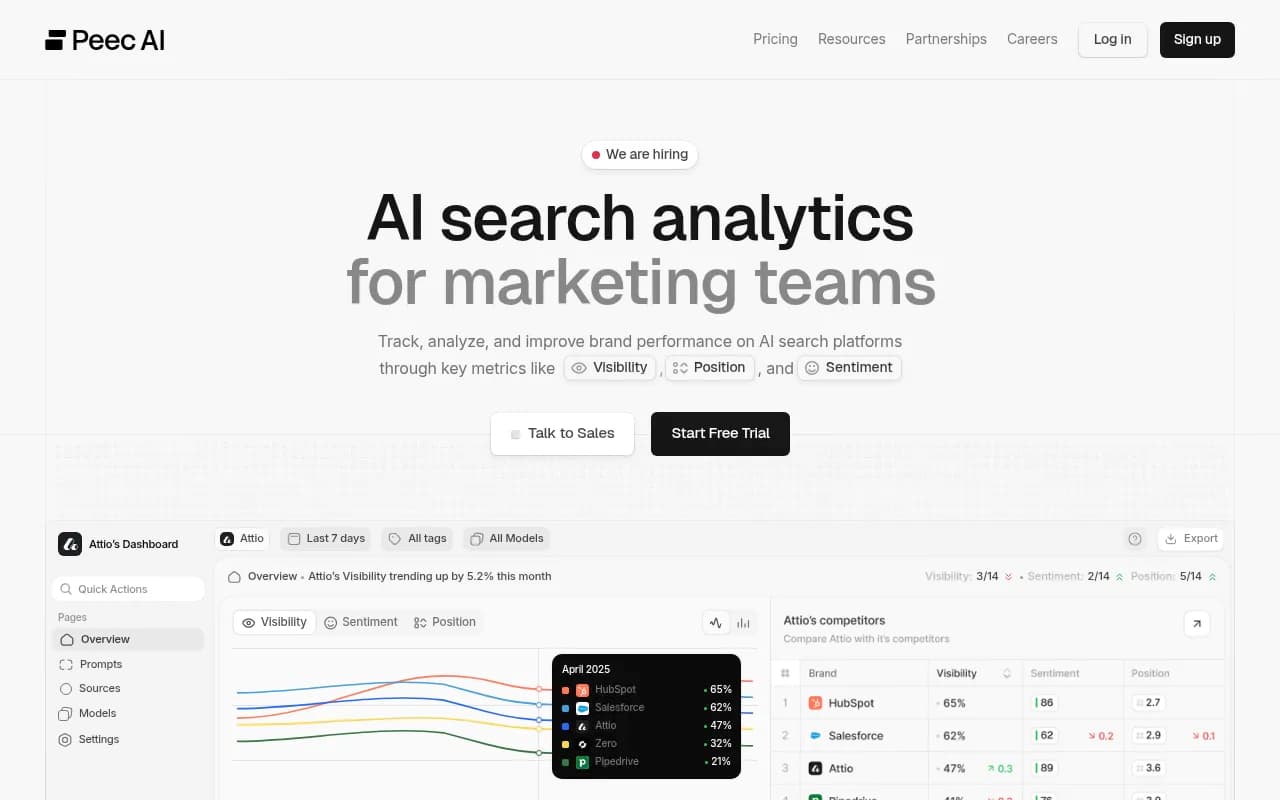
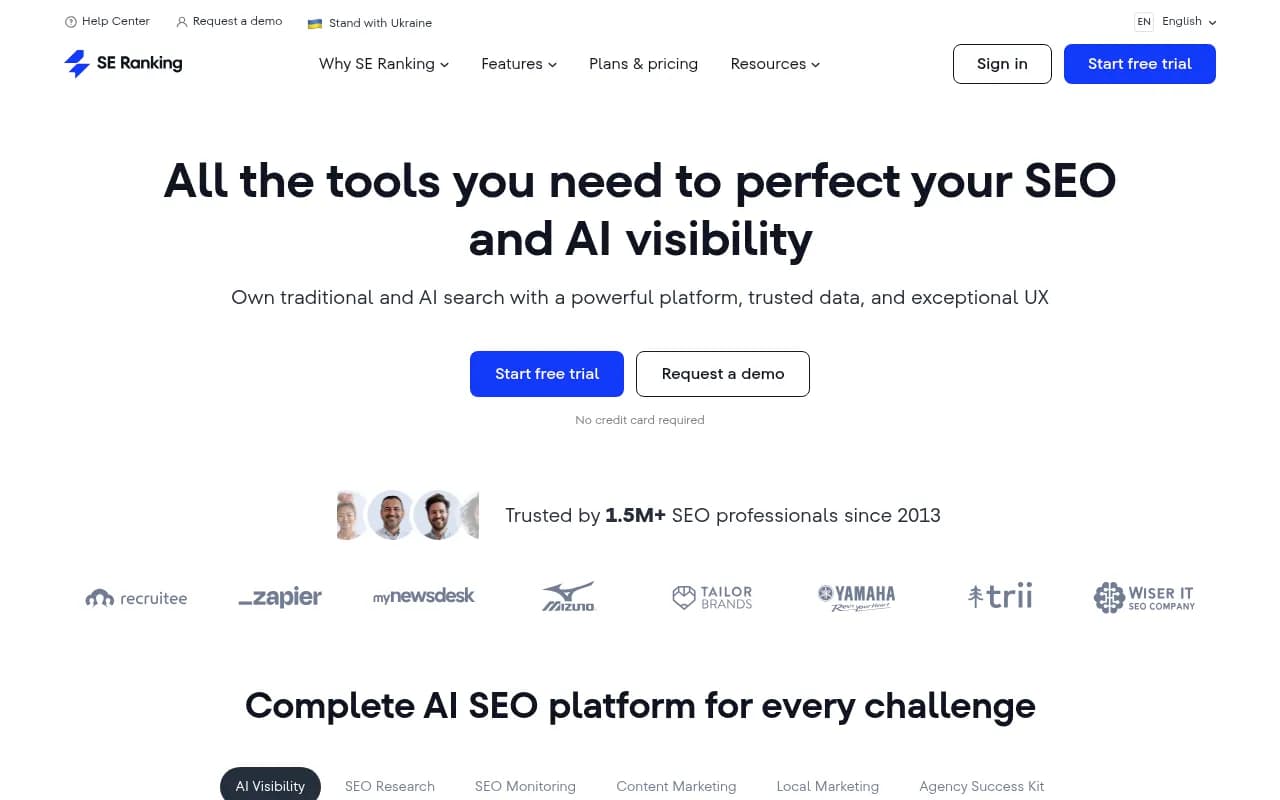
Other tools worth knowing about for AI visibility tracking:
A practical roadmap for building topical authority
If you're starting from scratch or rebuilding a content strategy, here's a sequence that works:
Step 1: Pick a specific niche. Not "marketing" -- "email deliverability for SaaS companies." Not "fitness" -- "strength training for people over 40." The narrower your focus, the faster you build genuine authority. You can expand later.
Step 2: Map the topic completely. List every question, subtopic, comparison, and use case within your niche. Tools like Topical Map AI can automate a lot of this. The goal is a complete map of everything someone might want to know, from beginner to expert.
Step 3: Audit what you already have. Match your existing content against the map. Identify gaps, thin content that needs expanding, and pages that should be consolidated.
Step 4: Build the pillar first. Create your comprehensive pillar page before the cluster content. It sets the structure and gives you something to link cluster pages back to.
Step 5: Fill in the clusters systematically. Work through your topic map methodically. Don't publish 50 articles in a week -- publish consistently over time. AI models (and Google) reward freshness and consistency, not bursts.
Step 6: Link everything together. Every cluster page links to the pillar. The pillar links to every cluster. Clusters link to each other where relevant. This is non-negotiable.
Step 7: Track your AI visibility. Set up monitoring for the prompts that matter to your business. Watch which pages get cited, which don't, and use that data to prioritize your next round of content.
Tools that help at each stage
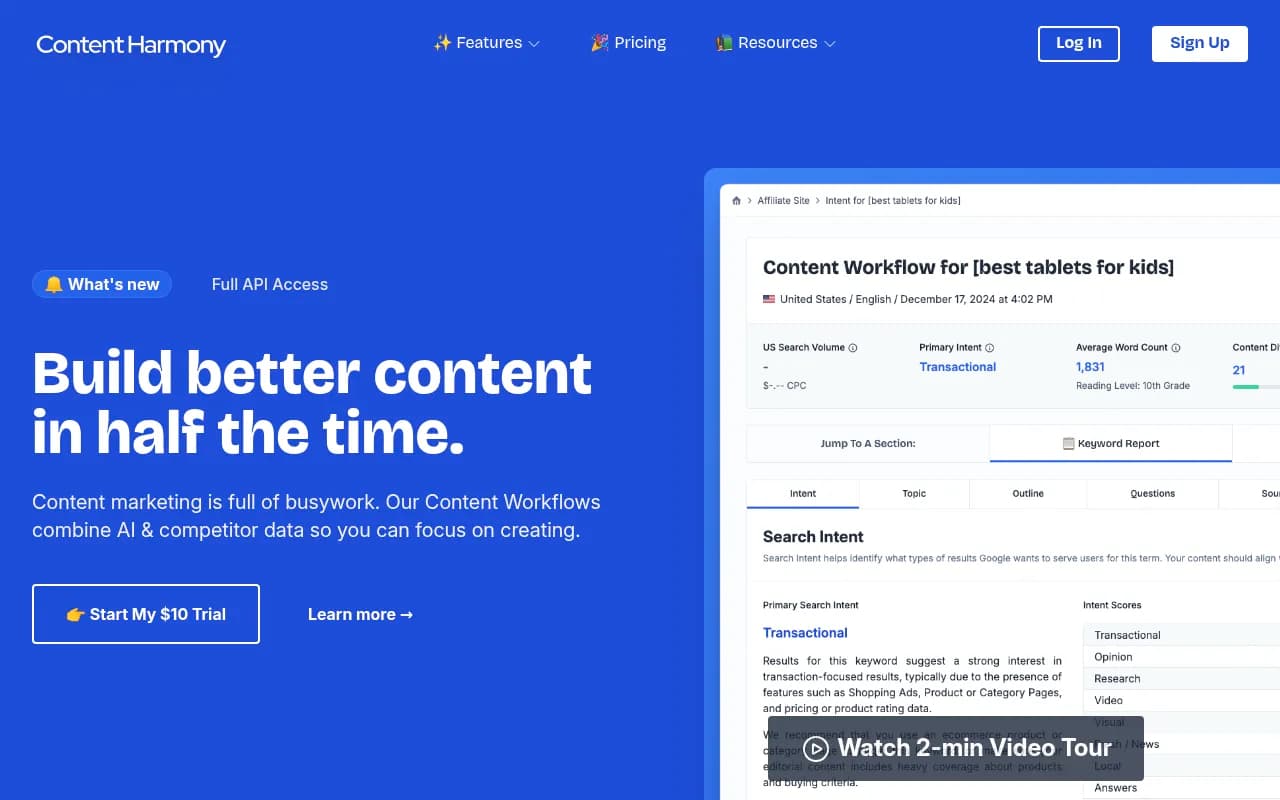
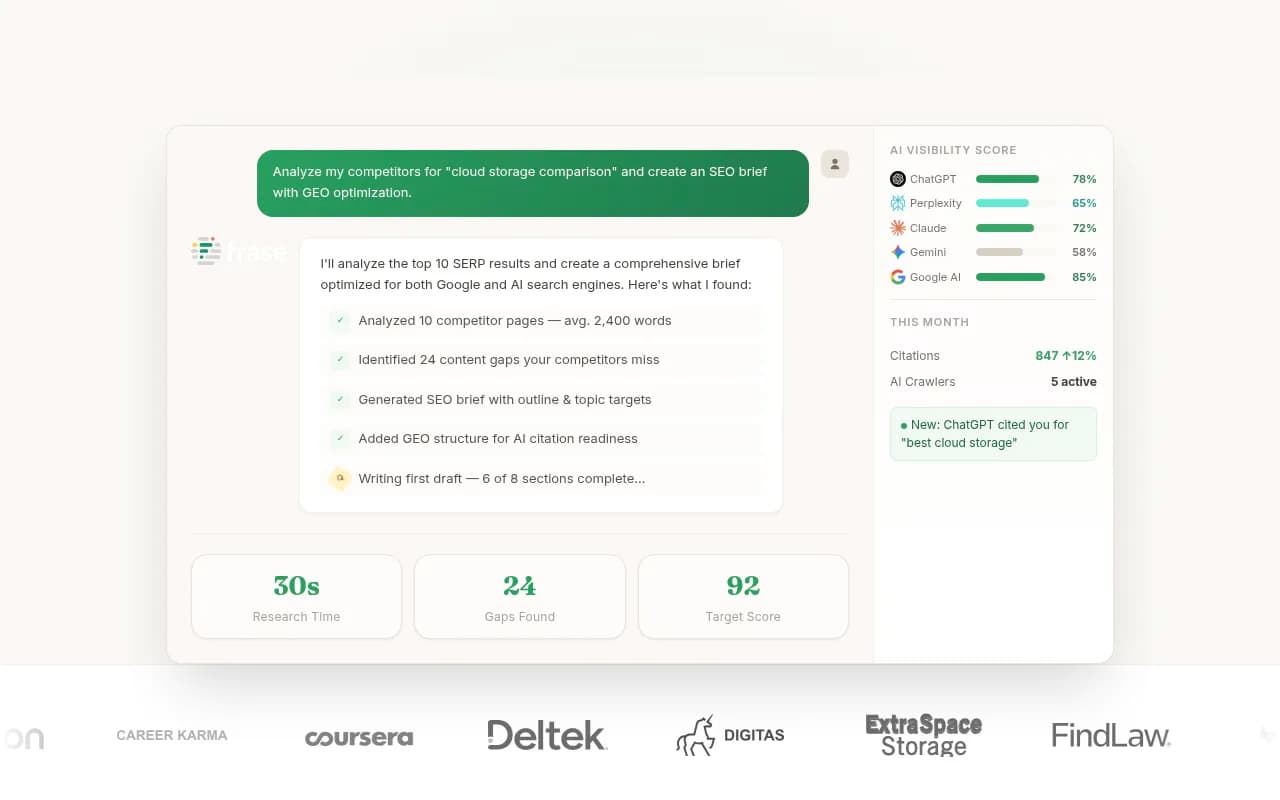
Here's a quick reference for the tools mentioned in this guide, organized by where they fit in the process:
| Stage | Tool | What it does |
|---|---|---|
| Topic mapping | Topical Map AI | Maps out complete content clusters for a topic |
| Keyword research | Clearscope, MarketMuse | Identifies semantic coverage gaps |
| Content writing | Surfer SEO, NeuronWriter | Optimizes content for topical depth and relevance |
| AI gap analysis | Promptwatch | Shows which prompts competitors win that you don't |
| AI visibility tracking | Promptwatch, Otterly.AI, SE Ranking | Monitors citations across AI models |
| Content brief creation | Content Harmony, Frase | Builds research-backed briefs for writers |
The bottom line
Topical authority in 2026 is not a trend or a nice-to-have. It's the mechanism by which AI search engines decide who to trust. The sites getting cited repeatedly by ChatGPT, Perplexity, and Google AI Overviews aren't necessarily the biggest or the most linked-to. They're the ones that have built the most complete, most useful, most well-connected knowledge base on their subject.
That's achievable for almost any site willing to commit to the work. Pick a specific niche, map it completely, build the content hub, link it together, and track what's happening in AI search. The compounding effect of genuine topical authority -- in both traditional and AI search -- is real, and it builds over time in a way that keyword tricks never did.