Key takeaways
- ChatGPT Shopping processes over 50 million daily queries and uses a fundamentally different ranking logic than Google -- structured product data, third-party reviews, and conversational context matter more than backlinks.
- Google Shopping still dominates purchase-ready traffic through its merchant feed ecosystem, but Google AI Mode is rapidly blending conversational discovery with traditional shopping ads.
- The two channels are increasingly complementary, not competing: ChatGPT handles early-stage discovery and shortlisting, while Google captures bottom-of-funnel intent.
- Semrush research confirmed that ChatGPT actually runs shopping queries through Google Shopping behind the scenes -- meaning your Google Merchant feed quality affects both platforms.
- Tracking visibility across both requires different tools: Google Search Console for traditional Shopping, and dedicated AI visibility platforms for ChatGPT and other LLMs.
The discovery shift nobody fully anticipated
Two years ago, the idea that ChatGPT would become a serious product discovery channel felt speculative. Now it's just a fact. OpenAI confirmed that ChatGPT handles more than 50 million shopping-related queries every day. That's not a rounding error -- that's a channel.
But "ChatGPT is competing with Google Shopping" is an oversimplification that leads to bad strategy. The two platforms work differently, attract users at different stages of the buying journey, and reward completely different optimization approaches. If you're treating them the same way, you're probably losing visibility on both.
This guide breaks down exactly how each platform works for product discovery in 2026, where they overlap, and -- critically -- how to track what's actually happening to your brand on each one.
How ChatGPT Shopping actually works
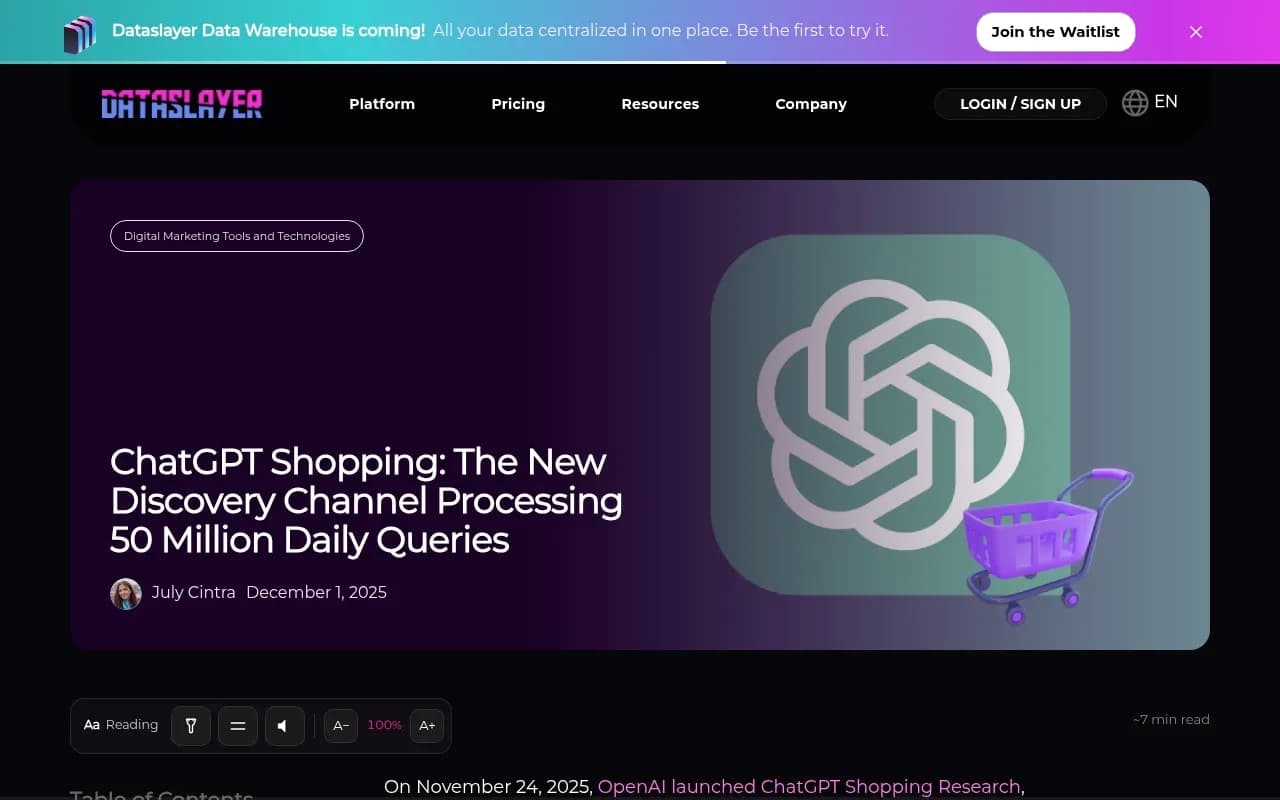
ChatGPT's shopping experience isn't a traditional search results page. When a user asks something like "what's the best noise-canceling headphone under $200 for commuting," ChatGPT doesn't return a list of links. It builds a shortlist, explains tradeoffs, and presents product cards with images, prices, and direct purchase links.
OpenAI's Agentic Commerce Protocol powers the richer end of this experience -- enabling side-by-side comparisons, visual product cards, and in some cases direct checkout flows. But the underlying data sourcing is more interesting than the interface.
Semrush ran an experiment and confirmed something counterintuitive: ChatGPT runs shopping queries through Google Shopping to pull product data. So your Google Merchant feed isn't just a Google asset -- it feeds ChatGPT recommendations too. Clean, complete product data in your feed directly affects whether you show up in ChatGPT's responses.
Beyond the feed, ChatGPT weighs a few other signals heavily:
- Third-party reviews: Reddit discussions, review sites, YouTube comparisons. ChatGPT is trained on this content and actively surfaces it. A product with strong organic review coverage across the web has a real advantage.
- Structured data on your product pages: Schema markup (Product, Offer, AggregateRating) helps AI crawlers understand your inventory at a granular level.
- Brand authority in conversational contexts: If your brand gets mentioned in editorial content, buying guides, and forum discussions, you're more likely to appear in ChatGPT's shortlists.
One thing ChatGPT Shopping doesn't care about: your Google Ads budget. There's no paid placement in ChatGPT's organic recommendations (though OpenAI has signaled that sponsored placements are coming). Right now, it's purely merit-based -- which is either exciting or alarming depending on where you sit.
The Amazon blackout problem
There's a notable quirk worth understanding. Amazon products are largely absent from ChatGPT Shopping recommendations. This isn't accidental -- it reflects the ongoing tension between OpenAI and Amazon's data agreements. For brands that sell primarily through Amazon, this is a real gap. For direct-to-consumer brands with their own product pages, it's an opening.
Which categories perform best on ChatGPT Shopping
Not all product categories get equal treatment. ChatGPT Shopping tends to perform best for:
- Electronics and tech accessories (high review volume, lots of comparison content)
- Home and kitchen appliances
- Health and wellness products
- Outdoor and sporting goods
Categories with thin review ecosystems or highly commoditized products (think basic office supplies) tend to get less nuanced ChatGPT treatment. The model needs enough third-party signal to form a recommendation.
How Google Shopping works in 2026
Google Shopping is a mature, well-understood channel. Merchants submit product feeds through Google Merchant Center, and Google surfaces product listings in Shopping tabs, search results, and increasingly within AI Overviews and Google AI Mode.
The ranking factors are well-documented: feed quality (title optimization, accurate attributes, complete variant data), bid strategy for paid placements, product reviews through Google's review programs, and landing page relevance.
What's changed in 2026 is the AI layer on top. Google AI Mode -- Google's conversational search interface -- now pulls from Shopping feeds to answer product questions in a way that looks a lot like ChatGPT Shopping. A user asking "what running shoe is best for flat feet and wet trails" might get an AI-generated recommendation with product cards, not just a list of links.
Google's advantage here is structural: their shopping ecosystem has years of merchant feed data, variant-level detail, and deep integration with Google Ads. The AI layer is being built on top of an already-rich data foundation.
Google AI Mode vs ChatGPT Shopping: the key differences
| Feature | ChatGPT Shopping | Google AI Mode / Shopping |
|---|---|---|
| Data source | Google Shopping feed + web crawl | Google Merchant Center feed |
| Paid placement | Not yet (coming) | Yes, via Shopping Ads |
| Review signals | Heavy weight on third-party web reviews | Google Reviews + feed data |
| Purchase intent stage | Early discovery / shortlisting | Mid to late funnel |
| Amazon products | Largely absent | Included |
| Variant-level data | Limited | Strong |
| Conversational interface | Native | Emerging (AI Mode) |
| Tracking tools | AI visibility platforms | Google Search Console, Merchant Center |
Where the two channels overlap (and where they don't)
The most important thing to understand about ChatGPT Shopping vs Google Shopping is that they're not fighting over the same user at the same moment.
ChatGPT Shopping tends to capture users in the research phase. Someone who doesn't know what they want yet -- "I need a gift for a cyclist who already has everything" -- is a ChatGPT Shopping user. The conversation helps them figure out what they're looking for. By the time they have a specific product in mind, they often move to Google to find the best price or a trusted retailer.
This means the funnel looks something like:
- Discovery and shortlisting: ChatGPT
- Price comparison and purchase: Google Shopping
If you're only optimizing for Google, you're invisible during the moment when preferences are being formed. That's a problem, especially for higher-consideration purchases.
There's also the feed overlap to account for. Since ChatGPT pulls from Google Shopping data, a well-optimized Google Merchant feed improves your odds on both platforms simultaneously. This is the most efficient place to start if you're resource-constrained.
What it takes to show up on each platform
Showing up on ChatGPT Shopping
The optimization logic here is different from traditional SEO. You're not chasing keywords -- you're building the kind of brand presence that AI models trust.
Practically, that means:
- Get your product schema right. Product, Offer, and AggregateRating schema on every product page. This is table stakes.
- Build review coverage outside your own site. ChatGPT surfaces products that have strong third-party validation. That means review sites, Reddit threads, YouTube comparisons, and editorial buying guides all matter. A product with 200 Amazon reviews and nothing else is less visible than one with 50 reviews spread across multiple independent sources.
- Optimize your Google Merchant feed. Since ChatGPT uses Google Shopping data, feed quality directly affects ChatGPT visibility. Descriptive titles, accurate GTINs, complete attribute sets, and high-quality images all help.
- Publish content that answers buying questions. Blog posts, comparison guides, and FAQ pages that address the questions buyers ask in conversational AI searches give the model something to cite.
Showing up on Google Shopping
This is better-documented territory, but the AI layer adds some new considerations:
- Feed optimization is still foundational. Product title structure, attribute completeness, and feed health directly affect both organic Shopping and AI Mode recommendations.
- Google Reviews matter more than they used to. AI Mode weighs review data when forming recommendations. Collecting reviews through Google's approved programs is worth the effort.
- Landing page quality. Google AI Mode, like traditional Shopping, considers the quality and relevance of the destination page. Thin product pages hurt.
- Structured data. Same as ChatGPT -- Product schema helps Google's AI layer understand your inventory.
How to track your visibility on both
This is where most brands are flying blind. Google Shopping visibility is relatively easy to measure -- Google Search Console, Merchant Center diagnostics, and standard analytics cover it well.
Google Search Console is the obvious starting point for the Google side.
ChatGPT Shopping visibility is harder. There's no native analytics dashboard that tells you when ChatGPT recommends your product. You're essentially invisible to your own analytics unless you're specifically tracking AI-referred traffic and citation patterns.
A few approaches work:
UTM tracking on product pages: Some AI shopping referrals show up in analytics as direct traffic or with referrer data from chat.openai.com. Adding UTM parameters to your product URLs in your Merchant feed can help capture some of this.
AI visibility platforms: This is the more systematic approach. Tools built specifically for tracking AI search visibility can show you when and how often your brand appears in ChatGPT, Perplexity, and other LLM responses -- including shopping-related queries.
Promptwatch tracks ChatGPT Shopping appearances specifically, including when your brand shows up in product recommendations and shopping carousels. It also shows you which prompts your competitors are winning that you're not -- which is genuinely useful for figuring out where your product content has gaps.

For brands that want a broader view of AI search visibility beyond just shopping, a few other platforms are worth knowing about:

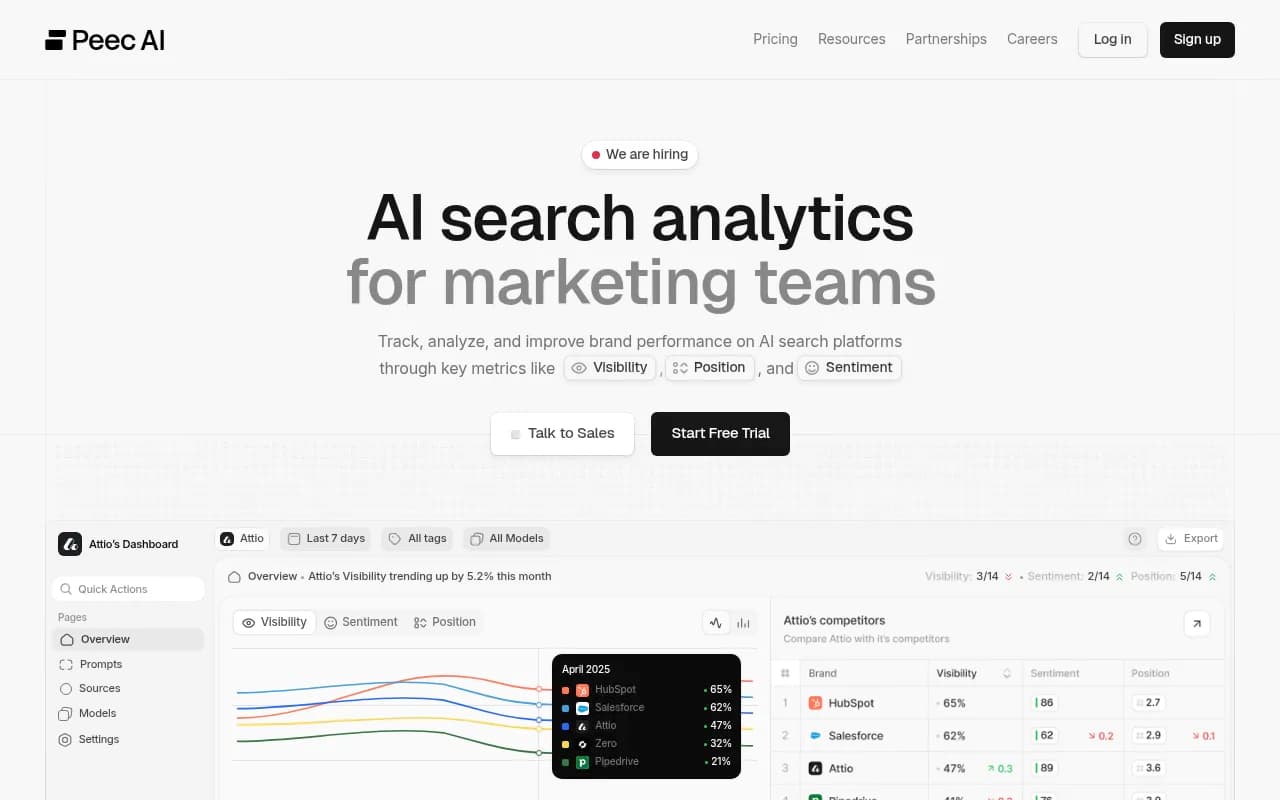
The key difference between these tools and just watching your analytics: they actively query AI models with shopping-related prompts and track whether your brand appears. You get visibility data proactively, not just when someone happens to click through.
The review ecosystem: the hidden lever
Both platforms weight reviews heavily, but in different ways. Google Shopping uses structured review data from approved partners and Google's own review system. ChatGPT is more promiscuous -- it pulls from Reddit, YouTube, independent review sites, and editorial content across the web.
This means your review strategy needs to be multi-channel. Getting reviews only on Google or only on Amazon isn't enough for ChatGPT visibility. You want:
- Independent review site coverage (Wirecutter, RTINGS, niche category sites)
- Reddit discussions that mention your product favorably
- YouTube reviews from creators with decent authority
- Your own editorial content (comparison guides, buying guides) that gets crawled and cited
The brands that are winning ChatGPT Shopping in 2026 tend to have strong organic review ecosystems built over years -- not because they gamed AI, but because they built real product credibility. The AI is just surfacing what was already there.
Practical recommendations by role
If you run an e-commerce brand
Start with your Google Merchant feed. Clean it up, complete every attribute, write descriptive titles that include use-case language (not just model numbers). This single investment improves both Google Shopping and ChatGPT visibility simultaneously.
Then audit your review coverage. Where does your product appear in third-party content? Where are the gaps? A targeted outreach to review sites and YouTube creators in your category is worth more for ChatGPT visibility than most traditional SEO tactics.
If you're an SEO or digital marketing manager
Add AI visibility tracking to your reporting stack. You can't optimize what you can't measure. Set up tracking for your key product categories across ChatGPT and other LLMs -- even basic monitoring will surface gaps you didn't know existed.
Tools like Semrush cover the Google side well.
For the AI side, you need something purpose-built.
If you're at an agency managing multiple e-commerce clients
The clients who are asking about ChatGPT Shopping visibility are ahead of the curve. The ones who aren't asking yet will be asking in six months. Building an AI visibility reporting capability now -- using platforms that track LLM citations and shopping appearances -- is a real differentiator.
What's coming next
OpenAI has signaled that paid placements in ChatGPT Shopping are on the roadmap. When that happens, the channel will start to look more like Google Shopping -- with both organic and paid components. Brands that have already built organic visibility will have a head start when paid options arrive.
Google, meanwhile, is pushing AI Mode harder. The line between "Google Shopping" and "Google AI Mode shopping recommendations" is blurring. The optimization principles are converging: structured data, review signals, feed quality, and authoritative content all matter for both.
The practical upshot: the brands investing in product data quality, review ecosystems, and structured markup right now are building assets that compound across both channels. The ones waiting to see how this shakes out are ceding ground that gets harder to recover.
Track both. Optimize both. The infrastructure is different but the underlying principle is the same -- be the most credible, well-documented option when a buyer is forming their shortlist.