Key takeaways
- Over 51% of B2B software buyers now start vendor research in an AI chatbot, making AI search visibility a pipeline issue, not just an SEO metric.
- Profound is a solid enterprise platform, but it's primarily a monitoring tool -- it shows you where you're invisible but leaves the fixing to you.
- The most important distinction when evaluating any alternative: does it help you act on the data, or just show it to you?
- For B2B SaaS specifically, buyer research queries (comparisons, "best X for Y" prompts, use-case questions) are where deals are won or lost in AI search.
- The platforms below range from lightweight trackers to full optimization suites -- the right one depends on your team's capacity to execute.
Why B2B SaaS teams are rethinking Profound in 2026
Profound built a real product. Enterprise teams use it, and it does what it says: tracks your brand across AI search engines, shows you competitor share of voice, and gives you a clean dashboard to monitor trends. If you need to report AI visibility to a CMO, it works.
The problem is what happens after you see the data.
A buyer at a 500-person company types "best project management software for remote engineering teams" into ChatGPT. Your competitor gets recommended. You don't. Profound shows you that gap. Then it stops. What you do next -- which content to write, which prompts to target, which pages to fix -- is entirely on you.
For B2B SaaS teams with a dedicated SEO strategist and content team, that's fine. For everyone else, it's a frustrating loop of accurate data and no clear path forward.
There's also a pricing reality. Profound sits at the enterprise end of the market. Teams at earlier stages, or agencies managing multiple SaaS clients, often find themselves paying for depth they can't fully use.
The alternatives below were chosen specifically for B2B SaaS use cases: buyer comparison queries, use-case prompts, category-level visibility, and the ability to act on what you find.
The monitoring vs. optimization gap (and why it matters for B2B)
Before getting into specific tools, this distinction is worth spending a minute on because it determines whether a tool actually moves your pipeline.
Monitoring tools run your prompts on a schedule, log whether your brand appeared, and show you trend lines. Mention rate, sentiment, share of voice. All real, all worth knowing. None of it tells you what to do.
Optimization tools go further. They identify which prompts you're missing, why competitors are winning those prompts, what content gaps are causing the problem, and sometimes generate the content to fix it.
For B2B SaaS, this matters more than in most categories. Buyer research queries are specific and high-intent: "what's the best CRM for early-stage SaaS," "Salesforce vs HubSpot for a 50-person company," "tools for reducing churn in B2B subscriptions." AI models answer these with specific recommendations. If your content doesn't directly address those questions, you won't appear -- and no amount of monitoring will change that.
The tools below are ranked roughly by how far they go beyond monitoring.
7 Profound alternatives worth evaluating
1. Promptwatch
Promptwatch is the most complete alternative if your goal is to close the loop between visibility data and content execution. It tracks AI responses across 10 models (ChatGPT, Perplexity, Claude, Gemini, Grok, DeepSeek, and others), but the part that separates it from Profound is what happens after tracking.
The Answer Gap Analysis shows you exactly which prompts competitors rank for that you don't -- not as a vague category observation, but as specific questions with prompt volume estimates and difficulty scores. From there, Content Agents generate articles, comparisons, and briefs built around those specific gaps, grounded in real citation data and competitor analysis.
For B2B SaaS teams, the AI Crawler Logs are particularly useful. You can see which pages ChatGPT or Perplexity's crawlers are reading, how often they return, and when a page moves from "crawled" to "cited." That's a level of technical visibility that most tools -- including Profound -- don't offer.
It also tracks Reddit threads and YouTube content that influence AI recommendations, which matters because AI models frequently cite community discussions when answering vendor comparison queries.
Pricing starts at $99/month for the Essential plan (1 site, 50 prompts, 5 articles), with Professional at $249/month adding crawler logs and multi-location tracking.

2. Profound AI
Worth naming directly since this is the tool being compared. Profound's strengths are real: clean enterprise UX, solid multi-model tracking, good competitor share-of-voice reporting, and a team that clearly understands the AI search space. If you're at a large B2B SaaS company and need a monitoring-first tool with strong reporting for stakeholders, it's a reasonable choice.
The gaps: no content generation, no crawler log visibility, no Reddit/YouTube tracking, and pricing that puts it out of reach for most growth-stage teams. It's also worth noting that Profound's prompt tracking uses fixed prompt sets in some configurations, which can miss the long-tail buyer research queries that actually drive B2B pipeline.
3. Athena HQ
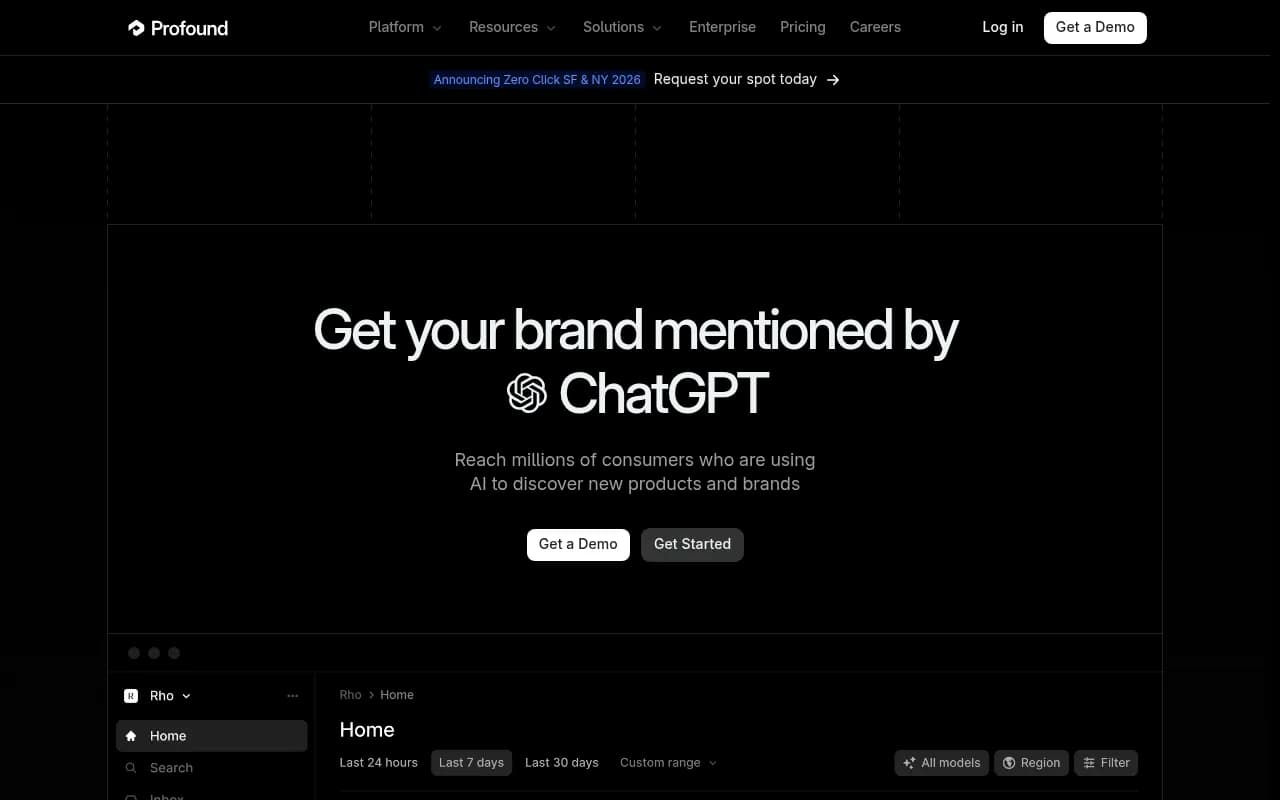
AthenaHQ sits in a similar tier to Profound -- enterprise-focused, strong monitoring, good multi-model coverage. It's particularly well-regarded for brand sentiment tracking and competitive benchmarking across AI platforms.
Where it falls short for B2B SaaS is the same place Profound does: it's a monitoring platform. There's no content gap analysis, no generation tooling, and no path from "you're invisible for this prompt" to "here's what to do about it." If your team has the internal capacity to translate monitoring data into content strategy, AthenaHQ is worth a look. If you need the tool to help you execute, it won't.
4. Scrunch AI
Scrunch takes a slightly different angle -- it focuses on how AI models perceive and represent your brand, not just whether they mention you. For B2B SaaS, this matters because AI models can mention your product while describing it inaccurately, in the wrong category, or with outdated positioning.
The platform tracks sentiment, accuracy of AI-generated descriptions, and how your brand narrative compares to competitors across models. It's a useful complement to pure visibility tracking, especially for companies going through a repositioning or entering a new category.
The limitation is scope: Scrunch is strong on brand perception but lighter on the prompt-level tracking and content optimization that B2B SaaS teams need for buyer research queries specifically.
5. Otterly.AI
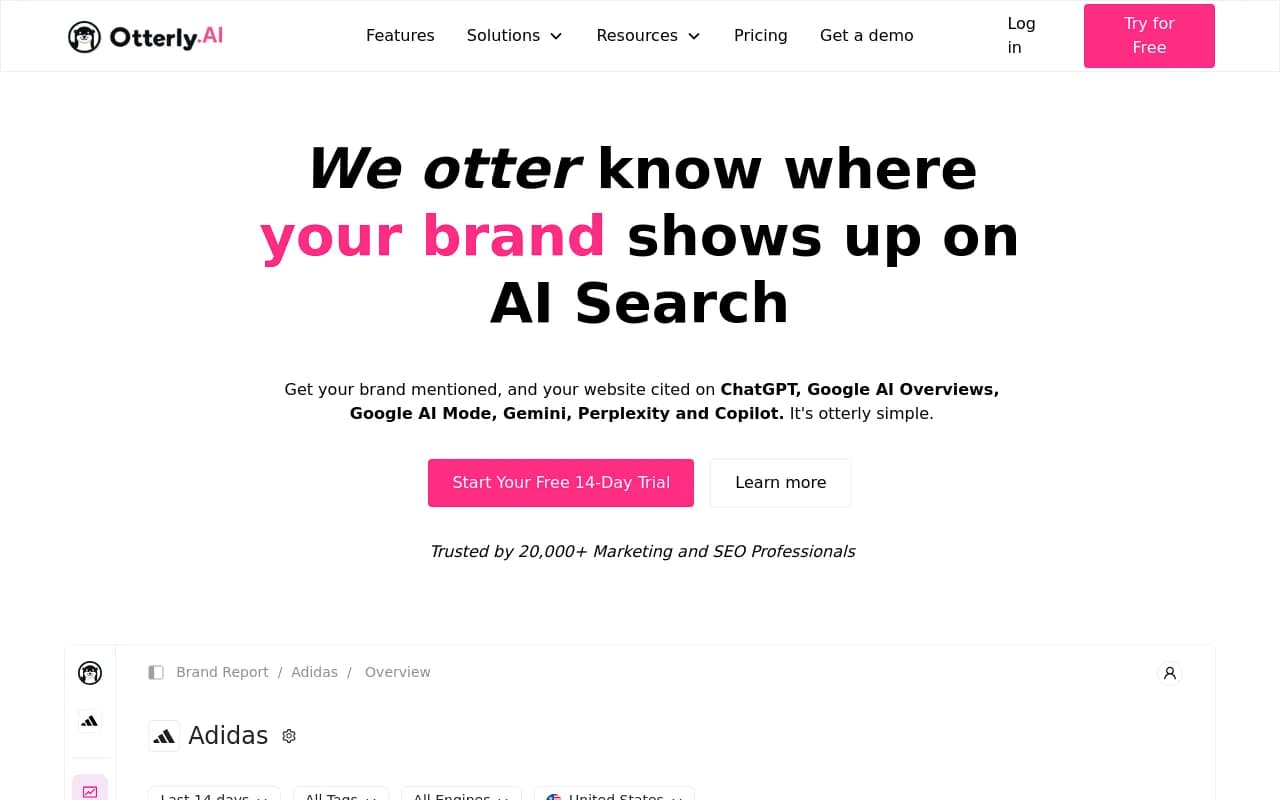
Otterly is the most accessible entry point on this list. It's affordable, straightforward, and does basic AI visibility monitoring well. You set up prompts, it tracks them across ChatGPT and Perplexity, and you get a clean view of mention rates over time.
For a B2B SaaS team that's just starting to think about AI search visibility and wants to understand the baseline before committing to a more expensive platform, Otterly makes sense. It's also useful for agencies that need a lightweight tool to show clients their current AI visibility before pitching a more involved engagement.
The ceiling is low, though. No content generation, no gap analysis, no crawler data, no Reddit tracking. Once you've established your baseline and want to improve it, you'll outgrow Otterly quickly.
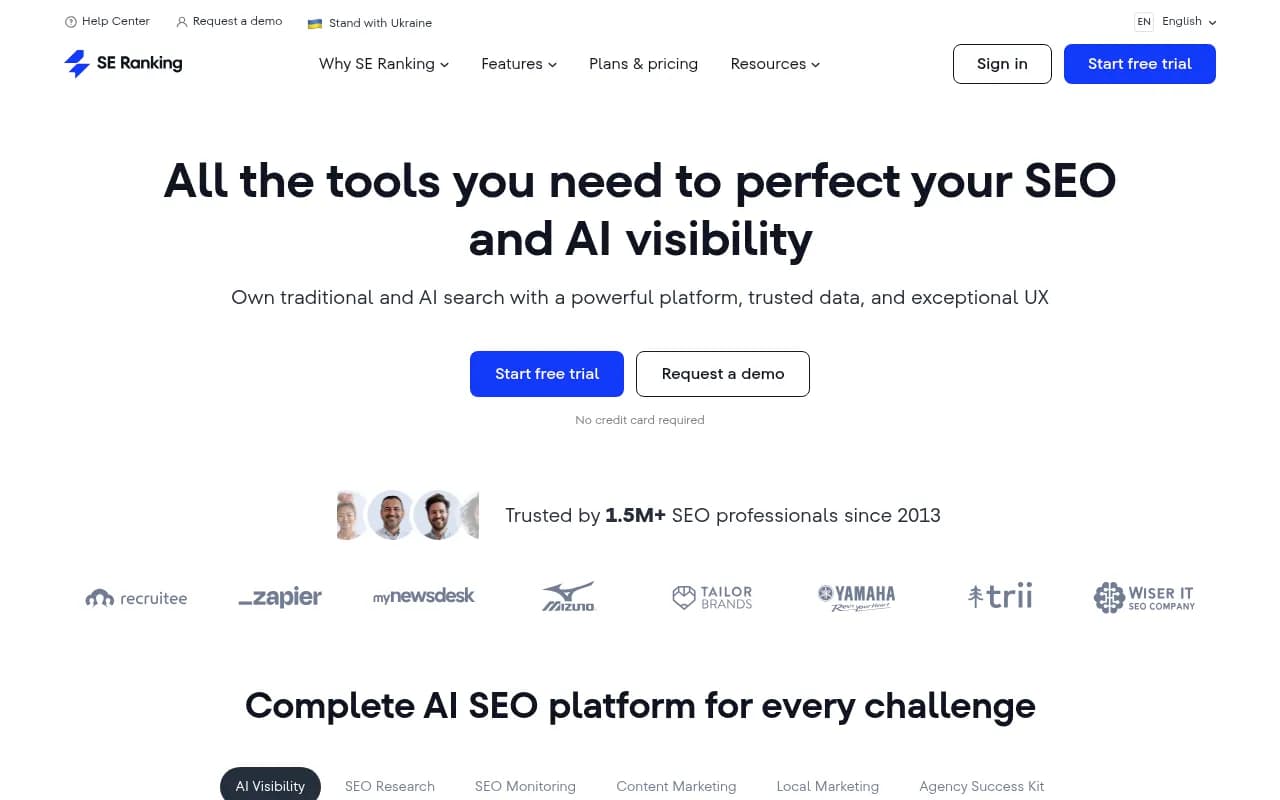
6. SE Ranking (AI Visibility module)
SE Ranking has been building out its AI visibility features steadily, and for teams already using it for traditional SEO, the AI module is a natural extension. It tracks brand mentions across AI search engines, shows share of voice against competitors, and integrates that data with your existing keyword and ranking data.
The B2B SaaS use case where SE Ranking shines is when you want to correlate traditional search performance with AI visibility -- seeing whether pages that rank well in Google are also being cited in AI answers, and where the gaps are. That cross-channel view is genuinely useful.
It's not a pure GEO tool, so the AI visibility features aren't as deep as dedicated platforms. But if you're already paying for SE Ranking and want to add AI monitoring without a separate subscription, it's worth turning on.
7. Relixir
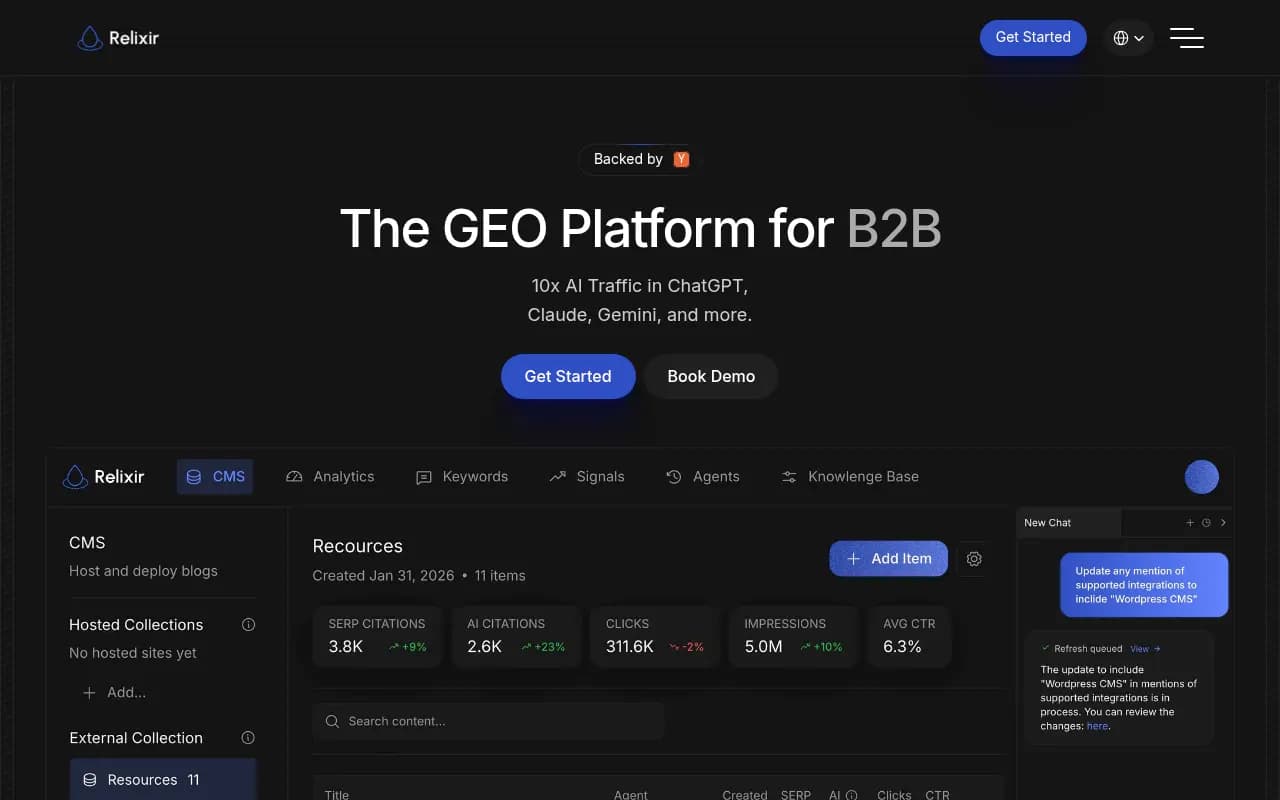
Relixir is one of the newer entrants on this list but worth including because it's built specifically around the optimization side of the problem. It tracks AI visibility, identifies content gaps, and generates content to fill them -- a similar loop to Promptwatch but with a different interface and pricing structure.
For B2B SaaS teams at the growth stage who want an optimization-first tool without enterprise pricing, Relixir is worth evaluating. The platform is earlier in its development than some others here, which means the feature set is still maturing, but the core loop -- find gaps, generate content, track results -- is there.
How these platforms compare
| Platform | Monitoring | Content generation | Crawler logs | Reddit/YouTube tracking | B2B SaaS fit | Starting price |
|---|---|---|---|---|---|---|
| Promptwatch | Yes (10 models) | Yes (Content Agents) | Yes | Yes | Strong | $99/mo |
| Profound AI | Yes (multi-model) | No | No | No | Strong (enterprise) | Custom |
| AthenaHQ | Yes (multi-model) | No | No | No | Moderate | Custom |
| Scrunch AI | Yes (sentiment focus) | No | No | No | Moderate | Custom |
| Otterly.AI | Yes (basic) | No | No | No | Entry-level | ~$49/mo |
| SE Ranking | Yes (AI module) | No | No | No | Moderate (SEO teams) | $65/mo |
| Relixir | Yes | Yes (limited) | No | No | Moderate | Custom |
What B2B SaaS teams should actually track
Most teams set up generic brand monitoring prompts ("what is [Company Name]?") and call it AI visibility tracking. That's not where B2B pipeline comes from.
The prompts that drive actual buyer decisions look like this:
- "Best [category] software for [specific use case]"
- "[Your product] vs [Competitor] for [company size/industry]"
- "What do people say about [Your product] on Reddit?"
- "Tools for [specific workflow problem] in [industry]"
- "Is [Your product] worth it for a [stage] company?"
These are the queries where buyers are actively evaluating vendors. If you're not appearing in these answers, you're losing deals you never knew were in play. Any tool you choose should let you track these specific prompt types, not just generic brand mentions.
The case study from Discovered Labs (ranking a B2B SaaS #1 in ChatGPT, growing trials from 575 to 3,500+ per month in seven weeks) used exactly this approach: mapping the specific buyer research queries in their category, identifying content gaps, and building content engineered to answer those questions with citable, structured information.
How to choose the right tool for your team
The honest answer is that the right tool depends less on features and more on what your team can actually execute.
If you have a content team and a clear strategy but need data to direct it, a monitoring-first tool like Profound or AthenaHQ might be enough. The data tells you where to focus; your team does the rest.
If you don't have that internal capacity -- or if you want the tool to help you close the gap, not just identify it -- you need something with content generation built in. Promptwatch and Relixir are the two options here that actually help you produce the content that fills the gaps.
If you're budget-constrained and just want to understand your baseline, start with Otterly or SE Ranking's AI module. Get a sense of where you stand before committing to a more expensive platform.
If you're at a growth-stage B2B SaaS company where AI search is becoming a meaningful acquisition channel, the monitoring-only approach will cost you more in lost pipeline than the price difference between a basic and a full-featured platform.
One practical step: before buying anything, run a manual test. Type five of your most important buyer research queries into ChatGPT and Perplexity. See who gets recommended. If your competitors appear and you don't, you have a content problem -- and you need a tool that helps you fix it, not just confirm it.
The bottom line
Profound is a legitimate product, and if you're at an enterprise with dedicated resources to act on monitoring data, it may still be the right choice. But for most B2B SaaS teams in 2026, the gap isn't awareness of the problem -- it's the path from data to execution.
The platforms that close that loop are worth the extra investment. The ones that don't will leave you with a very accurate picture of a problem you still can't solve.