Key takeaways
- Competitor AI answer visibility tracking is a distinct discipline from traditional SEO -- your Google rankings tell you nothing about what ChatGPT recommends to buyers.
- Promptwatch, Profound, Goodie AI, and AthenaHQ are the four most-discussed platforms in this space, but they differ significantly in what they actually let you do with the data.
- Monitoring-only tools (AthenaHQ, and to a degree Profound) show you the gap. Platforms with built-in content generation and optimization (Promptwatch, Goodie AI) help you close it.
- Price ranges vary from $99/mo to $200+/mo for the core tiers, with enterprise pricing on top for larger deployments.
- If competitor gap analysis is your primary use case, the combination of prompt-level share-of-voice data and answer gap analysis is what separates the useful tools from the dashboards.
Why competitor AI answer visibility matters now
ChatGPT crossed 900 million weekly active users in early 2026. Google AI Overviews now appear across a significant share of high-intent queries. Perplexity has carved out a real research audience. Together, these surfaces represent a demand layer that traditional SEO tools simply weren't built to monitor.
When a buyer asks "what's the best project management tool for a 50-person team," they don't see your Google ranking. They see what ChatGPT or Perplexity recommends. If your competitor is cited and you're not, you've lost that buyer before they ever reached a search results page.
That's the problem competitor AI visibility tools are trying to solve. The category is real, the tools are maturing fast, and the differences between them matter more than most comparison posts let on.
This guide focuses on the four platforms that come up most often in serious practitioner discussions: Promptwatch, Profound, Goodie AI, and AthenaHQ. I'll cover what each actually does, where each falls short, and which one makes sense depending on what you're trying to accomplish.
What "competitor AI answer visibility" actually means
Before comparing tools, it's worth being precise about what we're measuring.
When an AI model answers a query, it typically cites sources, recommends brands, or summarizes content from specific pages. "AI answer visibility" means tracking how often your brand (or a competitor's brand) appears in those answers across a set of relevant prompts.
Competitor analysis in this context means:
- Which prompts is your competitor cited for that you're not?
- Which AI models favor them over you, and why?
- Which pages or external sources (Reddit threads, listicles, YouTube videos) are driving their citations?
- Where are the gaps in your own content that explain why you're invisible for certain queries?
That last question is where the tools diverge most sharply. Some platforms stop at "here's the data." Others help you act on it.
The four platforms, examined
Promptwatch
Promptwatch is the most full-featured platform in this comparison. It monitors 10 AI models (ChatGPT, Perplexity, Google AI Overviews, Google AI Mode, Claude, Gemini, Meta/Llama, DeepSeek, Grok, Mistral, Copilot) and tracks citations, brand mentions, and share-of-voice across all of them.
What separates it from the others is the action loop. Most competitor visibility tools show you where you're losing. Promptwatch shows you why, and then helps you fix it.
The Answer Gap Analysis feature identifies specific prompts where competitors are cited but you're not -- not as a vague "you're missing content on this topic" observation, but as a specific list of prompts with volume estimates and difficulty scores. You can see exactly what a competitor is being cited for and what content on your site (or missing from it) explains the gap.
From there, Content Agents generate articles, comparisons, and briefs grounded in that prompt data. This isn't generic AI writing -- it's content engineered around the specific gaps the analysis surfaces.
The crawler log feature is also worth calling out specifically. Promptwatch logs real-time activity from AI crawlers (ChatGPT, Claude, Perplexity, etc.) hitting your website -- which pages they read, errors they encounter, how often they return, and when a page moves from crawl to citation. Most competitors don't have this at all.
Pricing starts at $99/mo (Essential: 1 site, 50 prompts, 5 articles), $249/mo (Professional: 2 sites, 150 prompts, 15 articles, crawler logs), and $579/mo (Business: 5 sites, 350 prompts, 30 articles). A free trial is available.

Profound
Profound (available at profound.so) is an enterprise-focused AI visibility platform with a strong reputation for prompt analytics and benchmarking. It's one of the more established names in the space and has solid integrations.
Where Profound excels is in structured reporting and competitive benchmarking at scale. Enterprise teams that need to present AI visibility data to leadership tend to like it -- the dashboards are clean, the data is well-organized, and the benchmarking features let you compare your position against named competitors across a prompt set.
The limitation is that Profound is largely a monitoring and analytics platform. It tells you where you stand. The optimization side -- content briefs, content generation, gap-to-action workflows -- is limited compared to Promptwatch. You'll likely need to pair it with separate content tools to actually move the needle.
Pricing starts around $99/mo for entry-level access, with enterprise tiers for larger deployments.
Goodie AI
Goodie AI positions itself as an enterprise and mid-market GEO platform with multi-model monitoring, content optimization features, and an "action hub" that surfaces recommendations. It also includes attribution tracking and real-time analytics.
It's a more capable platform than pure monitoring tools, and the action hub concept is genuinely useful -- it surfaces specific recommendations rather than leaving you to interpret raw data. The attribution tracking is also a differentiator for teams that need to connect AI visibility to revenue.
The main friction point is price. Goodie AI starts at $200+/mo, which puts it above Promptwatch's entry tier and makes it harder to justify for smaller teams or agencies managing multiple clients. The feature set is strong, but you're paying for it.
AthenaHQ
AthenaHQ is a well-known name in AI visibility tracking and has been around long enough to have a real user base. It monitors AI visibility across 8+ AI search engines and provides dashboards for tracking brand mentions and competitive position.
The honest assessment: it's analytics-heavy and monitoring-focused. Multiple practitioners who've tested the platform describe it as similar to Profound in feel -- strong dashboards, solid data, but limited when it comes to taking action on what you find. There's no content generation, no crawler logs, no prompt-to-content workflow.
For teams that already have strong content operations and just need the visibility data piped into their existing workflow, AthenaHQ works fine. For teams that want a platform that helps them close the gaps it identifies, it falls short.
Feature comparison
Here's how the four platforms stack up across the dimensions that matter most for competitor AI answer visibility analysis:
| Feature | Promptwatch | Profound | Goodie AI | AthenaHQ |
|---|---|---|---|---|
| AI models monitored | 10 | Multiple | Multiple | 8+ |
| Competitor share-of-voice | Yes | Yes | Yes | Yes |
| Answer gap analysis | Yes | Limited | Partial | No |
| Content generation | Yes (Content Agents) | No | Partial | No |
| AI crawler logs | Yes | No | No | No |
| Prompt volume & difficulty | Yes | Limited | No | No |
| Reddit & YouTube tracking | Yes | No | No | No |
| ChatGPT Shopping tracking | Yes | No | No | No |
| Offsite citation analysis | Yes | Limited | Limited | No |
| Traffic attribution | Yes | No | Yes | No |
| Multi-language/region | Yes | Yes | Limited | Limited |
| Starting price | $99/mo | ~$99/mo | $200+/mo | Custom |
| Free trial | Yes | Limited | No | No |
How to choose
The right tool depends on what you're actually trying to do with competitor visibility data.
If your goal is to find content gaps and fix them, Promptwatch is the clearest choice. The answer gap analysis plus content generation workflow is the most direct path from "we're invisible for these prompts" to "we published content that addresses this." No other platform in this comparison closes that loop as tightly.
If your goal is enterprise reporting and benchmarking, Profound has a strong track record here. The dashboards are clean, the data is well-structured, and it integrates with existing reporting workflows. You'll need separate tools for the optimization side, but if the primary deliverable is a competitive visibility report, Profound does that well.
If you need attribution from AI visibility to revenue, Goodie AI's attribution tracking is worth the premium. For teams where connecting AI citations to pipeline is a board-level conversation, that capability justifies the higher price point.
If you're primarily a monitoring team that feeds data to a separate content team, AthenaHQ works -- but at its price point, you'd want to evaluate whether Promptwatch's Professional tier gives you more for similar or lower cost.
The monitoring-only problem
One pattern worth naming directly: most of the tools in this space were built as monitoring dashboards. They show you data. They don't help you move.
This matters because the value of knowing your competitor is cited for 40 prompts you're invisible for is zero unless you do something about it. A dashboard that shows you the gap is only useful if you have the content team bandwidth, the brief-writing process, and the publishing workflow to act on it.
Platforms that integrate the action side -- content briefs grounded in real prompt data, generation tools that produce drafts, and tracking that shows you when new content starts getting cited -- compress that cycle significantly. That's the practical argument for Promptwatch over monitoring-only alternatives, and it's why the "find gaps, create content, track results" loop is worth taking seriously as a platform selection criterion rather than a nice-to-have.
Other tools worth knowing
The four platforms above aren't the only options. A few others come up regularly in practitioner discussions:
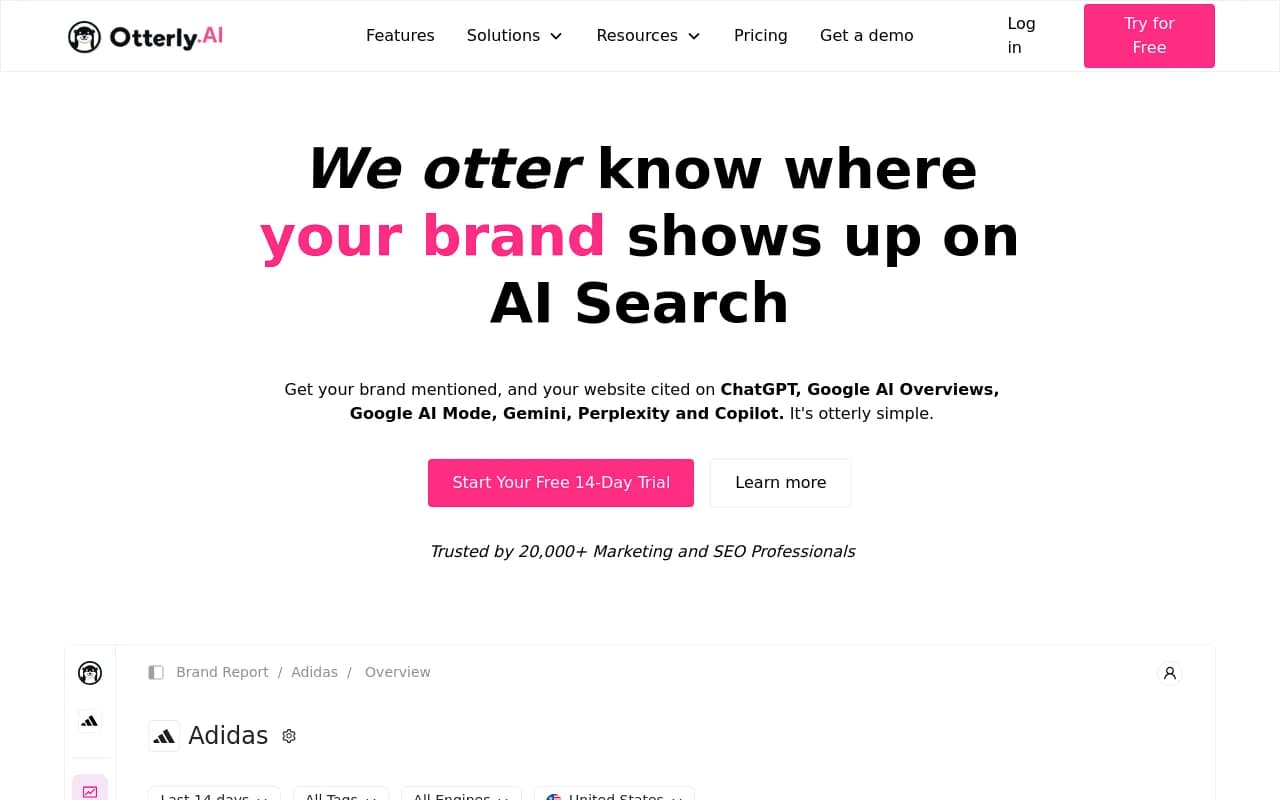
Otterly.AI is a budget-friendly monitoring tool that works well for teams that just need basic AI mention tracking without the complexity of a full GEO platform.
Scrunch focuses on AI traffic analytics and site audits, with a content team orientation. It's a reasonable choice if your primary concern is understanding how AI traffic behaves on your site.
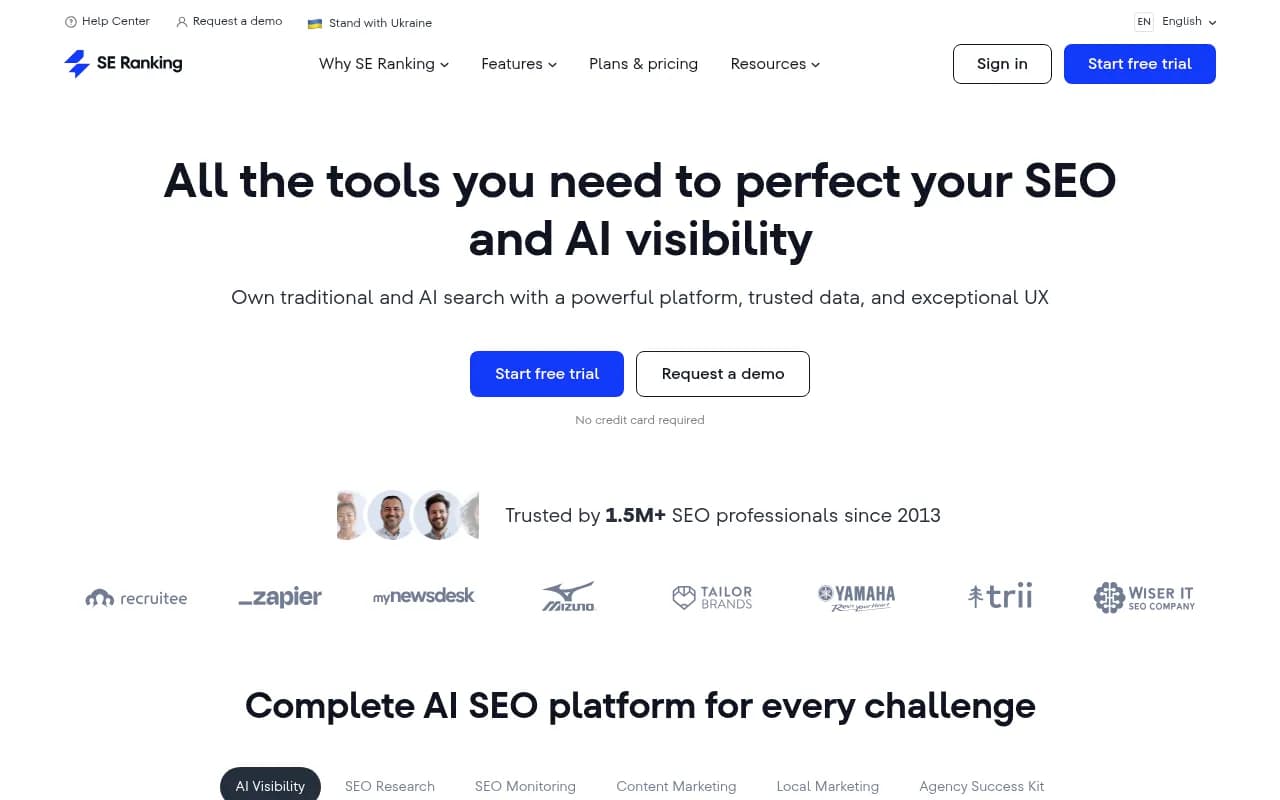
SE Ranking's AI Visibility module is worth considering if you're already in the SE Ranking ecosystem and want AI visibility data alongside traditional rank tracking without switching platforms entirely.
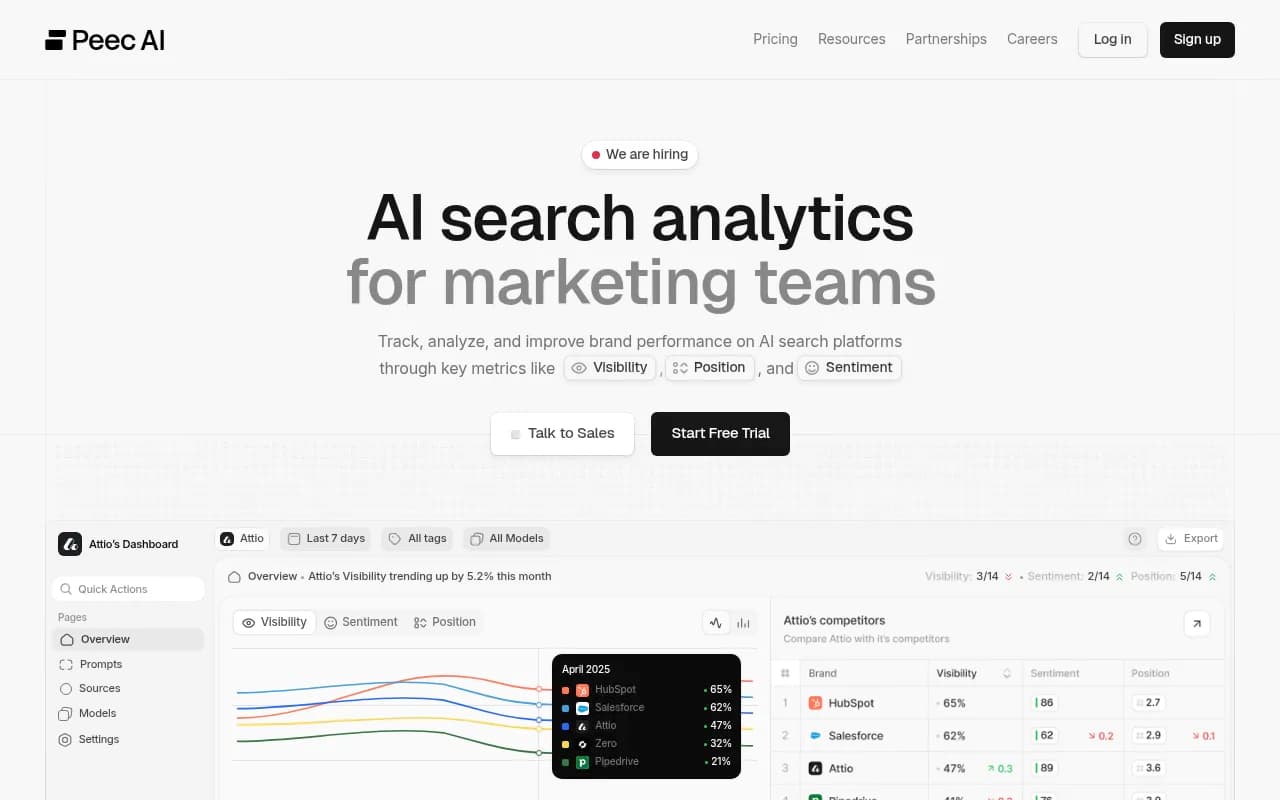
Peec AI handles multi-country tracking and sentiment analysis well, making it a reasonable option for international brands that need regional breakdowns.
Bottom line
Competitor AI answer visibility is a real discipline now, not a speculative one. The tools exist, the data is actionable, and the gap between brands that track this and brands that don't is widening.
The choice between Promptwatch, Profound, Goodie AI, and AthenaHQ comes down to one question: do you need a platform that helps you act on what you find, or do you need a platform that tells you what's happening?
If it's the former, Promptwatch is the most complete option in 2026. If it's the latter, Profound is the most polished. Goodie AI earns its premium for teams where revenue attribution is the primary metric. AthenaHQ is a solid monitoring tool that works best when paired with a strong content operation that can absorb the data and run with it.