Key takeaways
- Most GEO tools in 2026 are monitoring dashboards -- they show you visibility scores but don't help you improve them.
- The real cost isn't the subscription fee; it's the competitor visibility you're not capturing while you watch the numbers.
- A Writesonic analysis found that for every $1 spent on GEO software, companies spend $6 on services to actually execute -- a gap that monitoring-only tools create.
- Conductor's 2026 research found that 94% of enterprise marketing leaders are increasing AI search investment, and 32% of CMOs rank AEO/GEO as their #1 priority.
- The tools that deliver ROI in 2026 close the loop: find gaps, generate content, track results.
The monitoring trap nobody talks about
There's a pattern playing out across marketing teams right now. A team signs up for a GEO tracking tool, gets a dashboard full of visibility scores and mention counts, and then... sits with it. They know they're not appearing in ChatGPT for their best keywords. They can see competitors winning prompts they should own. But the tool doesn't tell them what to do about it.
This is the monitoring trap. And it's expensive -- not because these tools are overpriced, but because the data they surface has no path to action.
Think about what happens when you find out you're invisible for a high-value prompt. You need to figure out what content is missing, write something that AI models will actually want to cite, publish it, and then track whether it worked. A monitoring-only tool helps with exactly one of those four steps. The other three? You're on your own.
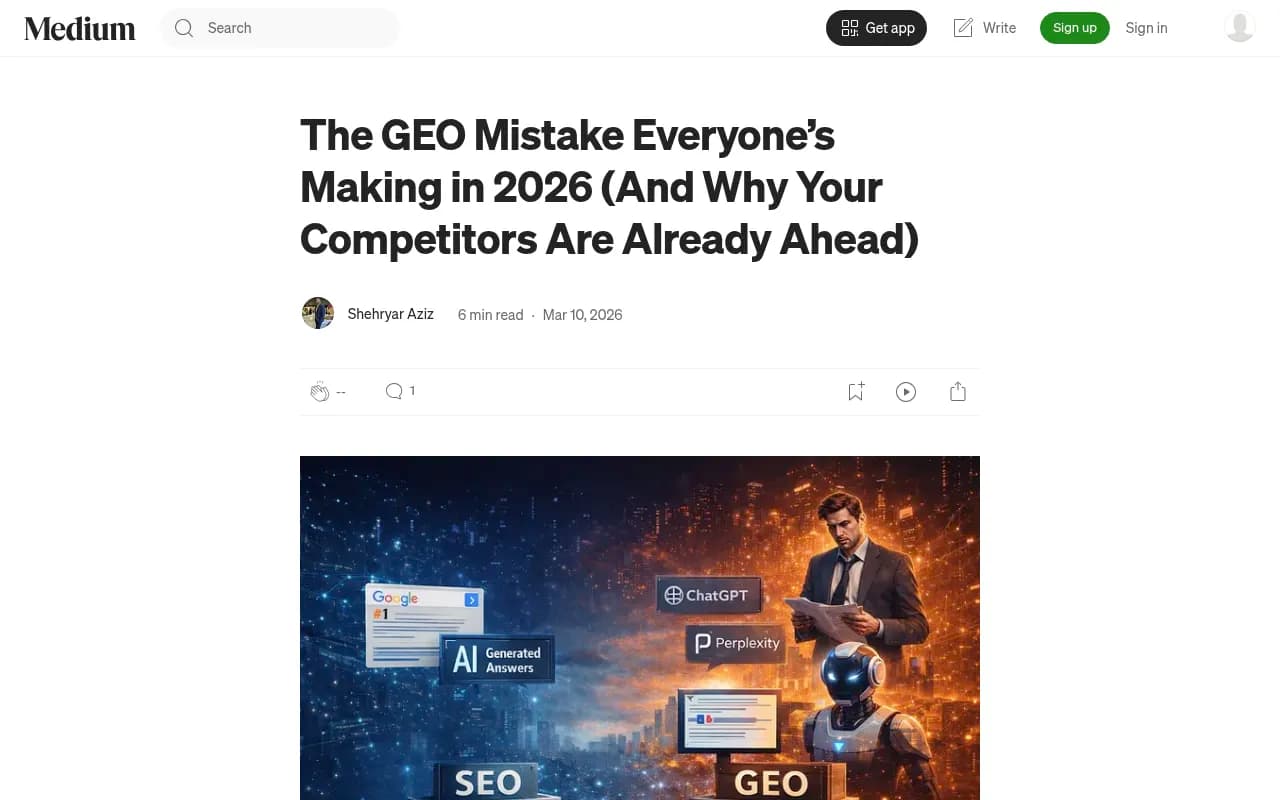
Shehryar Aziz audited 50 websites in March 2026 and found the same pattern across healthcare, home services, and professional services: teams knew about GEO, had heard the term, some had even tried to implement it -- but they were all making the same mistake. They were treating GEO as a reporting exercise rather than an optimization discipline.
What "monitoring only" actually costs you
The subscription fee is the visible cost. The hidden cost is everything that doesn't happen while you're watching a dashboard.
The execution gap
Writesonic published a striking stat: for every $1 companies spend on GEO software, they spend $6 on services to actually execute. That ratio exists because most tools create awareness without capability. You know you're losing -- you just can't fix it from inside the platform.
That $6 goes to content agencies, freelance writers, SEO consultants, and internal team hours spent manually researching what to write. Some of that spending is unavoidable, but a lot of it is the direct result of tools that stop at the data layer.
The competitor compounding problem
AI visibility compounds. When a competitor's content gets cited by ChatGPT for a prompt, that citation trains the model's sense of who the authoritative source is. The longer they hold that position, the harder it becomes to displace them -- not because the model is locked in, but because their content keeps accumulating signals (citations, crawls, engagement) that reinforce their authority.
Every week you spend monitoring without acting is a week your competitors are building a lead that gets harder to close.
The prompt volume you're not capturing
Most monitoring tools show you whether you appear in a response. Fewer tell you how often that prompt is actually asked, how difficult it is to rank for, or how it branches into related sub-queries. Without that context, you can't prioritize. You might spend three months optimizing for a prompt that gets asked 50 times a month while ignoring one that gets asked 50,000 times.
The state of GEO investment in 2026
Conductor's 2026 research (surveying 250+ enterprise marketing leaders) found that 94% are increasing their AI search investment, and 32% of CMOs now rank AEO/GEO as their single top priority. The benchmark for budget allocation has landed around 12% of total search budget going to AI visibility.
That's a lot of money flowing into a category where most tools are still in the "show you data" phase. The teams getting ROI from that investment are the ones who've moved past monitoring into actual optimization.
The same research flagged AI crawler activity, sentiment tracking, and bot log analysis as the new KPIs that boards are starting to ask about. These aren't vanity metrics -- they're signals about whether AI models can actually find and understand your content.
What the GEO tool market actually looks like
The GEO tool space in 2026 is genuinely messy. There are roughly three tiers of tools, and the differences matter.
Tier 1: Monitoring dashboards
These tools track brand mentions across AI models, show you visibility scores, and let you compare against competitors. They're useful for reporting and for understanding the baseline. The problem is they stop there.
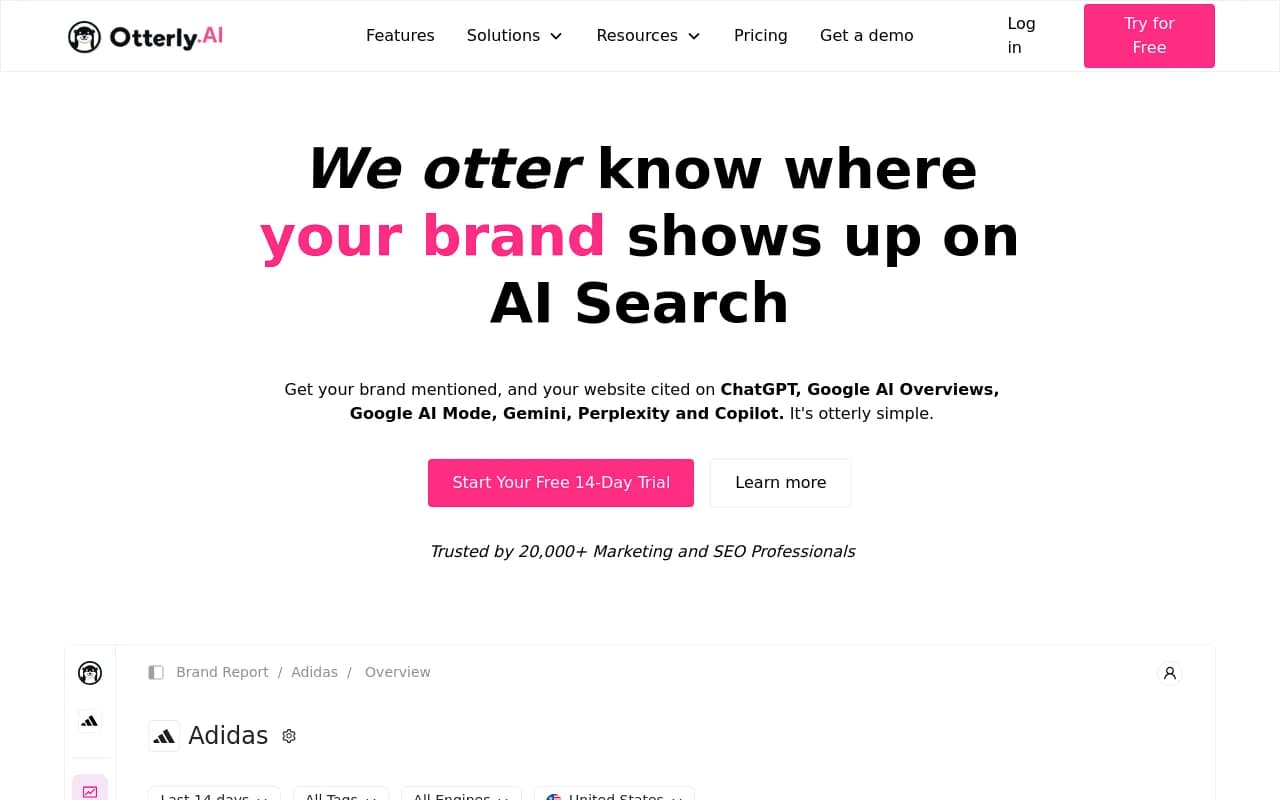
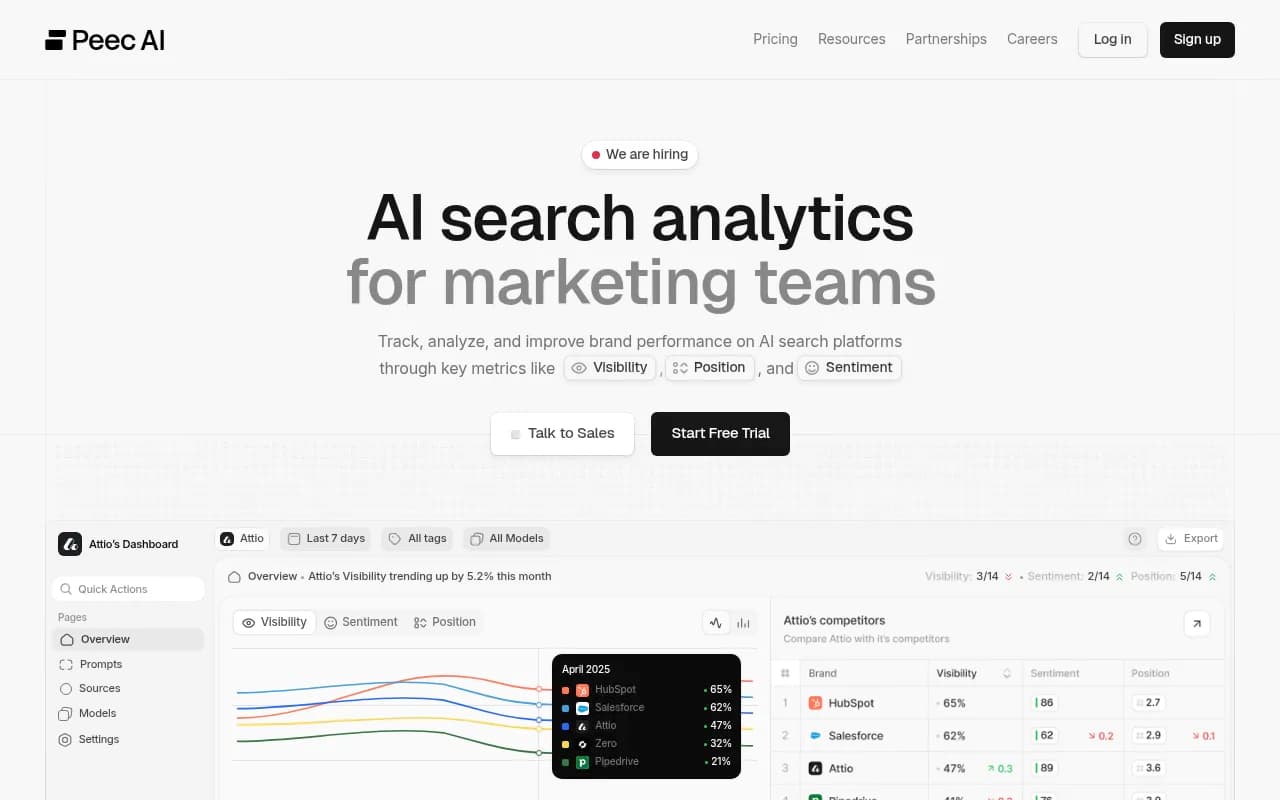
Tools like Otterly.AI and Peec AI fall into this category -- solid for tracking, but they don't help you close the gaps they surface.
Tier 2: Monitoring plus some optimization signals
A step up from pure dashboards, these tools add features like content recommendations, competitor gap analysis, or basic prompt tracking. They give you more to work with, but the execution still happens outside the platform.
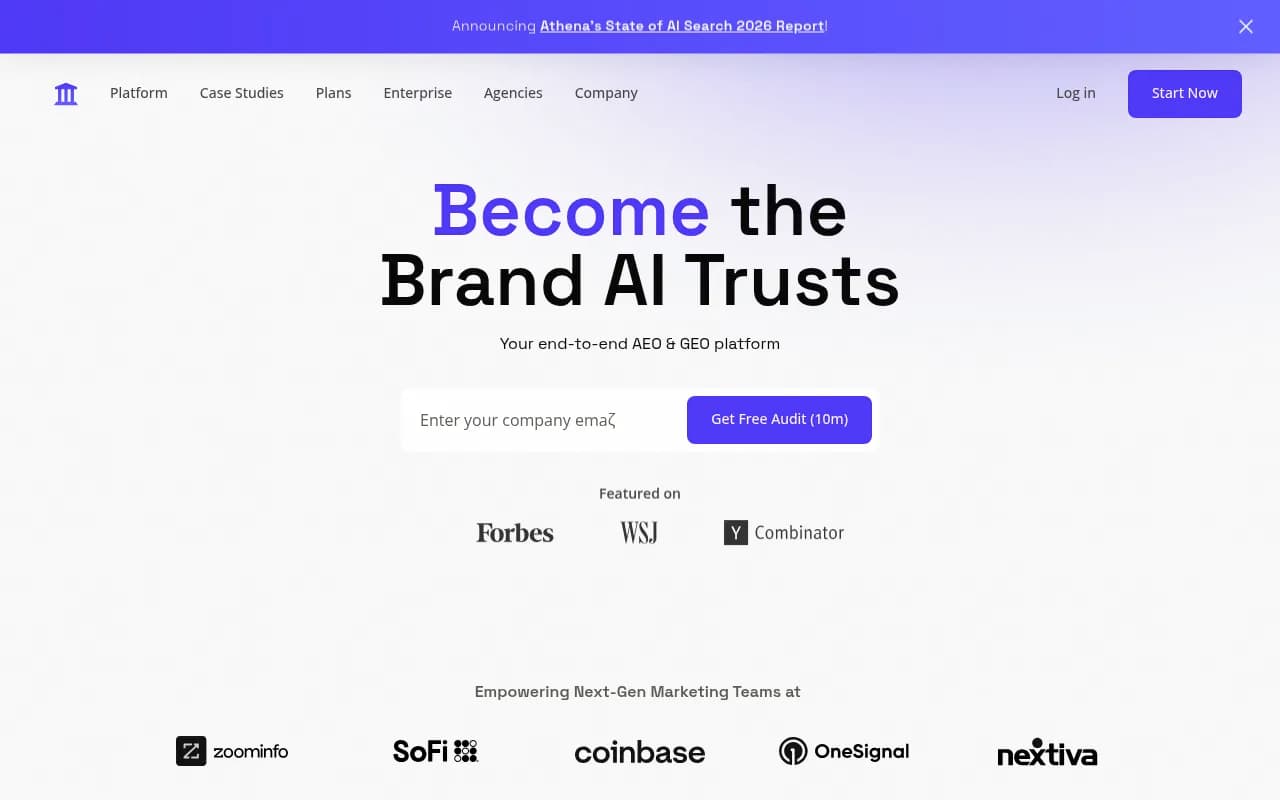
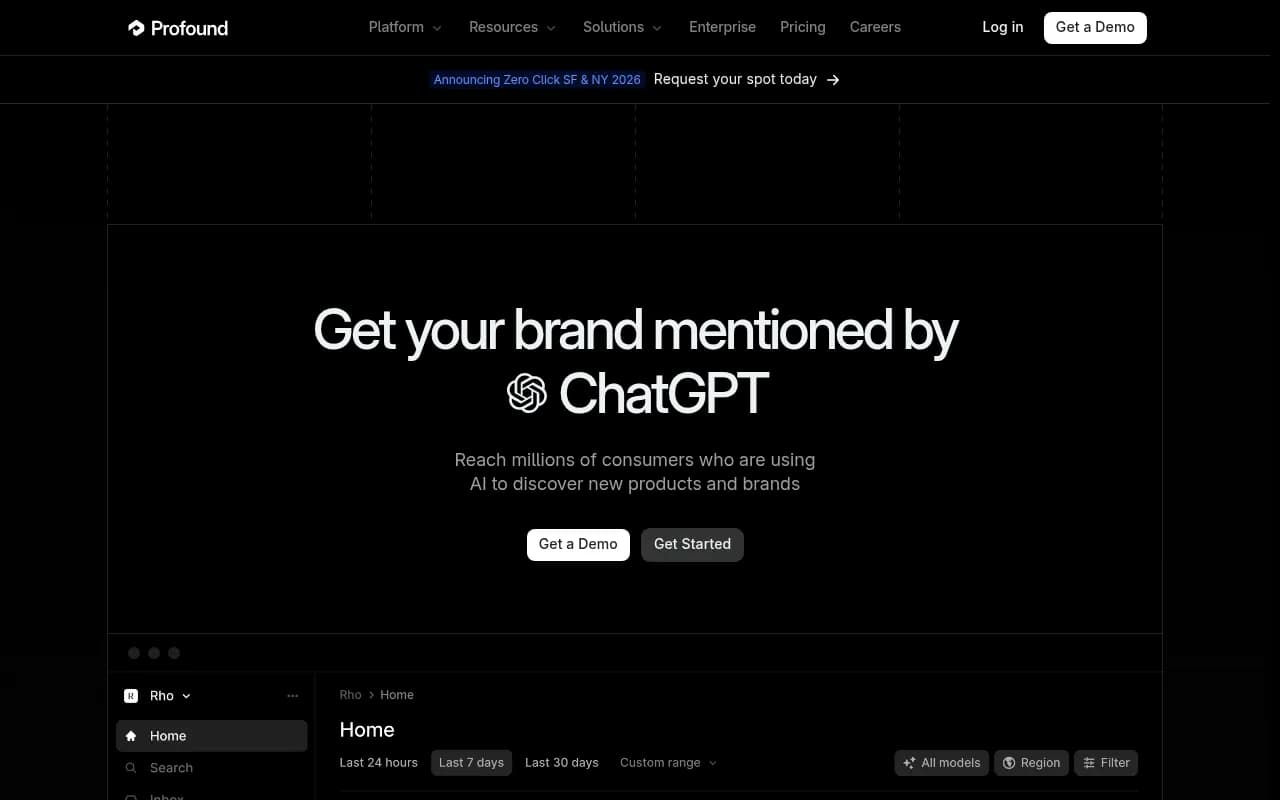
Athena HQ, Profound, and Scrunch AI sit roughly here -- stronger feature sets, but the action loop isn't closed.
Tier 3: Full optimization platforms
These tools close the loop. They find the gaps, help you create content to fill them, and track whether that content actually improves your visibility. This is where the ROI conversation changes from "we have data" to "we moved the number."
Promptwatch is the clearest example of this tier. It combines Answer Gap Analysis (showing you exactly which prompts competitors rank for that you don't), an AI writing agent that generates content grounded in real citation data, and page-level tracking that connects new content to visibility improvements. The crawler logs feature is particularly useful -- it shows you which AI bots are hitting your site, which pages they're reading, and where they're hitting errors, so you can fix indexing issues before they become visibility problems.

A comparison of what different tool types actually give you
| Capability | Monitoring-only tools | Mid-tier tools | Full optimization platforms |
|---|---|---|---|
| Brand mention tracking | Yes | Yes | Yes |
| Visibility scores by AI model | Yes | Yes | Yes |
| Competitor comparison | Basic | Yes | Yes |
| Prompt volume / difficulty data | No | Sometimes | Yes |
| Content gap analysis | No | Sometimes | Yes |
| AI content generation | No | No | Yes |
| AI crawler logs | No | Rarely | Yes |
| Page-level citation tracking | No | Sometimes | Yes |
| Traffic attribution | No | No | Yes |
| Reddit / YouTube citation tracking | No | No | Yes |
| ChatGPT Shopping tracking | No | No | Yes |
The table tells the story pretty clearly. Monitoring-only tools give you the top two rows. Full optimization platforms give you the whole thing.
The tools worth knowing about in each category
If you're evaluating the market, here's a quick orientation.
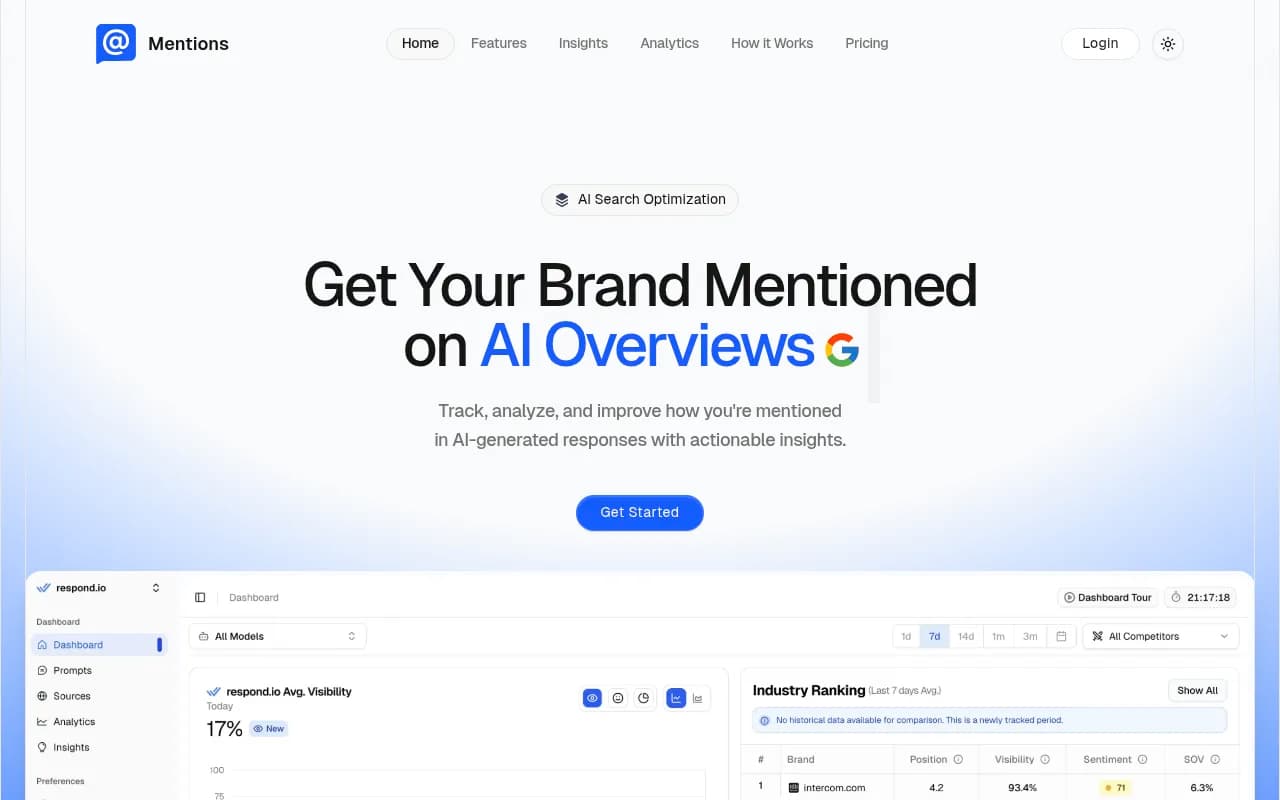
For pure monitoring on a budget, Mentions.so and Airefs cover the basics without a large commitment.
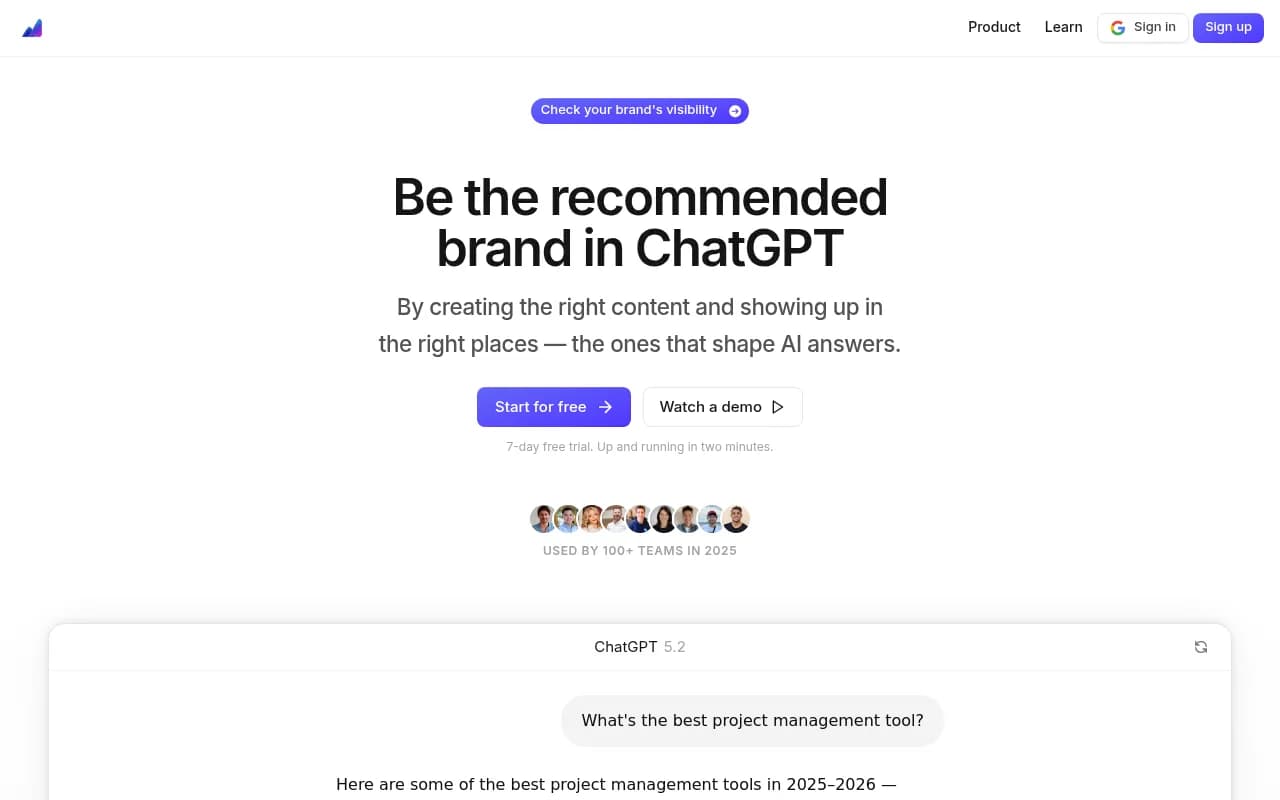
For mid-market teams that want more signal without full platform complexity, SE Ranking's AI visibility features and Writesonic's GEO tracking have both gotten more capable in 2026.
For enterprise teams with complex multi-brand or multi-region requirements, Profound and Evertune are worth evaluating, though both sit at higher price points.
For agencies managing multiple clients, Search Party and Conductor both have agency-oriented workflows, though neither closes the full optimization loop the way Promptwatch does.
Search Party
For teams that want the full loop -- gap analysis, content generation, and tracking in one place -- Promptwatch is the only platform that currently covers all three stages without requiring external tools or services to execute.
What a real optimization loop looks like
The teams winning at GEO in 2026 aren't just tracking visibility -- they're running a repeatable cycle.
Step 1: Find the gaps. Not just "we don't appear here" but specifically: which prompts are competitors ranking for that we're not? What topics are AI models looking for answers on that our site doesn't cover? This requires prompt-level data, not just brand mention counts.
Step 2: Create content that AI models want to cite. This is where most teams get stuck. Writing for AI citation is different from writing for Google rankings. AI models want authoritative, specific, well-structured answers to the questions users are asking. Generic SEO content doesn't cut it. The content needs to be grounded in what AI models are actually citing -- which domains, which formats, which angles.
Step 3: Track what works. Publish the content, then watch whether AI crawlers pick it up, whether citations increase for those prompts, and whether that visibility translates to actual traffic. Page-level tracking closes the loop -- you can see exactly which new pages are getting cited, by which models, and how often.
Step 4: Repeat. The gap analysis will surface new opportunities as the competitive landscape shifts. This isn't a one-time project; it's an ongoing discipline.
Monitoring-only tools support step 3 (partially) and nothing else. That's the core problem.
The "snake oil" problem in GEO
One honest note: the GEO space has a credibility problem in 2026. There are tools and agencies making claims about AI visibility that don't hold up under scrutiny -- vague promises about "optimizing for AI" with no clear mechanism for how that works.
The Reddit community around AI search optimization has been particularly vocal about this. The signal to look for is specificity: can the tool show you exactly which prompts it's tracking, exactly which pages are being cited, and exactly how its content recommendations connect to visibility outcomes? If the answer is "trust the score," that's a red flag.
The tools worth paying for are the ones that show their work.
What to ask before buying any GEO tool
Before signing up for anything, these questions cut through the noise:
- Does it track prompt volume, or just whether you appear?
- Can it show me which specific content gaps are costing me visibility?
- Does it help me create content, or just tell me I need to?
- Can I see which AI crawlers are hitting my site and what they're finding?
- Does it connect visibility improvements to actual traffic and revenue?
A monitoring-only tool will answer "no" to most of those. That's not necessarily a dealbreaker if you have a team that can execute independently -- but you should go in knowing what you're buying.
The bottom line
The cost of a monitoring-only GEO tool isn't the subscription fee. It's the six dollars of execution spend for every dollar of software spend. It's the competitor citations that compound while you're watching a dashboard. It's the high-volume prompts you're not prioritizing because you don't have difficulty scores.
In 2026, with 94% of enterprise marketing leaders increasing AI search investment and 32% of CMOs calling it their top priority, the question isn't whether to invest in GEO. It's whether your tools are actually helping you improve, or just helping you measure how far behind you are.
Monitoring is necessary. It's just not sufficient.