Key takeaways
- Ranking and being cited are different outcomes. A page can sit in the top five on Google and still be absent from ChatGPT, Perplexity, and AI Overviews.
- Google's generative AI performance reports (announced June 3, 2026) give you impressions by page, country, device, and date. Bing's AI Performance report gives you citations and grounding queries. Neither covers ChatGPT, Perplexity, or Claude.
- The "ranks but never cited" list comes from a simple join: pages with strong web clicks, minus pages with AI impressions or citations.
- Most fixes are boring and findable: crawler access, thin or unextractable passages, missing entity clarity, and pages that don't match the sub-queries AI actually runs.
- Audits go stale fast. ChatGPT changed its search behavior overnight on August 8, 2026, so re-run the analysis monthly.
Why rankings and citations drift apart
I keep seeing the same complaint in SEO forums: "we rank #2 and ChatGPT has never heard of us." A thread on r/seogrowth put it bluntly, noting that the overlap between pages cited in ChatGPT and Perplexity and pages that rank on Google is smaller than expected. That matches what vendors are reporting, though the exact numbers vary and you should read them with some suspicion.
Bigeye's September 2026 write-up says industry analyses put the share of AI Overview citations drawn from Google's top 10 at roughly 17% to 38% in early 2026, down from about 76% in mid-2025. It doesn't name a primary study. Geolix.ai, cited by Mintec, claims overlap between top rankings and AI-cited sources fell from about 70% to under 20% over two years. Both are vendor claims. The direction is consistent, the precise figure isn't something I'd put in a board deck.
The mechanism is easier to trust than the statistics. AI systems break a prompt into smaller searches, then pick passages, not whole pages. Promptwatch's ChatGPT query fanout data shows ChatGPT averaged about 2.15 distinct web searches per response in early December 2025, easing to about 1.84 by early March 2026, with query length shrinking to around 53 characters from April. Complex prompts can trigger many more. The practical point: your page has to match one of the generated queries, not the user's original prompt.
There's a second shift worth knowing. On August 8, 2026, ChatGPT started using the site: operator at scale. Promptwatch's site: operator report shows these queries jumped from 0.37% to 16.8% of fanout queries in one day, and average fanouts per response rose from about 1.08 to 1.83. If ChatGPT searches your domain directly, it only sees what search engines have indexed from it. Thin category pages and unindexed content now cost you answers.
What each data source actually tells you
Before building anything, be clear on what you're holding. These sources measure different things and none of them is the full picture.
| Source | What it shows | What it doesn't show |
|---|---|---|
| Google Search Console, standard Performance | Clicks, impressions, position, queries per page | Anything about AI answers by itself |
| Search Console generative AI reports | Impressions by page, country, device, date for AI features in Search and Discover | Queries, answer text, brand description, other AI platforms |
| Bing Webmaster Tools, AI Performance | Citations in Copilot, Bing AI answers, partner integrations; cited pages; grounding queries; intents and topics | Clicks, conversions, ChatGPT or Perplexity |
| Server or CDN logs | Which AI crawlers hit which pages, and what errors they got | Whether the crawl led to a citation |
| Prompt-level AI citation tracker | Which URLs get cited for which prompts in ChatGPT, Perplexity, Gemini, Claude | Your organic rankings (unless it imports them) |
Google Search Console
Google Search Console is free and is where your baseline lives.
Google announced its Search generative AI performance reports on June 3, 2026, with separate reports for Search and Discover. The listed metrics are impressions, pages, countries, devices (Search only), and dates, at hourly, daily, weekly, or monthly granularity. At launch it went to a subset of sites, and the data also stays inside the overall performance report. Google's own post doesn't list query-level data or a click metric. Mintec reports a worldwide rollout on August 31, 2026 and mentions clicks on links inside AI responses, but that's secondary-source, so check your own UI before relying on it.
One conflicting claim to flag: some blogs describe a Search Type filter with AI Overviews and AI Mode segments offering a Queries dimension, CTR, and position. That doesn't match Google's announcement. Open the live report and see what you actually have.
Bing Webmaster Tools
Microsoft introduced AI Performance in public preview in February 2026. As CXL's walkthrough describes it, the core metrics are Total Citations, Average Cited Pages, Cited Pages, Grounding Queries, and Visibility Trends. Grounding queries are sampled retrieval queries, not necessarily what users typed. A citation is not an impression or a click.
June 2026 added intents (informational, commercial, navigational, research, creation, local), topics, citation share for a specific grounding query, and period comparison. An October 2026 beta, Topics Portfolio, shows topic demand, the number of competing sources, and queries where others are cited but you aren't. That last one is the most direct "cited elsewhere, not you" report any free tool offers.
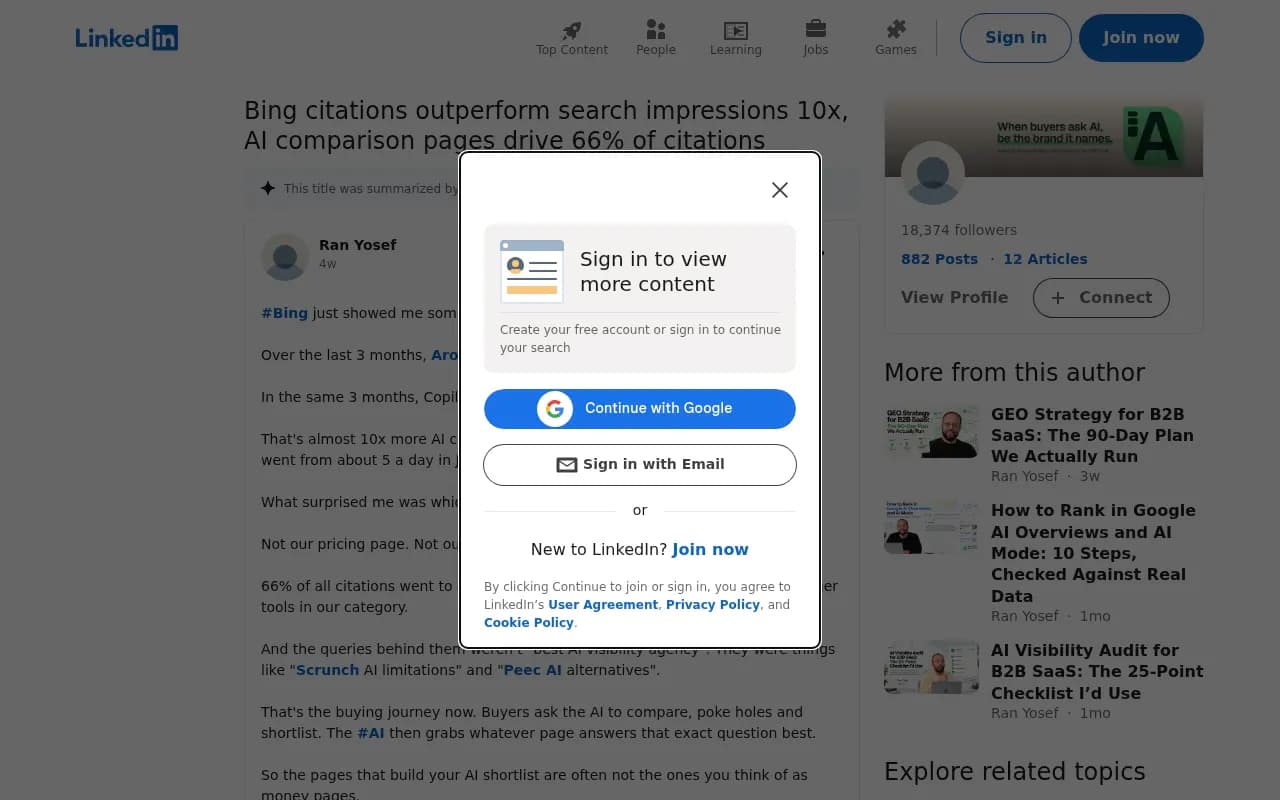
A LinkedIn post making the rounds claims Bing citations outperform search impressions 10x and that AI comparison pages drive 66% of citations. Treat that as one practitioner's dataset, but it's a useful nudge: look at which page types show up in your Bing citations before assuming blog posts are the winners.
Step 1: Build the baseline list of pages that rank
Export from the standard Search Console Performance report, with the Pages dimension, for the last 90 days. Keep clicks, impressions, and average position. Filter to pages with meaningful web clicks. I usually start with the top 100 to 200 pages by clicks, since below that the noise swamps the signal.
Then do the same in Bing Webmaster Tools using the Search Performance report. Bing traffic is smaller for most sites, but Copilot and several AI integrations draw on Bing's index, so what Bing has indexed matters more than its referral share suggests.
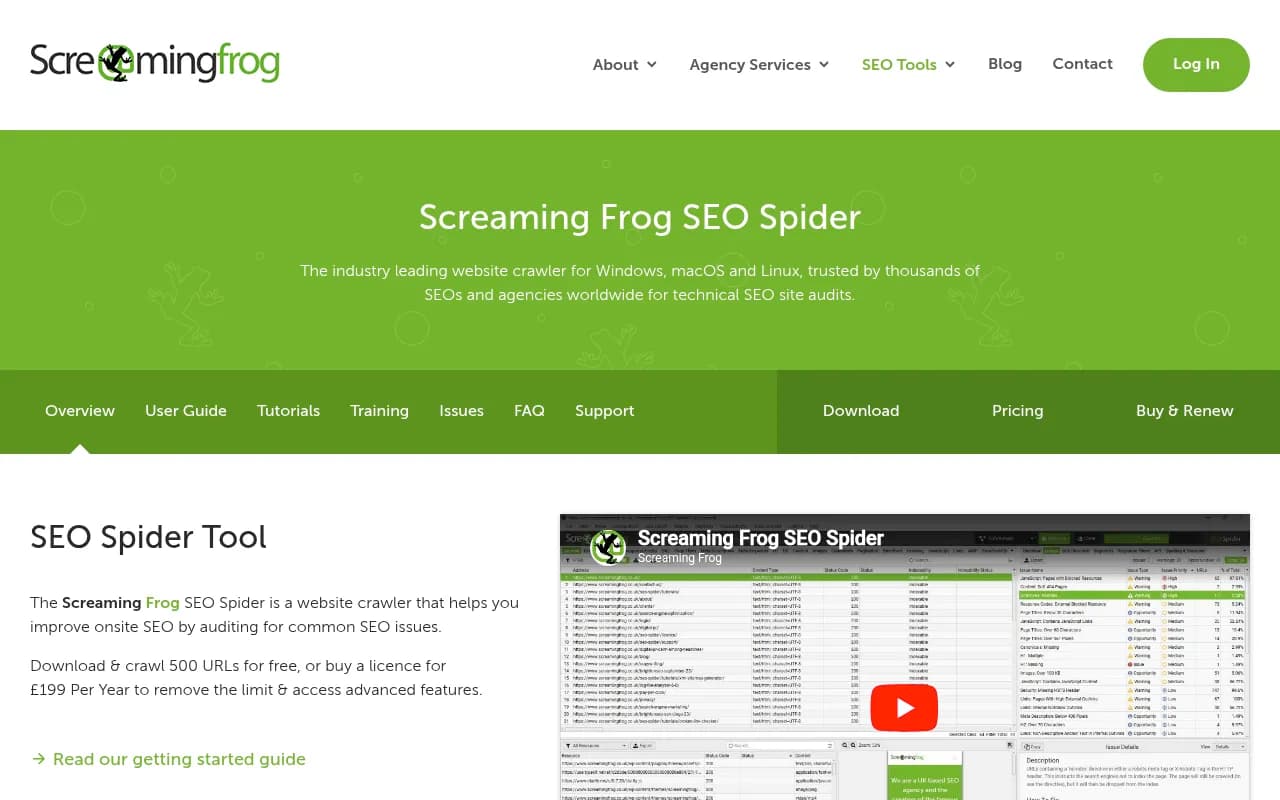
If you want this in one place without spreadsheets, a crawler plus rank tracker helps. Screaming Frog SEO Spider can pull Search Console data into a crawl so each URL carries its clicks next to its technical status.
Step 2: Add the AI side
Google generative AI report
Export the Pages view from the generative AI report for the same period. Join it to your baseline on URL. The pages with strong web clicks and impressions but zero AI impressions are your first candidates. Marie Haynes suggests the opposite correlation too: pages with high AI impressions and high regular clicks tell you what a winning page looks like on your own site. Study those before you touch the losers.
Bing AI Performance
Export Cited Pages and Grounding Queries. Join cited pages to your baseline. Pages with Bing organic traffic but no citations go on the list. Then read the grounding queries for the pages that do get cited. They're a free look at the sub-questions an AI system asked on the way to your page, and you can write future headings to match them.
CXL ran a small test and found its ten most-cited pages averaged about position 5 in organic search. They were careful to say the sample is too small to prove a general relationship. I'd say the same: don't conclude that position 5 is the sweet spot.
Prompt-level citations for everything else
Neither Google nor Bing tells you what ChatGPT, Perplexity, Gemini, or Claude cite. That's where an AI visibility platform comes in. Promptwatch tracks the real interfaces of ChatGPT, Google AI Overviews, AI Mode, Gemini, Perplexity, and others, and its 360 Insights view overlays Search Console and Bing Webmaster data per page with AI crawls, citations, and clicks. That makes the question "which pages rank in Google and Bing but never get cited by AI?" a filter instead of a weekend of VLOOKUPs.

Other options exist. Several trackers in the catalog cover multi-model citations, including Profound, Otterly.AI, and Peec AI, though they're mostly monitoring-focused. If you want to compare more, the GEO software directory at bestgeosoftware.com and the AI rank tracking directory list a lot of them.


Whatever you use, build a fixed panel of buyer questions. Mintec suggests 20 to 40 questions and changing no more than 10% per quarter, so trends mean something. That's good advice. A panel that changes every week tells you nothing.
Step 3: Build the gap table
Put the data in one sheet with a row per URL.
| URL | Google clicks (90d) | Avg position | Google AI impressions | Bing citations | ChatGPT/Perplexity citations | Verdict |
|---|---|---|---|---|---|---|
| /pricing | 1,200 | 3.1 | 0 | 0 | 0 | Rank, no cite |
| /guide-x | 800 | 6.4 | 450 | 12 | 5 | Healthy |
| /compare-y | 300 | 9.0 | 0 | 8 | 0 | Bing-only |
Three patterns come up again and again:
- Rank, no cite anywhere. The page is probably unreadable or unextractable by AI systems, or doesn't answer a sub-question.
- Cited in Bing but not Google AI, or the reverse. Usually an indexing or freshness difference between the two engines.
- Cited in Google or Bing, absent from ChatGPT. Often a crawler access problem for OpenAI bots, or the page isn't indexed in whatever search backend ChatGPT uses.
Step 4: Diagnose why each page is skipped
Check crawler access first
Search Console shows indexation signals. It doesn't show what an AI crawler can reach and parse. That's a server and CDN log question. Promptwatch's AI crawler traffic data (IP-verified requests, June 8 to September 6, 2026) puts OpenAI at 79.8% of verified AI crawler requests in the week of Aug 31 to Sep 6, down from 94.8% in mid-June. If a provider is large in that chart but near zero in your logs, you're probably blocked or unreachable for them. Check robots.txt, CDN rules, and WAF rules for every provider, not just the one you care about most.
Provider totals mix training crawlers and answer-time fetchers, so look at the answer-time bots specifically. Promptwatch's crawler logs separate them and filter spoofed user agents, which saves a lot of squinting at raw logs.
Check the page itself
Frase's team makes the point that when a page ranks but doesn't get cited, the reason is usually something you can find on the page. In my experience it's one of these:
- The answer is buried in the fourth paragraph under a vague heading.
- The entity and category aren't stated plainly. "We" and "our platform" instead of the actual product name and what it is.
- The page is a broad pillar that answers nothing specifically. AI wants the focused page for "X vs Y" or "X pricing."
- Claims have no numbers or named sources, so there's nothing safe to lift.
- JavaScript rendering hides the content from crawlers that don't execute it.
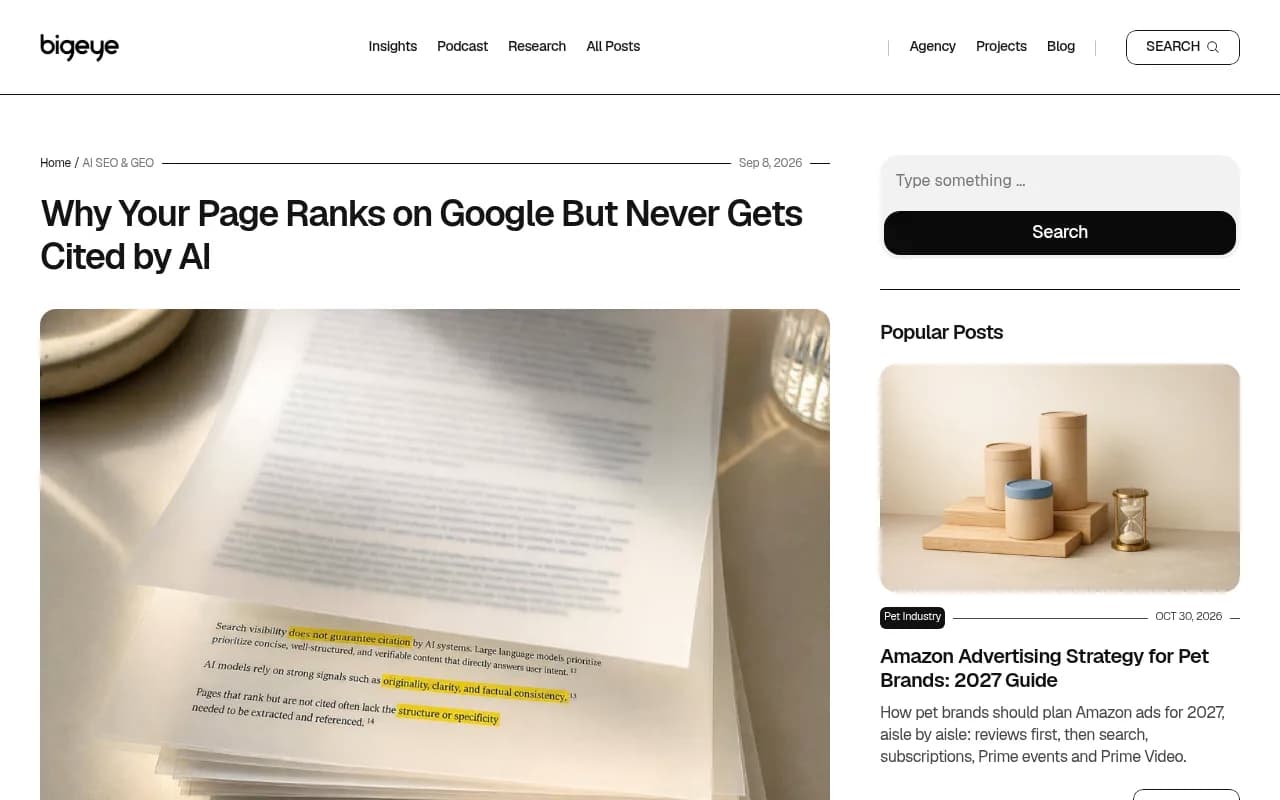
Bigeye's framing is that answer engines select short passages rather than full pages. That's the thing to internalize when you rewrite. Each section should be able to stand alone as an answer.
Check indexing in both engines
Given the site: operator change, confirm the page is indexed in Google and Bing. In Search Console use URL Inspection. In Bing use URL Inspection as well. If Bing hasn't indexed something that Google has, submit it. IndexNow helps here, and tools like IndexerNow in the catalog wrap that workflow.
Match the generated queries
Pull the Bing grounding queries and the fanouts from your prompt tracker. Promptwatch's guidance from its fanout data is to write headings that read like search queries, front-load the entity and category, and build focused pages for sub-questions such as comparisons, pricing, alternatives, and how-tos. Fanout mappings built before August 8, 2026 are stale, so re-run them.
What type of page to write matters too. Promptwatch's content type citation data shows product pages were the most cited type in ChatGPT at 22.4% of citations from Sep 28 to Oct 4, 2026, followed by landing pages and listicles. Its content half-life study found landing pages and docs stayed cited longest, while news lost half its pages within 36 days. If your "ranks but never cited" list is mostly blog posts, consider whether a landing page or comparison page would serve the same query better.
Domain authority is also less of a barrier than people assume. In Promptwatch's August 2026 data, sites with domain rank 46 to 75 earned almost half of ChatGPT citations, while DR 91 to 100 fell to about 3%.
Step 5: Fix, then measure whether it worked
Pick the 10 to 20 highest-value pages from the gap list. For each one:
- Fix access or indexing problems first. It's the cheapest win.
- Rewrite headings to match grounding queries and fanouts.
- Add a direct answer in the first two sentences under each heading.
- Add specific numbers, named sources, and the product or brand name in plain text.
- Split bloated pages into focused ones where a sub-question deserves its own URL.
- Re-crawl, re-submit, and wait at least a few weeks.
Then watch the same columns you built. Geolix's case study claims four content pieces aimed at intent gaps lifted ChatGPT citation rate from 9.7% to 26.7%. That's a vendor result, so don't promise it to anyone, but it shows what a targeted fix looks like: a handful of pages, not a site rewrite.
For drafting and refreshing, tools like Surfer SEO and Clearscope help with on-page structure, though neither is built around AI citation data. Promptwatch's Content Refresh and Content Agent work from the citation gaps directly and track whether each published page gets crawled, cited, and clicked.
Common mistakes
- Treating Bing citations as a click metric. There's no click or conversion data in that report.
- Treating grounding queries as user prompts. They're retrieval queries, often shorter and stranger.
- Judging a page on a single week. Citation data is noisy. Use 28 to 90 day windows.
- Optimizing for one engine. Social sources show how different the engines are: from Sep 28 to Oct 4, 2026, ChatGPT drew 0.46% of citations from social platforms while Google AI Overviews drew 12.2%. A fix that works in one may do nothing in another.
- Forgetting to check AI referral traffic. Mintec suggests a GA4 exploration filtering sources for chatgpt.com, perplexity.ai, gemini.google.com, copilot.microsoft.com, and claude.ai. It's a cheap sanity check that citations turn into visits.
A monthly routine
If you only do one thing, do this on the first Monday of each month: export Search Console pages and the generative AI Pages view, export Bing Cited Pages and Topics, pull your prompt panel results, and refresh the gap table. Review the new rank-no-cite rows, pick five, fix them. It takes half a day once the sheet exists, and it keeps you ahead of platform changes like the August 8 shift.
For more of the underlying research, Promptwatch Data publishes regularly updated reports on citations, crawlers, and query fanouts.
The free tools get you most of the way. Search Console and Bing show you what the engines owned by Google and Microsoft are doing. Anything beyond that, including ChatGPT and Perplexity, needs a tracker, and the gap list is only useful if you act on it.