Key takeaways
- Most AI visibility tools monitor 3-5 LLMs at best. True 10-model coverage (ChatGPT, Perplexity, Gemini, Claude, Google AI Overviews, Google AI Mode, Grok, DeepSeek, Copilot, Meta AI) is rare.
- Monitoring alone isn't enough. The tools that just show you data leave you stuck -- you still need to figure out what to do about it.
- Promptwatch is the only platform in this comparison rated as a Leader across all evaluation categories, largely because it closes the loop from gap detection to content creation to result tracking.
- Profound is the strongest pure enterprise monitoring option but comes at a price point that rules out most mid-market teams.
- LLMrefs and AICarma are useful entry points for teams that just want to get started, but both hit walls quickly when you need depth.
- Omnia sits in an interesting middle ground -- solid coverage, reasonable pricing, but limited on the optimization side.
The question sounds simple: which AI visibility tool actually tracks all 10 major LLMs? But once you start digging, you realize the question has layers. Tracking 10 models is one thing. Tracking them accurately, at the user-interface level rather than just through APIs, is another. And then there's the question of what you do with the data once you have it.
This comparison covers five tools that come up repeatedly in 2026 discussions about multi-model tracking: Profound, Promptwatch, LLMrefs, AICarma, and Omnia. I looked at what each actually monitors, how deep the data goes, what optimization capabilities exist (if any), and whether the pricing makes sense for the coverage you get.
Why model coverage matters more than you think
When a user asks ChatGPT "what's the best accounting software for freelancers," the answer they see in the ChatGPT interface can differ meaningfully from what you'd get hitting the OpenAI API directly. The same is true for Perplexity, Gemini, and others. Tools that only query APIs can miss citations, shopping recommendations, and entity mentions that appear in real user-facing responses.
This is why "covers 10 LLMs" needs a follow-up question: how are you querying them?
The 10 models worth tracking in 2026 are: ChatGPT, Perplexity, Google AI Overviews, Google AI Mode, Claude, Gemini, Meta AI/Llama, DeepSeek, Grok, and Copilot. Not every tool covers all of these -- and the ones that do don't all do it the same way.
The five tools, side by side
Before getting into each tool individually, here's the comparison at a glance.
| Profound | Promptwatch | LLMrefs | AICarma | Omnia | |
|---|---|---|---|---|---|
| Models tracked | Up to 10 | 10 | 5-6 | 4-5 | 6-8 |
| UI-level tracking (not just API) | Partial | Yes | No | No | Partial |
| Content gap analysis | No | Yes | No | No | Limited |
| AI content generation | No | Yes | No | No | No |
| Crawler / agent logs | No | Yes | No | No | No |
| Prompt volume & difficulty | No | Yes | No | No | No |
| Reddit & YouTube insights | No | Yes | No | No | No |
| ChatGPT Shopping tracking | No | Yes | No | No | No |
| Competitor heatmaps | Yes | Yes | Limited | Limited | Yes |
| Multi-language / multi-region | Yes | Yes | Limited | No | Limited |
| Starting price | ~$200/mo | $99/mo | Free / ~$49/mo | Free / ~$29/mo | ~$79/mo |
| Free trial | Yes | Yes | Yes | Yes | Yes |
Profound
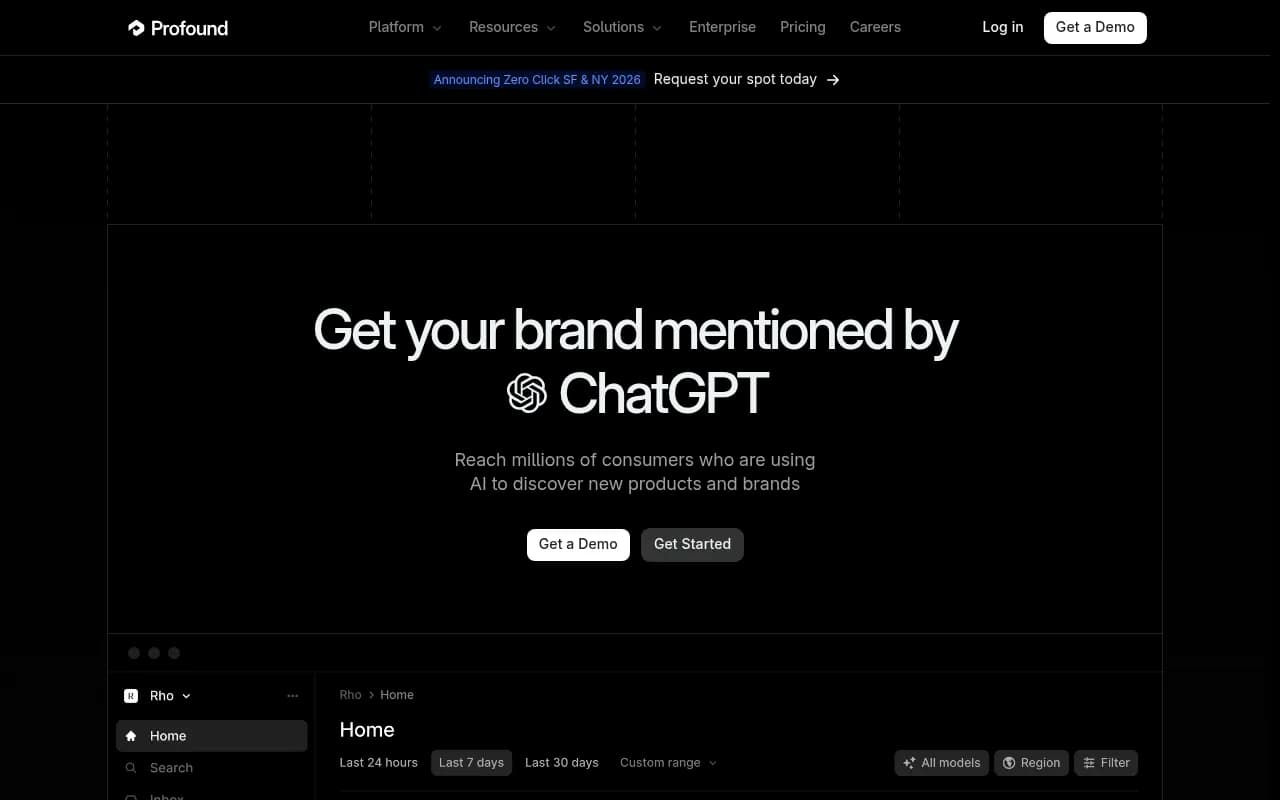
Profound is built for enterprise teams. It does prompt analysis well, tracks up to 10 answer engines, and has solid paraphrase tracking -- meaning it can detect when AI models are referencing your content without directly citing you. The dashboard is clean and the reporting is detailed enough for large brands that need to present AI visibility data to leadership.
The gaps are real, though. There's no content generation, no crawler logs, no Reddit or YouTube tracking, and no ChatGPT Shopping visibility. For a team that wants to understand their AI visibility and then go figure out what to do about it separately, Profound works. For a team that wants to act on the data within the same platform, it falls short.
Pricing is also a consideration. Profound sits at a price point that makes it a harder sell for marketing teams at mid-market companies, especially when more capable platforms exist at lower price points.
Promptwatch

Promptwatch monitors all 10 LLMs -- and importantly, it does this at the user-interface level, not just through API calls. That distinction matters because the citations, shopping carousels, and entity mentions that appear in real ChatGPT or Perplexity sessions can differ from what API queries return.
What separates Promptwatch from every other tool in this comparison is what happens after the monitoring. Answer Gap Analysis shows you exactly which prompts competitors are visible for that you're not. Content Agents then generate articles, comparisons, and briefs built around that gap data -- not generic SEO filler, but content engineered around the specific questions AI models are already being asked. Then page-level tracking shows whether your new content gets crawled, cited, and by which models.
The crawler log feature is genuinely useful and rare. You can see when ChatGPT, Claude, or Perplexity's crawlers hit your site, which pages they read, and whether those pages are moving from crawl to citation. Most tools in this space don't offer anything close to this.
Prompt volume and difficulty scoring helps prioritize where to focus. Query fan-outs show how one prompt branches into related sub-queries. Reddit and YouTube insights surface discussions that actually influence AI recommendations. ChatGPT Shopping tracking covers product carousels specifically.
Pricing starts at $99/month for one site and 50 prompts, which is reasonable for what you get. The Professional plan at $249/month adds crawler logs, city/state tracking, and more prompts. Agency and enterprise pricing is available.
LLMrefs
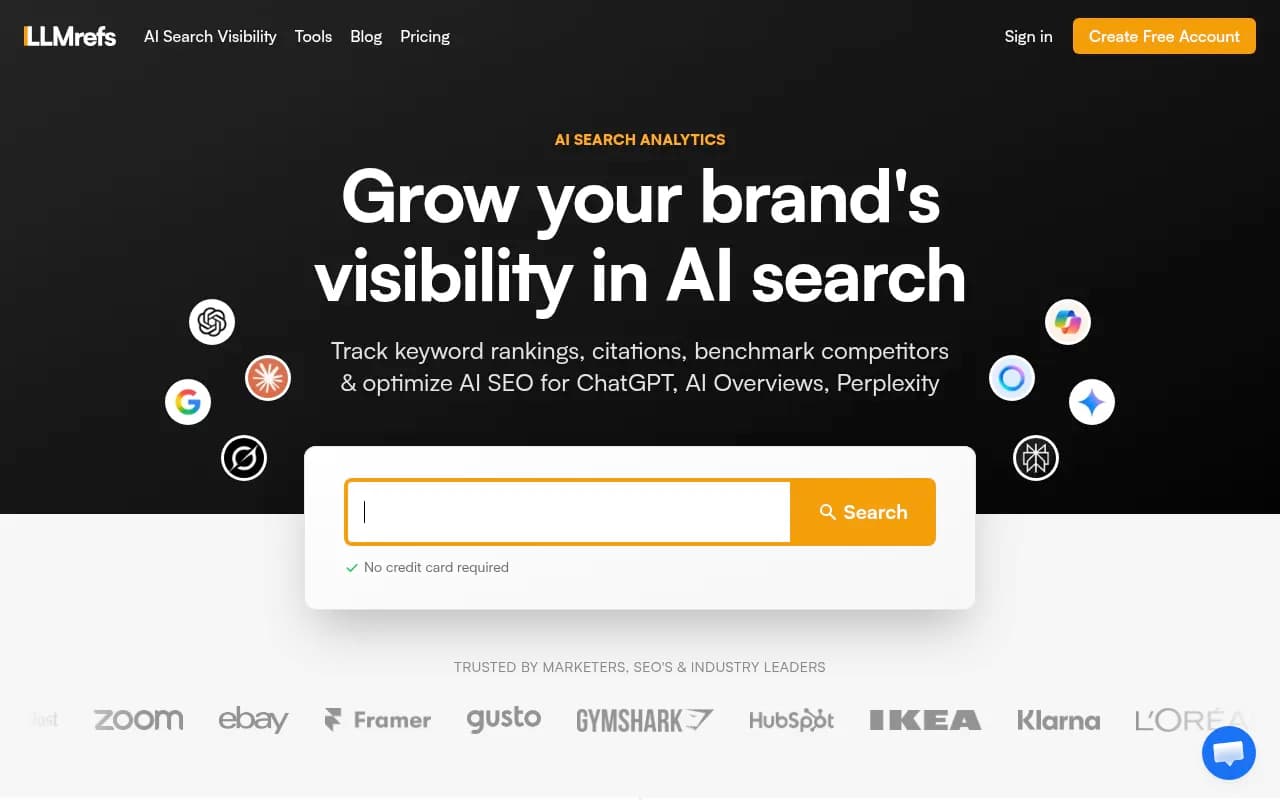
LLMrefs is a lighter tool aimed at teams that want to get started with AI visibility tracking without a big commitment. It tracks brand mentions and citations across ChatGPT, Perplexity, and a handful of other models -- the exact count varies depending on the plan.
The free tier makes it accessible, and the interface is straightforward. For a small team or solo marketer who wants a basic read on whether they're showing up in AI responses, it's a reasonable starting point.
The ceiling is low, though. There's no content optimization, no gap analysis, no crawler logs, and the model coverage doesn't reach 10. If you outgrow the basics quickly -- and most teams do -- you'll be migrating to something else within a few months.
AICarma
AICarma positions itself as a multi-LLM dashboard focused on "impression share" and retrieval frequency. The concept is solid: it tries to give you a sense of how often your brand is being retrieved across AI engines relative to competitors.
Coverage is limited to around 4-5 models, and the data depth is fairly surface-level. There's no content generation, no crawler visibility, and the competitor analysis is basic. It works as a quick pulse check, and the free tier makes it easy to try. But for teams that need actionable data, it runs out of road fast.
Omnia
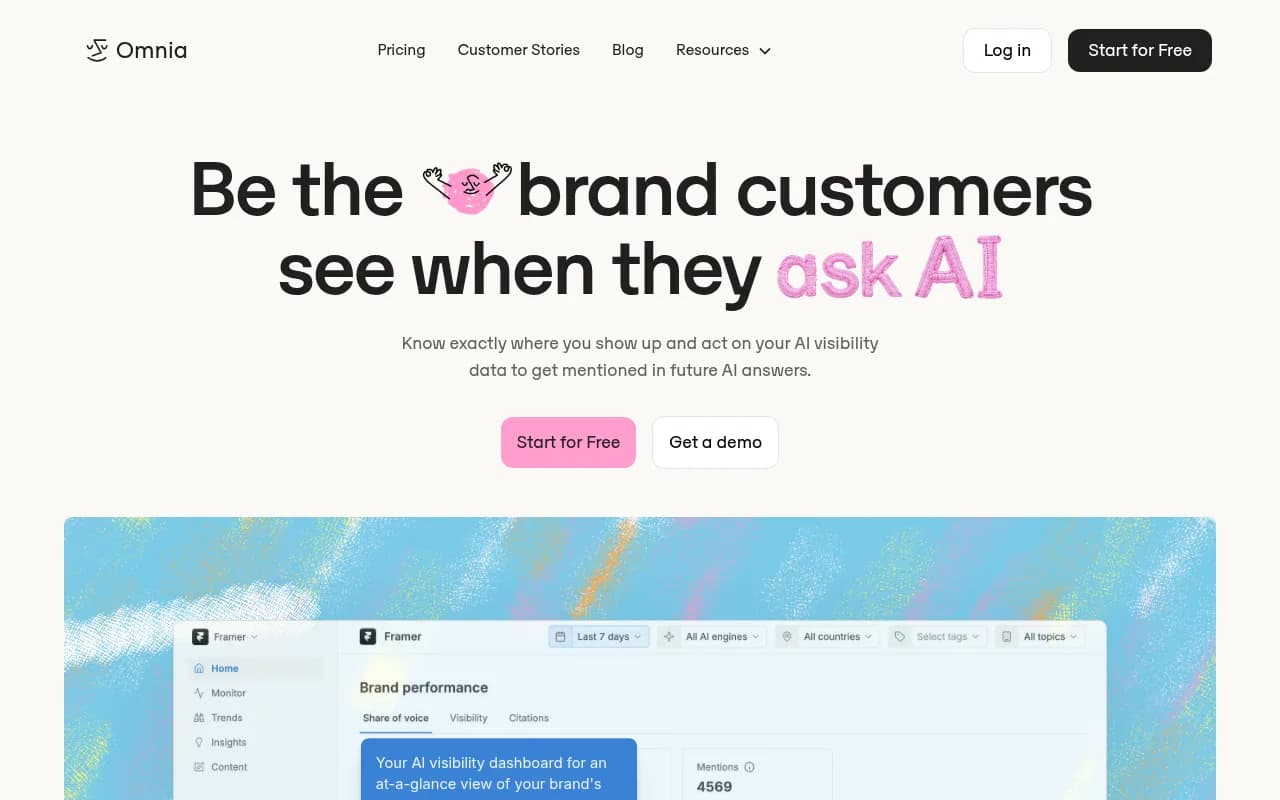
Omnia covers more ground than LLMrefs or AICarma, with tracking across 6-8 models depending on the plan. The platform has a clean interface and includes competitor comparison features that are genuinely useful for understanding share of voice across AI engines.
The limitation is on the optimization side. Omnia is primarily a monitoring tool. It shows you where you stand, but the path from "I can see I'm not visible for this prompt" to "here's what I'm going to do about it" requires leaving the platform. There's no content generation, no gap analysis tied to actionable briefs, and no crawler logs.
For teams that want solid monitoring with decent model coverage and don't need the full optimization loop, Omnia is a reasonable choice. It's priced competitively and the UI is approachable.
The real question: monitoring vs. optimization
The comparison above makes something clear: most of these tools are monitoring dashboards. They show you data. What you do with that data is your problem.
That's fine if you have the internal resources to translate visibility data into content strategy and execution. But for most marketing teams, the bottleneck isn't knowing where they're invisible -- it's having a clear path to fixing it.
This is where Promptwatch is genuinely different. The action loop -- find gaps, generate content, track results -- is built into the platform. You're not exporting data to a spreadsheet and then starting from scratch in a content tool. The gap analysis feeds directly into content briefs and generation, and the tracking shows you whether the content is working.
That said, if your team's primary need is enterprise-grade monitoring with detailed reporting for stakeholders, Profound is the strongest pure monitoring option. If you're just starting out and want a free or low-cost way to check your AI visibility, LLMrefs or AICarma are fine entry points.
Model coverage: what each tool actually tracks
This is worth being specific about, because "covers multiple LLMs" is a claim that ranges from "we query the ChatGPT API" to "we monitor 10 models at the user-interface level with real prompt data."
The 10 models that matter in 2026:
- ChatGPT (OpenAI)
- Perplexity
- Google AI Overviews
- Google AI Mode
- Claude (Anthropic)
- Gemini (Google)
- Meta AI / Llama
- DeepSeek
- Grok (xAI)
- Copilot (Microsoft)
Promptwatch tracks all 10. Profound claims up to 10 but the depth varies by model. Omnia covers most of the major ones. LLMrefs and AICarma top out at 4-6 depending on the plan.
Google AI Mode and Google AI Overviews are worth calling out specifically -- they behave differently from each other, and many tools lump them together or skip AI Mode entirely. DeepSeek and Grok are also frequently missing from tools that haven't updated their coverage recently.
Who should use which tool
If you're an enterprise brand with a dedicated analytics team and need detailed reporting across all 10 models: Profound is worth evaluating, budget permitting.
If you're a marketing team or agency that wants to track visibility and actually do something about it -- fix gaps, generate content, see what's working: Promptwatch is the clearest choice. The pricing is accessible, the coverage is complete, and the optimization loop is built in.
If you're a small team or individual just getting started and want a low-commitment way to see where you stand: LLMrefs or AICarma give you a starting point without a big investment.
If you want solid monitoring with decent model coverage and a clean interface, and you're comfortable handling optimization separately: Omnia is worth a look.
A note on what's coming
The AI search landscape is still moving fast. Google AI Mode rolled out broadly in 2026 and is already changing how brands think about visibility. DeepSeek's growth means ignoring it is no longer an option. ChatGPT's shopping and product recommendation features are increasingly influencing purchase decisions.
Tools that were built around 3-4 models in 2024 are scrambling to add coverage. The ones that built for breadth from the start are in a better position. When evaluating any platform, it's worth asking not just "what do you cover now" but "how quickly did you add DeepSeek and Grok when they became relevant?"
The monitoring-only tools will continue to add models. The gap between them and optimization platforms like Promptwatch is less about model count and more about what you can actually do with the data. That gap is widening, not closing.
For teams serious about AI search visibility in 2026, the combination of complete model coverage, real UI-level tracking, and a built-in optimization loop is what separates a tool you'll actually use from one that becomes a dashboard you check occasionally and then ignore.