Key takeaways
- Nimt.ai is a lightweight AI visibility monitoring tool -- good for getting started, but limited to tracking what's happening rather than fixing it.
- Promptwatch covers the full GEO loop: find visibility gaps, generate optimized content, and track results across 10+ AI models.
- The core difference isn't features -- it's whether you want a dashboard or a workflow. Monitoring tells you where you're invisible. Optimization helps you stop being invisible.
- Promptwatch's Content Agents, Answer Gap Analysis, and AI Crawler Logs are capabilities Nimt.ai doesn't offer.
- If you're just starting out and want a simple pulse check, Nimt.ai might be enough. If AI search is a real growth channel for your business, you'll outgrow it fast.
The AI search visibility space has exploded in 2026. There are now dozens of tools claiming to help you "rank in ChatGPT" or "get cited by Perplexity." Most of them do roughly the same thing: they run a set of prompts, check whether your brand appears in the responses, and show you a dashboard.
Nimt.ai fits that description. It's a clean, accessible entry point into AI visibility monitoring. Promptwatch does not fit that description -- or at least, it doesn't stop there. It's built around the idea that knowing you're invisible is only useful if you can do something about it.
This guide breaks down what each tool actually does, where they differ, and how to figure out which one is right for where you are right now.
What Nimt.ai does
Nimt.ai is a lightweight AI monitoring tool aimed at marketers and small teams who want to understand how their brand shows up in AI-generated responses. The pitch is simplicity: set up a brand, add some prompts, and start tracking whether you're being mentioned across models like ChatGPT, Perplexity, and Gemini.
It's genuinely useful for that narrow job. If you've never tracked your AI visibility before, Nimt.ai gives you a quick baseline. You can see mention rates, compare yourself against a few competitors, and get a rough sense of which AI models are picking up your brand.
What it doesn't do is tell you why you're not appearing, which pages are being cited, how AI crawlers are interacting with your site, or what content you should create to close the gap. It monitors. It doesn't optimize.
That's not a criticism exactly -- it's a design choice. Nimt.ai is positioning itself as an accessible starting point, not an end-to-end platform.
What Promptwatch does
Promptwatch is built around a three-step loop: find the gaps, create content that fills them, and track whether it worked.

The "find the gaps" part is Answer Gap Analysis -- it shows you which prompts your competitors are visible for that you're not, and maps those gaps to specific content your site is missing. This isn't just "you're not being cited enough." It's "here are the exact questions AI models are answering where your competitors appear and you don't."
The "create content" part is Content Agents -- an AI content generation system that produces articles, listicles, comparisons, and briefs grounded in real prompt data, citation patterns, and competitor analysis. The output is designed to answer the specific gaps AI models are already exposing, not generic SEO filler.
The "track results" part covers page-level citation tracking, AI Crawler Logs (real-time logs of when ChatGPT, Claude, Perplexity, and others crawl your pages), and traffic attribution that connects AI visibility to actual revenue.
Promptwatch also tracks 10 AI models -- ChatGPT, Perplexity, Google AI Overviews, Google AI Mode, Claude, Gemini, Meta/Llama, DeepSeek, Grok, Mistral, and Copilot -- and monitors how they behave in real user interfaces, not just through API calls. That distinction matters because what users actually see in ChatGPT's interface can differ from what the API returns.
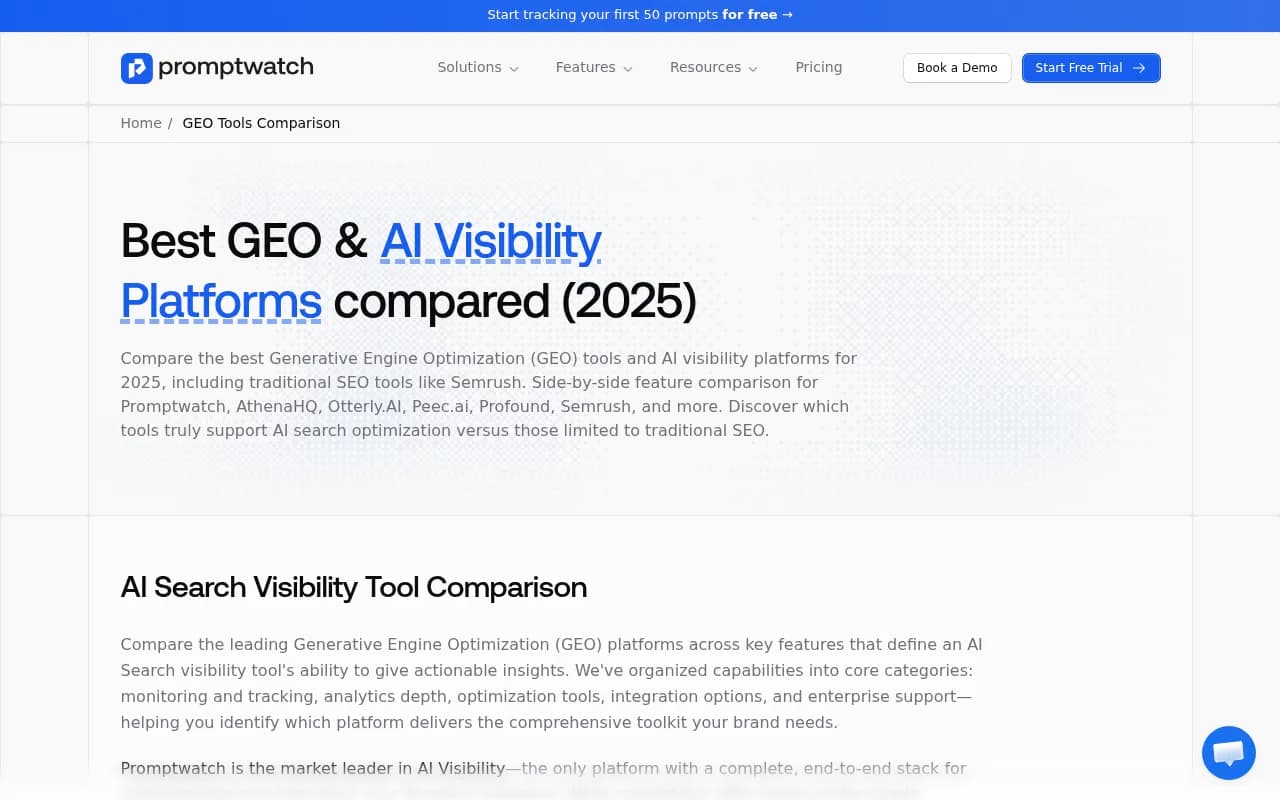
Feature comparison
Here's how the two tools stack up across the capabilities that matter most for GEO in 2026:
| Feature | Nimt.ai | Promptwatch |
|---|---|---|
| Brand mention tracking | Yes | Yes |
| Competitor comparison | Basic | Yes, with heatmaps |
| Number of AI models tracked | Limited | 10 (ChatGPT, Perplexity, Gemini, Claude, Grok, DeepSeek, Copilot, Meta AI, Google AI Overviews, Mistral) |
| Answer Gap Analysis | No | Yes |
| Content generation (Content Agents) | No | Yes |
| AI Crawler Logs | No | Yes |
| Page-level citation tracking | No | Yes |
| Prompt volume & difficulty scoring | No | Yes |
| Query fan-outs | No | Yes |
| Reddit & YouTube citation tracking | No | Yes |
| ChatGPT Shopping tracking | No | Yes |
| Offsite citation analysis | No | Yes |
| Traffic attribution | No | Yes |
| Multi-language / multi-region | Limited | Yes |
| API & Looker Studio integration | No | Yes |
| Free trial | Yes | Yes |
| Starting price | Low | $99/mo (Essential) |
The table tells a clear story. Nimt.ai covers the monitoring column. Promptwatch covers monitoring plus everything you'd need to actually improve your position.
The real difference: monitoring vs optimization
Most AI visibility tools launched in 2024-2025 are monitoring dashboards. They answer the question "where do I show up?" That's useful, but it's the beginning of the conversation, not the end.
The harder question is "what do I do about it?" And that's where the market splits.
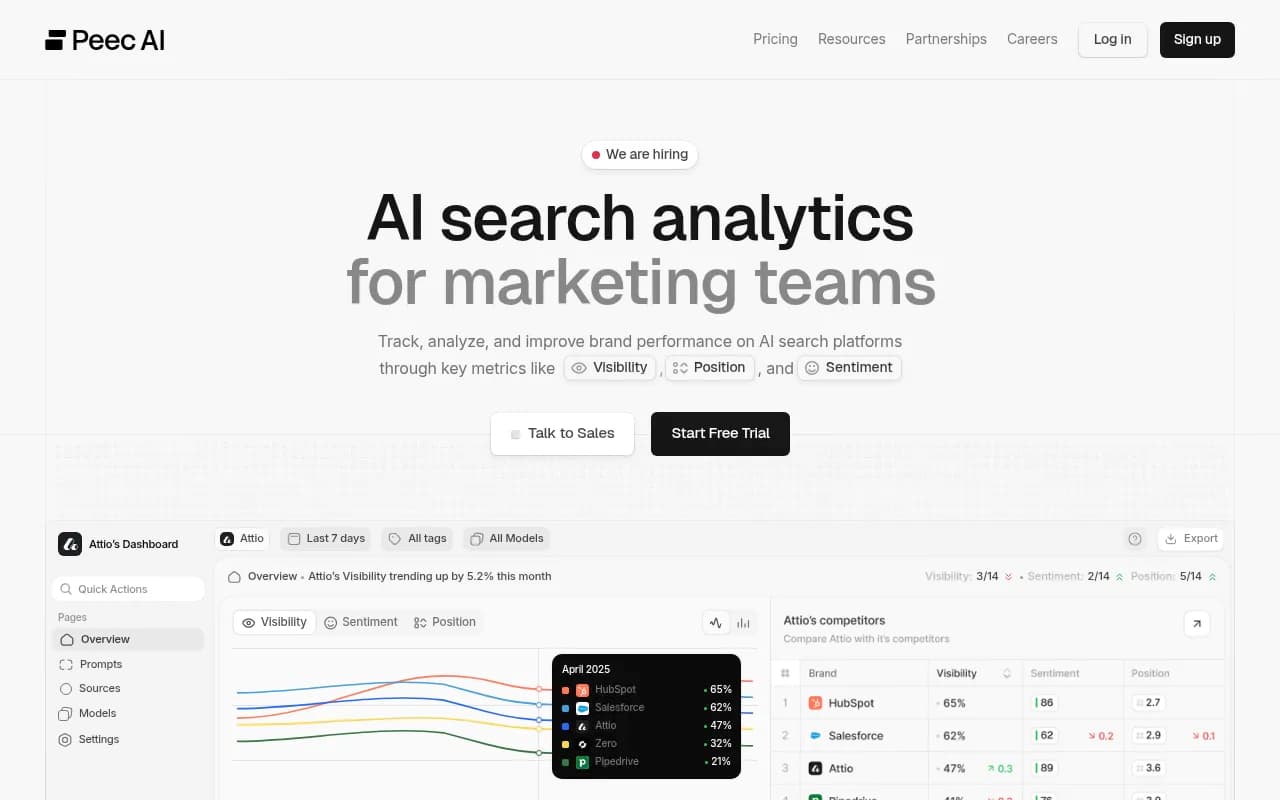
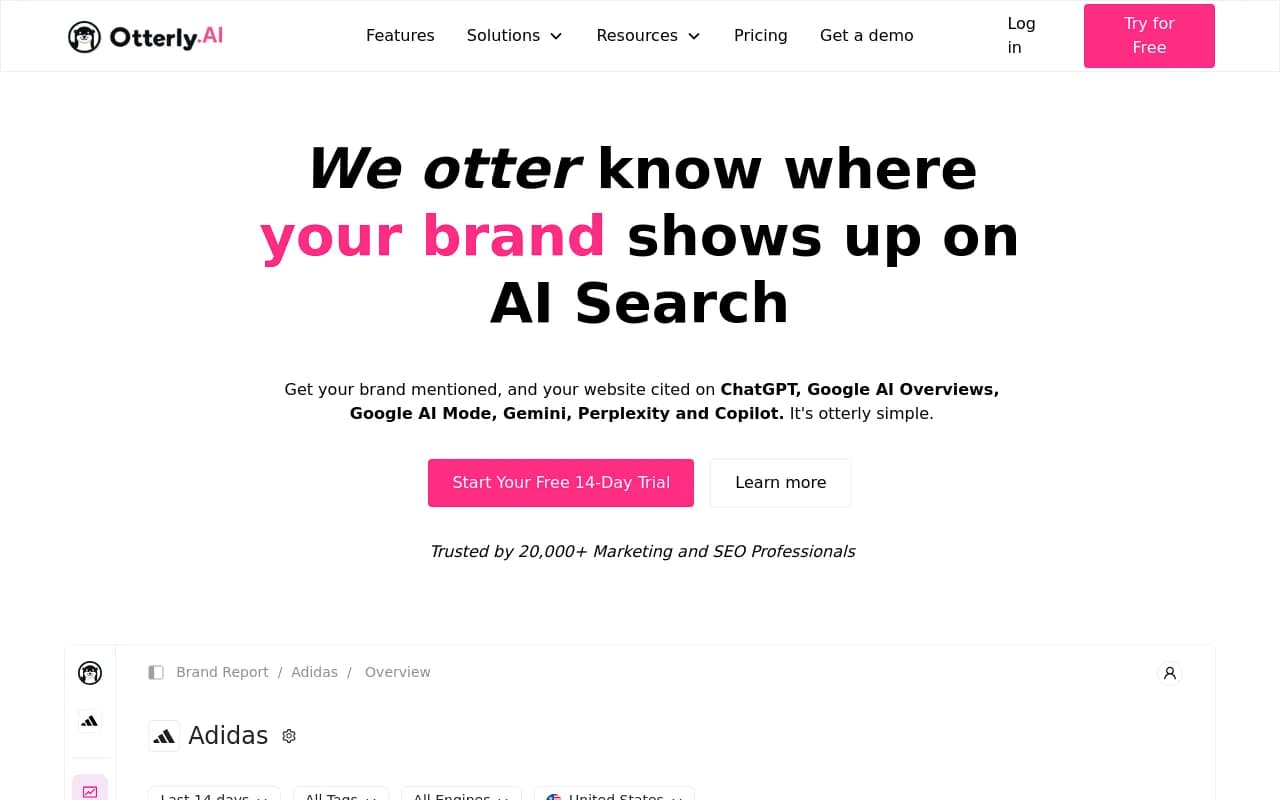
Nimt.ai, like Otterly.AI, Peec.ai, and several others, stops at the monitoring layer. You get data. You figure out what to do with it yourself.
Promptwatch is designed around the assumption that the data is only valuable if it leads to action. The Answer Gap Analysis doesn't just show you gaps -- it tells you what content to create. The Content Agents don't just generate articles -- they generate articles grounded in the specific prompts, citation patterns, and competitor content that are driving AI responses in your category. The Crawler Logs don't just show you traffic -- they show you which pages AI models are actually reading, which ones they're ignoring, and where indexing errors are blocking your content from being cited.
That's a fundamentally different product philosophy, and it shows up in the results. Brands using Promptwatch can close the loop from "we're not appearing for this prompt" to "we published content that fixed it" to "we're now being cited for that prompt" -- with data at every step.
Who should use Nimt.ai
Nimt.ai makes sense if:
- You're just starting to explore AI visibility and want a low-commitment way to see where you stand
- Your team doesn't have bandwidth to act on optimization recommendations yet
- Budget is tight and you need the cheapest possible baseline
- You already have a content team and just need data to brief them manually
It's a reasonable starting point. The risk is that you end up with a dashboard full of data and no clear path to improving the numbers you're looking at.
Who should use Promptwatch
Promptwatch makes sense if:
- AI search is a real acquisition channel for your business (or you want it to be)
- You want to understand not just whether you're visible but why, and fix it
- You're running content marketing and want to align it with what AI models are actually citing
- You're an agency managing multiple clients' AI visibility
- You want to track the business impact of GEO work -- not just visibility scores but actual traffic and revenue
The pricing reflects the difference in scope. Promptwatch's Essential plan starts at $99/month for one site, 50 prompts, and 5 AI-generated articles. Professional is $249/month and adds crawler logs, city/state tracking, and 15 articles. Business is $579/month for 5 sites and 30 articles. There's a free trial if you want to test it before committing.
A note on the broader market
The AI visibility tool space is genuinely crowded right now. There are 20+ tools claiming to solve this problem, and most of them are monitoring-only dashboards with slight variations in UI and pricing.
A few tools worth knowing about beyond these two:
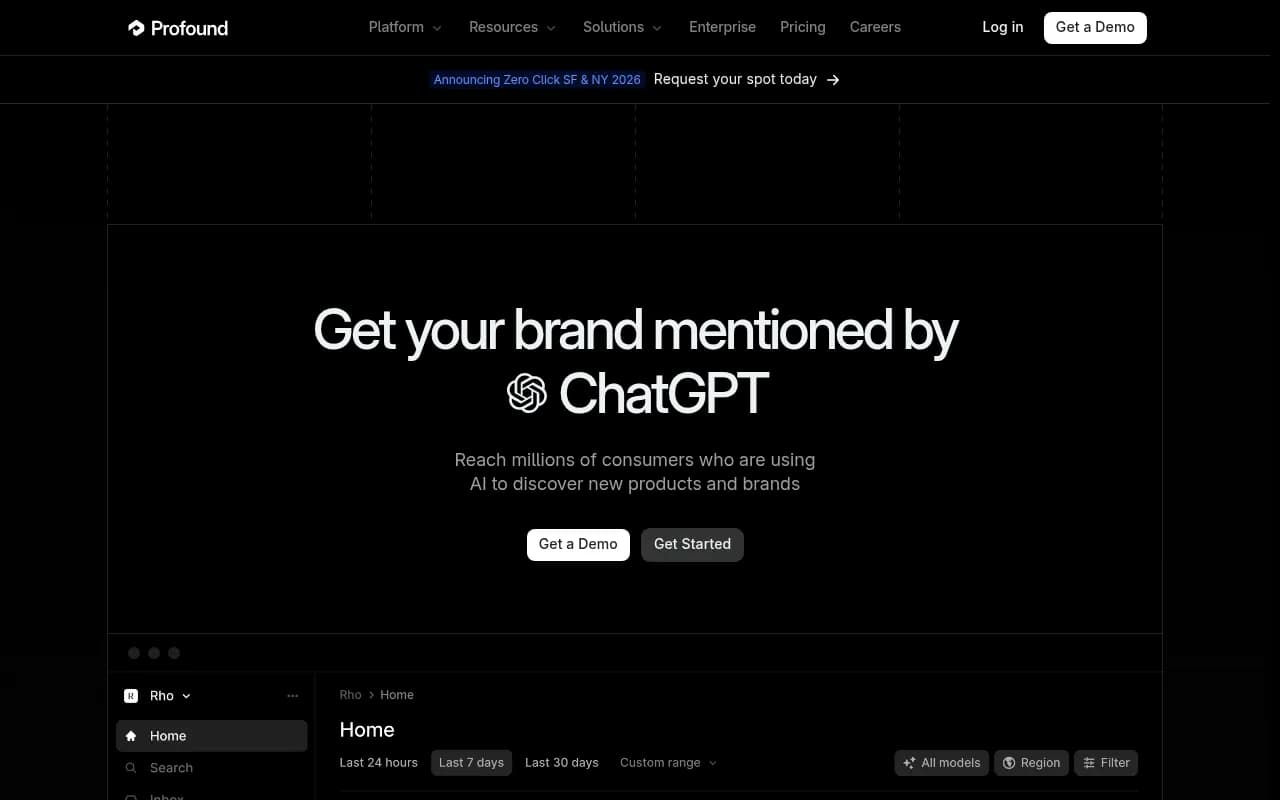
Profound is a strong enterprise option with solid data depth, though it's priced accordingly and lacks Reddit tracking and ChatGPT Shopping monitoring.

AthenaHQ has good monitoring capabilities but is focused on tracking rather than optimization -- similar to Nimt.ai in that respect, just with more enterprise polish.
Scrunch AI covers monitoring across major AI models and has some optimization features, though it doesn't match Promptwatch's content generation or crawler log depth.
The honest summary: if you're comparing tools in 2026, the most important question to ask isn't "which models does it track?" -- most tools cover the major ones. The question is "what does it help me do with that data?"
Making the call
If you're evaluating Nimt.ai vs Promptwatch, you're essentially choosing between two different stages of GEO maturity.
Nimt.ai is for teams that want to start measuring. Promptwatch is for teams that want to start winning.
That's not a knock on Nimt.ai -- there's real value in a simple, accessible monitoring tool, especially for teams that are just getting their heads around AI search. But if you're serious about AI visibility as a growth channel, you'll hit the ceiling of a monitoring-only tool pretty quickly. You'll have data showing you're invisible for important prompts, and no tooling to help you fix it.
The GEO platforms that are actually moving the needle for brands in 2026 are the ones that close the loop from insight to action. Promptwatch is the clearest example of that in the market right now -- used by 1,480+ brands including Booking.com and Center Parcs, with 4.5 billion citations, clicks, and prompts processed.
Start with what you can act on. If that's a lightweight monitor while you figure out your strategy, Nimt.ai works. If you're ready to build AI visibility into your content workflow, Promptwatch is the more complete bet.