Key takeaways
- Google AI Overviews now appear in over 60% of all searches, making definition and explainer content one of the highest-leverage content types you can produce.
- AI Overviews favor content that is easy to extract: clean definitions, structured headings, short answer-first paragraphs, and supporting context.
- Semantic completeness matters more than keyword density -- AI needs to see that your page covers a topic fully, not just mentions the right words.
- E-E-A-T signals (experience, expertise, authoritativeness, trustworthiness) are a real ranking factor, not just a checklist item.
- Tracking whether your content actually gets cited requires dedicated tooling -- not just Google Search Console.
Why definition content is the best bet for AI Overview visibility
If you want to appear in Google AI Overviews, there's a content type that consistently outperforms everything else: definitions and explainer content.
Think about how AI Overviews work. Google's system pulls from web pages to construct a synthesized answer. It needs source material that is clean, factual, and structured in a way that makes extraction easy. Definitions and explainers are built for exactly that. A well-written "What is X?" page is practically a gift to an AI system trying to answer a user's question.
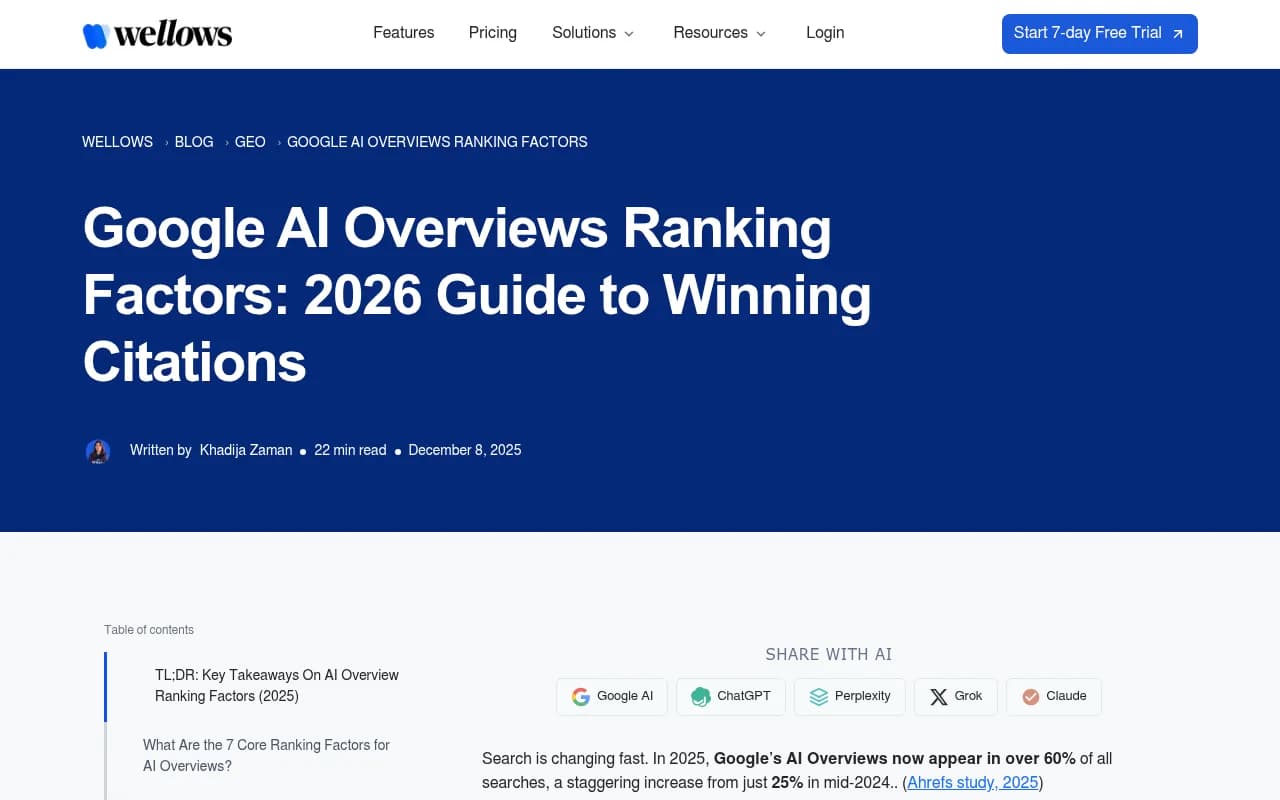
According to research from Wellows, AI Overviews now appear in over 60% of searches -- up from 25% in mid-2024. That's a massive shift in a short time. And the pages getting cited aren't necessarily the ones with the most backlinks. They're the ones that answer the question most completely and most clearly.
The question is: what does "clearly" actually mean to Google's AI system? That's what this guide breaks down.
What Google's AI actually looks for in explainer content
Before getting into formatting specifics, it helps to understand the signals Google's AI uses when deciding what to cite. These aren't guesses -- they're patterns that show up consistently across pages that win AI Overview citations.
Semantic completeness
This is the big one. AI Overviews don't just want a definition -- they want a definition plus context, plus related concepts, plus common use cases or misconceptions. A page that defines "bounce rate" in one paragraph will lose to a page that defines it, explains why it matters, clarifies what counts as a "good" bounce rate, and distinguishes it from exit rate.
The mental model here: imagine a user who knows nothing about the topic. What would they need to understand it fully? Your page should answer that, not just the narrow question in the title.
Answer-first structure
AI systems extract content by looking for the clearest, most direct answer near the top of a section. If your definition is buried in paragraph three after two sentences of preamble, it's harder to extract. If it's the first sentence after the heading, it's easy.
This is sometimes called the "inverted pyramid" structure -- lead with the conclusion, then support it. Journalists have written this way for a century. It turns out AI systems like it too.
E-E-A-T signals
Google's quality raters have used E-E-A-T (Experience, Expertise, Authoritativeness, Trustworthiness) as a framework for years, and it's now baked into how AI Overviews select sources. For definition content, this means:
- Author credentials visible on the page (or linked to an author bio)
- Citations or references to primary sources where relevant
- Publication dates that are current
- A domain with topical authority in the subject area
A definition of "machine learning" on a general lifestyle blog will lose to the same definition on a site that consistently publishes technical AI content.
Structured, extractable formatting
Headers signal topic boundaries. Lists make individual items parseable. Tables let AI compare options. Pages that use these elements correctly are easier for AI to process than walls of prose.
This doesn't mean stuffing your content with bullet points for the sake of it. It means using structure where it genuinely helps the reader -- which, conveniently, also helps the AI.
The anatomy of a definition page that gets cited
Here's a concrete structure that works for definition and explainer content targeting AI Overviews.
The opening definition block
Your first paragraph after the H1 (or after the intro section heading) should contain a clean, standalone definition. Something like:
[Term] is [concise definition in one to two sentences]. [One sentence of context explaining why it matters or where it's used].
That's it. Don't pad it. Don't start with "In today's digital world..." The AI needs to extract a definition, and this format makes that trivially easy.
The "why it matters" section
After the definition, explain the significance. This is where you add context that makes the definition useful rather than just technically accurate. Keep this to two to three paragraphs. Use concrete examples, not abstract statements.
Bad: "This concept is important for businesses of all sizes." Better: "A 90% bounce rate on a landing page usually means the page isn't matching what users expected when they clicked -- either the headline is misleading or the content doesn't deliver on the ad's promise."
The breakdown section
Break the concept into components, types, or stages. Use a numbered list or a table here. This is where semantic completeness really pays off -- you're showing Google that your page covers the full topic, not just the surface.
For example, a definition of "content marketing" might include a breakdown of content types (blog posts, videos, case studies, newsletters), distribution channels, and measurement approaches.
Common misconceptions or FAQs
This section is underused and highly effective. AI Overviews frequently get triggered by "is X the same as Y?" or "what's the difference between X and Z?" questions. If your page addresses these, you become a candidate for those queries too.
A short FAQ section at the bottom of a definition page -- three to five questions with direct answers -- can dramatically expand the range of queries your page gets cited for.
Structured data
Adding FAQ schema or HowTo schema where appropriate helps Google understand your content structure. It's not a magic bullet, but it removes friction. Tools like Yoast SEO make this straightforward for WordPress sites.
Formatting rules that make content extractable
Here's a practical table of what works and what doesn't for AI Overview citation:
| Element | What works | What to avoid |
|---|---|---|
| Opening paragraph | Direct definition in sentence 1-2 | Long preamble before the actual answer |
| Headings | Descriptive, question-style H2s and H3s | Clever or vague headings that don't signal content |
| Lists | Bulleted or numbered for discrete items | Bullet points for things that flow better as prose |
| Tables | Comparisons, feature breakdowns, step sequences | Tables with merged cells or complex layouts |
| Paragraphs | 2-4 sentences, one idea each | Dense blocks of 8+ sentences |
| Links | Internal links to related concepts | Excessive external links that dilute authority signals |
| Images | Diagrams with descriptive alt text | Stock photos with no informational value |
One thing worth noting: sentence length matters. Shorter sentences are easier for AI to parse and extract. This doesn't mean every sentence needs to be five words long -- it means avoiding the 60-word compound sentence that buries the key point in a subordinate clause.
Semantic completeness in practice
"Semantic completeness" sounds abstract, so here's a concrete way to think about it.
When Google's AI processes a query like "what is programmatic advertising?", it's not just looking for a page that contains those words. It's looking for a page that covers the concept thoroughly enough to answer follow-up questions too. Things like: how does it work, what are the main platforms, how does it differ from direct ad buying, what are the typical costs.
A page that covers all of those -- even briefly -- is more semantically complete than a page that only answers the narrow definition question.
The practical implication: when you're writing a definition page, map out the five to eight questions a curious reader might ask after reading your opening definition. Then answer them, in order of importance. You don't need to write 3,000 words on each -- a paragraph per question is often enough.
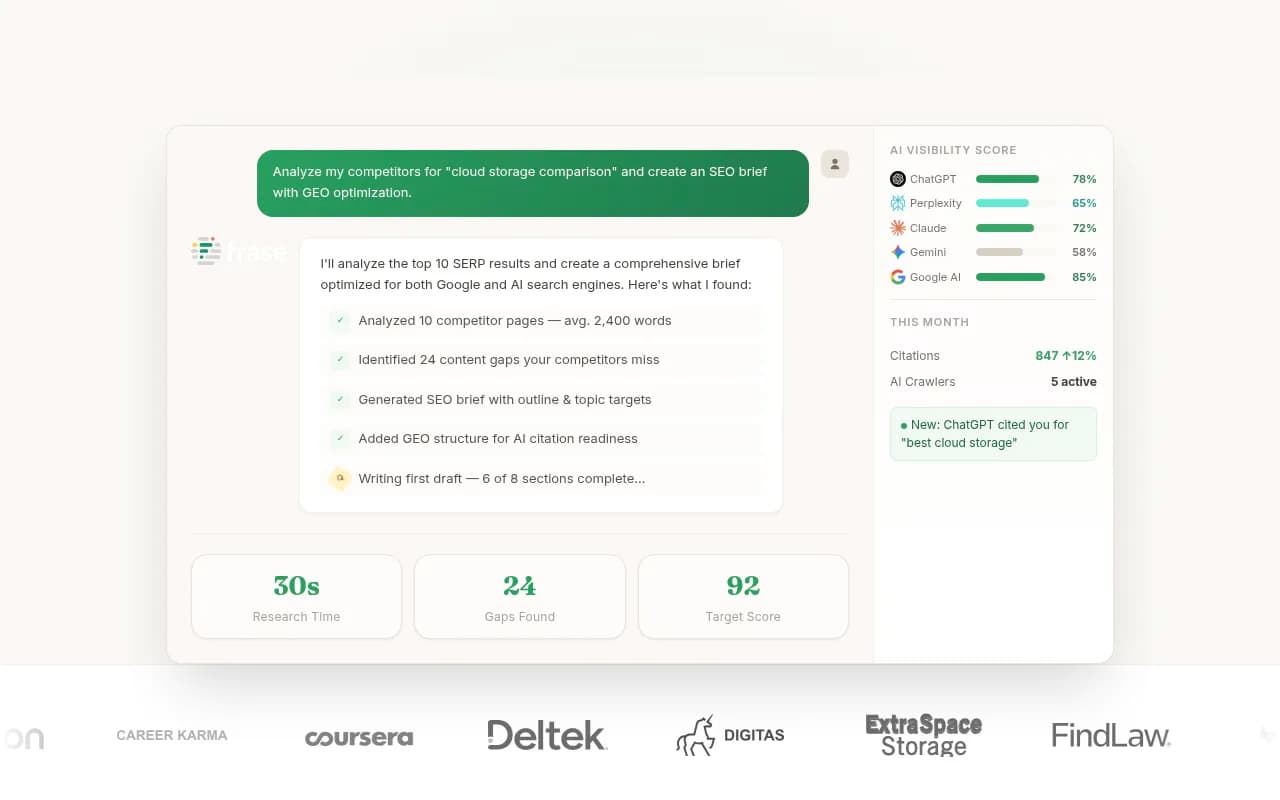
Tools like Clearscope and Frase are useful here. They analyze top-ranking content and surface the related terms and subtopics your page should cover.
Long-tail queries: where definition content really wins
One insight that gets overlooked: AI Overviews are disproportionately triggered by long-tail, specific queries. "What is SEO?" is a competitive, broad query. "What is the difference between on-page and off-page SEO for e-commerce sites?" is a long-tail query where a well-structured explainer page can dominate.
This matters for strategy. If you're trying to get cited in AI Overviews, don't only target the obvious head terms. Build out definition and explainer content for the specific, nuanced questions in your niche. These are the queries where:
- Competition is lower
- User intent is clearer
- AI Overviews are more likely to cite a single authoritative source rather than synthesizing from many
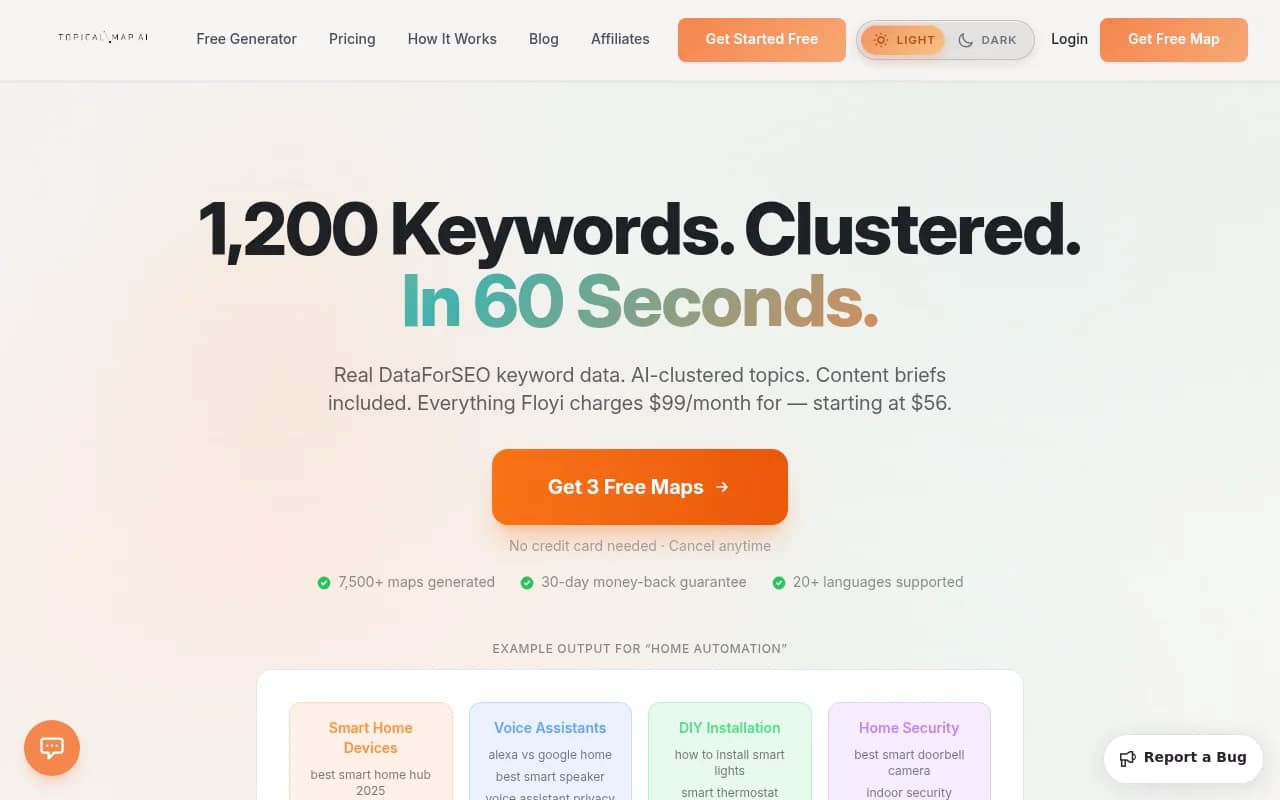
A good topical map helps you find these gaps systematically. Topical Map AI is built specifically for this -- it helps you identify the full cluster of questions around a topic so you can build out comprehensive coverage.
E-E-A-T: what it actually means for definition pages
E-E-A-T is often treated as a vague checklist. For definition content specifically, here's what it means in practice.
Experience means showing that the author has actually worked with the concept, not just read about it. For a definition of "A/B testing," an author who has run A/B tests and can reference specific outcomes is more credible than one who's just summarizing Wikipedia.
Expertise means topical depth. Does the rest of your site cover this subject area? Is the author known for this topic? A single definition page on a site that covers everything from recipes to finance will struggle against a page on a dedicated marketing or analytics site.
Authoritativeness is partly about backlinks, but also about whether your content is cited elsewhere -- including in AI responses. This creates a compounding effect: pages that get cited tend to get cited more.
Trustworthiness means the basics: HTTPS, clear authorship, accurate information, no deceptive patterns. For definition content, it also means not overstating claims. If something is debated or context-dependent, say so.
Tools for writing and optimizing definition content
Writing good definition content isn't just about knowing the rules -- it's about having the right tools in your workflow.
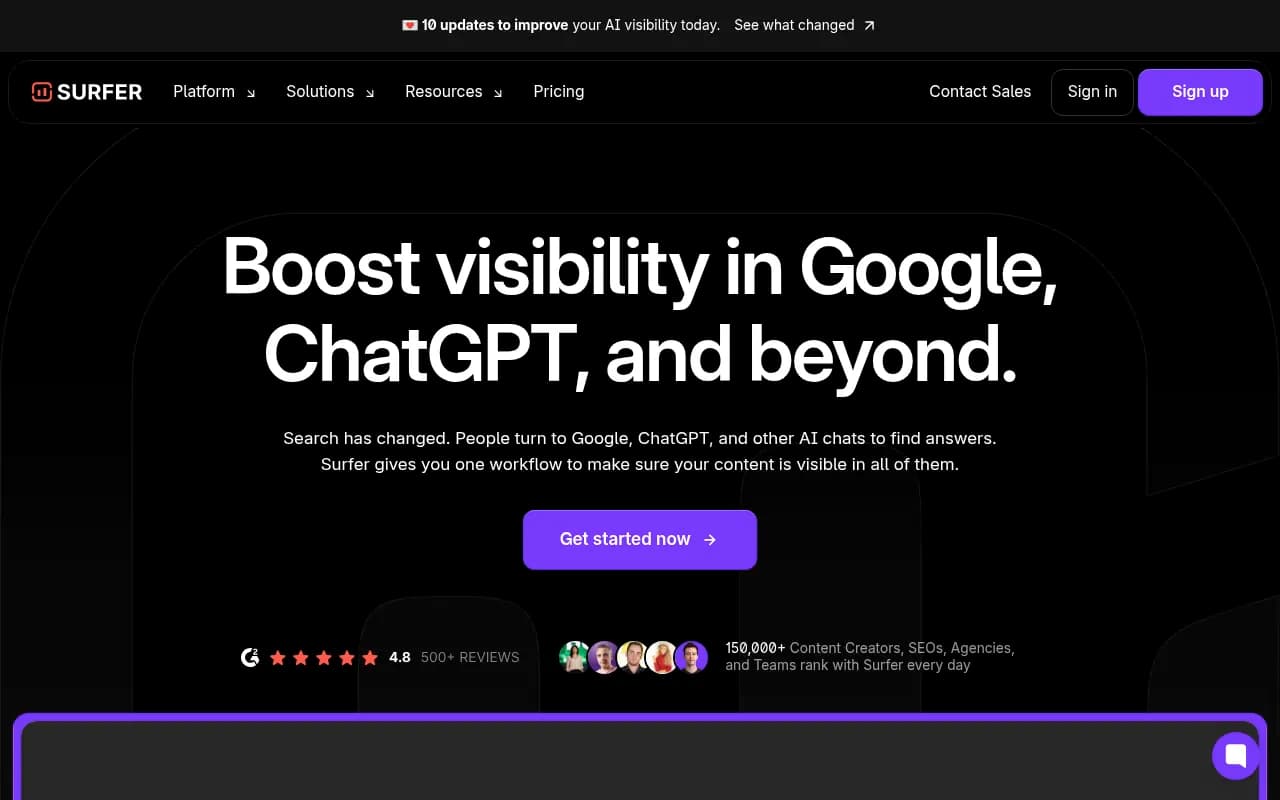
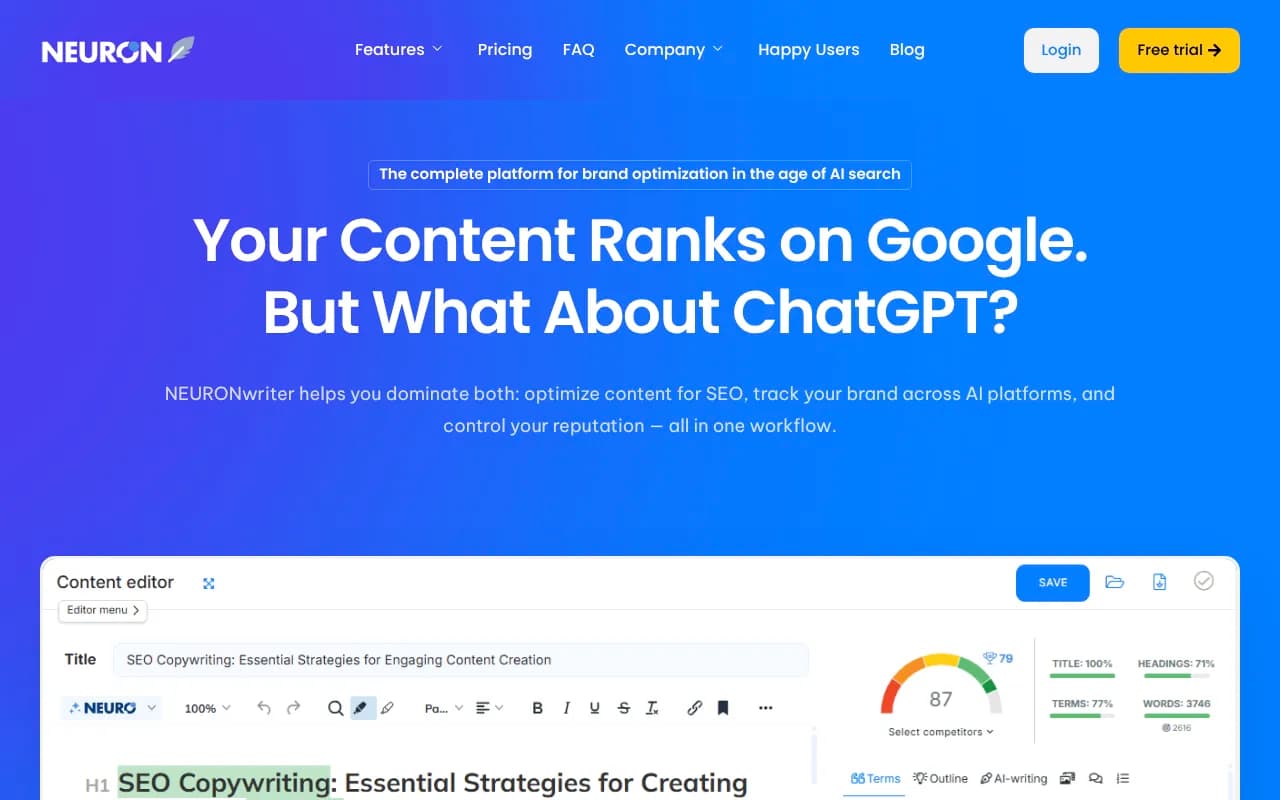
For content research and optimization, Surfer SEO and NeuronWriter both analyze top-ranking pages and tell you what terms and subtopics to include. They're particularly useful for the semantic completeness piece.
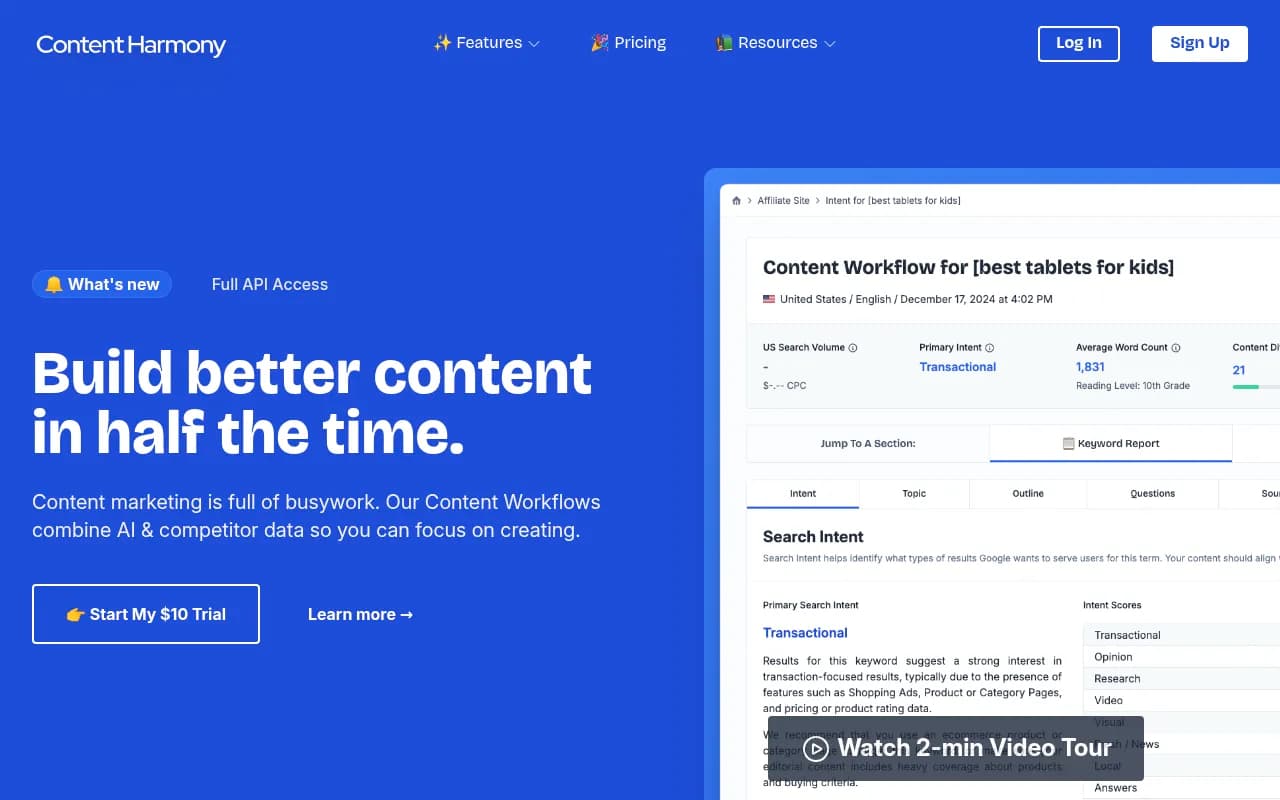
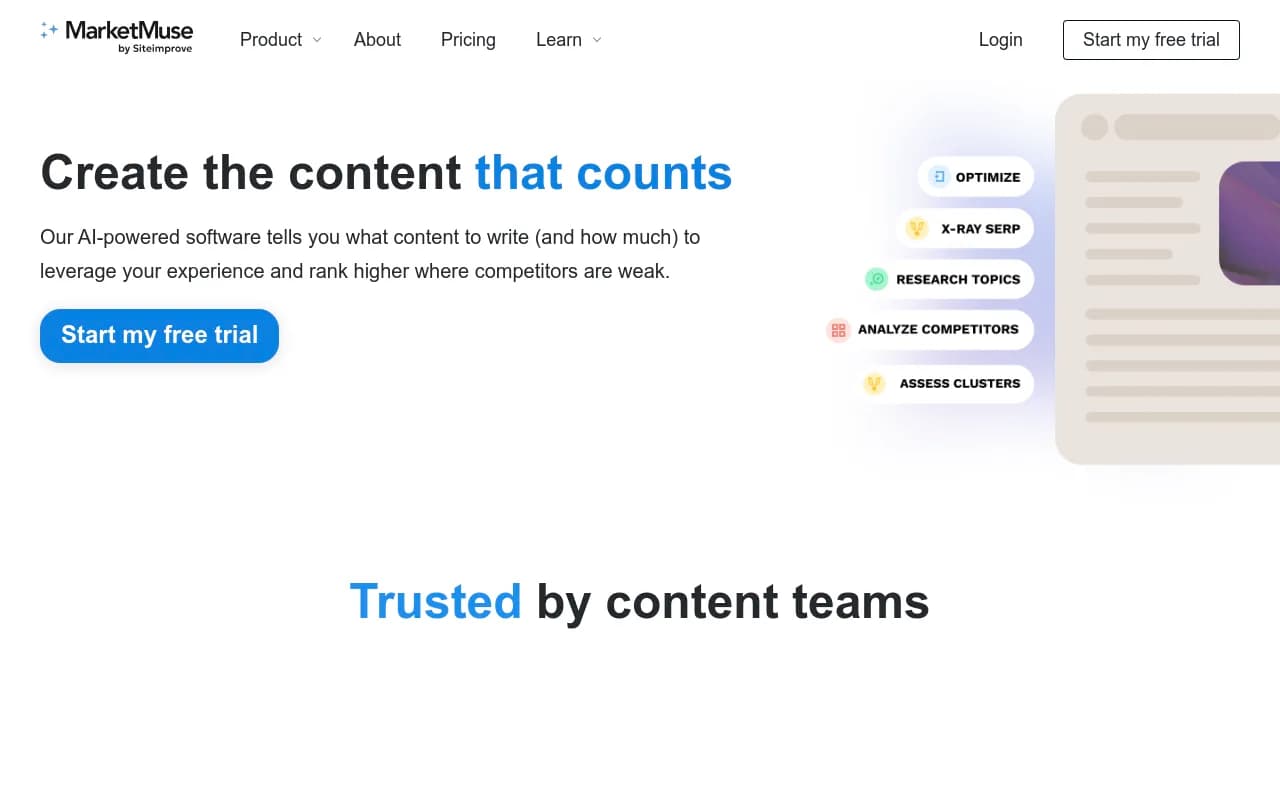
For content briefs and gap analysis, Content Harmony and MarketMuse help you map what your page needs to cover before you write a word.
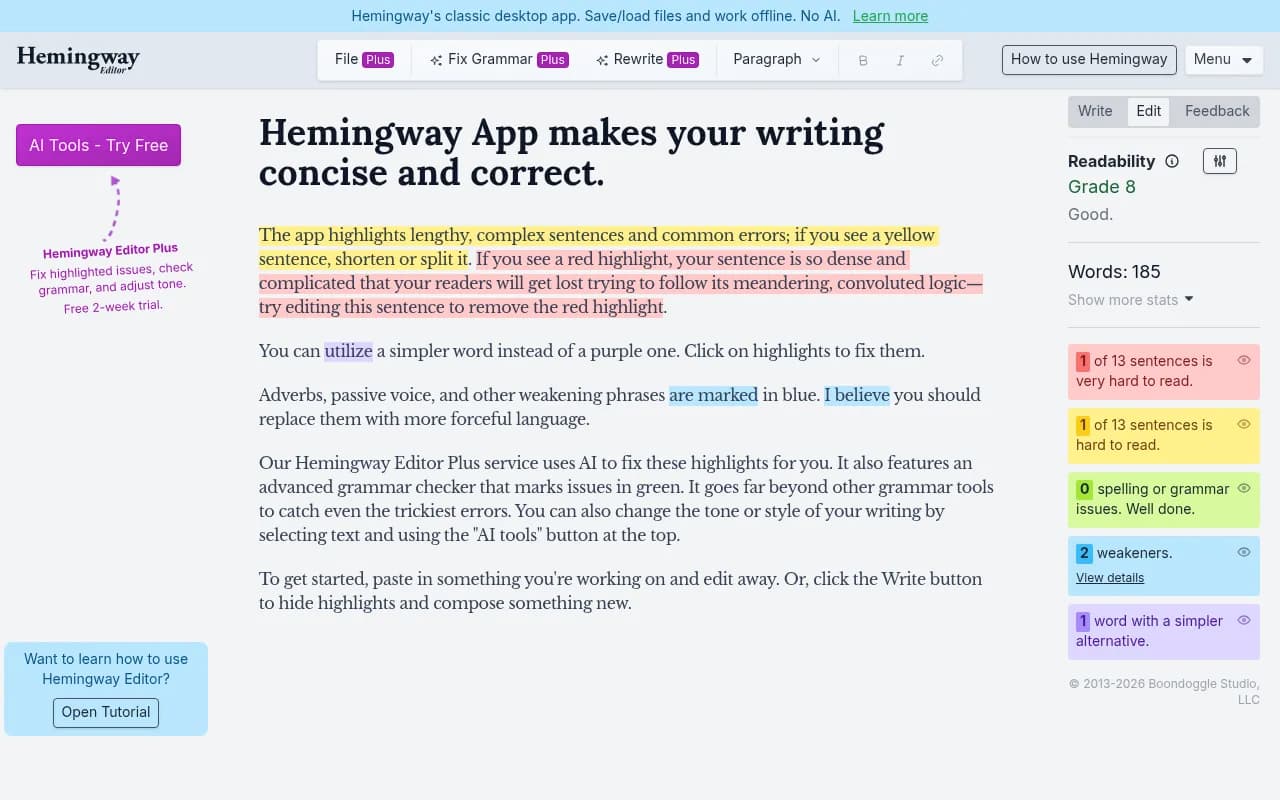
For readability, the Hemingway App is blunt and useful. It flags sentences that are too long or complex -- exactly the kind of thing that makes content harder for AI to extract.
Tracking whether your content actually gets cited
Here's the frustrating part: Google Search Console doesn't tell you whether your page is being cited in AI Overviews. It shows impressions and clicks, but AI Overview citations often don't generate clicks at all -- the user gets their answer and moves on.
This means you need separate tooling to track AI visibility. Promptwatch is built for exactly this -- it tracks which of your pages are being cited in AI Overviews (and other AI search engines like ChatGPT, Perplexity, and Gemini), how often, and for which queries. It also shows you the gaps: the prompts where competitors are getting cited but you're not, which tells you exactly what content to create next.

That gap analysis is genuinely useful for definition content strategy. If you can see that a competitor is getting cited for "what is customer lifetime value?" and you don't have a page on that topic, you have a clear, prioritized content opportunity.
A comparison of content optimization tools for AI Overview targeting
| Tool | Best for | AI Overview focus | Content generation |
|---|---|---|---|
| Surfer SEO | On-page optimization and NLP scoring | Moderate | Yes |
| Clearscope | Semantic completeness analysis | Moderate | No |
| Frase | Research and brief creation | Moderate | Yes |
| MarketMuse | Topic modeling and content strategy | Moderate | Yes |
| NeuronWriter | Semantic SEO with SERP analysis | Moderate | Yes |
| Content Harmony | Brief creation and intent analysis | Moderate | No |
| Promptwatch | AI citation tracking and gap analysis | High | Yes (via Content Agents) |
The honest summary: most content optimization tools were built for traditional SEO and have added AI features. Promptwatch is built specifically for AI search visibility, which makes it more useful for tracking and improving AI Overview citations specifically.
Common mistakes that kill AI Overview citations
A few patterns show up repeatedly in pages that should be getting cited but aren't.
Burying the definition. If your page starts with three paragraphs of background before getting to the actual definition, the AI may not extract it correctly. Put the definition first.
Vague or hedged language. "X can sometimes be considered a type of Y in certain contexts" is hard to extract. "X is a type of Y" is easy. Be direct where you can be direct.
No structure below the surface. A page can look well-structured (it has headings!) but still fail if the headings are vague ("Overview," "More Information") rather than descriptive ("How X works," "X vs. Y: key differences").
Ignoring related entities. AI systems understand concepts through their relationships to other concepts. A definition of "conversion rate" that never mentions "landing pages," "CTAs," or "A/B testing" is less semantically rich than one that does. Use related terms naturally.
Thin FAQ sections. A FAQ with one-sentence answers is better than nothing, but a FAQ where each answer is two to three sentences -- enough to actually address the question -- is significantly more useful to AI systems.
Putting it together: a practical workflow
If you're building out definition and explainer content with AI Overview visibility as a goal, here's a workflow that works:
- Identify target queries using long-tail keyword research. Focus on "what is," "how does," and "what's the difference between" queries in your niche.
- Use a tool like Content Harmony or Frase to build a brief that maps the subtopics your page needs to cover for semantic completeness.
- Write the page with an answer-first structure: definition in the first paragraph, context and breakdown in subsequent sections, FAQ at the bottom.
- Optimize for readability -- short paragraphs, descriptive headings, tables where appropriate.
- Add structured data (FAQ schema at minimum) using a plugin or manually.
- Publish and track citations using a dedicated AI visibility tool. Adjust based on what's getting cited and what isn't.
The pages that dominate AI Overviews aren't necessarily the longest or the most technically sophisticated. They're the ones that answer the question clearly, cover the topic completely, and make it easy for an AI system to extract and use the content. That's a standard any writer can meet -- it just requires being deliberate about it.