Key takeaways
- Otterly.AI (from $29/mo) and Rankscale (a roughly $20/mo annual-only Essentials tier) are the cheapest entry points. Peec AI starts at $95/mo.
- Engine coverage differs more than price. Otterly includes 4 engines and charges extra for Gemini, Claude and AI Mode. Peec gives you 3 engines of your choice. Rankscale lists all engines on every paid plan.
- Gauge is not really a lightweight tracker. Its pricing is inconsistent across sources ($99+ versus $599 for Growth), and it leans toward content creation and agent-led workflows.
- Always compare cost per answer, not cost per prompt. Rankscale's credits and Peec's model add-ons make list prices misleading.
- All four are monitors first. If you want crawler logs, traffic attribution and content that gets published for you, you need a different class of tool.
What "lightweight" means here
A lightweight AI tracker does one job: you give it prompts, it runs them against ChatGPT, Perplexity, Google AI Overviews and friends, and it tells you whether your brand showed up and who got cited instead. No sprawling suite, no six-month onboarding.
Otterly.AI, Peec AI and Rankscale fit that description. Gauge is the odd one out. I included it because people keep putting it in the same shortlist, but it sells itself as an "Agent-Led Growth" platform, and the price and feature set reflect that. Treat it as the heavier, execution-oriented option in this comparison.
One caveat before the details. Most of the pricing and comparison claims I found come from the vendors themselves or from rival blogs with their own agenda. Gauge's cost-per-answer numbers, for example, are published on Gauge's own comparison pages. I've flagged where that matters, and you should confirm every figure on the vendor's pricing page before buying.
The four tools at a glance
| Tool | Entry price (monthly billing) | Pricing model | Engines on entry plan | Seats |
|---|---|---|---|---|
| Otterly.AI | $29 (15 prompts) | Per prompt | 4 (ChatGPT, AI Overviews, Perplexity, Copilot) | Unlimited |
| Peec AI | $95 (50 prompts) | Per prompt tier plus model add-ons | 3 of your choice | Unlimited |
| Rankscale | About $20 annual only; $99 Pro on monthly | Credits | All listed engines on paid plans | Reported unlimited, unverified |
| Gauge | $99+ listed in places; $599 Growth | Prompts across 3 engines | ChatGPT, AI Mode, Copilot (on Growth) | Not confirmed |
Otterly.AI

Otterly is the most accessible monitor of the group, and that reputation is earned. Lite is $29/mo for 15 prompts. Standard is $189/mo for 100 prompts, and Premium is $489/mo for 400. Enterprise is custom and starts at 1,000 prompts. Extra prompts cost $99 per 100 on Standard and Premium.
Every tier includes ChatGPT, Google AI Overviews, Perplexity and Microsoft Copilot, daily tracking and unlimited team members. The catch is that Claude, Google AI Mode and Gemini are paid add-ons. If your buyers use Gemini or you care about AI Mode, the real price is higher than the headline.
Otterly also bundles a few free-ish utilities: AI prompt research, a Query Fan Out tool, a crawlability audit and a content check. API, MCP and Agent Analytics start at Standard, and the Data Studio connector is also Standard and up. Lite gets 3 recommendations per week and one workspace.
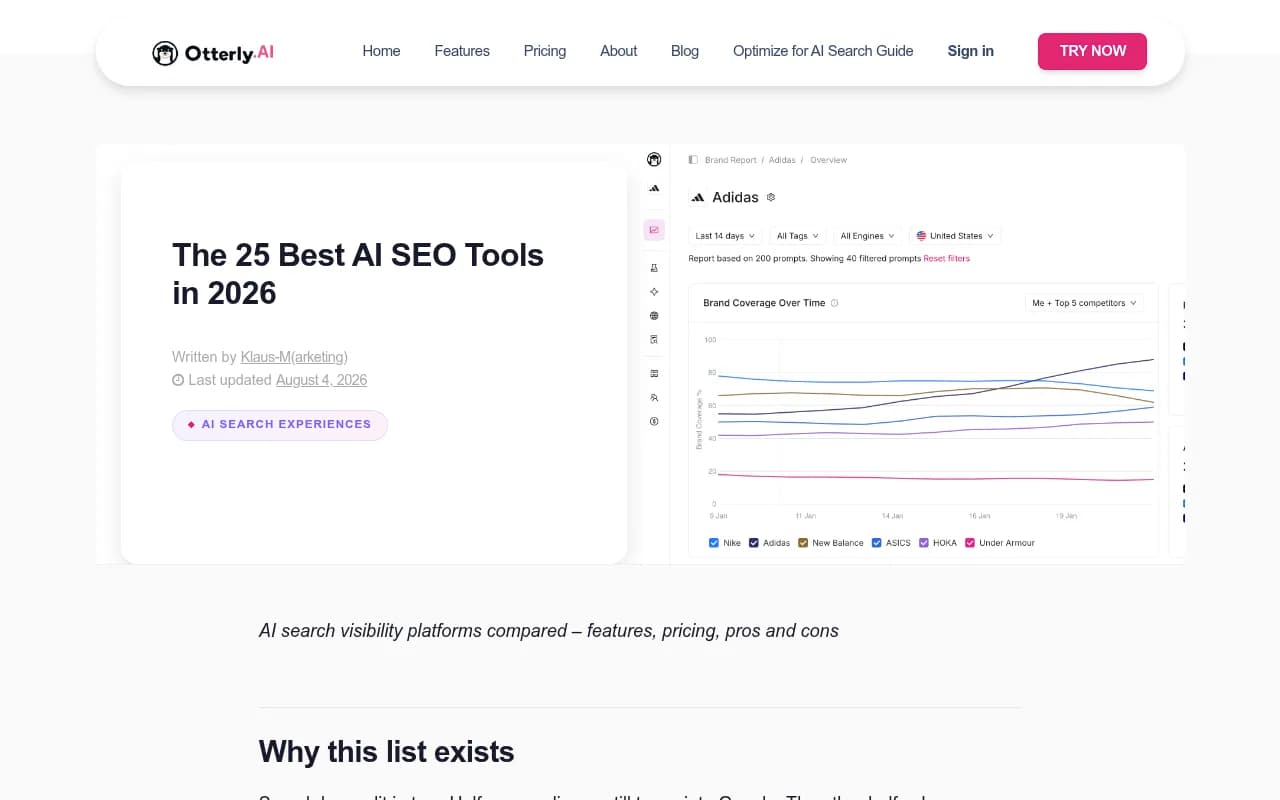
That screenshot is from Otterly's own blog, so read the ranking with a grain of salt. Otterly lists itself at number 2 and Rankscale at 17, and flags Rankscale's "limited engine coverage and metric depth" as a con. That last claim sits oddly with Rankscale's own pricing page, which lists nine-plus engines on paid plans. Competitor-written cons are worth verifying yourself.
Who it fits: solo marketers, small teams and agencies who want daily tracking of a small prompt set without a procurement process. Who it doesn't: anyone who needs Gemini or Claude without paying extra, or a tool that tells them what to write next.
Peec AI

Peec is the fastest-growing challenger in the category. One roundup puts its raised funding at $29M and ARR at $4M+ within ten months, though that is a third-party figure. It is also noticeably more polished than the cheapest tools.
Current USD pricing, per Peec's pricing page and a late-October 2026 write-up from Xtrusio:
- Starter: $95/mo, 50 prompts, 1 project, 1 country
- Pro: $245/mo, 150 prompts, 2 projects, 3 countries
- Advanced: $495/mo, 350 prompts, 5 projects, 3 countries
- Enterprise: custom, with SSO and unlimited prompts
Annual billing takes roughly 15% off. If you see older figures like "EUR 85 / 205 / 425" floating around, they are stale.
Each self-serve plan tracks 3 models of your choice daily. Choose from ChatGPT, AI Mode, AI Overviews, Copilot, Gemini and Naver AI. Extra models cost $35, $85 or $165 per month depending on tier. So a Starter user who wants 5 models pays closer to $140/mo on annual billing than the $80 headline, according to a Ryze review.
What you get on every tier is generous for a monitor: unlimited users, competitors and languages, source and gap analysis, recommended actions, an ads library, AI shopping and SKU tracking, brand perception scoring, a crawlability audit across 40+ bots, AI referral reporting and MCP access. API access starts at Pro. The Data Studio connector starts at Advanced.
Peec also sells agency plans from $245/mo (about 111 prompts across 3 clients). Ignore the stray claim that Enterprise starts at $499; the pricing page says custom.
Who it fits: mid-market teams that want analysis depth and clean reporting and can live with picking three engines. Who it doesn't: budgets under $100, or teams that need every engine at once without add-ons.
Rankscale
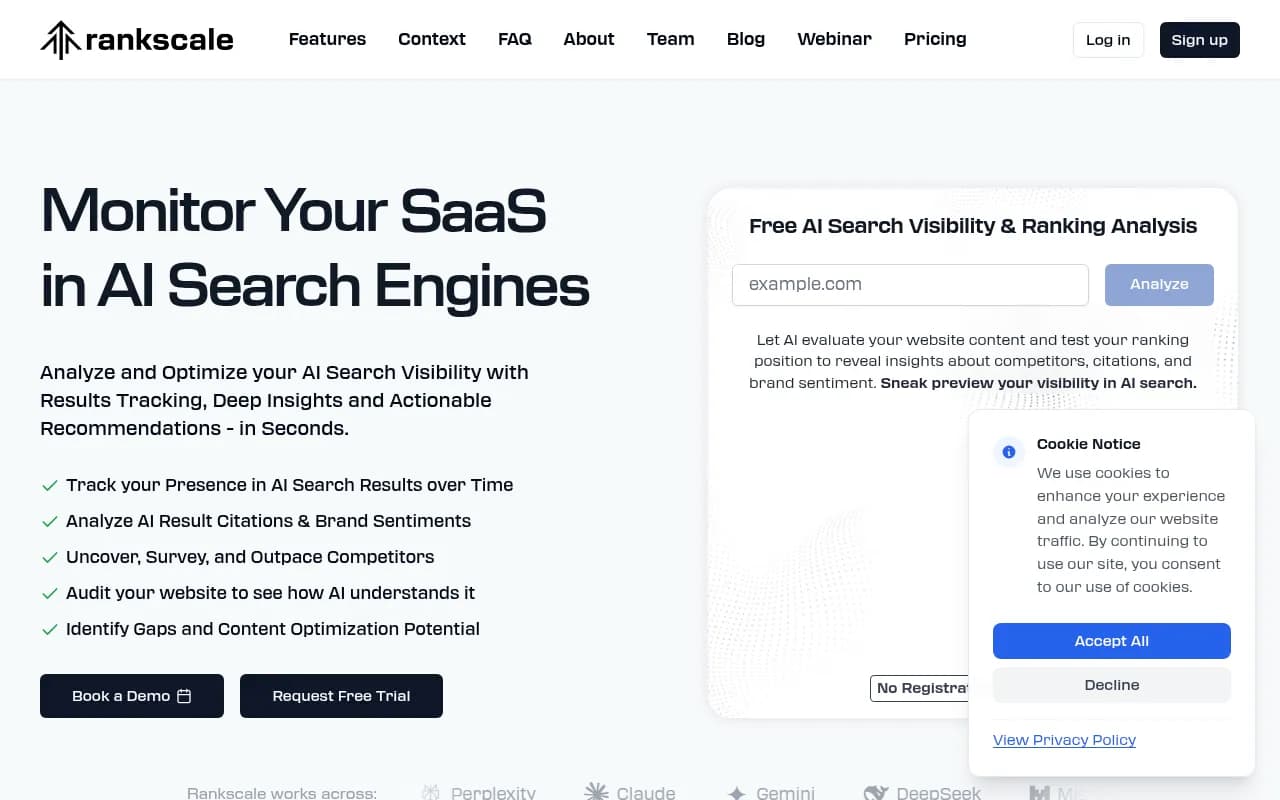
Rankscale is the budget challenger with the widest engine list. Paid plans list ChatGPT, Perplexity, Google AI Mode, AI Overviews, Gemini, DeepSeek, Mistral, Claude and Microsoft Copilot, with Meta Muse Spark announced on the site. It is a Vienna-based company, founded in 2024, and one roundup puts its funding at roughly $915K.
It bills on credits rather than prompts. Monthly prices, with yearly in brackets (15% off):
- Pro: $99 ($84), 1,200 credits, up to 4,800 answers
- Pro+: $229 ($195), 3,000 credits, up to 12,000 answers, REST API
- Growth: $385 ($327), 5,500 credits, up to 22,000 answers, white-label and agency features
- Enterprise: $780 ($663), 12,000 credits, up to 48,000 answers
The widely quoted $20/mo figure is an Essentials tier that is annual only, per IndustryLens. Its cheapest monthly plan is $99. That is a real difference if you were hoping to try it for a month. Essentials also lacks sentiment analysis, custom dashboards, local results, AI visits and shopping analysis, so it is a trimmed experience.
The pitfall is the credit model. Cost depends on prompts, engines and frequency all multiplied together, so a 'cheap' plan can burn out fast if you run many engines hourly. Use Rankscale's credit calculator before comparing it with per-prompt tools. One more warning: I found the scraped comparison table on the pricing page garbled (odd credit counts and engine numbers), so go by the plan cards, not the table.
Its standout feature is the AI Readiness Score, a 200+ checkpoint page audit covering content structure, schema, crawlability and metadata. It tells you what to fix on a page, which Otterly and Peec only partly do.
Who it fits: agencies and SMBs who want broad engine coverage and some page-level guidance. Who it doesn't: teams who hate estimating usage.
Gauge
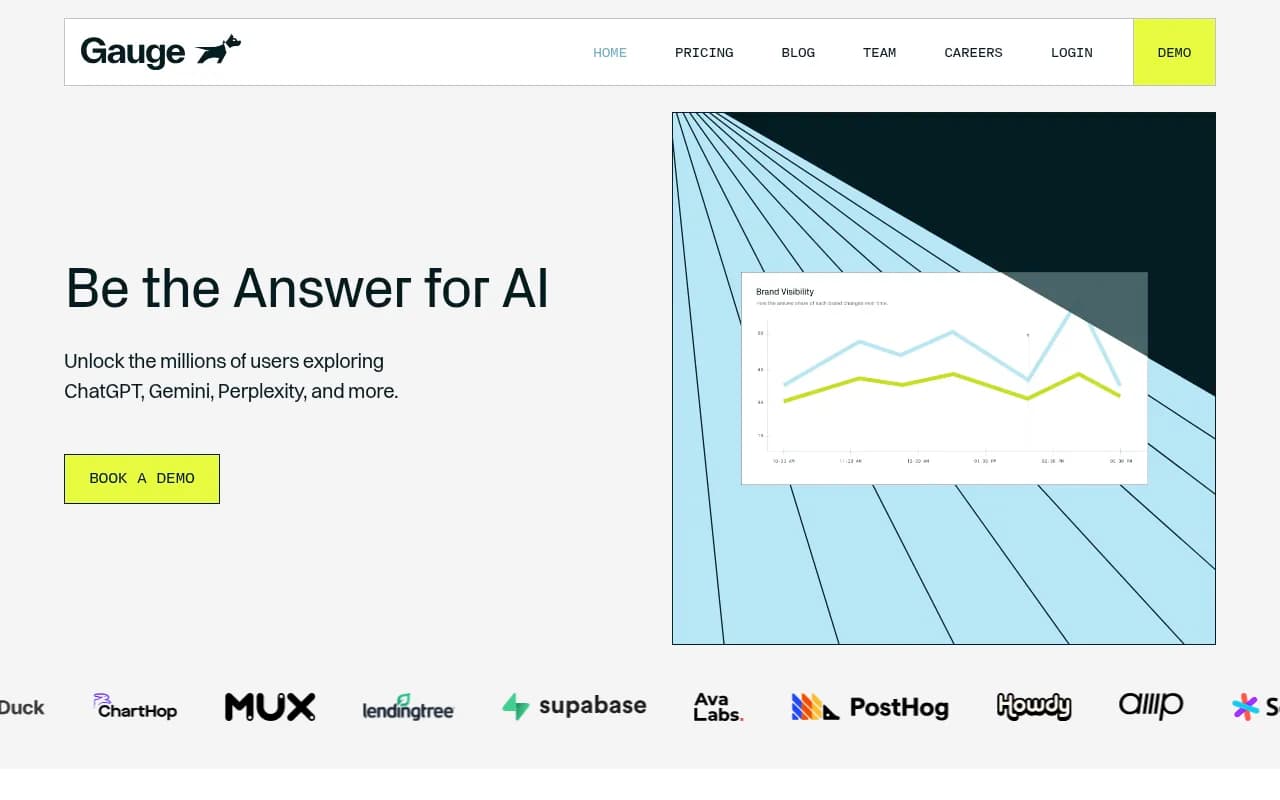
Gauge describes itself as an "Agent-Led Growth" platform covering AI search visibility, agent preference and agent experience. It is a different animal from the other three.
Pricing is where things get murky. Gauge's comparison pages put the Growth plan at $599/mo, month to month, with 600 prompts across ChatGPT, Google AI Mode and Microsoft Copilot. That is 54,000 answers a month, which Gauge calculates as $11.09 per 1,000 answers. Another Gauge page and Menra both cite "$99/mo+" as the starting price. I could not reconcile the two, so ask for a current quote.
What Gauge claims to add:
- Automated content creation: brief, outline, article and CMS publish
- An "Ask Gauge" agent that pulls in GA4, Search Console, DataForSEO and ads data
- ChatGPT Ads and Google Ads tracking, technical AEO site auditing and a Slack integration
- Sentiment analysis, but only on Enterprise
It also publishes a PostHog case study claiming 41x growth in LLM-referred traffic. That is a vendor claim, not independent evidence.
At $99 the entry price is roughly 6x Peec's Starter-adjusted gap and 3x Otterly Lite; at $599 it is a different budget conversation entirely. Gauge only makes sense if you want execution and a content loop bundled with tracking. For pure monitoring it is overbuilt.
Cost per answer: the fairer comparison
Per-prompt prices hide how much data you actually get. An answer is one prompt run through one model on one day.
| Tool | Plan | Approx. monthly answers | Notes |
|---|---|---|---|
| Otterly.AI | Lite ($29) | 1,800 | 15 prompts x 4 engines x 30 days |
| Peec AI | Starter ($95) | 4,500 | About 2.1 cents per answer on monthly billing |
| Peec AI | Pro ($245) | 13,500 | About 1.8 cents per answer |
| Rankscale | Pro ($99) | Up to 4,800 | About 4 answers per credit |
| Gauge | Growth ($599) | 54,000 | Gauge's own figure, $11.09 per 1,000 |
Peec's own numbers work out to about $13 to $19 per 1,000 answers, and Otterly's to about $16 and up. So Gauge's per-answer cost is not obviously better once you account for the plan size, and the comparison is self-published anyway. The main takeaway: the cheapest sticker price is rarely the cheapest per answer, and entry plans on all of these tools give you only a few thousand answers a month.
Things to check before you pay
Which engines do you actually need?
If your audience lives in ChatGPT, Perplexity and AI Overviews, Otterly's base four-engine set covers you. If you need Gemini or Claude, price in the add-ons or look at Rankscale. Peec forces a choice of three.
How stable are the numbers?
Citation counts vary by engine. Promptwatch's average sources per response data shows ChatGPT citing about 5 sources per web-search answer, while Google AI Overviews and Perplexity sit near 10. Copilot swung from under 2 to nearly 17 within weeks before settling lower. So judge Copilot on monthly trends, not weekly snapshots, and use Perplexity as a steadier test bench.
Do the fanout features match reality?
Otterly, Rankscale and Peec all offer query fanout views. According to Promptwatch's ChatGPT query fanout data, average fanouts fell from 2.15 per response in December 2025 to about 1.84 by early March 2026, and average query length dropped from roughly 117 characters to the high 80s, then about 53 after April. Fanouts are lean now, so check any fanout tool against current behaviour and write headings that read like short keyword queries.
Is it sampling the real interface?
I could not verify independent evidence on accuracy differences or whether each tool uses UI scraping or API sampling. Peec labels some Enterprise models as API. Ask each vendor directly, because user-facing answers can differ from API output.
Where lightweight trackers stop
All of these tools tell you whether you were mentioned. They stop short of the questions that follow. Which AI crawlers actually visited my pages? Did visits turn into citations? Did any of it send traffic? What should I publish this week?
If those are the questions you have, a platform like Promptwatch covers the full loop: IP-verified crawler logs, AI traffic attribution, content gap analysis and a Content Agent that writes and publishes to your CMS. It costs more than Otterly Lite, but Essential starts at $95/mo and includes all models, so it lands next to Peec Starter. Confirm current plans at promptwatch.com/pricing.

For a wider view of the category, the directories at ai-rank-tools.com and bestgeosoftware.com list dozens more trackers by price and feature.
Which one should you pick?
- You want the cheapest possible start and have a small prompt set: Otterly Lite at $29. Budget for add-ons if you need Gemini.
- You want deeper analysis, unlimited seats and clean reporting for a mid-size team: Peec Starter or Pro.
- You want many engines and page-level audit hints, and don't mind credit math: Rankscale. Check whether annual-only Essentials is acceptable.
- You want tracking plus automated content and a connected agent, and can spend $99 to $599: Gauge, after getting a firm quote.
- You want tracking plus crawler data, traffic attribution and published content: step up to an optimization platform instead of stacking monitors.
My honest take: for pure monitoring, the decision comes down to Otterly versus Peec, and it is mostly a budget question. Rankscale is the wildcard worth a trial if engine breadth matters. Gauge is a different purchase, and shouldn't be judged against $29 tools.
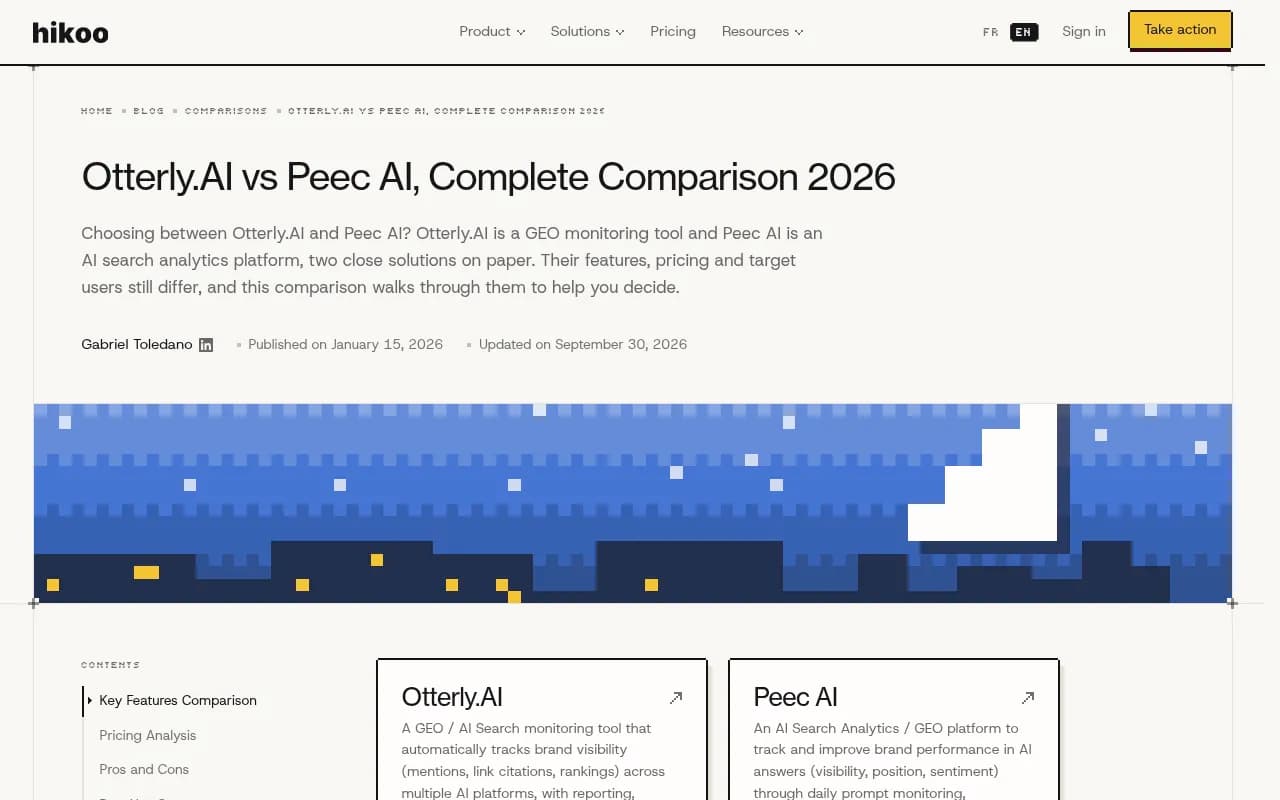
Run a 7 to 14 day trial where available, load the same 15 to 20 prompts into two tools, and compare the answers they return. That tells you more than any pricing page will.