Key takeaways
- Free tools answer two different questions: "can AI crawlers reach and read my site?" and "does AI actually mention my brand?" Most free tools only cover the first.
- Start with robots.txt. If you block GPTBot, OAI-SearchBot, ClaudeBot or PerplexityBot, nothing else on this list matters.
- llms.txt is cheap to add but there is little evidence AI search reads it. A 12-week study by ezy.ai of 83 sites found PerplexityBot made zero llms.txt fetches against 775 robots.txt fetches.
- For real brand-mention checks, the free options are one-off reports (Promptwatch, HubSpot, Frase, Prismic) and the manual method: ask the questions your buyers ask and write down who shows up.
- Free stops being enough when you need repeat tracking, since AI answers change run to run.
What "free AI visibility" actually means
I've looked at a lot of roundups titled "free AI visibility tools" and most blur two very different jobs together. One job is technical readiness: can GPTBot or PerplexityBot fetch your pages, is your robots.txt accidentally blocking them, do you have structured data. The other job is measurement: when someone asks ChatGPT for the best tool in your category, are you named?
Free tools are good at the first job and mediocre at the second. That's fine, as long as you know which one you're using. A clean readiness score does not mean you're being recommended. Goodie's own free audit tools make this point plainly in the research I reviewed: they check crawlability and a preset industry index, not whether you are mentioned.
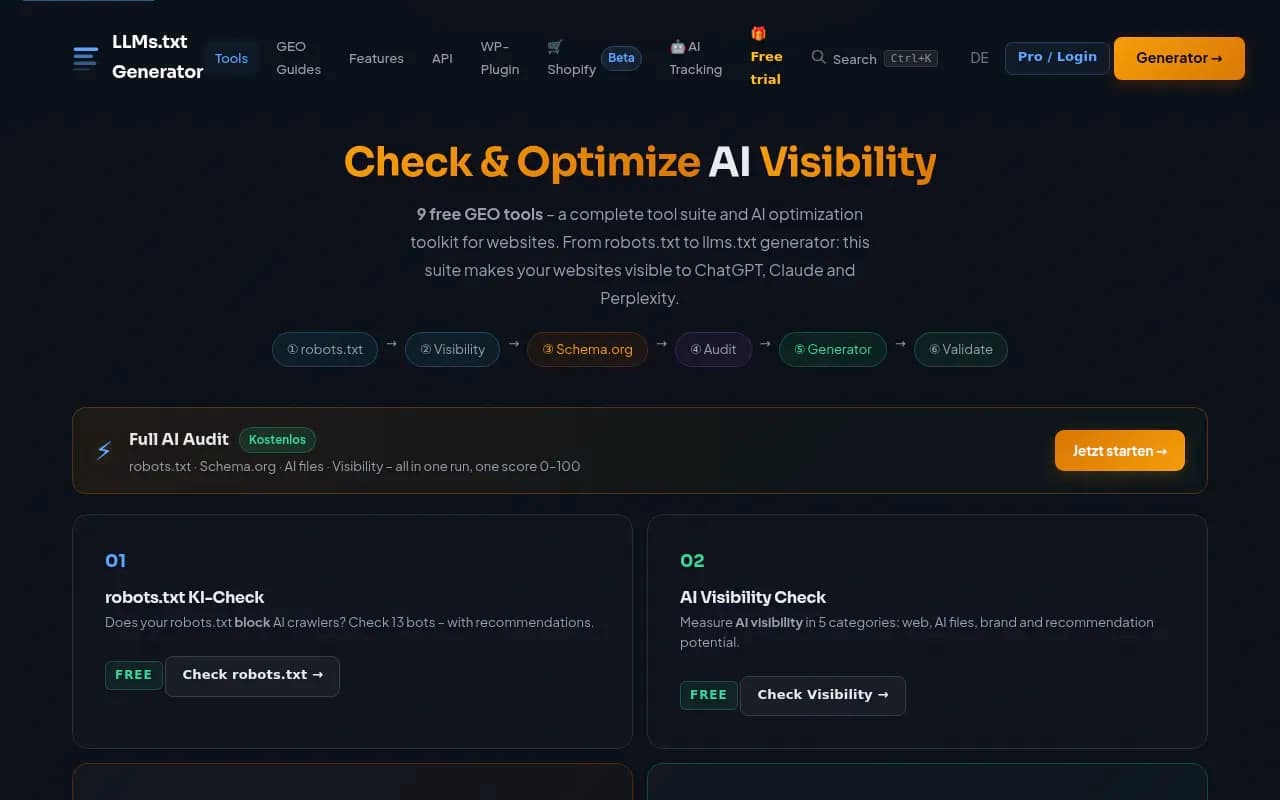
The screenshot above is llmstxtgenerator.de's tool suite, a decent example of the technical-readiness side: nine free checkers that run in the browser with no login.
The quick comparison
| Tool | Job | Signup | Best for |
|---|---|---|---|
| Promptwatch Free AI Visibility Report | Measurement | No login | A first look at how ChatGPT, Gemini and Perplexity describe your brand |
| Promptwatch Agentic Readiness Check | Readiness | Free | Seeing which AI crawlers can read you and which agent standards you support |
| GEO Inspector (Chrome extension) | Research | Free, runs locally | Seeing query fan-outs and fetched vs cited sources in ChatGPT |
| Promptwatch LLMs.txt Generator | Readiness | Free | Building an llms.txt file quickly |
| Promptwatch Robots.txt Generator for AI | Readiness | Free | Writing AI-specific crawler rules |
| AI Crawler URL Inspector | Readiness | Free | Checking whether a specific URL is reachable by AI bots |
| llmstxtgenerator.de suite | Readiness | No login | robots.txt AI check, schema scoring, llms.txt validation |
| Goodie Agent Readiness Audit | Readiness | No signup | Crawlability checks, LLMs.txt generation |
| Google Search Console | Search data | Free | Spotting pages that rank but never get cited |
Start with the manual method
The cheapest check is also the most honest. Open ChatGPT, Perplexity, Gemini and Google AI Overviews, ask 10 to 20 questions your buyers would actually ask, and record who gets named, in what position, and which sources get cited. No tool required.
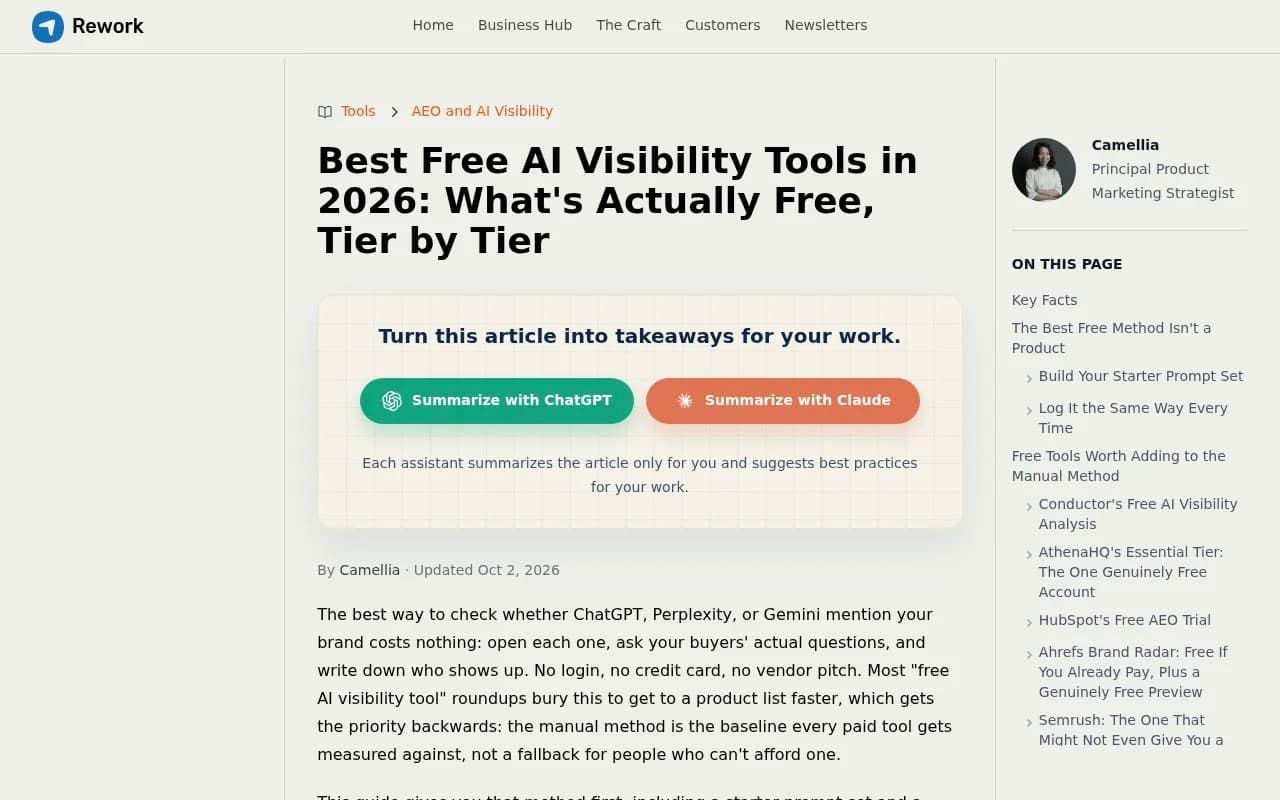
Two cautions. First, answers vary. One study cited by Rework found less than a 1% chance that ChatGPT or Google's AI returns an identical brand list twice for the same prompt, based on nearly 3,000 runs. So run each prompt several times and treat results as ranges. Second, log the cited sources, not just the brand mentions. The sources tell you where to go work.
A simple spreadsheet works: prompt, model, date, brands named, your position, cited URLs. That's the baseline every paid tool gets measured against.
GEO Inspector: see what ChatGPT actually searched
GEO Inspector for ChatGPT is a free Chrome extension from Promptwatch that shows the query fan-outs behind a ChatGPT answer, plus which sources were fetched versus actually cited. It runs 100% locally, so nothing about your sessions leaves the browser.

Why this matters: ChatGPT rarely answers from one search. It fans a prompt out into several web queries, and the wording of those queries is the closest thing to a keyword list for AI search. Promptwatch Data found ChatGPT Search began using the site: operator at scale on August 8, 2026, jumping from roughly 0.4% to about 17% of all fanout queries overnight, with searches per response nearly doubling (report). If you never look at fan-outs, you miss shifts like that.
Practical use: run your five most important buyer prompts, note the fan-out queries, and check whether you have a page that plainly answers each one. The gap between "fetched" and "cited" is also revealing. Pages that get read but not cited usually have a content problem, not an access problem.
Robots.txt: the check that comes first
If your robots.txt blocks an AI crawler, that provider cannot read your content, however good it is. Check this before anything else. The crawlers worth knowing about:
| User agent | What it controls | Lever |
|---|---|---|
| OAI-SearchBot | Appearing in ChatGPT search answers | Allow or block in robots.txt |
| GPTBot | Use of your content for OpenAI model training | Separate from OAI-SearchBot |
| ClaudeBot | Anthropic model training collection | Allow or block in robots.txt |
| PerplexityBot | Indexing for Perplexity search | Honors robots.txt |
| Google-Extended | Use for Gemini training and grounding | Separate token from Googlebot |
| Bingbot | Powers Microsoft Copilot answers via Bing | Standard rules, no separate Copilot crawler documented |
The distinction between training bots and search bots is where people get burned. You can block GPTBot and still allow OAI-SearchBot, so you stay eligible for ChatGPT search answers without contributing to training. Blocking everything with a blanket rule is the common mistake.
Promptwatch's Robots.txt Generator for AI writes these rules for you, and llmstxtgenerator.de has a robots.txt AI check covering 13 bots that tells you which line is in the way. For a single page, the AI Crawler URL Inspector is quicker than reading rules by hand. There's also a directory of 440+ AI bots at promptwatch.com/bots if you hit a user agent you don't recognize.
One more source of truth: your own logs. Promptwatch Data's weekly breakdown of IP-verified crawler requests (June 8 to September 6, 2026) showed OpenAI at 79.8% of verified AI crawler requests in the week of August 31 to September 6, down from 94.8% in early June (AI crawler traffic report). Their advice is sensible: compare your own logs to that mix. A provider that's large in the chart but near zero in your logs probably means you're blocked or unreachable for it.
Also worth a look: Meta-WebIndexer grew from about 2% to nearly 38% of tracked AI crawler requests between mid-July and August 9, 2026 (report). If your robots.txt was written in 2024, it probably doesn't mention it.
LLMs.txt generators: cheap, low expectations
An llms.txt file is a curated map of your key pages for AI agents. Generators are everywhere: Promptwatch's LLMs.txt Generator, Goodie's, Siftly's, Marco Diversi's, and the llmstxtgenerator.de app, which also outputs llms-full.txt and has a validator that flags errors, token limits and missing sections.
I'd treat this as a ten-minute task, not a strategy. The evidence that AI search uses llms.txt is thin. In the ezy.ai study cited by Rework (12 weeks, 83 sites), GPTBot made 7 llms.txt fetches versus 3,990 robots.txt fetches, ClaudeBot 9 versus 3,120, and PerplexityBot none versus 775. I haven't independently verified those counts, so label them as one third-party study. Even so, the direction matches common sense: crawlers read robots.txt constantly and llms.txt almost never.
There's a related finding from Promptwatch Data. Markdown files made up just 0.05% of AI search citations, with HTML taking 99.94% (markdown report). Markdown-style files for AI are an agent and developer channel, not a consumer search channel. Claude's and OpenAI's bots do fetch developer-docs .md files heavily, so if you run docs, an llms.txt plus .md endpoints makes sense. For a marketing site, spend the effort on heading hierarchy, direct answers and fixing client-side JavaScript rendering instead.
The downside of adding llms.txt is near zero. Just don't count it as done work on AI visibility.
Free readiness and audit checkers
Beyond robots.txt and llms.txt, a few free checkers are worth bookmarking:
- Promptwatch's Agentic Readiness Check shows which AI crawlers can read your site and which agent standards you support: llms.txt, MCP server cards, A2A agent cards, OAuth discovery and Content Signals.
- Promptwatch's AI SEO Audit and Page Token Inspector for page-level problems.
- llmstxtgenerator.de's Schema.org scorer (0 to 100) with a code generator, useful if you have no structured data at all.
- Frase's free GEO Score, which grades one page from 0 to 100 on how quotable it is.
- Goodie's Agent Readiness Audit, which needs no signup.
The Web Aloha testing notes are a good reminder of how to use these: verify every readiness finding against the live robots.txt, sitemap and page markup yourself. Checkers disagree with each other, and a quick manual look settles it.
Free one-off visibility reports
These answer the measurement question, once. They're snapshots, not monitoring.
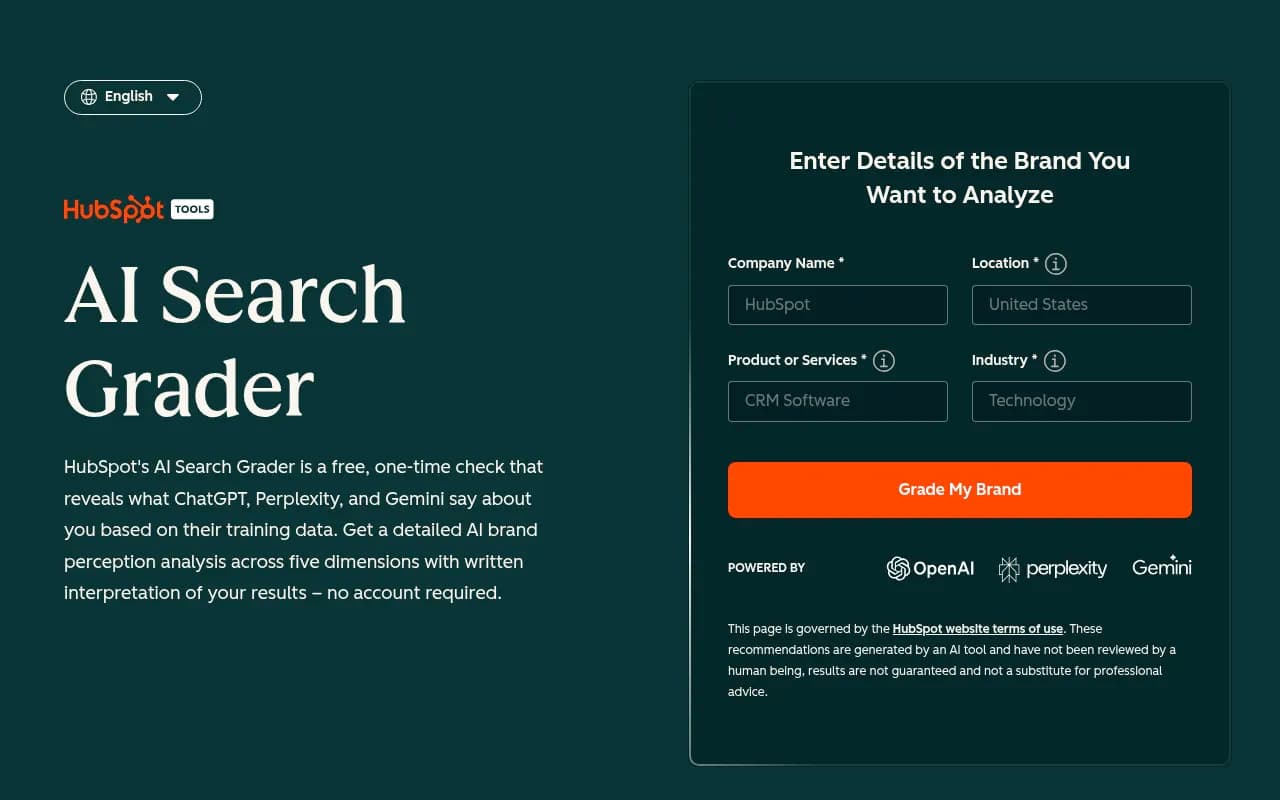
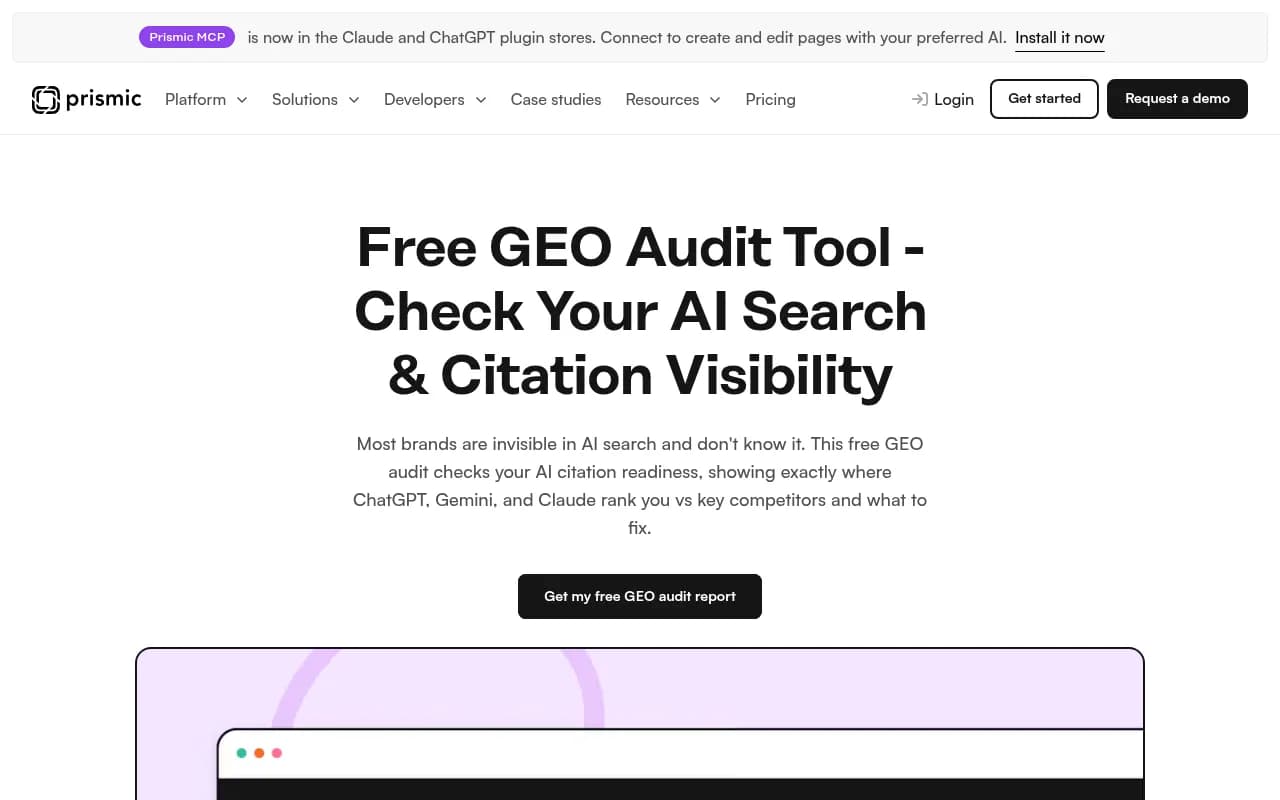
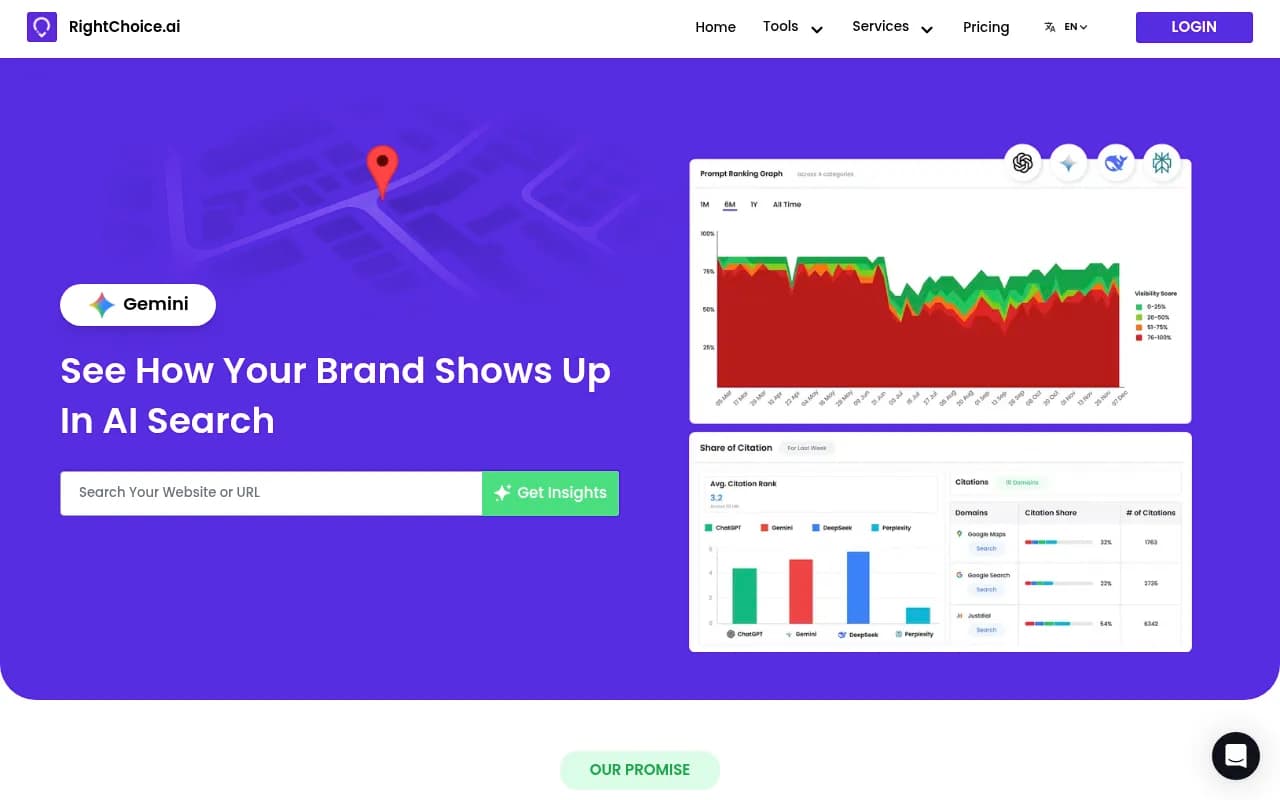
Promptwatch's Free AI Visibility Report scans how ChatGPT, Gemini and Perplexity talk about your brand with no login. Other options from our catalog include HubSpot's AI Search Grader, Prismic's Free GEO Audit, AnswerGist, RightChoice.Ai and the AI Rank Checker.

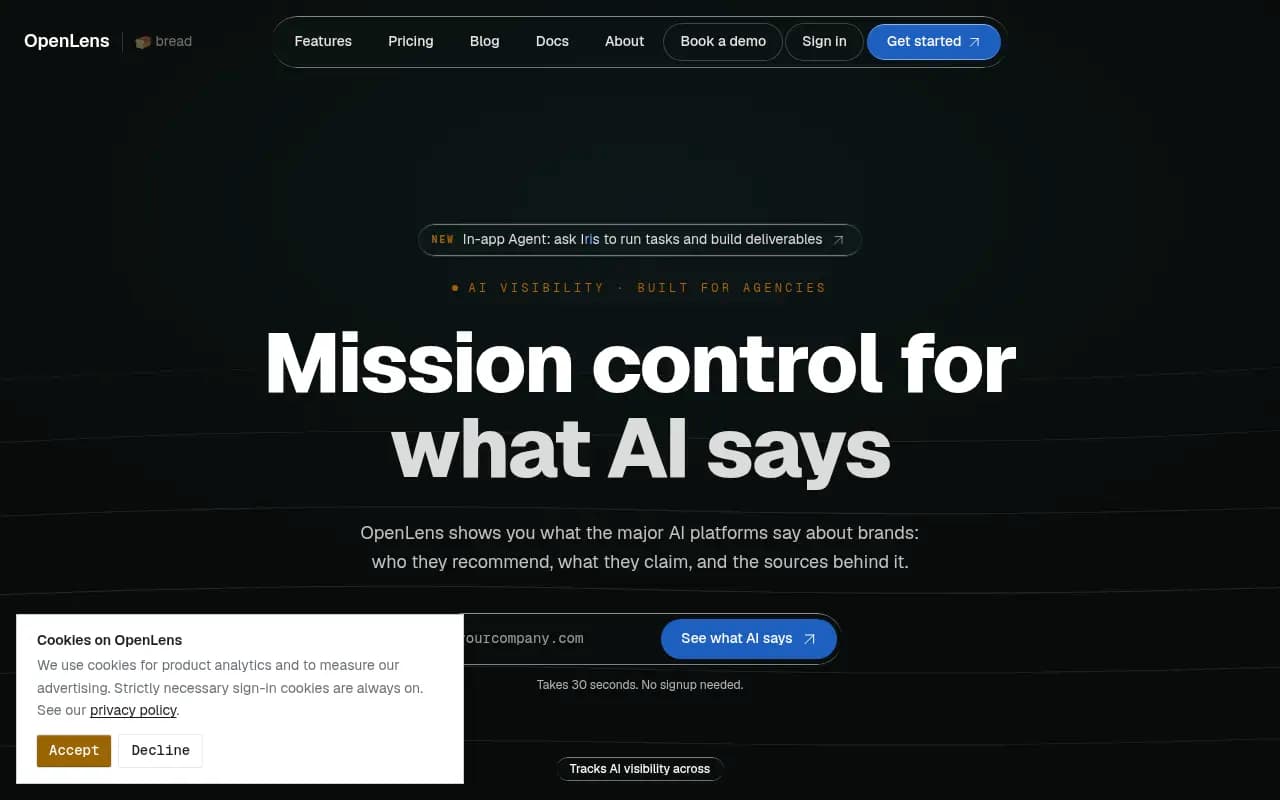
Some vendors also have free tiers that repeat. Trakkr offers a free-forever tracker covering 8 models, and Dageno AI and OpenLens list free plans. Check each one's current limits before relying on them.
A fair warning: one-off reports are lead generation for paid products. That's fine, they're still useful, but run two of them and compare. If they disagree wildly, trust your manual prompt log.
Free data you already have
Google Search Console is free and quietly useful here. Pages that rank in Google but never appear as citations in AI answers are your best candidates for restructuring. Server logs matter too: filter for AI user agents and check whether pages return errors. If you use Cloudflare, Vercel or Fastly, the logs already exist.
For sector context, Promptwatch Data publishes free citation reports. Software prompts, for instance, see GitHub, Microsoft's docs and G2 lead ChatGPT citations, with documentation and help centers earning the largest share (Sep 28 to Oct 4, 2026, report). Product pages were the most cited content type in ChatGPT at 22.4% of citations in the same week (report). Reading those tells you what kind of page to build before you pay for anything.
A free workflow that takes an afternoon
- Check robots.txt and CDN or WAF rules for every major AI crawler. Fix blocks first.
- Run the Agentic Readiness Check and one more independent checker, then verify by hand.
- Generate an llms.txt and publish it. Move on.
- Write 15 buyer prompts. Run them in ChatGPT, Perplexity, Gemini and AI Overviews. Log brands, positions and cited sources.
- Open GEO Inspector on your top five prompts and note the fan-out queries.
- Compare fan-out queries to your pages. Where there's no page that answers one, that's your content gap.
- Run a free visibility report from one or two vendors as a cross-check.
- Repeat in two to four weeks and compare.
When free stops being enough
The manual method breaks at around the point you have more than a few dozen prompts, multiple countries, or a boss who wants a weekly trend line. AI answers are volatile, so a single run proves little. You need the same prompts run daily, across models, with history.
That's when a paid platform earns its place. Prompt trackers tell you whether you were mentioned. Platforms like Promptwatch go further, with IP-verified crawler logs, visitor analytics for AI-referred traffic and a content agent that acts on gaps, plans starting at $95/month with a free Explore tier for ChatGPT only (confirm at promptwatch.com/pricing). If you're comparing options, the GEO software directory at bestgeosoftware.com lists the field.
If you'd rather have specialists run this for you, 1001 SEO Media handles technical SEO and AI search work for brands, and uses Promptwatch for AI visibility tracking.
What I'd skip
- Any "free" tool that asks for a card before showing results.
- Readiness scores treated as visibility scores.
- Building .md mirrors of your blog because of a rumor about llms.txt.
- Blanket robots.txt blocks on all AI bots without separating training from search.
Free tools are best used to remove obvious blockers and to learn how AI describes you. After that, the question is whether you can measure change over time, and that's the point to decide on paying.