Key takeaways
- Word count is a weak signal on its own. Ahrefs reports a 0.04 correlation between length and AI Overview citations, while other studies see citation rates climb until roughly 2,000 to 3,000 words and then flatten.
- The studies conflict because they measure different things: platforms, query types, and citation likelihood versus cited-page length. Treat every number here as correlational, not as a target.
- Structure does more work than length. Direct answers under clear headings and sections of roughly 120 to 180 words keep coming up in the research.
- Freshness has first-party support. Promptwatch Data shows how fast different content types lose ChatGPT citations, and news decays far quicker than landing pages or docs.
- Write as long as the query needs. Then test, refresh and prune.
The short answer
No, length is not what gets you cited. But length is not irrelevant either, and that is why the debate never ends.
If you read five studies on this, you will get five different answers. One says word count barely matters. Another says pages over 2,900 words earn far more ChatGPT citations. A third says citations peak at 3,000 to 5,000 words and then fall. I think the honest reading is that all of them can be true at once, because long pages tend to have other qualities that get them cited, and short pages can win when they answer one narrow question cleanly.
So the useful question is not "how many words?" It is "what does this query need, and is each section easy to lift out?"
What the citation studies actually say
Here are the main figures floating around, with the caveats that matter. I have not independently verified these, and some conflict. Read them as directional.
| Source | Finding | What it measures |
|---|---|---|
| Ahrefs (via PushLeads), 174,048 pages | 0.04 correlation between word count and AI Overview citations; 53.4% of citations went to pages under 1,000 words | Google AI Overviews |
| SE Ranking (via PushLeads), 129,000 domains | Pages over 2,900 words earned 59% more ChatGPT citations than pages under 800 words | ChatGPT |
| Presence AI (via PushLeads) | Citation rate peaks at 64% for 3,000 to 4,999 words, then drops to 58% past 7,500 | Mixed platforms |
| Am I Cited community analysis, 500+ articles | Citation rate: under 500 words 12%, 500-1,000 18%, 1,000-2,000 26%, 2,000-3,000 31%, over 3,000 28% | Mixed, small sample |
| Otterly.AI, about 1 million URLs | Near-zero correlation between URL length or depth and citations (a different variable, but the same lesson: surface attributes do not predict citations) | URL structure |
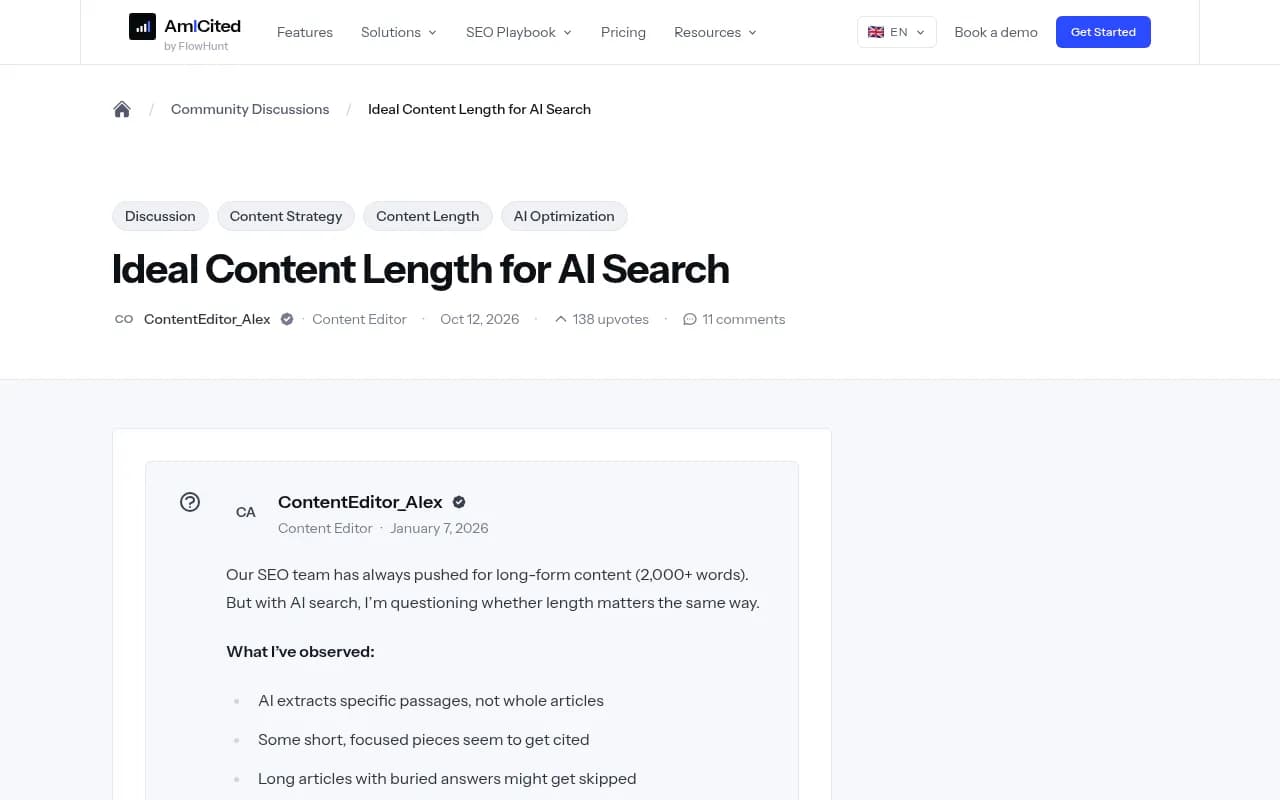
Two things stand out. First, the sample sizes and methods vary wildly, from 174,000 pages down to a few hundred articles in a forum thread. Second, the Am I Cited researcher said it plainly: when they controlled for structure and expertise signals, the length effect mostly disappeared. Long content often has those qualities. Short content often does not. That is correlation doing what correlation does.
One date warning too. The PushLeads article refers to an Ahrefs study with a December 2026 date, but the page itself looks like it was published around February 2026. I would not repeat that date without checking the original.
Why the studies disagree
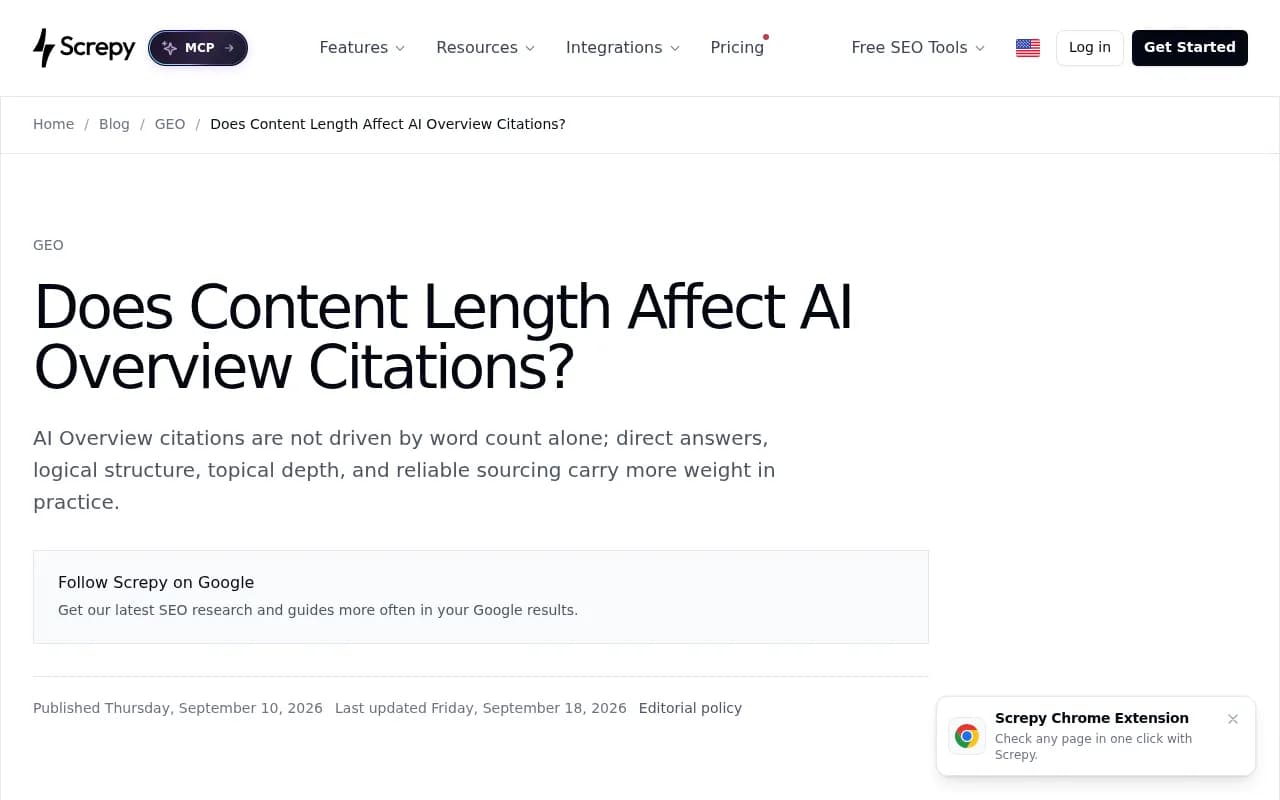
Screpy makes a point I find more useful than any single number: citation likelihood, citation position and cited-page length answer different questions. A dataset showing that cited pages are longer on average does not show that adding words caused the citation.
A few reasons the numbers diverge:
- Different platforms pull from different pages. PushLeads reports preferred lengths of roughly 1,166 words for AI Overviews, 1,200 to 2,000 for Perplexity, and much longer for ChatGPT and Claude. Those platform figures are from one source and I would treat them as a rough pattern, not a rule.
- Different queries need different depth. A definition can be answered in a paragraph. A comparison or diagnosis needs context.
- Longer pages cover more subtopics, so they match more query variations. That is a coverage effect, not a word-count effect.
- Sample selection matters. Compare like with like: same industry, same format, same intent.
Google's own guidance says the same thing from the other direction. Its documentation on AI features describes no separate requirements and no documented content-length benchmark, and its people-first content advice explicitly tells you not to write to a preferred word count.
Depth beats length
There is a real difference between a long page and a deep one. Depth means the page answers the main question, the important qualifiers, and the follow-up questions a reader will have next.
AI systems often run several related searches behind one answer (query fan-outs), then pull passages from different pages. A page that covers the core question plus the five most common follow-ups can match many of those sub-queries. A page that covers one angle matches one. That is the honest reason longer pages sometimes win. If you want to see the pattern in real data, Promptwatch Data has a report on how ChatGPT query fanouts work in practice.
The reverse is also true. Screpy's example is a 3,000-word guide that dilutes its useful information with repetition, generic background and loosely related sections. That page loses to a tight 500-word answer.
A rough sanity check before adding words:
- What is the primary intent of the query?
- Which questions must a reader get answered to trust the page?
- What evidence is missing (examples, limits, numbers, decision criteria)?
- Does the next paragraph add any of that, or just fill space?
If it is the last one, cut it.
Structure: the part with the most consistent evidence
If one factor shows up in almost every source, it is how easy a section is to extract. AI engines grab passages, not whole articles.
What the research keeps pointing to:
- A direct answer in the first 40 to 60 words under each heading (PushLeads calls it an answer capsule).
- Headings that predict exactly what the following passage says. "What is technical SEO?" followed by a one-sentence definition works. "More about our approach" does not.
- Sections of about 120 to 180 words between headings. SE Ranking, as cited by PushLeads, found these earned 70% more ChatGPT citations than sections under 50 words.
- Specific, verifiable claims such as numbers and named studies instead of vague generalities.
Here is the contrast from the Am I Cited thread. A strong version reads: "Generative Engine Optimization (GEO) is the practice of optimizing content to be cited in AI-generated responses." The weak version opens with "In today's ever-changing digital environment..." and buries the definition in a hedge. Same topic. Very different odds.
A caution on the grounding-budget claim. PushLeads cites Dan Petrovic's research that Google uses roughly 2,000 words of grounding per query, with shorter pages getting more of their content used. It is an interesting idea and it fits the extractability theme, but it comes from a single researcher via a secondary write-up, so I would not build a content strategy on the exact figures.
Freshness: where first-party data helps
There is no word-count figure in Promptwatch's own data, but there is a lot on format and freshness, which is arguably the more actionable lever.
In Promptwatch Data's half-life study (pages ChatGPT cited on July 6, 2026, tracked through October 4, 2026):
| Content type | Still cited after 30 days | Still cited after 60 days | Notes |
|---|---|---|---|
| Landing pages | 78% | 69% | Half-life likely near or beyond 90 days |
| Docs | 76% | 67% | Smallest drop after day 0 |
| Comparisons | 72% | 63% | Hold up well |
| Listicles | n/a | 60% | Keep more than 60% after two months |
| Product pages, reviews, how-tos | n/a | about 55% | Half-life of 74 to 77 days |
| News | n/a | 41% | Half gone after 36 days; almost a quarter never cited again |
Two takeaways. Do not assume a product page stays cited on its own, since it decays about as fast as a how-to guide. And treat landing pages, docs and pricing pages as long-term assets, keeping prices, features and positioning accurate. News is a short burst of visibility at best.
The PushLeads video adds a claim that content updated every 30 days earns far more citations than content updated quarterly. I cannot verify that, and PushLeads' own written article says freshness signals come mostly from recent reviews rather than republished pages, so the two contradict each other a bit. My read: keep facts current, and refresh pages that matter on a schedule you can actually sustain.
If you want to understand which formats ChatGPT favors, Promptwatch's content type citation data for Sep 28 to Oct 4, 2026 puts product pages at 22.4% of citations, landing pages at 16.8% and listicles at 13.6%. Page type matters more than page length in that data.
How long should each page type be?
No official numbers exist, so treat these as starting ranges, drawn mostly from PushLeads and The Ad Firm, and adjust to the query.
| Page type | Starting range | What matters most |
|---|---|---|
| Service or product page | 500 to 1,000 words | Direct answers, FAQ section, accurate details |
| Definition or narrow explainer | 800 to 1,200 words | Answer capsule up top, then supporting depth |
| Blog post or how-to | 1,500 to 2,500 words | Sections of 120 to 180 words, a stat every 150 to 200 words |
| Comparison or competitive guide | 1,500+ words | Parallel structure, comparison table, decision criteria |
| Comprehensive pillar guide | 3,000 to 5,000 words | Tables, original data, clear internal sections |
| Local or service-area page | 400 to 800 words | Genuinely unique local content |
The Ad Firm argues pages under about 600 words rarely surface for competitive queries, though a 400-word page can win as the definitive source for a narrow factual one. That matches my experience: thin pages lose on broad topics, not because of the count but because they cover one angle.
How to test whether more words help
Do not start by adding a 1,000-word section. Screpy's advice is sound: update weak passages first.
- Pick pages that rank in Google but never get cited by AI.
- Rewrite the opening of each section so it answers the heading directly.
- Add the missing evidence, examples or qualifiers, not background.
- Cut repetition.
- Record citations before and after, and give it several weeks. A short-term bump is not proof.
PushLeads reports citation counts roughly doubling within 60 days for four clients after structural and formatting changes. That is vendor-reported and small, but the changes themselves were cheap.
Tools that help with the testing
You need two kinds of tools: something to see whether AI cites your pages, and something to improve the content.
For tracking and acting on it, Promptwatch monitors prompts across ChatGPT, AI Overviews, Perplexity and others, shows which of your pages get cited, and its crawler logs and page-level tracking help you see whether a rewrite changed anything.

For monitoring-focused alternatives, Otterly.AI is a simpler prompt tracker.

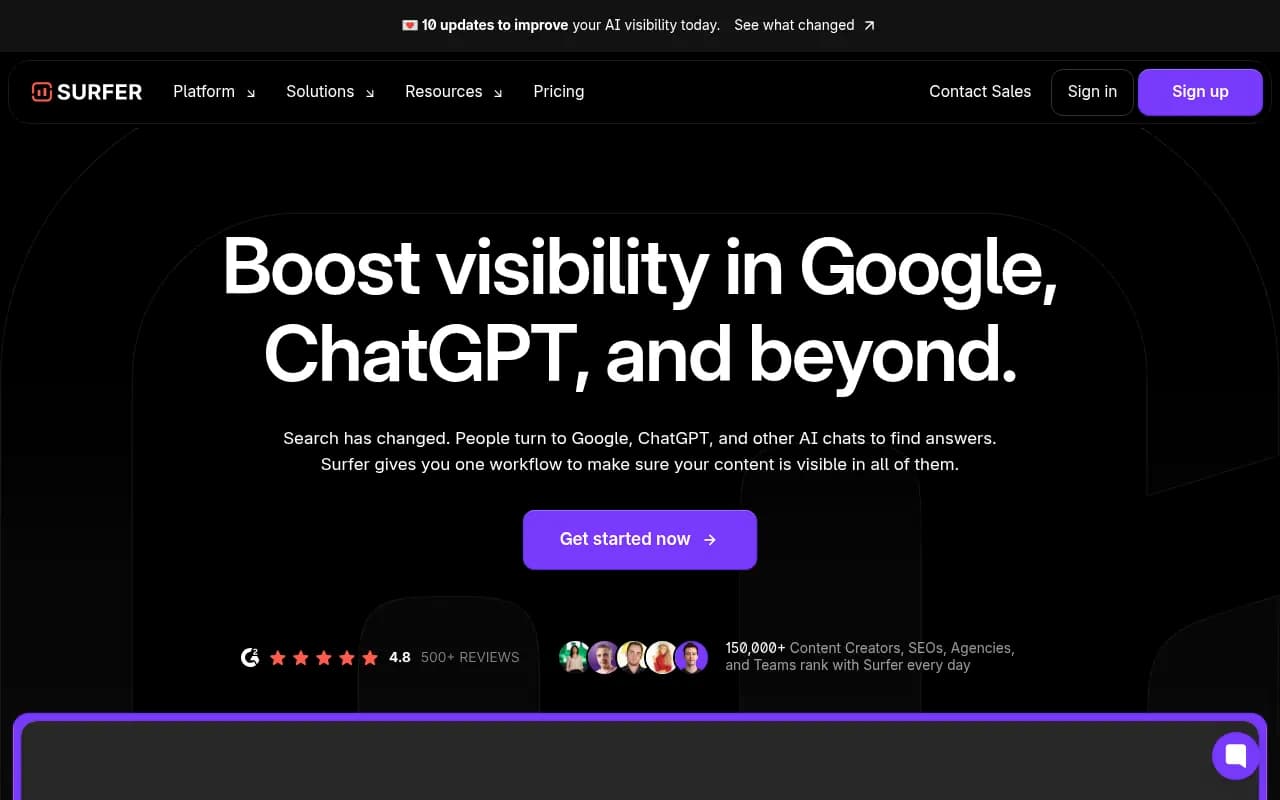
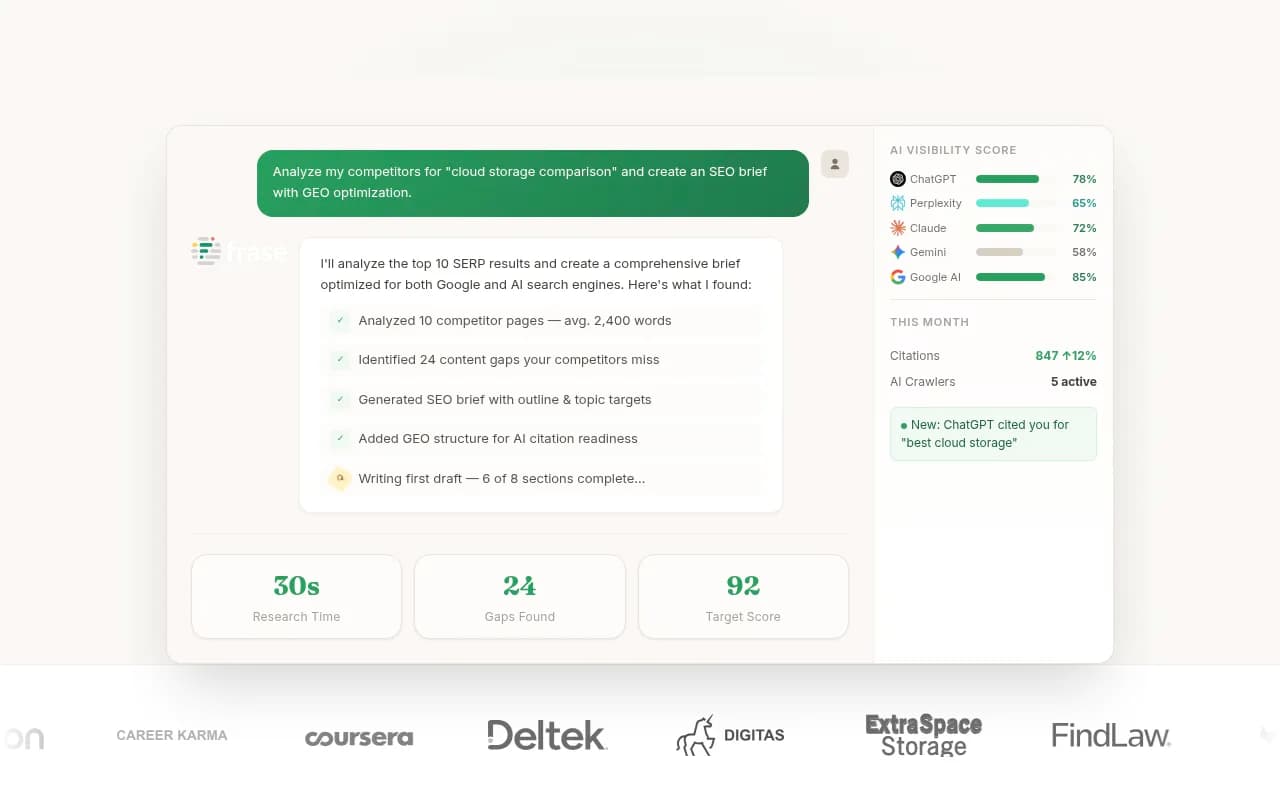
For shaping the content itself, Clearscope and Surfer SEO help with coverage and topic depth, and Frase is useful for researching the follow-up questions your page should answer.
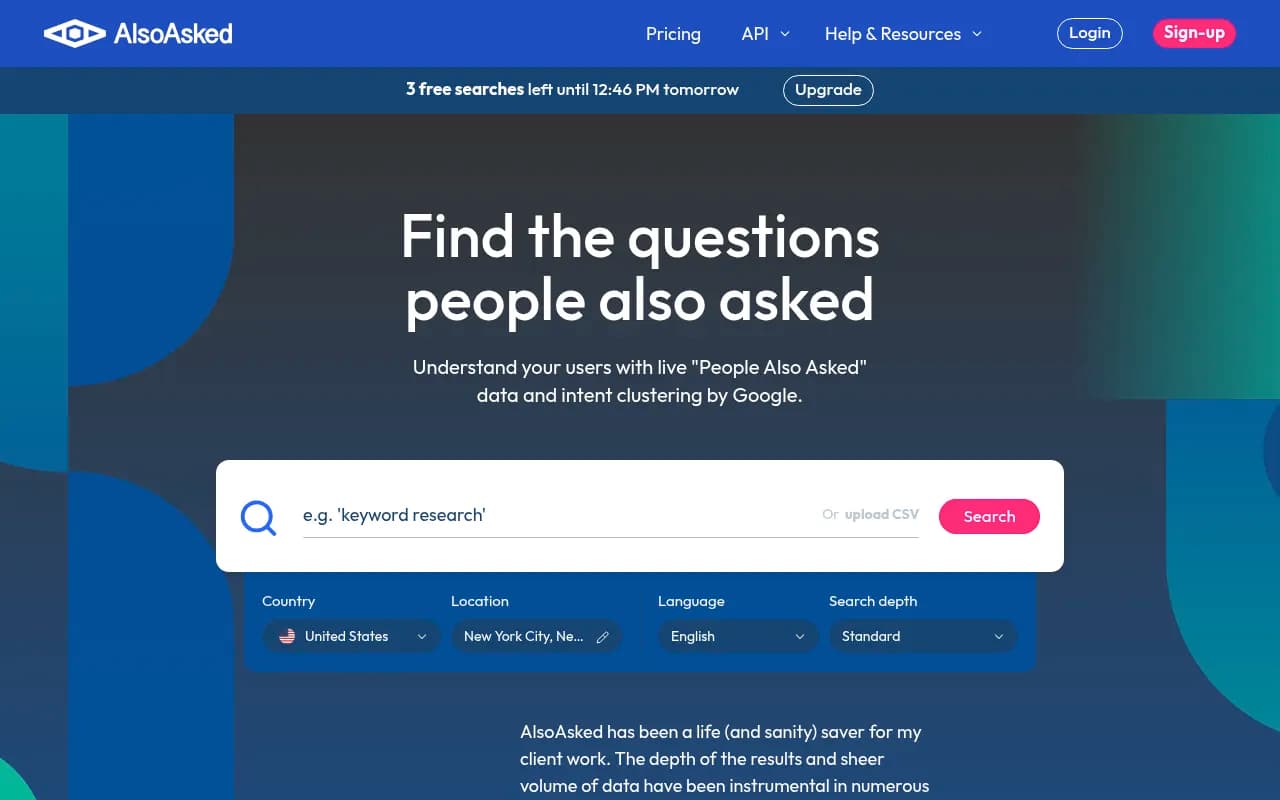
AnswerThePublic and AlsoAsked are good for finding those narrower follow-up questions Screpy talks about.
If you want to compare more options, the GEO software directory at bestgeosoftware.com lists a lot of them.
A practical checklist
- Scope the page to the query, then let the word count fall out of that.
- Put the answer in the first one or two sentences under every heading.
- Keep sections to a readable 120 to 180 words where it fits.
- Add a specific fact, number or named source every few paragraphs.
- Use tables for comparisons and FAQ sections for follow-ups.
- Keep prices, features and stats current on landing pages, docs and pricing pages.
- Refresh your most important pages on a regular schedule.
- Do not use news-style content as a long-term citation asset.
The bottom line
I would stop asking for an ideal word count. The studies cannot agree on one, and the ones that control for structure and quality find length mostly disappears as a factor. What does hold up across sources is the unglamorous stuff: answer first, cover the follow-ups, support claims with specifics, and keep important pages accurate. Write the length the topic earns, then measure what happens.