Key takeaways
- ChatGPT trackers collect data in two ways: they drive the real ChatGPT interface, or they call the OpenAI API. The answers can differ a lot.
- A Surfer study (as cited by ZeroRank, not independently verified by us) found only 24% brand overlap between API and scraped ChatGPT answers, and the API returned no sources about 25% of the time.
- Neither method is perfect. UI collection is closer to what buyers see. API collection is reproducible and ToS-friendly. Vendors on both sides sell the method they use.
- Most vendors do not publish their method clearly. Ask before you buy, using the checklist below.
- ChatGPT itself changes overnight (GPT-5.3 in March 2026, the site: operator shift in August 2026), so continuous monitoring beats one-off checks.
Why the collection method matters
"Rank tracking" is a borrowed phrase. ChatGPT has no results page and no stable position. What a tool really measures is whether your brand is mentioned, whether your pages are cited, and how that compares to competitors across a set of prompts.
That measurement is only as good as the answers the tool collects. If those answers come from a different system than the one your buyers use, the dashboard is precise and wrong at the same time.
There are two main ways to get ChatGPT answers at scale:
- UI collection (scraping). The tool opens the actual ChatGPT interface, or a browser automation of it, types the prompt, and extracts the answer and citations.
- API calls. The tool sends the prompt to an OpenAI model through the API, sometimes with the web search tool enabled, and parses the response.
They sound interchangeable. They are not.
What the evidence says about the gap
The most cited comparison is a Surfer study of 1,000 ChatGPT prompt executions, scraped versus API. I haven't opened the original; the numbers below come via ZeroRank's write-up from August 2026, and ZeroRank sells scraping-based tracking, so weigh it accordingly.
| Metric | API | Scraped (UI) |
|---|---|---|
| Average answer length | 406 words | 743 words |
| Average sources per answer | 7 | 16 |
| Answers with no sources | About 25% | Rare |
| Brand overlap between methods | 24% | 24% |
The ChatGPT interface adds system instructions, search behavior and interface logic that the API does not expose. seoClarity ran a side-by-side with the same GPT-5 model and browsing enabled, and the API still did not reproduce the ChatGPT answer. seoClarity also sells scraping-based tracking, so same caveat.
The counterargument
Conductor, which sells API-based monitoring, makes a fair case for the other side:
- API responses expose structured tool calls, so you can tell whether web search fired and separate grounded answers from ungrounded ones.
- API results are reproducible.
- API use is within OpenAI's terms. Scraping likely is not.
- Scrapers break silently when the UI, authentication or bot detection changes.
- Many scrapers use logged-out sessions, which may serve weaker or older models and represent only one narrow user configuration.
I find both sides persuasive, which is the honest answer. Scraped data looks more like what a buyer sees, but it is fragile and hard to audit. API data is clean and repeatable, but it can describe a product nobody is actually using.
Variance exists inside one method too
A LinkedIn post by Maritz (I only saw a snippet, so treat it as a lead, not a source) claims two runs of the same method share only 31% to 41% of cited domains. If that is even roughly right, a single check of any prompt is one sample, not a result. Searchable's own measurement of 6.9 million responses found ChatGPT runs an average of 1.74 underlying searches per answer, which adds more noise.
The practical rule: pick tools that sample each prompt repeatedly and show trends, not single snapshots.
ChatGPT is a moving target
Promptwatch Data shows how often the platform itself shifts under trackers:
- On March 4, 2026, GPT-5.3 rolled out. Average sources per search-enabled response fell from about 6.4 to about 4.7-4.9 and did not recover a month later. The drop hit GPT-5.3, GPT-5.4 and GPT-5-Mini at once (ChatGPT citation drop report).
- On August 8, 2026, ChatGPT started using the site: operator at scale. site:-scoped fan-out queries went from about 0.4% to roughly 17% of all fan-outs overnight, and searches per response rose from about 1.1 to 1.8 (site: operator report).
- Average fan-outs per response drifted from about 2.15 in December 2025 to about 1.84 in March 2026 (query fan-out report).
If your citation count falls, it might be your content. It might also be ChatGPT. A tool that shows citations per response as a baseline lets you tell the difference. Any baseline built before August 8 is stale.
What I could and could not verify about each tool
Here is the awkward part. I found no vendor-by-vendor confirmation of the collection method for Profound, Peec, Otterly, Semrush, Ahrefs or ZipTie. Most marketing pages say "tracks ChatGPT" and stop. Below is what vendors state publicly, as far as the sources I read show.
| Tool | What it says about ChatGPT collection | Verified? |
|---|---|---|
| Omnia | Opens real browsers in real locations, types the query, extracts citations from the live response | Vendor claim |
| Searchable | Separates model-only, ChatGPT Search, ChatGPT Shopping and fan-out queries; 1 sample per day | Vendor documentation |
| Rankability | Model-only and ChatGPT Search; daily, weekly or monthly sampling | Vendor documentation |
| Rankscale | Model-only, ChatGPT Search, Shopping, fan-outs; as often as hourly | Vendor documentation |
| Morningscore | Model-only and ChatGPT Search; weekly sampling | Vendor documentation |
| ProRankTracker | Model-only and ChatGPT Search; daily; no fan-out visibility | Vendor documentation |
| Geoptie | Model-only and ChatGPT Search; may track models retired from the ChatGPT app | Per Searchable's review |
| Profound, Peec AI, Otterly.AI, Semrush, Ahrefs, ZipTie | Not confirmed in the sources I read | Ask the vendor |
One detail from the Searchable comparison is worth remembering. Geoptie's visibility data may not match what users see, because some models are still available via API but retired from the web and desktop apps. That is exactly the API-versus-UI problem in a single sentence.
Price per prompt, where published
| Tool | Entry price (monthly billing) | Samples per prompt |
|---|---|---|
| ProRankTracker | $0.20 per prompt per month | 1/day |
| Rankability | $0.97 per prompt per month | 1/day (weekly and monthly also available) |
| Rankscale | $1.06 per prompt per month (daily sampling) | Up to 1/hour |
| Searchable | $1.25 per prompt per model per month | 1/day |
| Cairrot | $2.60 per prompt per month | Not published |
| Geoptie | $3.27 per prompt per month | 1/day |
| LPagery | $4.90 per keyword per month | 1/day |
| Morningscore | $6.90 per prompt per month | 1/week |
These are from Searchable's own comparison, dated October 2026, and Searchable is a competitor of every other tool on the list. Confirm current prices on each vendor's site.
The tools worth a look
The catalog below groups tools by what they are good at. For a wider sweep of the category, the AI rank tracking tools directory is a useful second source.
Tools built on real-interface data
Promptwatch monitors the actual interfaces of ChatGPT, Google AI Overviews, AI Mode, Gemini, Perplexity, Copilot and others, by country and language, and tracks API models alongside them so you can see what models believe from training data versus what users are shown. It also adds IP-verified crawler logs and AI-referred visitor analytics, which let you check tracked visibility against actual traffic. It is the one I would shortlist if you want to move from "was I mentioned" to "what do I fix."

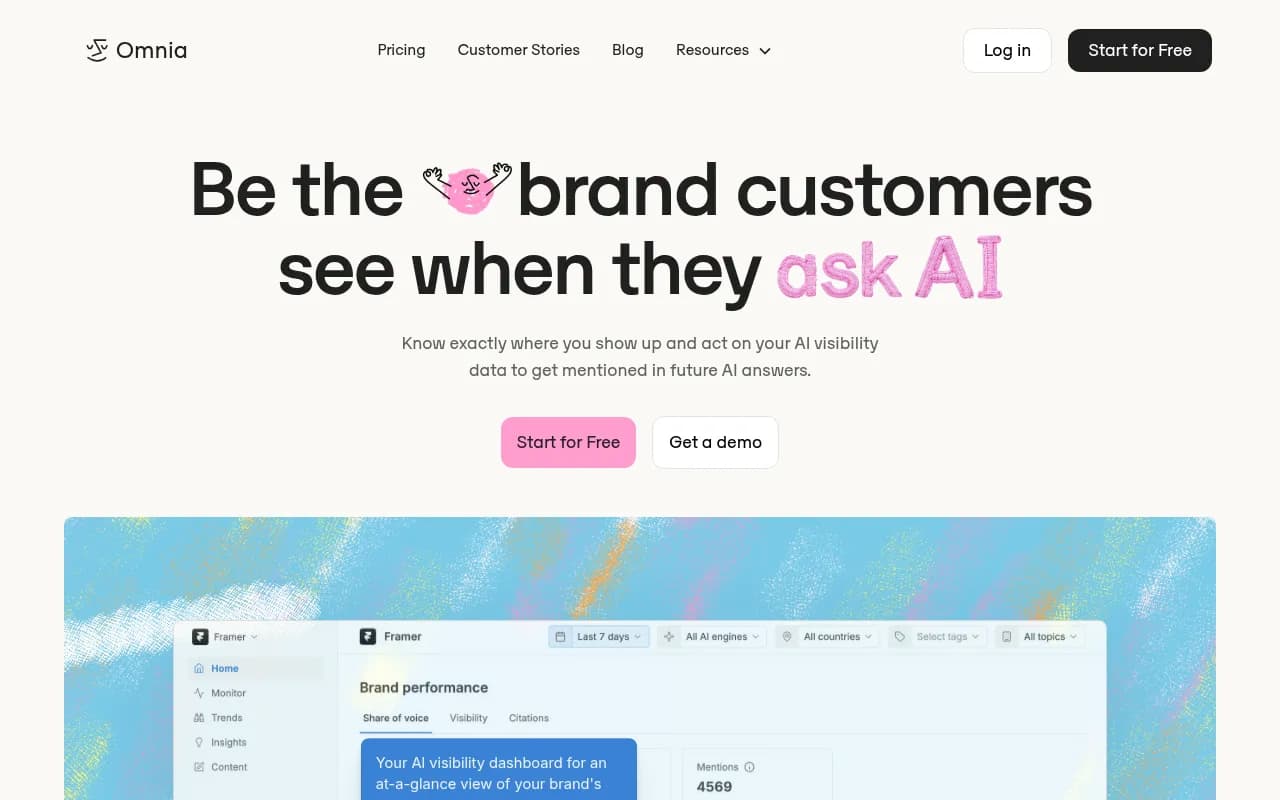
Omnia says it opens real browsers in real locations for ChatGPT and contrasts that with API-only rivals. That is a vendor claim, but a clear and testable one.
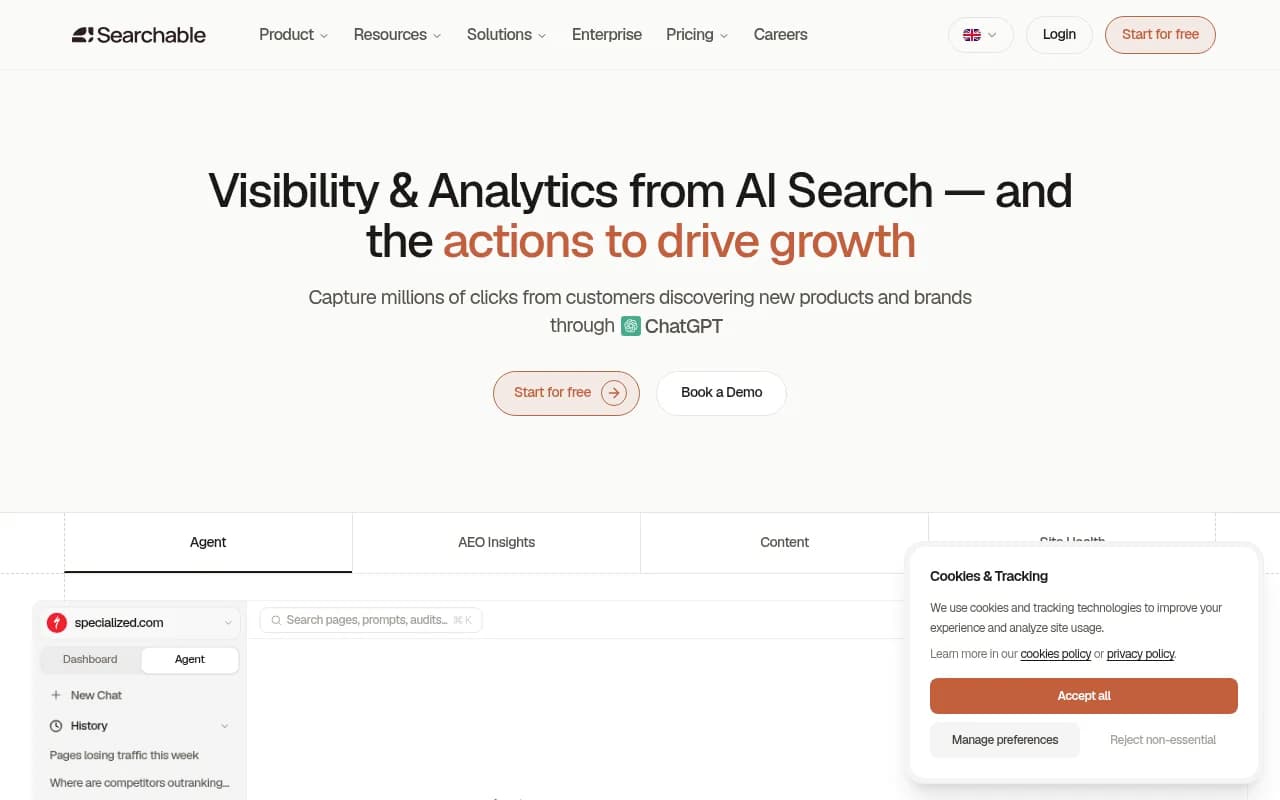
Searchable is useful if you care about surfaces. It breaks out model-only answers, ChatGPT Search, Shopping and fan-out queries, which is the clearest public methodology breakdown I found.
Budget and sampling-focused tools
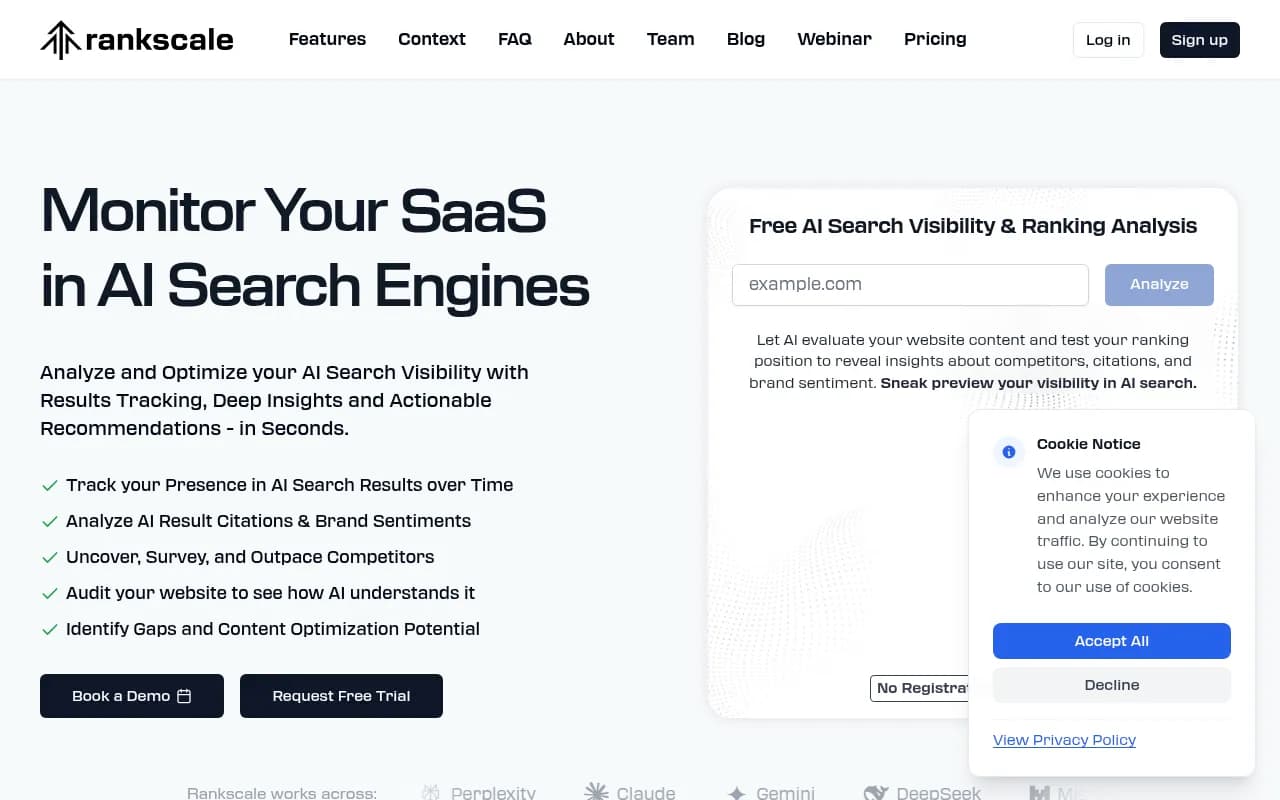
Rankscale offers the only user-controlled refresh schedule in the Rework comparison, down to hourly.
ProRankTracker is the cheapest per prompt of the group, with daily sampling but no fan-out visibility.

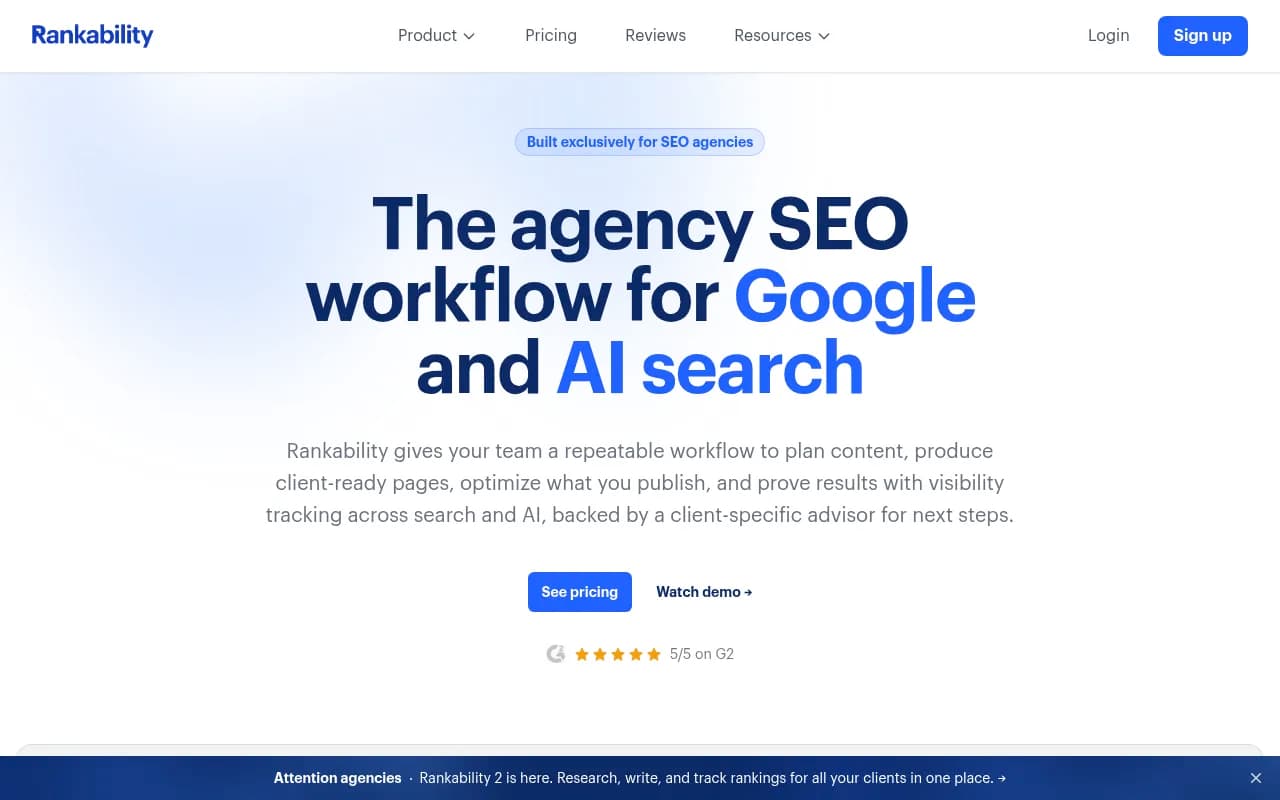
Rankability covers model-only and ChatGPT Search with fan-outs at under a dollar per prompt.
Otterly.AI is a low-cost entry at $29 per month, but its 15-prompt Lite allotment is shared across four engines, so ChatGPT depth is thinner than it looks.

Monitoring platforms to interrogate before buying
These are well known, but I could not confirm their ChatGPT collection method from public sources. Ask.



Peec AI also has a quirk worth checking: ChatGPT is one of three models you pick from a pool of six, so confirm it is actually selected.
A vendor checklist you can use this week
Send these questions to any vendor on your shortlist. Vague answers are an answer.
- Do you collect ChatGPT answers from the live interface, the API, or both? If both, can I see them separately?
- Is web search on? Model-only answers cannot cite sources. ChatGPT Search answers can.
- Which model and which account state? Logged-out sessions can serve different models than a paid account.
- What location and language do you run from? Buyers in Berlin and Boston see different answers.
- How often do you sample each prompt? Once a week is a snapshot. Daily or more gives you a trend.
- Do you show fan-out queries? They explain why a page was or was not retrieved.
- How do you handle ChatGPT changes? Ask what happened to their data on March 4 and August 8.
- Can I see raw responses? If you cannot read the answer behind the score, you cannot audit it.
A simple test
Pick five prompts that matter to you. Run them yourself in ChatGPT with search on, then look at what a trial of each tool reports for the same prompts. Do not expect an exact match, since ChatGPT varies run to run, but you should see the same competitors and similar sources. If a tool returns a very different set of brands, ask which surface it is measuring.
Which method should you pick?
| Situation | Lean toward |
|---|---|
| You report to executives on what buyers see | UI-based data, with raw responses visible |
| You need strict reproducibility or compliance review | API-based data, with tool-call detail |
| You want to separate training knowledge from live search | A tool that tracks both, labeled separately |
| You sell in several countries | A tool that runs real locations, not one US server |
| You are on a tight budget | A cheap per-prompt tool, but sample the same prompts repeatedly |
My own take: for brand visibility reporting, I would trust interface data first and use API data as the secondary view on what the models themselves believe. But I would not call either one "the truth." Anyone selling certainty here is selling something.
Also keep in mind that tracking is only half of it. Product pages are the most cited content type in ChatGPT, at 22.4% of citations in the week of Sep 28 to Oct 4, 2026 (content type report). Almost half of responses cite 10 or more unique domains (unique domains report). So a tool that also tells you which pages to build or fix is worth more than one that only charts mentions. For a broader comparison, see the GEO software directory.
Bottom line
Ask every vendor whether their ChatGPT numbers come from the real interface or the API, and make them show you a raw response. Then run five of your own prompts side by side during the trial. Whatever you choose, sample repeatedly, because ChatGPT changed its citation and search behavior twice in 2026 without warning.