Key takeaways
- In October 2026, GPT-6 began opening links without the
utm_source=chatgpt.comtag, so GA4 filed many ChatGPT visits under Direct. Most ChatGPT clicks never had a referrer in the first place; the tag was doing the work. - LLM Pulse measured a drop of about 46% in daily ChatGPT sessions over Oct 9-11, while total traffic on the same sites moved only about 2%. Much of that is relabeling, not lost demand.
- Fix your analytics first (annotations, a custom channel group, Direct-to-deep-URL monitoring, a self-reported attribution field). Then add a visibility tool, because clicks undercount influence.
- Treat any AI traffic number as a floor. Several analysts reached the same conclusion independently.
What actually broke (and what didn't)
The framing "ChatGPT dropped referrers" is slightly off, and the difference matters for how you fix it. Per the sources I read, most ChatGPT clicks already arrived without a referrer. What kept them out of the Direct bucket was the utm_source=chatgpt.com parameter ChatGPT appended to links. Around the GPT-6 launch (paid plans Oct 7, free plans Oct 8), that tag vanished from many links.
Adobe's Cedric Huesler found that GPT-6 opens links in a new window with noopener/noreferrer and without the UTM tag. GA4 then has nothing to go on and calls it Direct. Search Engine Roundtable reported the same behavior.
The numbers, from LLM Pulse:
- Daily ChatGPT sessions in GA4 fell about 46% over Oct 9-11 versus the prior two weeks.
- More than 8 in 10 sites lost over 30%.
- Perplexity and Claude referrals showed no break.
- Across roughly 500 pages where ChatGPT drove 5% or more of visits, ChatGPT lost about 31,000 visits a day while Direct gained about 26,000 a day.
Profound measured the tag itself: about 99% of ChatGPT answers had at least one tagged link before Oct 8, about 75% on Oct 9, and only 5-12% for roughly 27 hours on Oct 14-15. By 06:30 UTC on Oct 16 it was back around 99%. Profound also warns against using these percentages as a multiplier to "correct" your revenue numbers. I agree. The sample is small and the accounts conflict.
A few honest caveats. LLM Pulse's own update puts the trough shallower than Profound does. The report that OpenAI called it a bug is secondhand through Arcalea, and I found no public OpenAI statement. And one log analysis showed ChatGPT-User activity falling after Oct 9, so some of the decline may be real. Also, the missing history will not come back even though tags have returned.
Fix your analytics first
Before you pay for anything, spend an hour in GA4. This is the cheapest, highest-value work.
1. Annotate the gap
Mark Oct 8-16, 2026 in GA4 and in every dashboard that reports ChatGPT traffic. Otherwise someone will present a "46% collapse" in a quarterly review.
2. Size the hidden traffic
List the pages ChatGPT sent visitors to in the four weeks before Oct 8. Compare Direct traffic on those pages before and after. Huesler found Direct grew on two in three of the pages that lost ChatGPT traffic. Long blog URLs and deep service pages are the tell, since people rarely type those by hand.
3. Check where tagged sessions land
Google added an "AI Assistant" channel to GA4's Default Channel Group in May 2026. Its rule matches a medium of ai-assistant or a referrer from Google's list of AI assistants. ChatGPT's tag sets the source, not the medium. So per Arcalea's reading (not confirmed by Google), a tagged visit with no referrer may never reach that channel. Check your own setup rather than trusting the default.
The safer move is a custom channel group that reads session source and matches chatgpt.com, perplexity.ai, gemini.google.com, claude.ai, and copilot.microsoft.com, placed above the default Referral channel. Filter on utm_source=chatgpt.com, not on the referrer. Gen3marketing recommends the same.
4. Ask people
Add a "How did you hear about us?" field to forms and booking pages, with ChatGPT, Perplexity, and Gemini as options. Compare the answers against analytics. The gap between the two is your undercount, measured directly.
5. Watch for ad contamination
One more wrinkle. Promptwatch Data's ChatGPT ads report found ads in 20.1% of ChatGPT responses that ran a web search over May 20 to Aug 17, 2026, passing 30% from July 1. ChatGPT clicks may now come from ads as well as organic citations, which muddies any "AI organic" number.
Why clicks are no longer enough
Even in a clean month, click data misses most of what ChatGPT does for you. A Cognizo roundup notes ChatGPT cites only about 15% of the pages it retrieves, and a brand can be recommended in a conversation without ever getting a click. The same roundup cites AI-referred retail traffic converting 42% better than non-AI traffic in March 2026, so the visitors you can see are worth chasing. SE Ranking found ChatGPT referrals rose 36.7% in May 2026 across 101,574 sites.
The market is also splitting. Similarweb's July 2026 figures, via Cognizo, put ChatGPT at about 53% of generative AI web traffic, down from roughly 76% a year earlier, with Gemini past a quarter. Gemini reportedly started adding UTM parameters to some links around Oct 1, undocumented by Google, so don't assume its labeling is stable either.
The practical conclusion: you need three layers. Web analytics for the clicks you can see, server-side or crawler data for what AI bots read, and visibility tracking for what AI says inside answers.
Layer 1: analytics tools
GA4 and Looker Studio
Free, and the baseline. Build the custom channel group above, an Explore segment for AI sources, and a Looker Studio dashboard so non-analysts can see it. The weakness is obvious: GA4 can only classify what arrives with a signal.
Siteimprove and Hardal
Siteimprove's AI Traffic feature classifies referrals from Gemini, Claude, Copilot and others by domain. Hardal, a cookieless analytics tool, captures utm_source, utm_medium and the referrer for ChatGPT visits. Both are worth a look if your current analytics is too coarse, but neither can recover visits that arrive with no signal at all.
HockeyStack and Usermaven
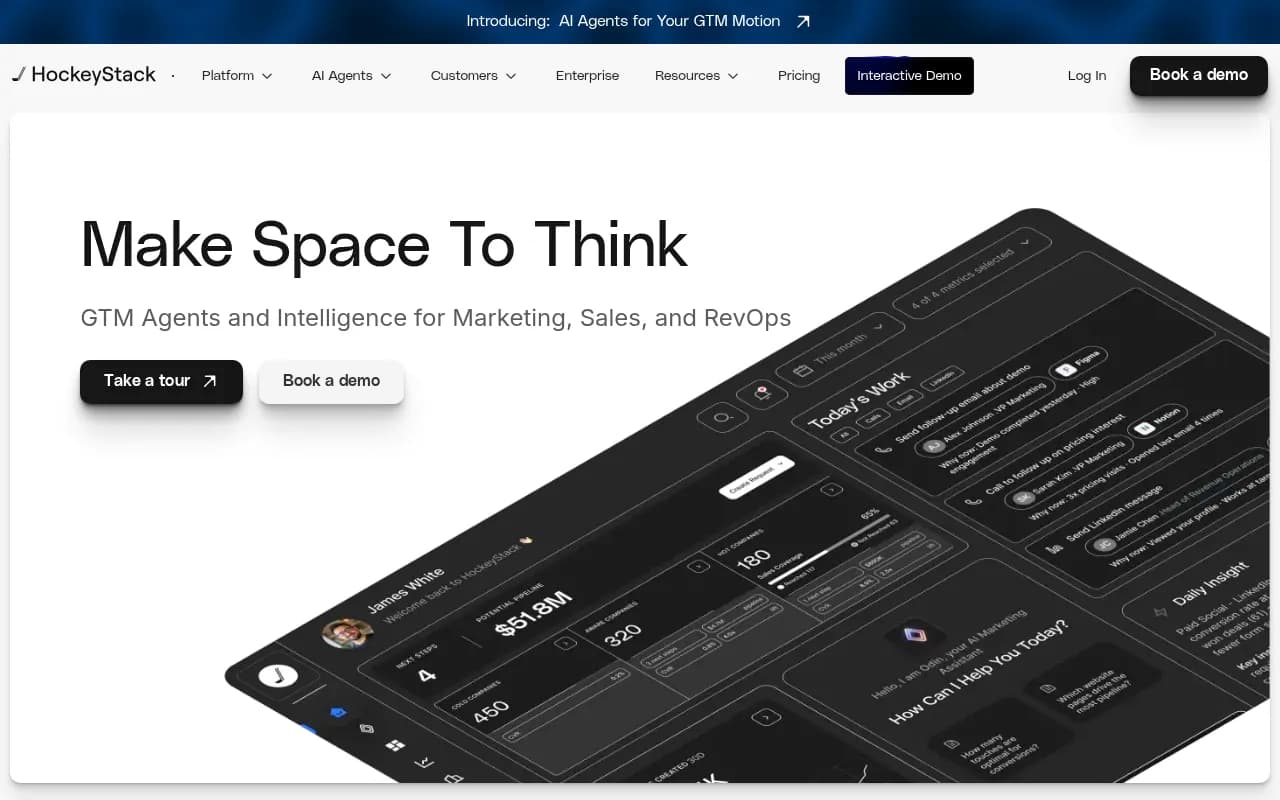
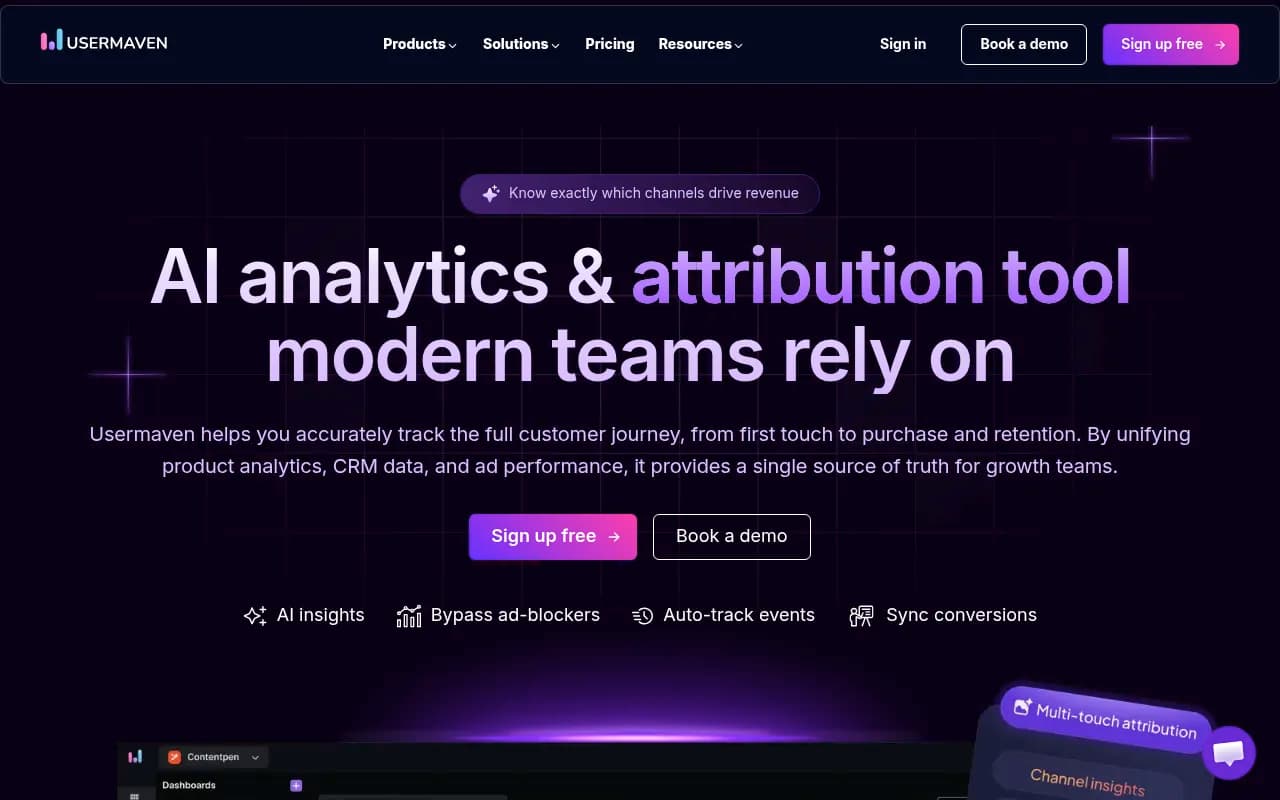
If your real question is revenue, attribution platforms like HockeyStack and Usermaven can tie AI-sourced sessions to pipeline or product events, and self-reported attribution fields feed them nicely.
Similarweb
Useful for the market view, such as how AI platform share is moving, rather than your own traffic.
Layer 2: crawler and server-side data
This is the layer most teams skip, and it is the one that survives referrer changes. Server logs record every bot hit regardless of what a browser sends. Promptwatch Data's AI crawler report shows OpenAI at 79.8% of IP-verified AI crawler requests in Aug 31-Sep 6, down from 94.8% in June 8-14. Only requests from published operator IP ranges are counted, so spoofed user agents are excluded. Compare that mix with your own logs: a provider that is big in the report but near zero for you suggests you are blocked or unreachable.
A caveat from that report: one provider's share can combine training, answer-time fetch and citation bots, so read logs carefully.
Promptwatch is the one in this list that joins IP-verified AI crawler logs to citations and visitor analytics, so you can see whether a page was fetched, cited, and then visited. Crawler logs start on the Professional plan.

For pure log analysis without the AI layer, FandangoSEO, Botify, and Oncrawl handle crawl data at different scales.

Layer 3: AI visibility tracking
Visibility tools answer the question your analytics can't: are we being named, cited, and recommended in the answers themselves? Pricing below comes from vendor and competitor comparison posts dated Oct-Nov 2026, so confirm on each vendor's site.
| Tool | Starting price | What it adds for traffic measurement | Watch out for |
|---|---|---|---|
| Promptwatch | Paid from $95/mo; crawler logs from $245/mo | Citations, crawler logs, visitor analytics and conversions in one product | Content Agent needs Business ($579/mo) |
| Semrush AI Visibility Toolkit | $99/mo per domain, 25 prompts | Familiar suite, easy add-on for existing users | Claude and Copilot reportedly need Enterprise |
| Peec AI | $95/mo (50 prompts) | Clean prompt tracking, Looker Studio on Advanced | Monitoring only; Claude costs 15x the credits |
| Otterly.AI | $29/mo (15 prompts) | Cheap entry point; API and crawler logs from Standard ($189) | AI Mode, Gemini and Claude are paid add-ons |
| Ahrefs Brand Radar | Custom prompts from $50/mo on a paid plan | Brand mentions beside backlink data | Index is $199/mo extra |
| Profound | Custom Enterprise contract | Deep enterprise monitoring | Self-serve plans reportedly removed Sept 2026 |
| LLM Pulse | See vendor | Published the best referral-drop analysis | Check coverage for your markets |
A note on Profound: Semrush's roundup still lists Starter at $99 and Growth at $399, but Promptwatch's November post says those self-serve brand plans ended in September 2026. I'd treat the Semrush listing as stale.
Promptwatch
It ties visibility to outcomes. You see how ChatGPT, Gemini, Perplexity, Claude and Google AI Overviews mention you, then check visitor analytics for the traffic and conversions AI sends. After the October break it added a setting that counts visits tagged utm_source=chatgpt.com as ChatGPT traffic. If you want the fix step too, the Content Agent publishes to WordPress, Webflow and Framer. It runs on real interface data rather than only APIs. There is a free AI visibility report and a 7-day trial, and pricing is at promptwatch.com/pricing.
Semrush and Ahrefs Brand Radar
If you already live in either suite, the add-ons are the path of least resistance, but both are bolt-ons with fixed prompt sets.

Peec AI and Otterly.AI
Good for the question "were we mentioned?" at low cost. They do not touch crawler logs (Otterly only from Standard) or conversions in the way a full platform does.


LLM Pulse and Profound
Both published solid research on the October event, which is a decent signal of how seriously they treat attribution.

If you want to browse more options, the GEO software directory at bestgeosoftware.com lists many of these side by side.
Which setup fits which team
| Situation | Do this |
|---|---|
| Small site, tight budget | GA4 custom channel group, annotations, self-reported field, free AI visibility report |
| Content team that needs to prove AI value | Analytics fix plus a platform with visitor analytics and citations (Promptwatch) |
| Already on Semrush or Ahrefs | Add their AI module, still do the GA4 fix |
| Agency reporting to clients | Agency plan on a full platform plus Looker Studio dashboards |
| Enterprise with procurement | Shortlist Promptwatch (ISO/IEC 27001), Profound, Conductor, BrightEdge |
A measurement routine that holds up
- Weekly: check Direct traffic to deep URLs against your ChatGPT-cited pages.
- Weekly: review crawler logs for fetch errors on pages you want cited.
- Monthly: compare self-reported "ChatGPT" answers with GA4 ChatGPT sessions. The ratio is your undercount factor, though not a multiplier you should bake into revenue.
- Monthly: review visibility and citation share by topic, and make content decisions from gaps.
- Always: report AI traffic as a floor, with the Oct 2026 annotation visible.
What I'd do tomorrow
Annotate the dates, build the channel group, and look at Direct on your top ChatGPT-cited pages. That costs nothing and tells you whether you lost traffic or only lost labels. Then pick one visibility tool and run it for a month. The tag is back, but OpenAI changed link behavior once without notice, and it can do it again. Build measurement that doesn't depend on a single parameter.
If you'd rather hand the whole thing to specialists, 1001 SEO Media runs AI search and GEO programs and uses Promptwatch for the measurement side.