Key takeaways
- SnowSEO focuses on auto-generating content to improve AI visibility, but most alternatives either do more (full GEO platforms) or do it better (dedicated AI writing tools)
- The strongest SnowSEO alternatives combine content generation with visibility tracking, so you can measure whether what you publish actually gets cited by ChatGPT, Perplexity, or Claude
- Promptwatch is the top pick for teams that want the full loop: find content gaps, generate AI-optimized content, and track citation results in one platform
- Budget-conscious teams can start with tools like Otterly.AI or Writesonic before graduating to a full GEO platform
- The key question to ask any alternative: does it just generate content, or does it tell you which content to generate based on actual AI citation data?
What SnowSEO does (and why people look for alternatives)
SnowSEO is a niche tool built around one idea: automatically generating content designed to get cited by AI search engines. It's a reasonable concept. If AI models like ChatGPT and Perplexity are pulling answers from web content, then publishing the right content in the right format should improve your visibility.

The problem most users run into is that content generation without visibility intelligence is a bit like writing answers before you know the questions. SnowSEO generates content, but it doesn't tell you which prompts your competitors are winning, which pages AI models are actually citing, or whether your new articles are moving the needle on your brand's mention rate.
That gap -- between publishing content and knowing if it works -- is why people go looking for alternatives.
Some want a more complete GEO platform that tracks visibility and generates content. Others want a better AI writing tool that produces higher-quality output. And some want both, wrapped in a single workflow.
Here's what's actually worth considering in 2026.
The best SnowSEO alternatives in 2026
1. Promptwatch -- best overall for AI visibility + content generation
Promptwatch is the most complete alternative if you want to understand why you're invisible in AI search and then fix it. Where SnowSEO generates content and hopes for the best, Promptwatch starts with data.

The core workflow is an "Answer Gap Analysis" that shows you exactly which prompts your competitors appear in but you don't. You see the specific topics and questions AI models want to answer but can't find on your site. From there, a built-in AI writing agent generates articles and comparisons grounded in real citation data -- over 880 million citations analyzed -- rather than generic SEO logic.
Then you track results. Page-level tracking shows which pages are getting cited, by which AI models, and how often. Traffic attribution connects those citations to actual visits and revenue.
It monitors 10 AI models: ChatGPT, Perplexity, Claude, Gemini, Google AI Overviews, Google AI Mode, Grok, DeepSeek, Copilot, and Mistral. Pricing starts at $99/month for the Essential plan (1 site, 50 prompts, 5 articles/month), with Professional at $249/month and Business at $579/month.
For teams that want to close the loop between content creation and AI visibility, this is the strongest option on the market right now.
2. Writesonic -- best for AI writing with built-in visibility tracking
Writesonic started as an AI writing tool but has evolved into something closer to a GEO platform. It tracks brand mentions across AI search engines and connects that data to content creation. If you liked SnowSEO's content generation angle but want more writing quality and better tracking, Writesonic is worth a look.

3. Otterly.AI -- best budget-friendly monitoring option
Otterly.AI is one of the most affordable ways to start tracking AI visibility. It monitors ChatGPT, Google AI Overviews, Perplexity, Google AI Mode, Gemini, and Copilot. It doesn't generate content, so you'd need a separate writing tool alongside it -- but for teams just getting started with GEO, it's a low-risk entry point.

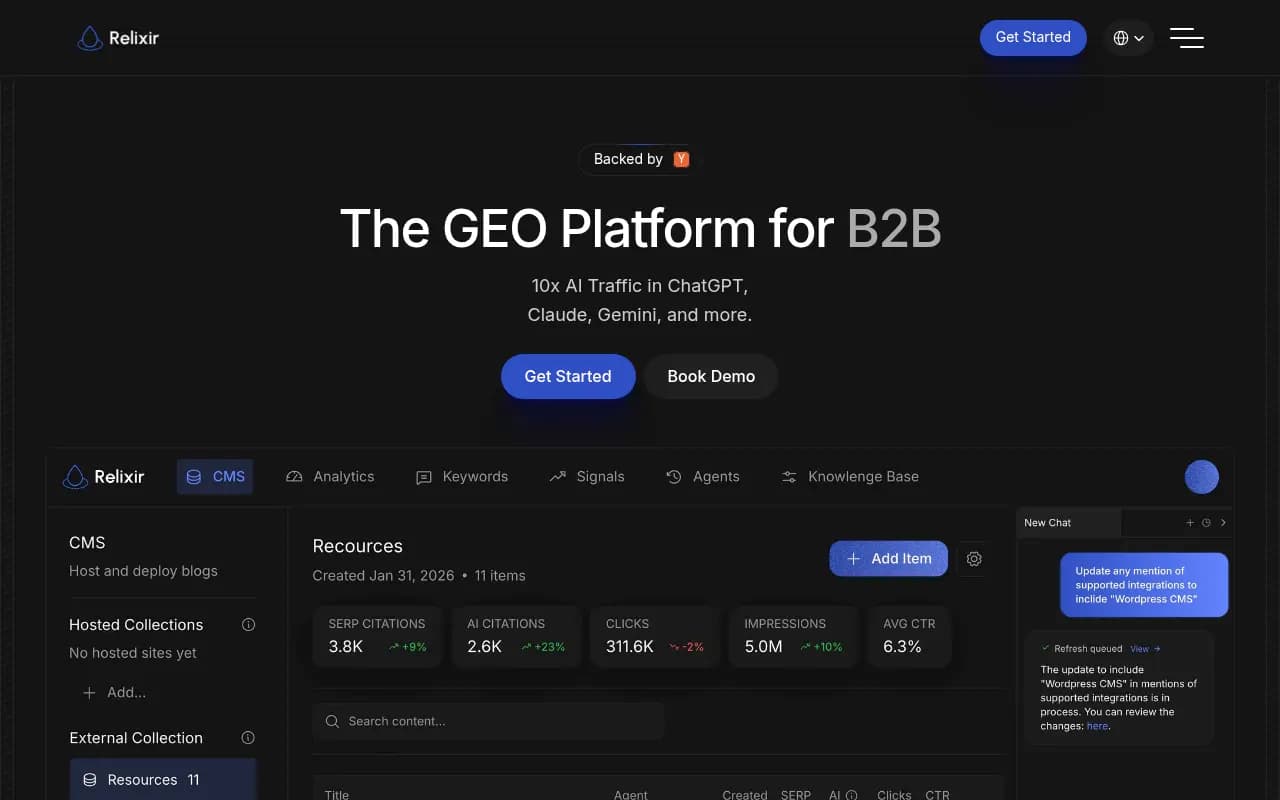
4. Relixir -- best for all-in-one GEO with content generation
Relixir combines AI search visibility monitoring with content generation, making it a direct functional competitor to SnowSEO. It's positioned as an end-to-end GEO platform with analysis and content creation built in. Worth evaluating if you want a tighter integration between the two functions than SnowSEO offers.
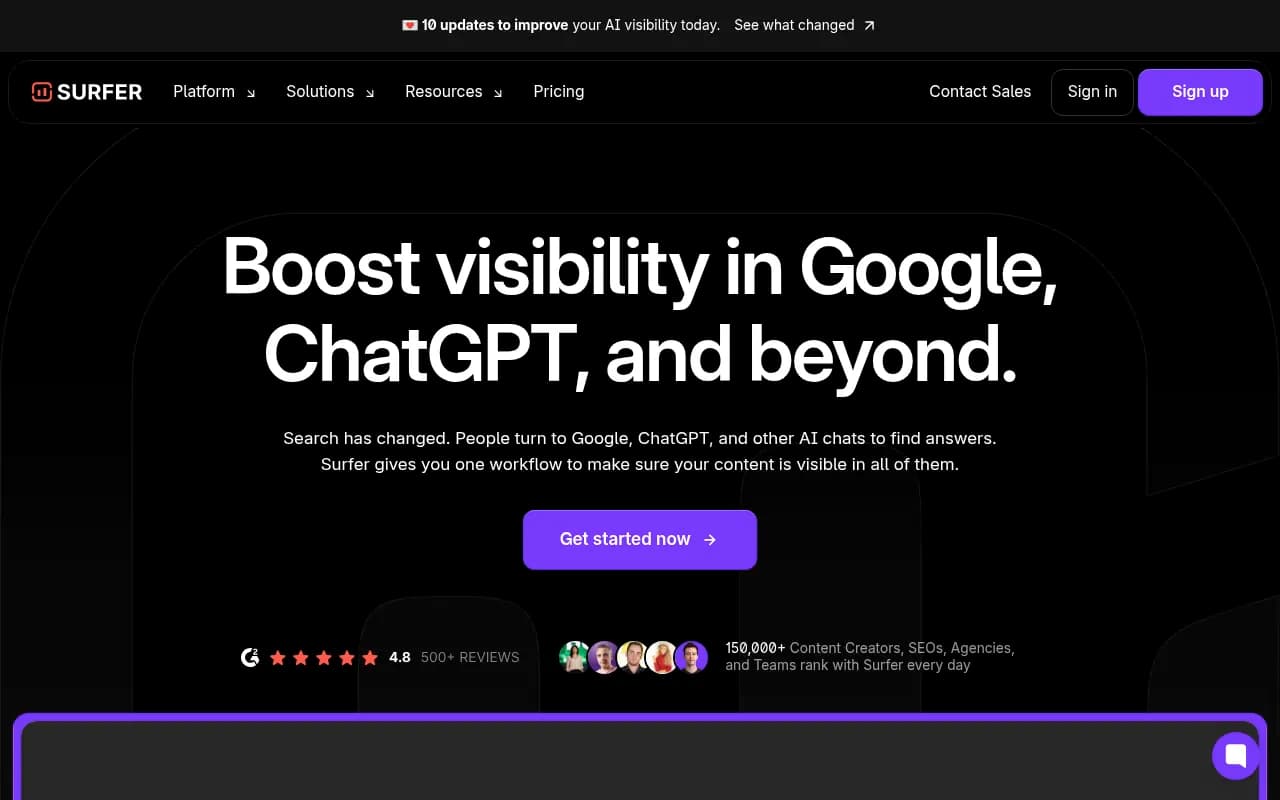
5. Surfer SEO -- best for content optimization with SEO grounding
Surfer SEO is a well-established content optimization platform that's added AI writing capabilities. It's not a GEO tool in the strict sense -- it's still primarily optimizing for Google rankings -- but its content briefs and NLP analysis produce well-structured articles that tend to perform in AI search too. Good choice if your team already uses Surfer and wants to extend its output toward AI visibility.
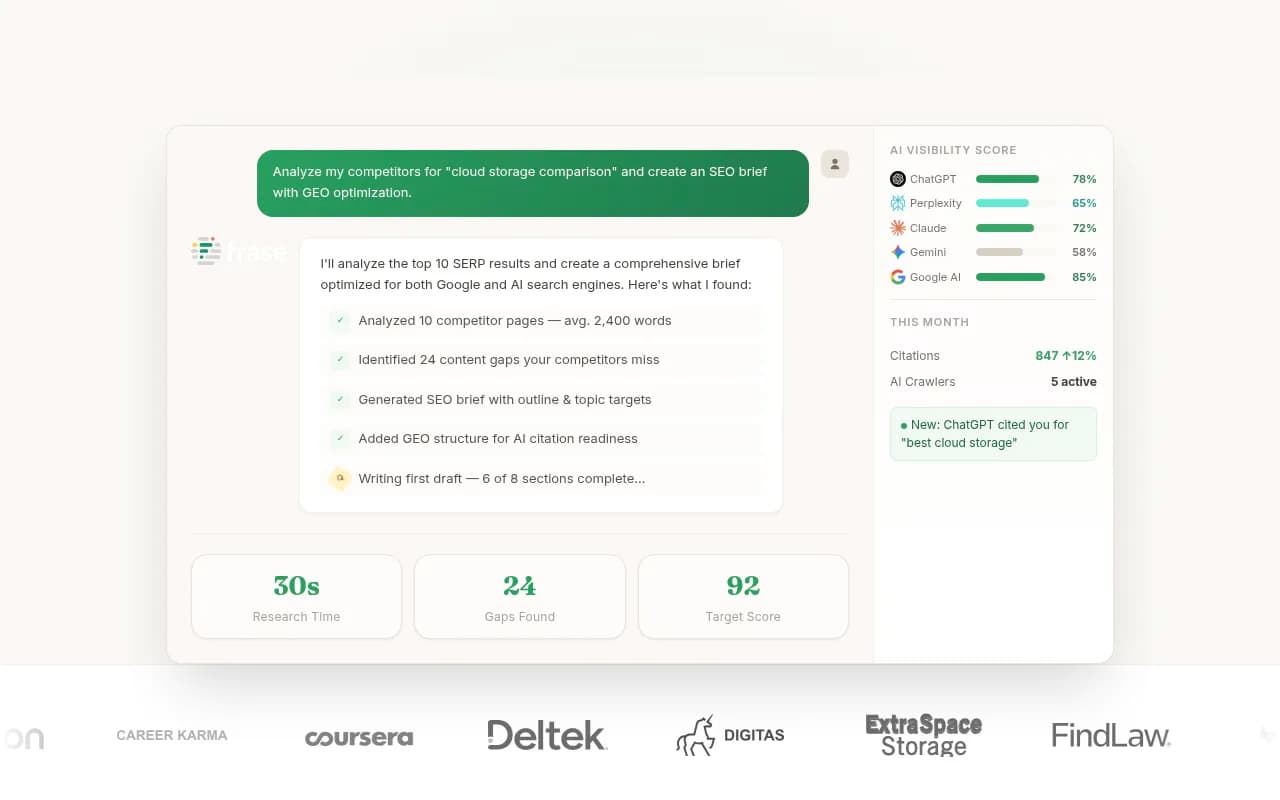
6. Frase -- best for research-driven content briefs
Frase builds detailed content briefs from search data and competitor analysis, then helps you write against them. Like Surfer, it's more traditional SEO than GEO, but the research-first approach produces content that AI models tend to cite. A solid alternative if SnowSEO's output felt thin on substance.
7. Profound -- best for enterprise AI visibility
Profound is a serious enterprise platform for AI visibility tracking. It's monitoring-focused rather than content-generation-focused, so it's not a direct SnowSEO replacement -- but for larger teams that need deep analytics and are willing to handle content creation separately, it's one of the stronger options in the market.
8. Scrunch AI -- best for brand sentiment + visibility tracking
Scrunch AI tracks how AI assistants like ChatGPT and Claude describe your brand, not just whether they mention you. If SnowSEO's content generation felt disconnected from how your brand is actually being portrayed in AI responses, Scrunch's sentiment layer adds useful context.
9. Jasper -- best for high-volume AI content teams
Jasper is one of the most mature AI writing platforms available. It doesn't have GEO-specific features, but its output quality is high and it handles long-form content well. For teams that need to publish a lot of content quickly and have a separate tool for tracking visibility, Jasper is a reliable workhorse.

10. MarketMuse -- best for content strategy depth
MarketMuse uses AI to show you what to write and how thoroughly to cover a topic. It's a content intelligence tool more than a GEO platform, but its topic modeling approach produces the kind of comprehensive content that AI models tend to favor as citation sources.

How these tools compare
| Tool | Content generation | AI visibility tracking | Citation data | Pricing starts at |
|---|---|---|---|---|
| Promptwatch | Yes (AI writing agent) | Yes (10 models) | 880M+ citations | $99/mo |
| SnowSEO | Yes (auto-generate) | Limited | Unknown | Varies |
| Writesonic | Yes | Yes | Moderate | ~$99/mo |
| Otterly.AI | No | Yes (6 models) | No | ~$29/mo |
| Relixir | Yes | Yes | Yes | Custom |
| Surfer SEO | Yes | No | No | ~$89/mo |
| Frase | Yes | No | No | ~$45/mo |
| Profound | No | Yes (enterprise) | Yes | Custom |
| Scrunch AI | No | Yes | Sentiment focus | Custom |
| Jasper | Yes | No | No | ~$49/mo |
| MarketMuse | Partial | No | No | ~$149/mo |
The pattern is clear: most tools do one thing well. SnowSEO generates content. Otterly.AI tracks visibility. Profound analyzes data. The tools that do both -- Promptwatch, Writesonic, Relixir -- are the ones that make the most sense as direct replacements.
What to actually look for in a SnowSEO alternative
Does it tell you what to write, not just how to write it?
SnowSEO generates content, but the question is whether it generates the right content. The best alternatives use actual AI citation data to identify which topics and prompts are worth targeting. Promptwatch's Answer Gap Analysis is the clearest example of this -- it shows you specific prompts where competitors appear and you don't, so you're not guessing.
Does it close the loop between content and results?
Publishing content is step one. Knowing whether that content gets cited by ChatGPT or Perplexity is step two. Most tools stop at step one. If you're investing time and money in AI-optimized content, you need to know if it's working. Page-level citation tracking -- which Promptwatch provides -- is what separates optimization from guessing.
Does it monitor the AI models your customers actually use?
Not all GEO tools monitor the same platforms. Some focus only on ChatGPT and Perplexity. Others include Google AI Overviews, which is increasingly important for organic traffic. Check which models a tool covers before committing.
Is the content generation grounded in real data?
Generic AI writing tools can produce content that looks good but doesn't reflect what AI models actually want to cite. The best content generation for GEO is grounded in citation analysis -- what sources are AI models already pulling from, what format do they prefer, what questions are they trying to answer. That's a different standard than standard SEO content.
Who should switch from SnowSEO (and to what)
If you're a small team or solo marketer who just wants affordable AI visibility tracking without content generation, Otterly.AI is the simplest starting point. Add a writing tool like Jasper or Writesonic alongside it.
If you're a marketing or SEO team that wants content generation tied to real citation data, Promptwatch is the most complete option. The Answer Gap Analysis + AI writing agent combination is specifically built for this use case.
If you're an agency managing multiple clients, Promptwatch's agency/enterprise tier or Search Party are worth evaluating. Both handle multi-site workflows.
If you're enterprise with a dedicated analytics team, Profound or Evertune offer deep reporting capabilities, though you'll need separate content workflows.

If your main frustration with SnowSEO is content quality rather than visibility tracking, Surfer SEO or Frase will produce better-structured, more researched output.
The bigger picture: content generation alone isn't enough
The reason SnowSEO exists is real: AI search engines are increasingly the first place people get answers, and the brands that get cited in those answers have a significant advantage. Publishing content optimized for AI citation is a legitimate strategy.
But content generation without visibility intelligence is only half the job. You need to know which prompts to target, whether your content is actually getting cited, and how your visibility compares to competitors. That's the shift from "publishing content" to "doing GEO properly."

The tools that combine both functions -- content generation grounded in citation data, plus tracking to measure results -- are where the market is heading. SnowSEO was an early attempt at this. The alternatives listed here have gone further.
If you're evaluating options, start by asking one question: does this tool tell me which content to create based on what AI models are actually citing, or does it just help me create more content? The answer will narrow your shortlist quickly.