Key takeaways
- Franchise GEO is two problems: getting locations named in local AI answers, and getting the brand recommended to prospective franchisees. Most tools only cover one.
- Pick tools by job. You need AI visibility tracking, location data and listings management, and technical or structured data support. No single product does all three well.
- ChatGPT leans on product and landing pages (about 39% of its citations in early October 2026), so your location pages and "own a franchise" pages matter more than blog volume.
- Start with a free AI visibility scan, test 20 to 30 real prompts per market, and only then buy a platform.
- Most franchise GEO agency rankings online are written by agencies ranking themselves. Treat them as vendor material.
Why franchises need a different GEO setup
A normal brand has one website and one reputation. A franchisor has a brand site, hundreds of location pages, franchisee-run social accounts, review profiles scattered across Google, Yelp and Facebook, and a separate audience of people considering buying in.
That creates two prompt families you should track separately.
The first is consumer prompts: "best pizza delivery near me", "which gym franchise has the cleanest locations", "urgent care open now in Tampa". These are local, they depend on listings and reviews, and the answer changes by neighborhood.
The second is franchise development prompts: "best low-cost franchises to buy in 2026", "is [brand] franchise worth it", "[brand] franchise fee and royalty". Here the buyer is doing research that used to happen in Google plus a pile of franchise portals. Now ChatGPT or Perplexity summarizes it, and your Franchise Disclosure Document details, Item 19 claims and reviews from franchisees all feed the answer.
Most tools in the market were built for the first problem or neither. So the useful question is which combination fits your brand's size.
What the data says about how AI picks sources
I would not build a franchise GEO plan on guesses, so here is what first-party data shows. None of it is franchise-specific (Promptwatch Data has no franchising report yet), so the franchise readings below are my interpretation.
In Promptwatch's ChatGPT citation share by content type report (Sep 28 to Oct 4, 2026), product pages were the most cited type at 22.4% and landing pages followed at 16.8%. Listicles took 13.6%. For branded prompts, reviews rose to 5.6%, more than three times their overall share, and FAQ pages reached 4.8%.
For a franchisor, location pages and "own a franchise" pages are landing pages. Branded questions like "is this franchise worth it" lean on reviews and FAQs. So the basics (complete location pages, a real franchise FAQ, review collection) are where citations come from.
The unique domains per response data adds a catch. 47.6% of ChatGPT responses with citations cite ten or more domains, and for organic prompts with no brand named that rises to 52.5%. You share every answer with a crowd of third-party listicles, directories and review sites. For branded queries the picture flips: the most common count is five domains, so your own site and a few review sources carry more weight.
Social presence also differs by engine. In Promptwatch's social citation data for Sep 28 to Oct 4, 2026, social platforms made up just 0.46% of ChatGPT citations but 12.2% of Google AI Overviews citations, with YouTube at 4.28% and Facebook at 2.38%. If your franchisees run active Facebook and YouTube pages, that helps in AI Overviews far more than in ChatGPT. Reddit dropped sharply in ChatGPT too, from about 4% to 0.5% on August 14, 2026, per Promptwatch's Reddit citation report.
What to look for in a franchise GEO tool
Before the list, a checklist. I would score every vendor against these:
- Location-level tracking. Can you run the same prompts as if asked from different cities or exact coordinates? National averages hide the fact that your Dallas locations might be invisible while Denver is fine.
- Brand-level and franchise-development prompts tracked as their own set, not mixed into local queries.
- Citation sources, not just mention counts. You need to see which review sites, directories and pages the AI actually pulled from.
- Crawler visibility. If AI bots cannot read your location pages (common with store locators built in JavaScript), nothing else matters.
- Reporting that works at two levels: a corporate view and something you can hand to a franchisee.
- Action, not only dashboards. Someone has to fix 400 location pages.
The tool categories, and who fits where
| Job | Tool types | Examples |
|---|---|---|
| AI visibility tracking and optimization | GEO platforms | Promptwatch, Profound, Scrunch, Peec AI, Otterly.AI |
| Listings, reviews, local data | Multi-location presence platforms | Yext, Uberall, Synup, Birdeye, Chatmeter |
| Enterprise SEO with AI features | Large SEO suites | BrightEdge, Conductor, seoClarity, Botify |
| Structured data | Schema platforms | Schema App |
| Local social at scale | Franchise social tools | SOCi |
GEO platforms: tracking and fixing AI visibility
Promptwatch is the one I would look at first for franchisors, mostly because it goes past tracking. It monitors the real interfaces of ChatGPT, Google AI Overviews, Google AI Mode, Gemini, Perplexity, Copilot and others, and the Business plan adds state and city tracking plus local GEO/SEO targeting at exact coordinates (20 m to 5 km accuracy radius). That is the feature that matters when "near me" prompts are your lifeblood. You can keep a national franchise development monitor and a separate local monitor per key market, since a monitor's location and language are fixed once created.
On the fixing side, it logs AI crawler hits with IP verification (useful for checking whether GPTBot or ClaudeBot can reach your location pages), runs weekly site audits, flags content gaps against the prompts AI answers, and its Content Agent can write and publish to WordPress, Webflow or Framer. Brand Narrative pulls out the individual claims AI makes about you, such as "high startup costs" or "strong franchisee support", which is directly useful for franchise development teams. Pricing, quoted from the plan page: Business is $579/mo, Professional is $245/mo, and agencies serving multiple franchise brands can look at Kick-off at $199/mo, Growth at $399/mo or Scale at $799/mo. Confirm current numbers at promptwatch.com/pricing. A free AI visibility report and a 7-day trial on monthly billing are the cheap way in.

A quick note on fit: the automated Content Agent, local coordinate targeting and Fact Check start at Business. If you are a young franchisor with 15 locations, Professional may be plenty.
Profound is the enterprise-priced monitoring name that comes up in almost every shortlist. It has strong tracking, but no agentic execution in the way the above does, and you should ask hard questions about location-level granularity before signing.

Scrunch is similar territory: monitoring and some optimization of how assistants describe your brand. Worth a demo if you want a second opinion on enterprise features.

Peec AI and Otterly.AI are the budget trackers. They tell you whether you are mentioned and by whom. For a small franchisor wanting a baseline, that can be enough. They do not read your crawler logs or write content, so expect to do the fixing elsewhere.


If you want to compare more options, the GEO software directory at bestgeosoftware.com lists dozens more.
Listings and local presence platforms
AI answers for local queries are still built on the same data layer as maps and local packs: names, addresses, hours, categories, reviews. If that data is inconsistent across 300 locations, no GEO tool will rescue it. This is the unglamorous half of franchise GEO.
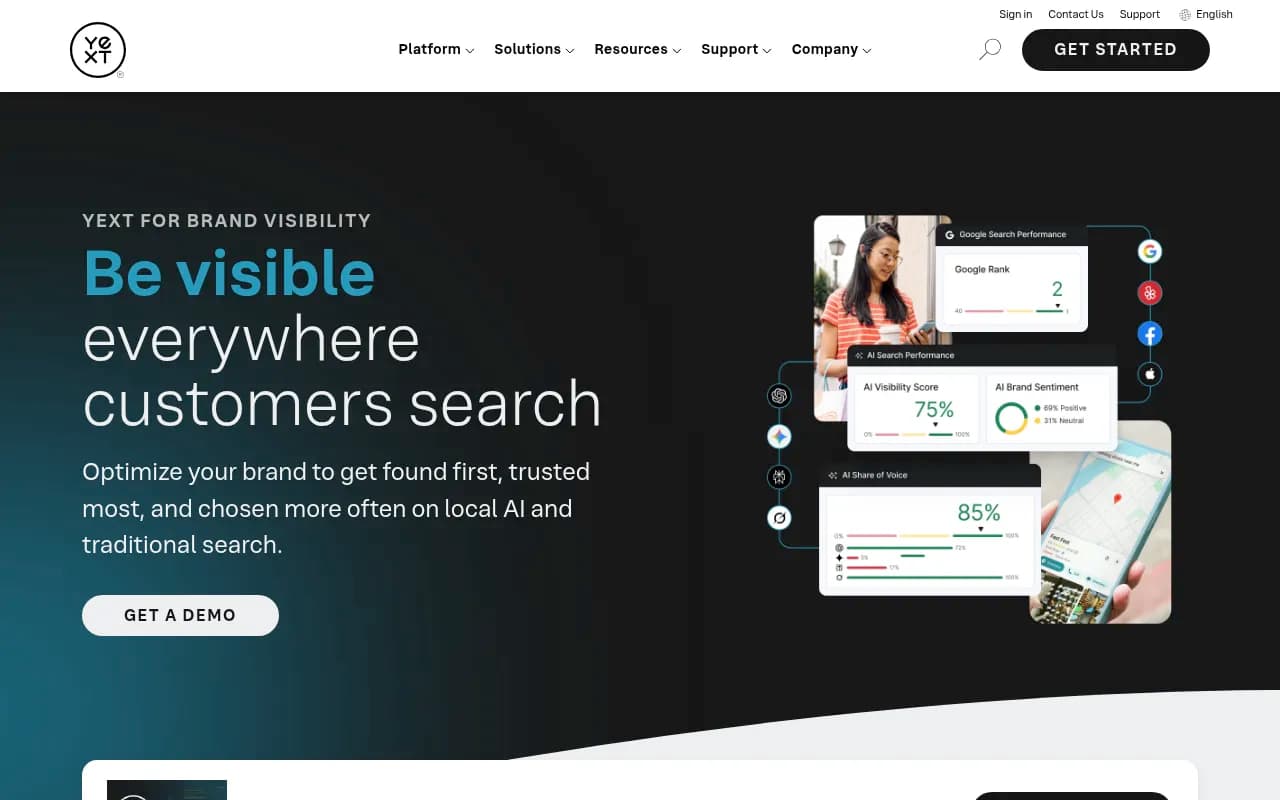
Yext is the best known for multi-location brands and pushes structured location data to a wide publisher network.
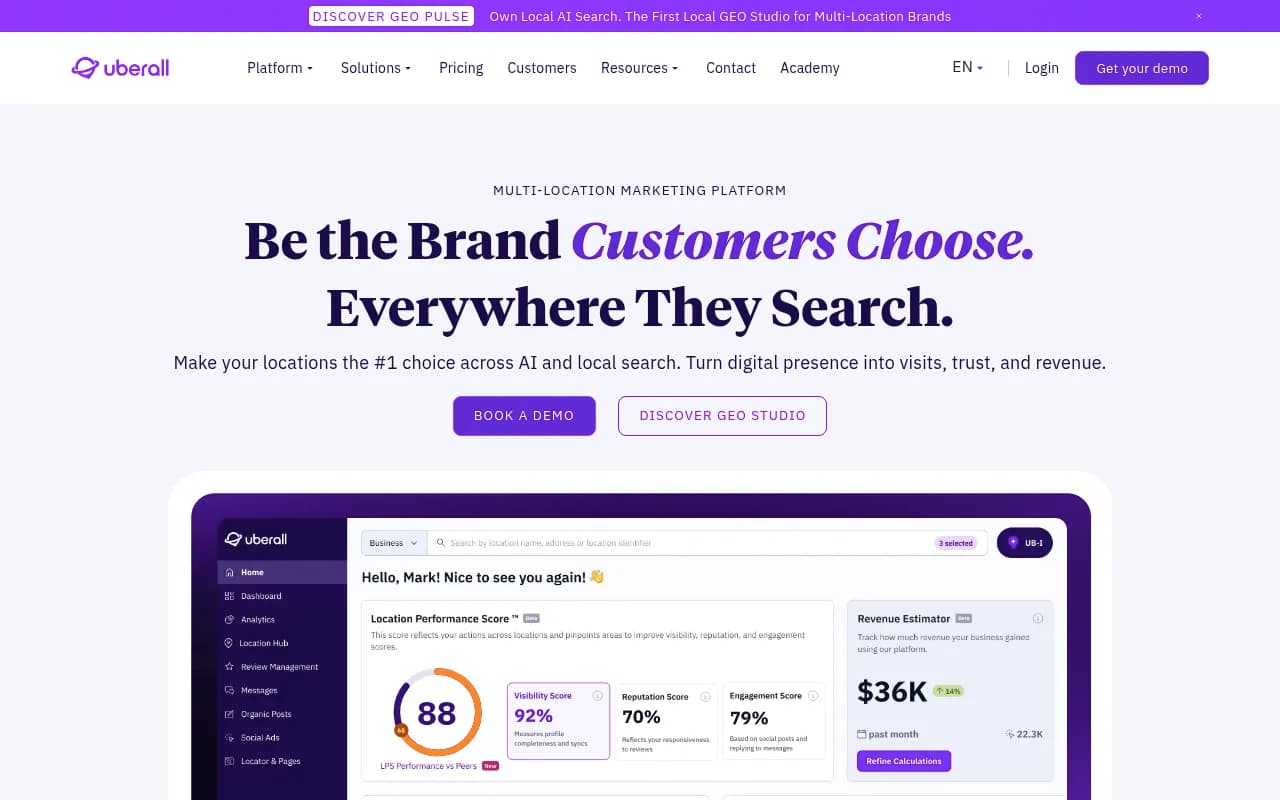
Uberall is a close competitor with a similar pitch, stronger in European markets in my experience.
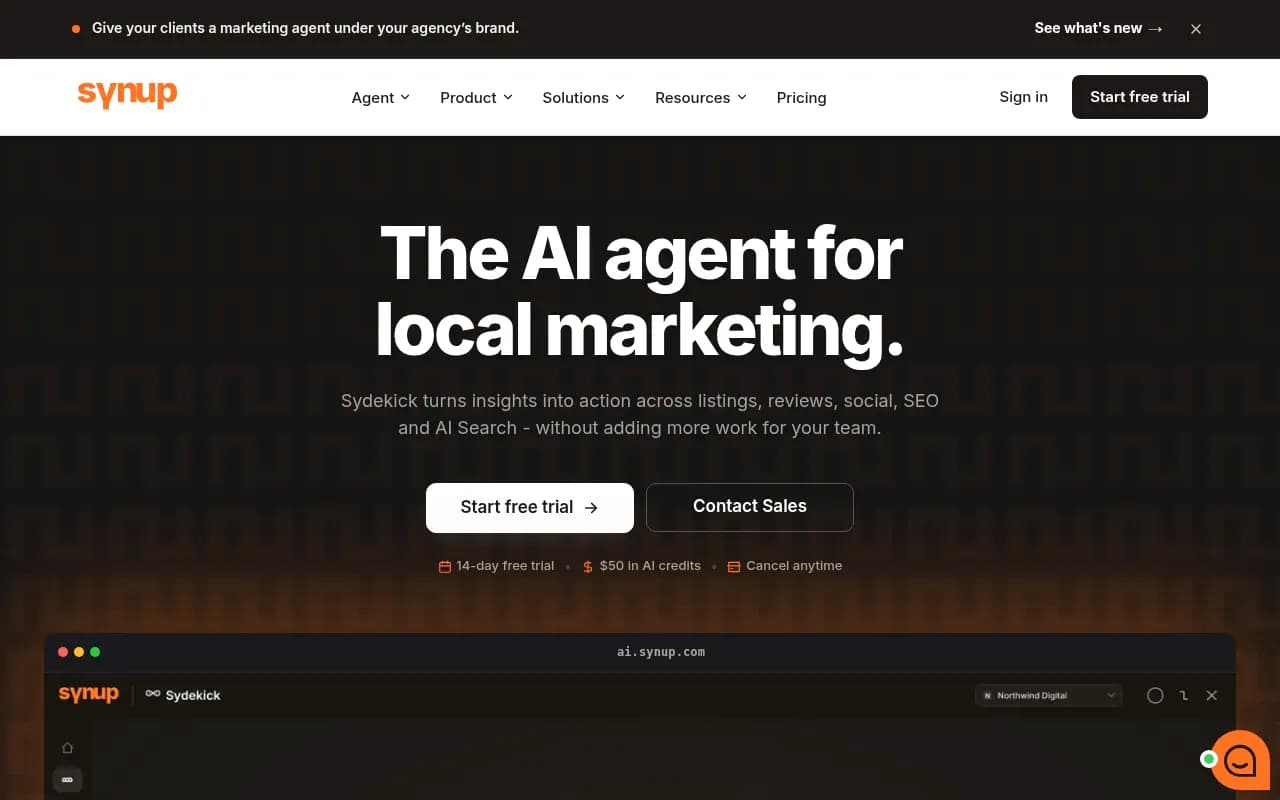
Synup is the more affordable option and markets an AI agent that handles listings, reviews and local visibility.
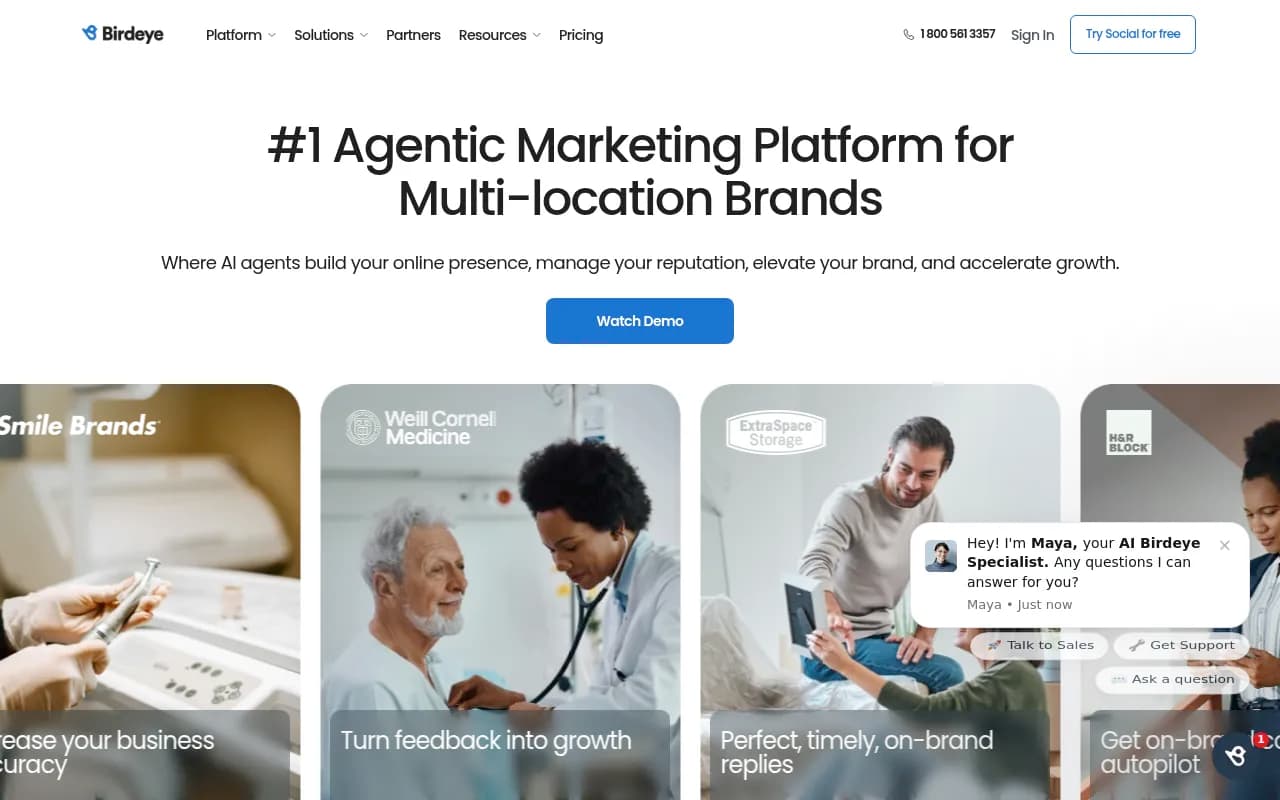
Birdeye and Chatmeter lean toward reviews and reputation, which matters because reviews feed branded prompts directly.
BrightLocal is better for agencies or smaller networks that want local rank tracking and citation audits without enterprise contracts.
For franchisee-run social profiles, SOCi handles localized posting and approvals at scale. That matters most for Google AI Overviews, where Facebook and Instagram show up more.
Enterprise SEO suites with AI add-ons
BrightEdge, Conductor, seoClarity and Botify are the usual names in franchise and multi-location SEO lists. All four have added AI search visibility modules. They suit teams already living in these platforms, with a central SEO group managing thousands of URLs.
My honest take: the AI modules in traditional suites tend to be shallower than dedicated GEO platforms, with fixed prompt sets and less citation detail. They earn their place when your technical SEO problem is huge, for example a store locator that generates thousands of thin or duplicate pages. Botify and Lumar-style crawlers are good at that kind of mess.
Structured data
Schema markup for LocalBusiness, Organization and FAQ content helps machines read location pages unambiguously. The Sitefinity SEO and GEO guide called structured data the most impactful action this year, though that is one vendor-adjacent opinion, not a measured result. Schema App automates markup across large site networks, which beats hand-editing templates.
Tool comparison for franchisors
| Tool | Best for | Location-level AI tracking | Fixes content | Crawler logs |
|---|---|---|---|---|
| Promptwatch | End-to-end GEO, local and franchise development | Yes (city, state, exact coordinates on Business) | Yes (Content Agent, gap analysis) | Yes |
| Profound | Enterprise monitoring | Confirm in demo | Limited | Confirm in demo |
| Scrunch | Enterprise monitoring and brand control | Confirm in demo | Some | Confirm in demo |
| Peec AI / Otterly.AI | Low-cost baseline tracking | Limited | No | No |
| Yext / Uberall / Synup | Listings and location data | Not AI tracking | No | No |
| BrightEdge / Conductor / seoClarity | Enterprise SEO with AI modules | Varies | Varies | Varies |
| Schema App | Structured data at scale | No | Markup only | No |
I did not verify current feature lists for every vendor above, so the "confirm in demo" cells are real homework for you.
A sensible stack by franchise size
Under 50 locations: a GEO platform on a mid tier, native Google Business Profile management, and a review collection routine. Skip enterprise suites.
50 to 500 locations: add a listings platform (Yext, Uberall or Synup), structured data on location templates, and a GEO platform with city-level tracking. Assign someone to own franchise development prompts separately.
500+ locations: all of the above plus an enterprise SEO suite for technical governance, and likely a managed or agency layer. Here location-level reporting for franchisee groups matters as much as the tracking itself.
How to set this up in your first 30 days
- Write two prompt lists. One with 25 consumer prompts per priority market, one with 25 franchise development prompts (cost, fees, comparisons with competitor brands, reviews).
- Run a free baseline. The free AI visibility report from Promptwatch covers ChatGPT, Gemini and Perplexity, and the Agentic Readiness Check shows which AI crawlers can read your site.
- Check crawlability of location pages. Look at your robots.txt and whether your locator renders without JavaScript.
- Look at which sources AI cites for your category. Often it is a franchise portal or listicle, not your site. Those are outreach targets.
- Fix the cheap stuff: consistent NAP data, a franchise FAQ answering fees, royalties, training and territory, complete location pages with real local detail.
- Re-run the prompts weekly. Content half-life matters here: Promptwatch's half-life data shows news losing half its cited pages within about 36 days, while landing pages and docs last longest, so evergreen location and franchise pages are the better investment.
What about franchise GEO agencies?
Searches for this topic turn up long agency listicles, including a 21-agency ranking from Web Tonic and a top 10 from Bluelinks. Read them with care. Web Tonic ranks itself second, and both pieces are vendor-authored, so the order tells you little. Use them as a name list, then ask each agency for franchise client references, how they report per location, and which tracking platform they use.
If you want a partner, 1001 SEO Media is an SEO and GEO agency that works with Promptwatch as its AI visibility platform, with no long-term contracts. Whatever agency you choose, make sure you keep access to your own tracking data.
Mistakes I see franchisors make
- Tracking only the brand name. People ask category questions, and you need to know whether you appear when nobody names you.
- Treating all locations the same. Visibility is local; one strong flagship can mask fifty invisible units.
- Ignoring franchisee-generated content. Their reviews and posts are your most cited sources on branded queries.
- Buying a dashboard and expecting results. A score does not rewrite 300 pages.
Bottom line
For most franchisors the winning setup is a GEO platform that tracks by location and helps you fix gaps, plus a listings tool to keep location data clean. Start with the free baseline, compare two or three platforms using your own prompts, and judge them on whether they show which sources AI actually cites in your markets.