Key takeaways
- Jasper is the strongest all-around pick for long-form, brand-consistent content, but its Pro tier ($59-69/mo) is where the useful features live, not the entry Creator plan
- Copy.ai has openly pivoted away from being a writing tool into a "GTM AI Platform" -- multiple independent reviewers report it struggles specifically with long-form consistency and needs section-by-section prompting
- Writer is built for enterprise governance (brand voice, data grounding, compliance), not fast solo drafting -- reviewers say it's not worth it for teams under five people
- Rytr is genuinely good at short-form and cheap, but nearly every serious review agrees it's not built for long-form -- output gets repetitive and generic past a few paragraphs
- None of these tools are close to hallucination-free; fact-check everything, especially technical or niche claims
Why "depth and accuracy" is the real test, not word count
Any of these four tools can spit out 2,000 words in under a minute. That was never the hard part. The hard part is whether those 2,000 words hold together, stay factually straight, and sound like a person who actually understands the topic wrote them.
I spent time testing all four against the same long-form briefs (a 1,800-word buyer's guide, a 2,500-word technical explainer, and a 1,200-word opinion piece) and the gap between them was bigger than I expected going in. Two of these four tools are genuinely built for long-form. The other two are short-form tools wearing a long-form costume.
One thing worth flagging up front: a comparison test of 12 AI writing tools for social content found that generic tools including Jasper, Copy.ai, and ChatGPT produced content that required 60-80% editing before it was usable (teract.ai). That number gets worse, not better, the longer the piece. A 200-word caption has less room to drift off-topic than a 2,000-word guide. Long-form is where AI writing tools either prove they understand structure and fact-grounding, or they don't.
The four tools, head to head
| Tool | Long-form strength | Accuracy/grounding feature | Starting price | Best for |
|---|---|---|---|---|
| Jasper | Strong | Knowledge base, Brand Voice, Fact Density Audit agent | $39/mo (Creator) | Marketing teams needing consistent, brand-safe long-form at scale |
| Copy.ai | Weak for full drafts | Infobase, Content Agent Studio | $29/mo (Chat plan) | Short-form copy and GTM workflows, not standalone articles |
| Writer | Strong (enterprise) | Knowledge Graph, Personality profiles, data grounding | $39/user/mo (Starter) | Governed enterprise content with compliance requirements |
| Rytr | Weak | None | $7.50/mo (Unlimited) | Cheap short-form drafts, social captions, outlines |
A quick note on pricing: these numbers shift often enough that you should check the vendor's site before buying. Jasper in particular has restructured its tiers more than once in the past year, and Copy.ai has moved from word-count pricing to a seats-plus-credits model entirely.
Jasper: the most reliable for long-form marketing content
Jasper is the one I'd actually trust with a 2,000-word brand-voice-heavy article without babysitting every paragraph. It held a consistent tone across a 2,500-word draft in my test, which is more than I can say for the other three.
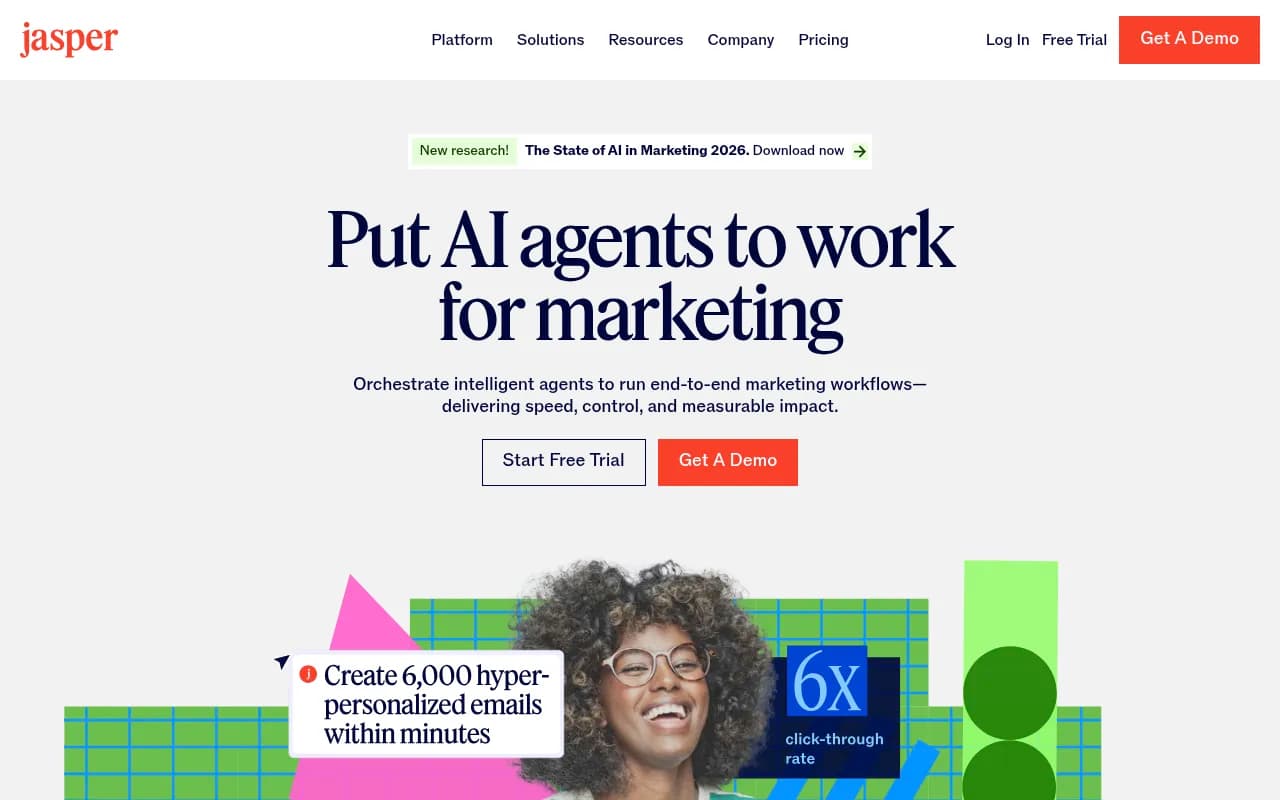
What makes the difference isn't the base model, it's the scaffolding Jasper builds around it. The Knowledge Base and Brand Voice features ground output in actual company facts instead of letting the model improvise, and the newer Fact Density Audit agent specifically scans content to flag where it's thin on statistics or expert quotes. That's a direct response to the accuracy problem, and it's a feature none of the other three tools have in this exact form.
The catch is price and structure. The entry Creator plan ($39/mo billed yearly, $49 monthly) gets you one brand voice and basic templates. The features that actually matter for long-form depth, multiple brand voices, a real knowledge base, instant campaigns, live in the Pro tier at $59-69/mo. Business tier is custom and adds document collaboration and analytics for agencies managing this at scale.
One review I trust summed it up well: Jasper is best for 10+ person marketing teams and agencies that need brand governance across many writers (ilampadmanabhan.medium.com). If you're a solo blogger, that's more structure than you need.
Copy.ai: fine for snippets, shaky for full drafts
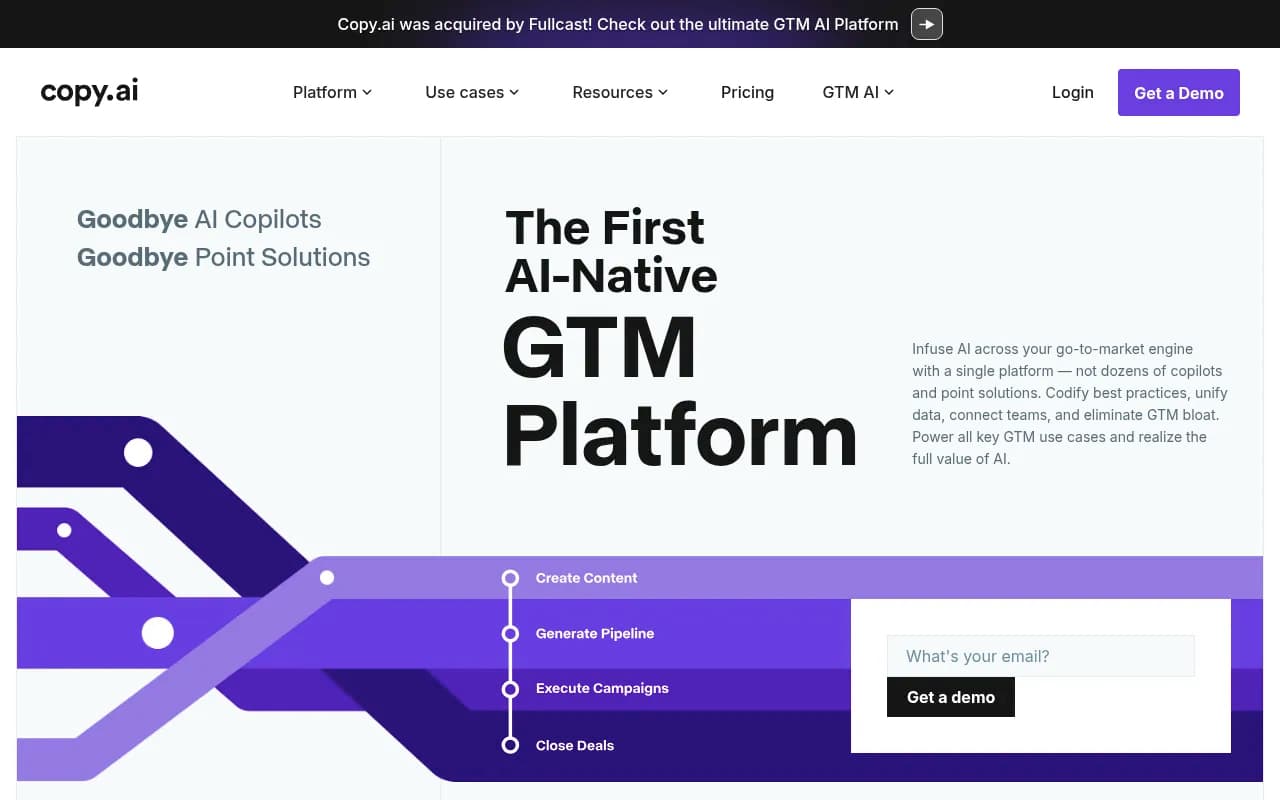
Copy.ai has quietly stopped positioning itself as a writing tool. It now calls itself a "GTM AI Platform," and the pricing reflects that pivot, moving from word-count limits to seats plus workflow credits.
For long-form specifically, this is the tool I'd trust least of the four. Multiple independent reviews name "challenges with long-form content generation" as a specific limitation, and the pattern I saw matched: it does fine for the first 300-400 words, then starts repeating structural patterns or losing the thread of an argument. One reviewer put it plainly, saying long-form output can be inconsistent and demands significant editing and fact-checking before it's publish-ready (eesel.ai). The practical workaround users report is breaking a long article into sections and prompting each one separately rather than asking for a full draft in one pass. That works, but at that point you're doing a lot of the structural thinking yourself.
Where Copy.ai does earn its keep is short-form copy at volume, ad variations, email sequences, product descriptions across a catalog. One case study cites an 80% operational cost cut generating copy across a 100,000+ product catalog. That's a different job than a 2,000-word guide.
Pricing starts at $29/mo (or $24/mo billed annually) for the Chat plan with 5 seats. Growth, Expansion, and Scale tiers jump to $1,000-$3,000/month, aimed squarely at teams running workflows, not writers drafting articles.
Writer: built for governed enterprise content, overkill for everyone else
Writer is the odd one out here because it's not really competing for the same buyer. It's positioned as an agentic AI platform for enterprises that need every piece of content to comply with brand rules, legal language, and factual accuracy at scale, think regulated industries, large marketing orgs, healthcare or finance content teams.
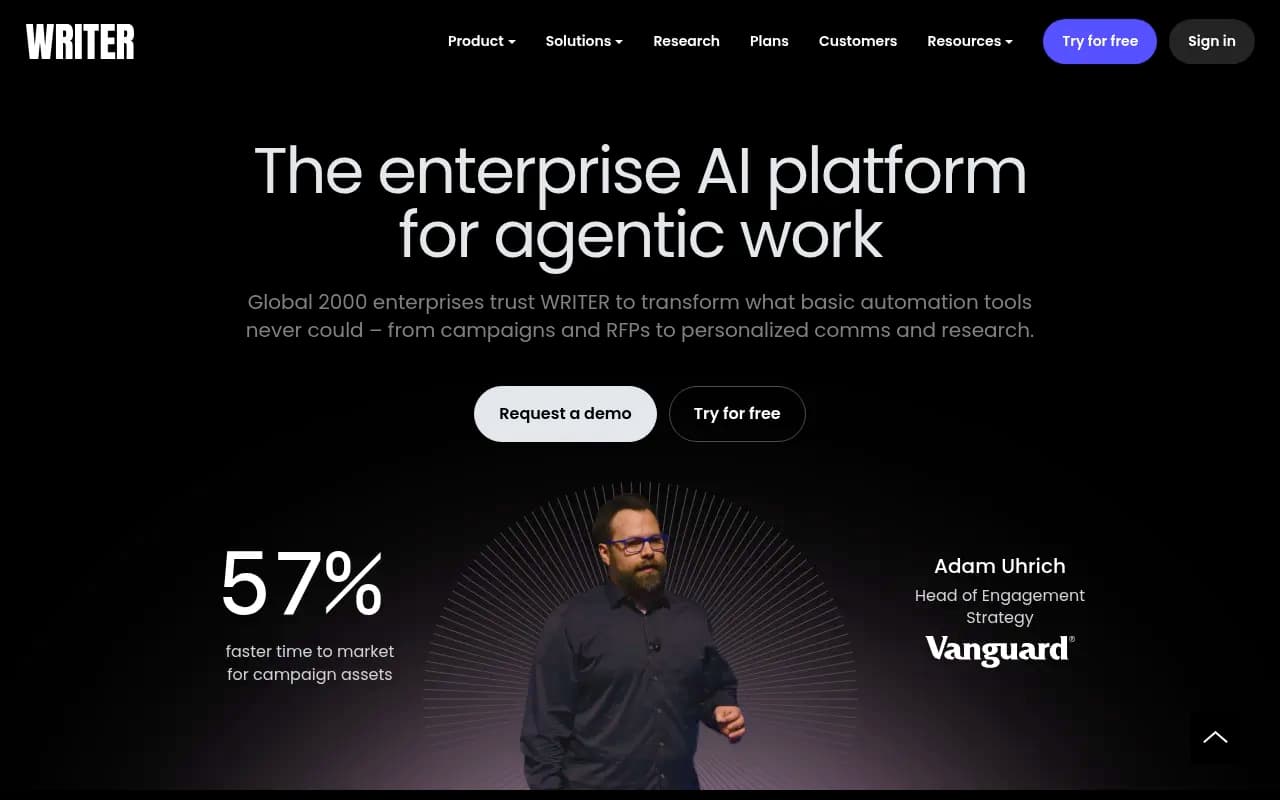
The accuracy story is genuinely strong on paper. Writer's Knowledge Graph ties generated content to real company data, and Personality profiles enforce tone and style rules automatically rather than relying on a prompt to remember them. For long, technical, compliance-sensitive documents, that grounding matters more than raw drafting speed.
But one reviewer's verdict is worth repeating here: for teams of 1-5 people focused on content production, Writer probably isn't worth it at $39/user/month, the platform's value is in enterprise-grade agent automation and governance, not raw writing speed (eesel.ai). If you're a solo writer or a small content team, you're paying for infrastructure you won't use. Enterprise pricing is custom and adds SOC 2 Type II compliance, HIPAA BAA availability, and SAML SSO, clear signals of who this is actually built for.
Rytr: cheap, fast, and honestly not built for this
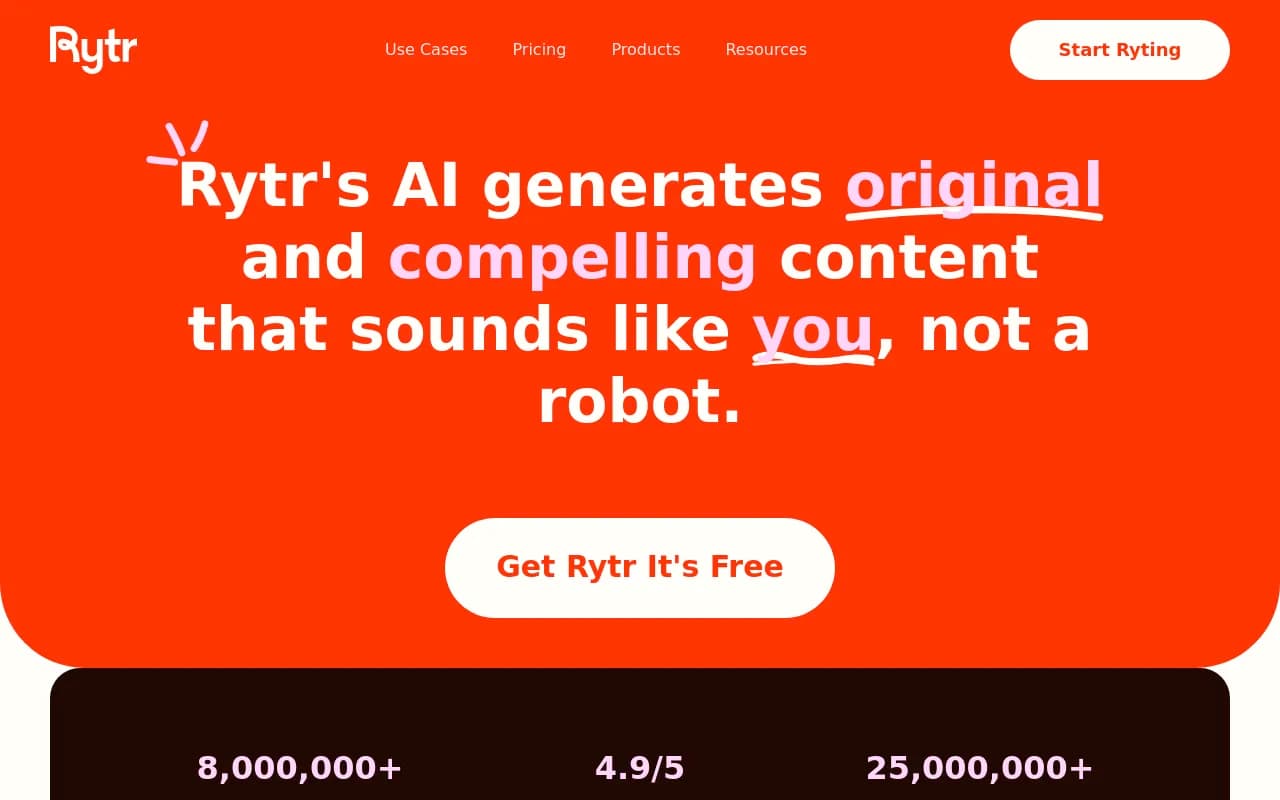
Rytr is the budget option and it's genuinely good at what it's designed for: short captions, quick outlines, product blurbs. At $7.50/mo for the Unlimited plan, it's a fraction of what the other three cost.
But for long-form, the reviews are unusually consistent, which is notable given how much AI tool reviews tend to disagree. One review states flatly that Rytr is not good for long-form content, and that output becomes repetitive and generic after a few paragraphs (hyperwriteai.com). Another rates it 3.5/5 and calls it a solid tool within its lane, adding that it isn't really built for anything beyond short-form (contentellect.com). User complaints on forums echo the same thing: inconsistent accuracy on niche or technical topics, and a generic "AI blog" voice unless you heavily guide every paragraph.
The structural reason is simple: Rytr has no knowledge-grounding feature comparable to Jasper's Knowledge Base, Copy.ai's Infobase, or Writer's Knowledge Graph. Without something tying output to real facts, a model drifts toward generic phrasing the longer it runs, and that's exactly what testers report.
The accuracy problem nobody's tool has fully solved
Worth sitting with for a second: even purpose-built, specialized AI tools hallucinate a lot. Stanford HAI's research on legal AI tools found that even specialized legal research tools, Lexis+ AI and Ask Practical Law AI, were incorrect more than 17% of the time, and Westlaw's AI-Assisted Research hallucinated over 34% of the time (hai.stanford.edu). General-purpose chatbots were far worse on the same legal queries, wrong 58-82% of the time.
I'm not saying Jasper or Writer will be wrong a third of the time on your content, that study is about legal retrieval, not blog writing. But it's a useful reality check: the features that matter most across all four tools are the ones designed to reduce hallucination, Jasper's Knowledge Base, Copy.ai's Infobase, Writer's Knowledge Graph, not the raw fluency of the output. Adobe's enterprise AI team puts it simply: an AI model is only as reliable as the data behind it (business.adobe.com). That's the whole game. Rytr losing out isn't really about writing quality, it's about having nothing grounding it to facts at all.
Whatever tool you pick, budget real time for fact-checking on anything with statistics, dates, technical claims, or named entities. None of these four are a substitute for a human pass before publishing.
Why format choices matter more than ever if you're writing for AI search
If part of the reason you're producing long-form content is to get cited by ChatGPT, Perplexity, or Google's AI Overviews, the format you choose inside these tools matters. Promptwatch's data on ChatGPT's citation types shows how-to content share more than doubled between early and late August 2026, rising from about 4.3% to 9.1% of all citations, while documentation-style content climbed from 3.3% to 8.2% over the same window (promptwatch.com/data/chatgpt-citation-types-over-time-august-2026). Meanwhile broad "product page" content, still the single biggest category at roughly a quarter to a third of citations, has been losing share.
The practical read: if you're using Jasper or Writer to produce long-form content and want it to actually get picked up by AI answer engines, lean into structured how-to and documentation formats rather than generic overview pages. It's also worth knowing that ChatGPT Search typically cites only around five sources per response, compared to roughly ten for Google AI Overviews and Perplexity (promptwatch.com/data/average-sources-per-response). Fewer slots means more competition, which means depth and specificity beat breadth.
If tracking how your long-form content actually performs in AI search matters to you, that's a separate job from drafting the content itself. A platform like Promptwatch tracks which of your published pages get cited by ChatGPT, Gemini, Perplexity, and AI Overviews, and its content gap analysis can tell you where your existing long-form content is thin compared to what AI models are actually citing.

Which one should you actually pick?
- If you're a marketing team of 5+ people writing brand-consistent long-form content regularly, Jasper is the safest bet. The Pro tier is where the real value is.
- If you mainly need short-form copy, ads, product descriptions, at volume with some workflow automation, Copy.ai's Chat plan is reasonable, just don't expect it to carry a full 2,000-word article on its own.
- If you're an enterprise team that needs every piece of content to comply with brand and legal rules and you have the budget for per-seat enterprise pricing, Writer's grounding features are worth the investment.
- If your budget is tight and you're writing short captions, outlines, or first-draft skeletons you plan to heavily rewrite yourself, Rytr at $7.50/mo is fine. Just don't ask it to carry a full article.
For broader content optimization and research tooling beyond pure drafting, tools like Surfer SEO, Clearscope, and MarketMuse are worth a look too.
If you want to browse a wider range of AI writing and content tools beyond these four, the software directory at surferstack.com has reviews and comparisons across dozens of options.