Key takeaways
- Patients are asking ChatGPT, Perplexity and Google AI Overviews about symptoms, providers and treatments. A healthcare brand needs to see which sources those answers cite, not just whether it was mentioned.
- In Promptwatch Data's October 2026 healthcare report, government and research sites dominate ChatGPT citations. NIH alone earns 5.46% of all healthcare citations, more than the FDA, NHS, CMS and SAMHSA combined.
- Choose a platform on five things: source transparency, prompt and claim control, location tracking, approval workflows, and whether it helps you fix gaps or only reports them.
- Compliance claims (HIPAA, BAAs, SSO) vary by vendor and tier. Verify each in writing before you sign.
- Most vendor listicles on this topic are self-ranked. Treat any "we are number one" list, including ones you find while researching this, with some suspicion.
Why healthcare needs its own shortlist
Health searches are the strange corner of AI search. People ask sensitive questions, the answers can affect real decisions, and the sources AI trusts look nothing like the sources in other industries.
The numbers behind that are big. A DexCare article on health system marketing, citing Healthcare Brew, says 79% of U.S. adults use the internet for health answers, and that ChatGPT receives health and wellness questions from more than 230 million people each week. The same piece cites Seer Interactive data showing click-through rates falling from 1.6% to 0.6% when an AI Overview appears. Those are secondhand figures, but the direction is hard to argue with: patients increasingly get an answer without visiting your site.
So the job changes. For a clinic or health system, AI visibility means three things: being named when someone asks "best dermatologist near me", being described accurately, and having your content cited as a source for medical claims. A tracker that only counts mentions covers the first and ignores the other two.
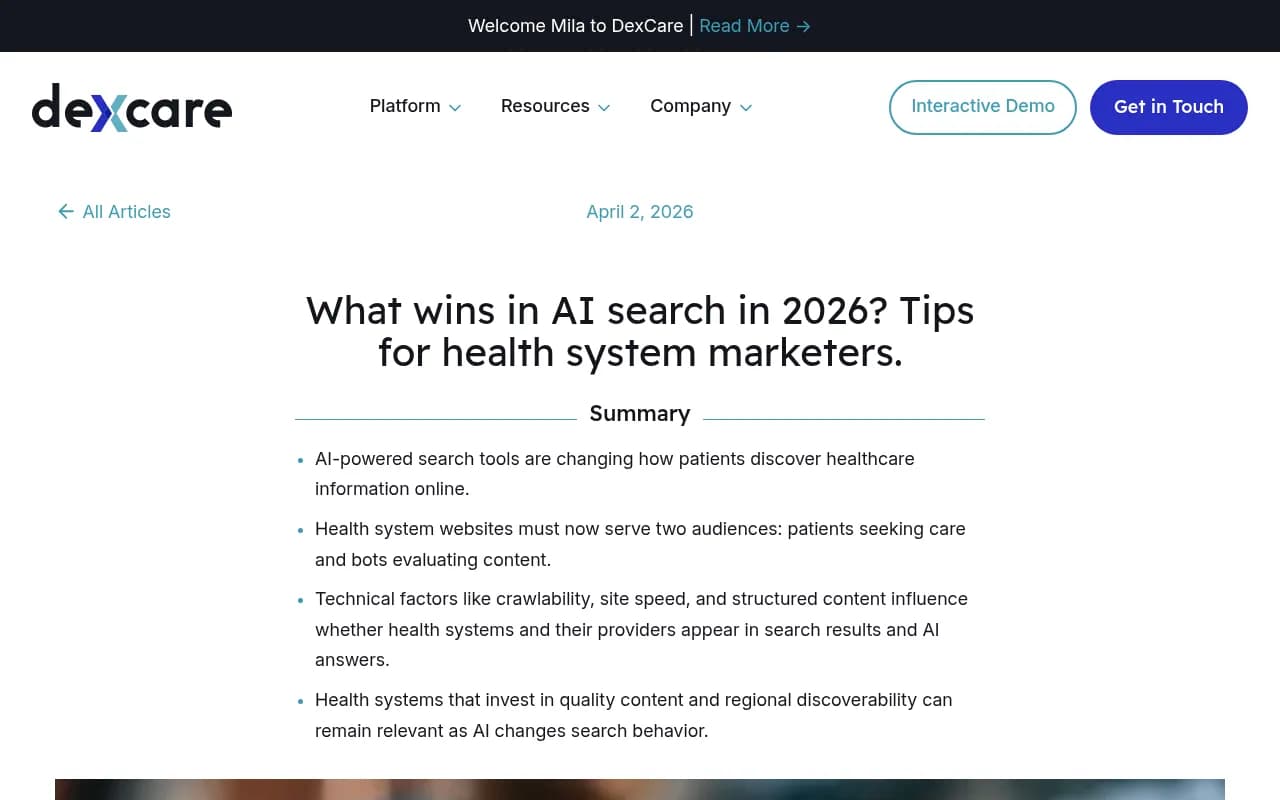
DexCare's piece is a useful non-vendor read on how health system websites now serve both patients and bots, with crawlability, site speed and structured content named as the technical factors.
What the healthcare citation data says
Before comparing software, look at what AI actually cites in your industry. Promptwatch Data's healthcare report for October 2026 covers organic healthcare prompts in ChatGPT from Sep 9 to Oct 8, 2026.
- NIH is the most cited source at 5.46% of all healthcare citations, spread across six nih.gov subdomains. PubMed Central is 2.38% and PubMed 2.33%.
- The FDA follows at 1.76%, then the NHS at 1.1%.
- The top non-government site is the American Society of Plastic Surgeons at 0.64%, then the American Academy of Dermatology at 0.54%.
- Mayo Clinic (0.49%) and Cleveland Clinic (0.4%) are the only hospitals in the top 20.
- Government and public health sites together earn 7.06%. Medical associations earn 1.39%, hospitals and clinics 0.89%, reviews and directories 0.46%.
- Doctify and WebMD doctor profiles are the only review and directory entries, at 0.23% each.
Two things stand out. First, the AAD and the American Society of Plastic Surgeons together beat Mayo Clinic and Cleveland Clinic combined, so specialty associations carry real weight. Second, the whole top 20 earns only 15.54% of citations. The long tail is large, which is good news for a smaller practice that publishes well-sourced content.
The practical takeaways Promptwatch drew from the data are sensible: back medical claims with peer-reviewed studies and link them on PubMed or PubMed Central, keep pages consistent with FDA, CDC, NHS and NICE guidance, engage the medical associations in your specialty, and keep Doctify and WebMD profiles complete.
Social platforms matter differently per engine
Promptwatch's social citation data for Sep 28 to Oct 4, 2026 shows ChatGPT drew only 0.46% of its citations from social platforms, while Google AI Overviews drew 12.2%. YouTube leads AI Overviews at 4.28%, with Facebook at 2.38% and Instagram at 1.61%. Reddit has fallen to 0.09% in ChatGPT, a drop Promptwatch tracked on August 14, 2026.
For a medical practice that means patient education videos on YouTube and an active Facebook page are worth more for Google's surfaces than for ChatGPT. A Reddit strategy no longer helps with ChatGPT.
What to look for in a healthcare AI visibility platform
A useful filter, adapted from questions that come up in every evaluation:
- Can you inspect the source behind an answer? Mentions without citations are not enough when accuracy matters.
- Can you control the prompts you monitor? Healthcare needs prompts per specialty, condition, procedure and location.
- Can you separate markets? A multi-location group needs city or state tracking, not one national number.
- Can your team approve work? Medical review is a real step, so look for approval chains and audit history.
- Does it help you act? Finding a gap is cheap. Closing it is the expensive part.
One boundary worth stating plainly: these are marketing visibility platforms. They do not diagnose, replace clinical review, or act as patient-facing tools.
A note on HIPAA
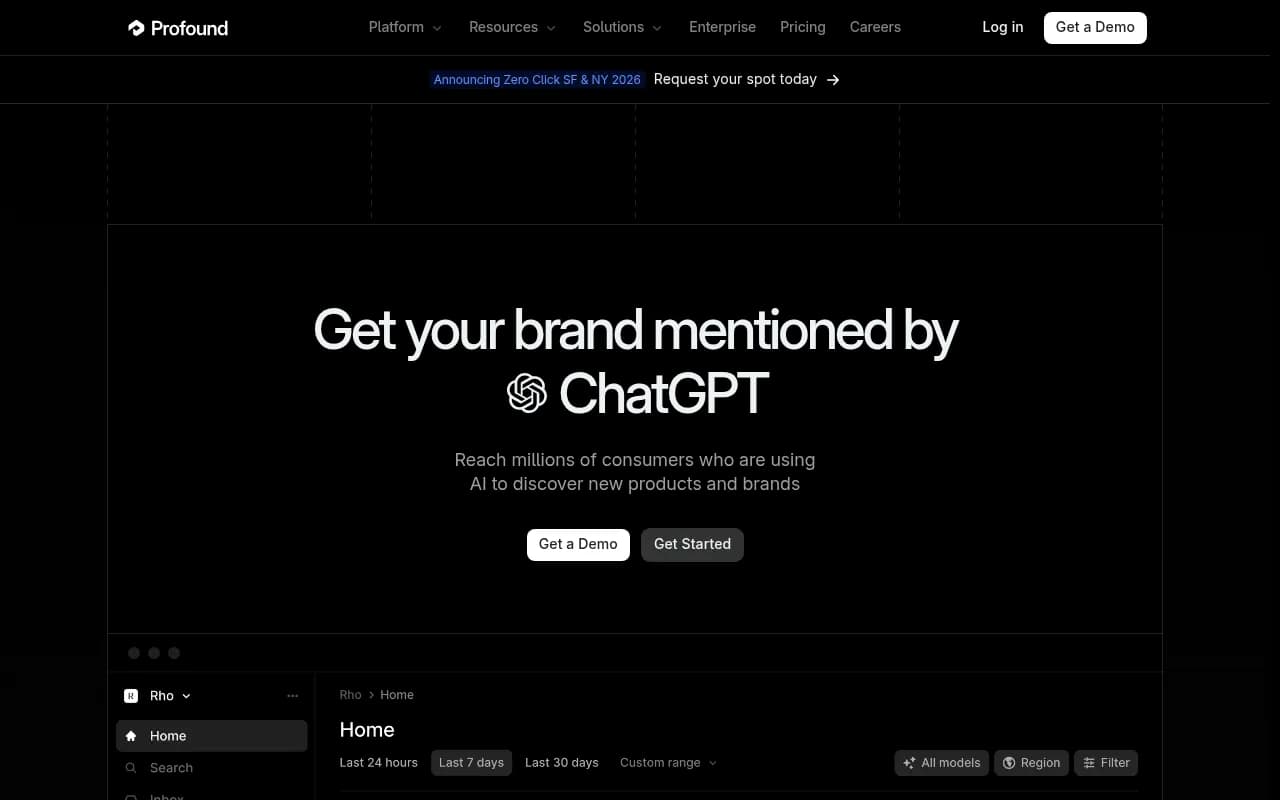
An AI visibility tool monitors public AI answers and public web pages. It normally has no reason to touch protected health information. Still, vendors differ on security posture, and some enterprise tools advertise independent HIPAA assessments. Profound, for example, has announced HIPAA compliance through an assessment by Sensiba LLP. I did not verify BAA terms for any vendor in this guide, so ask each one directly, especially if you plan to connect analytics or CRM data.
The platforms worth shortlisting
Promptwatch
Promptwatch is the one I would start with for a practice or health system that wants to do something with the data rather than just look at it. It tracks real user interfaces of ChatGPT, Google AI Overviews, Google AI Mode, Gemini, Perplexity, Copilot and others, with country tracking on every paid plan and state/city tracking from the Business tier, which matters for multi-location groups.
The parts that map to healthcare needs: citation analytics showing which of your pages get cited and where you sit in the source list, Offsite Mentions that catch your brand named on third-party pages (useful for directories and association listings), IP-verified AI crawler logs that show whether bots can even read your site, and a content gap analysis feeding an Action Board and Content Agent that drafts and publishes to WordPress, Webflow or Framer. A Brand Book and Knowledge Base keep generated content tied to approved facts, and the review inbox keeps a human in the loop before anything goes live.
Pricing starts free for a single project with 10 prompts, then $95/mo (Essential) up to $579/mo (Business). Confirm current plans at promptwatch.com/pricing.

Profound
Profound is the strongest fit for large regulated organizations with security reviews. Its HIPAA compliance announcement and governance features appeal to pharma, hospital systems and life sciences companies. The catch is cost: third-party listings put enterprise plans in the thousands per month. Monitoring is strong, but expect to pair it with your own content process.
Scrunch AI
Scrunch combines answer monitoring, site audits, citation analysis, AI-referral measurement and an edge layer called Agent Pages that serves clean, JavaScript-free HTML to verified AI agents. That suits a health system with a large, script-heavy site and CDN access. According to the SearchEye comparison, the entry plan is $250/mo with a card-required seven-day trial, and SSO and audit controls sit on higher tiers. Verify current terms before you buy.
Peec AI
Peec AI is a monitoring-first tool with deep analytics across models and countries. Good if your team already has a content process and only needs clean measurement. It will not write or publish anything for you.

BrightEdge and other enterprise SEO suites
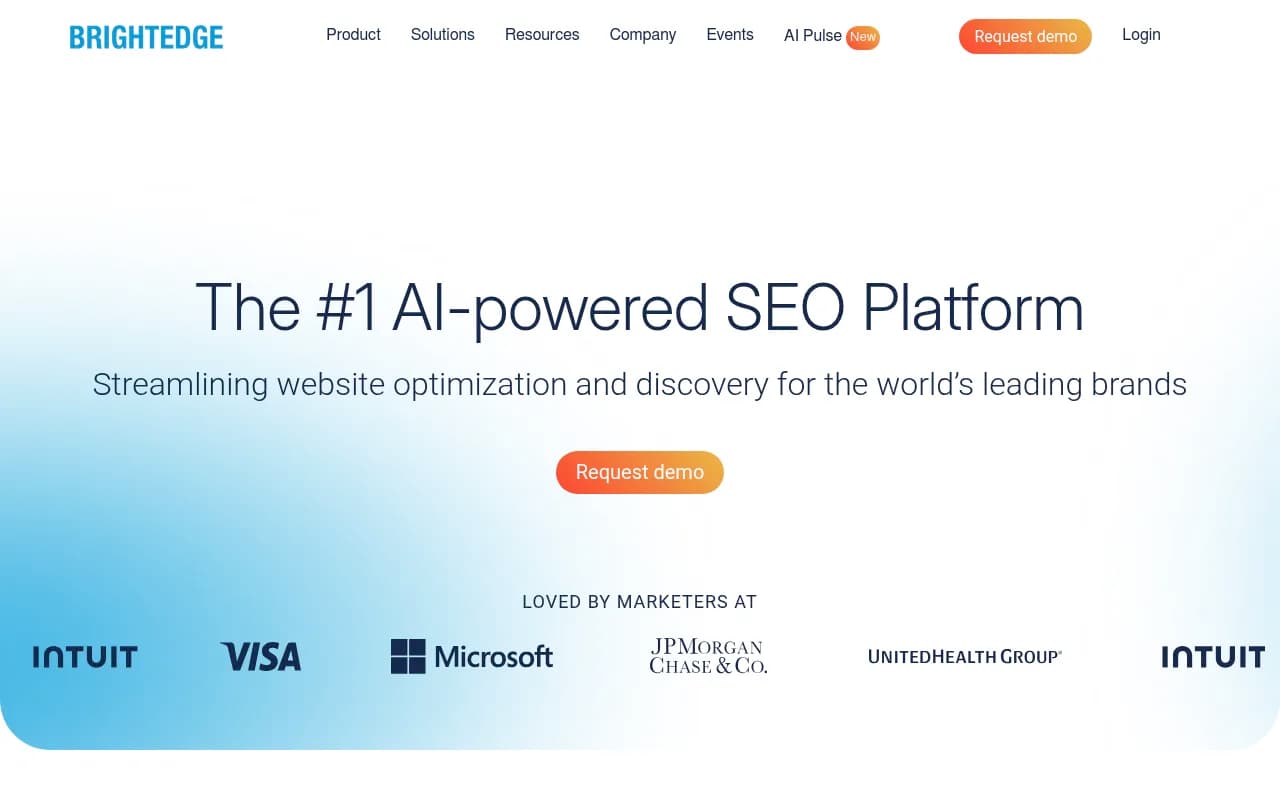
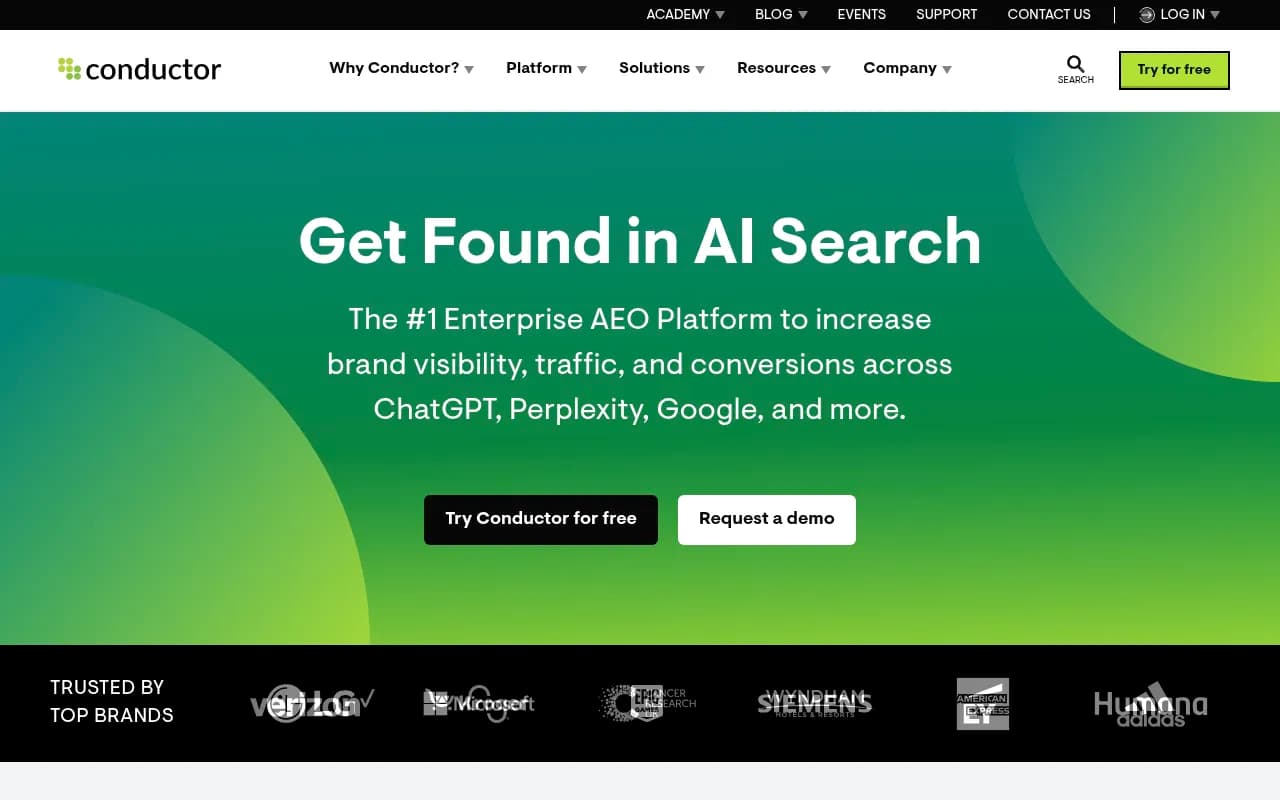
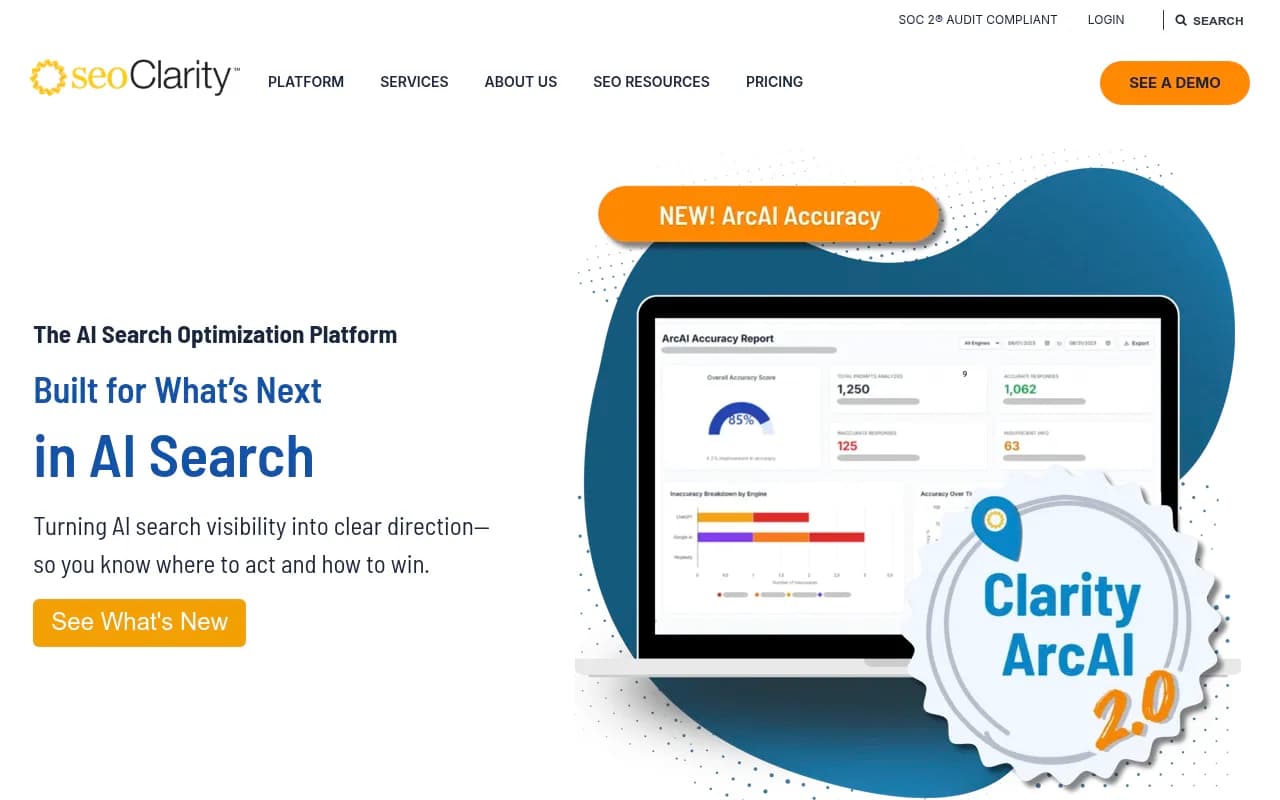
If your hospital group already runs BrightEdge, Conductor or seoClarity for traditional SEO, their AI visibility modules are the low-friction option because procurement and security review are done. The tradeoff is that AI-specific depth, such as crawler logs and citation classification, is usually shallower than in dedicated platforms.
Lower-cost trackers
Solo practices and small groups can start with a cheap tracker to establish a baseline. Otterly.AI is a common pick for simple tracking.

Local and reputation tools to pair with any of the above
AI answers for "near me" style healthcare queries lean on listings and reviews. Yext, Birdeye and BrightLocal cover listing accuracy and review management, which feeds the review and directory share of citations. Keep these in your stack even if the AI visibility tool is separate.
Comparison table
| Platform | Best for | Acts on gaps | Location tracking | Compliance notes |
|---|---|---|---|---|
| Promptwatch | Practices and health systems that want insight plus execution | Yes: Content Agent, Action Board, CMS publishing | Country on all paid plans, state/city from Business | Ask about BAA and SSO (SSO is Enterprise) |
| Profound | Regulated enterprises, pharma | Mostly monitoring | Varies by plan | Announced HIPAA compliance via Sensiba LLP |
| Scrunch AI | Technically mature sites with CDN access | Agent Pages for AI-readable delivery | Varies by plan | SSO and audit controls on higher tiers |
| Peec AI | Analytics-heavy teams | No | Multi-country | Not verified |
| BrightEdge / Conductor / seoClarity | Orgs already on an enterprise SEO suite | Partial | Yes, traditional SEO strengths | Existing vendor review may cover it |
| Otterly.AI | Small budgets, baseline tracking | No | Limited | Not verified |
About the vendor listicles you will find
Search for this topic and you will hit several pages that rank their own products first. SearchEye's list does, Rankfender's does, and a DoctorConnect page is really about practice-operations AI, not visibility. They contain useful detail (SearchEye's cites an Ipsos finding that 31% of consumers used generative AI for health information between appointments but only 38% somewhat or generally trusted it), but their rankings are biased by construction. Use them for feature ideas, then test tools yourself.
A practical rollout for a practice
Week 1: set up prompts by service line and location
Build a prompt list per specialty, with variations for symptoms, "best X near me", cost, insurance and comparison queries. Add persona variants if your platform supports them: a parent asking about pediatric care phrases things differently than an adult asking about a knee replacement.
Week 2: audit access and accuracy
Check whether AI crawlers can read your pages. Robots.txt rules and JavaScript-heavy templates block more clinics than people expect. Then read the actual answers about your practice for wrong hours, outdated providers or incorrect services, and fix the source pages and listings.
Weeks 3 to 8: close citation gaps
Add study citations to treatment pages, link to FDA, CDC, NHS or NICE guidance where relevant, complete Doctify and WebMD profiles, and publish content that reflects your actual clinicians. Route everything through medical review. Landing pages and docs tend to stay cited longest, according to Promptwatch's content half-life data, while news loses half its pages within 36 days, so evergreen service and condition pages are the better investment.
Ongoing: measure what matters
Track visibility score, share of voice, sentiment, and above all AI-referred visits and booked appointments. Mentions that never turn into visits are vanity metrics.
Do you need an agency instead?
Some health systems lack the staff to run this. A specialist agency can handle strategy, content and digital PR while you keep medical review in-house. If you go that route, 1001 SEO Media is one option that combines technical SEO, content and generative engine optimization, with no long-term contracts. Whichever agency you pick, ask whether they have a platform for measuring AI citations and not just rankings.
Where to explore further
For a wider look at the category, the GEO software directory at bestgeosoftware.com lists dozens of platforms beyond the ones covered here.
Bottom line
Pick the tool that matches your constraint. If security review is the blocker, start with Profound or the enterprise suite you already own. If your site is hard for bots to read, look hard at Scrunch. If you want one platform that shows where you are invisible, drafts the fix and tracks whether it worked, Promptwatch is the better fit for most practices and mid-size systems. Whatever you choose, run a 7-day trial on your real prompts first, and have a clinician check the first batch of AI-generated content before it goes anywhere near your site.