Key takeaways
- AI language models now influence over $595 billion in retail e-commerce, and AI-driven referral traffic to online stores grew 302% in 2025 alone.
- Most AI visibility tools were built for content and brand teams -- not e-commerce. The ones that matter for product sellers track individual SKUs, attribute revenue, and connect to your commerce stack.
- ChatGPT Shopping, Google AI Overviews, and Perplexity are the three channels where product discovery is shifting fastest right now.
- Structured data, complete product identifiers, and content that answers real buyer questions are the core levers for improving AI shopping visibility.
- A handful of platforms go beyond monitoring to help you actually fix gaps -- those are the ones worth paying for.
The numbers are hard to ignore. According to Euromonitor, AI language models now influence over $595 billion in retail e-commerce globally. AI-driven referral traffic to e-commerce sites grew 302% in 2025. And 35% of US consumers now use AI assistants for product research, up from just 12% in 2023.
What this means practically: when someone asks ChatGPT "what's the best running shoe for wide feet under $150," and your brand doesn't appear in that answer, you've lost a customer who never even typed your URL. The discovery moment has moved upstream, into the AI response itself.
This guide covers what's actually happening with AI shopping visibility, what separates useful platforms from monitoring-only dashboards, and which tools are worth your time in 2026.
What "AI shopping visibility" actually means
AI shopping visibility isn't just about brand mentions. It's about whether AI systems can understand, trust, and recommend your specific products when a buyer asks a relevant question.
AI assistants don't browse your site the way a human does. They read structured data, parse content semantically, and match products to user intent based on signals like:
- How complete and machine-readable your product data is (schema markup, GTINs, pricing, availability)
- Whether your content answers the actual questions buyers ask
- Trust signals like reviews, return policies, and fulfillment data
- How often your brand is cited across authoritative sources the AI has already ingested
Products with complete schema markup and high AI visibility scores are 3.2x more likely to be recommended by ChatGPT than products with incomplete data, according to Sixthshop's January 2025 research.
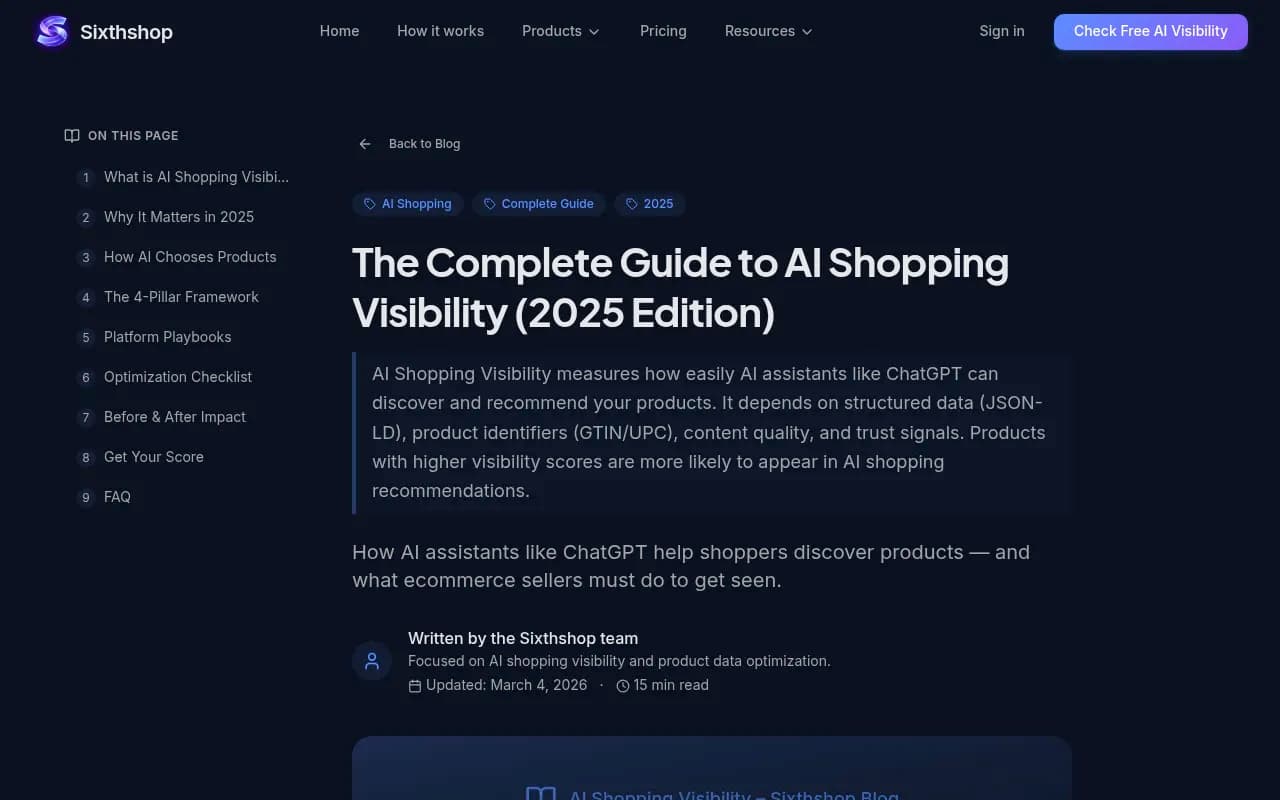
The shift is also happening faster than most sellers realize. Google AI Overviews now appear in over 40% of commercial search queries. OpenAI launched Shopping Research directly inside ChatGPT. Perplexity and Claude are adding shopping features. By 2026, analysts predict over 30% of product searches will start with an AI assistant rather than a traditional search engine.
Why traditional SEO tools aren't enough
Most SEO platforms were built to track keyword rankings on Google. That's a fundamentally different problem from tracking whether ChatGPT recommends your product when someone asks a shopping question.
The gap shows up in three specific ways:
The visual vanity trap. A brand can appear in a ChatGPT response but still receive zero product recommendations because the AI filtered it out during evaluation -- usually due to missing fulfillment data or incomplete product specs. Traditional AEO tools report the "win" while missing the revenue loss.
The attribution gap. AI-referred traffic converts at 4.4x higher rates than traditional organic search, according to a Semrush study. But if a purchase completes within an AI interface (a zero-click transaction), traffic-centric tools count it as a failure because they never see a session on your site.
Category blindness. Domain-level tools track your brand across all queries. But your real competitor for "running shoes" is Nike, while your competitor for "gym equipment" is someone completely different. SKU-level and category-level tracking is what actually matters for e-commerce.
The three criteria that separate e-commerce-ready platforms
Before looking at specific tools, here's the filter worth applying to any platform you evaluate:
SKU-level product tracking. Does the tool track individual products, or just your brand name? Knowing "our brand appeared in 40 AI answers" doesn't tell you which products are visible and which are invisible. For a catalog of 500 SKUs, that distinction is everything.
Revenue attribution. Can you connect AI visibility to actual sales? Monitoring without attribution is a reporting exercise. You need to know whether the prompts where you're visible are actually driving conversions.
First-party data integration. Does the tool pull from your product catalog, store data, and conversion metrics? Or does it sit in a silo, disconnected from your commerce stack?
Most platforms on the market right now fail at least one of these. Keep that in mind.
The main platforms worth knowing about
For dedicated AI visibility tracking
Promptwatch is one of the more complete platforms for tracking and improving AI search visibility. It monitors how your brand and content appear across 10 AI models -- ChatGPT, Perplexity, Google AI Overviews, Claude, Gemini, Grok, DeepSeek, Copilot, Meta AI, and Mistral -- and includes ChatGPT Shopping tracking specifically, which is rare. For e-commerce teams, the Answer Gap Analysis is particularly useful: it shows you which prompts competitors are visible for that you're not, including the specific product-related questions AI models are answering without citing your site.

What makes it more than a monitoring tool is the built-in content generation side. Once you know which gaps exist, you can generate articles and product-focused content grounded in real citation data. The AI crawler logs are also genuinely useful for e-commerce -- you can see which product pages AI crawlers are visiting, how often, and whether they're hitting errors.
Profound is another enterprise-grade option with strong brand tracking capabilities, though it sits at a higher price point and lacks some of the content optimization features.
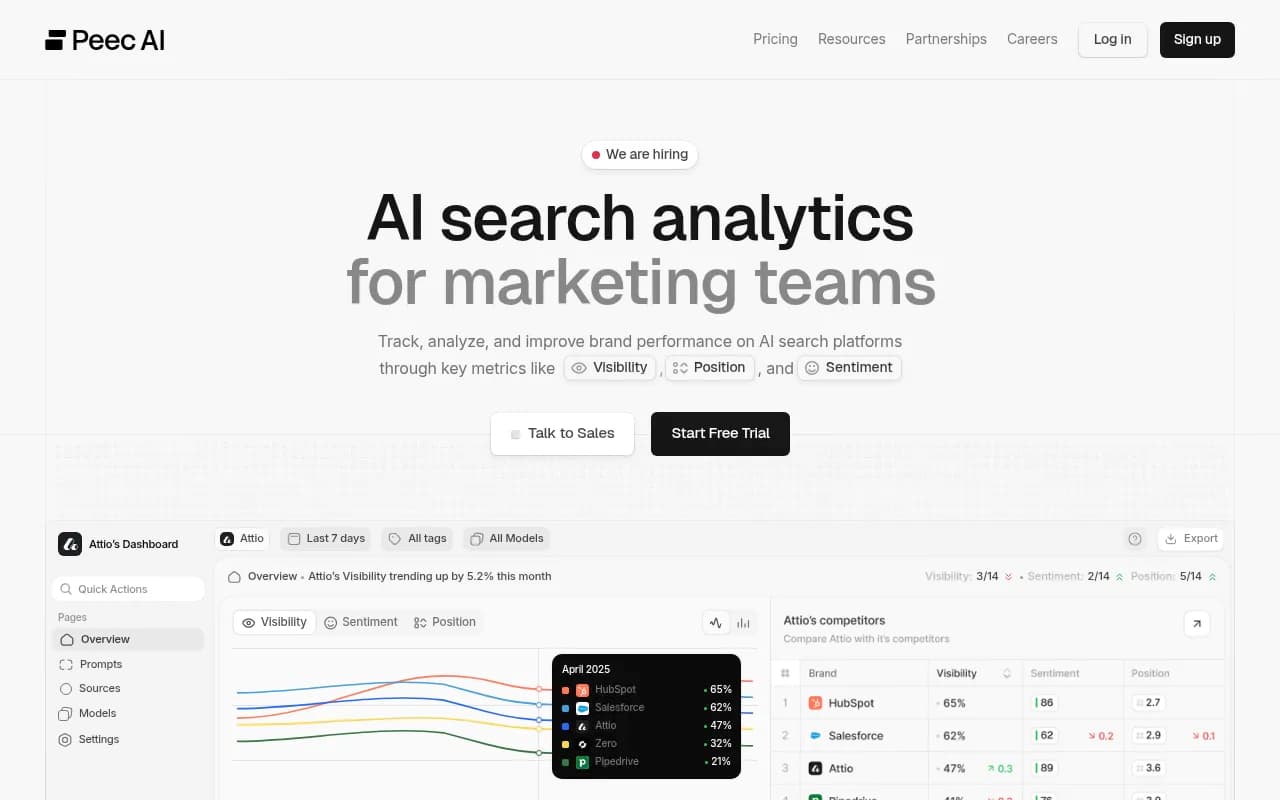
Otterly.AI and Peec AI are lighter-weight options that work well for teams that just want monitoring without the complexity. They're affordable and easy to set up, but they stop at showing you data -- there's no content gap analysis or generation.

For agencies managing multiple e-commerce clients, Search Party and Scrunch both have multi-brand capabilities, though their prompt metrics and content gap features are more limited.
Search Party
For broader AI search visibility
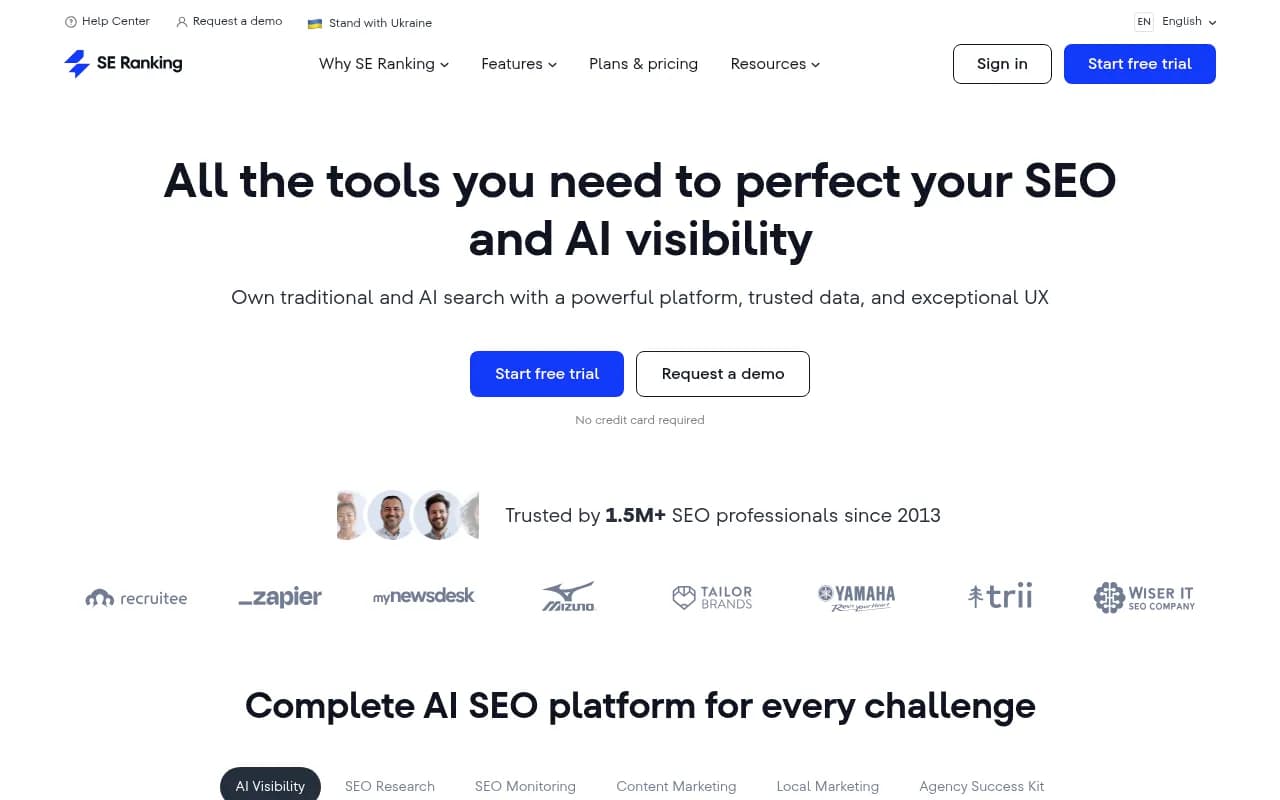
SE Ranking has added AI visibility features to its traditional SEO platform, making it a reasonable option if you're already using it for rank tracking and don't want to add another tool.
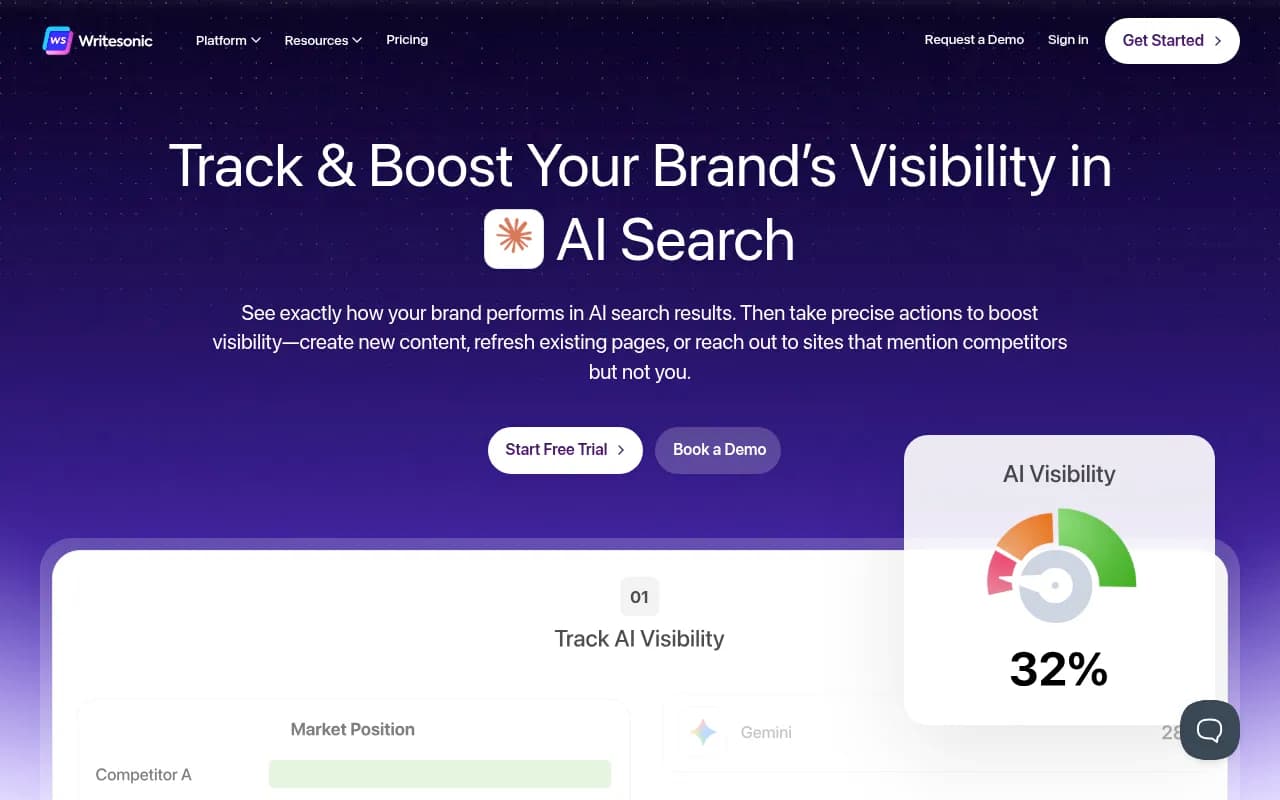
Writesonic has built out AI search visibility tracking alongside its content creation tools, which makes it worth a look if content production is a priority.
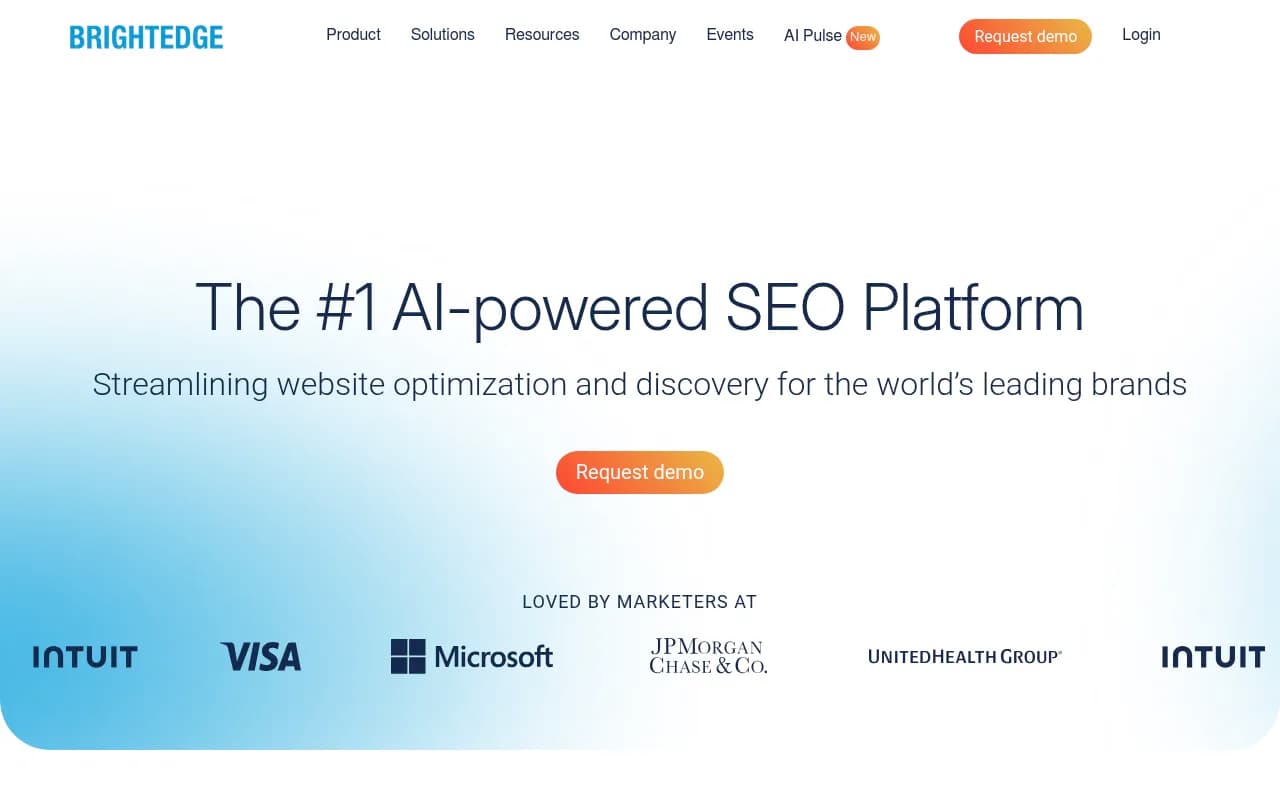
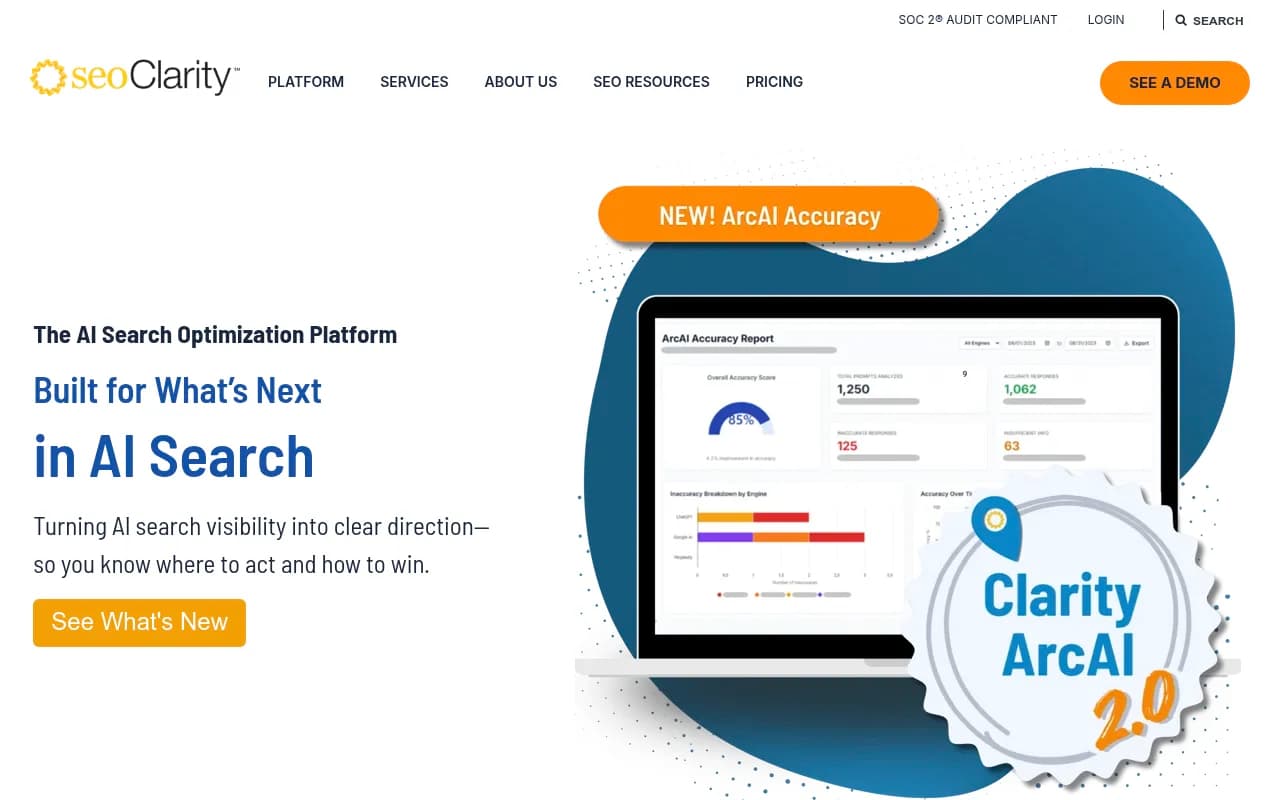
BrightEdge and seoClarity are enterprise SEO platforms that have added AI search monitoring. They're better fits for large retailers with dedicated SEO teams than for mid-market e-commerce brands.
Comparison: key features across platforms
| Platform | ChatGPT Shopping tracking | Content gap analysis | AI content generation | Crawler logs | E-commerce focus |
|---|---|---|---|---|---|
| Promptwatch | Yes | Yes | Yes | Yes | Moderate |
| Profound | No | Limited | No | No | Low |
| Otterly.AI | No | No | No | No | Low |
| Peec AI | No | No | No | No | Low |
| SE Ranking | No | No | No | No | Low |
| Writesonic | No | Limited | Yes | No | Low |
| BrightEdge | No | Limited | No | No | Moderate |
| Scrunch AI | No | No | No | No | Low |
The pattern is clear: most platforms are monitoring dashboards. They show you data but leave the fixing to you.
What actually moves the needle for e-commerce AI visibility
Tracking is only useful if you know what to do with the data. Here's what actually improves how AI systems discover and recommend your products.
Structured data and product identifiers
AI systems read your product pages differently than humans. Schema markup (specifically Product, Offer, and Review schema) tells AI crawlers exactly what your product is, what it costs, whether it's in stock, and what customers think of it. GTINs, MPNs, and brand identifiers help AI systems match your products to queries with high confidence.
If your product pages are missing these, you're essentially invisible to AI shopping systems regardless of how good your content is.
Content that answers real buyer questions
Traditional SEO content targets keywords. AI-optimized content answers questions. There's a meaningful difference. A buyer asking ChatGPT "is this running shoe good for plantar fasciitis?" needs a specific, trustworthy answer -- not a keyword-stuffed product description.
The best-performing product pages in AI search tend to include: detailed specs, comparison information, use-case specifics, and answers to the questions buyers actually ask. FAQ sections grounded in real customer questions perform particularly well.
Trust and fulfillment signals
This is the part most e-commerce brands underestimate. AI shopping agents operate under something like a risk-aversion function -- when they recommend a product, they're staking their own credibility on the outcome. So they filter heavily on signals like:
- Visible estimated delivery dates (75% of shoppers are influenced by these, and AI agents mirror this behavior)
- Clear return policies
- Review volume and recency
- Fulfillment accuracy signals
A brand can have perfect schema markup and still get filtered out of ChatGPT's product recommendations because its shipping information is vague or its return policy is buried.
Live product feeds to AI platforms
Retailers are increasingly sending live product feeds directly to platforms like Perplexity, Google Gemini, and ChatGPT to ensure their listings appear in AI-generated responses. This is the most direct route to AI shopping visibility, but it requires clean, complete product data to work.
ChatGPT Shopping specifically: what you need to know
OpenAI's Shopping Research feature inside ChatGPT is the most significant new channel for e-commerce brands right now. It creates a direct competitor to Google Shopping, and it operates differently from traditional product search.
ChatGPT Shopping pulls from multiple sources: structured product data, web content, reviews, and its own training data. Products that appear tend to have:
- Complete product schema with pricing and availability
- Strong review signals across multiple platforms
- Content that directly addresses the buyer's specific question
- Brand presence in sources ChatGPT already trusts (publications, review sites, Reddit discussions)
The Reddit piece is worth noting. AI models -- ChatGPT included -- cite Reddit discussions heavily when answering product questions. A brand that has genuine presence in relevant subreddits (r/running, r/frugalmalefashion, r/skincareaddiction, etc.) has a real advantage in ChatGPT Shopping results. Most brands ignore this entirely.
Platforms like Promptwatch track Reddit and YouTube as citation sources specifically because of this dynamic -- knowing where AI models are pulling their product information from is half the battle.
A practical starting point for e-commerce teams
If you're starting from scratch, here's a reasonable sequence:
-
Audit your product schema. Run your top 20 product pages through Google's Rich Results Test and fix any missing or broken structured data. This is free and has immediate impact.
-
Run a prompt audit. Write out 20-30 questions your customers actually ask when shopping for your products. Then ask ChatGPT, Perplexity, and Google AI those questions and see whether your brand appears. This takes an hour and tells you a lot.
-
Pick a tracking tool. For most mid-market e-commerce brands, Promptwatch's Professional plan ($249/mo) covers the core needs: prompt tracking, gap analysis, content generation, and crawler logs. If budget is tight, Otterly.AI or Peec AI give you basic monitoring at lower cost.
-
Fix the content gaps. Use whatever you find in step 2 and 3 to create content that directly answers the questions AI models are using to recommend products. This is where most of the long-term visibility gains come from.
-
Check your fulfillment signals. Make sure estimated delivery dates, return policies, and shipping information are clearly visible on product pages -- not just in the checkout flow.
The honest reality about where this is heading
AI shopping is not a trend that's going to plateau. The 302% growth in AI-driven referral traffic in 2025 is a signal, not a ceiling. OpenAI, Google, and Perplexity are all actively building out their commerce features, and the brands that figure out AI visibility now will have a meaningful head start.
The tools are getting better too. SKU-level tracking, revenue attribution, and live product feed integrations are all moving from "enterprise-only" to "available to anyone." The gap between what's possible and what most e-commerce teams are actually doing is still large -- which means there's real opportunity for brands willing to treat AI search as a first-class channel rather than an afterthought.
The core question isn't whether to pay attention to this. It's whether you're going to figure it out before your competitors do.