Key takeaways
- "AI SEO tool" now means two things: tools that use AI to speed up classic SEO work, and tools that track whether ChatGPT and Perplexity actually mention your brand. This guide focuses on the second group.
- ChatGPT and Perplexity behave differently. Visibility on one does not predict visibility on the other, so pick a tool that tracks both.
- Monitoring-only tools tell you where you are invisible. Platforms that also help you fix it (content, crawler data, traffic attribution) are worth the extra money once you have a baseline.
- Prices run from about $19/month for indie trackers to several thousand for enterprise platforms. Verify every price on the vendor's own page before buying.
- Product pages, landing pages and listicles earn most ChatGPT citations, so your tool should help you act on those formats.
Why ChatGPT and Perplexity need their own tooling
Google rank trackers were built for ten blue links. They cannot tell you whether ChatGPT names your brand when someone asks for the best option in your category, or whether Perplexity cites your site as a source.
The two engines also don't agree with each other. The 2025 AI Visibility Report from The Digital Bloom, as quoted by OtterlyAI, found only 11% of cited domains overlap between ChatGPT and Perplexity, and roughly 80% of LLM citations don't rank in Google's top 100 for the same query. Treat those as vendor-cited figures, but the direction matches what most teams see: ranking well in Google is no guarantee of being cited in an AI answer.
The citation sources differ too. In Promptwatch's social citation data for Sep 28 to Oct 4, 2026, social platforms made up just 0.46% of ChatGPT citations, 2.7% of Perplexity citations, and 12.2% of Google AI Overviews citations. For Perplexity, LinkedIn and Reddit tied at 0.86%. ChatGPT, meanwhile, had mostly stopped citing Reddit after reddit.com's share fell from about 4% to 0.5% on August 14, 2026. One playbook will not work for both engines.
What to look for in a tool
Most buying guides in this space weigh roughly the same four things, and they are a sensible checklist:
- Coverage: which engines are tracked, and on which plan. Some tools gate Perplexity or Copilot behind higher tiers.
- Depth: prompt-level visibility, cited sources, sentiment, share of voice, and competitor benchmarks.
- Actionability: does the product stop at a dashboard, or tell you what to change?
- Value: transparent pricing and a fair cost per tracked response.
Two extras I'd add. First, does it track the real user interface or just the API? Answers shown to users can differ from API output. Second, can it connect visibility to traffic? Mentions are nice, visits and conversions pay the bills.
Comparison table
Prices below come from vendor-sourced lists (mainly OtterlyAI's roundup, which is itself a competitor in this space), so confirm on each pricing page.
| Tool | Best for | Engines covered | Starting price | Standout trait |
|---|---|---|---|---|
| Promptwatch | Teams that want to track and fix | ChatGPT, Perplexity, AI Overviews, AI Mode, Gemini, Copilot, Claude and more | Free tier; paid from $95/mo | Crawler logs, traffic attribution, content agent |
| Profound | Enterprise GEO programs | 10+ engines | From $99/mo (vendor-listed) | Prompt volume data |
| OtterlyAI | Marketing-led teams and agencies | ChatGPT, AIO, AI Mode, Gemini, Perplexity, Copilot | From $29/mo | Simple, transparent pricing |
| Scrunch | Optimization-focused teams | ChatGPT, Claude, Gemini, AIO | Custom | Persona-based prompt testing |
| Semrush AI Toolkit | Existing Semrush users | ChatGPT, AIO, Gemini and more | $99/mo add-on | Sits inside the SEO suite |
| Ahrefs Brand Radar | Ahrefs users | ChatGPT, Perplexity, Gemini, Copilot, AIO, AI Mode | $129/mo | Backlink and AI mention overlay |
| Writesonic GEO | Content teams | ChatGPT, Perplexity, Gemini and more | $49/mo | Tracking plus AI writer |
| AIclicks | SMBs wanting weekly reporting | ChatGPT, Perplexity, Gemini | $39/mo | Citation source mapping |
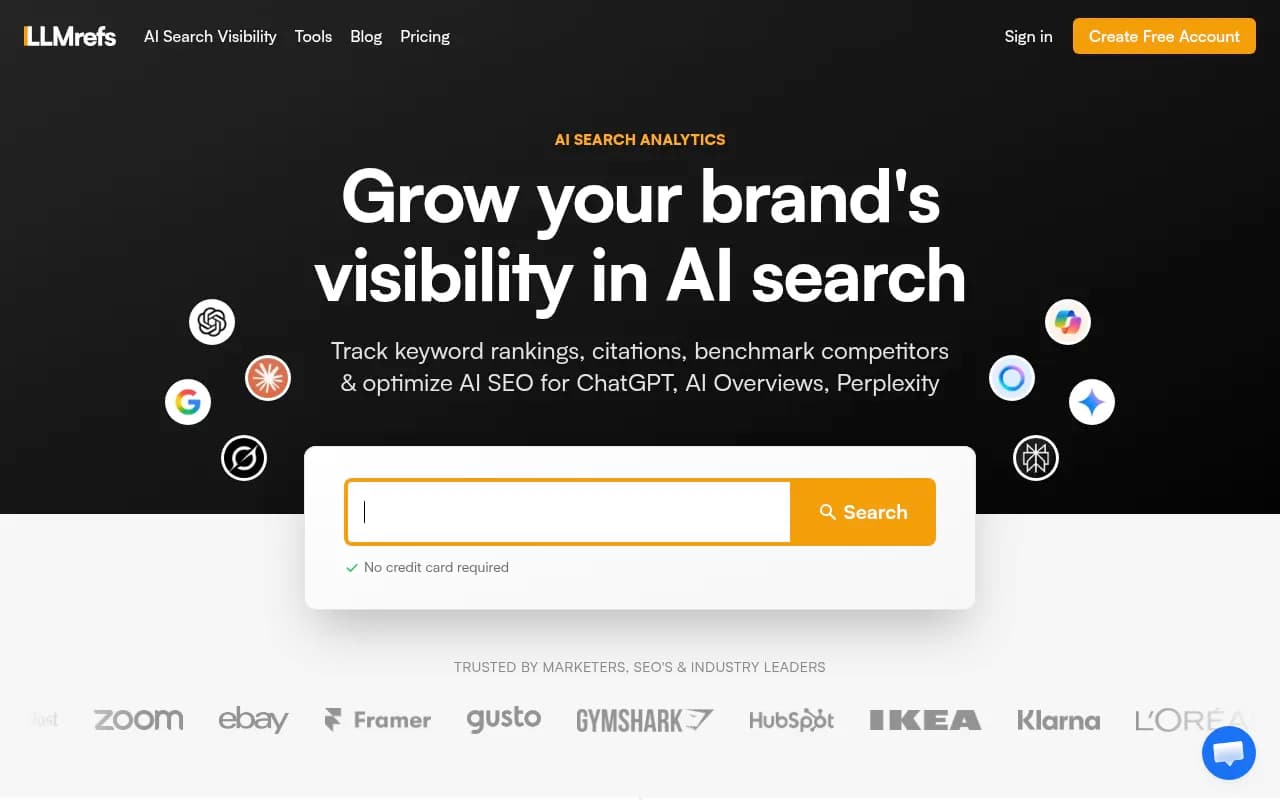
| LLMrefs | Keyword-style tracking | ChatGPT, AIO, Perplexity, Grok | Free plus paid | Keywords instead of prompts |
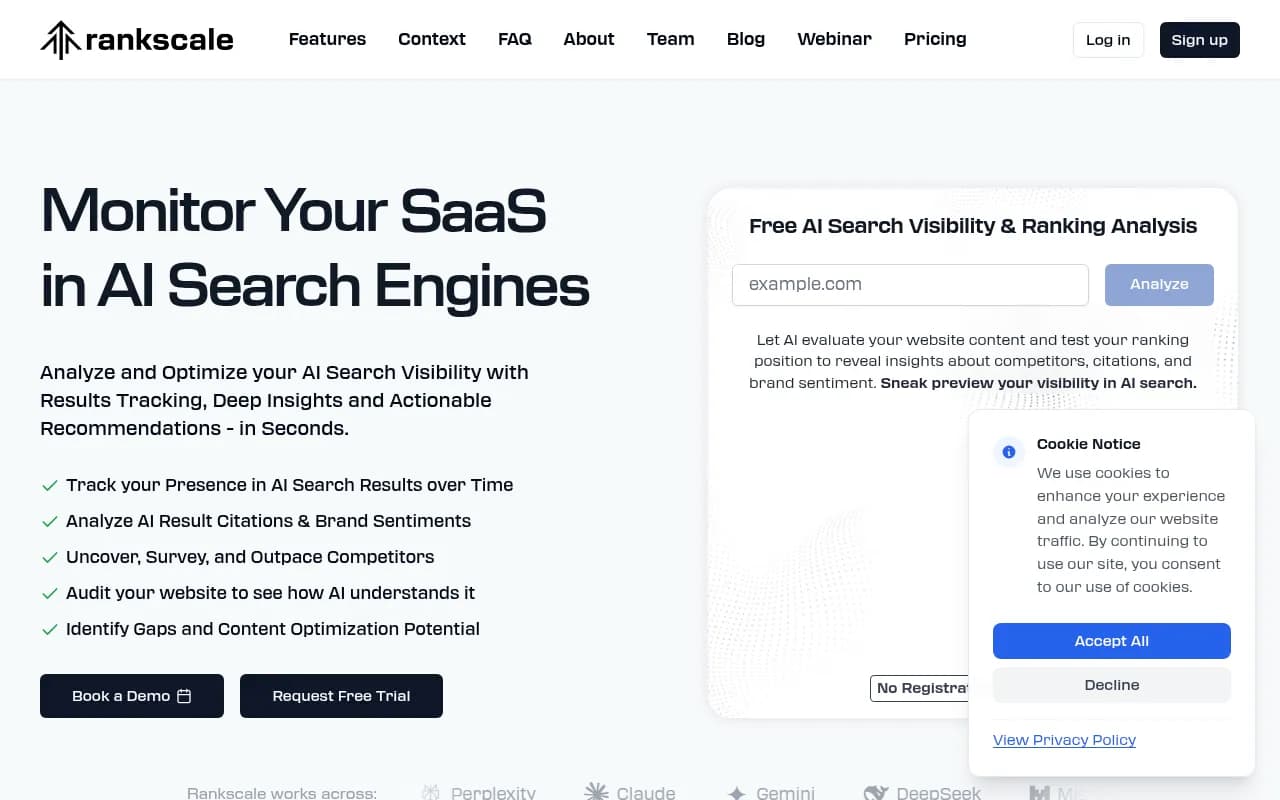
| Rankscale | Budget entry point | ChatGPT, Perplexity, Gemini | $19/mo | Low price |
| Clearscope | Content-first teams | ChatGPT, Gemini, Perplexity | $199/mo | GEO scoring in the editor |
Tools that track and help you act
Promptwatch
Promptwatch is the one I'd start with if you want more than a dashboard. It monitors the actual interfaces of ChatGPT, Perplexity, Google AI Overviews, AI Mode, Gemini and Copilot, then goes after the reason you are or aren't cited. IP-verified AI crawler logs show whether GPTBot, PerplexityBot and others can even read your pages. Visitor analytics connect AI mentions to real traffic. And the Content Agent plans, writes and publishes pages to WordPress, Webflow or Framer against the gaps it finds, then tracks whether those pages get crawled and cited.
The pricing ladder runs from a free Explore plan (10 prompts, ChatGPT only) to Essential at $95/month and Professional at $245/month. Check promptwatch.com/pricing for current numbers.

Writesonic GEO
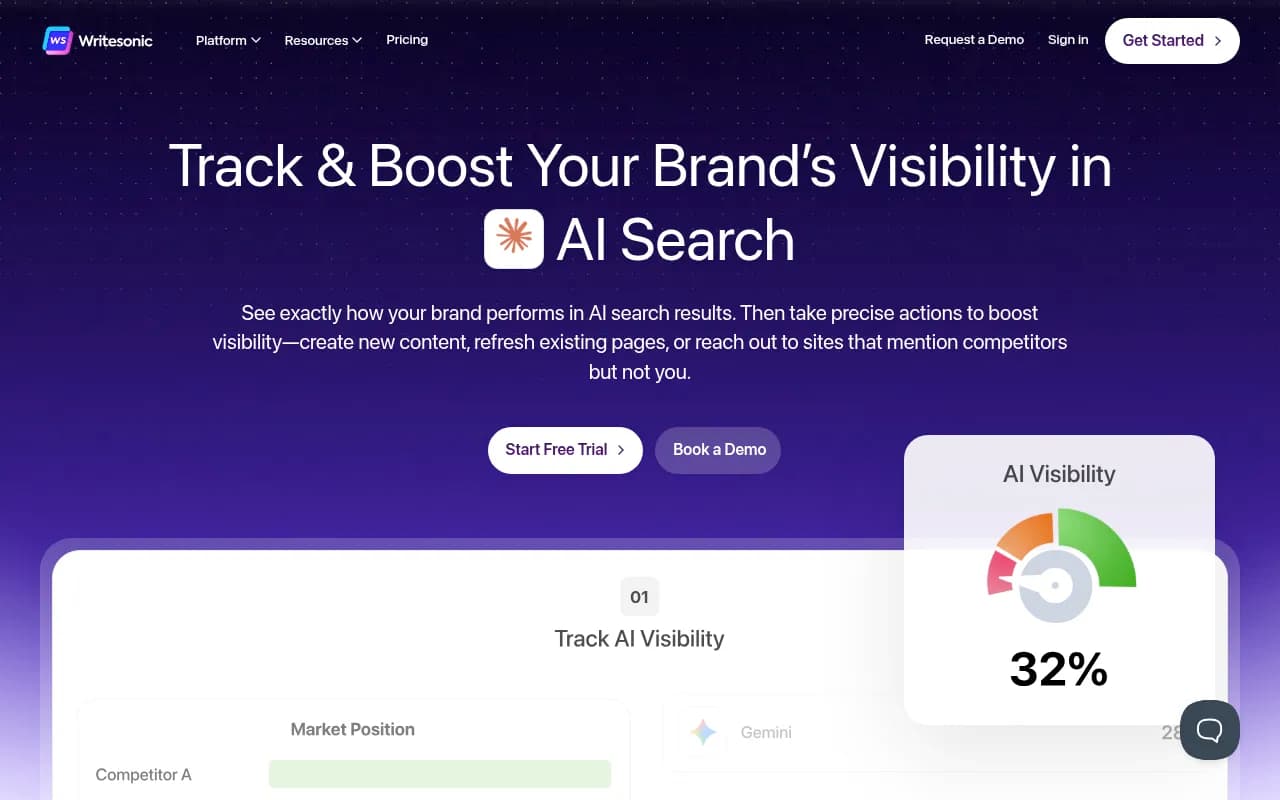
Writesonic pairs AI search tracking (ChatGPT, Perplexity, AI Overviews, Gemini, Claude, Copilot) with a writing assistant. That suits a small content team that wants one login. The trade-off is that the tracking layer is lighter than dedicated platforms.
Scrunch
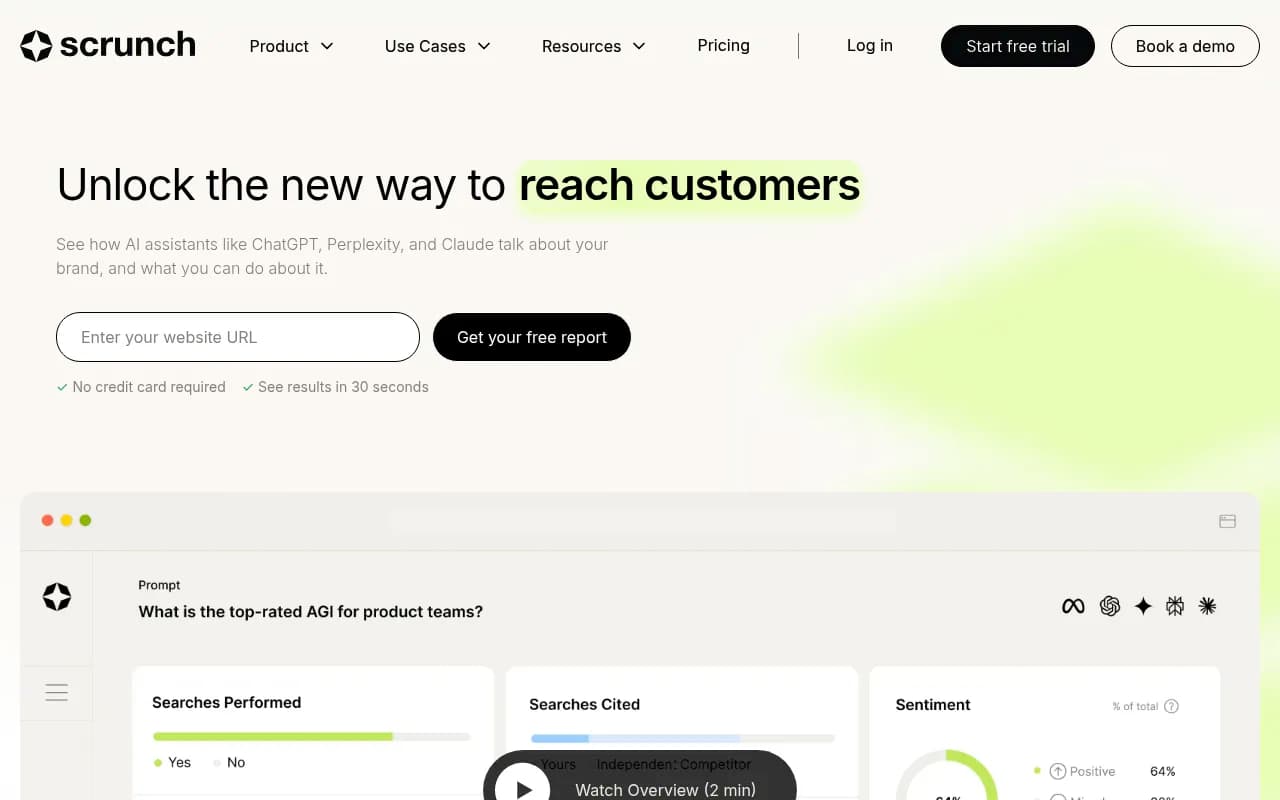
Scrunch leans into optimization and persona-based prompt testing, which helps when your buyers ask very different questions depending on role.
Profound
Profound is the enterprise name most people know, with broad engine coverage and prompt volume data. It is pitched at larger programs, and pricing climbs quickly with scope.

Monitoring-first tools
OtterlyAI
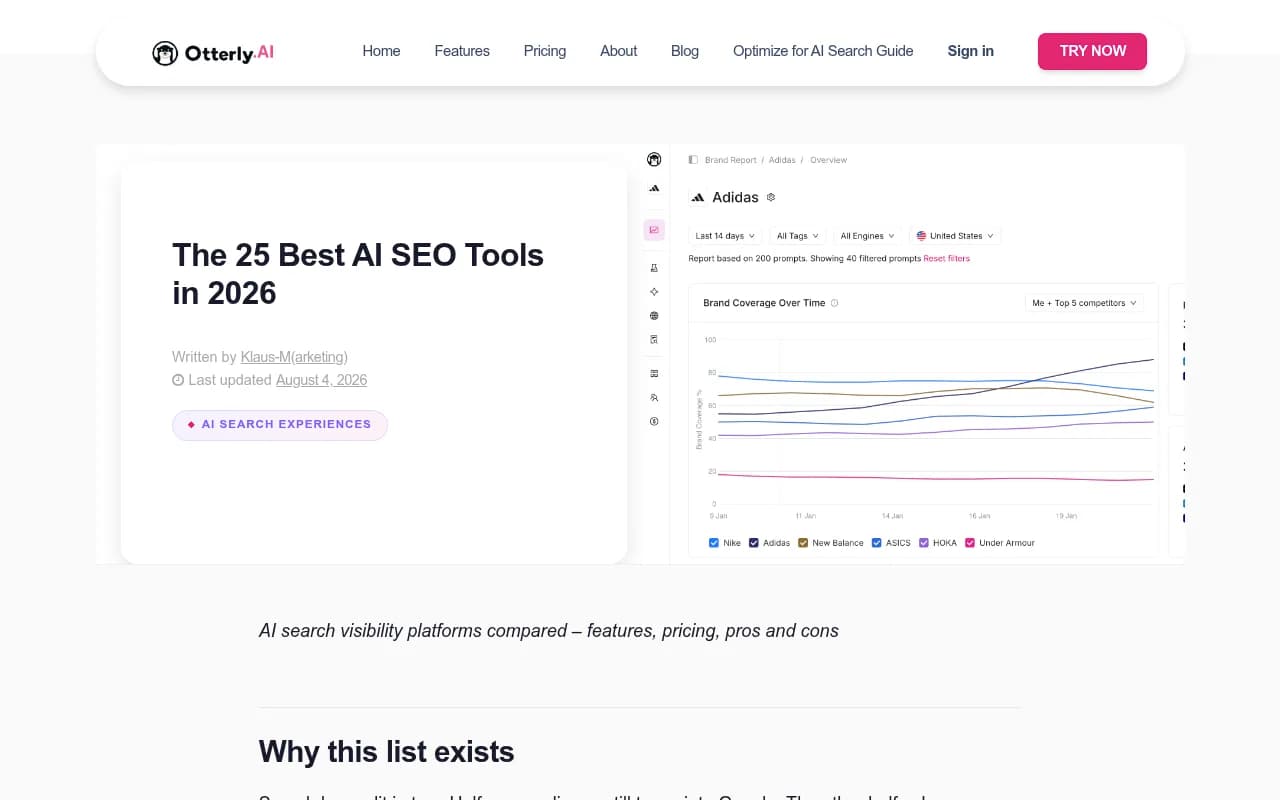
OtterlyAI covers ChatGPT, AI Overviews, AI Mode, Gemini, Perplexity and Copilot and is aimed at marketers rather than engineers. Fair for a first dashboard. Its own roundup ranks itself second, so read that list with that in mind.

AIclicks, LLMrefs and Rankscale
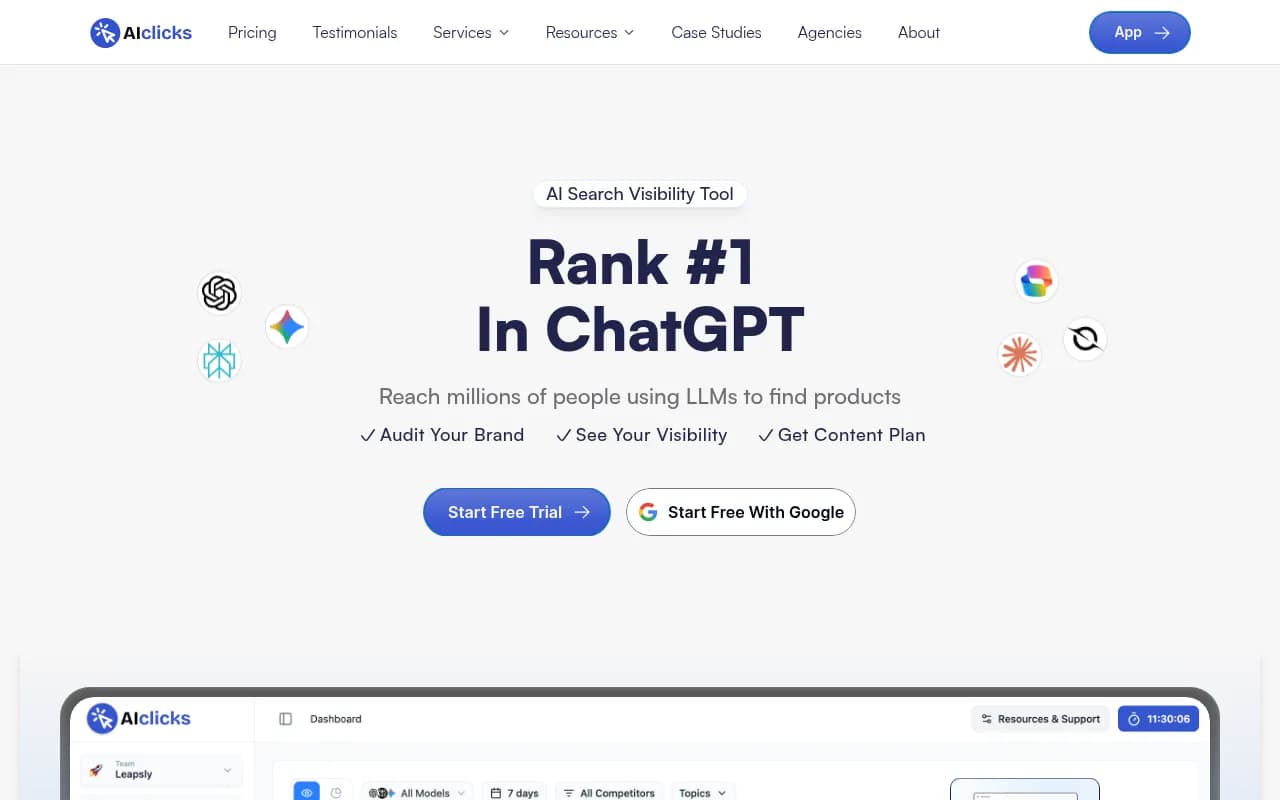
These are the budget end. AIclicks maps citation sources with weekly reporting, LLMrefs tracks by keyword rather than prompt (a familiar mental model for SEOs), and Rankscale starts around $19/month. Expect fewer engines on lower tiers, and little help with fixing what you find.
Peec AI and Rankshift
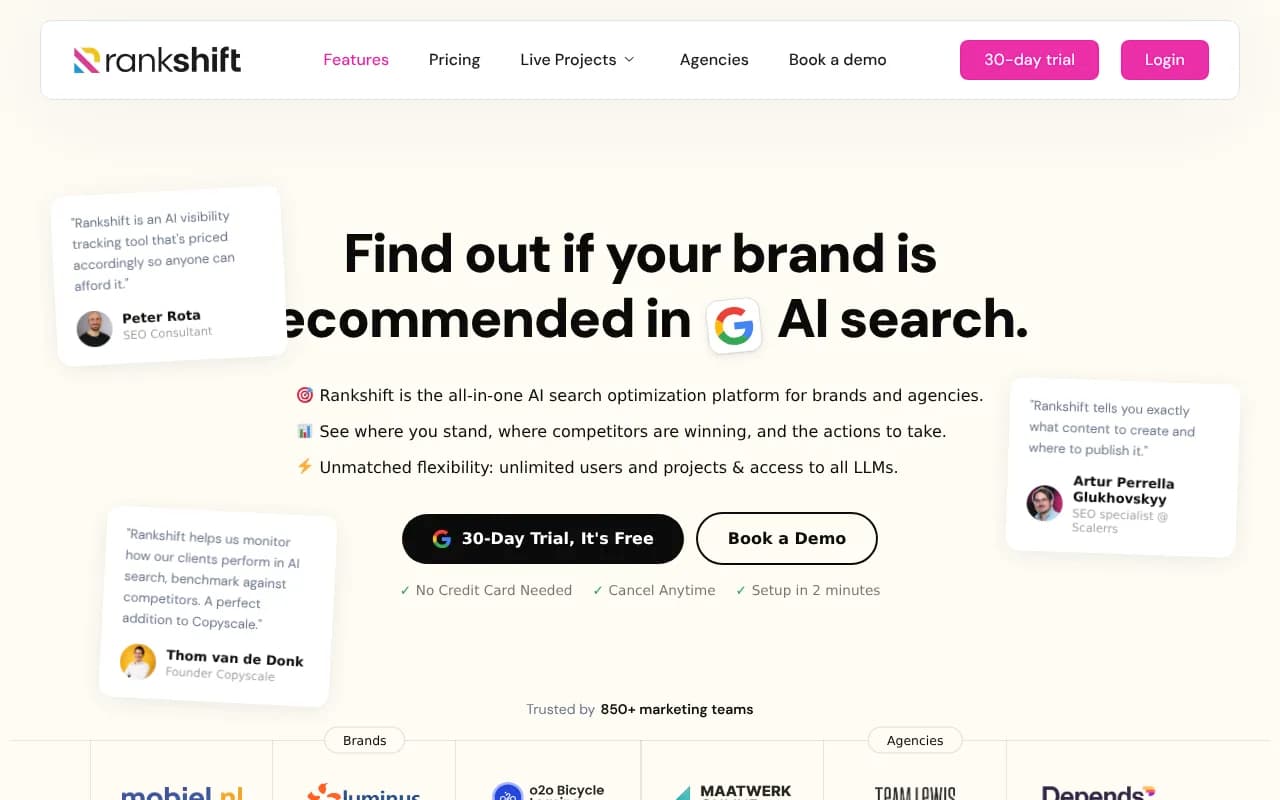
Peec AI is straightforward monitoring without the optimization side. Rankshift adds prompt refinement workflows. Both are reasonable if you only need to answer "are we mentioned?"

Tools bolted onto your existing SEO suite
If your team lives in Semrush or Ahrefs, the add-ons are the lowest-friction way to begin.
- Semrush's AI Visibility Toolkit tracks prompts, citations and share of voice across ChatGPT, Perplexity, AI Overviews and Gemini, reportedly in 140+ countries and 17 languages.
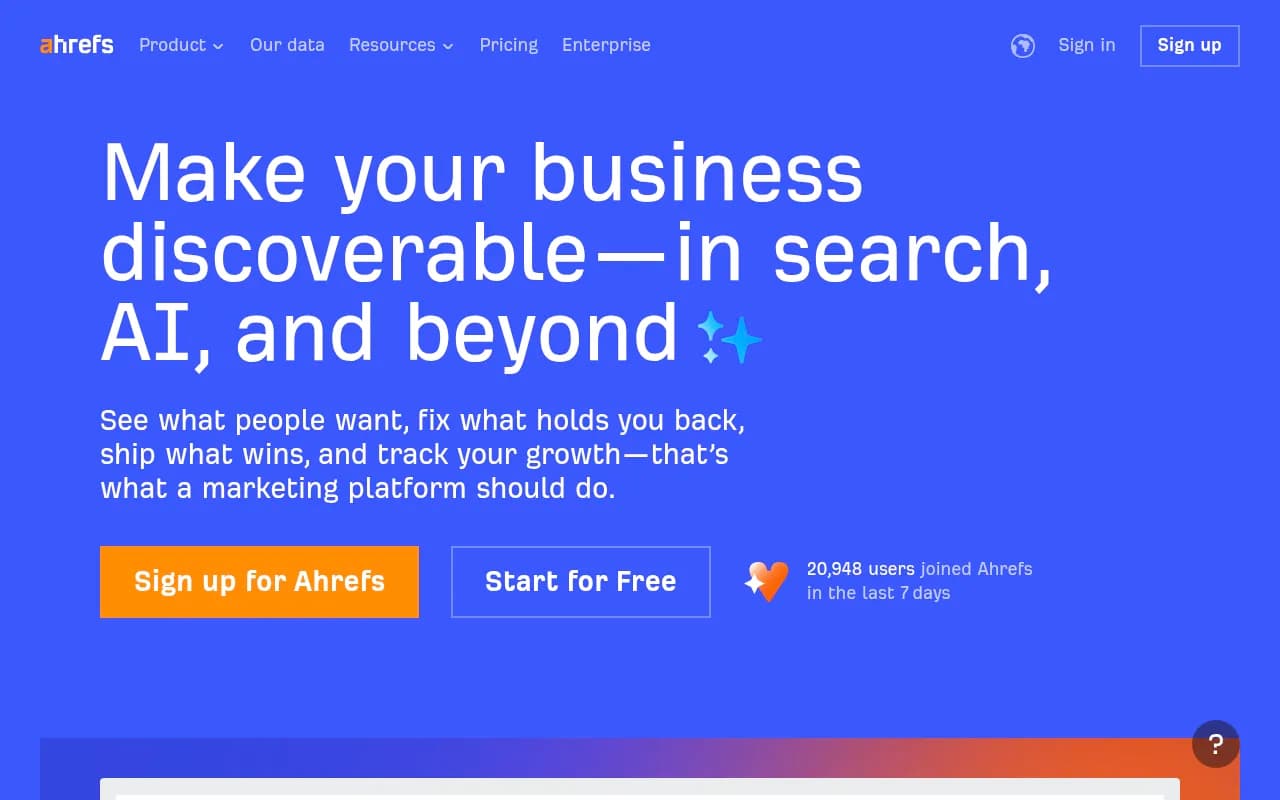
- Ahrefs Brand Radar covers ChatGPT, Perplexity, Gemini, Copilot, AI Overviews and AI Mode, and overlays backlink data.
- SE Ranking and Search Atlas offer AI visibility modules at lower price points.
The catch is the one you'd expect from an SEO suite adding a new module: fixed prompt sets and thinner AI-specific data. There are typically no crawler logs and weaker attribution of AI traffic.
Content optimization tools with AI tracking
Clearscope, Surfer SEO and Writesonic have all added AI visibility features (Clearscope's prompt tracking, Surfer's AI Tracker). They are good when the bottleneck is writing pages, because the scoring sits inside the editor. They are weaker as an independent source of truth about where you stand.

What the data says you should optimize
Tools only help if you know what to do with the output. Promptwatch Data on ChatGPT citation share by content type (Sep 28 to Oct 4, 2026) gives a useful baseline:
| Content type | Share of ChatGPT citations |
|---|---|
| Product pages | 22.4% |
| Landing pages | 16.8% |
| Listicles | 13.6% |
| How-tos | 8.7% |
| Documentation | 7.5% |
| General articles | 6.1% |
| Comparisons | 5.9% |
| News | 5.7% |
For commercial prompts, product pages, landing pages, listicles and comparisons make up almost 70% of citations. Practical moves: keep specs, prices and positioning complete on product pages, publish comparison pages, get into the roundups ChatGPT cites, and collect reviews on trusted sites.
A few other findings worth knowing when you read a dashboard:
- News content decays fast. In Promptwatch's content half-life data, news lost half its cited pages within 36 days, while landing pages and docs stayed cited longest.
- Almost half of ChatGPT responses cite 10 or more unique domains (unique domains report), so you are competing for a slot in a long list, not a single winner-takes-all answer.
- Mid-authority sites do well. Domain rank data for August 2026 shows DR 46-75 sites earning almost half of ChatGPT citations, with DR 91-100 near 3%.
- Query fanouts matter. ChatGPT's query fanout data suggests writing headings that read like short search queries, with entity and category first, and building focused pages per sub-question like pricing, alternatives and X vs Y.
- Markdown files are only 0.05% of AI search citations, so don't spend a quarter on markdown mirrors of your site expecting citations.
Perplexity-specific citation data is thinner in public research. What we have is the social mix above, so lean on your own tracked prompts there rather than assuming ChatGPT findings transfer.
Picking by team stage
Solo marketer or small business
Start free or cheap. A free plan or a $19-$49/month tracker will answer "are we mentioned at all?" Pick one prompt set around 10-20 buying questions and check it weekly. If you want a no-login baseline first, free scans exist. Promptwatch has a free AI Visibility Report, and tools like AnswerGist and HubSpot's AI Search Grader do one-off checks.
In-house SEO team
If you already pay for Semrush or Ahrefs, try the add-on for a month. Then ask whether you can see crawler activity and AI-referred traffic. If not, that gap is usually the reason to add a dedicated platform.
Content team
Where output is the bottleneck, choose a tool that links visibility gaps to content creation: Promptwatch, Writesonic or Clearscope depending on how much tracking depth you need.
Agency or enterprise
Look at white-label reporting, multi-project pricing, regional tracking and SSO. Promptwatch has agency plans from $199/month, and Profound, Scrunch and BrightEdge target larger programs. Browse the GEO software directory at bestgeosoftware.com for wider comparisons.
How to trial a tool properly
- Write 20 prompts your buyers really ask, a mix of branded, category and competitor comparison questions.
- Run the same set in two tools for two weeks and compare the answers to what you see by hand in ChatGPT and Perplexity.
- Check whether the tool uses the real interface or the API. Differences show up quickly.
- Look for the cited sources, not only the mention count. Sources tell you what to publish.
- Test the exit: can you export data, and what happens to history if you cancel?
- Confirm pricing on the vendor's page. Response limits, not prompt counts, are what usually drive overages.
Common mistakes
Tracking only ChatGPT is the big one, since Perplexity and AI Overviews pull from very different sources. Treating a single day's mention rate as a trend is another. AI answers vary run to run, so look at weeks, not days. And buying a pure monitor, then having nobody responsible for acting on it, is a quiet way to waste a budget.
For a wider look at the category, the directories at aisearchtoolrank.com and ai-rank-tools.com list many more trackers than fit here.
Bottom line
If you only want to know whether ChatGPT and Perplexity mention you, a $19-$49 tracker does the job. If you need to know why not, and fix it, choose a platform with crawler data, citation analysis and content workflows. Promptwatch is my pick for that second case, with Semrush or Ahrefs add-ons as the easy path for suite loyalists. Whatever you choose, check the prices yourself, and let your first two weeks of real prompt data decide whether to upgrade.