Key takeaways
- Informational, commercial, and transactional prompts behave very differently in AI search -- and most tools track them all the same way, which is a problem.
- Monitoring-only tools (Otterly.AI, Peec AI, Ahrefs Brand Radar) are fine for spotting where you're missing but won't help you close the gap.
- Platforms with built-in content generation and gap analysis (Promptwatch, Writesonic, Frase) give you a path from "you're invisible here" to "here's the content that fixes it."
- Prompt intent should drive your tracking setup: informational prompts need citation depth, commercial prompts need competitor heatmaps, transactional prompts need shopping and entity tracking.
- Most teams need a primary AI visibility platform plus at least one content tool -- the question is whether you want them bundled or separate.
Why prompt intent matters more than you think
Here's something most AI visibility guides skip: the type of prompt being tracked changes everything about what "good visibility" means.
When someone asks ChatGPT "how does a heat pump work," they want an explanation. When they ask "best heat pump brands for a small home," they're comparing options. When they ask "where can I buy a Mitsubishi heat pump near me," they're ready to buy. These are three completely different signals, and the AI model handles each one differently -- citing different sources, pulling from different content types, and in some cases (like ChatGPT's shopping carousels) surfacing product entities rather than editorial content.
If your AI visibility tool treats all three the same, you're flying blind on two of them.
This guide breaks down how to think about prompt intent in AI search, which tools are actually built to handle the distinction, and what to prioritize depending on your situation.
The three prompt types and what they mean for AI visibility
Informational prompts
These are the "how," "what," "why," and "explain" queries. AI models love them because they can synthesize a comprehensive answer from multiple sources. The citation behavior here tends to favor:
- Long-form editorial content (guides, explainers, research)
- High-authority domains that AI crawlers have indexed repeatedly
- Content that directly answers the question rather than dancing around it
For visibility tracking, you want to know: is your content being cited when someone asks questions in your topic area? Which specific pages are getting pulled? Are competitors' guides showing up instead of yours?
Commercial investigation prompts
These are "best X for Y," "X vs Y," "top tools for Z" queries. This is where a huge amount of brand visibility happens, and it's where most marketing teams feel the most pain. AI models tend to cite:
- Comparison articles and listicles
- Review sites (G2, Capterra, Reddit threads)
- Brand-owned comparison pages
- YouTube reviews and demos
The tracking challenge here is competitive: you need to see not just whether you appear, but where you rank relative to alternatives, and which sources are driving your competitors' mentions.
Transactional prompts
These are "buy X," "X price," "X near me," "order X" queries. This is newer territory for AI search. ChatGPT's shopping recommendations, Google's AI Mode product carousels, and Perplexity's commerce integrations all surface differently from editorial citations. Entity tracking matters here -- whether your brand is recognized as a product entity, not just a cited source.
Most AI visibility tools were built for informational and commercial prompts. Transactional tracking is still catching up.
How to evaluate tools by prompt type coverage
Before diving into specific tools, here's a framework for what to look for:
| Capability | Why it matters | Prompt types it serves |
|---|---|---|
| Citation tracking by page | Shows which content gets cited and how often | Informational, Commercial |
| Competitor heatmaps | Shows who's winning for each prompt | Commercial |
| Prompt volume + difficulty scores | Helps prioritize which prompts to target | All three |
| Answer gap analysis | Shows prompts where competitors appear but you don't | Informational, Commercial |
| Shopping / entity tracking | Tracks product appearances in AI carousels | Transactional |
| Content generation | Helps create content to close gaps | Informational, Commercial |
| AI crawler logs | Shows which pages AI bots are reading | All three |
| Reddit / YouTube tracking | Surfaces third-party content influencing AI answers | Commercial |
Now let's look at which tools actually cover these bases.
The tools worth knowing about
Full-stack platforms (track + optimize)
These tools don't just show you where you're invisible -- they help you do something about it.
Promptwatch is the most complete option for teams that want to close the loop between tracking and action. It covers all three prompt types: informational gaps through Answer Gap Analysis, commercial visibility through competitor heatmaps across 10+ AI models, and transactional presence through ChatGPT Shopping tracking and entity monitoring. The AI crawler logs are genuinely useful -- you can see which pages ChatGPT or Perplexity are reading, how often they return, and when a crawled page starts generating citations. That's the kind of data that tells you whether your new content is actually working, not just whether it exists.

The content generation side (Content Agents) generates articles and briefs grounded in real prompt data and citation analysis, not generic SEO templates. For commercial prompts especially, where listicles and comparison content drive so much AI visibility, having content built around actual prompt volumes and competitor citation patterns is a meaningful difference.
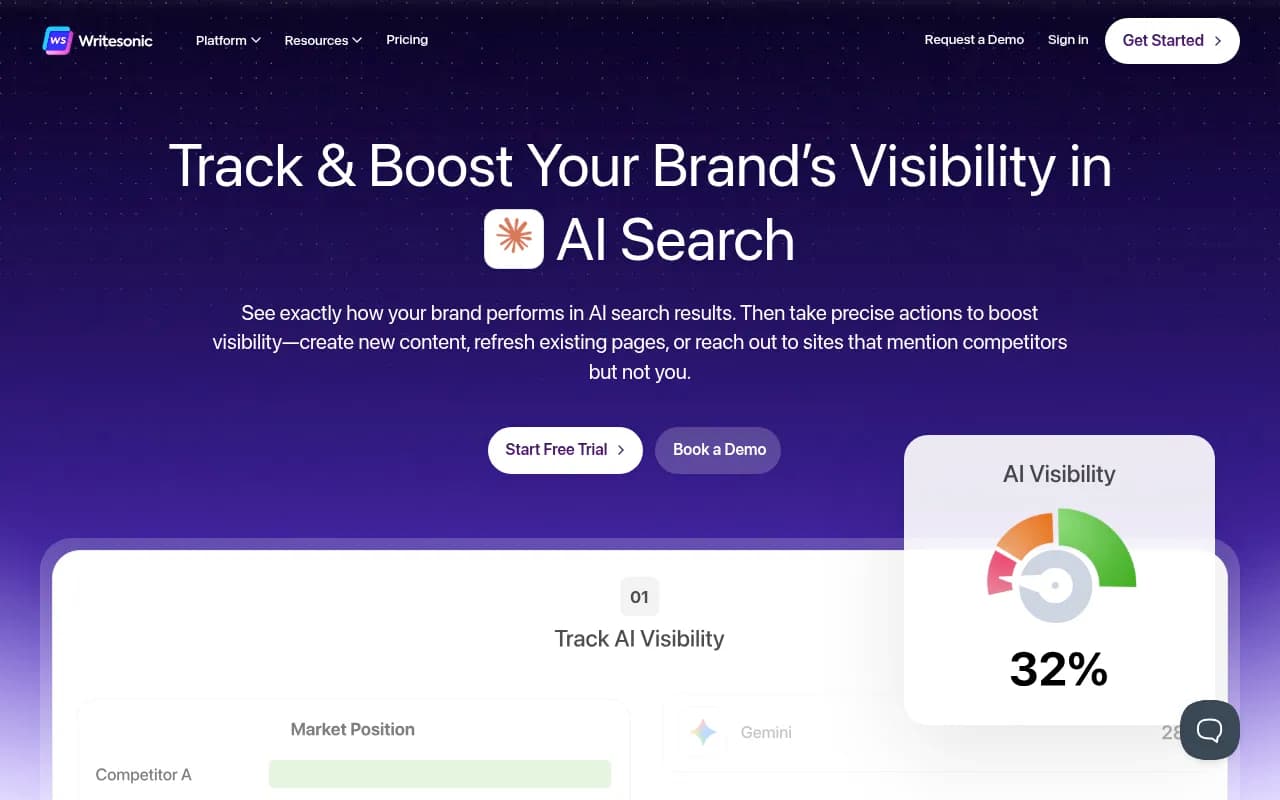
Writesonic has evolved into an AI search visibility platform that combines brand monitoring with content creation. It tracks citations across ChatGPT, Perplexity, and Google AI Overviews, and the content tools are solid for teams that need to produce a lot of material quickly.
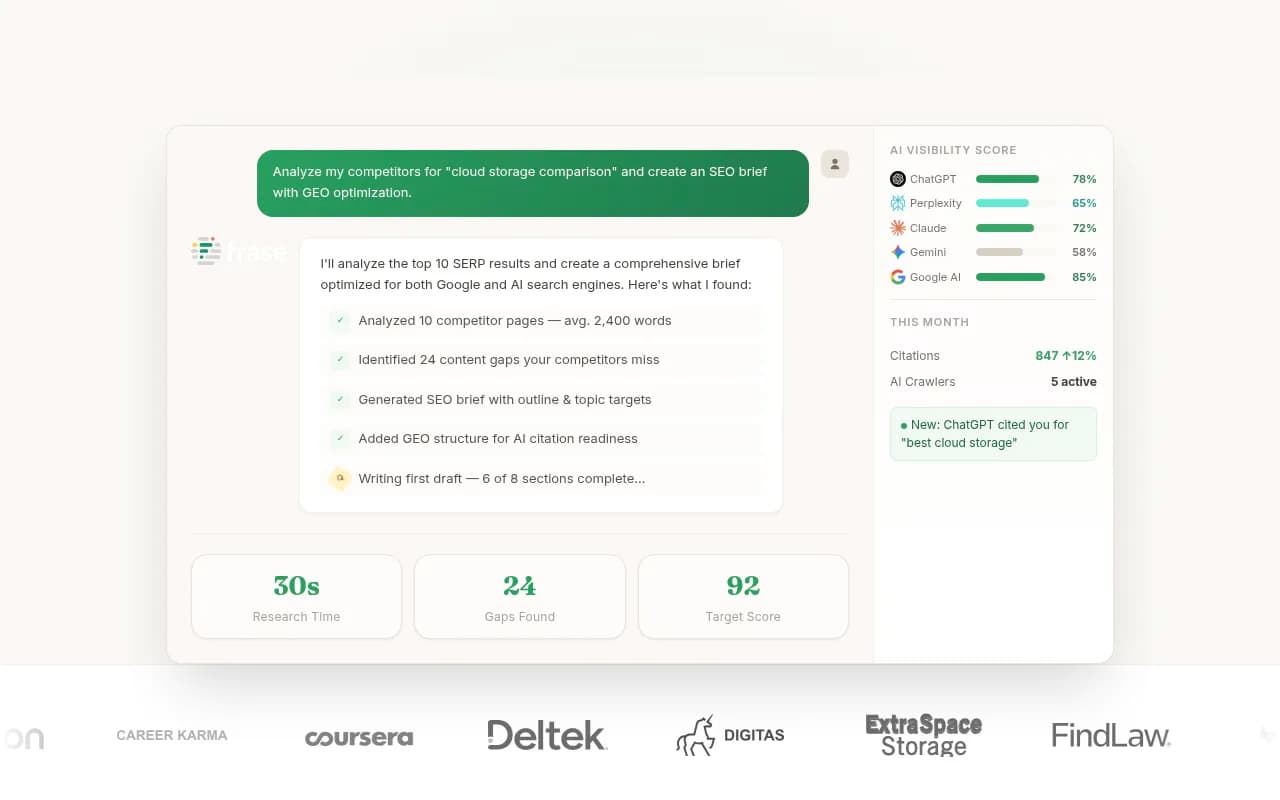
Frase pairs AI-engine citation tracking with research and writing tools. It's particularly strong for informational prompt coverage -- the content research workflow maps well to the kind of comprehensive, citeable guides that AI models favor.
Monitoring-focused platforms
These tools do the tracking well but leave the optimization work to you.
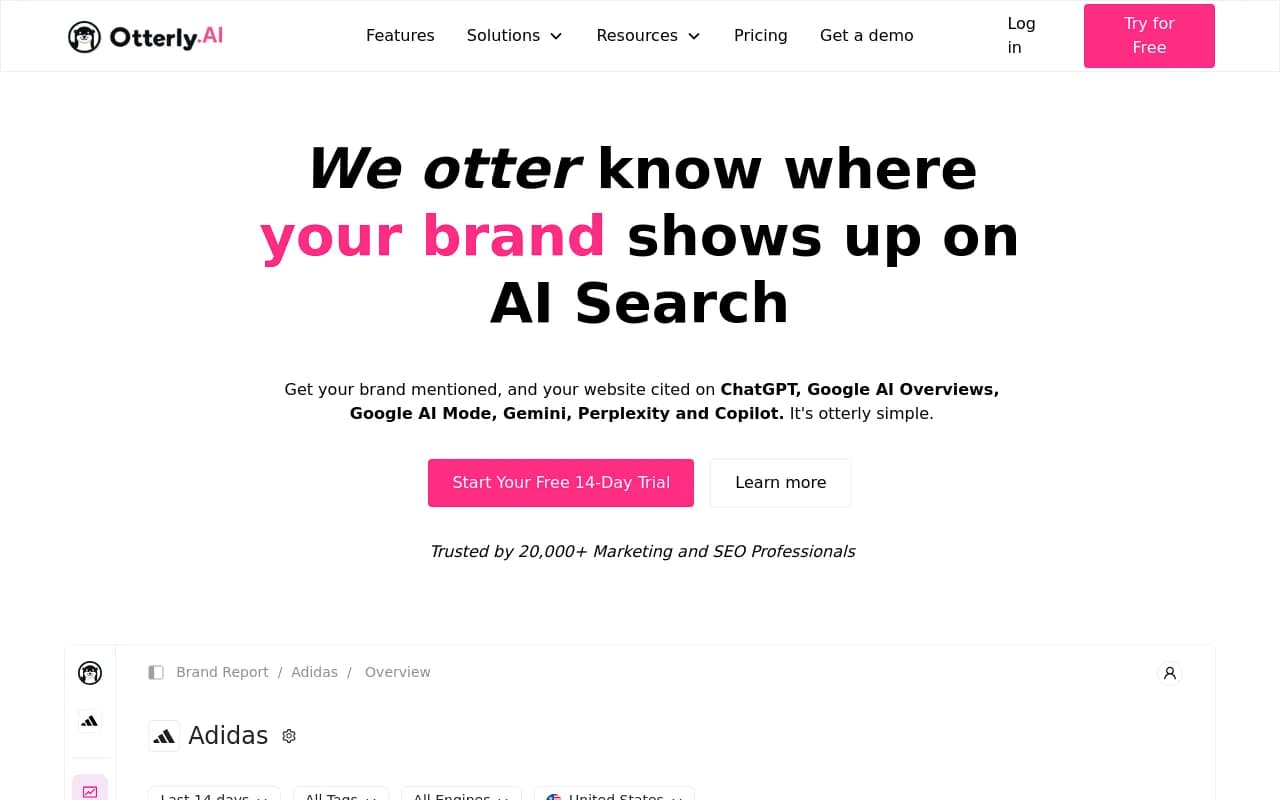
Otterly.AI is a clean, affordable monitoring tool. Good for teams that just need to know where they stand across a handful of AI models without a big setup investment. It doesn't distinguish prompt intent in any sophisticated way, but for basic citation tracking it works.
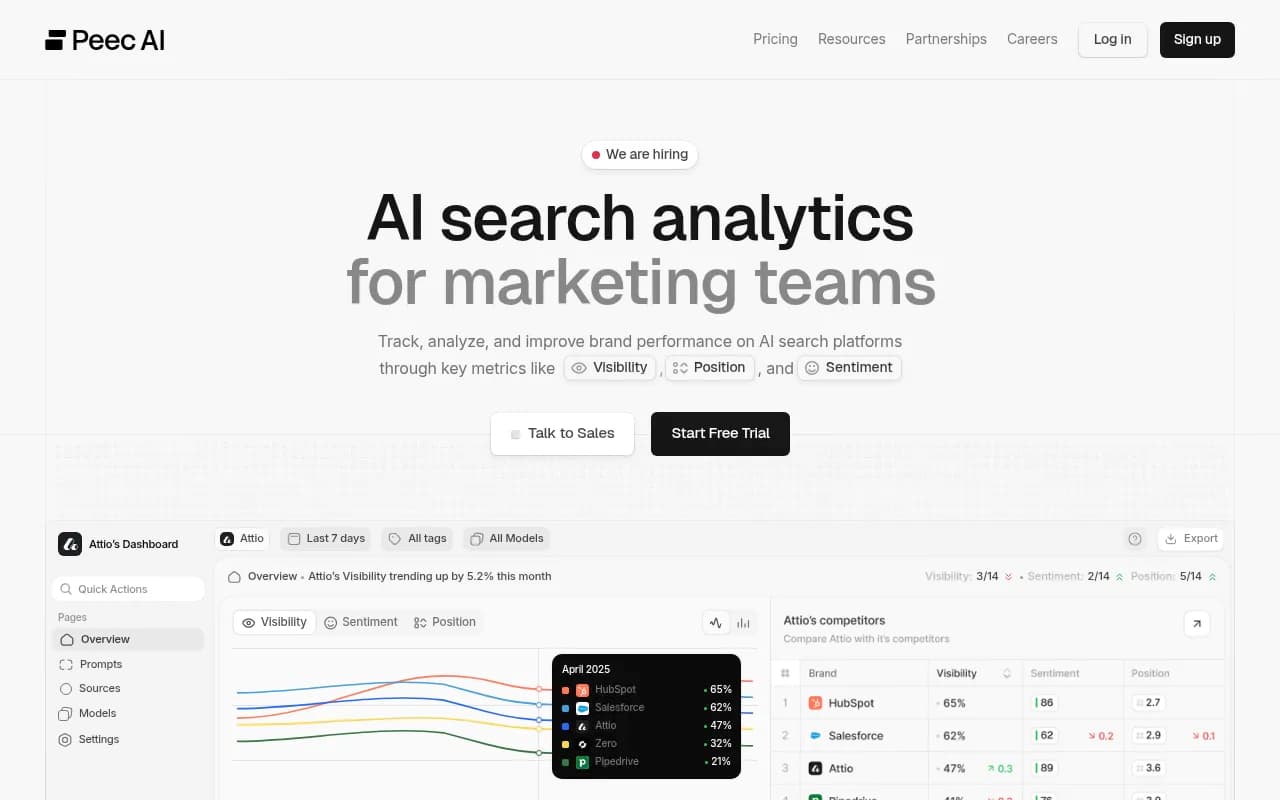
Peec AI is similar -- solid monitoring, limited optimization. If you're early in your AI visibility journey and want to understand your baseline before committing to a more expensive platform, it's a reasonable starting point.
Athena HQ tracks visibility across 8+ AI search engines with a clean interface. Better for commercial prompt monitoring than transactional, and like most monitoring tools, it stops at the data rather than helping you act on it.
Ahrefs Brand Radar is worth mentioning because many teams already use Ahrefs and will naturally reach for it. It does surface brand mentions in AI search, but the prompts are fixed (you can't customize them to your actual customer queries), and there's no AI traffic attribution. Fine as a supplementary signal, not as a primary AI visibility strategy.
SE Ranking has added AI visibility features to its existing SEO suite. The AI visibility module gives you a strategic view of how you appear across AI search engines, and it integrates with the broader rank tracking and site audit tools most SEO teams already use.
Profound is the strongest dedicated monitoring platform for enterprise teams. Deep tracking, strong reporting, and it handles large prompt sets well. The price point reflects the enterprise positioning, and like most monitoring-first tools, content optimization isn't its focus.
Niche and emerging tools
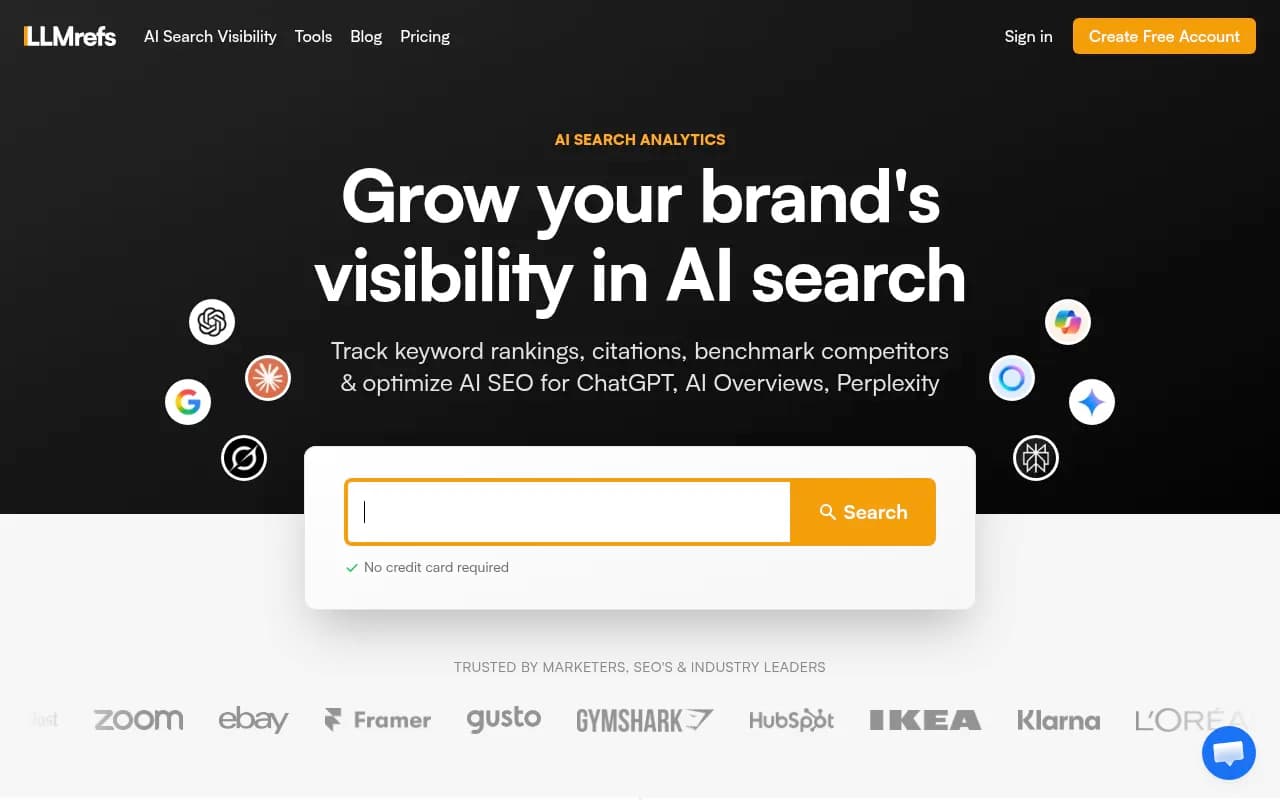
LLMrefs tracks brand visibility and rankings across ChatGPT, Perplexity, and other models. It's particularly useful for understanding citation patterns at the source level -- which domains, Reddit threads, and YouTube videos are driving AI answers in your category.
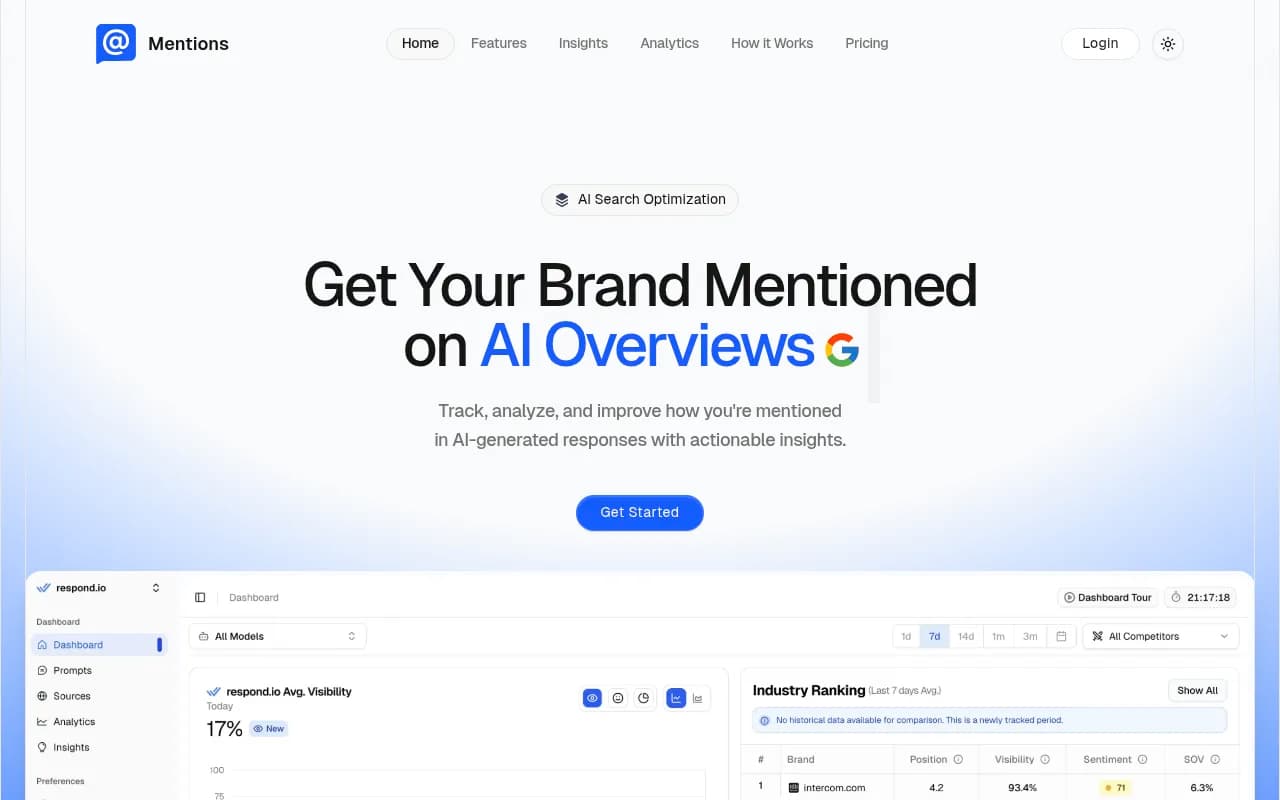
Mentions.so focuses specifically on brand mention tracking in AI search. Narrow scope but does it cleanly.
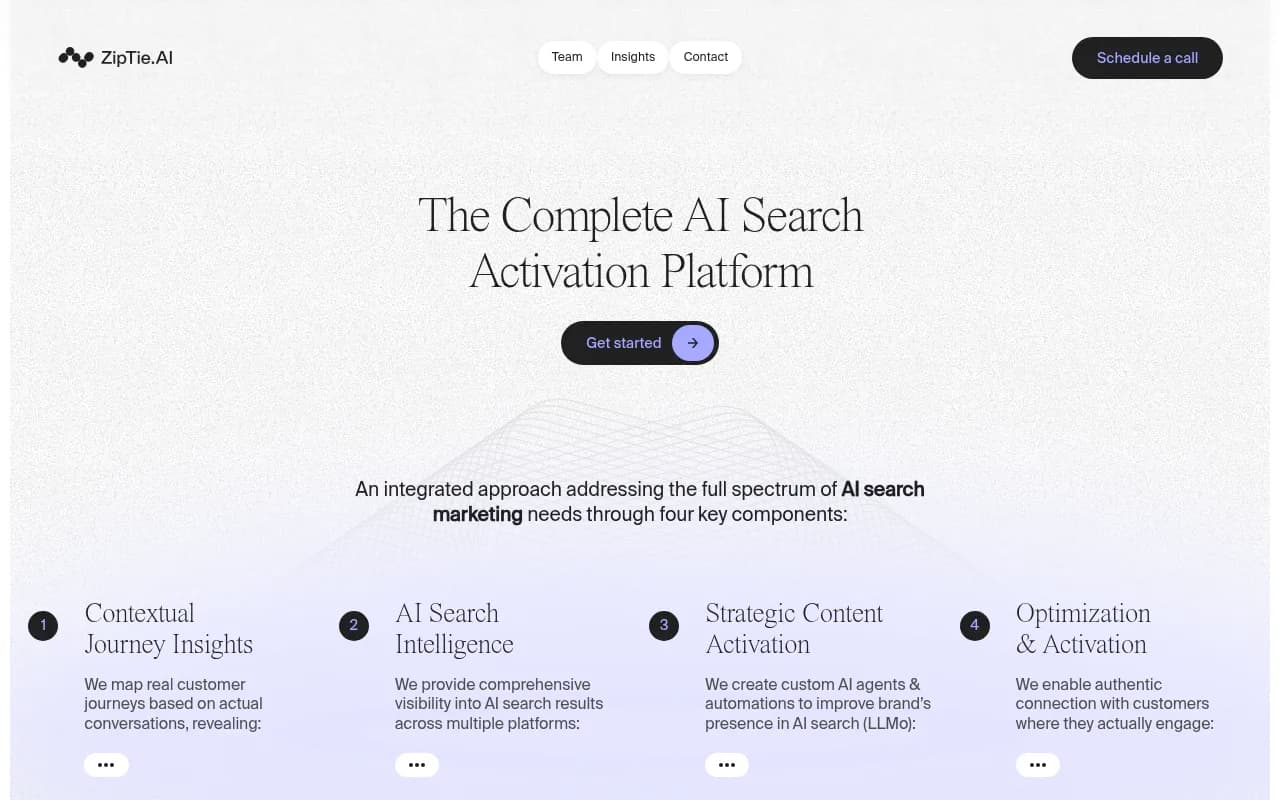
ZipTie offers deep analysis for AI search visibility. Good for teams that want granular data on how AI models are interpreting and citing content.
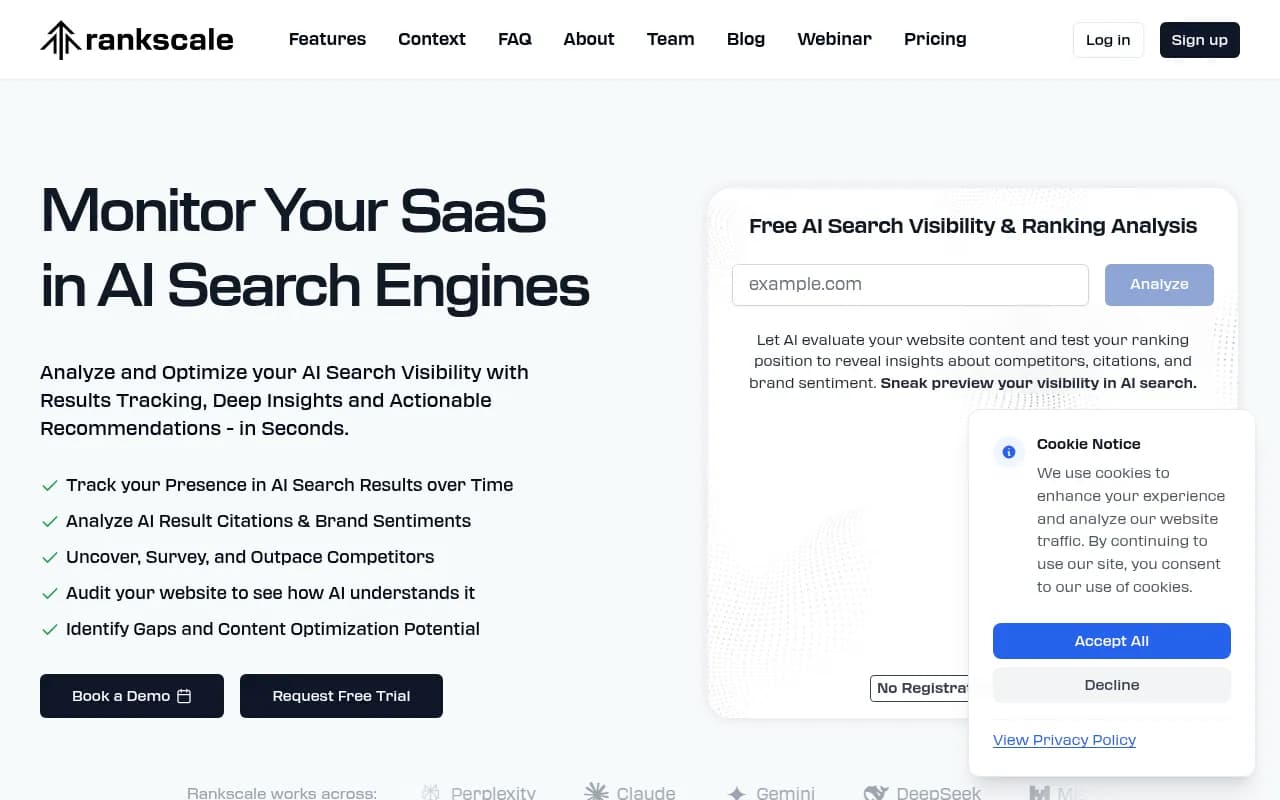
Rankscale is built for scaling AI visibility across larger content operations. Worth looking at if you're managing visibility for multiple brands or a large site.
Semrush has added AI visibility tools to its existing platform through the AI Visibility Toolkit. The advantage is integration with existing Semrush workflows; the limitation is that prompts are somewhat fixed and the depth of AI-specific tracking doesn't match dedicated platforms.
Comparing tools by prompt type coverage
| Tool | Informational | Commercial | Transactional | Content generation | Crawler logs |
|---|---|---|---|---|---|
| Promptwatch | Strong | Strong | Yes (Shopping tracking) | Yes | Yes |
| Writesonic | Strong | Good | Limited | Yes | No |
| Frase | Strong | Good | Limited | Yes | No |
| Profound | Strong | Strong | Limited | No | No |
| Otterly.AI | Good | Good | No | No | No |
| Peec AI | Good | Good | No | No | No |
| Athena HQ | Good | Good | No | No | No |
| SE Ranking | Good | Good | Limited | No | No |
| Ahrefs Brand Radar | Basic | Basic | No | No | No |
| Semrush AI Toolkit | Good | Good | No | No | No |
| LLMrefs | Good | Good | No | No | No |
How to set up tracking by prompt intent
For informational prompts
Start by mapping the questions your target audience actually asks AI models. Not keyword research -- actual conversational questions. "What's the difference between X and Y?" "How do I set up Z?" "Why does A happen?"
Then check which of those prompts your content is being cited for. The gap between the full list and your citation list is your content roadmap. Tools with Answer Gap Analysis (like Promptwatch) automate this; with monitoring-only tools you'll have to build the comparison manually.
One thing that's easy to miss: AI models don't just cite your homepage or your most-linked pages. They cite the specific page that best answers the question. So a 2,000-word guide buried three clicks deep on your site might be generating more AI citations than your homepage. Page-level tracking matters.
For commercial investigation prompts
This is where competitor heatmaps become essential. You need to know: when someone asks "best [your category] tools," who appears? In what order? Across which AI models?
The answer varies more than you'd expect. A brand that dominates ChatGPT's commercial recommendations might barely appear in Perplexity's, and vice versa. Each model has different training data, different citation preferences, and different update cycles.
Reddit and YouTube matter a lot for commercial prompts. AI models frequently pull from Reddit discussions and YouTube reviews when answering "best X" questions, because those sources have authentic user perspectives. If your brand is getting mentioned positively in those channels, it's likely feeding into AI commercial recommendations. If it's not, that's a gap worth addressing -- and most pure AI visibility tools don't surface this. Promptwatch's Reddit and YouTube tracking is one of the few places you can see this signal directly.
For transactional prompts
This is the frontier. ChatGPT's shopping recommendations and Google's AI Mode product carousels are still evolving, and most brands haven't figured out how to optimize for them yet.
What we know so far: entity recognition matters. If AI models recognize your brand as a product entity (not just a cited source), you're more likely to appear in shopping-style recommendations. Structured data, product schema, and consistent brand information across the web all feed into this.
For tracking, you want a tool that specifically monitors shopping appearances and entity mentions, not just editorial citations. Most monitoring tools don't distinguish these. Promptwatch's ChatGPT Shopping tracking and entity tracking are specifically built for this, which is why it's the only platform in the comparison table above with "Yes" in the transactional column.
A practical setup for most marketing teams
If you're starting from scratch or reassessing your current setup, here's a reasonable approach:
Small teams or early-stage programs: Start with a monitoring tool like Otterly.AI or Peec AI to understand your baseline. Run it for 30-60 days, identify the prompts where you're invisible, then decide whether you need a full optimization platform.
Growth-stage teams with content capacity: A platform like Promptwatch or Writesonic that combines tracking with content generation is worth the investment. The monitoring alone won't move the needle -- you need to create content that closes the gaps, and doing that without prompt data and competitor citation analysis is guesswork.
Enterprise teams: Profound for deep monitoring and reporting, paired with a content generation workflow. Or Promptwatch if you want the full loop in one platform.
Teams already on Semrush or Ahrefs: Use the AI visibility features as a supplementary signal, but don't rely on them as your primary AI visibility strategy. The fixed prompts and lack of intent segmentation mean you're missing too much.
The bigger picture
About 68% of Google searches ended without a click in early 2026, according to SparkToro's analysis of Similarweb clickstream data. That number is going up, not down. The brands that show up inside AI answers -- cited, recommended, mentioned -- are capturing attention that never reaches a results page.
The tools exist to track this. The harder question is whether you're using them to actually change your content strategy, or just to watch the numbers. Most teams that invest in AI visibility tracking and then don't see results have the same problem: they're monitoring without optimizing. The prompt intent framework here is meant to give you a more targeted way to act on what you find -- different content strategies for informational gaps, competitive repositioning for commercial gaps, and entity/schema work for transactional gaps.
Pick the tool that fits where you are. But make sure it's a tool that helps you move, not just measure.