Key takeaways
- Coverage claims vary a lot. "Engines supported" is not the same as "engines included in your plan", and add-ons can double the real cost.
- ChatGPT, Perplexity, Gemini, and AI Overviews are covered by almost everyone. Copilot and Claude are common but often paid extras. Meta AI is rare. Alexa is rarer still.
- Each assistant cites sources very differently, so you need per-engine tracking, not one blended score.
- Monitoring tells you where you are invisible. It does not fix anything. Decide whether you also want help creating content and publishing it.
- Vendor pages and roundups disagree on pricing and engine lists. Check live pricing pages before buying.
Why assistant coverage matters more than it used to
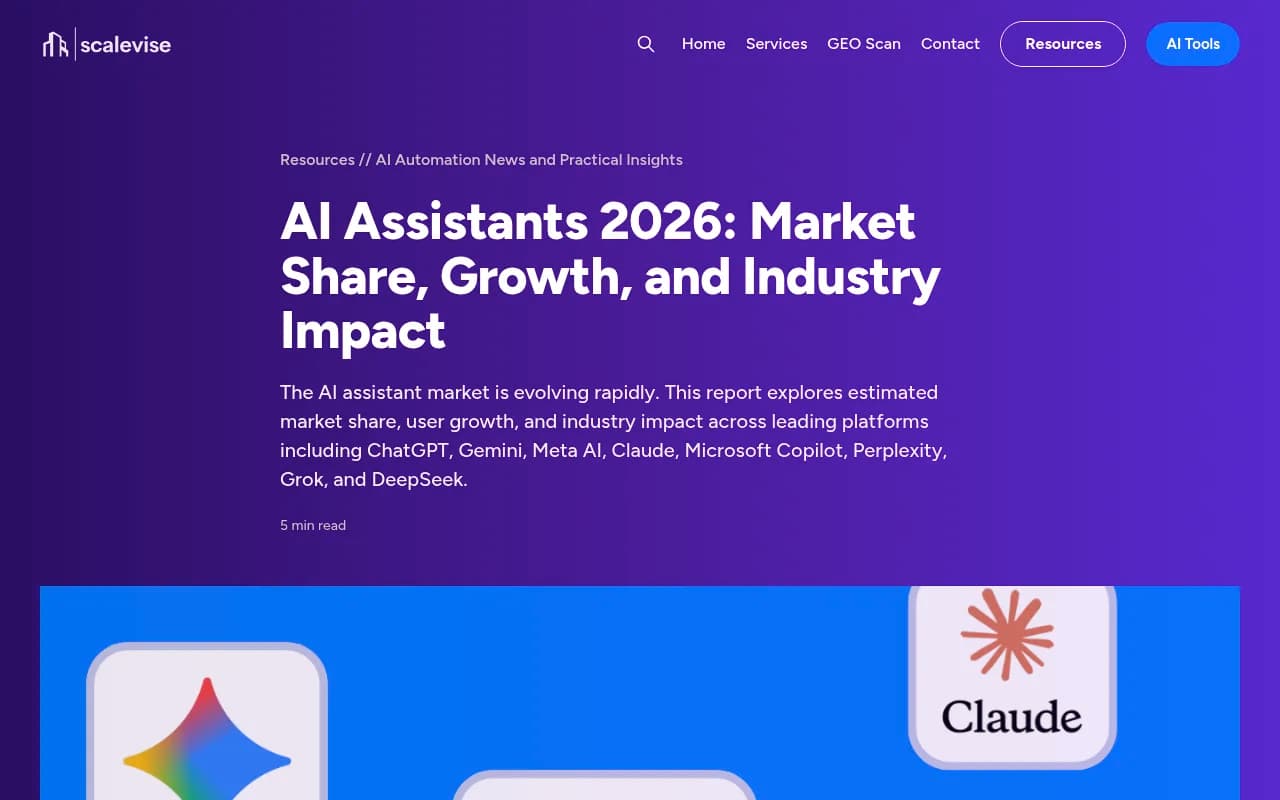
A year or two ago, tracking ChatGPT and Perplexity was enough for most teams. That is no longer true. People bounce between assistants depending on the job: one for general questions, another for Google Workspace, another for coding, another for research. One 2026 market-share estimate from Scalevise puts ChatGPT at 1.1 billion+ monthly users, Gemini at 662 million, Meta AI at 500 million, Claude at 245 million, and Copilot at 150 million. Treat those as rough, since the source is low-authority and I could not verify them, but the shape is believable. The market is split across many assistants.
YouGov's US brand rankings tell a similar story from the preference side. ChatGPT leads at 33.7%, Copilot follows at 8.2%, Claude at 6.1%, Meta AI at 4.7%, and Alexa at 4.1%. Those are small slices individually, but if your customers are in Microsoft shops, or ask Alexa for product recommendations, a tracker that ignores those assistants has a blind spot.
The other reason is behavioral. The assistants do not cite the same way. Promptwatch Data's social media citations report (Sep 28 to Oct 4, 2026) found social platforms made up just 0.46% of ChatGPT citations, 2.7% of Perplexity citations, and 12.2% of Google AI Overviews citations. Same internet, wildly different sourcing. The report's own advice is to track per engine and not assume one predicts another.
The number of sources differs too. According to Promptwatch's average sources per response data, ChatGPT cites about 5 sources per web-search answer, AI Overviews about 10, and Perplexity almost exactly 10 every day. Copilot is the odd one. It swung from under 2 to nearly 17 sources per response within weeks, which makes tracker readings for Copilot noisy. Read it on monthly trends, make sure Bing indexes your pages, and keep it on the radar rather than center stage.
The coverage tiers: what each assistant takes to track
Not all engines are equally easy to cover. Roughly, they fall into four tiers.
- Near-universal: ChatGPT, Perplexity, Google AI Overviews, Gemini. If a tool misses one of these, move on.
- Common but sometimes gated: Google AI Mode, Copilot, Claude. Often sold as add-ons or higher-tier features.
- Less common: Grok, DeepSeek, Mistral, Meta AI.
- Rare: Amazon Alexa, plus coding agents like Codex and Claude Code.
One more caveat. Real user interfaces and APIs can return different answers. Some platforms query the actual consumer UI, others call model APIs. For assistants like ChatGPT, where web search behavior and citations in the app differ from the raw model, that distinction matters. Ask any vendor which one they do per engine.
Platforms compared by assistant coverage
The table below pulls from vendor pages and third-party roundups dated August to October 2026. I could not verify every vendor's live pricing, and sources conflict in places, so treat it as a starting map and confirm before you buy.
| Platform | Entry price (reported) | Engines covered | Meta AI | Alexa | Notes |
|---|---|---|---|---|---|
| Promptwatch | $95/mo Essential (free tier tracks ChatGPT only) | ChatGPT, AI Overviews, AI Mode, Gemini, Perplexity, Copilot, Claude, Grok, DeepSeek, Mistral and more | Yes | Yes | All paid plans unlock all active models; also tracks Codex, Claude Code, OpenCode |
| AthenaHQ | $295/mo, 3,600 credits | 11+ engines incl. Claude, Copilot, Grok, DeepSeek, Mistral | Yes | No | One credit per AI response |
| Trakkr | $100/mo flat | 8 models incl. Claude, Grok, DeepSeek | Yes | No | Broad included-by-default list |
| Searchable | $125/mo | 8 engines on every plan | No | No | Includes Grok and DeepSeek |
| Rankscale | From about 17 to 20 per month | Claims 17+ engines | Unverified | Unverified | Credits weighted by engine, costs hard to forecast |
| Profound | Enterprise or custom (sources disagree) | Up to 9 to 10 engines | Disputed | No | Some roundups list Meta AI and Grok, others don't |
| Goodie | $399/mo Core | 5 engines on Core | No | Pro only | Pro adds Gemini and Alexa |
| Otterly.AI | $29 to $489/mo | 4 included (ChatGPT, AI Overviews, Perplexity, Copilot) | No | No | Gemini, AI Mode, Claude are paid add-ons |
| Peec AI | $95/mo Starter | Pick 3 on self-serve | No | No | Extra models $35 to $165/mo |
Promptwatch
Promptwatch is the one I would start with if breadth is the main criterion. It tracks the real interfaces of ChatGPT, Google AI Overviews, Google AI Mode, Gemini, Perplexity, Microsoft Copilot, Amazon Alexa, and Meta AI, each by country and language. Claude, DeepSeek, Mistral, and Grok are tracked via API alongside, which shows what models believe from training data rather than from live search. It also covers coding agents (Codex, Claude Code, OpenCode), which matters if you sell developer tools.
Two things stand out. First, every paid plan unlocks all active models, so there is no per-engine add-on ladder. Second, it goes past monitoring: IP-verified AI crawler logs, visitor analytics, and a Content Agent that plans, writes, and publishes to Webflow, Framer, or WordPress. That helps once the coverage report says "you're invisible in Copilot" and somebody has to act on it.

Pricing starts at $95/mo for Essential (50 prompts, 6,000 responses), with Professional at $245 and Business at $579. Confirm at promptwatch.com/pricing.
AthenaHQ
AthenaHQ lists 11+ engines, including Claude, Copilot, Grok, DeepSeek, Meta AI, and Mistral, with no add-on charge for engines. The catch is the credit pool. One credit is one AI response, so a $295 Starter plan with 3,600 credits runs out faster than you think if you track many prompts across many engines. Do the arithmetic before committing.
Trakkr
Trakkr is the budget pick for breadth. At $100/mo flat it includes eight models by default: ChatGPT, Claude, Gemini, Perplexity, AI Overviews, Grok, DeepSeek, and Meta AI. Rework's comparison calls it the broadest included-by-default list. It is a monitoring tool, so don't expect content workflows.
Searchable
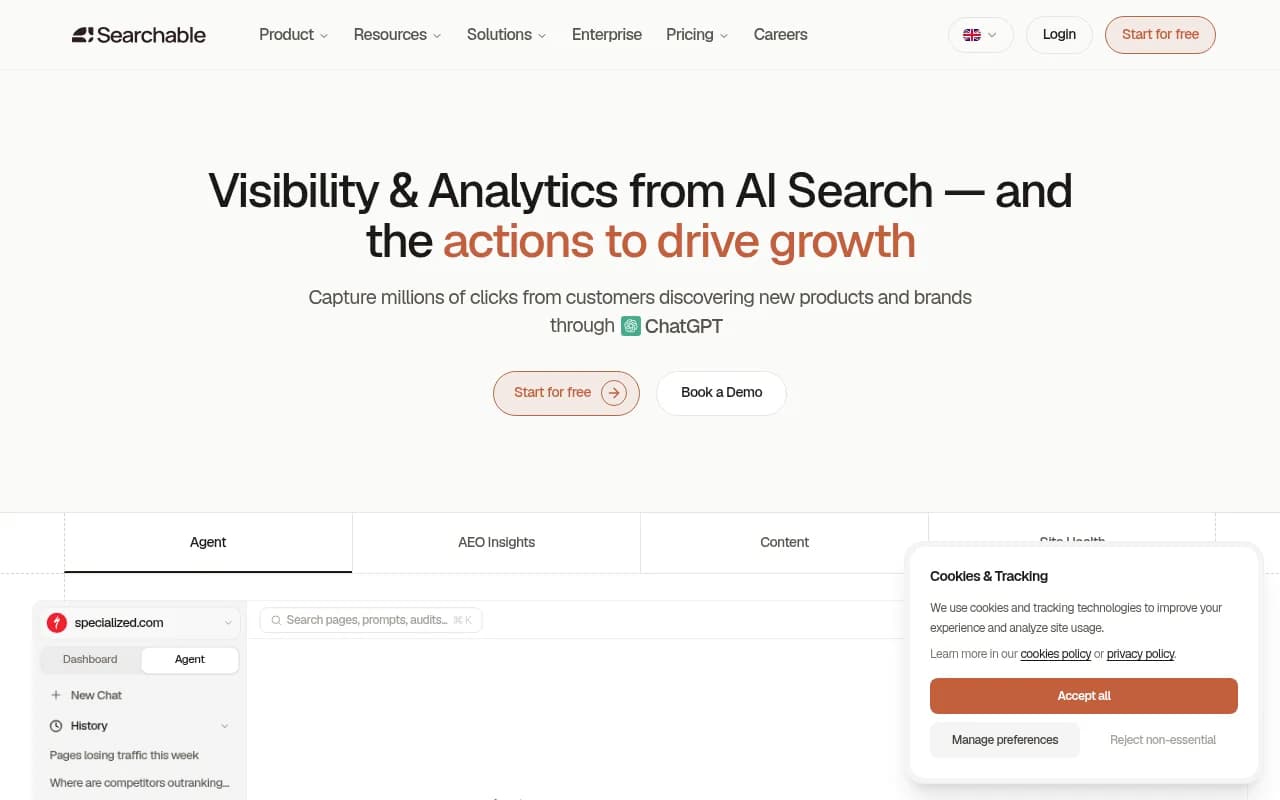
Searchable runs eight engines on every plan at $125/mo, including Grok and DeepSeek, with article and page-audit allowances bundled in. No Meta AI or Alexa, though.
Profound
Profound is the enterprise name most people know. Its engine list is where sources disagree. Enterprise covers up to nine engines in some reports (ChatGPT, Perplexity, AI Mode, AI Overviews, Gemini, Copilot, Claude, DeepSeek, Exa), while others add Grok and Meta AI. Treat Meta AI coverage as unconfirmed until you see it in a demo. Pricing also conflicts: some roundups say self-serve plans are gone, leaving a trial and a custom tier.

Goodie AI
Goodie is the only tool in the sources I reviewed that names Alexa coverage, and only on the Pro tier. Core at $399/mo has five engines. If Alexa is a hard requirement, ask Promptwatch and Goodie for demos side by side.
Otterly.AI and Peec AI
Both are clean, well-liked trackers with a catch: base plans cover few engines. Otterly includes four (ChatGPT, AI Overviews, Perplexity, Copilot) and charges extra for Gemini, AI Mode, and Claude. Claude add-ons run from $29 to $439/mo depending on tier. A 50-prompt, 7-engine setup lands around $416/mo against $189 for the Standard plan. Peec lets you choose three engines on self-serve and charges $35 to $165/mo per extra model. Sources conflict on whether Claude is an add-on or Enterprise-only there.


Rankscale
Rankscale claims 17+ engines at a low sticker price, but credits are weighted by engine. One source says a Claude answer costs 8x a standard answer, another says 2 credits against 0.25 for ChatGPT. Either way, the monthly bill is hard to predict.
Meta AI and Alexa: the real gaps
This is where the "broadest coverage" claims thin out.
Meta AI shows up in AthenaHQ, Trakkr, and Promptwatch, and in Scrunch and Profound per some roundups. Alexa is far rarer. Beyond Promptwatch, Goodie Pro was the only tool in my sources that named it. If either assistant matters to your category, treat it as a hard filter in demos and ask to see actual tracked responses, not a logo on a feature grid.
I also found no independent study of Meta AI or Alexa citation behavior. That means you will mostly learn by running your own prompts. It does not mean the surfaces are unimportant. Meta is also crawling aggressively: Promptwatch's Meta-WebIndexer data shows it growing from about 2% to nearly 38% of tracked AI crawler requests between mid-July and August 9, 2026. Whatever Meta is building, it is reading your site. Crawler logs are the cheapest way to see that happening.
Engines supported is not engines included
Three pricing patterns cause most of the surprise bills.
- Add-ons. Otterly and Peec both advertise a wide list, then charge per extra engine. The headline price is for the narrow base.
- Credit weights. Rankscale charges more credits for some engines than others. Ahrefs Brand Radar uses 8 checks per update for a Claude prompt.
- Credit pools. AthenaHQ has no engine surcharge, but credits are consumed per response, so the pool caps how many runs fit in a month.
A decent sanity check: compute prompts times engines times days you want to run, then compare against the plan's real monthly allowance. If the math doesn't work at the entry plan, the entry plan isn't your plan.
Don't forget the SEO suites
Semrush's AI Visibility Toolkit starts at $99/mo for 25 prompts and caps at four engines. Ahrefs Brand Radar covers AI Overviews, AI Mode, Gemini, ChatGPT, Perplexity, Copilot, and Claude. Conductor covers four (Perplexity, ChatGPT, Gemini, Copilot) with no Claude. These make sense if you already live in those suites and want a first look. For breadth and depth of AI-specific data, dedicated platforms usually win.

Which engines should you actually cover?
Covering everything is nice. Covering the right things is better. A practical rule set:
- Everyone: ChatGPT, Google AI Overviews, Google AI Mode, Perplexity, Gemini.
- B2B or Microsoft-heavy buyers: add Copilot. Wonnda's advice is the same, and it adds Claude for tech buyers.
- Developer tools and technical audiences: Claude, plus coding agents if your tool supports them.
- Consumer brands and retail: Meta AI, and Alexa if you sell products people reorder or ask about by voice.
- Global reach: look for country and language tracking, not just engine count.
Then match the tool to the workflow. If you only need a dashboard, a cheap tracker like Trakkr is fine. If you need to turn gaps into published pages and see whether they got crawled and cited, you need something that does the work too. Monitoring-only tools such as Peec measure and recommend but do not create content, as Wonnda's review puts it.
For more options by category, the GEO software directory at bestgeosoftware.com lists dozens of trackers with feature filters.
How to test coverage claims in a demo
Before you pay, ask for these:
- Show me a real tracked response from the engine I care about, in my country and language.
- Is this the consumer UI or the API?
- What happens to my budget if I add Claude, Copilot, or Meta AI?
- How many responses per month does this plan really include?
- Can you show crawler logs or traffic data to connect visibility to outcomes?
Also read the AI-era basics from a neutral angle. Promptwatch's ChatGPT query fanouts data explains how many web searches ChatGPT runs per answer, which determines what your tracker needs to emulate.
Bottom line
If you want the widest assistant coverage with everything included, Promptwatch covers the most surfaces I found, including Meta AI, Alexa, Copilot, and coding agents, without per-engine add-ons, and it can act on what it finds. Trakkr and AthenaHQ are the next-widest, Trakkr cheaper and AthenaHQ with more engines. Goodie is the Alexa alternative at a higher price. Otterly and Peec are good products where the sticker price hides the real cost of breadth.
Whichever you pick, check live pricing, ask for real responses per engine, and track Copilot over months, not days.